

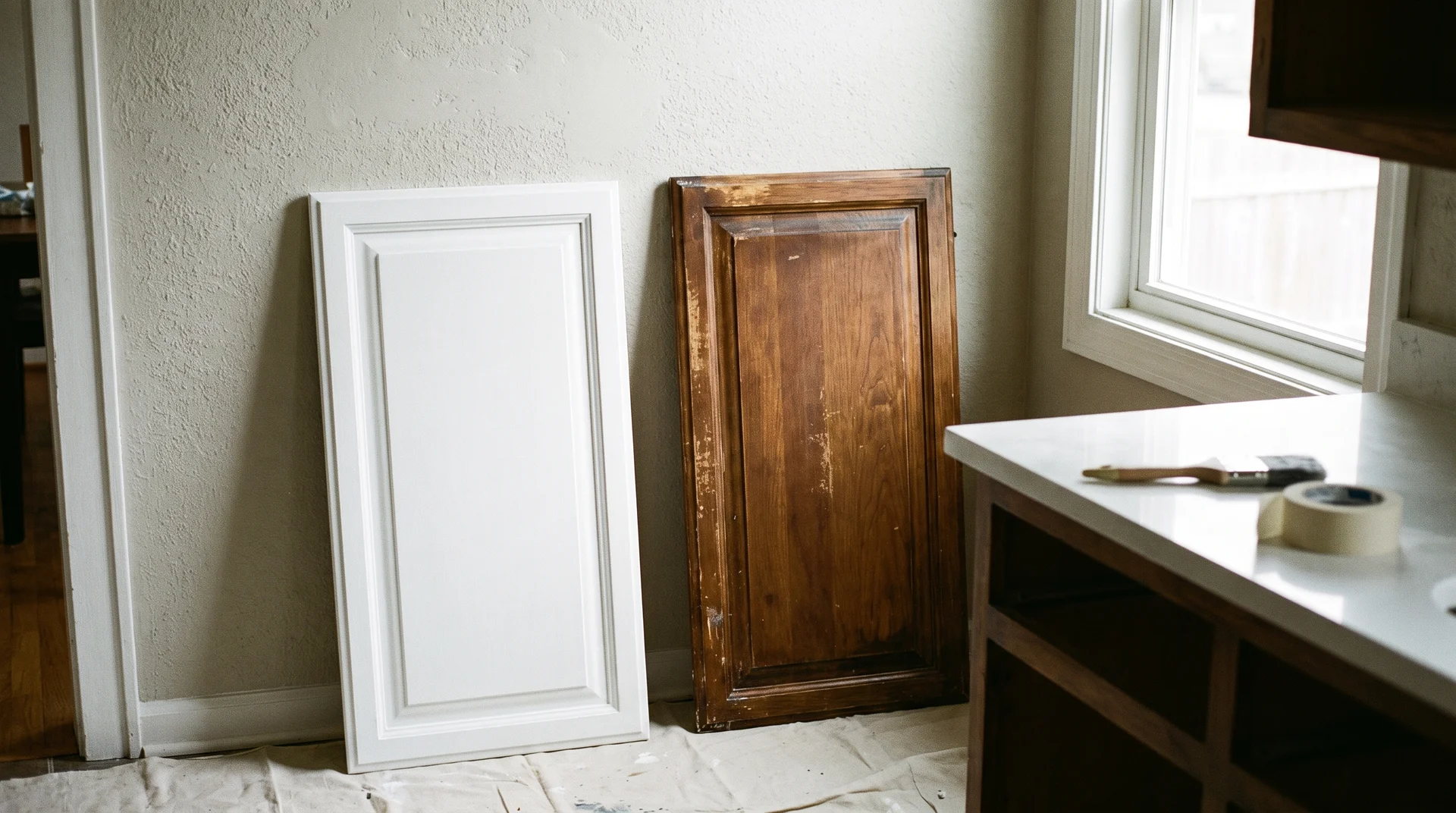
You’re standing in your kitchen with a professional quote for $5,200 in hand. That number either makes sense to you, or it doesn’t.
The gap between $5,200 and the $300 YouTube version of this project is not a pricing error. It represents a different scope of work, a different finish lifespan, and a different failure risk.
Professional cabinet painting runs $2,000 to $7,000 for most US kitchens. DIY materials cost $200 to $600.
This piece covers painting only. Cabinet refacing and replacement involve different cost structures and different contractors. Both belong in a different article with different data.
What Professional Cabinet Painting Actually Costs
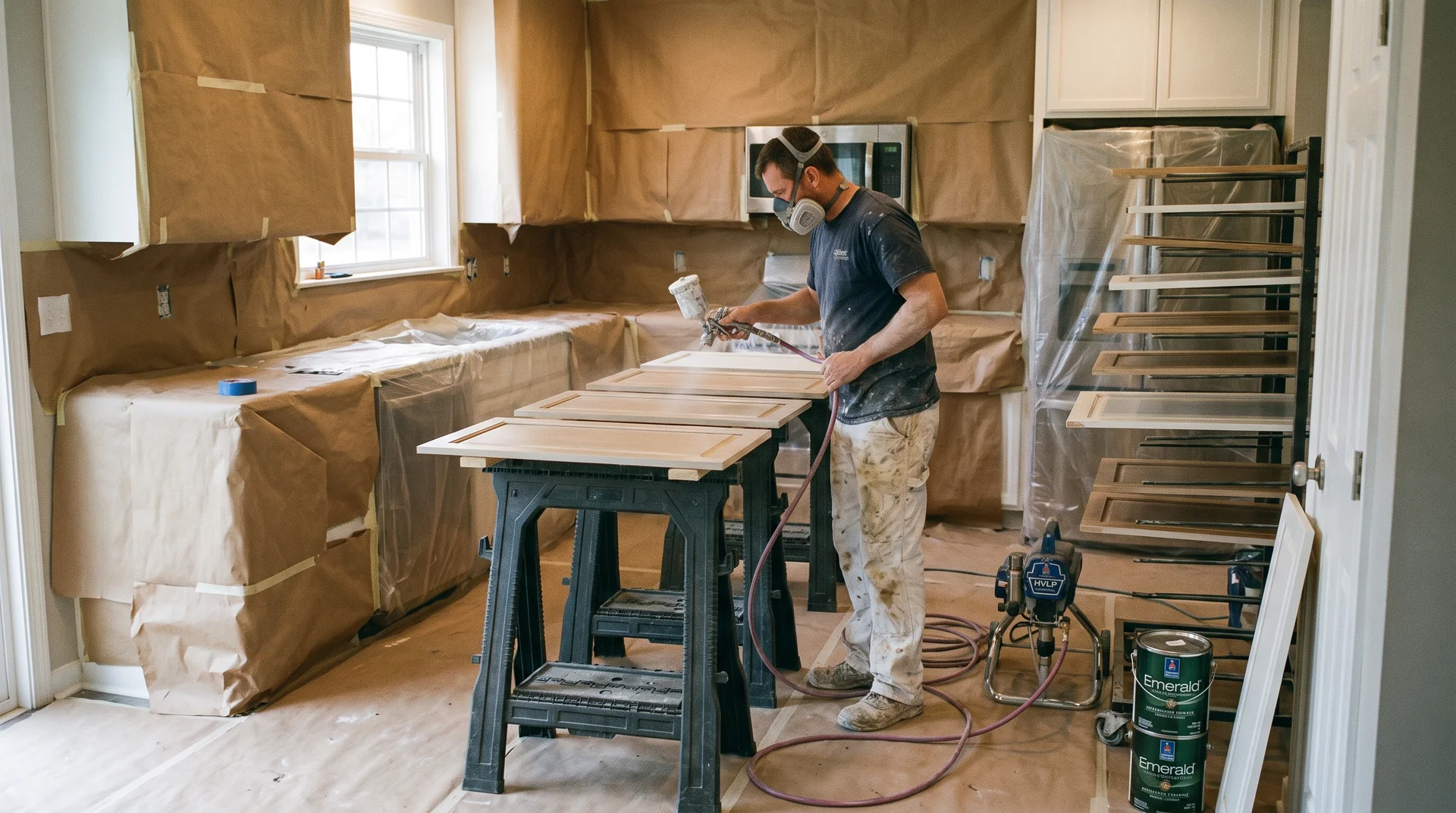
Most professional cabinet painting jobs in the US fall between $2,000 and $7,000.
Where your project lands depends on three things: how the painter prices the job, the size of your kitchen, and what the quote actually covers. All three are visible in the quote before anyone starts working.
How Professionals Price the Job
Professional cabinet painters price residential jobs per piece, per linear foot, or per square foot.
Here’s how those rates typically break down nationally, based on data from Angi and The Kitchn.
| Pricing Method | Typical Rate |
|---|---|
| Per door | $90–$155 each |
| Per drawer front | $30–$50 each |
| Per linear foot | $30–$70 per foot |
| Per square foot | $5–$12+ (labor and materials) |
Labor accounts for 60 to 70 percent of any professional quote, according to Angi’s 2026 national data. That’s why prep scope shifts the price so significantly. Prep is almost entirely labor hours.
Most reputable residential painters use per-piece pricing. It’s easier to scope and easier to compare across quotes. This type of work is sometimes also advertised as cabinet refinishing — the term covers the same scope.
Cost by Kitchen Size
Count your doors and drawer fronts before requesting a single quote.
It’s the fastest way to get an accurate estimate over the phone. Here’s how professional pricing typically breaks down by kitchen size, based on data from The Kitchn and Kitchen Search.
| Kitchen Size | Approximate Door Count | Professional Cost Range |
|---|---|---|
| Small (e.g., 10×10) | 8–12 doors | $2,000–$4,000 |
| Medium | 15–22 doors | $4,000–$5,500 |
| Large | 25+ doors | $5,500–$7,000+ |
These are national ranges. Regional variation is real and unpredictable without a local quote.
I’ve seen the same scope priced $1,500 higher in coastal markets and $1,000 lower in the Midwest. Online cost calculators don’t account for this. Your real number requires an in-person quote from a local painter.
What a Legitimate Quote Should Include
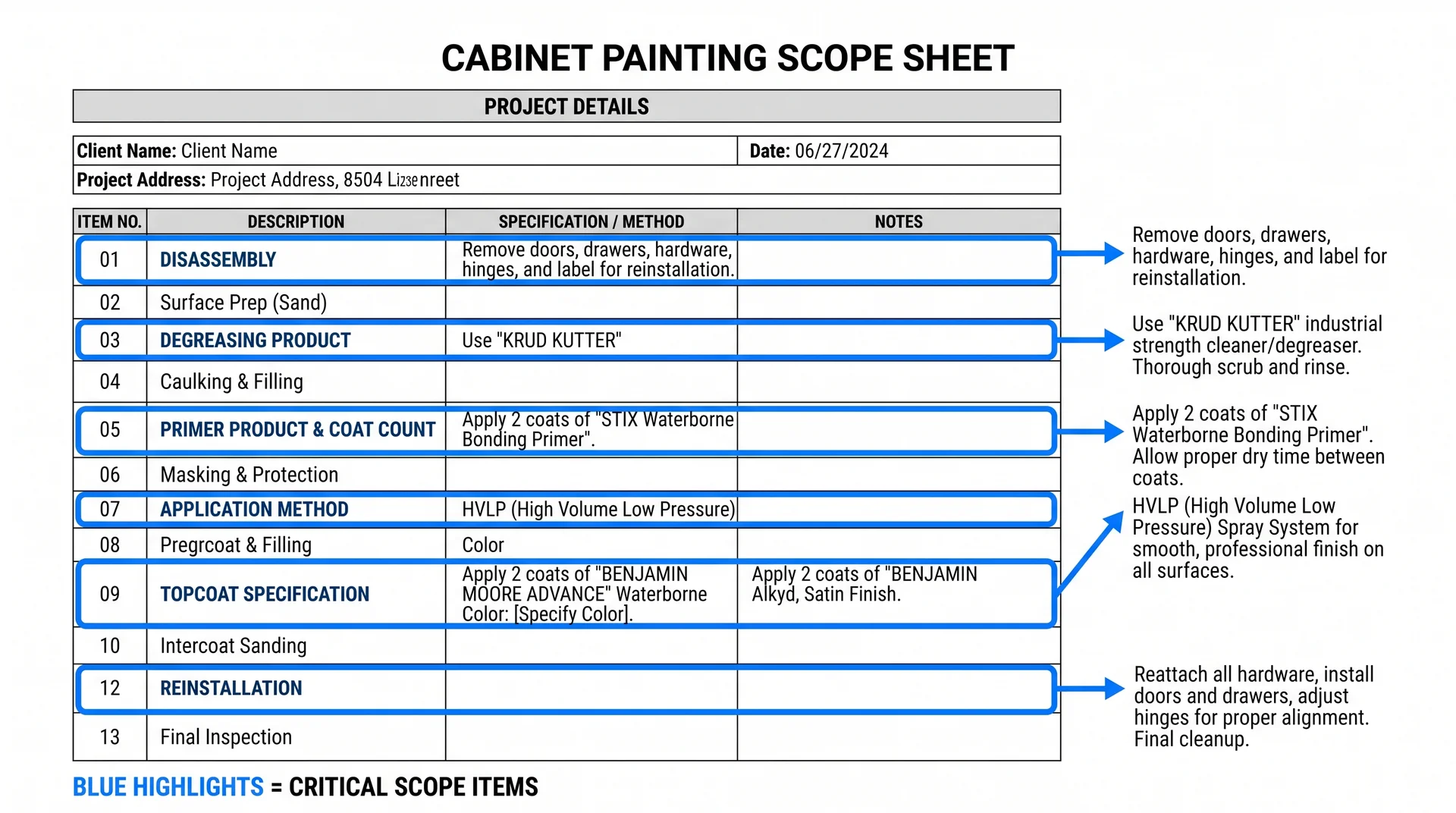
The gap between a $3,000 and a $7,000 quote for the same kitchen almost always comes down to prep.
What gets specified there tells you whether the quote represents a complete job. If the prep section is vague or missing, the lower price is not a bargain.
A professional cabinet painting quote should cover all of the following. If any item is absent, ask for a written explanation before you sign anything.
- Full disassembly: All doors, drawer fronts, and hardware removed before work begins. Painting around hardware produces edges that fail first.
- Dedicated degreasing: A named product or cleaning method on the scope sheet. Kitchen cabinets collect years of cooking residue. Primer applied over that residue doesn’t bond reliably.
- Primer: Product name and coat count specified. “Priming included” with no further detail is not a specification.
- Application method: Spray, brush, and roll, or a combination. A spray finish is smoother. A legitimate spray quote reflects the setup and containment time that method requires.
- Topcoats: Minimum two coats specified, surface type noted.
- Reinstallation with alignment check: Every door and drawer is rehung and adjusted before the job is considered complete.
A quote that reads “clean, prime, and paint” for $1,800 on a full kitchen is describing a different job. I’ve learned to read a scope sheet by what’s missing from it as much as by what’s on it.
What DIY Cabinet Painting Actually Costs
DIY cabinet painting materials cost $200 to $600 for a small to medium kitchen.
That figure covers supplies. It doesn’t cover the full cost of the project.
Materials and Supplies
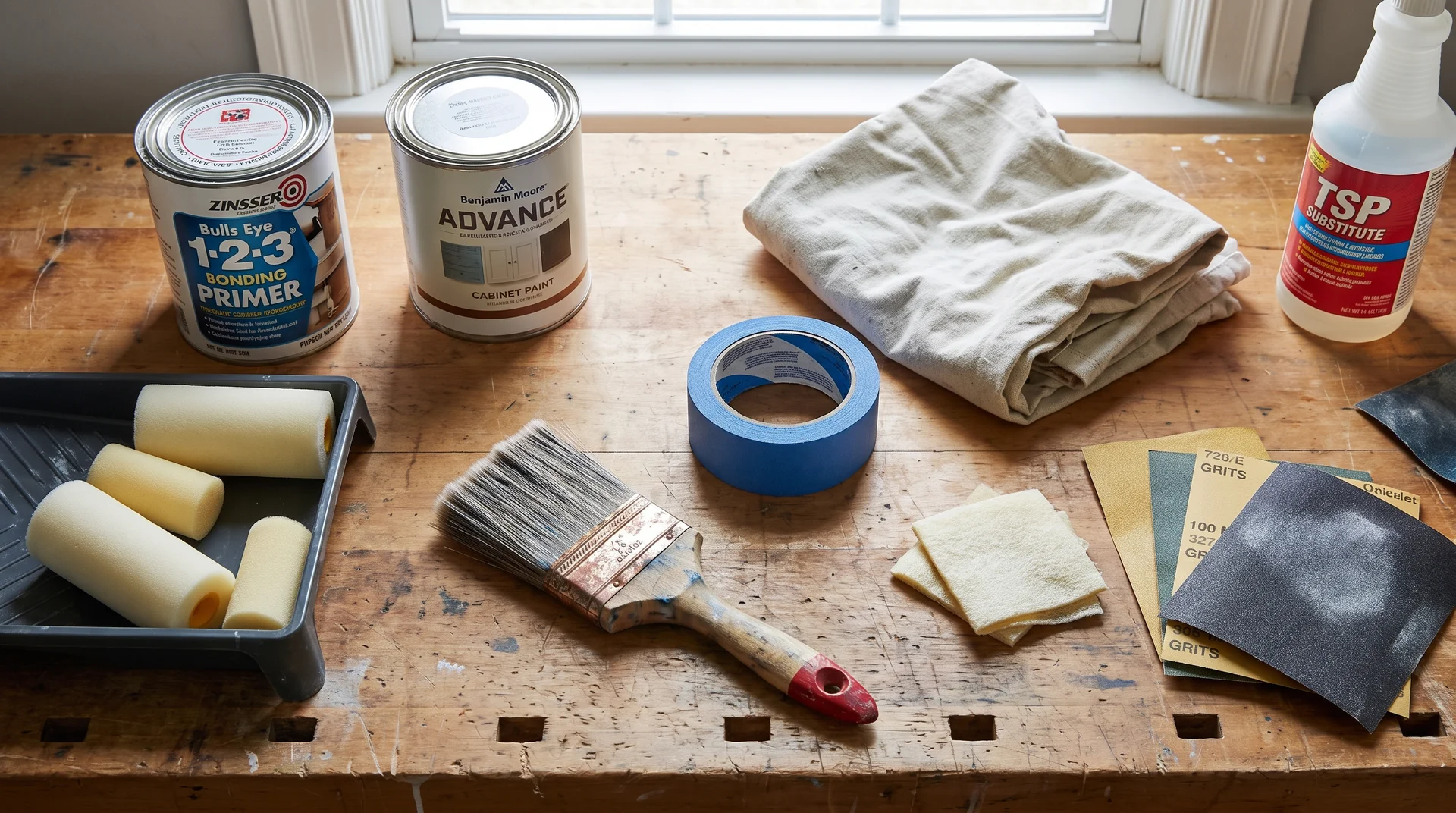
Budgeting accurately for DIY cabinet painting means accounting for every item in the supply chain.
Here’s what you’ll need and what each item typically costs for a medium kitchen.
| Item | Approximate Cost | Notes |
|---|---|---|
| Degreaser (TSP substitute or Krud Kutter) | $15–$30 | Non-negotiable. Use in a ventilated space and wear gloves. |
| Primer (shellac-based or bonding, matched to surface) | $25–$50 per quart | A wrong primer means starting over. Product choice depends on cabinet material. |
| Cabinet-grade paint (water-based alkyd hybrid) | $60–$100 per gallon | Most kitchens need at least two gallons. Lower VOC than oil-based but still ventilate. |
| Foam rollers and a quality angled brush | $20–$40 | Cheap rollers leave texture in the finish. Buy quality here. |
| Sandpaper (120-grit and 220-grit) and tack cloths | $20–$30 | Used between primer coats and before painting. |
| Painter’s tape and drop cloths | $20–$40 | Budget more than you think you’ll need. |
| Respirator mask (if working in a small or enclosed kitchen) | $20–$40 | Not optional in tight spaces. Water-based alkyds still benefit from ventilation. |
| Paint sprayer (optional) | $100–$300 to rent or buy | Smoother finish. Real learning curve and significant setup time. |
Without a sprayer, budget $200 to $400 for a medium kitchen. Add a sprayer, and you’re looking at $300 to $700.
A paint sprayer produces the smoothest possible finish. It also produces the most setup time, the steepest learning curve, and the highest consequence for getting viscosity wrong.
The Costs Most Budget Estimates Leave Out
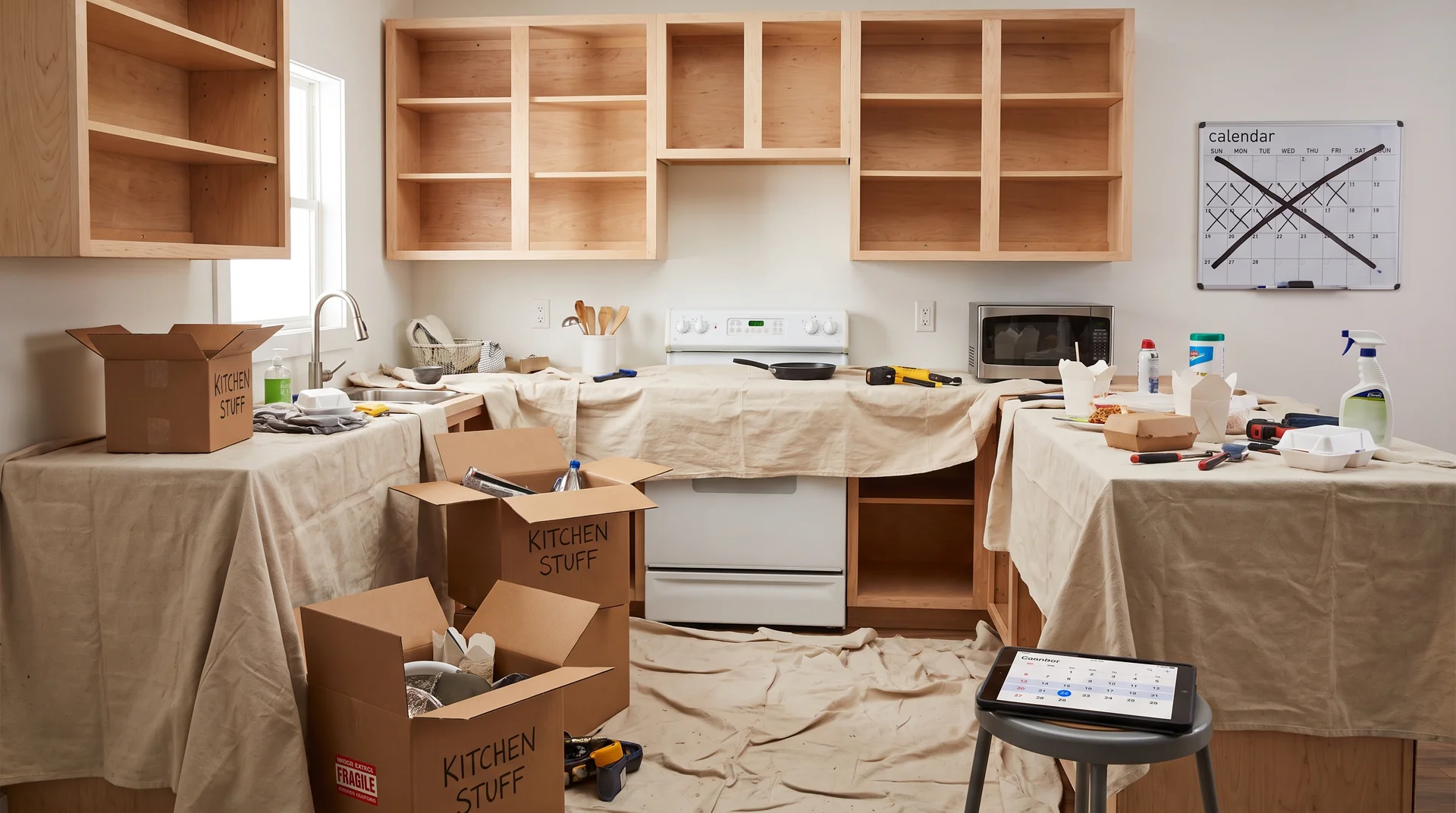
The $200 to $600 material estimate is what it costs to attempt the project. Three more costs don’t appear on any supply list.
- Time. Cabinet painting from degreasing through final topcoat takes 20 to 40 hours for a medium kitchen. Those hours happen across two to three weekends, not a single day.
- Kitchen disruption. Doors come off and stay off for the duration, and counters stay covered throughout. You’re without normal kitchen access for 10 to 14 days minimum.
- Correction cost if prep fails. When a primer bond fails, paint peels from the edges inward. The fix isn’t repainting. You’re stripping, sanding, and repriming every affected surface before a new coat can go on.
The correction cost is the most significant of the three. A professional repair on a failed primer bond typically runs more than the original professional quote would have cost.
Professional vs. DIY: The Real Comparison
The cost difference between professional and DIY cabinet painting runs deeper than the numbers.
Cabinet painting runs from $200 in DIY materials to $7,000 for a professional job, and every variable between those figures represents a real difference in outcome. Read the table below before settling on which path fits your kitchen.
| Variable | Professional | DIY |
|---|---|---|
| Total cost | $2,000–$7,000 | $200–$700 in materials |
| Expected finish lifespan | 8–15 years with proper cleaning | 3–7 years with correct prep and cleaning |
| Project timeline | 3–5 days, the kitchen will be restored after | 10–14+ days, kitchen disrupted throughout |
| Finish quality | Spray-applied, very smooth | Brush and roll texture unless you master a sprayer |
| If prep goes wrong | The contractor absorbs the correction | You pay to fix it |
| Correction cost if the finish fails | Covered under the guarantee, if stated in the quote | Materials plus professional repair – often more than the original pro quote |
Which tradeoffs matter most depends on your kitchen, your timeline, and how much disruption you can absorb.
When to Hire a Pro and When to DIY
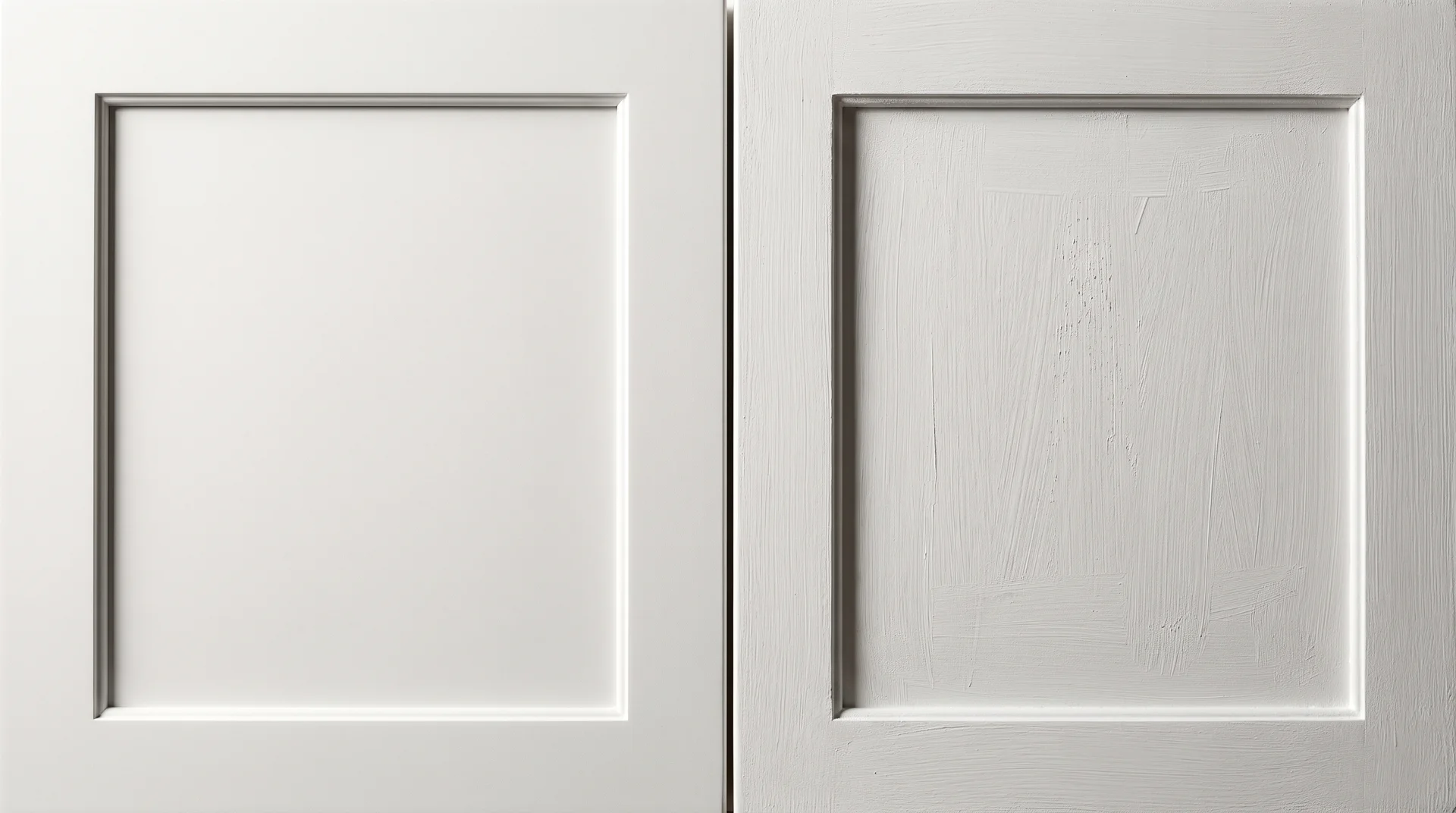
Not every kitchen is a good candidate for DIY cabinet painting.
After more than 220 renovation projects, the pro-vs-DIY question consistently comes down to conditions in the kitchen. Not skill level.
Four Situations Where Professional Painting Is the Smarter Budget Decision
Hiring a professional makes more financial sense in four specific situations.
In each case, difficulty and failure risk increase in ways most homeowners can’t gauge before the project starts.
- High-gloss existing finish. High-gloss surfaces need full abrasion before primer can grip. It’s the most labor-intensive prep step in the project and the one where DIY timelines most often stall or get rushed.
- Dark-to-light color change or a two-tone cabinet layout. Covering dark stain or paint with white or a light neutral requires extra coats for even coverage. A two-tone layout adds masking complexity on top of that. Getting consistent coverage across large flat panels by brush and roller is harder than tutorials make it look.
- A hard deadline. A professional crew completes the work in three to five days. A DIY project across weekends runs 10 to 14 days minimum. If kitchen disruption is a genuine hardship, that gap outweighs the cost difference.
- The existing finish is already failing. Bonding a new primer over a failing surface replicates the same failure faster. Professionals can assess and address the substrate condition before work begins. Most homeowners can’t make that call accurately until after they’ve started.
When DIY Is a Reasonable Bet
DIY cabinet painting works reliably when four specific conditions are in place at the start.
All four need to be true. If three are and one isn’t, look hard at the fourth before you commit.
- Solid wood or MDF cabinets in good structural condition. No water swelling near the sink. No delamination at seams. No cracked or loose face frame areas.
- A neutral-to-neutral or light-to-light color change. Prep demands and coat count are lower. Coverage is more forgiving.
- Kitchen disruption is manageable for two weekends minimum. Manageable means workable, not preferred. Be honest about which standard applies to your household.
- You’ll complete the degreasing step correctly. Every other prep step can be done adequately by a careful first-timer. Degreasing is the one I’ve documented failing most often across twelve years of real renovation work. The surface looks clean. The failure shows up at month eighteen.
How to Read a Professional Quote
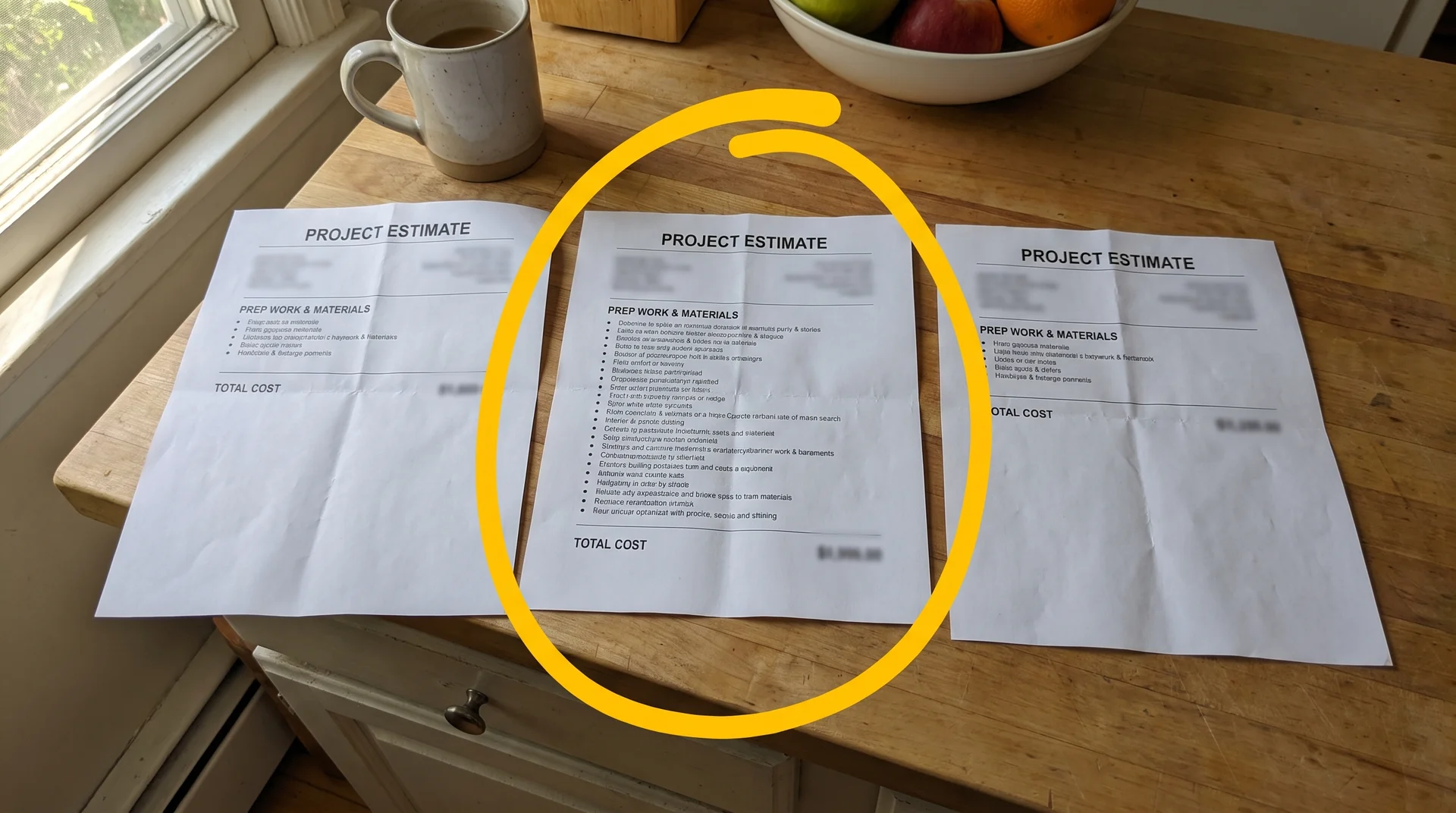
A professional quote tells you more than a price.
You’ve got three quotes on the counter. Same kitchen, same 20 doors. They’re $3,200 apart.
What to Ask for Before You Sign
Before you sign anything, get written answers to each of the following.
If a painter won’t put these items in writing, that’s the answer you need before anything else.
- Surface preparation method: degreasing product or approach named, sanding noted where applicable
- Primer: product name, coat count specified
- Application method: spray, brush, and roll, or a combination
- Topcoat: product name, coat count specified
- Whether disassembly and reinstallation are included
- What happens if the finish fails within a defined period
A painter who won’t specify those items in writing is giving you information. I’ve learned to take it seriously.
How to Compare Quotes Once You Have Them
The gap between the lowest and middle quotes is almost always in the prep scope.
Get three quotes minimum. Use the spread to compare scope, not just price. The checklist above is exactly what you’re comparing across every document.
A few red flags to look for before committing to any quote. Each one means the scope has been priced low.
- No mention of degreasing on the scope sheet
- No primer product named
- No application method stated
- A per-hour price with no scope cap
The lowest quote for a reduced scope isn’t the cheapest option. The lowest quote for a full scope is.
One practical way to reduce any professional quote: do the hardware removal and a first-pass cleaning before the painter arrives. I’ve seen most painters take $200 to $500 off a medium kitchen quote for that prep work.
If you schedule during late fall or winter, when residential painters are in lower demand, some will price more competitively than in peak spring and summer months. Worth asking.
Know which part of the work you’re contributing to and what you’re not. The quote you get back will reflect both.
Frequently Asked Questions
Is It Expensive to Have Kitchen Cabinets Professionally Painted?
Professional cabinet painting runs $2,000 to $7,000 for most US kitchens.
A small kitchen with 8 to 12 doors typically falls between $2,000 and $4,000. Medium and large kitchens run $4,000 to $7,000 or more. For context, full cabinet replacement costs $8,000 to $30,000 or higher.
How Much Does It Cost to Paint Kitchen Cabinets in a 10×10 Kitchen?
A standard 10×10 kitchen has roughly 8 to 12 cabinet doors and 4 to 6 drawer fronts.
Professional painting for that scope runs $2,000 to $4,000. DIY materials for the same kitchen cost $200 to $400 without a sprayer.
Can I Just Paint Over My Kitchen Cabinets Without Sanding?
Yes, under specific conditions.
Your existing finish needs to be intact, with no high-gloss sheen and no peeling or lifting anywhere. A bonding primer handles adhesion without sanding when those conditions are met. Sanding is required if any of them are not.
What Is the Average Price to Paint Cabinets?
National figures from Angi and The Kitchn put the professional average at $3,500 to $4,500 for a medium kitchen.
Per-door rates run $90 to $155. Drawer fronts run $30 to $50. DIY materials average $200 to $600, depending on kitchen size and whether a sprayer is included.
Prep is the one variable in cabinet painting that everything else submits to. I’ve applied that principle across more than 220 renovation projects.