
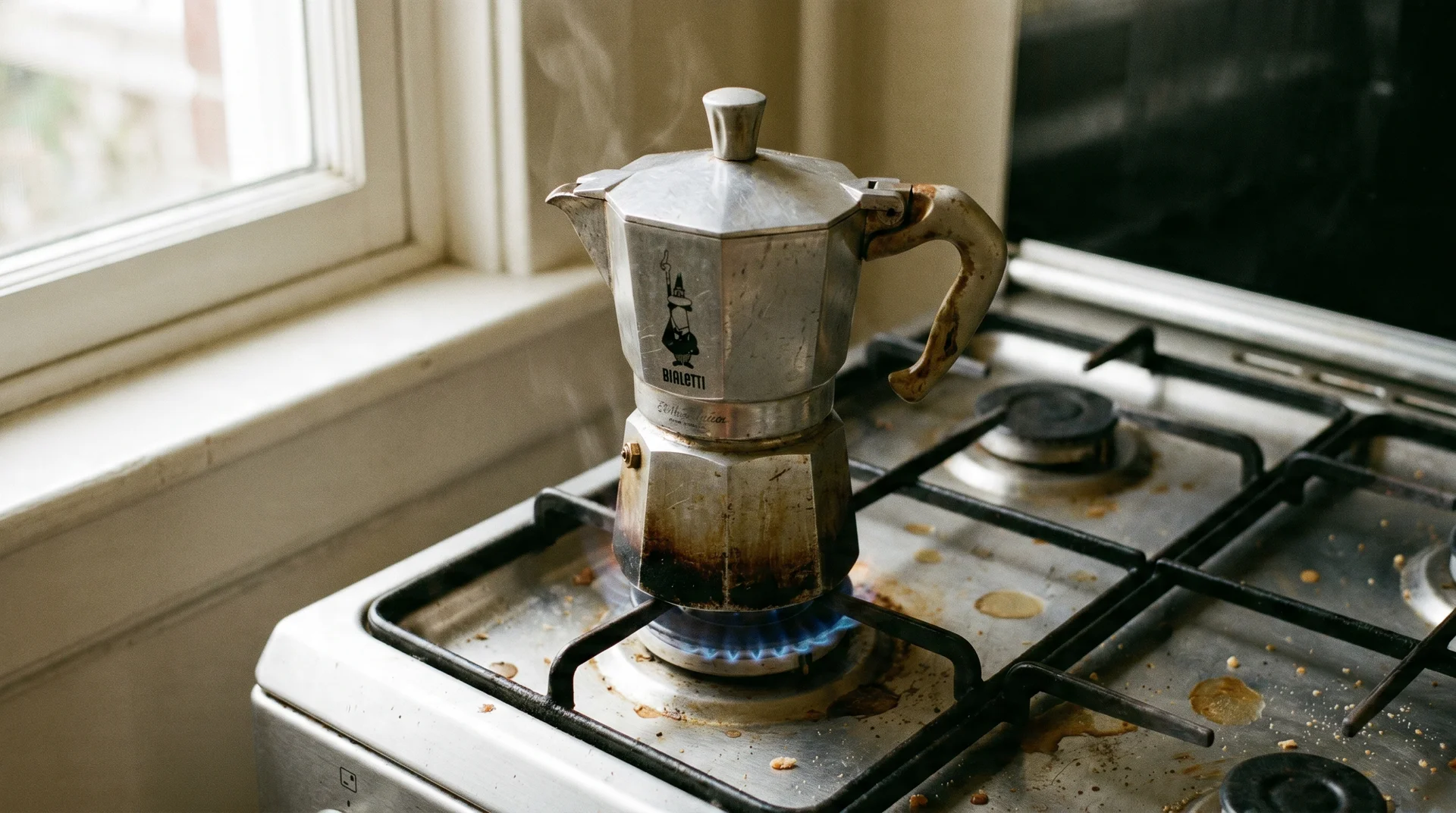
The right moka pot size depends on how much coffee you drink per sitting.
That label number is where most buyers go wrong. The word “cup” means something different on a moka pot, and it changes every size calculation that follows.
This guide covers one decision: which size to get. How to brew correctly once you have the right pot is a different article, and it needs different criteria.
What “Cup” Actually Means on a Moka Pot
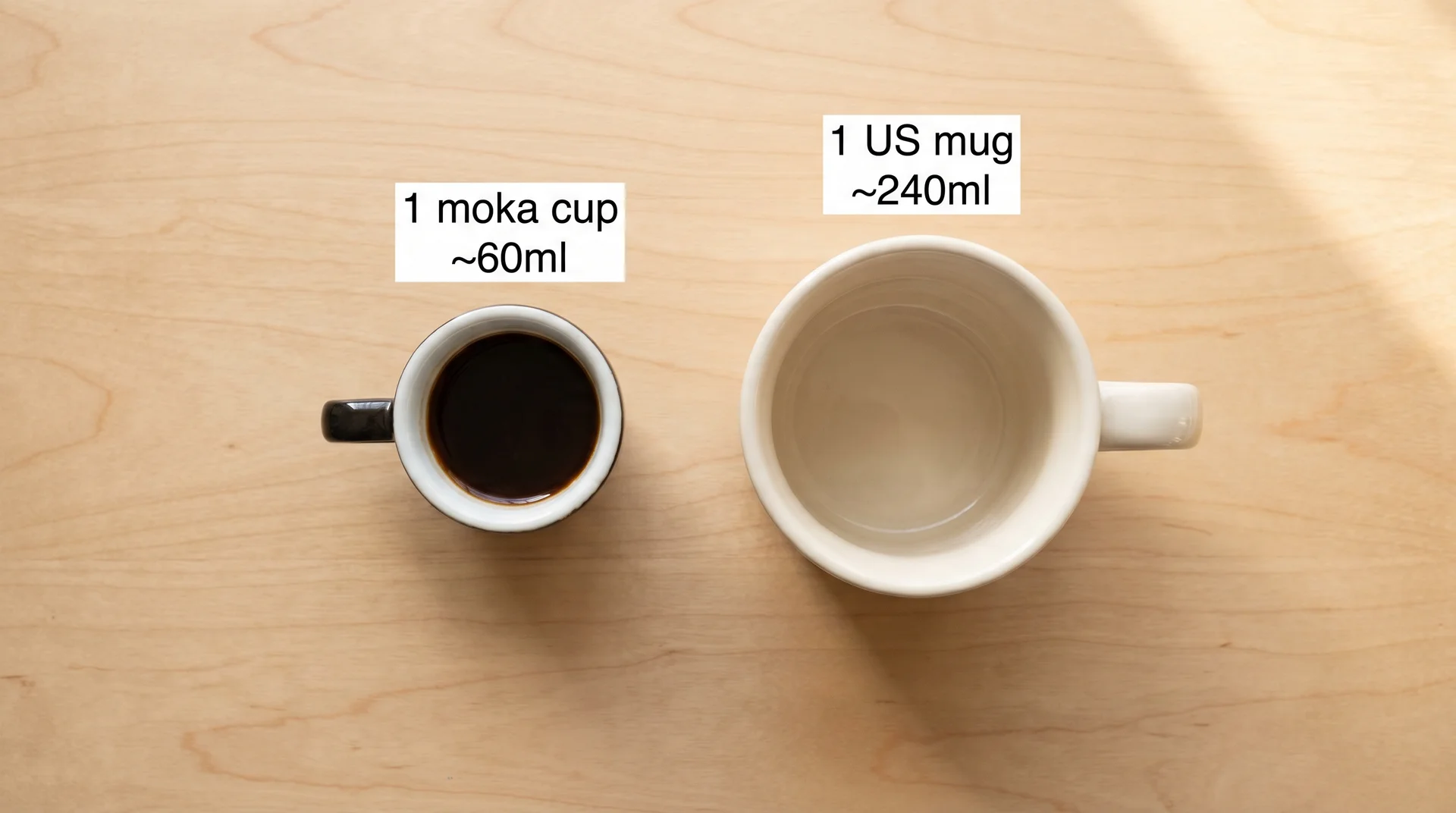
A moka pot cup is not the cup in your kitchen cabinet.
It’s an Italian espresso cup: roughly 50 to 60 millilitres of concentrated coffee. A standard US coffee mug holds about 240ml. A 6-cup moka pot produces about 270 to 300ml in total.
The gap between those two volumes is the source of most sizing mistakes. Here is what each common size actually delivers.
- A 3-cup moka pot produces about 130 to 180ml
- A 6-cup moka pot produces about 270 to 300ml
- A 9-cup moka pot produces about 420ml
None of those volumes fills a standard American mug on its own. Moka pot coffee is a concentrate. Keep that in mind for every calculation below.
Size by Size: What Each One Actually Produces
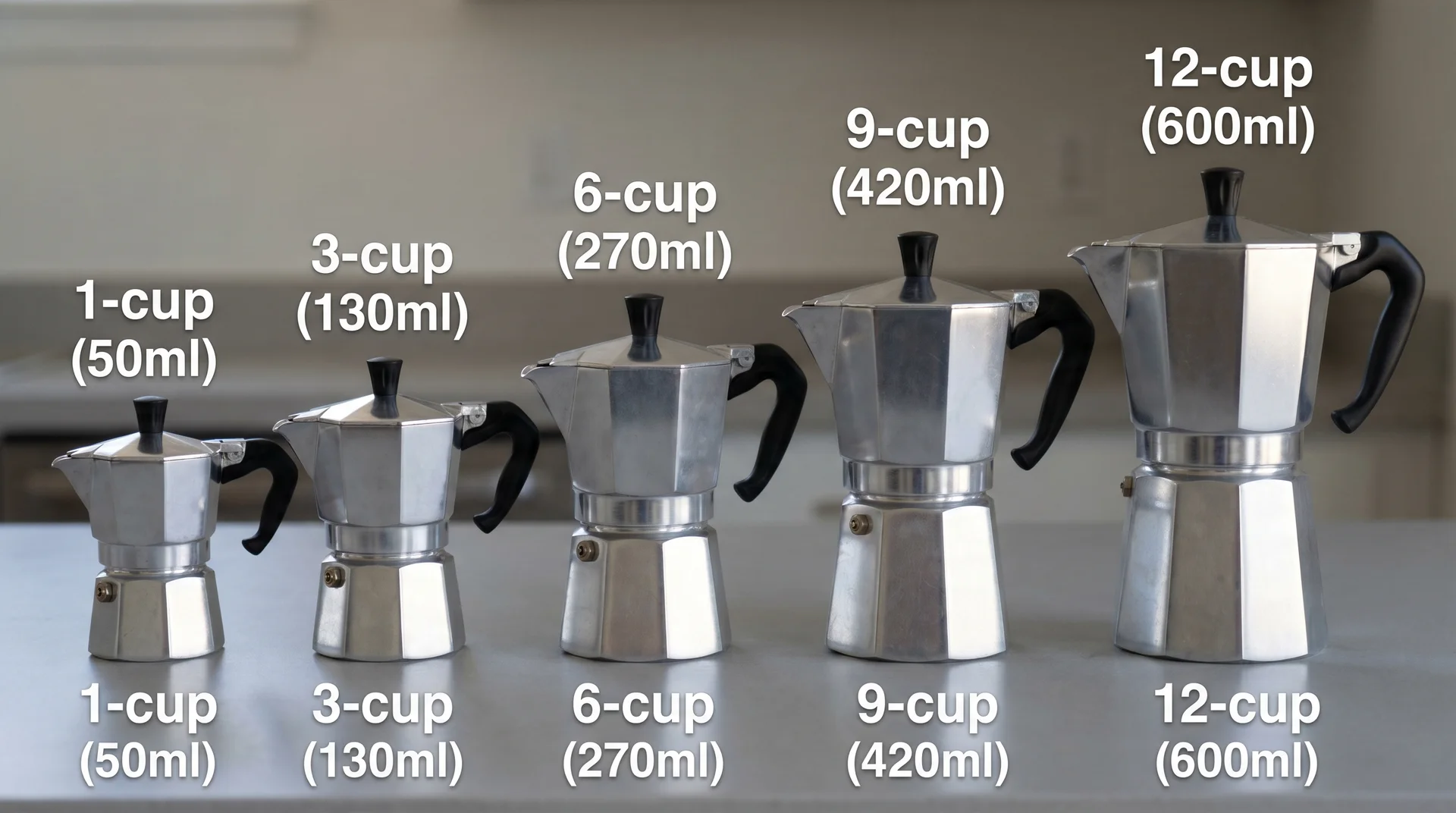
Every standard size produces a fixed volume and suits a specific use case.
The table below shows output, approximate fluid ounces, which size suits, and who should skip it. Output varies slightly by brand.
Stainless steel versions sometimes produce different volumes than their aluminum equivalents at the same cup rating. These figures are reliable working estimates.
| Size | Output (ml) | Output (fl oz) | Best For | Skip If You… |
|---|---|---|---|---|
| 1-cup | ~60ml | ~2 fl oz | One small black coffee; travel or camping | Add milk, drink more than one cup, or brew for two |
| 3-cup | ~130–180ml | ~4.5–6 fl oz | One person, one morning serving, black or with milk | Share the same brew with a second person |
| 6-cup | ~270–300ml | ~9–10 fl oz | Two people; one large mug for a solo drinker who fills it every time | Won’t consistently fill it to rated capacity |
| 9-cup | ~420ml | ~14 fl oz | Three to four people | Brew daily for one or two people |
| 12-cup | ~600–670ml | ~20–22 fl oz | Larger gatherings | Use it as your everyday morning pot |
Here is how each size behaves in a real kitchen.
The 1-Cup: Who It’s Actually For
The 1-cup makes one espresso shot. That is the complete offer.
It produces around 60ml of coffee. It looks almost comically small the first time you hold one.
It suits one specific person: someone who drinks one small, intense black coffee daily and nothing else. It’s also the right pick for travel or backpacking, where weight and space matter.
Anyone who adds milk, drinks more than one cup, or shares coffee should skip it.
The 3-Cup: The Most Misunderstood Size
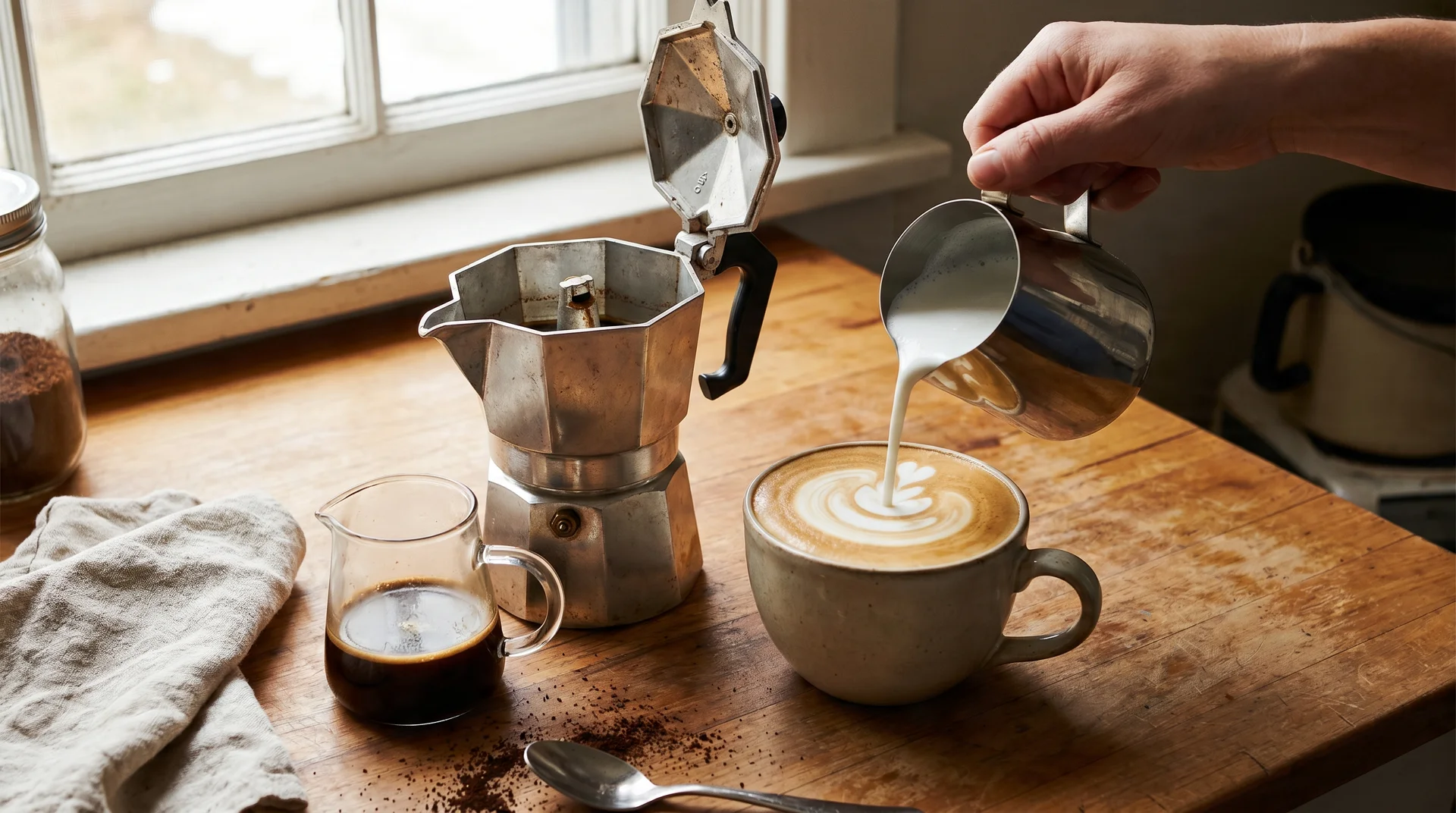
The 3-cup delivers a full single serving, and most buying guides underestimate it.
It produces 130 to 180ml per brew. That’s enough to fill a smaller mug when drunk black, or to use as a concentrate base for one large latte or cappuccino.
Most buying guides treat the 3-cup as the “just one person” option, with a faint apology attached. I think that framing gets it wrong. For a single drinker with a consistent morning habit, the 3-cup is often the best choice.
A fully filled 3-cup also makes better coffee than an underfilled 6-cup. The mechanism behind that is in the next section.
On coffee dose: Blue Bottle Coffee’s moka pot guide puts the 6-cup dose at 20 to 22 grams per brew. A 3-cup uses roughly half that amount. Over a month of daily use, the grounds saving is real.
The 6-Cup: The Default Choice, and When to Skip It
The 6-cup is the most popular stovetop espresso maker size, and it gets recommended too broadly.
It produces 270 to 300ml per brew. For two people who both drink coffee, it works well.
The problem appears when a solo drinker buys a 6-cup because it sounds more versatile. They don’t fill it completely every morning. The coffee comes out weak and sour.
They spend weeks adjusting technique, and nothing works.
They’re fixing a sizing problem they don’t know they have. The 6-cup works for two people, or for one person who fills it every morning. It performs poorly when it isn’t filled to rated capacity.
The 9-Cup and Larger: What They’re Actually Built For
The 9-cup is for three to four people sharing one morning brew.
It produces around 420ml at full capacity. Both the 9-cup and 12-cup take noticeably longer to reach brewing pressure. You need to stay at the stove.
For a household of three, I’d rather run two rounds with a 6-cup than one round with a 9-cup. Two fully filled batches produce more consistent extraction quality. The 9-cup earns its place when you need four servings, and two rounds isn’t practical.
Which Size Moke Pot to Get Based on How You Drink Coffee
Headcount is a starting point.
What you do with the coffee matters as much as who’s drinking it. Each scenario below maps the volume logic from the table above to how you actually use your kitchen.
You Drink It Black, One Mug in the Morning
Get the 3-cup.
You’re making one serving per brew. The 3-cup fills completely, extracts correctly, and gives you 130 to 180ml to drink straight.
If you prefer a longer drink, adding 60 to 80ml of hot water after brewing works well. You still get one clean, fully extracted brew with no wasted grounds and no fill problems.
You Drink Lattes, Cappuccinos, or Coffee With Milk
The 3-cup gives you enough concentrate for one large milk drink.
A 3-cup produces roughly 150ml of concentrate. Add 100 to 150ml of frothed milk. That’s enough for one full latte in a normal-sized mug.
A 6-cup gives you 270 to 300ml. With the same milk that covers two lattes. The exact split depends on your mug size and your preference for strength, so treat these as a starting framework.
If you’re making one latte each morning for yourself, the 3-cup is almost always enough. You don’t need the 6-cup for this.
Two People, Both Drink Coffee
Get the 6-cup. This is what it was designed for.
One full brew gives each person roughly 135 to 150ml of concentrate. That’s a solid serving, especially if either person adds milk.
If both want a large, full mug of black coffee, consider two rounds with the 6-cup. One brew won’t fill two large mugs at American mug volume.
One Person, Two Mugs or a Large Mug
A 6-cup filled completely, or two rounds with a 3-cup. Both approaches work.
The 6-cup produces about 300ml per brew. Two 3-cup rounds produce roughly the same total. The 6-cup is faster. My preference is the 6-cup, used daily at full capacity.
If you tend to brew a little less on some mornings, two 3-cup rounds give you a more reliable structure. The smaller pot punishes underfilling less harshly than the larger one.
Family of Three to Four
A 9-cup moka pot covers three to four people from one brew.
At full capacity, it produces around 420ml, enough for three standard servings. Two 6-cup rounds take more time but give you two properly filled, correctly pressurized brews.
Whether that trade-off is worth it depends on your morning routine. I won’t call it one way for everyone.
Why Getting the Size Right Improves Your Coffee
The right size changes how your coffee tastes, not just how much you get.
This is the part most buyers only understand after making the sizing mistake.
Why Filling It Completely Matters
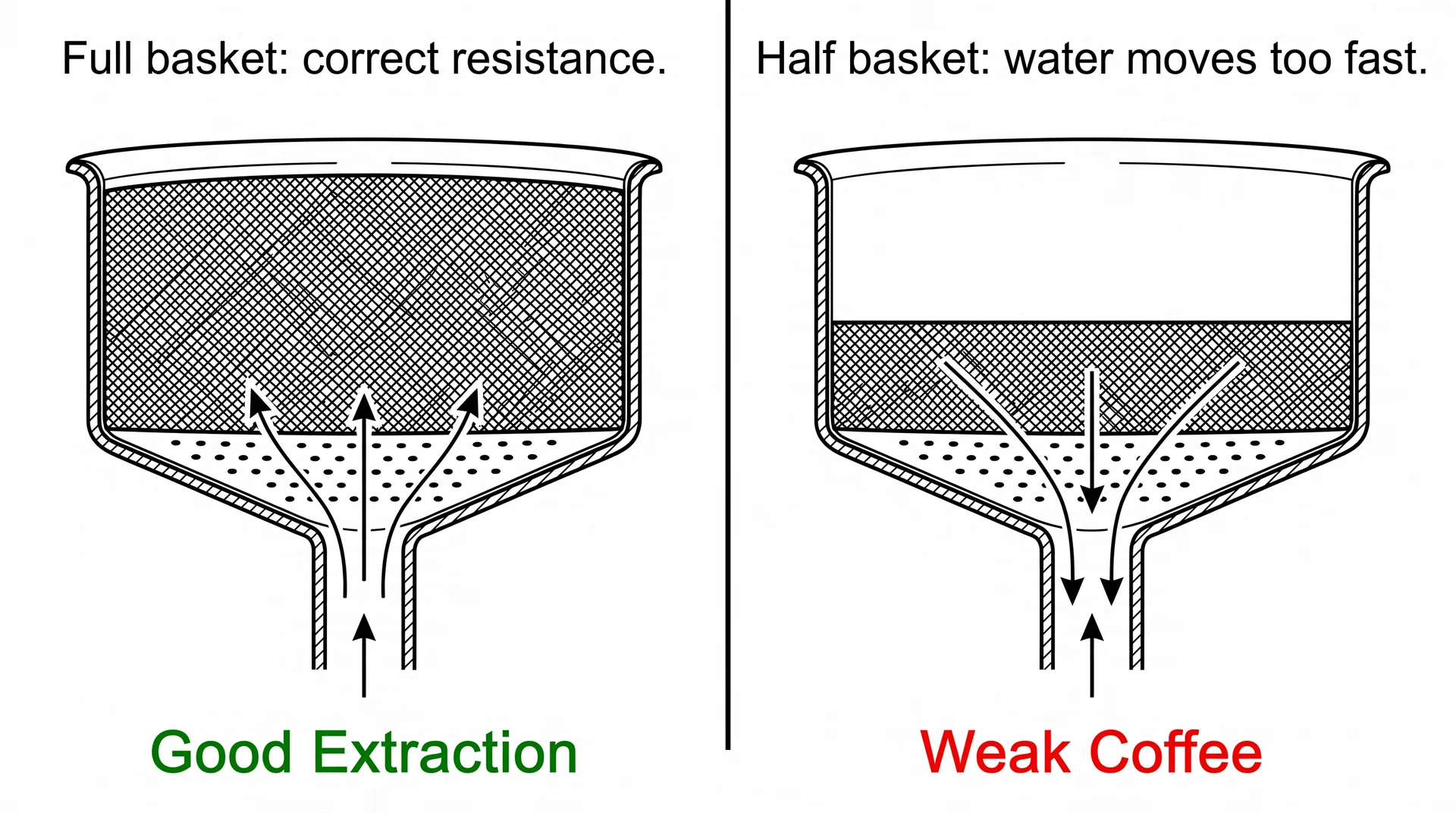
Moka pots require a full basket to extract correctly.
A moka pot works by building steam pressure in the lower water chamber. That pressure forces hot water up through the coffee packed in the filter basket. The coffee needs to fill that basket at rated capacity for the pressure to do its job.
When the basket is only half full, the water moves through faster. It meets less resistance. Extraction happens too quickly. The result is weak, sour coffee.
The grind gets blamed for a problem the size caused.
That symptom, weak and sour, looks almost identical to what happens when the grind is too coarse. Most people spend weeks adjusting their technique to fix it. The actual fix is owning the right size.
I tested this in my own kitchen, not in controlled conditions, and here’s what I found. A 6-cup Bialetti Moka Express at two-thirds capacity produced thinner, more acidic coffee than the same pot filled completely.
I tried adjusting the grind, then the heat. Neither made a meaningful difference. The fill level was the problem.
A practical note before filling: check that the safety valve on the side of the lower chamber is free of grounds and unobstructed. A blocked valve cannot release excess pressure during brewing. It takes two seconds to check, and it’s worth doing every time.
Moka pot coffee uses a medium-fine grind, finer than pour-over, coarser than espresso. Getting the grind wrong compounds a sizing problem and makes it harder to diagnose. So, just size first, then grind.
Why the 3-Cup Often Makes Better Coffee for One Person
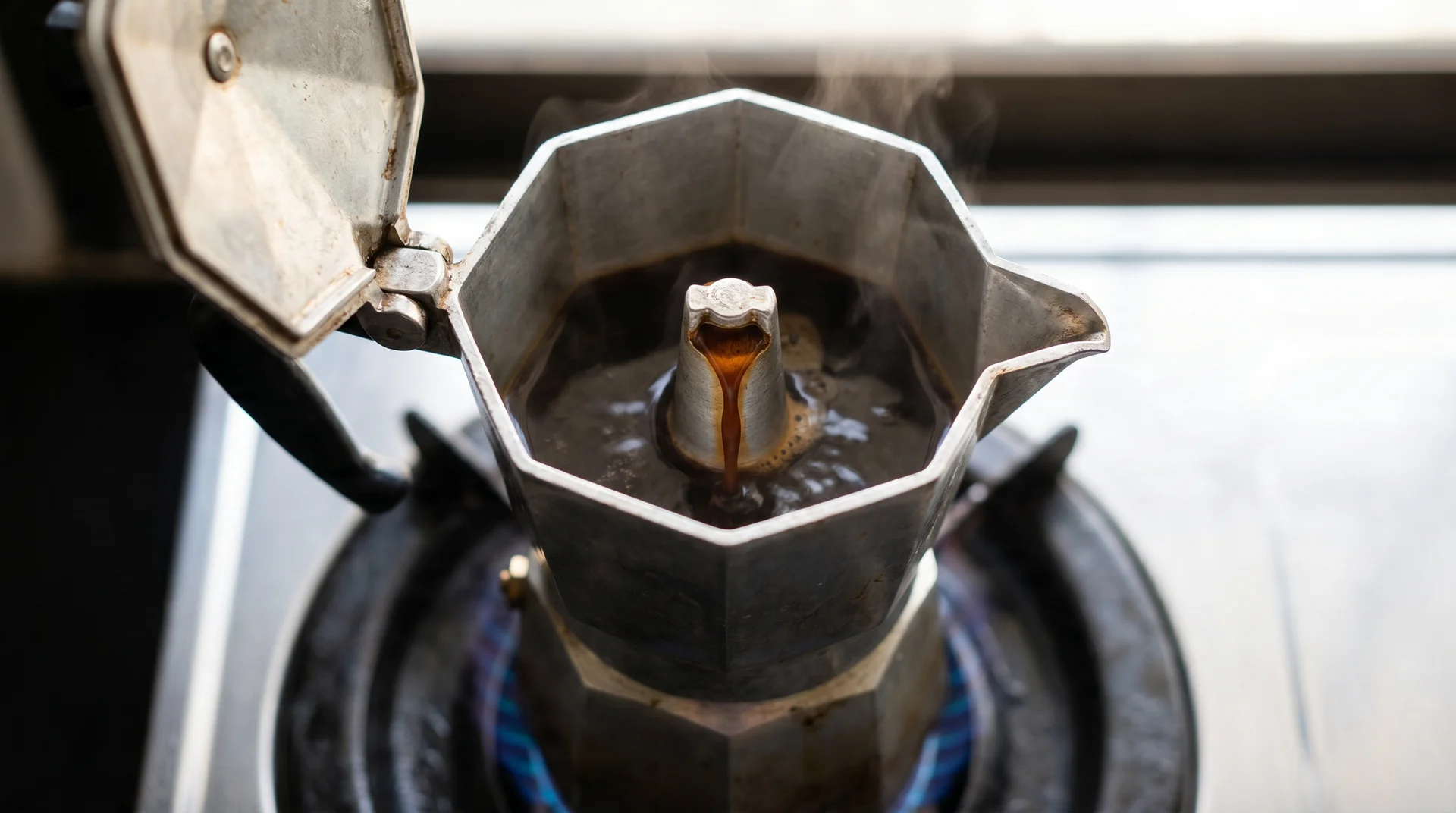
A fully filled 3-cup consistently outperforms an underfilled 6-cup on extraction quality.
Community testing at Home-barista.com, over several years, consistently found the 3-cup outperforms on extraction consistency. The basket-to-chamber pressure ratio runs tighter in the smaller pot. The extraction is more even.
For a single drinker, the 3-cup is a better brewing choice. Most buyers realize this only after trying both sizes.
Size for your daily habit. The right size is the one you’ll fill completely, every morning, without thinking about it.
One More Variable Before You Buy: Stove Type
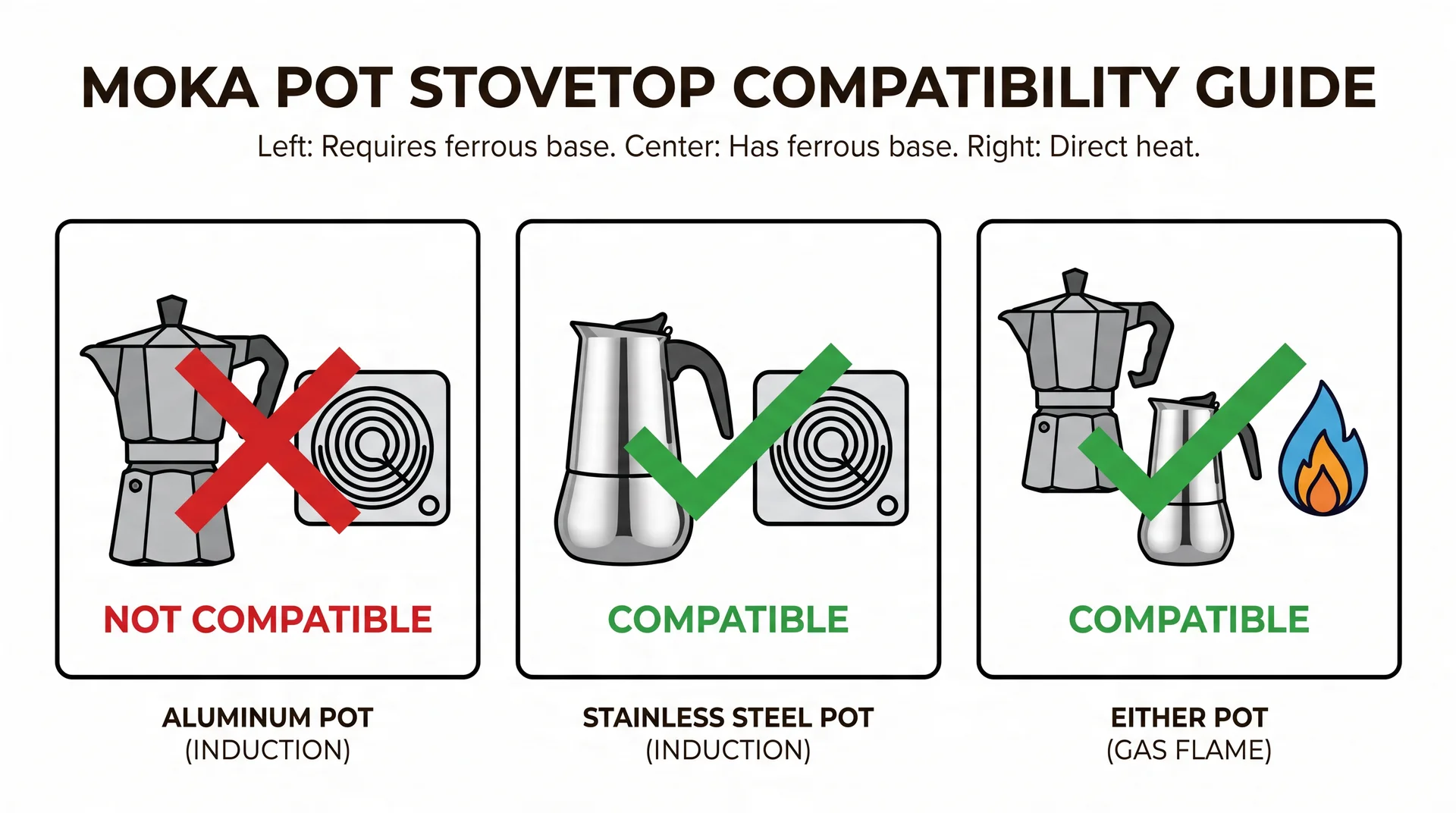
Your stove type can close off certain size options entirely.
Standard aluminum moka pots do not work on induction stoves. Induction heating works by creating a magnetic field. That field generates heat at the base of the pot. Aluminum is not magnetic, and the stove won’t detect it.
A classic aluminum Bialetti Moka Express placed on an induction burner will sit there cold. Buyers find this out after ordering. If you have an induction stove, two practical options exist.
- A stainless steel moka pot with a magnetic base. Induction-compatible and widely available in 3-cup, 6-cup, and 9-cup sizes. The Bialetti Venus is the most commonly recommended model. The same sizing logic from this guide applies.
- The Bialetti Moka Induction line. A hybrid design with an aluminum upper chamber and a stainless steel boiler, built specifically for induction use. I’ve used the 6-cup version for about eighteen months without issue, and it behaves identically to the standard aluminum Moka Express on output and sizing.
Small stainless steel pots can struggle on large induction burners because the base diameter sometimes falls below the detection zone. This is less of a problem at the 3-cup size and above.
Gas, electric coil, and glass-top electric stoves work with both aluminum and stainless steel without any compatibility issues.
Which specific Moka pot model to buy is a different article, and it needs different criteria. Gasket quality, replacement part availability, and handle construction all factor in. Those belong in a buying guide, not a size guide.
A Quick Decision Checklist Before You Order
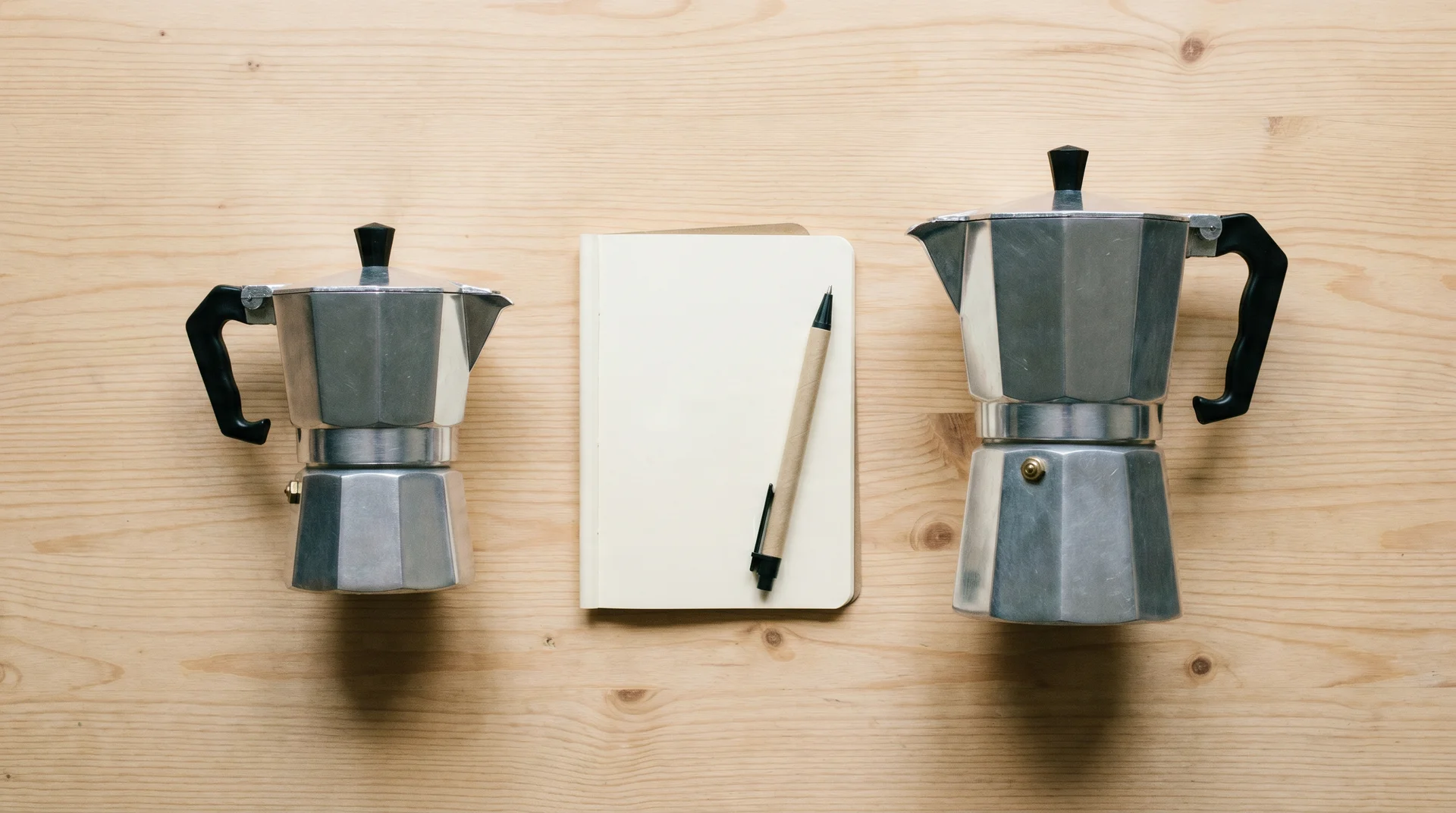
Before you order, answer these four questions.
Work through them in order. The right size becomes clear by the end.
How much coffee do you drink per sitting, in millilitres?
A standard US coffee mug holds around 240ml. A large mug holds 350ml or more. Work backward from that number through the volume table above.
A moka pot cup is about 50 to 60ml; the gap between that and a standard mug is where most sizing decisions go wrong.
Do you drink it black, or do you add milk?
Black drinkers need output that fills their mug directly. Milk drinkers use the moka output as a concentrate base, so they need a smaller starting volume.
A 3-cup is often enough for one large latte. A 6-cup gives you enough for two.
Do you have an induction stove?
If yes, standard aluminum pots are off the table. You’re choosing between stainless steel and the Moka Induction line. This can also limit which sizes are available at a given price point.
Are you buying for consistent daily use, or occasional guests?
Size for your daily habit first. If guests come occasionally, two rounds with your regular pot handles it. A larger pot for guest use that performs poorly for your normal routine is not a versatile choice. It’s a compromise in both directions.
Most people who feel uncertain after those four questions are trying to find one pot that handles every situation. One pot rarely does that well.
Buy for the habit. Adjust for the exceptions.