
A pan is oven safe when every part of it can handle oven heat without failing: the body, the handle, the lid, and any coating on the surface.
Check three things in this order: the marking on the base, the handle material, and the lid.
Look at the Bottom of Your Pan
Flip the pan over before you do anything else.
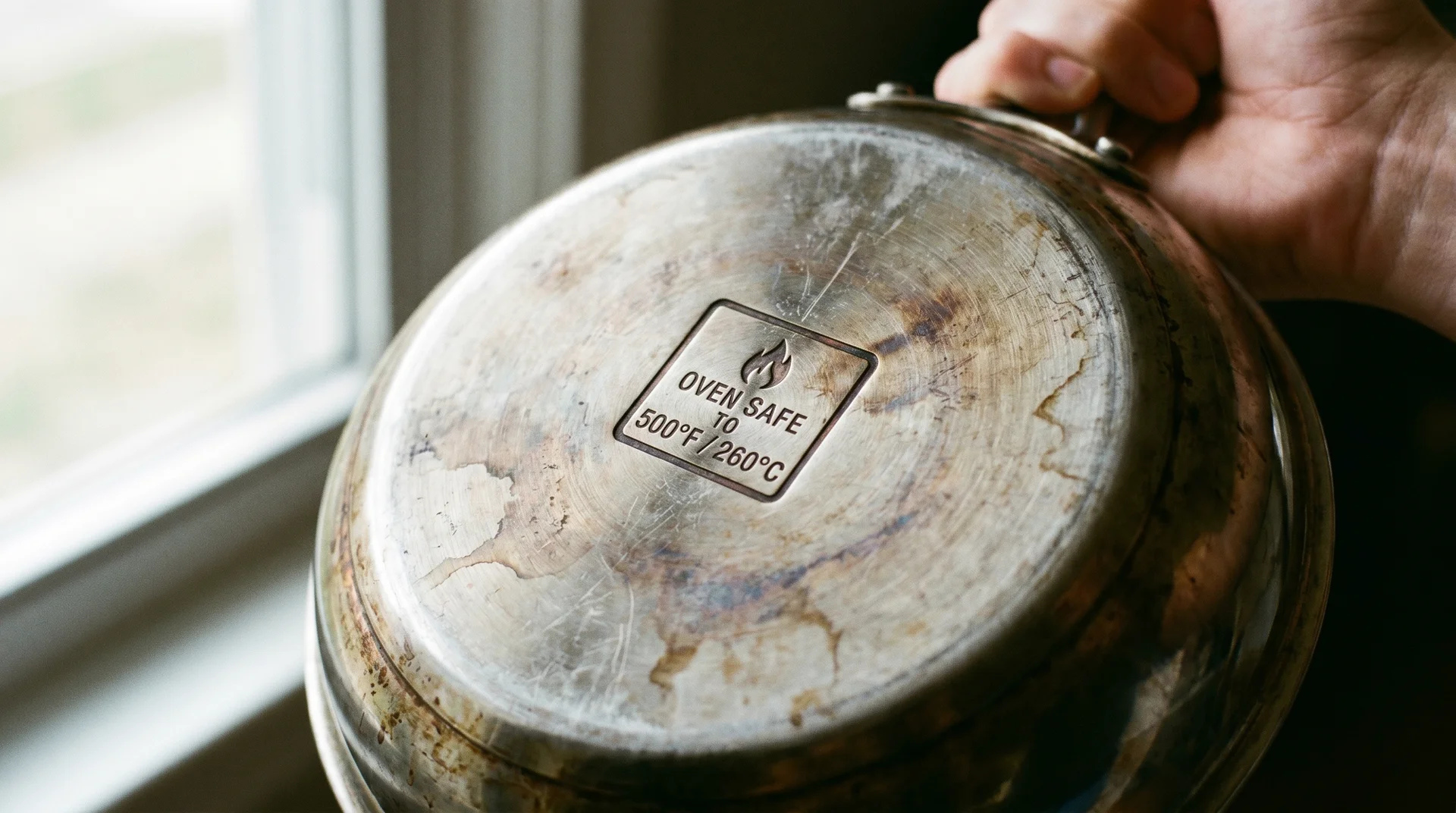
Most manufacturers stamp oven-safe information directly into the metal base. If it’s there, the question is answered in seconds.
What the Oven-Safe Symbol Looks Like
The oven-safe symbol is a small square with wavy lines inside, representing the interior of an oven.
It usually comes with a maximum temperature in Fahrenheit or Celsius stamped beside it. Some bases just read “oven safe” or “oven proof” in plain text. Those two phrases mean the same thing.
A temperature rating is more useful than a generic symbol. “Oven safe” without a number doesn’t tell you whether the ceiling is 350°F or 500°F.
Most stovetop-to-oven recipes need 400°F or higher, so that number is the one worth finding.
The temperature stamped on the base is the number that actually matters.
Check these locations in order:
- The base, stamped or etched directly into the metal
- The handle, sometimes on the underside of the grip
- The manufacturer’s website, searched by brand and model number
If all three are blank, the material and construction become your guide instead.
What to Do When There’s No Marking
No marking on the base means the manufacturer didn’t certify this pan for oven use. It doesn’t automatically mean the pan will fail in the oven. It means you’re working from material and construction instead of documentation.
I’ve run this check on pans in my own kitchen, not in a lab. The handle material was the limiting factor in about half of them. The pan body passed almost every time.
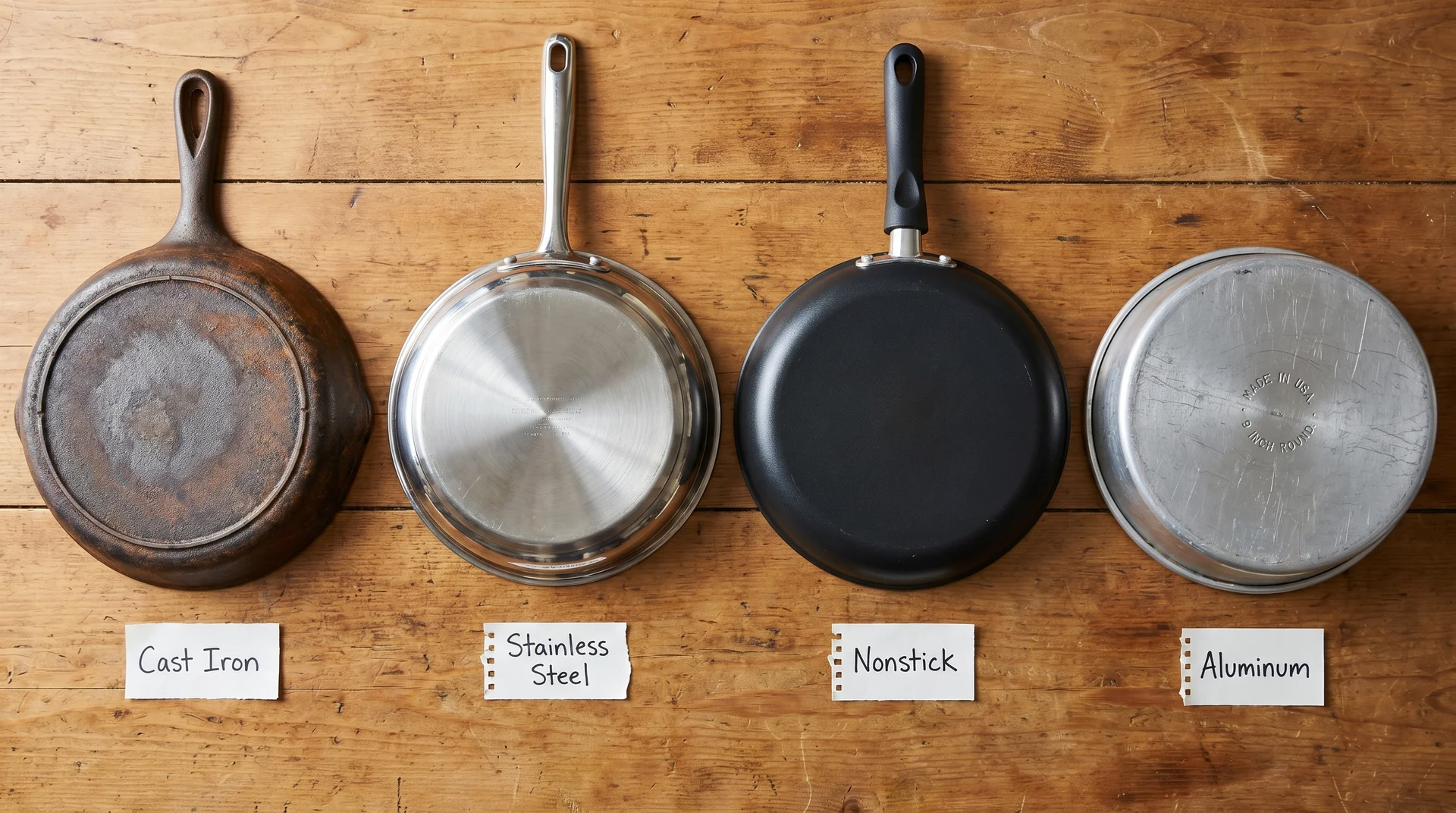
When the base is blank, these defaults hold in most cases:
- Cast iron with metal handles: treat as oven safe
- Fully stainless steel with riveted metal handles: treat as oven safe
- Bare aluminum bakeware with no coating: treat as oven safe
- Nonstick pans with no marking: stay under 350°F without documentation
These are working defaults based on what the materials do under heat. They aren’t manufacturer guarantees.
An NSF/ANSI 51 mark on the base means the materials have been independently tested for food safety by a third party. It’s a stronger signal about overall product quality than a self-applied stamp.
A brand or model number on the pan is worth searching for before you write it off.
Most manufacturers post care documentation online, even for discontinued products. Common brands like Lodge, All-Clad, and Circulon all have searchable documentation libraries.
A less familiar brand might take an extra search step, but the information is usually there.
How Pan Material Tells You What You Need to Know
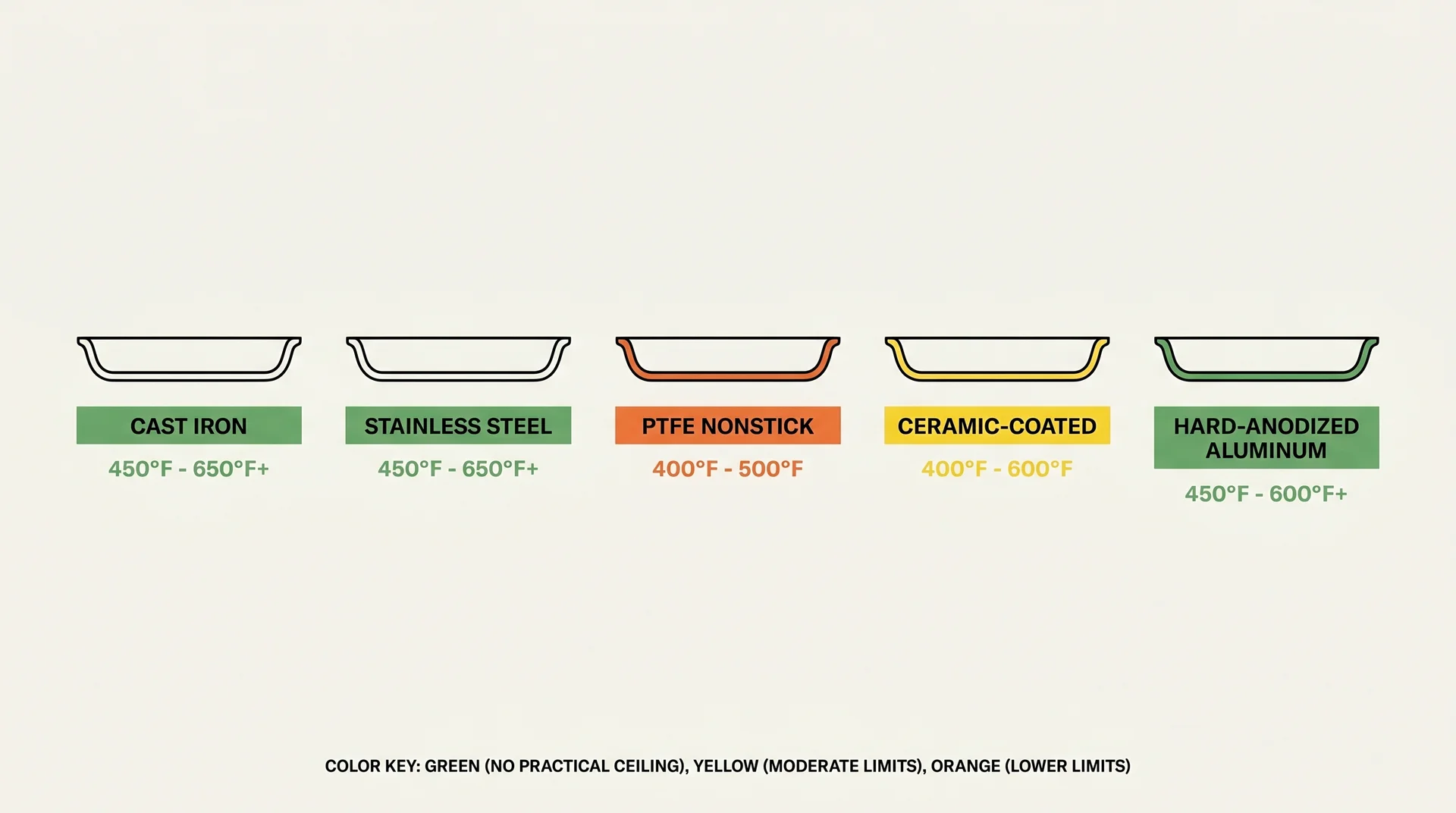
When there’s nothing on the base, the material answers most of the questions on its own.
Different materials behave very differently under oven heat. The section below covers each one. At the end, there’s a quick-reference table showing typical temperature ranges for the most common pan types.
Cast Iron
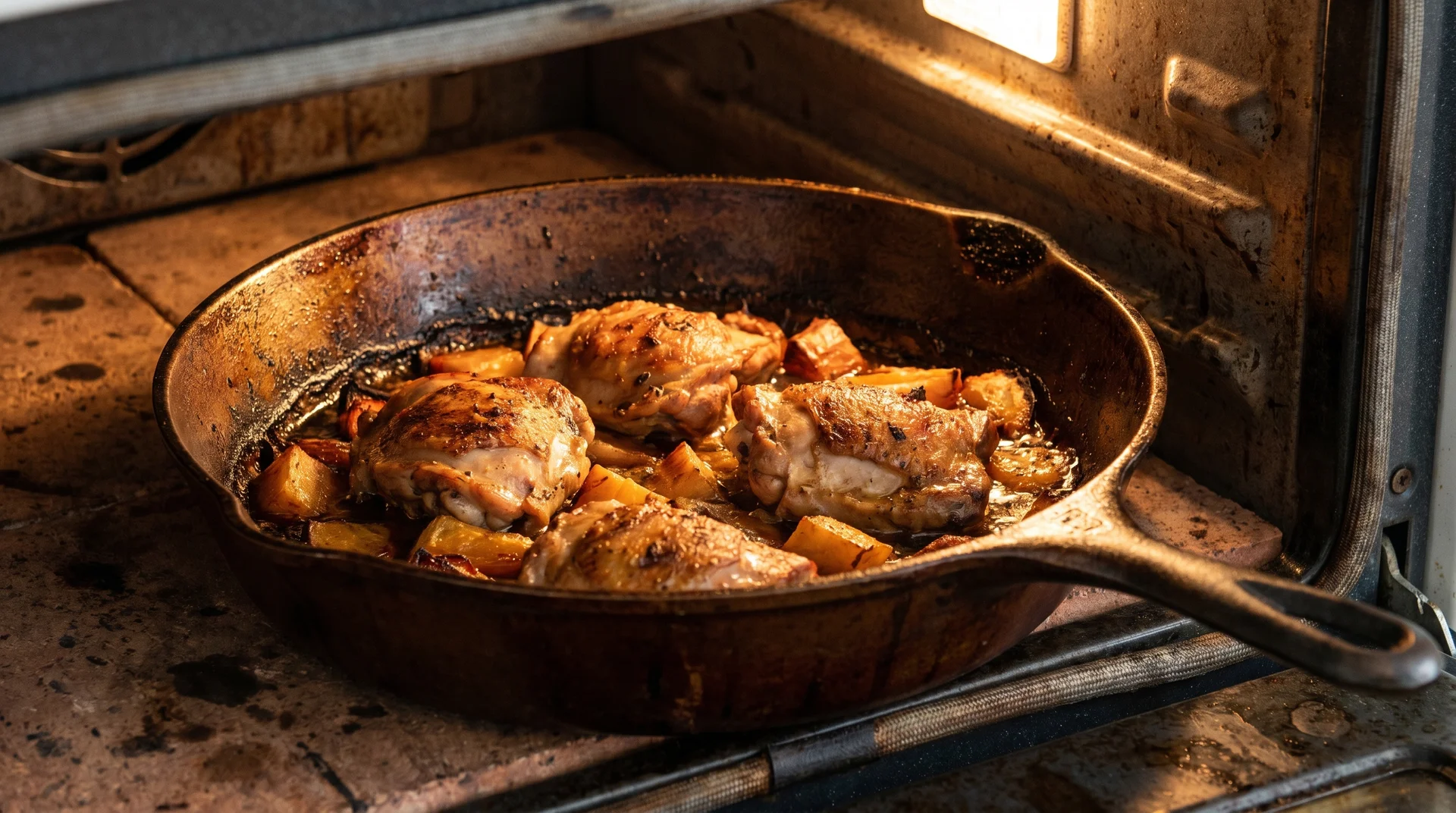
Uncoated cast iron, seasoned or bare, is oven safe without a practical temperature ceiling for home cooking.
I’ve used cast iron through thousands of oven cycles over eight years of restaurant work. I’d call it the most reliable material you can count on for this purpose. The body isn’t the variable. The seasoning holds fine at any temperature a home oven reaches.
Enameled cast iron is also oven safe, but the enamel adds a ceiling. Most enameled pieces are rated to around 500°F before the enamel risks damage from repeated use.
Many enameled Dutch ovens ship with plastic knobs rated to 350°F or 375°F. That knob, not the cast iron body, is the actual limit. Check it before you assume.
Stainless Steel
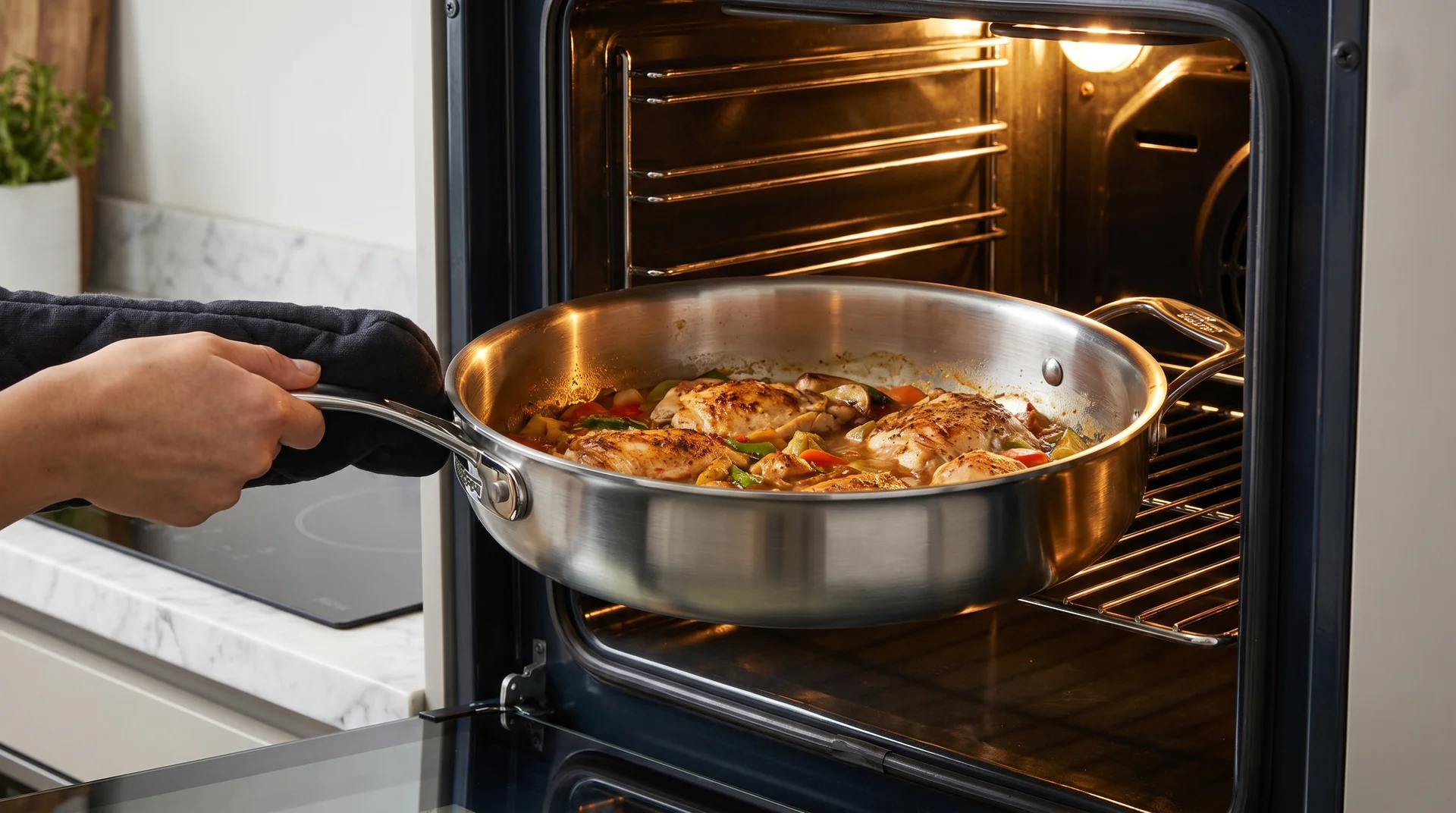
A fully stainless steel pan with riveted metal handles is oven safe at any temperature a home oven produces.
The stainless steel body isn’t the constraint. The handle material almost always is. A riveted stainless handle has no coating to degrade and nothing to melt. I’ve used pans with this construction through eight years of professional kitchen work, and I’d put all-metal riveted handles on the short list of what I’d recommend without any temperature caveat.
The common mistake: people see “stainless steel” on the label and assume the whole pan clears.
A stainless pan with a silicone grip is oven safe only up to that grip’s temperature rating. A stainless steel pan with a rubberized handle is a stovetop pan.
Nonstick Pans and PTFE Coatings
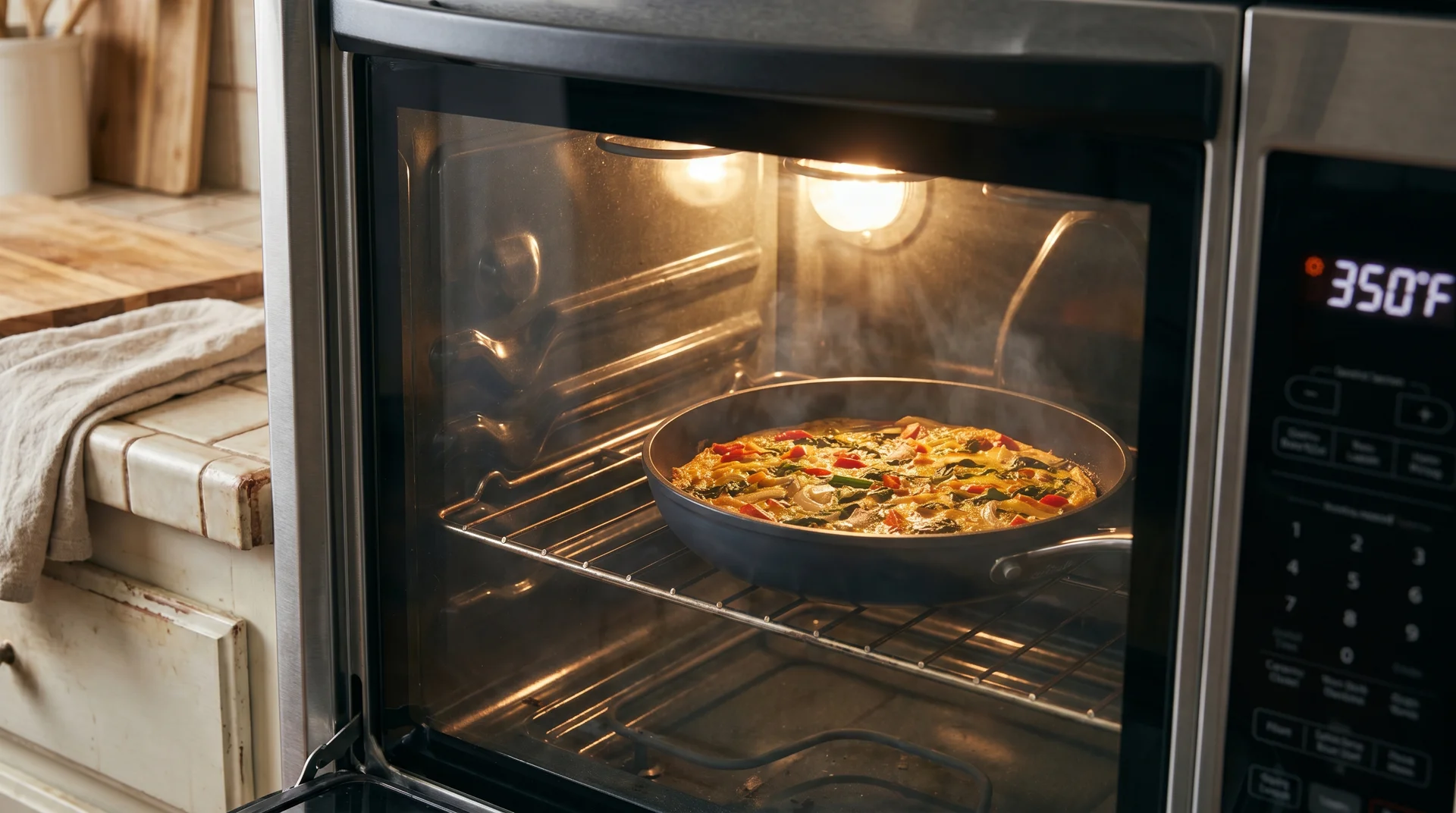
Nonstick pans are oven safe to a limit, and that limit matters more than the label usually lets on.
This is the material that trips people up most often. The coating, not the aluminum body underneath, is the real constraint. And the coating’s ceiling is lower than most people expect.
PTFE is the specific variable to understand.
PTFE is the material in Teflon and most conventional nonstick coatings. It begins to break down above 500°F. EPA documentation on fluoropolymer materials confirms this threshold. Above that temperature, PTFE releases fluorocarbon gases.
Medical literature documents the health effect as polymer fume fever: flu-like symptoms caused by inhaling the degradation products. Most home oven use stays well below this point. The risk becomes most relevant under a broiler, which I’ll address in the next section.
The practical concern for most home cooks sits well below 500°F.
Most nonstick pans are rated for oven use at 400°F or below. I’ve tested nonstick pans in my own kitchen, not in controlled conditions, and found the coating holds at spec. It just doesn’t hold there for long. Regular use at the very top of a pan’s rating shortens the coating’s effective life.
A scratched nonstick coating reaches the degradation threshold faster. Surface damage creates more exposure area for heat to work on. If yours has visible scratches, treat the ceiling as lower than the stated rating.
Ceramic-Coated Pans vs. Actual Ceramic
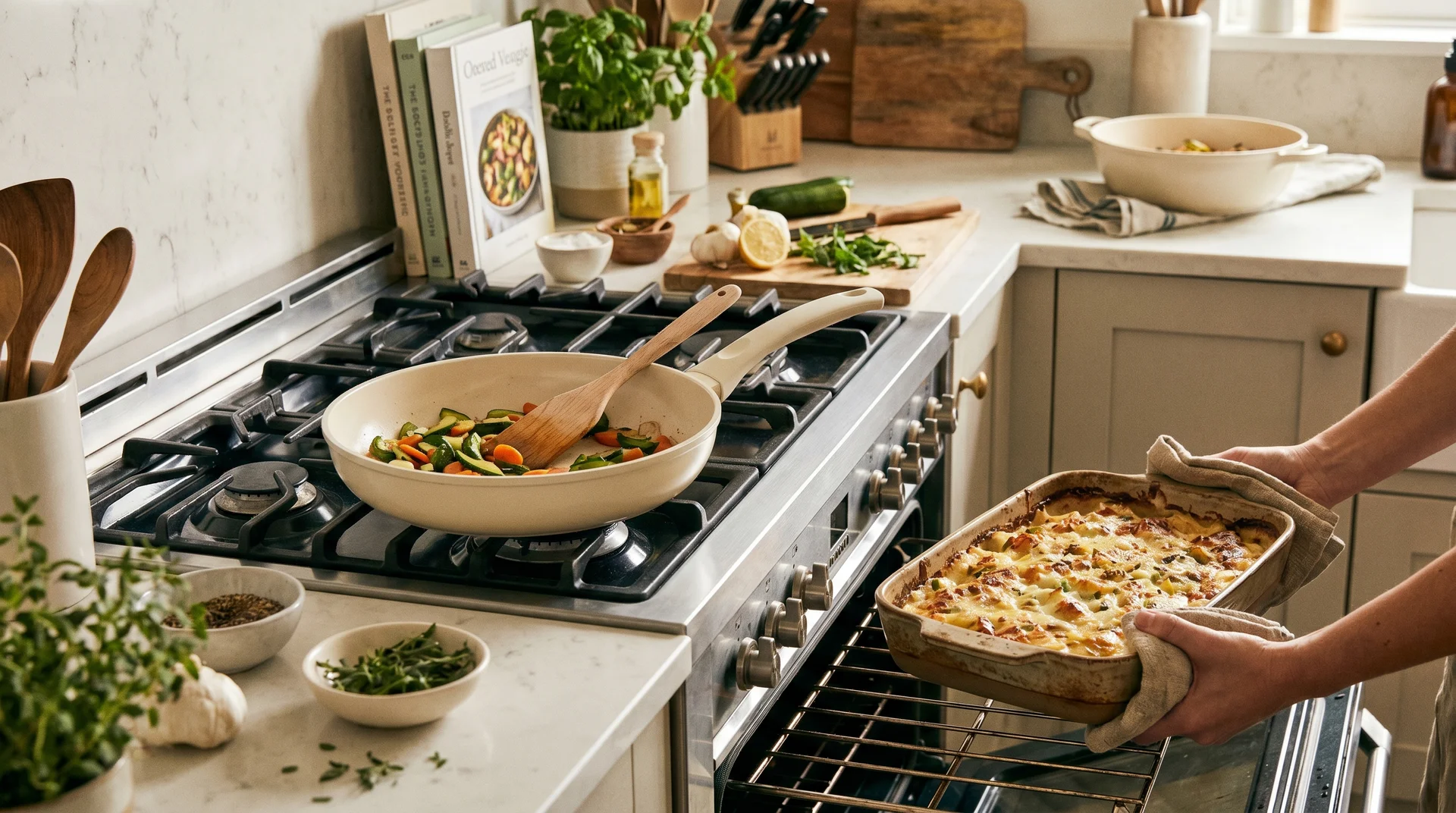
“Ceramic” on a pan’s packaging almost always means a ceramic-based nonstick coating, not solid ceramic material.
A ceramic-coated aluminum pan and a ceramic casserole dish are different products. The coating limits the temperature, typically to around 400°F to 450°F. Solid ceramic bakeware doesn’t share that constraint.
Actual ceramic cookware, like stoneware or earthenware, is more heat-tolerant overall. Thermal shock is a separate risk: moving a cold ceramic directly into a very hot oven can crack it. These are two distinct risk profiles, and treating them the same way causes real problems.
Aluminum
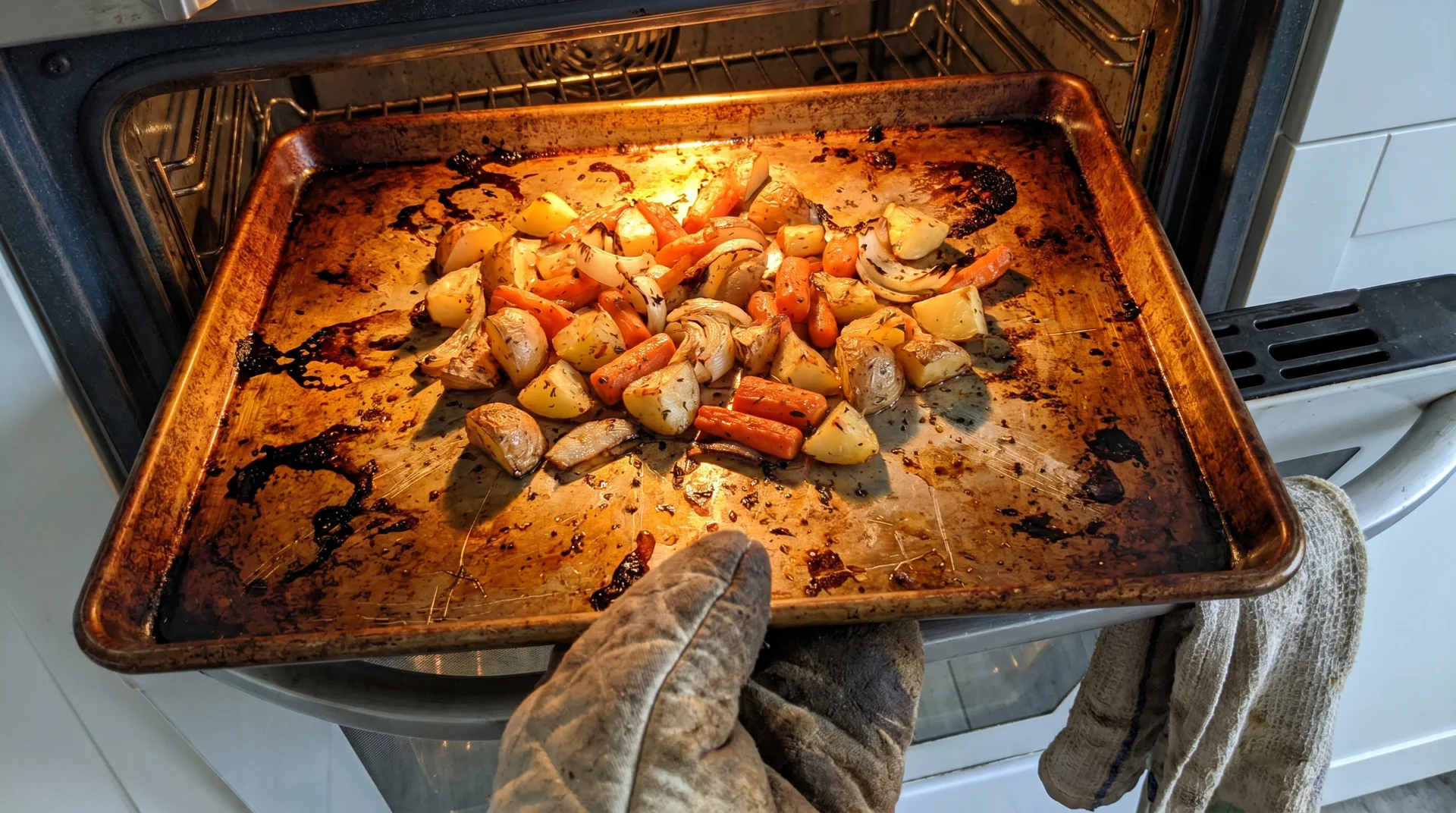
Plain aluminum bakeware is oven safe. Hard-anodized aluminum pans have temperature limits worth checking.
Bare aluminum bakeware works fine in any home oven. The material itself isn’t the limiting factor for these products. Hard-anodized aluminum, which has an electrochemically hardened surface, handles higher temperatures than conventional nonstick.
The ceiling is typically 400°F to 500°F, depending on the manufacturer [VERIFY with specific manufacturer data]. The handle, as with every other pan type, usually sets the actual limit before the body does.
Quick-Reference Temperature Guide
These are typical ranges for common pan types. Always check your specific pan’s documentation first — brand and model vary. Temperature limits marked [VERIFY] should be confirmed against your manufacturer’s guidance before use.
| Pan Material | Typical Oven-Safe Range | Key Notes |
|---|---|---|
| Uncoated cast iron | No practical ceiling | Handle gets scorching hot – use heavy mitts |
| Enameled cast iron | Up to ~500°F | The lid knob may limit the lower |
| Stainless steel, metal handle | No practical ceiling | Handle gets very hot – no grip to signal heat |
| Hard-anodized aluminum | 400°F–500°F | Depends heavily on the handle material |
| Conventional nonstick (PTFE) | Up to ~400°F typically | PTFE degrades above 500°F; scratched pans fail sooner |
| Ceramic-coated aluminum | 400°F–450°F typically | Not the same as solid ceramic bakeware |
| Bare aluminum bakeware | No practical ceiling | Thin pans may warp with repeated thermal cycling |
Use this as a starting point. The handle column of your pan almost always changes the effective answer.
The Handle Problem Most People Miss
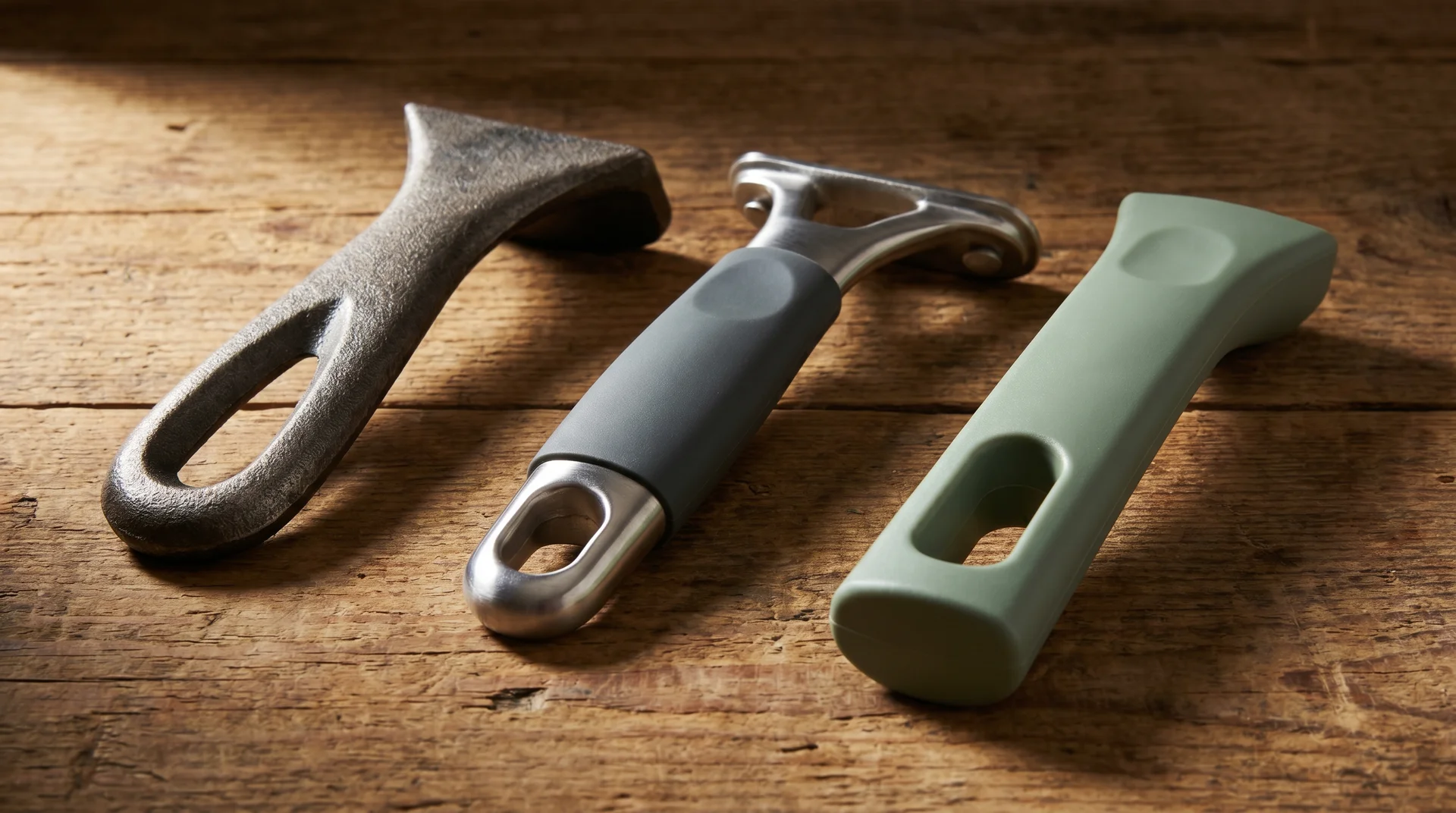
The handle is where most pans fail the oven test.
I’d call it the most underrated variable in how people think about pan safety. The body usually clears. The handle often doesn’t. Here’s how to read each type.
Metal Handles
Metal handles are unconditionally oven safe. They are also completely unforgiving about heat.
Cast iron loops and stainless stick handles have no temperature ceiling in a home oven. The material doesn’t degrade, melt, or off-gas. What they do is transfer every degree of oven heat directly to your hand with no warning.
Cast iron handles are the clearest example of why this matters.
Cast iron holds heat especially well, as I covered in the material section. A bare cast-iron handle pulled from a 425°F oven transfers that heat instantly. There’s no grip texture that cools, no cushion that slows the process. Have your oven mitts ready before the pan goes in, not after you’ve already grabbed the handle.
Silicone Handles and Grips
Silicone handles are oven safe to a temperature rating, with limits that matter in practice.
Most silicone handles and overmolded grips are rated to 400°F or 450°F. Some go higher. That rating is almost always stamped on the base alongside other pan markings. When there’s no number, look up the handle material’s temperature limit separately.
Silicone won’t melt the way plastic does at lower temperatures. Pushed past its rated limit repeatedly, it still degrades over time.
Texture change is usually the first sign.
The grip starts to feel tacky before anything looks wrong. By the time the surface begins breaking down visibly, the material has been overheated for a while. If you’ve been regularly cooking above 400°F in a pan with a silicone handle, check the grip before assuming it still holds.
Removable silicone sleeves over a steel handle behave differently. The sleeve has a temperature ceiling. The bare steel handle beneath it has none. Take the sleeve off when cooking above 400°F, and the handle itself is fine.
Plastic, Bakelite, Rubber, and Wood
None of these handle materials belongs in an oven at any temperature.
Plastic and rubber melt. Wood dries out, cracks, and can catch fire. Bakelite, a thermoset plastic common on older pans, looks durable but off-gasses at oven temperatures. None of this changes because the pan body looks well-built.
This is binary. There’s no temperature at which any of these materials becomes acceptable in a home oven. A heavy, well-constructed stainless steel pan with a plastic handle is a stovetop pan. Full stop.
The same logic applies to the lid. Check what’s on top before the whole thing goes in.
Lids, Knobs, and Tempered Glass
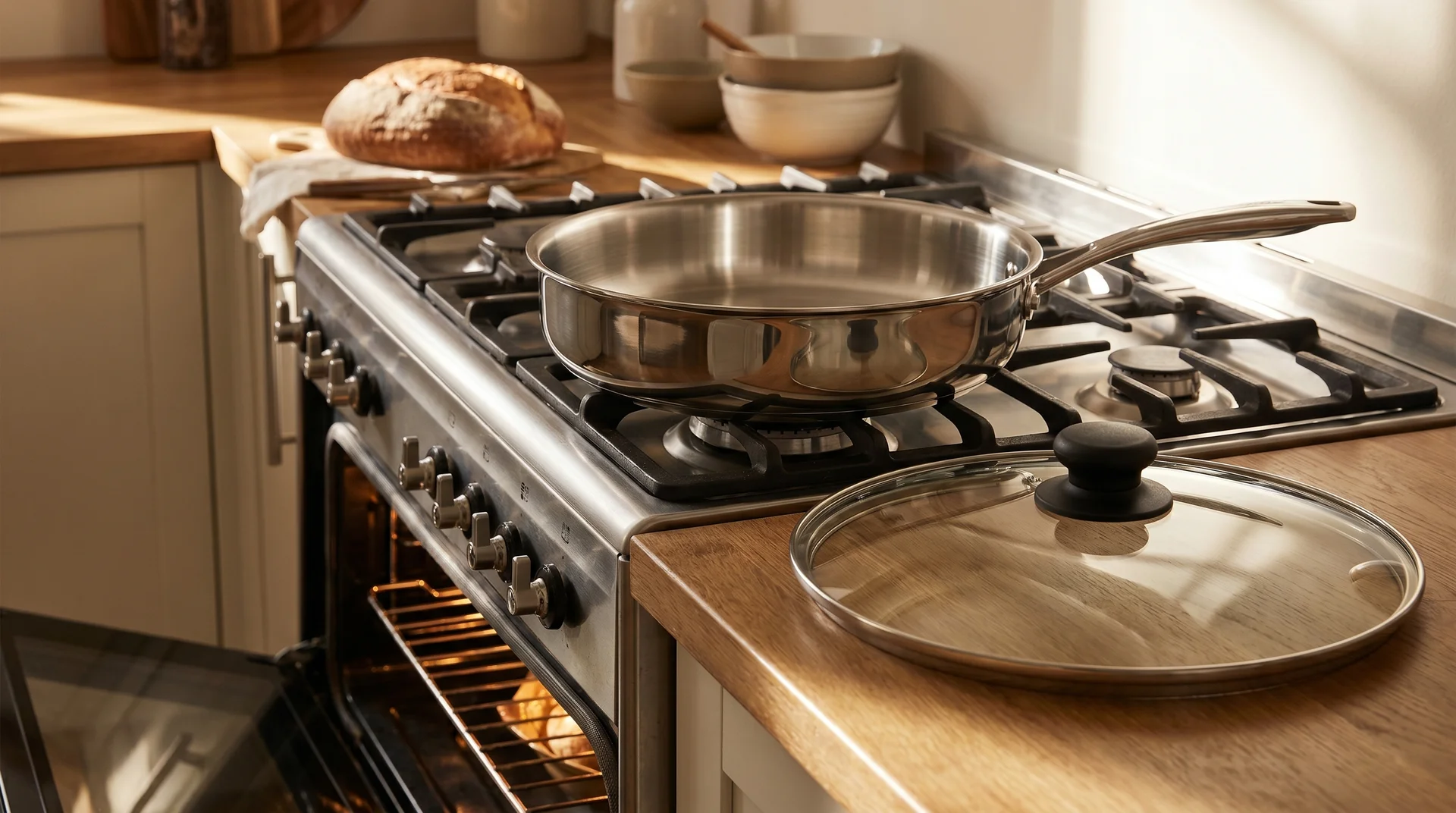
A pan and its lid are separate oven safety questions.
The pan body might be fully oven safe. The tempered glass lid might cap out at 375°F. The plastic knob on that lid might be rated to 350°F regardless of everything else.
Above 400°F, the lid knob is why I often end up cooking without a lid in my own kitchen. It’s not a problem the pan created. It’s a problem the knob created.
Tempered glass lids and metal lids are separate assessments.
Tempered glass lids are generally oven safe to around 350°F to 400°F. Moving a cold glass lid into a very hot oven can cause thermal shock and crack the glass. Metal lids without plastic components are oven safe at the same temperatures as the pan body.
The typical limit on a metal lid is a plastic or phenolic resin knob — phenolic resin is a heat-resistant plastic used on many budget and mid-range lids. Most knobs are rated to 350°F or lower.
Some knobs can be swapped for stainless replacements, which removes the temperature constraint entirely.
Check whether yours can be replaced if the recipe consistently needs the lid above 400°F. Cooking without the lid is also a workable solution at higher temperatures.
Oven Safe vs. Broiler Safe: Not the Same Rating
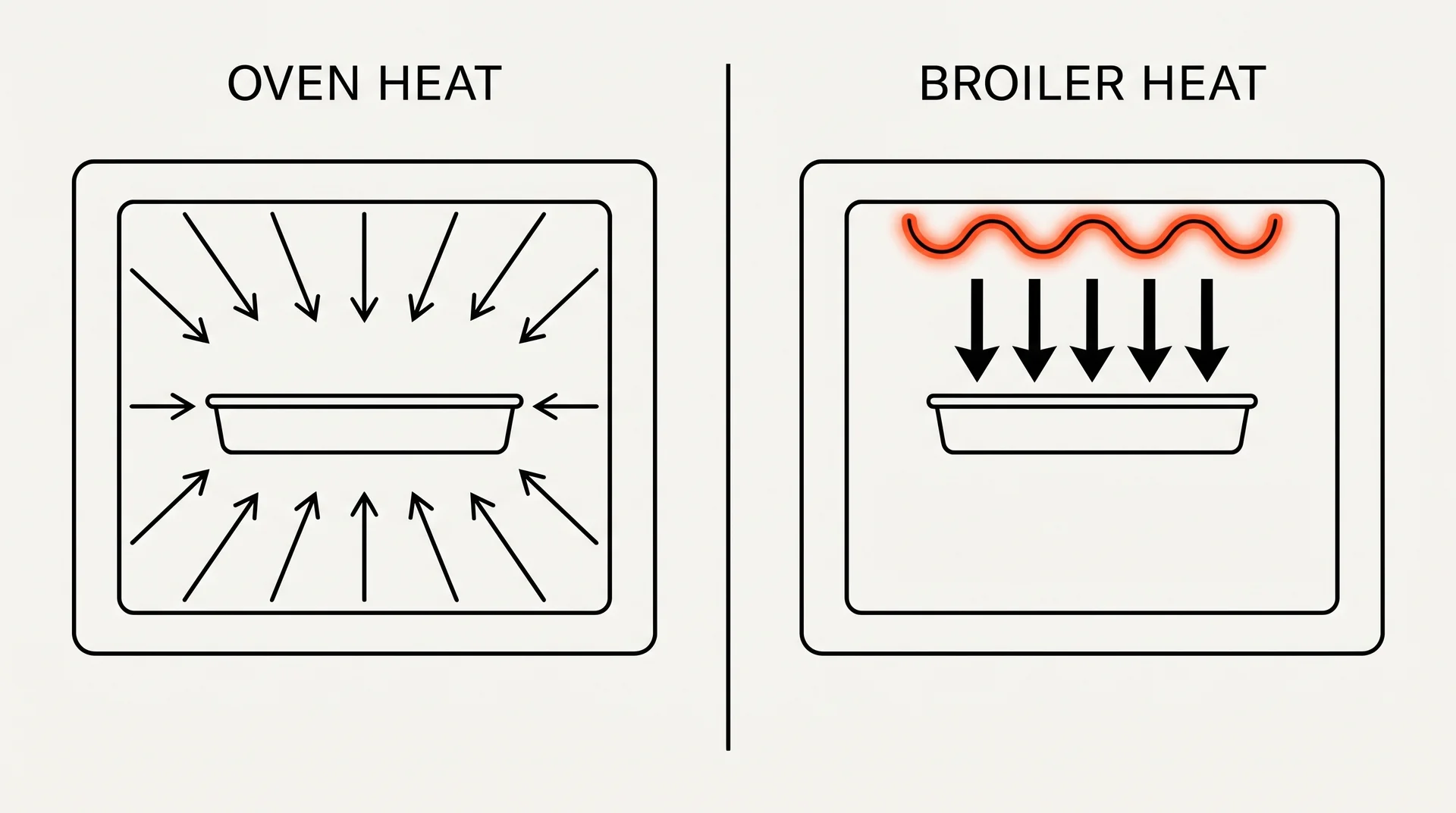
“Oven safe” and “broiler safe” are different ratings for different heat conditions.
- Oven heat is ambient. The oven reaches a set temperature and holds it around the pan from all sides.
- Broiler heat comes from directly above at very high temperatures, with no buffer between the element and the pan surface. A pan can handle 450°F ambient heat and still fail under a broiler.
The difference matters most for coatings, not just for temperature.
Radiant heat from a broiler focuses directly onto the surface. That concentration stresses coatings in a way that ambient heat at the same temperature doesn’t.
I’ve watched nonstick pans fail under a broiler at temperatures the same pan handled without issue in regular oven use. The mechanism is different enough that the two ratings have to be checked separately.
Here’s how the most common materials break down for broiler use:
- Cast iron with metal handles: broiler safe
- Uncoated stainless steel with metal handles: also broiler safe, it’s one of the only two materials that qualify without conditions
- Most nonstick pans: avoid the broiler regardless of what the oven temperature rating says; direct radiant heat stresses the coating differently than ambient heat at the same temperature
- Ceramic-coated pans: generally not a reliable call under the broiler
- Tempered glass lids: never, under any circumstances
If a pan is broiler safe, that’s stated separately from “oven safe” on the base or in documentation. If you don’t see it explicitly, assume the pan isn’t. Oven-safe does not imply broiler-safe.
Frequently Asked Questions
Is “oven-proof” the same as “oven safe”?
Yes. The two phrases mean the same thing in cookware. Some manufacturers use “oven proof,” others use “oven safe.” The marking and the temperature rating beside it carry the same meaning regardless of which phrase is used.
Do the same checks apply to pots?
Yes. The base marking, handle material, and lid assessment are the same for pots as for pans. A stockpot with fully stainless-steel construction and metal handles cleans the same way a stainless-steel skillet does. A pot with a plastic handle fails the same way.
My pan body is oven safe, but the handle isn’t. Can I still use it?
No, not without adapting. The oven safety of the full pan includes every component. A pan body rated to 500°F with a plastic handle that melts at 300°F is not oven-safe.
Some cooks wrap non-oven-safe handles in several layers of foil as a workaround for short oven sessions at moderate temperatures. Whether that’s appropriate depends on the handle material and the temperature involved.
The Thirty-Second Check
The whole process takes less time than preheating the oven.
Check the base for a temperature rating. Check the handle material. Check the lid only if the recipe needs it in the oven.
When there’s a marking, that’s the answer. When there isn’t, the material tells you most of what you need. Which specific pan to buy for stovetop-to-oven cooking is a different question, and it needs different criteria. That’s a different article.
Older pans from discontinued brands with no current web presence are the one scenario where I can’t give you a clean answer. You can read the material and make a reasonable call. Without documentation, that call is an estimate, and it’s yours to make.
Most people never think about the handle until it’s too late. Check it before the pan goes in.