
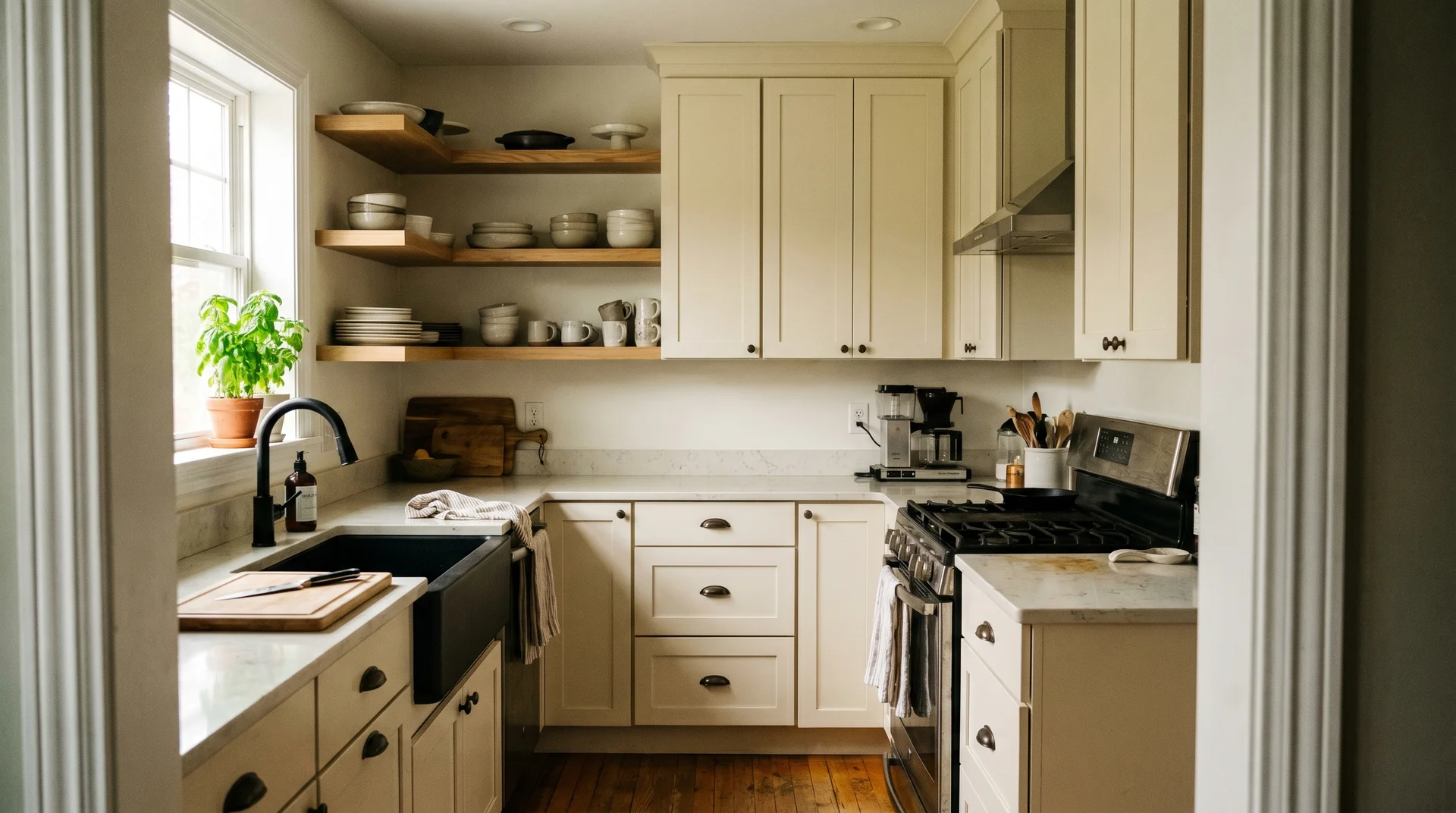
A kitchen decor theme is a shared design language. It connects your colors, materials, and objects into one readable statement.
The five most searched kitchen decor themes are below, along with 20 more ranging from timeless to bold.
- Modern Farmhouse
- Coastal
- Contemporary
- French Country
- Scandinavian
Each idea explains what the theme is and what it takes to pull it off.
Classic Kitchen Decor Themes
Classic themes have lasted because their defining visual element is structural.
A trend is defined by a motif or a cultural moment. A classic is defined by a material or a cabinet profile that carries no expiration date. These six themes have that quality.
Modern Farmhouse Kitchen Decor
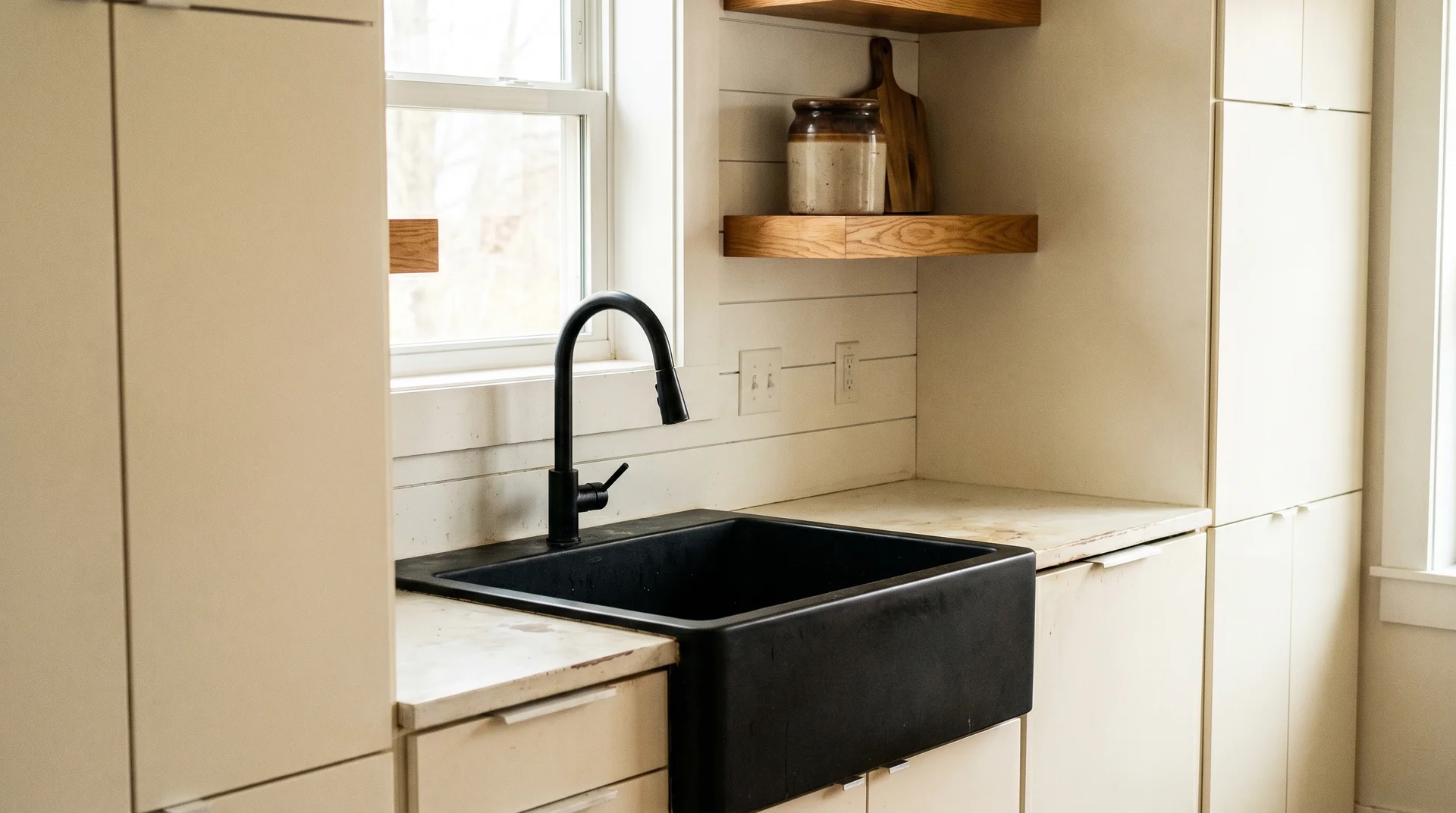
Modern farmhouse pairs rustic materials with clean contemporary lines, and the contrast between the two is what makes the theme read.
Walk into a modern farmhouse kitchen, and the first thing your eye hits is that contrast. Warm wood against white.
The non-negotiable visual element is one of three anchors. You only need one to establish the theme.
- An apron-front sink
- Board-and-batten on one wall
- Matte black hardware throughout
Layering all three tips into a caricature. Pick one and let it do the work.
If hardware is your anchor, the decisions around sizing, finish, and placement determine whether it works.
Picking the right cabinet hardware covers those choices in order, including how to build a finish hierarchy when matte black is your lead metal.
Read: Picking the Right Cabinet Hardware
Once the anchor is chosen, three elements do the structural work underneath it.
- A white, off-white, or cream cabinet base
- Warm wood visible somewhere: a floating shelf, an island top, or a displayed cutting board
- A light, neutral countertop
Everything else follows from those three. Dark flooring makes this theme a difficult fight from day one. Restraint keeps it timeless.
Traditional / Classic Kitchen Decor
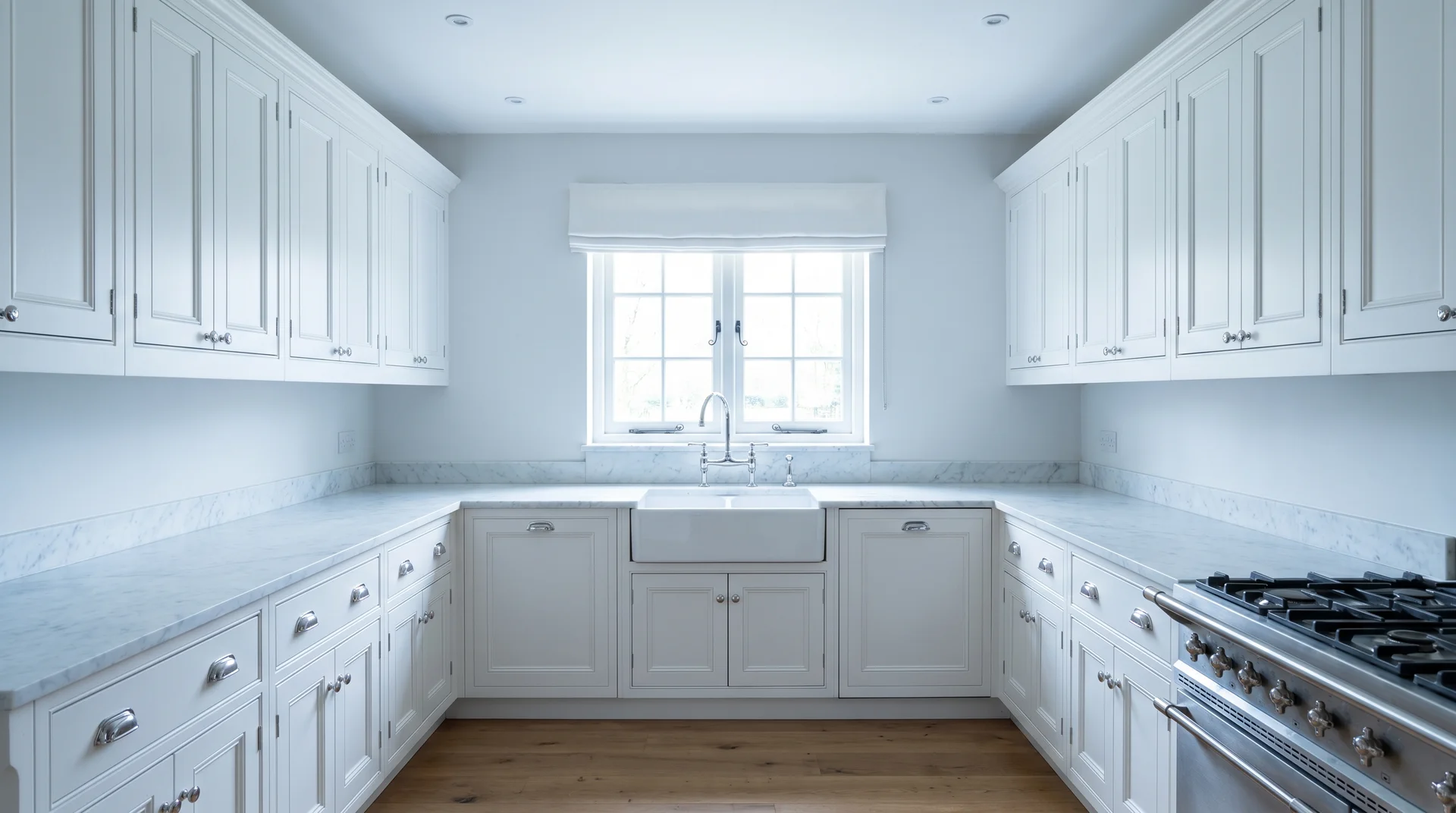
Traditional kitchens read through symmetry, quality materials, and a cabinet profile that doesn’t announce a decade.
The non-negotiable visual element is a raised-panel or beaded-inset cabinet profile. That detail does more structural work than marble counters or chrome fixtures. A symmetrical layout reinforces it.
Marble and chrome are associated with this style, but not required. The cabinet profile places the look more than either one.
Traditional is the stable baseline that every other style departs from or reacts against. If longevity is your primary concern, this is the lowest-risk choice in this list.
Coastal / Hamptons Kitchen Decor
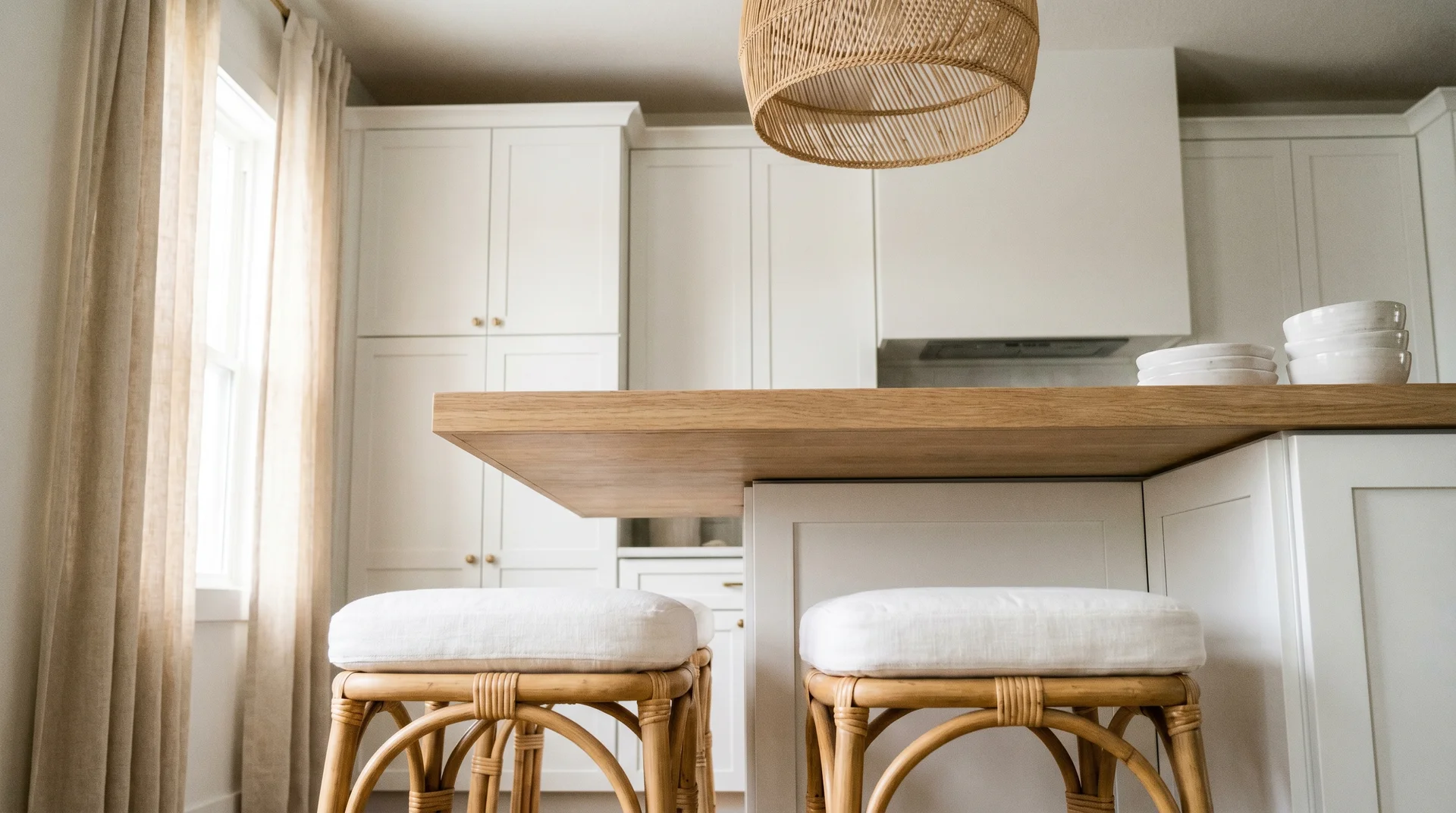
Coastal kitchens work through tone and texture, and overdoing the nautical motif is what kills them.
The non-negotiable visual element is a white or near-white cabinet base. Blue and rattan accents sit on top of white. They don’t read coastal against dark or warm-toned cabinetry.
What it takes to execute:
- Rattan or linen bar stools
- A pendant in natural fiber, white ceramic, or clear glass
- White oak or painted open shelving with neutral ceramics on display
- Linen or cotton window treatments
These elements establish the palette together. No single nautical object does that work alone.
The NKBA’s 2025 Kitchen Trends Report ranked blue the second-most popular kitchen color choice, at 63 percent of respondents. The coastal palette has broad, stable support.
French Country Kitchen Decor
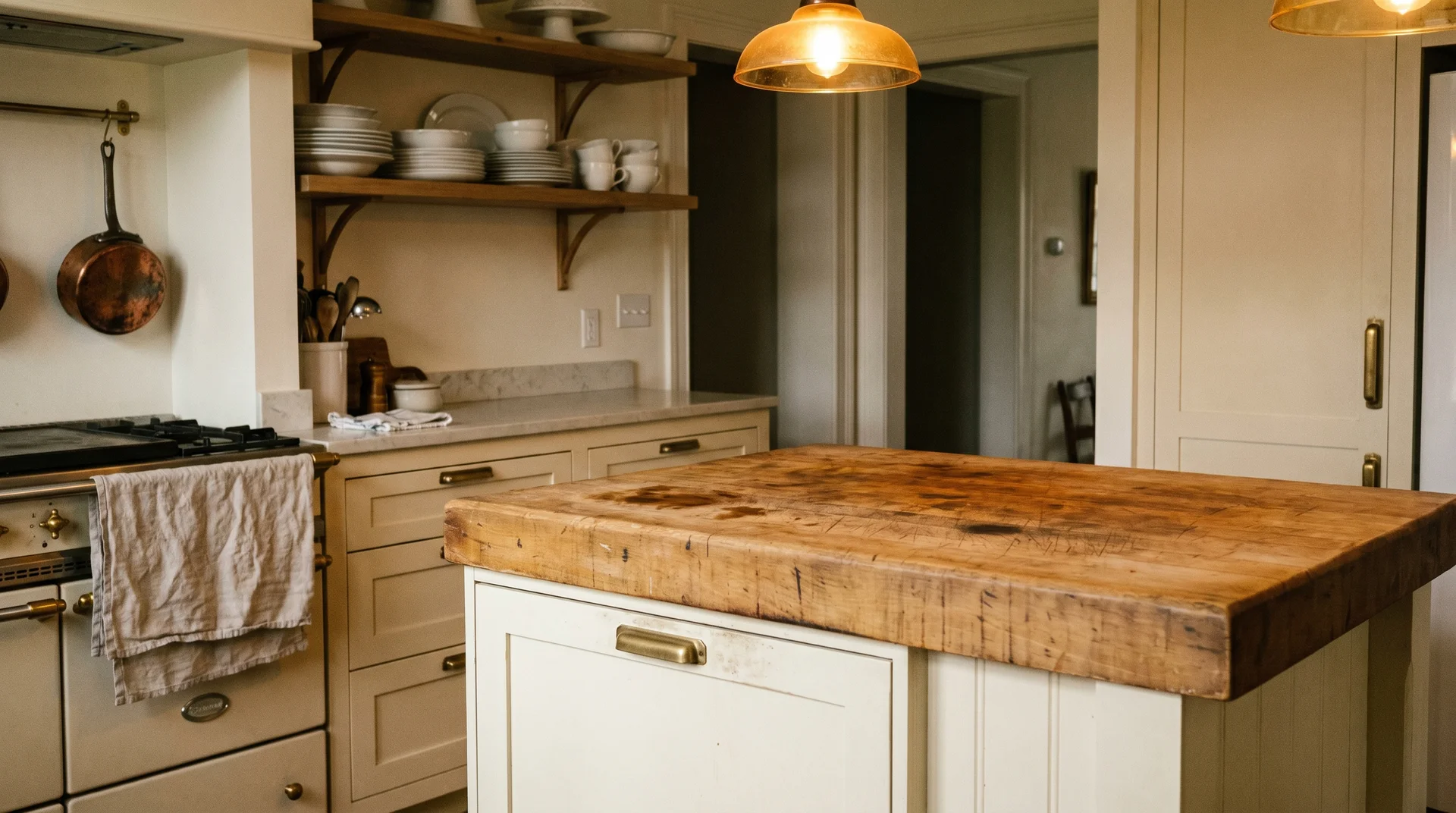
French Country kitchens read warm, slightly imperfect, and deliberately unfitted.
The non-negotiable visual element is warm wood visible somewhere in the room. Open shelving, a butcher block section, or one freestanding piece where a built-in could have gone, all carry the theme. Without it, French Country becomes generic beige.
Unlacquered brass or copper hardware reinforces the palette. A linen or woven textile adds softness. Something in the room should feel placed rather than installed.
Beige without brass or copper goes institutional fast. That’s the single most common way this theme falls apart.
Mediterranean / Tuscan Kitchen Decor
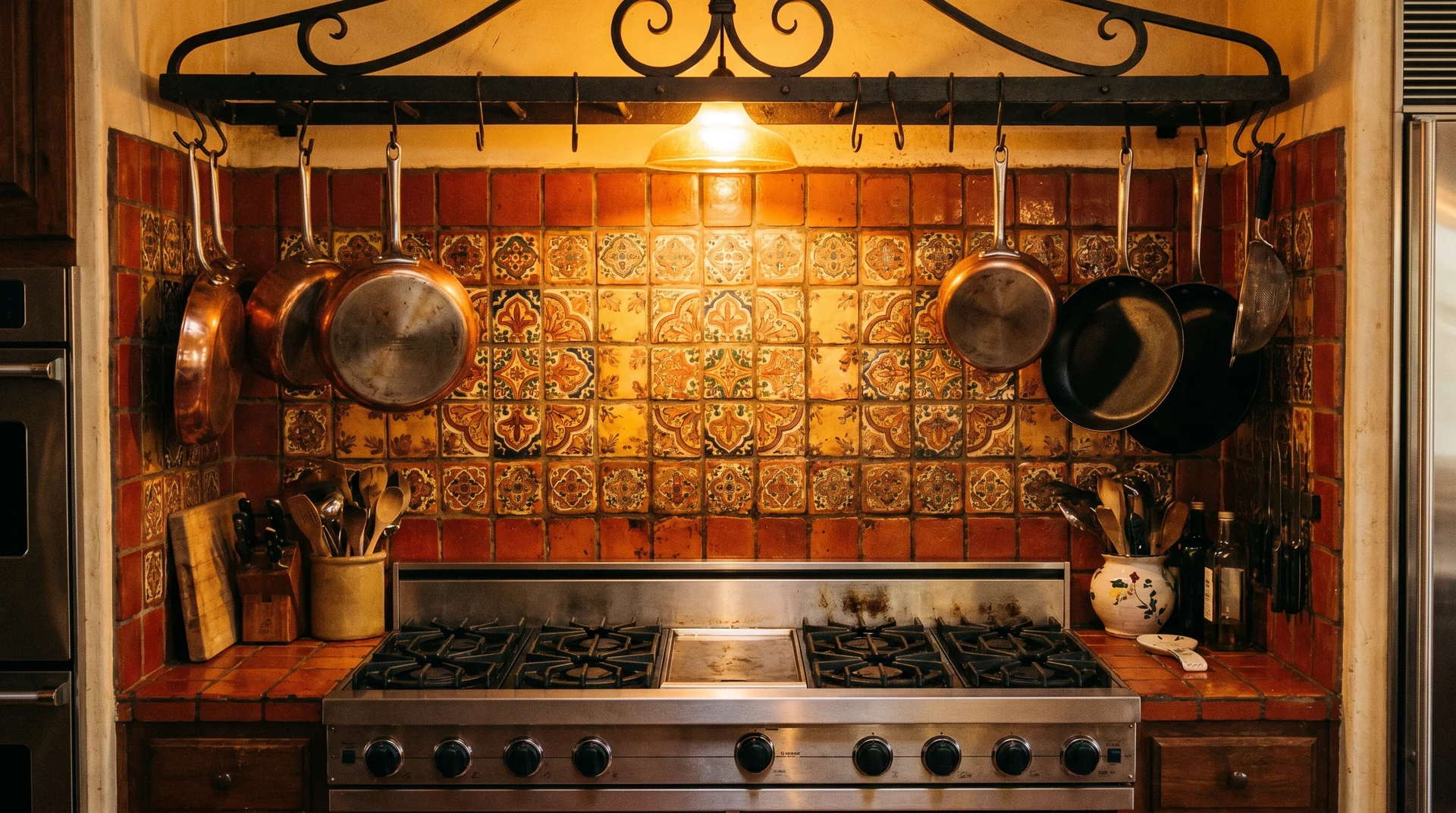
Mediterranean kitchens need one structural tile surface to read correctly, and accessories alone cannot substitute for it.
Terracotta tile or hand-painted decorative tile is the surface. One dominant placement with real commitment reads better than three cautious tile accents scattered around the room.
A full backsplash or a tiled floor does the structural work. The mistake is expecting accessories to carry a theme that requires a structural foundation.
Amber-warm lighting is not optional here. Cool overhead lighting cancels the palette the moment you switch it on.
The NKBA’s 2025 Kitchen Trends Report ranked brown third among kitchen color preferences, at 56 percent of respondents. The warm earth palette has broad and stable support.
English Country Kitchen Decor
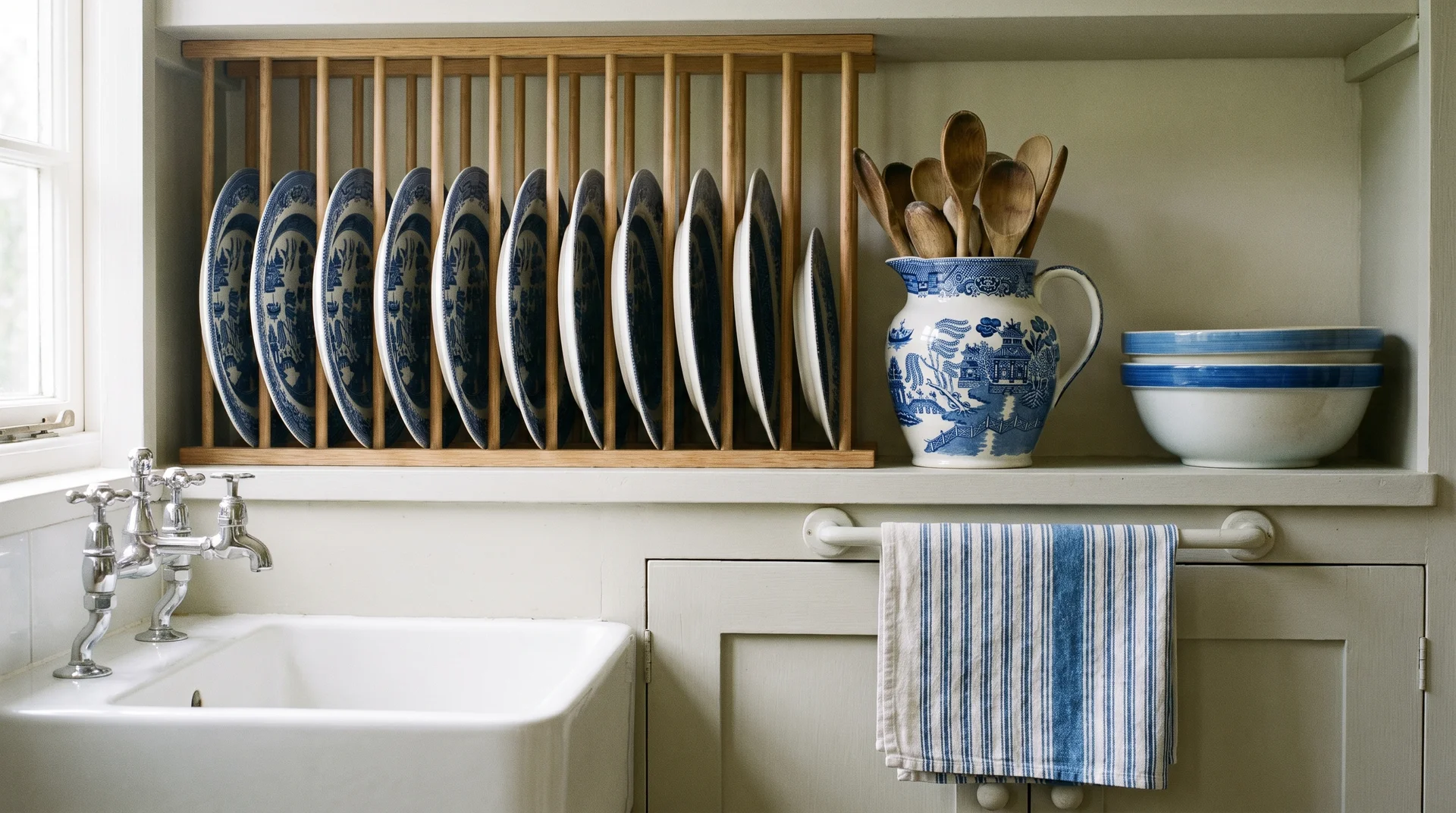
English Country is defined by pattern, display, and a butler’s-pantry sensibility.
The non-negotiable visual element is a butler-sink silhouette or a display of blue-and-white china on open shelving. Either one establishes the cultural reference. Neither works as a subtle suggestion.
Pattern distinguishes this theme from French Country. A striped runner or a floral window treatment tips the reading. A willow-pattern china display confirms it.
The vintage and artisan pieces that make this look convincing are harder to source affordably than inspiration photographs suggest.
Contemporary and Clean Kitchen Decor Themes
Contemporary themes hold together through material discipline and a single dominant element.
What makes any kitchen look cohesive is one visual element that everything else serves. In these themes, that element is almost always a material or a finish, not a motif or an object.
Contemporary / Modern Kitchen Decor
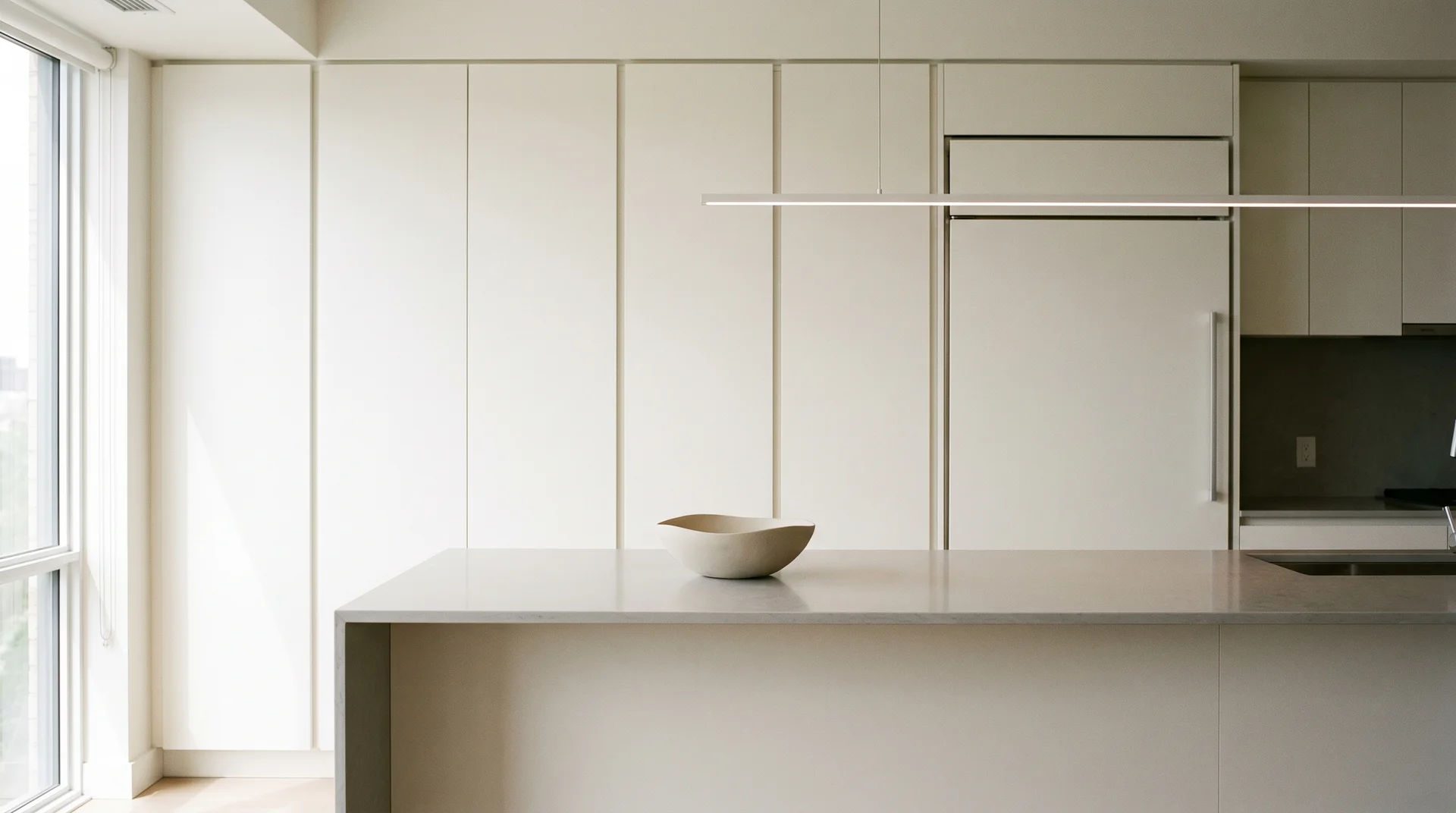
Contemporary kitchens are defined by what they remove from view, and handleless cabinet fronts are the decision that places them.
The non-negotiable visual element is handleless fronts or fully integrated pulls. Visible ornate hardware breaks this look completely. A flat-front cabinet with a traditional bin pull is a transitional kitchen, not a contemporary one.
Execution requires clean countertop sightlines. Small appliances need somewhere to go besides the counter. The kitchen that stops reading contemporary is almost always one where the counter has become a staging area.
A contemporary kitchen can run cool, with white surfaces and stainless steel, or warm-modern, with white oak and brass. Mixing both directions without committing to one loses the edge.
Scandinavian / Nordic Kitchen Decor
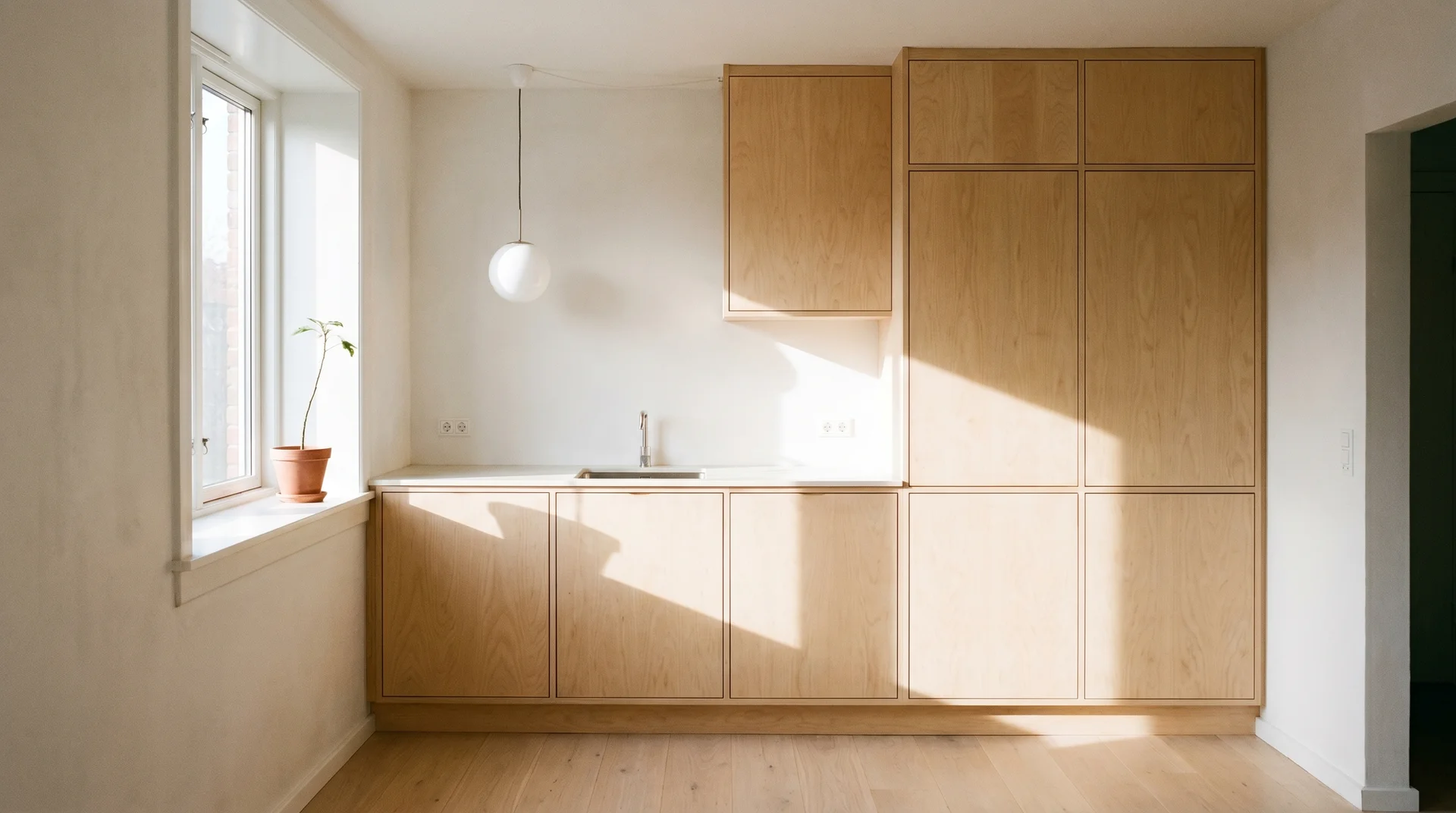
Scandinavian kitchens work through simplicity, light, and the complete absence of ornament.
The non-negotiable visual element is flat-front cabinetry in a light natural wood or painted white. Simple hardware or none at all. One functional light fixture that doesn’t compete with the rest of the room.
This theme performs best with good natural light. A north-facing kitchen fights the airy quality that defines Scandinavian design. No amount of white paint fully compensates for limited daylight. That’s worth knowing before you commit.
Japandi Kitchen Decor
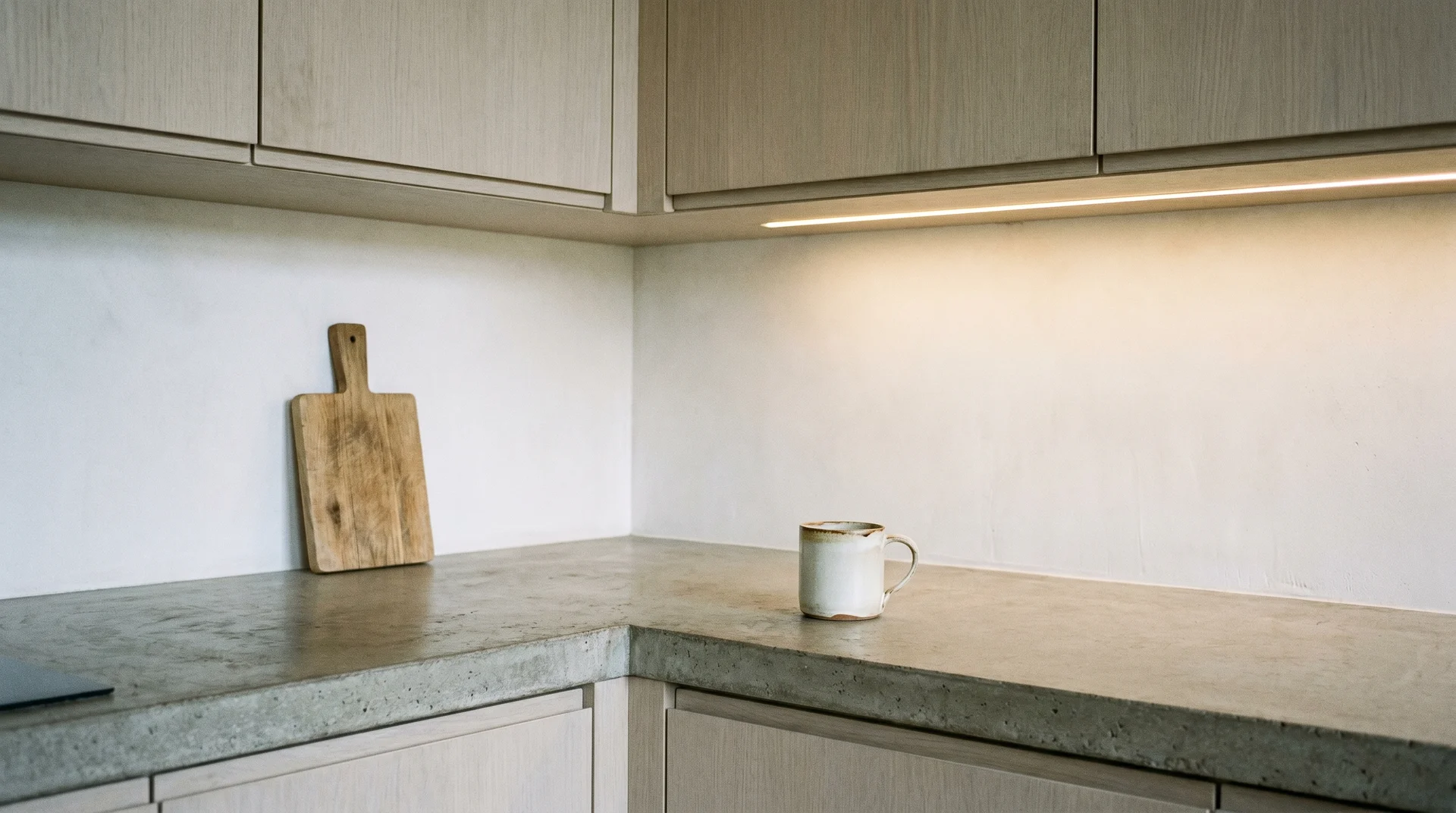
Japandi blends Japanese and Scandinavian design through natural materials and rigorous editing, and the editing is the harder half of the equation.
The non-negotiable visual element is hidden storage. Nothing stays on the counter that wasn’t placed there deliberately. Visible clutter cancels this theme completely.
What separates Japandi from plain minimalism is the wabi-sabi element: one handmade or intentionally imperfect object that adds warmth. A handmade ceramic vessel or a visibly imperfect wood edge does this. Without it, the kitchen reads cold rather than calm.
This theme requires daily discipline to maintain after the initial styling. That’s a compatibility question worth asking before you design toward it.
Mid-Century Modern Kitchen Decor
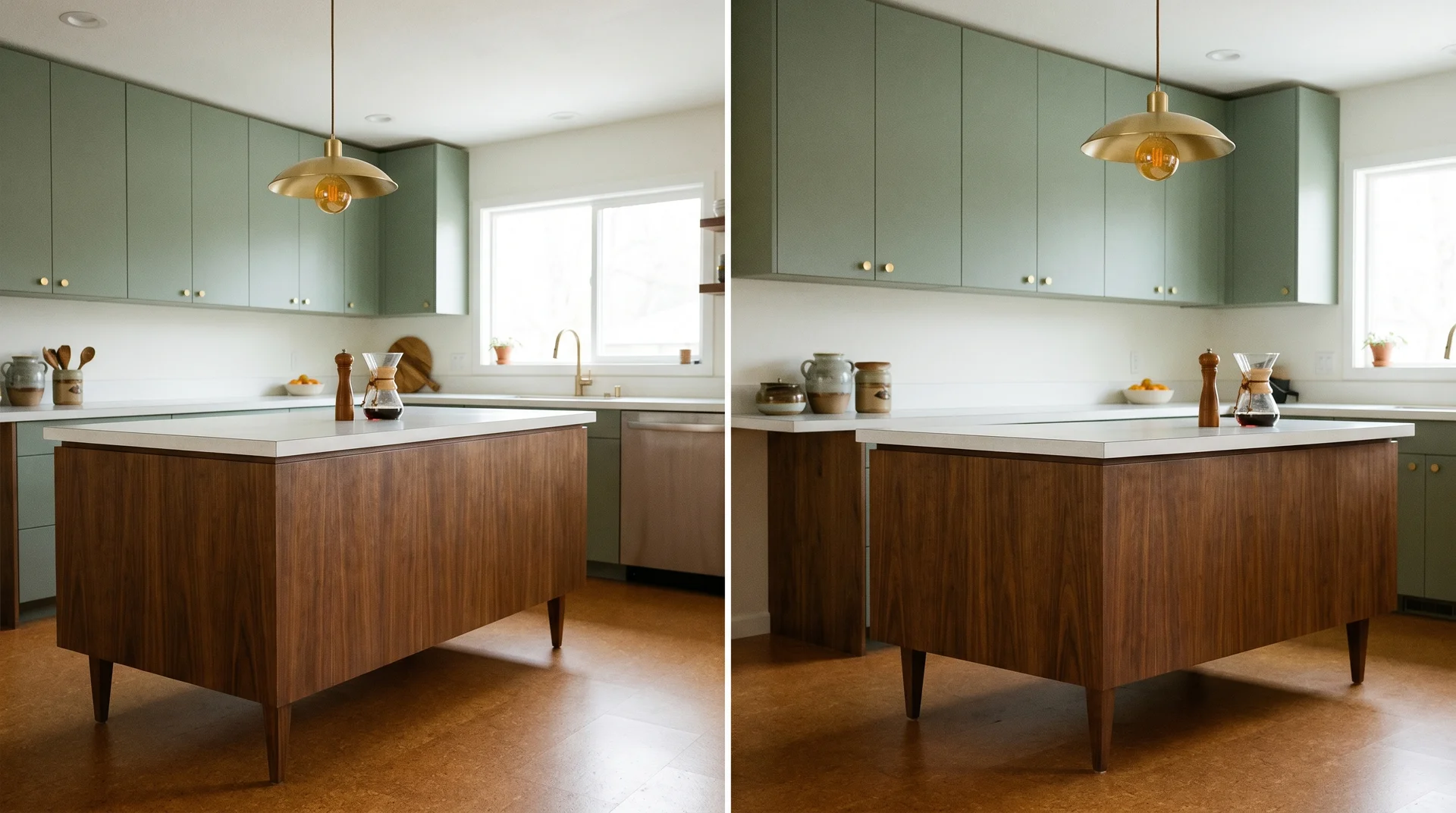
Warm wood tone is what places a kitchen in the mid-century modern era, not flat-front cabinets alone.
Flat-front cabinets in walnut or teak read 1958. The same flat fronts in white or gray read contemporary. The material does the era-placing work.
Either bold hardware or a bold accent color is necessary. Choose one. The pairing of warm wood with period-appropriate hardware is what anchors the kitchen in the decade.
Minimalist Kitchen Decor
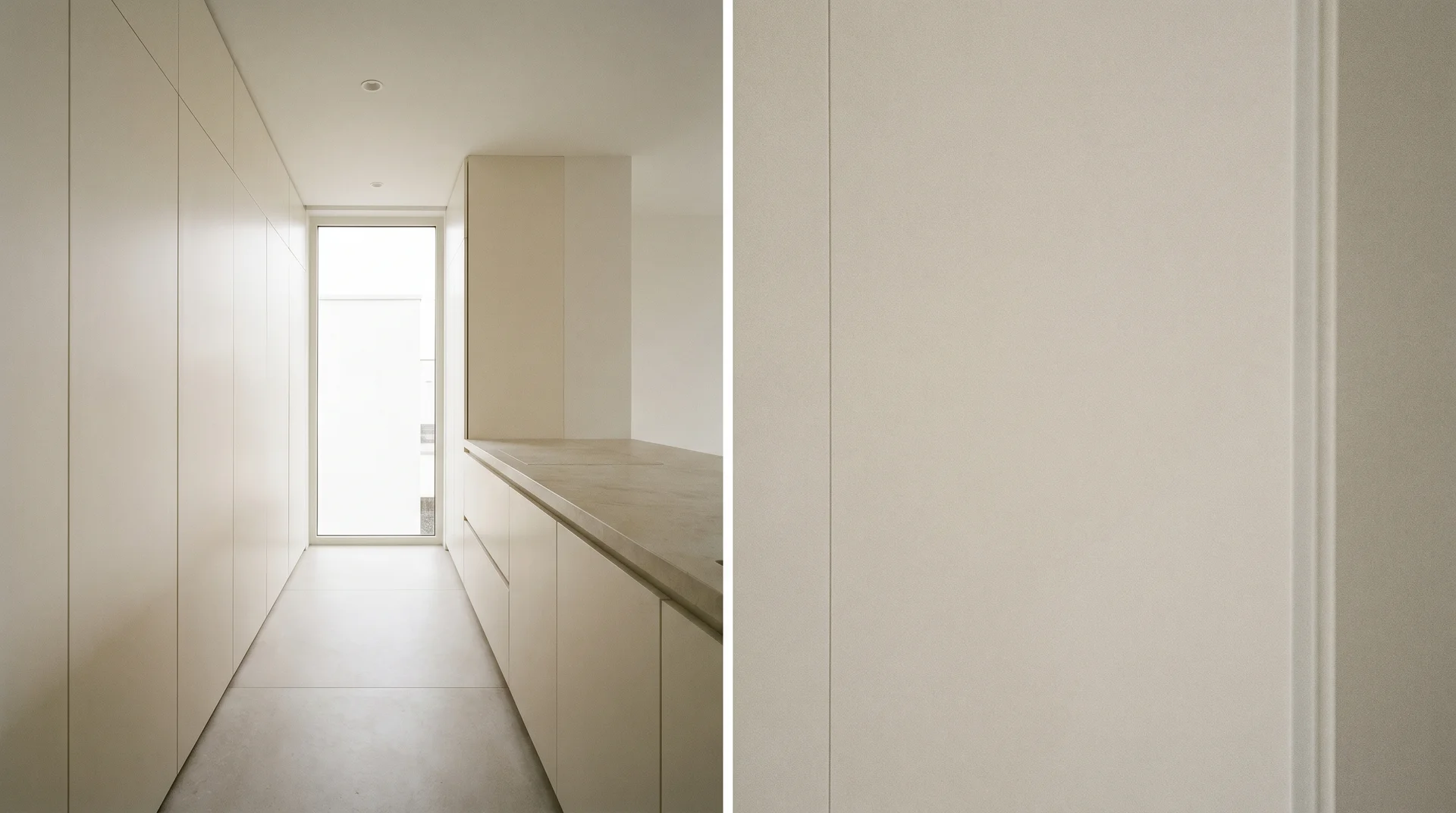
Minimalist kitchens depend on seamless concealed storage and one genuinely excellent primary material.
The non-negotiable visual element is concealed storage: appliances hidden, drawers flush with panel fronts. Open shelving, if present, holds very little and very deliberately.
The quality of the one primary surface material carries everything. There is nothing else in the room to carry it.
This is the most expensive theme to execute correctly. It’s also the most punishing of daily disorganization. Know whether the photograph matters more to you than the daily reality before committing.
Nature-Inspired Kitchen Decor Themes
Nature-inspired themes have grown the most sharply in search over the past two years.
The NKBA’s 2025 Kitchen Trends Report ranked green the top kitchen color for the second consecutive year, at 76 percent of respondents. These five themes reflect that shift toward organic materials and spaces that feel alive.
Biophilic / Nature-Inspired Kitchen Decor
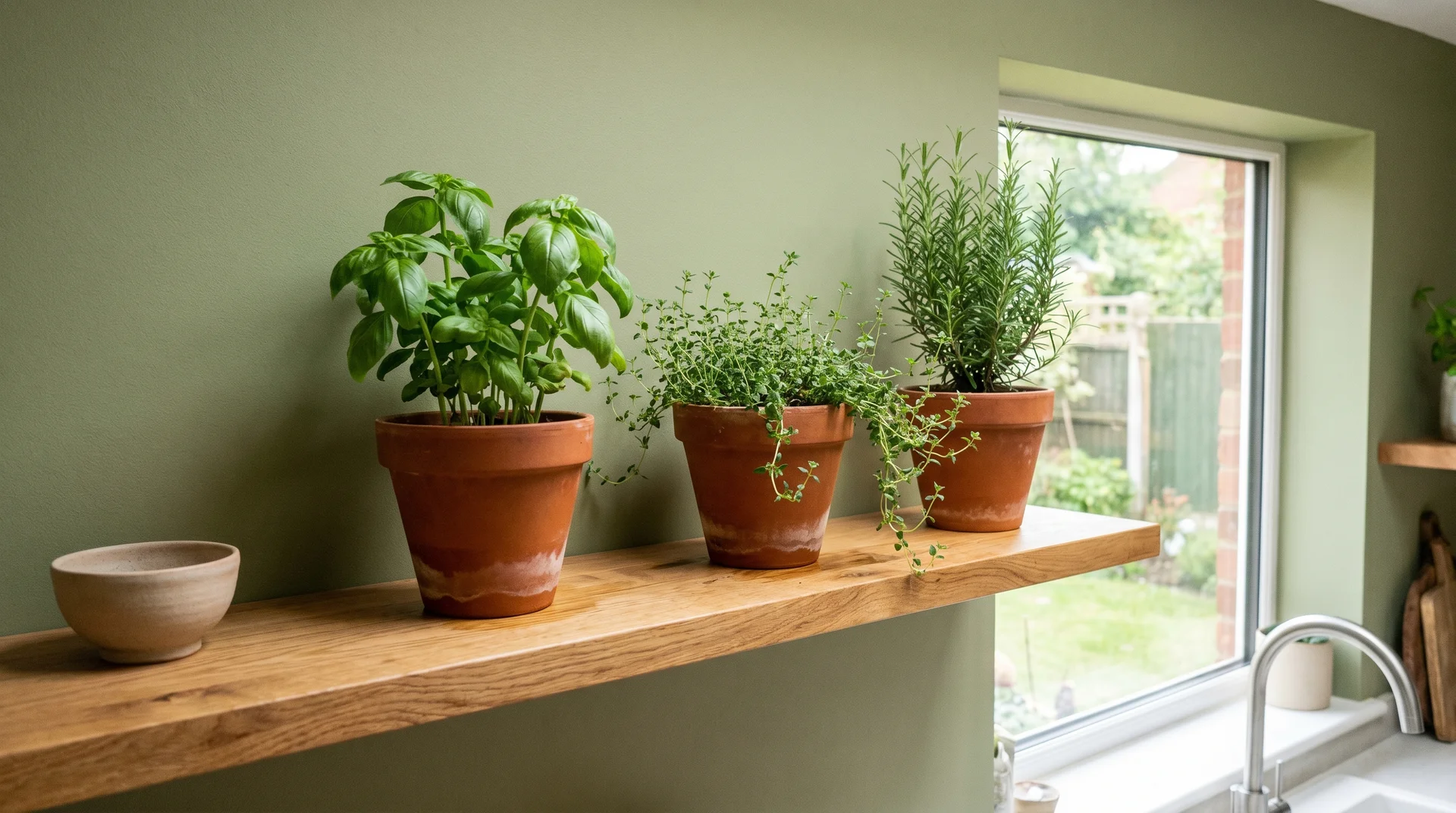
A biophilic kitchen includes actual living plant material as a structural element, not just earth tones and wood accents.
Earth tones and natural materials without living plants produce a nature-inspired aesthetic. A biophilic kitchen goes further. The living element is what distinguishes the two.
Executing this theme well requires three supporting decisions.
- Adequate natural light or a dedicated grow light positioned above the plant placement
- An earth-toned background palette in green, warm clay, or natural stone
- Natural material surfaces in wood, stone, or unglazed ceramic are visible
These three support the living plant material at the center. The plants are the centerpiece, not the finishing touch.
This is the only theme in this list that requires ongoing maintenance after the initial styling decision. A dead plant in the herb shelf undoes the visual argument immediately.
Cottagecore Kitchen Decor

Cottagecore is the romantic, slightly impractical version of farmhouse: softer, more personal, and more floral.
The non-negotiable visual element is a soft palette in sage, cream, or dusty rose combined with at least one vintage-feeling texture. Soft colors alone read empty rather than warm. The linen towel, the handmade ceramic, or the layered open shelf is what gives the direction its personality.
The distinction from Modern Farmhouse is that farmhouse is more utilitarian and rustic. Cottagecore is softer and more personally expressive. A little charming visual disorder is part of the point.
Open shelving with visible layered objects is part of the execution. Fully hidden storage undercuts the warmth this theme depends on.
Coastal Grandmother Kitchen Decor
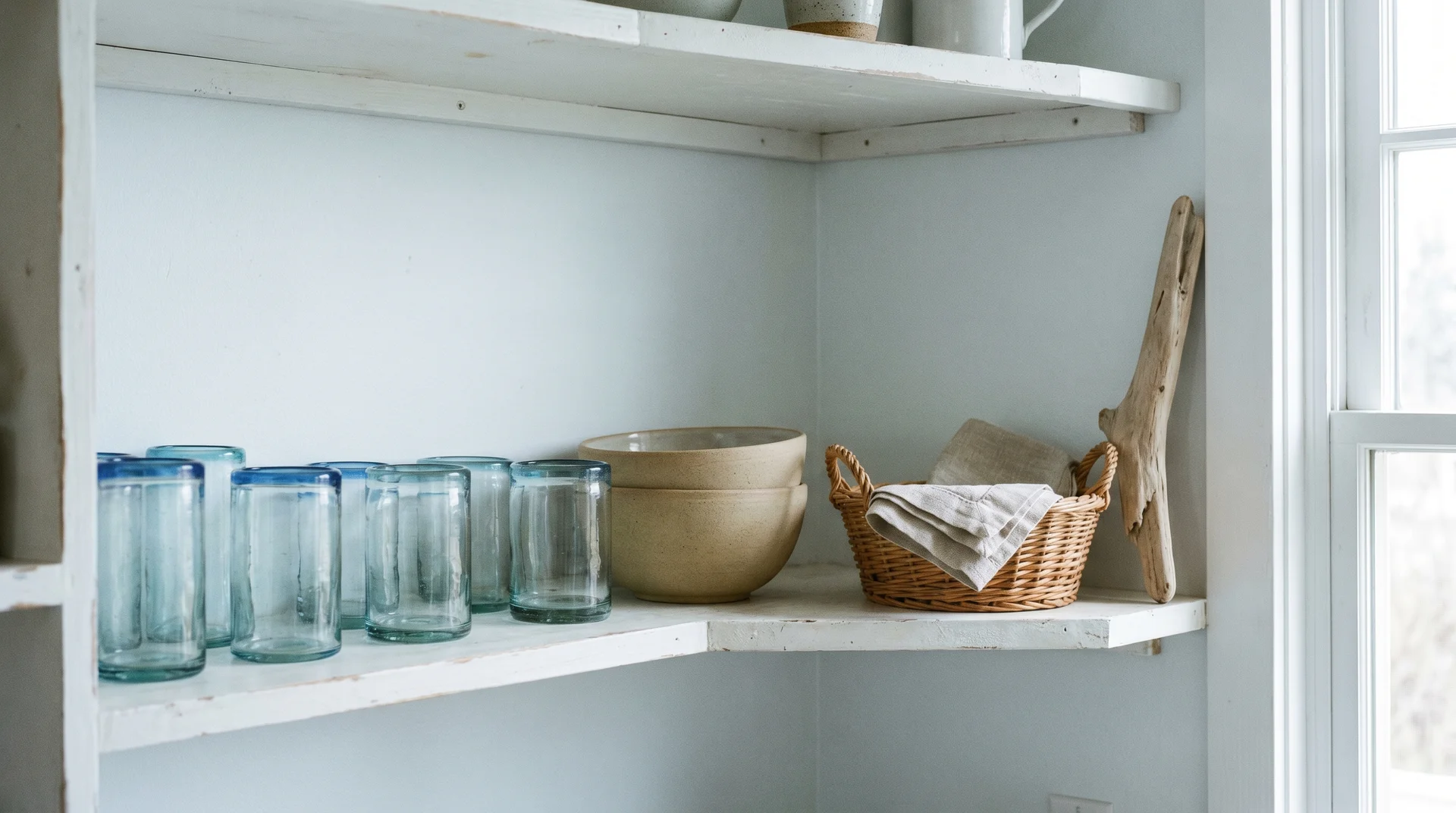
Coastal Grandmother is a relaxed, layered take on coastal style, more lived-in and less curated than Hamptons.
The aesthetic is blue, white, and sand, layered with weathered wood and visible collections. The weathered or natural wood detail is the non-negotiable element.
It’s what stops this from reading like a styled photo shoot and makes it feel like someone actually cooks here.
This is the most forgiving theme in this list. The worn quality is a design feature, not a budget limitation. If you’re new to decorating decisions, this is a gentle place to start.
Rustic / Mountain Lodge Kitchen Decor
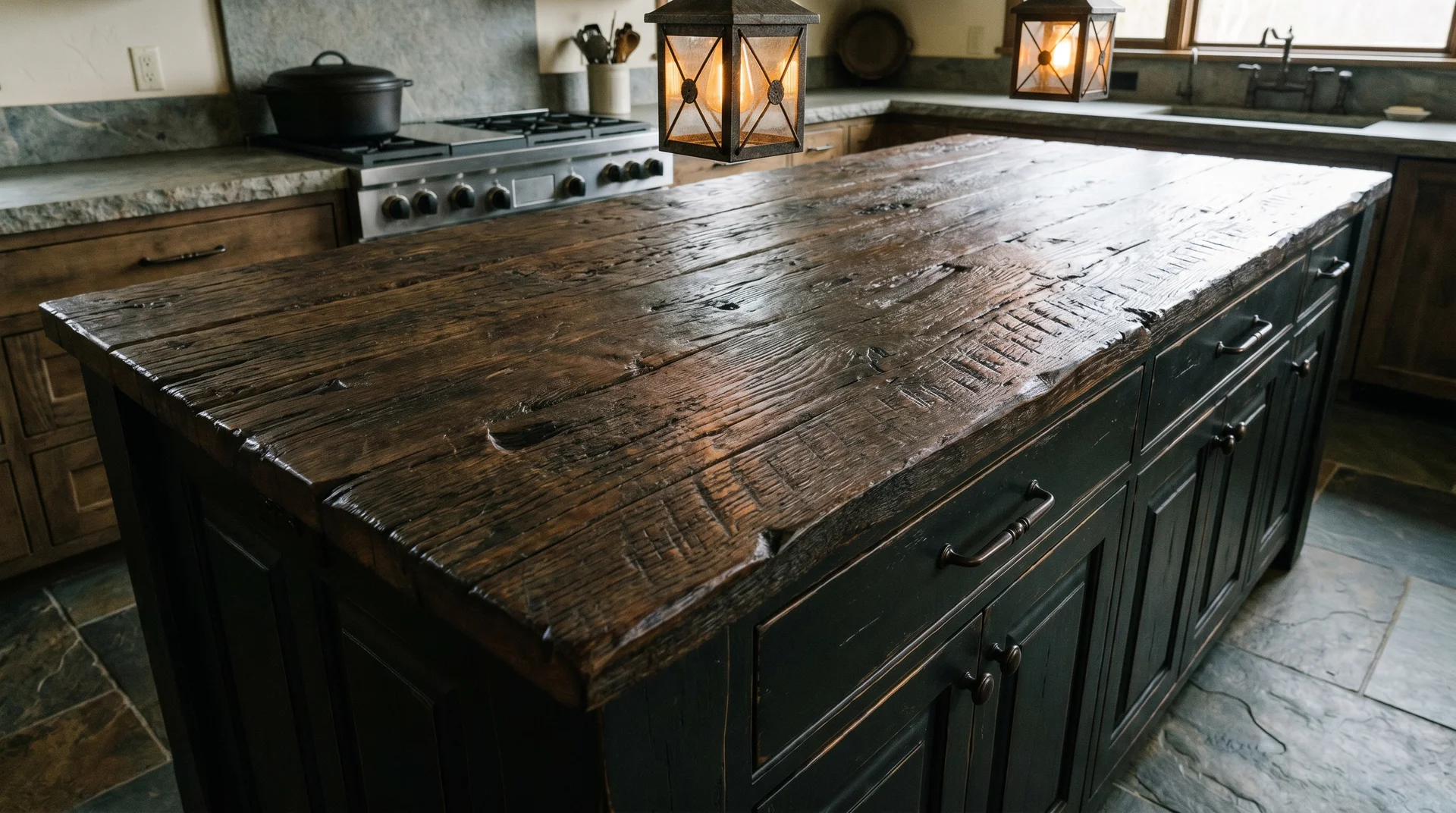
Rustic kitchens need dark distressed wood in a structural placement with real scale, not scattered as an accessory detail.
The material needs presence to carry the theme. An island top, an exposed overhead beam, or floating shelves in substantial reclaimed timber do this. A small wooden tray does not.
Three decisions reinforce the wood foundation and give the theme the texture it needs.
- Stone or concrete countertop rather than quartz or polished marble
- Oil-rubbed bronze or matte black hardware throughout
- Amber-warm pendant lighting in a lantern or heavy iron style
Without these, the theme reads as one good piece of furniture in an otherwise ordinary kitchen.
Fixed-element warning: wood-look vinyl plank flooring reads as vinyl plank. If your flooring is laminate or vinyl, this theme requires meaningful investment elsewhere to compensate for what the floor undermines.
Eclectic / Collected Kitchen Decor
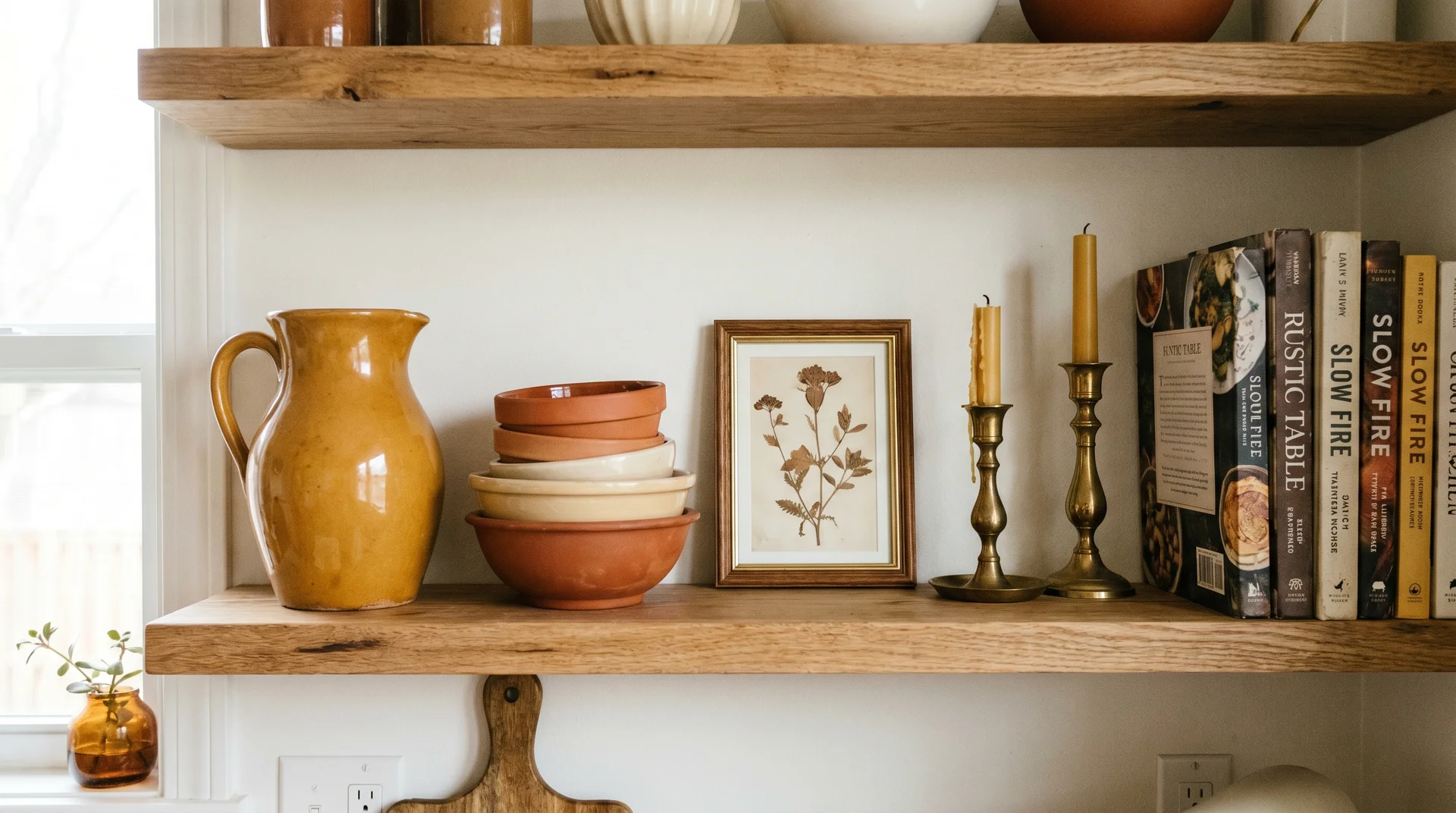
Eclectic kitchens look assembled over time, and a shared color tone is what holds the disparate pieces together.
The non-negotiable visual element is at least one piece that couldn’t have been bought new from a big box store. That found or inherited object gives the direction its legitimacy. Without it, the kitchen tips toward randomness.
I’ll be honest: I’m genuinely uncertain where the line between “collected” and “just messy” sits for different people. That threshold is personal and depends on your tolerance for visual complexity. This is the theme I’d approach last if decorating decisions are new territory for you.
Bold and Expressive Kitchen Decor Themes
Bold themes require more commitment, but they’re more reversible than most people assume.
The common fear around bold choices is regret. Paint is not cabinetry. A paint choice you regret costs a weekend and a can of primer.
A dark cabinet installation you regret costs thousands. The four themes that follow carry a distinctiveness that none of the themes above quite match.
Dark / Moody Kitchen Decor
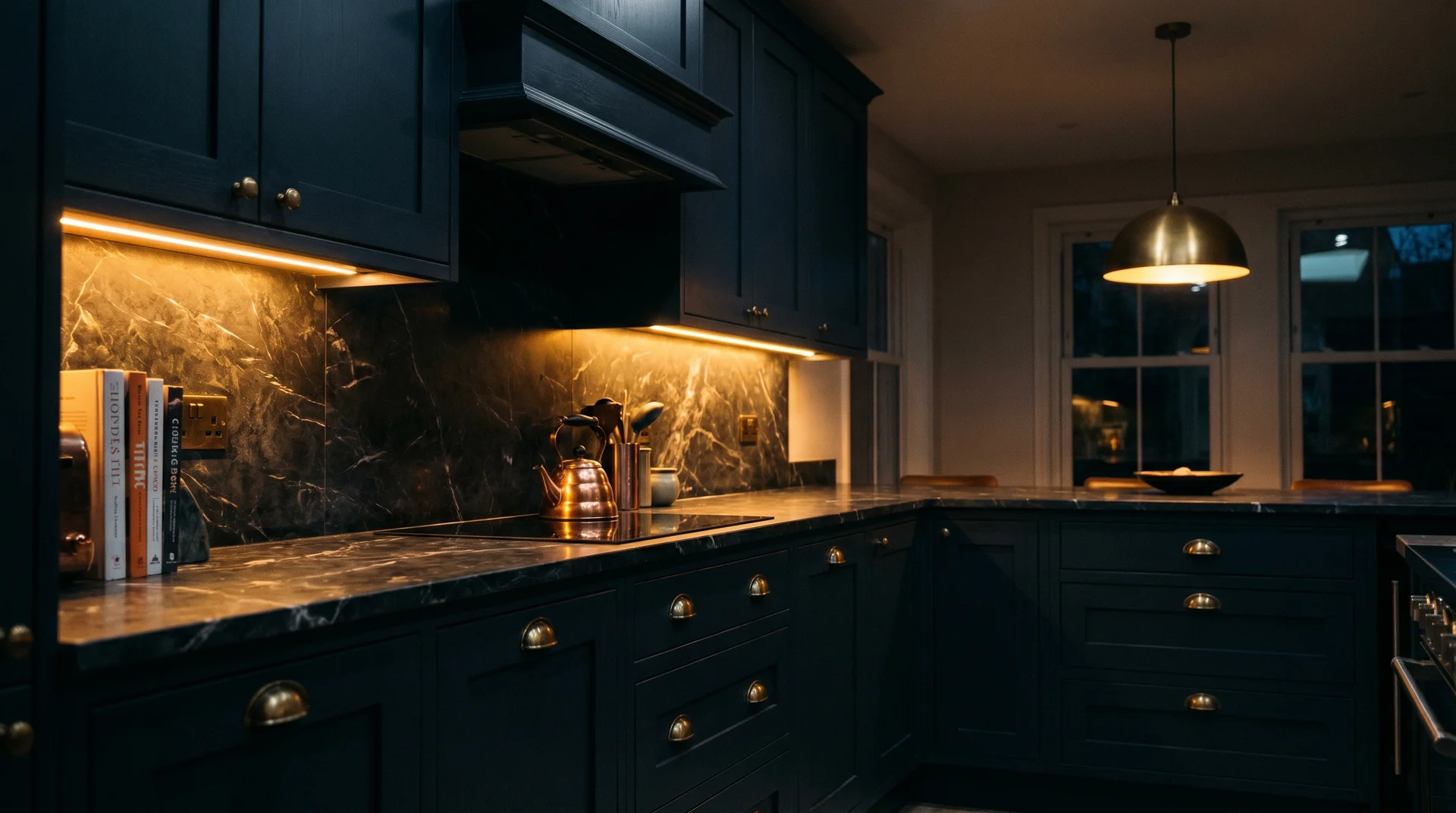
Dark and moody kitchens are established by cabinet color, and wall paint alone cannot replicate that effect.
The non-negotiable visual element is cabinet color in navy, forest green, or charcoal. Dark walls on light cabinets create a different, less committed effect. The cabinet is the hero.
Lighting is the most critical execution variable in this theme. Dark cabinets without generous warm light become oppressive rather than dramatic. Decide on a lighting plan before you choose the cabinet color.
The minimum lighting plan for a dark kitchen requires three decisions.
- Under-cabinet LED strips running the full counter length
- A statement pendant or hanging fixture above the island or table
- Dimmable control on all overhead fixtures
Warm under-cabinet strips and a pendant transform the same dark room from heavy to intentional. That difference is entirely in the lighting plan, not the paint choice.
Color-Drenched Kitchen Decor
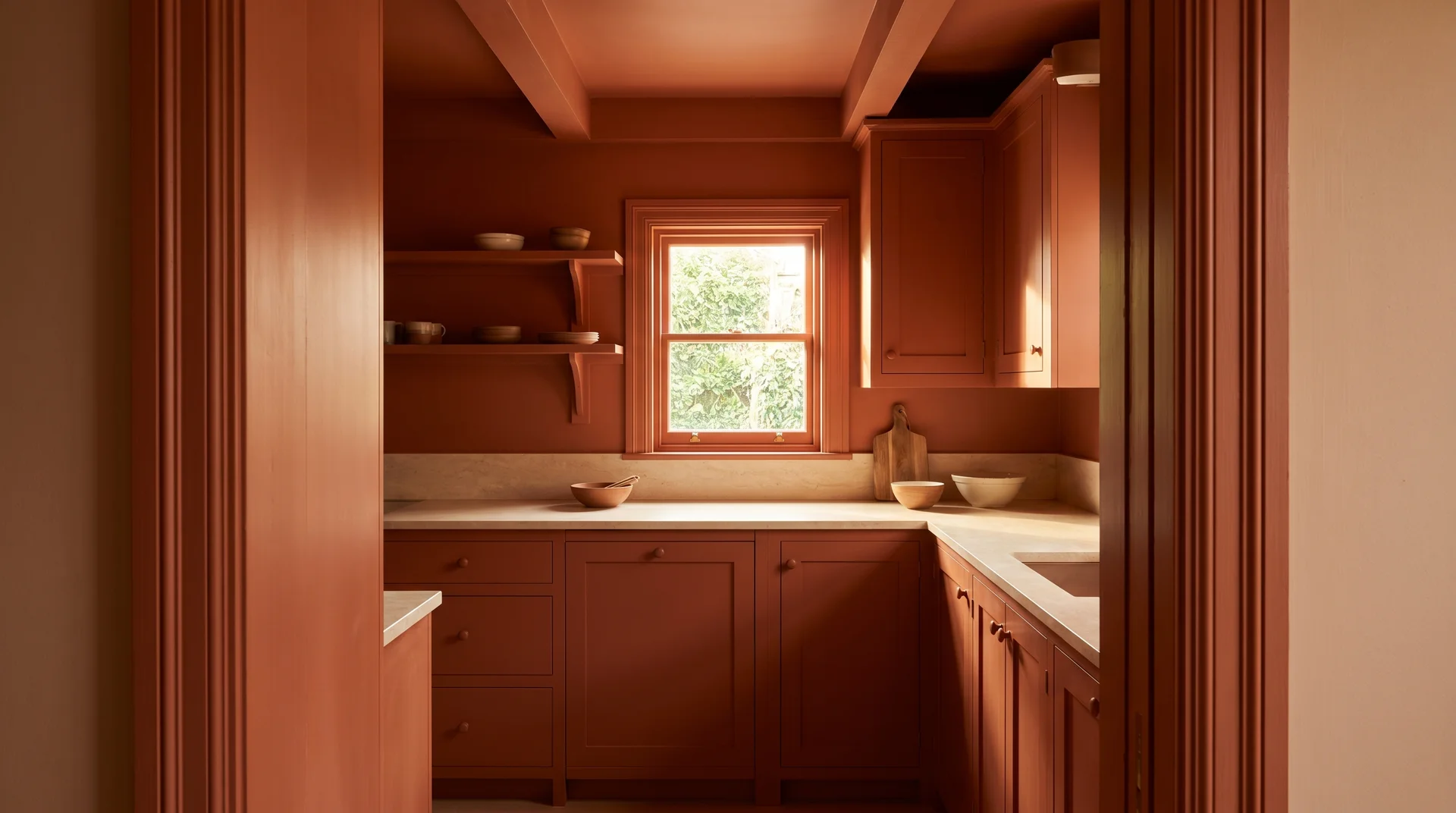
Color-drenching means running one saturated color across cabinets, walls, and ceiling together as a unified statement.
This is the highest-impact, lowest-cost kitchen refresh available without touching a fixture or fitting. A quart of paint costs under $60. The commitment required is simply to do it completely.
The non-negotiable execution rule is full commitment. Partial color-drenching reads like an unfinished paint job. Open windows or use a fan while painting a full-room color-drenching generates more fumes than painting a single accent wall.
Bold paint is one of the most reversible commitments in kitchen decorating. This is meaningfully different from the dark cabinet cost noted above: a paint choice you regret costs a weekend to fix.
Art Deco Kitchen Decor
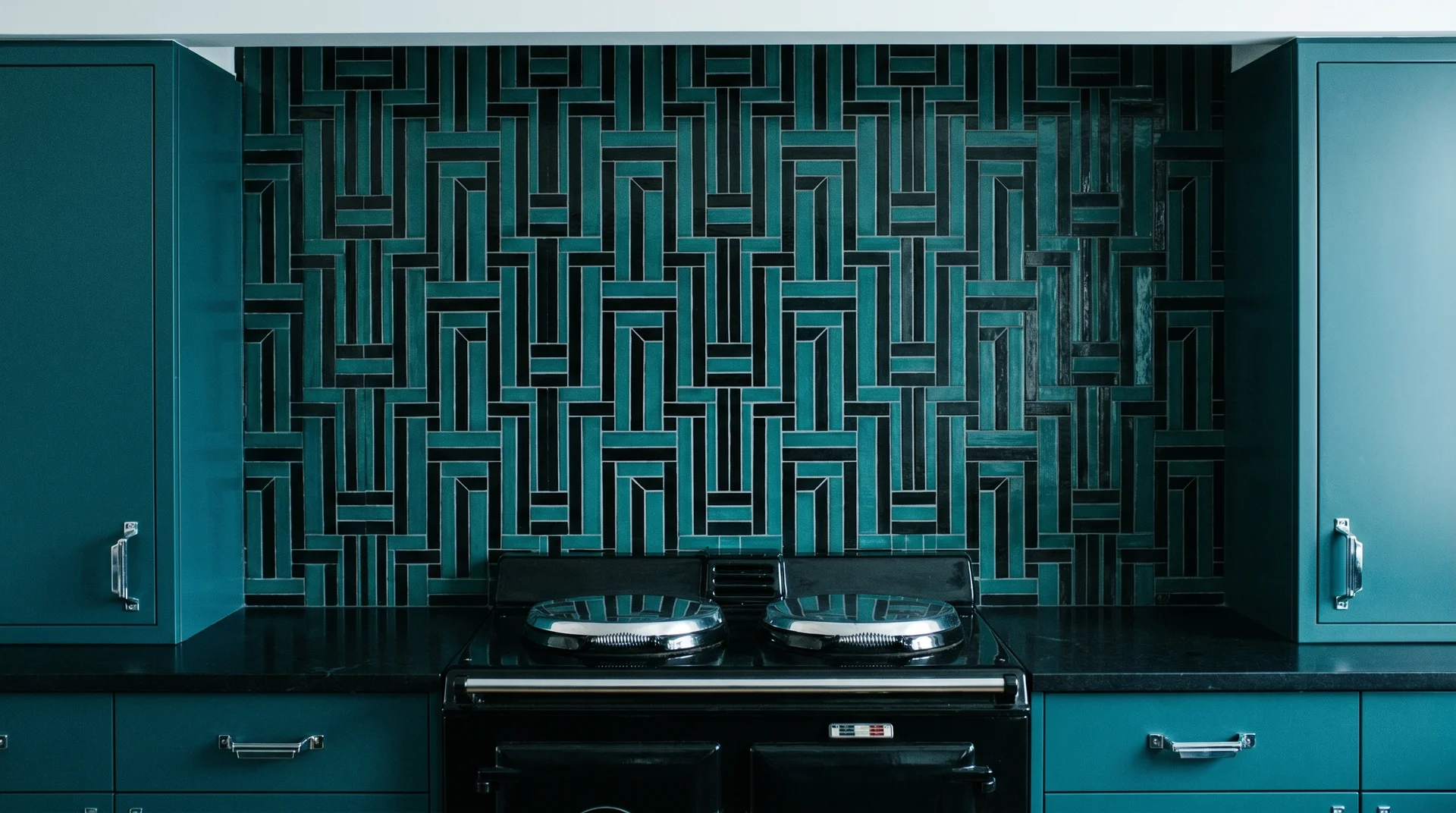
Art Deco needs geometric patterns in tile or hardware to establish the era, not gold accents on a plain cabinet.
Gold hardware on white cabinets produces a contemporary kitchen with updated hardware. It does not produce Art Deco. The geometric pattern is what places the decade.
The foundation is a jewel-tone cabinet in deep teal, burgundy, or emerald. The geometric element reads clearly against that base. Against white or neutral cabinetry, it reads like a misplaced tile sample.
Bohemian / Boho Kitchen Decor
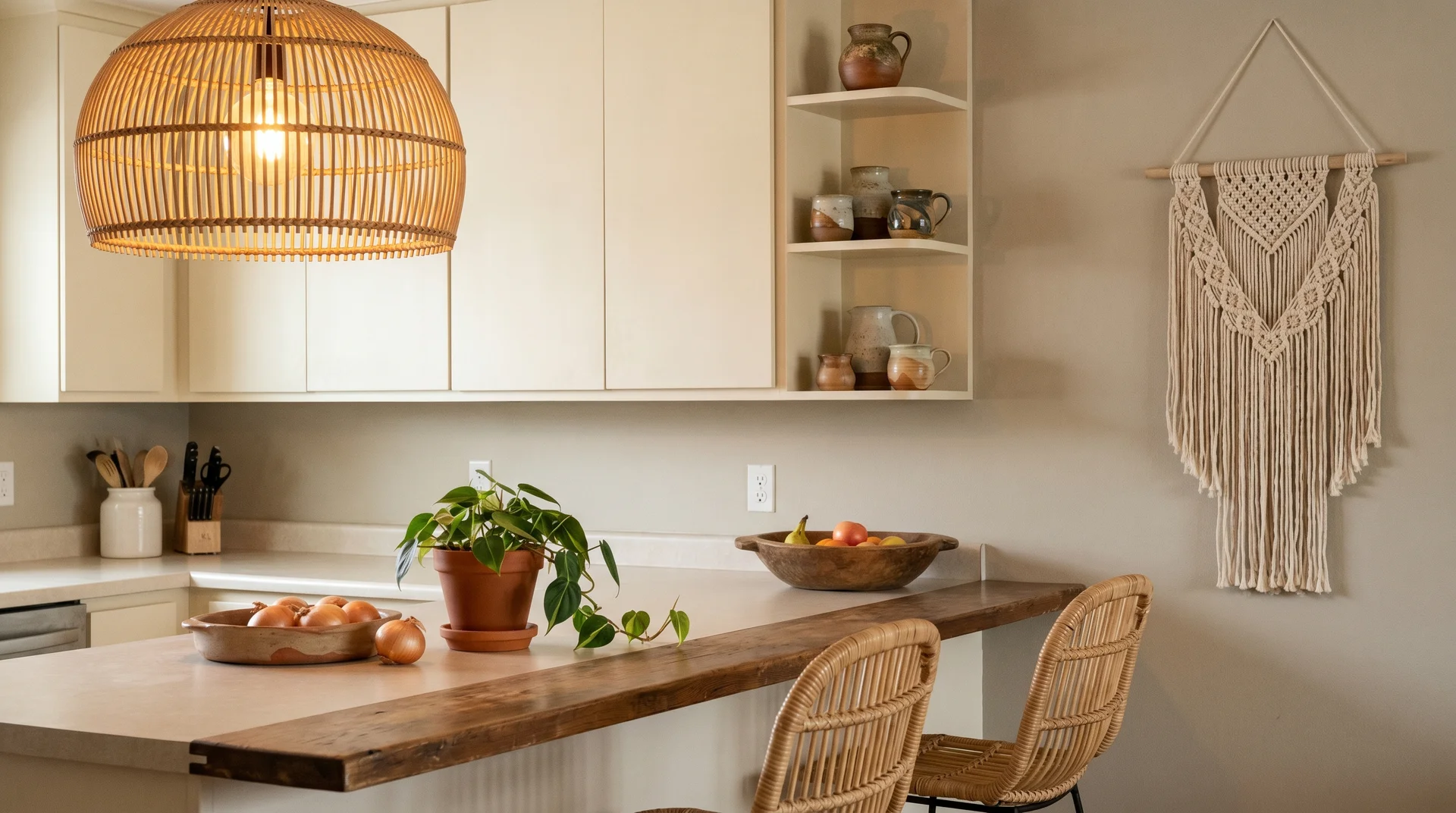
Boho kitchens are built on organic texture: rattan, macramé, woven fiber, and handmade clay.
Plants alone don’t establish this look. The textural element is what carries the theme. Plants amplify it.
Boho requires a warm color base. These materials sit flat against cool gray or bright white cabinetry.
A cream or terracotta cabinet color lets the organic material read as a design choice rather than a collection of unrelated objects.
Maximalist / Grandmillennial Kitchen Decor
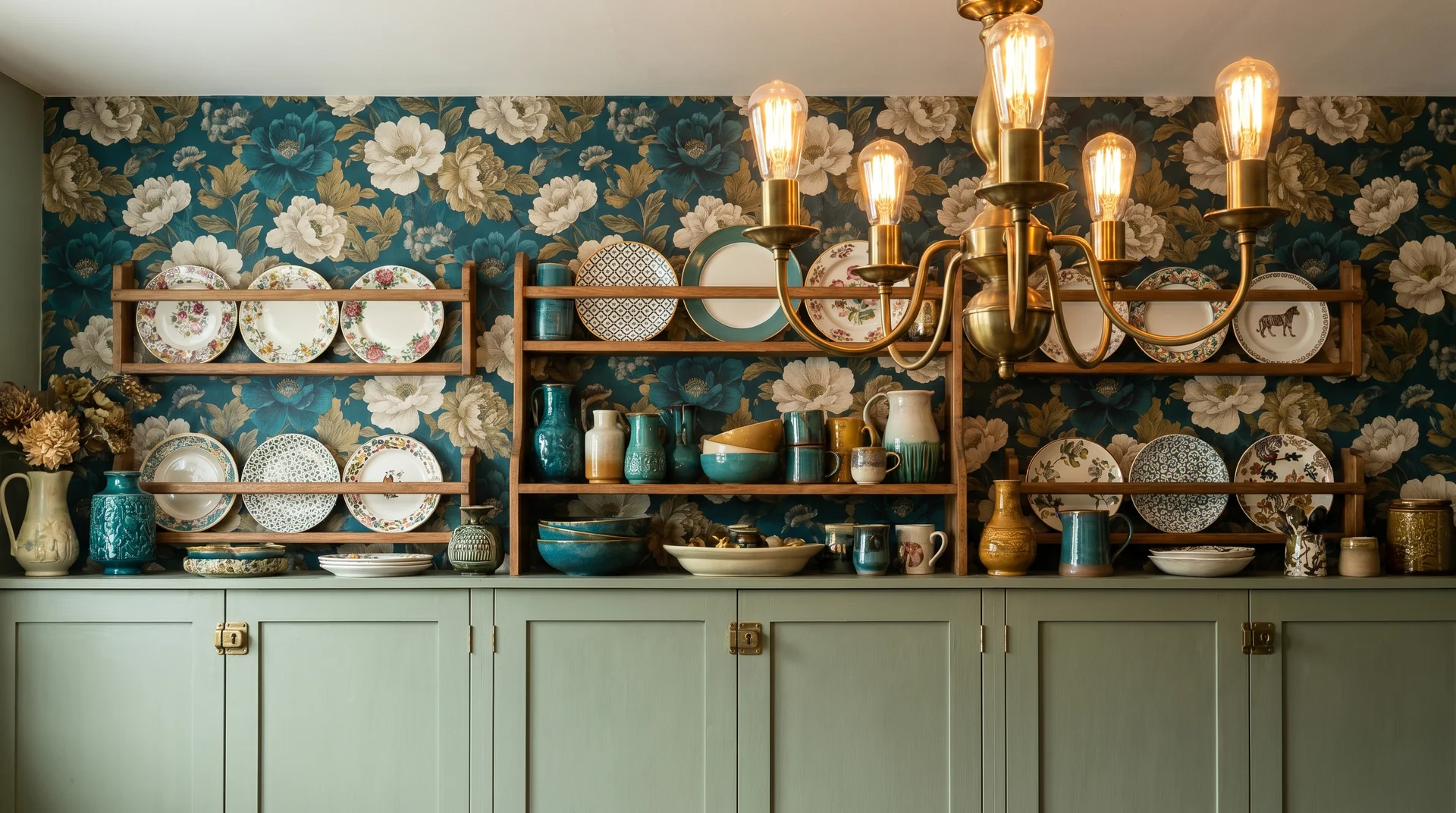
Maximalist kitchens are built on pattern first, then object accumulation; without a set pattern foundation just produces clutter.
Bold wallpaper or a graphic tile is the foundation that objects layer against. A shared color tone across different patterns keeps the look from becoming chaotic.
This theme requires a higher tolerance for visual complexity than most people realize. Admiring maximalism in a photograph and living in it every morning are genuinely different experiences.
Global and Character Kitchen Decor Themes
These four themes carry the strongest individual personality of any on this list.
Each one reads immediately and distinctly. There’s no confusion about which direction the kitchen is going. I’ve watched homeowners who commit fully to one of them end up with far more distinctive spaces than those who play it safe.
Vintage / Retro (1950s–60s) Kitchen Decor
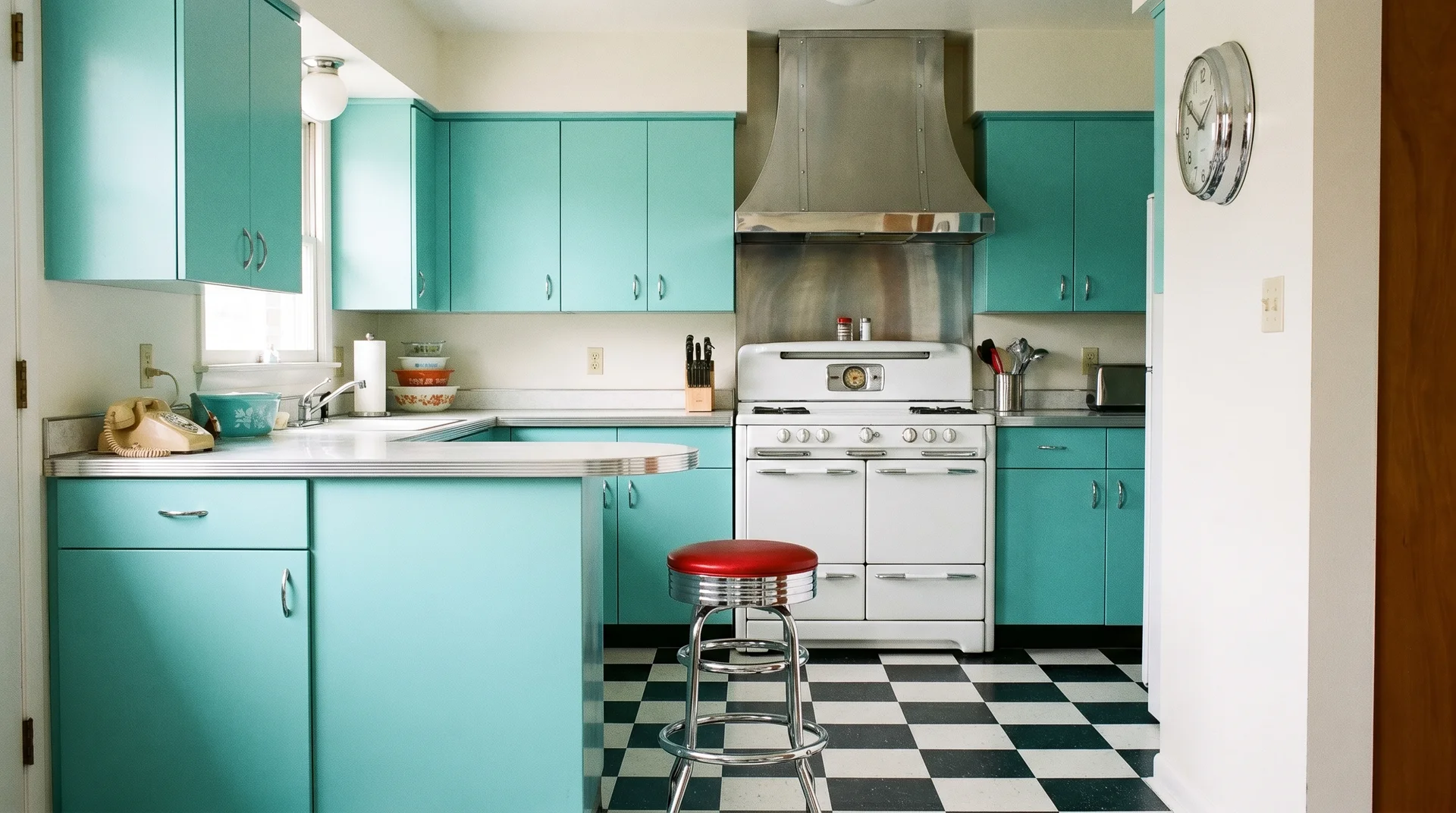
Vintage kitchens require pastel cabinetry or checkerboard tile to establish the era, and chrome is the metal that places the decade.
Pastel cabinet color places the era. Checkerboard tile in black and white on the floor confirms it. Together, they create a reading that needs no further explanation.
Chrome places the 1950s and 60s. Brass reads from a different decade. If you use brass because it’s more available right now, the theme slips. That detail matters more than it looks like it should.
This is one of the most personality-rich themes in this list. It is also one of the least budget-friendly to execute correctly.
Pastel custom cabinetry and period-accurate chrome fixtures are genuinely expensive. Accessories alone won’t get you there.
Industrial Kitchen Decor
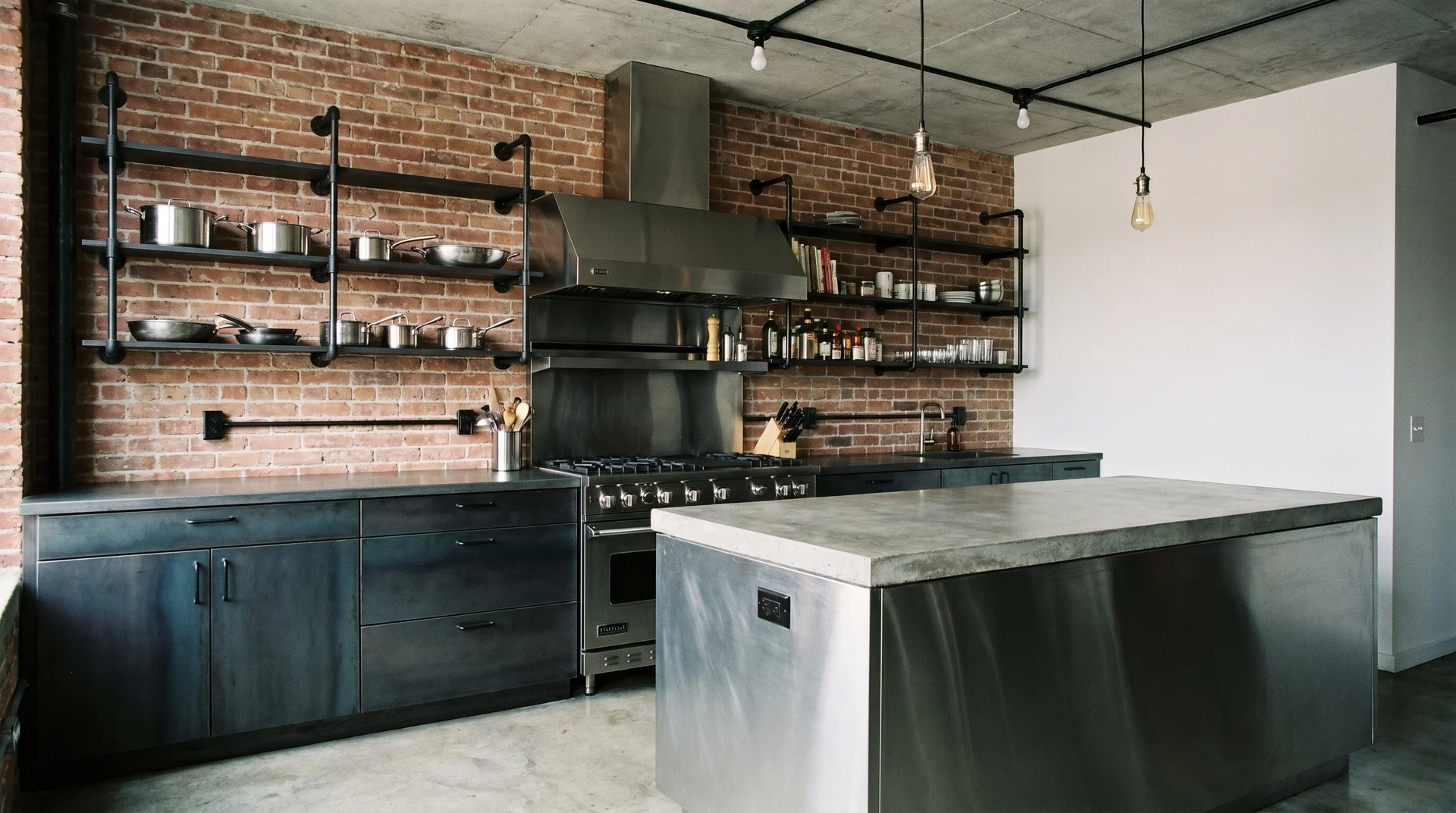
Industrial kitchens require a raw structural-finish surface as the foundation, and the Edison pendant alone does not make the theme.
The non-negotiable visual element is one raw or industrial-finish surface with structural presence: exposed brick, concrete, or visible metal pipe shelving. The pendant is the accessory. The structural surface is the anchor.
Adding Edison bulbs to a farmhouse kitchen produces farmhouse lighting, not an industrial design. That’s the most common execution mistake in this category.
What it takes to execute:
- Stainless steel appliances rather than panel-front or colorized ones
- Matte black or raw steel hardware throughout
- Pendant lights that expose the bulb rather than shield it
These three reinforce the raw-material quality that the structural surface establishes. Without them, the theme reads as one strong surface surrounded by an ordinary kitchen.
Mexican / Colorful Tile Kitchen Decor
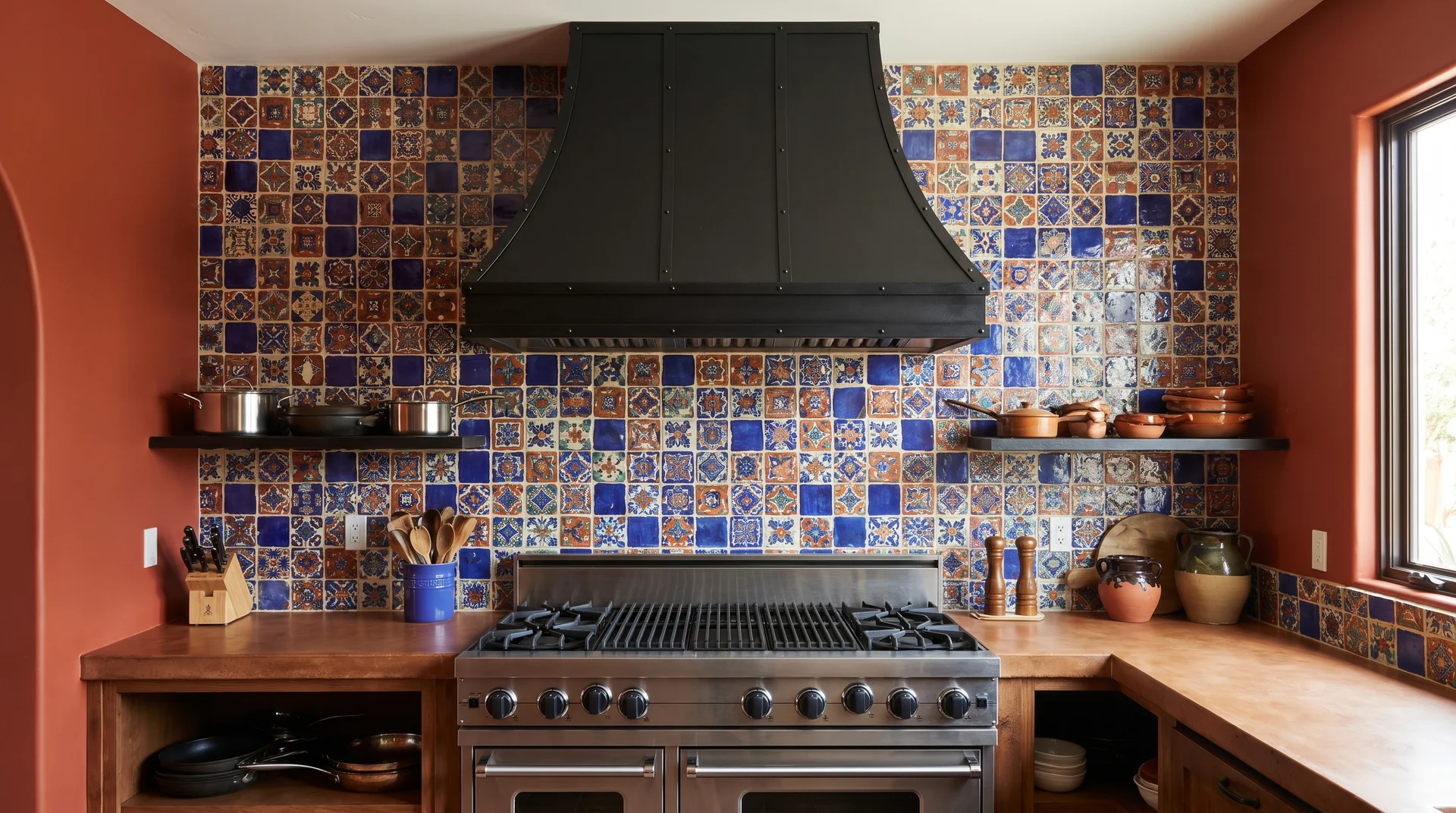
Colorful tile kitchens need warm, saturated wall color to anchor the tile; white walls disconnect it from the room.
The non-negotiable visual element is hand-painted or Talavera-style tile in a dominant placement: the full backsplash, the floor, or the island face. A half-row of decorative tile above white subway tile won’t establish this aesthetic.
Warm terracotta, deep ochre, or warm clay wall color is what lets the tile feel at home. Without it, the tile looks installed by accident.
Tile sourcing and installation belong in a separate guide with different planning criteria. That’s a different article, and it needs different criteria.
Japanese Zen / Wabi-Sabi Kitchen Decor
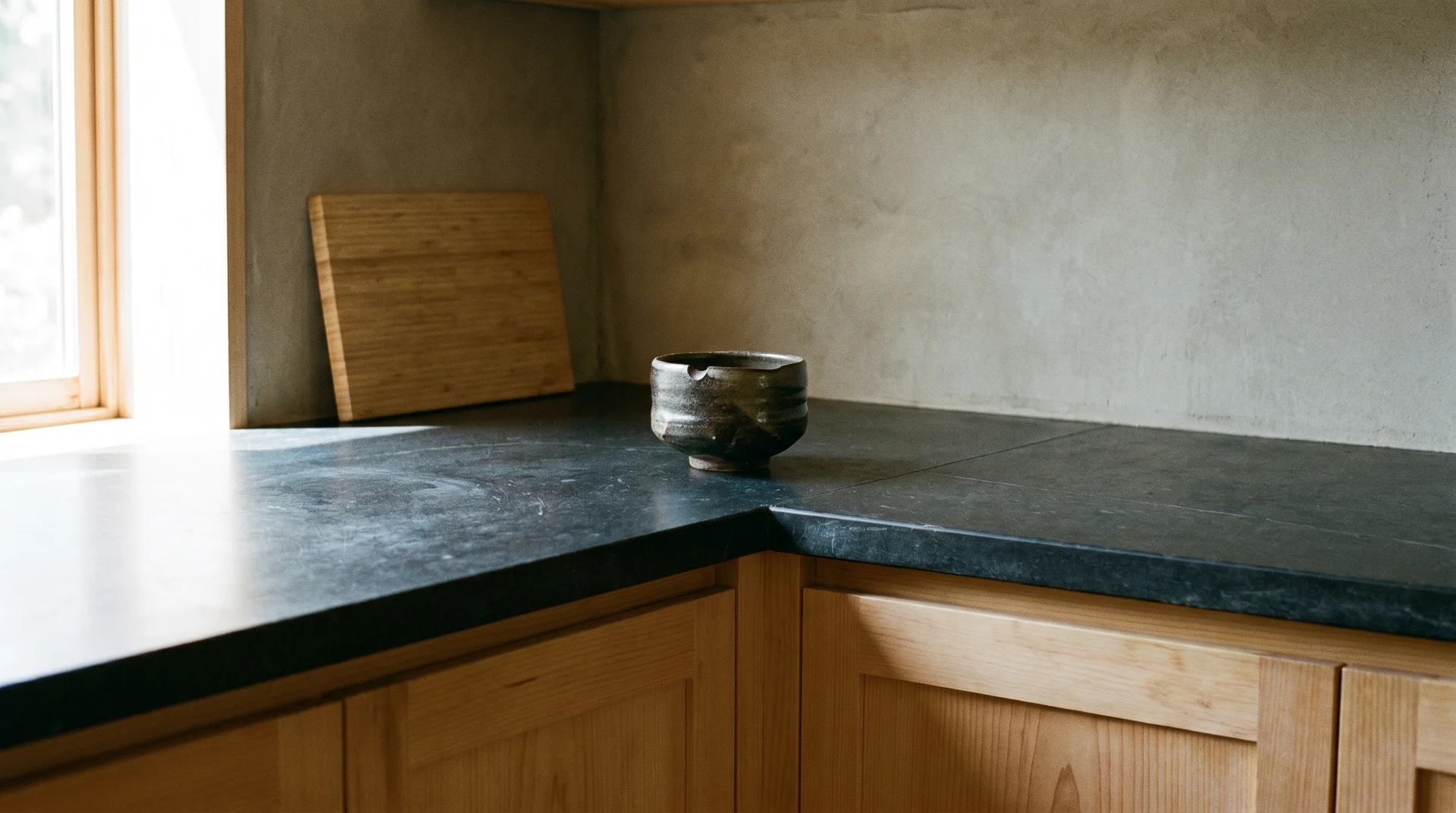
Japanese Zen kitchens require only natural materials on every visible surface: wood, stone, clay, and linen.
Anything synthetic or imitating another material cancels the effect. The material honesty is the aesthetic.
The same counter discipline as Japandi applies here, but the material selection standard is stricter. The distinction from Japandi: Japandi runs lighter and is more Scandinavian-influenced.
Japanese Zen allows darker, more weathered, and more visibly imperfect materials. The aged quality is intentional.
How to Choose a Kitchen Decor Theme?
To choose a working theme, start with your three fixed elements.
The theme that works is the one your kitchen can actually hold. Those fixed elements matter more than any mood board does.
Start with What You Cannot Change
Fixed elements eliminate options before you fall in love with them, and that’s useful rather than discouraging.
You’re standing in your kitchen before it gets remade. The floor underneath you and the countertop in front of you are the design problem you’re actually solving.
Run the themes you’re drawn to against your cabinet color, your floor, and your countertop. Cross off any theme that requires a foundation you don’t currently have.
Some themes have near-mandatory foundations. Knowing them before you plan prevents the most common mid-project surprise.
- Coastal Hamptons: white or near-white cabinetry as the base
- Modern Farmhouse: a light, neutral overall palette
- Mediterranean: structural tile in a dominant placement
If your kitchen doesn’t provide those foundations, those themes carry an implicit additional cost. Budget that honestly before the decorating decision.
Apply the One-Hero Rule
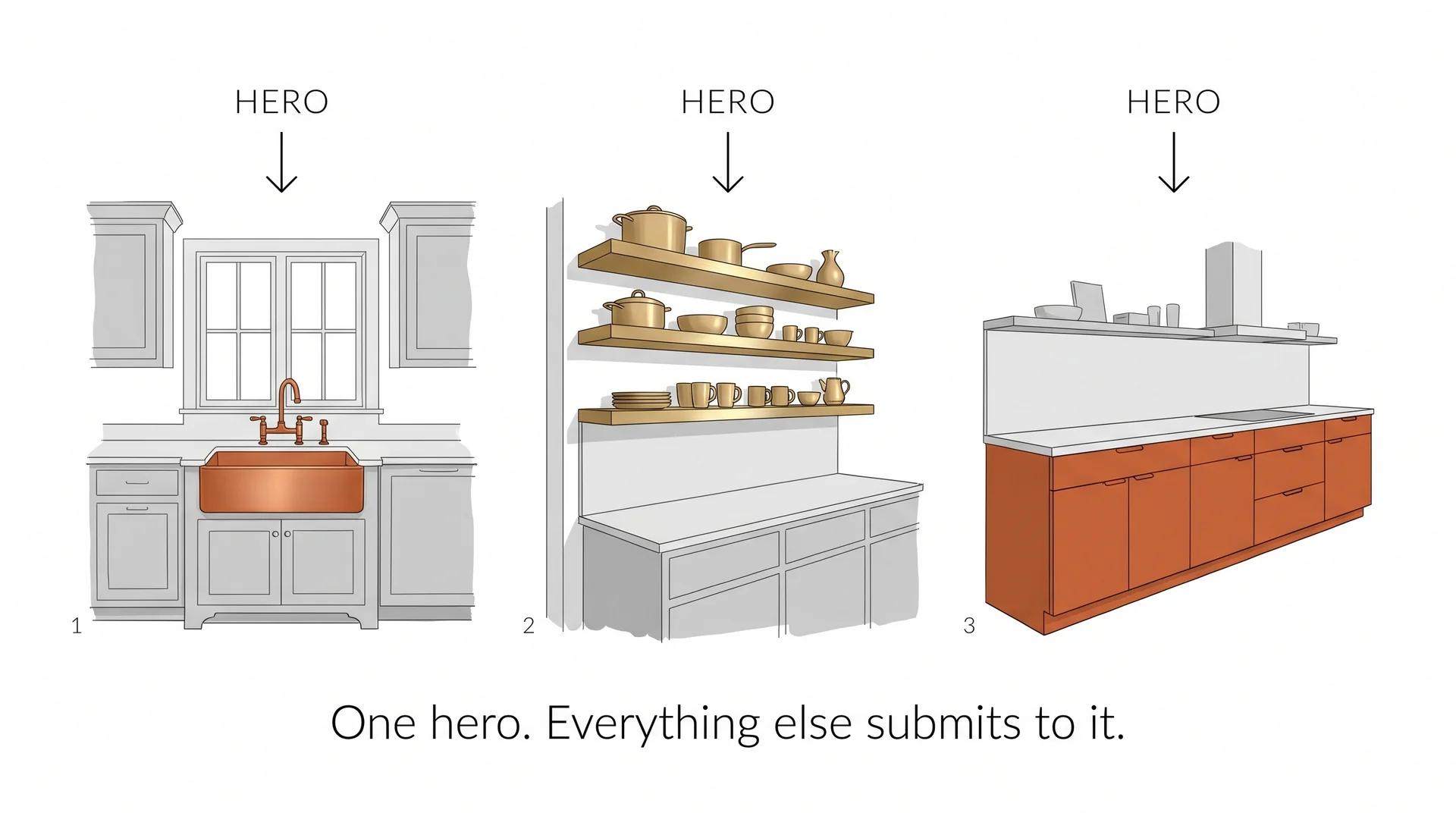
Every theme has one non-negotiable visual element that anchors it, and everything else submits to that element.
I built this rule from a project that cost me $6,000 to fix. I had over-specified a kitchen: patterned backsplash, brass hardware, marble counters, dark cabinets, open shelving with mismatched objects, all competing at once. No single element had dominance. The client cried at the reveal. Not happy tears.
Every kitchen needs one dominant visual statement. Everything else submits to it.
Your hero tends to already be showing up in your saves. Look at the images you’ve saved more than once and identify what element appears in all of them. That element is your hero.
As you reviewed the 25 themes above, each H3 named its non-negotiable visual element. That element is the hero for that theme. If the hero doesn’t work with your fixed elements, the theme probably doesn’t work for your kitchen without additional investment to build the right foundation first.
Match Theme Longevity to Your Budget
The less budget you have to revisit the decision later, the more your theme should prioritize longevity over novelty.
The budget is the design problem. How much it costs you to change your mind later should weigh on the decision you make now. The constraint is where the real decision lives.
| Longevity Category | Themes |
|---|---|
| Excellent (10+ years demonstrated) | Traditional, French Country, Coastal, Mid-Century Modern, Scandinavian |
| Strong (7–10 years) | Modern Farmhouse, Contemporary, Japandi, Biophilic, Industrial |
| Context-dependent | Bohemian, Eclectic, Cottagecore, Dark/Moody, Rustic, English Country |
| Higher-risk (trend-adjacent) | Color-Drenched, Art Deco, Maximalist, Vintage/Retro, Japanese Zen |
Higher-risk themes are not poor choices. They work best when paired with lower structural commitment: paint and textiles over cabinetry and tile. Reversibility is proportional to how much you’re willing to change later without a renovation budget behind you.
Frequently Asked Questions
What Are the Most Popular Kitchen Decor Themes Right Now?
Modern Farmhouse, Coastal, and Contemporary are the most consistently searched kitchen decor themes. Among bolder choices, Dark/Moody and Japandi have grown the most sharply in interest over the past two years [VERIFY].
What Kitchen Decor Theme Is the Most Timeless?
Traditional, French Country, and Coastal have the longest demonstrated staying power. Traditional carries no expiration date: its defining elements are structural rather than trend-dependent. Scandinavian and Mid-Century Modern have also held well over decades.
Can I Mix Kitchen Decor Themes?
Yes, with one condition: the themes you mix should share at least one visual element. A shared palette, material, or hardware finish holds different stylistic references together. Decide what your hero element is before you start mixing.
What Kitchen Decor Themes Work Best for Small Kitchens?
Scandinavian, Coastal, and Contemporary are the most forgiving for smaller spaces. All three use light palettes, minimal visual weight, and clean sightlines. Themes that rely on pattern, dark color, or accumulated objects increase visual density and make tight spaces feel more compressed.
How Do I Make My Kitchen Look More Cohesive Without Renovating?
Replace hardware first. A consistent finish across all cabinet doors and drawers creates immediate visual unity at relatively low cost. After hardware, edit the countertop: reduce what’s out and keep only what belongs to one color family.
Final Thoughts
The right starting point is your fixed elements. The theme that works begins with those.
The one-hero rule focuses on what remains after the fixed elements narrow the field. Your budget determines how reversible the commitment needs to be.
The theme you love and the theme your kitchen can actually hold are sometimes different questions. Knowing which one you’re answering first is what separates a renovation from a redo.