

Most ceramic cookware articles lead with a ranked list. The problem is that “ceramic” on a pan label describes a coating method rather than a quality standard.
A $60 OXO skillet and a $445 Caraway set both qualify as ceramic non-stick. The performance difference between them becomes clear around month six of regular use.
This guide covers 11 brands across three distinct ceramic types. The type you’re buying matters more than the brand name.
The number of brands that didn’t make this list is longer than the list itself. If you’re primarily here because of the health angle, the safety analysis is here. That’s a different article with different criteria, and this one is about brand selection.
Understanding the Three Types of Ceramic Cookware
Not all ceramic cookware is built the same way.
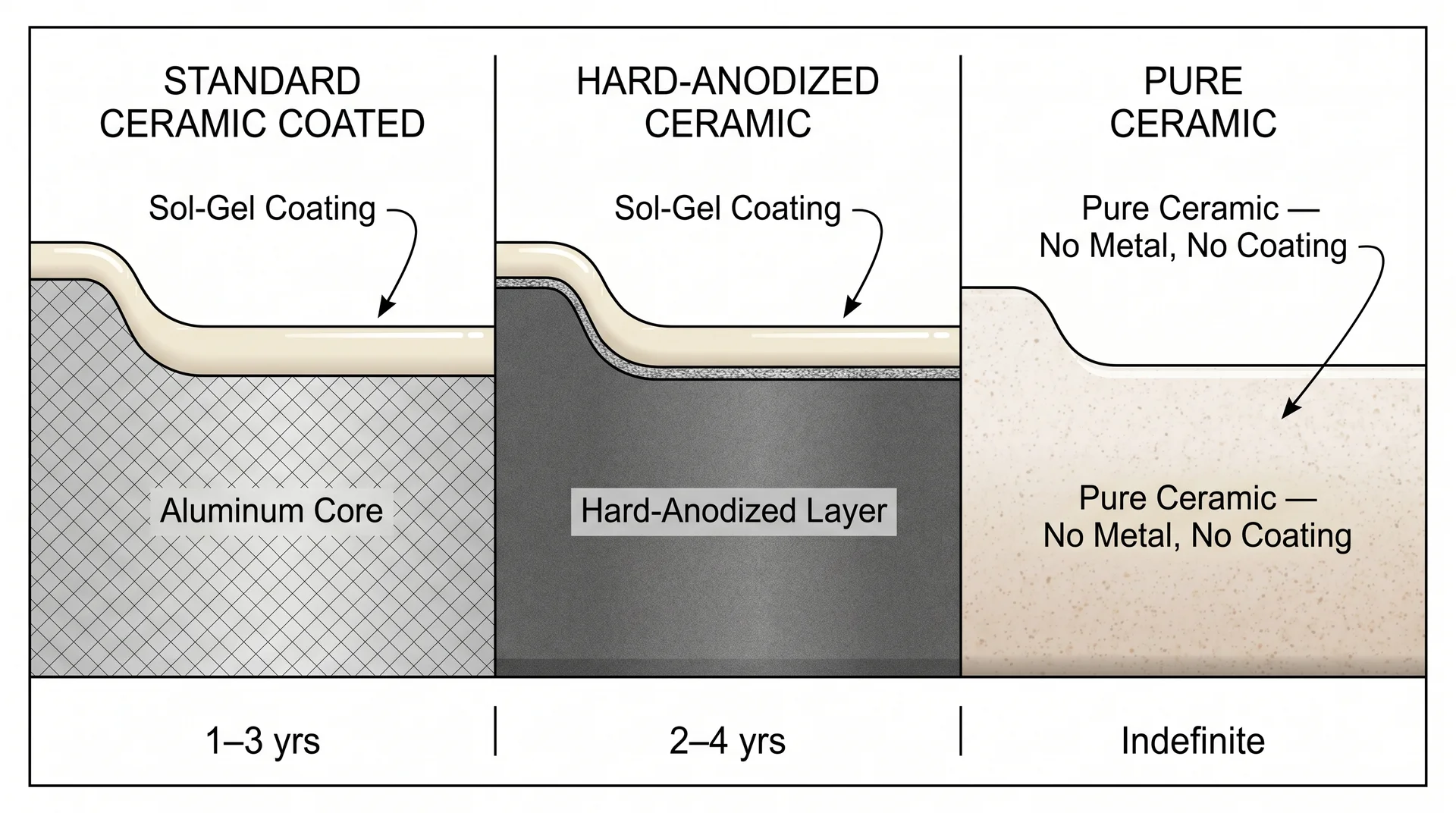
Every brand in this guide falls into one of three construction categories. The construction type determines long-term performance more reliably than the brand name or the coating’s marketing name.
| Type | What It Is | Typical Non-Stick Lifespan | Best Use Case |
|---|---|---|---|
| Ceramic-Coated Aluminum | Aluminum base with a sol-gel ceramic layer applied on top | 1-3 years with proper care | Eggs, fish, pancakes, and low-to-medium heat cooking |
| Hard-Anodized Ceramic | Electrochemically hardened aluminum base with ceramic coating | 2-4 years with proper care | Daily cooking, induction, light searing |
| Pure Ceramic | Clay and minerals throughout – no metal base, no synthetic coating | Indefinite if not chipped or dropped | Oven use, slow cooking, health-first buyers |
The sections below cover what each type means in practice before the brand entries begin.
Ceramic-Coated Aluminum
This is what most people mean when they say “ceramic pan.”
An aluminum core conducts heat quickly. A sol-gel ceramic layer on top releases food without PTFE or PFAS. That describes most brands at most price points in this category.
The limitation lies in the aluminum: it’s a soft metal that warps under sustained thermal stress. A warped base degrades the coating from below. In my experience, that failure gets blamed on user error more often than on the construction.
Hard-Anodized Aluminum With Ceramic Coating
Hard-anodized aluminum changes what the ceramic coating is sitting on.
Anodization is an electrochemical process that hardens the aluminum’s outer layer to roughly the hardness of steel. The result is a base that resists warping significantly longer than standard aluminum.
The ceramic coating applied on top is often the same class of sol-gel material used in standard pans. The base underneath is what changes.
This is the structural reason GreenPan Valencia Pro outperforms GreenPan Chatham, and the distinction lies in the base construction.
Pure Ceramic
Pure ceramic cookware contains no metal base and no synthetic coating of any kind.
Pure ceramic cookware is made from clay and minerals, fired at high temperatures. There’s no coating to chip, no aluminum to warp, and no proprietary formula with undisclosed components.
The cooking experience is genuinely different from any coated pan. Pure ceramic heats slowly and holds heat longer than coated options. You need to preheat at lower settings than you’d expect and add food before the surface gets too hot.
Best Ceramic-Coated Cookware Brands
These five brands all use a standard aluminum base with a sol-gel ceramic coating.
The differences come down to aluminum gauge, coating quality, and how each brand positions itself at retail.
Caraway
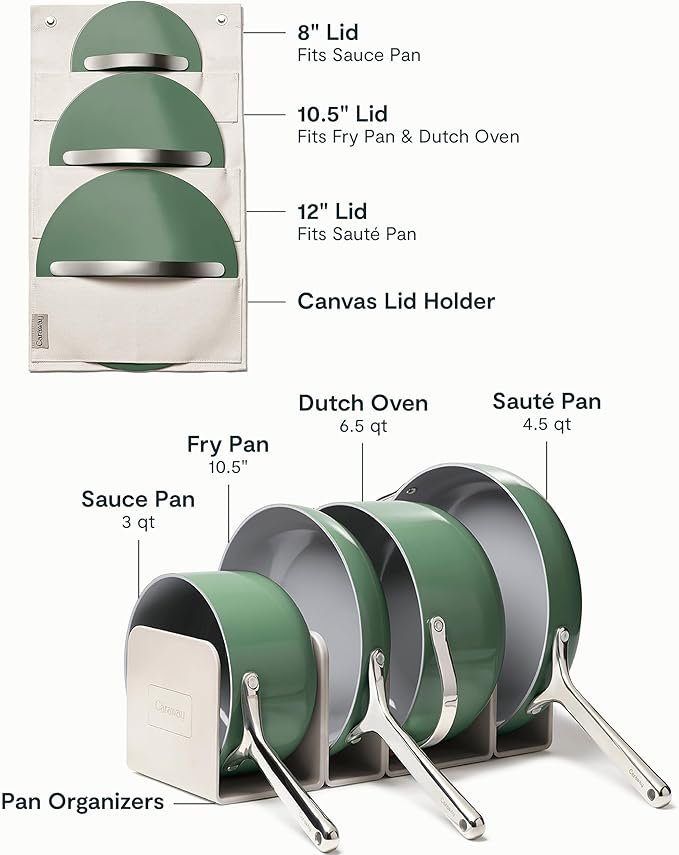
Caraway is the best-designed ceramic set for home cooks right now.
Part of the $445 price reflects a well-performing coating and a genuinely useful 550°F oven rating. Part of it reflects the color palette and the magnetic storage system.
The storage system sounds like a marketing add-on until you use it in a small kitchen. If cabinet space is tight, it solves a real problem that most cookware sets don’t address.
These specs set Caraway apart from other ceramic-coated sets at this price:
- Oven safe to 550°F, higher than most ceramic-coated aluminum options
- Induction compatible across all pieces in the set
- Magnetic storage racks for pans and lids included
- 12-piece set: around $445 at full retail
The 550°F rating and induction compatibility are where the functional value sits. The storage system is where Caraway differentiates.
Food and Wine tested 24 ceramic sets in early 2026 and named Caraway the best overall. That result is consistent with what I’ve tracked over time.
Lifespan is 1–3 years of strong non-stick performance with proper care, which is the ceramic-coated aluminum category average. That’s the ceiling for this construction type.
GreenPan
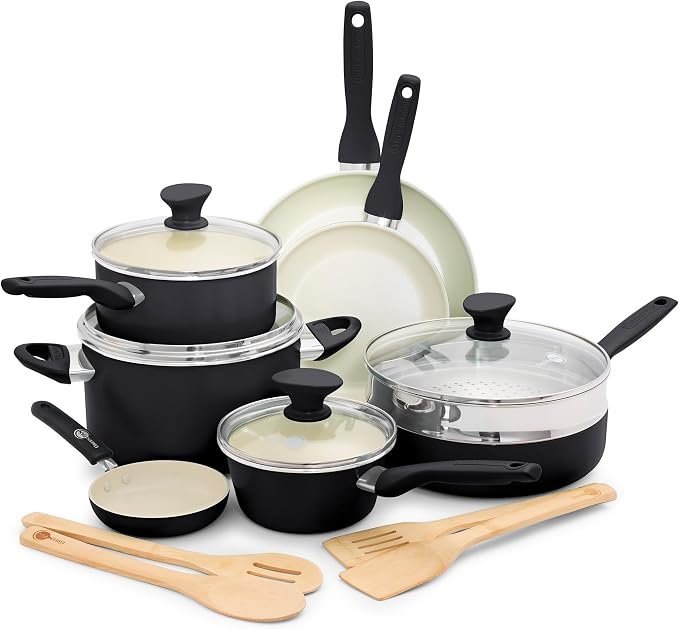
GreenPan has been refining ceramic non-stick longer than any other brand, and its lineup is the hardest to navigate in the category.
That experience shows in their better lines. It’s obscured by the number of lines they sell simultaneously and the lack of clear differentiation between them.
The most common mistake buyers make: choosing a Chatham or Stockholm on sale and expecting Valencia Pro performance. They are built to different specifications and deliver different results after six months of use.
Here’s how GreenPan’s main lines actually differ:
- Entry lines (Chatham, Stockholm): Standard ceramic-coated aluminum. Around $30–$80 per piece. Good starting point, standard lifespan expectations apply.
- Mid-range (Cambridge, Searsmont): Hard-anodized body on most configurations. Around $80–$130 per piece. More durable than the entry lines.
- Valencia Pro: Hard-anodized base, Thermolon Minerals Pro coating, America’s Test Kitchen winner. A different product category entirely is covered below under hard-anodized brands.
- GP5: GreenPan’s most advanced coating iteration. Less independently tested than Valencia Pro at this point.
Choosing the right GreenPan line matters more than choosing GreenPan as a brand. Valencia Pro is covered separately in the hard-anodized section below.
My view is that GreenPan would serve buyers better with fewer lines and clearer differentiation. They haven’t done that, so the work of understanding which line you’re choosing falls to you.
OXO
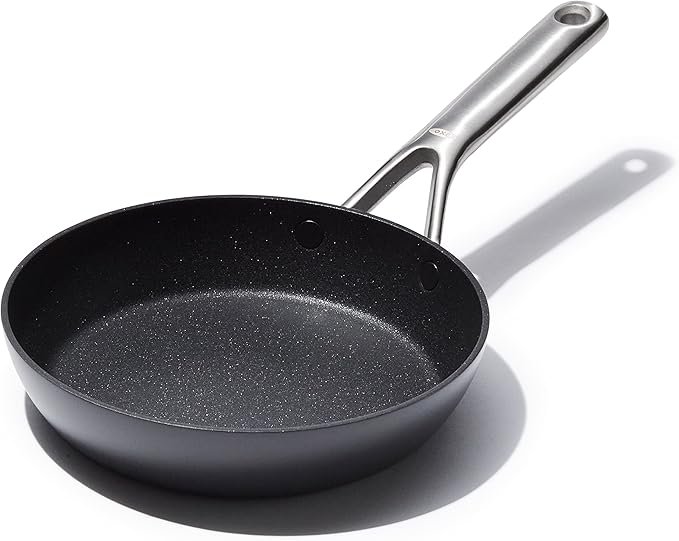
The OXO Ceramic Professional line is the best-value single skillet for readers not ready to commit to a full set.
The Ceramic Professional line uses a hard-anodized body and sells at around $60 per skillet. I’ve used the OXO Ceramic Pro 12-inch for about 14 months, and I wouldn’t change that recommendation yet.
OXO doesn’t have Caraway’s visual identity or color options. If the way the pan looks in your kitchen matters as much as how it cooks, OXO won’t satisfy that. It’s built for a different set of priorities.
KitchenAid
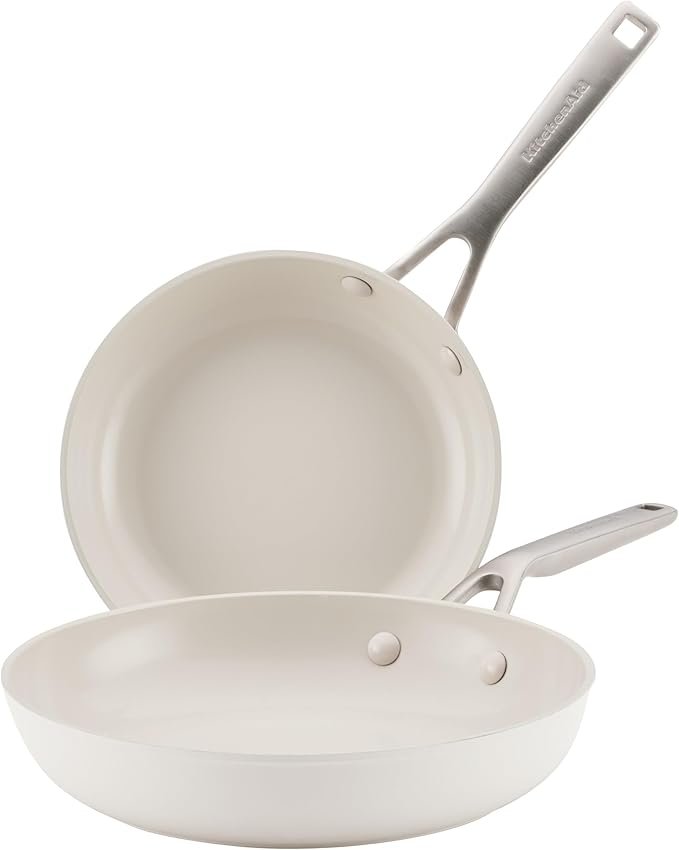
KitchenAid’s ceramic lines offer solid construction at a price between OXO’s entry point and Caraway’s premium.
Sets typically run $150–$250, depending on configuration. The better lines use a hard-anodized exterior with induction compatibility on most pieces.
The independent testing record for KitchenAid ceramic is thinner than Caraway’s or GreenPan’s. That means less data on long-term durability. I haven’t tracked the coating performance as long, and I won’t claim otherwise.
T-fal
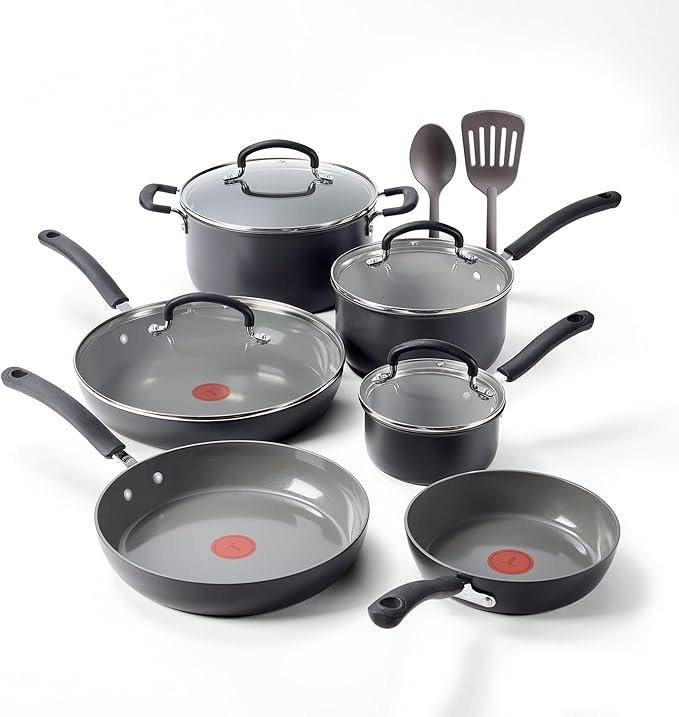
T-fal is the right answer if budget is the primary constraint and you want a complete set today.
Sets start around $100–$150 for 12-piece options. The Ultimate line uses hard-anodized construction despite the entry-level price. The oven-safe temperature is 400°F, which is lower than Caraway’s 550°F and lower than most hard-anodized options in this guide.
T-fal’s coating shows wear earlier than higher-gauge options in the category. That’s the honest trade-off at this price point. Think of this as a starting point in ceramic cookware.
Best Hard-Anodized Ceramic Cookware Brands
Hard-anodized ceramic pans are built on a different foundation.
Unlike standard ceramic-coated aluminum, these use an electrochemically hardened base. It resists warping longer, and the ceramic coating performs better as a result.
GreenPan Valencia Pro
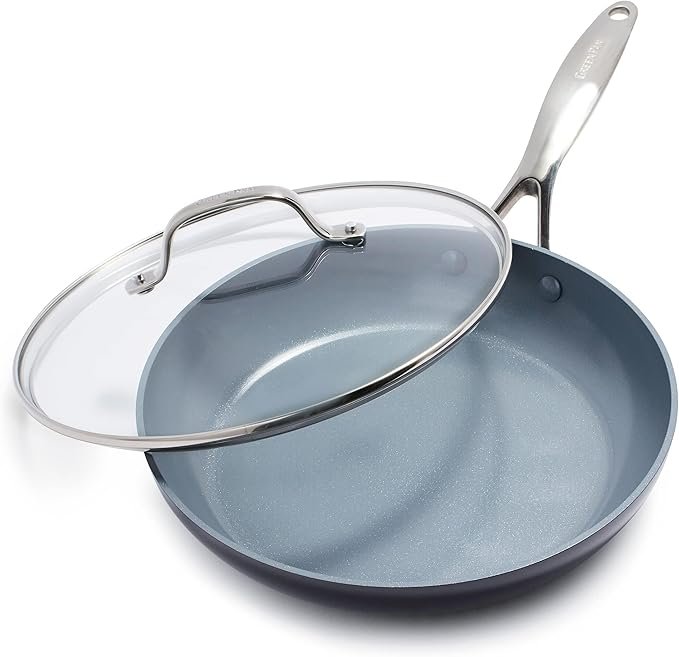
The GreenPan Valencia Pro is the most independently validated ceramic pan currently available.
America’s Test Kitchen named the Valencia Pro the top ceramic non-stick skillet. Serious Eats reached a different conclusion in their June 2026 review, placing Le Creuset first. Two credible testing organizations, two different top picks worth knowing before you decide which result matters more to you.
I tested the Valencia Pro against three GreenPan entry-line pans in my own kitchen under identical conditions. The performance gap at the six-month mark was not close.
The key specs that separate Valencia Pro from every other GreenPan line:
- Hard-anodized body – not standard aluminum
- Thermolon Minerals Pro coating – the specific coating cited by name in ATK testing
- Oven safe to 600°F on most configurations
- Induction compatible across the full range
Buying GreenPan and expecting Valencia Pro performance is the most common complaint about the brand in r/cookware. These are not the same pan.
I use a handwritten journal to track pan performance across months. The spine is falling apart from years of notes. At month six, the Valencia Pro’s coating holds where every standard ceramic-coated pan has already started to harden.
Le Creuset Ceramic Nonstick
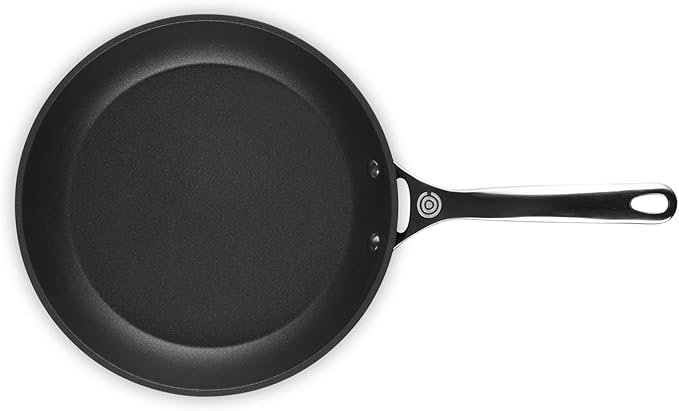
Le Creuset’s ceramic nonstick skillet is the current top pick from Serious Eats, and the construction justifies the price.
Serious Eats ranked it first in their June 2026 ceramic skillet review. It’s heavier than standard ceramic-coated options and notably scratch-resistant.
Le Creuset built ceramic into their existing quality standards rather than treating it as a budget non-stick line.
This pan feels closer to cast iron than to a lightweight ceramic option, which I find reassuring in a ceramic pan. Some cooks prefer that weight. Others find it tiring after daily use.
Made In CeramiClad
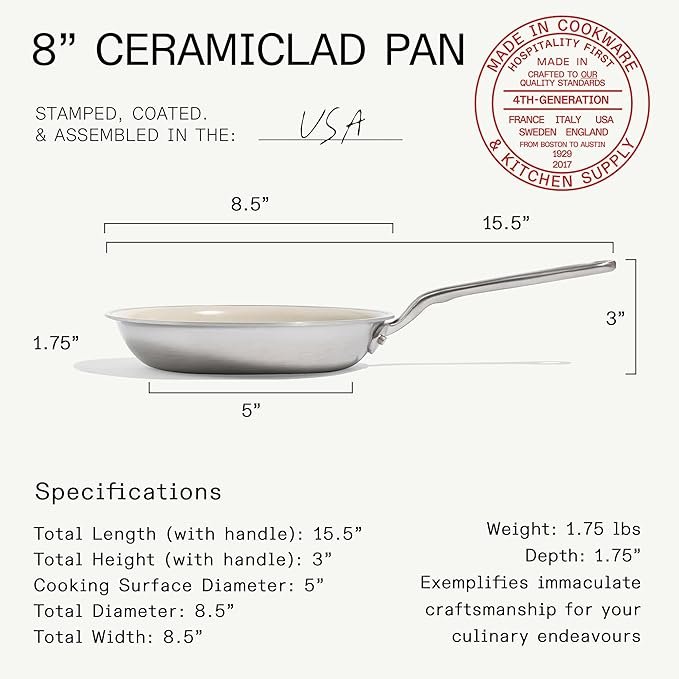
Made In CeramiClad offers the most durable ceramic coating base available outside of pure ceramic.
The 5-ply bonded construction uses multiple metal layers for better thermal stability than hard-anodized aluminum. It distributes heat more evenly and resists warping longer at sustained cooking temperatures. 7-piece sets run around $599.
The ceramic coating still has heat limits. The improvement is in base stability, not in what heat the coating can handle. Comparing CeramiClad against All-Clad HA1 in detail is a different article, and it needs different criteria.
Best Pure Ceramic Cookware Brands
Pure ceramic is not a better version of ceramic-coated pans.
It’s a distinct product category with its own cooking requirements and health profile. The learning curve is genuine, and so are the health benefits.
Xtrema
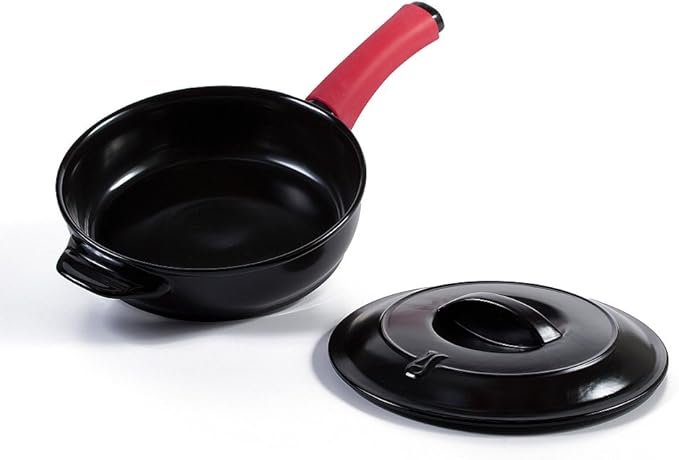
Xtrema is the only mainstream brand making 100% pure ceramic cookware for the stovetop.
Xtrema pans are made entirely from clay and minerals, fired at high temperatures. There’s no metal base, no synthetic coating, and no proprietary formula with undisclosed components. The non-leaching story is meaningfully different from any ceramic-coated pan.
The learning curve is real, and most negative Xtrema reviews trace back to cooking on them like a ceramic-coated aluminum pan. Xtrema heats slowly and holds heat longer than coated options.
Preheat at lower settings than you’d expect, and add food before the surface gets too hot.
The key differences from ceramic-coated pans:
- Non-leaching by nature: no coating to chip, no aluminum core to warp or leach
- Oven safe to temperatures that no ceramic-coated pan reaches
- Scratch-resistant: metal utensils won’t damage the surface
- Dishwasher safe: unlike any ceramic-coated pan
These aren’t features that ceramic-coated pans can match at any price.
If you want something that performs like a ceramic-coated pan from day one, Xtrema will frustrate you. I think the health argument for pure ceramic is the strongest case in this category, but only for cooks willing to adjust how they cook to match the material.
Emile Henry
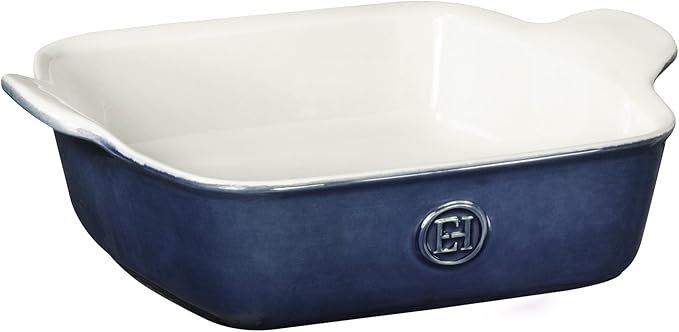
Emile Henry makes excellent pure ceramic cookware, but the primary application is the oven, not the stovetop.
The brand has made ceramic cookware in France since 1850. Their Flame ceramic line handles direct flame and some induction configurations. The product catalog is weighted toward dutch ovens, tagines, bakeware, and oven-to-table pieces.
If pure ceramic stovetop cooking is the goal, Xtrema is the more direct answer. If you want pure ceramic for braising, slow cooking, or oven-to-table serving, Emile Henry fits better than any other option here.
Ceraflame
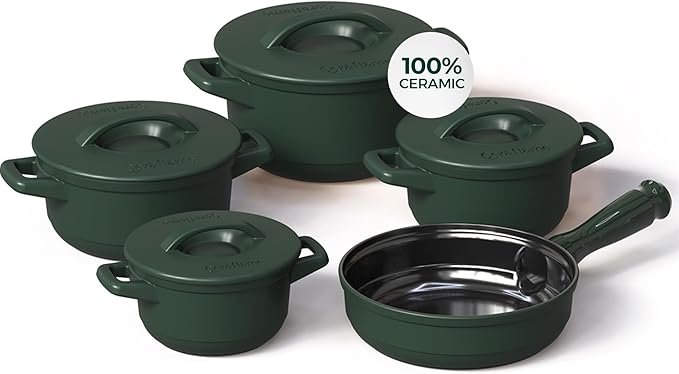
Ceraflame is the most versatile pure ceramic option for stovetop use, with limited US availability.
Made in Brazil, Ceraflame uses a thermal-shock resistant ceramic formula compatible with gas, electric, most induction setups, and microwave. Standard ceramic cracks when moved rapidly between hot and cold temperatures.
Ceraflame’s formula handles that transition better than most ceramic materials.
Third-party testing in English-language sources is thinner for Ceraflame than for Xtrema or Emile Henry. US retail availability is also limited compared to the other two pure ceramic options here. Both are worth knowing before you spend money on a less familiar brand.
What to Know Before You Buy Ceramic Cookware
Brand selection is only part of the ceramic cookware decision.
These three questions come up more than any others once buyers have had their pans for a while. Answering them before you buy saves a lot of returns.
How Long Ceramic Cookware Actually Lasts
Most ceramic cookware marketing overstates how long the non-stick performance holds.
Standard ceramic-coated aluminum delivers 1–3 years of strong non-stick performance with proper care. Hard-anodized ceramic typically lasts 2–4 years. Pure ceramic options like Xtrema last indefinitely when not chipped or dropped.
The exact lifespan depends on how you treat the pan. These ranges assume proper care:
- Standard ceramic-coated aluminum: 1–3 years, low to medium heat, no metal utensils, hand washing
- Hard-anodized ceramic: 2–4 years, same care conditions, better base stability
- Pure ceramic (Xtrema, Emile Henry, Ceraflame): Indefinite, no coating to degrade, only physical chipping from drops is a risk
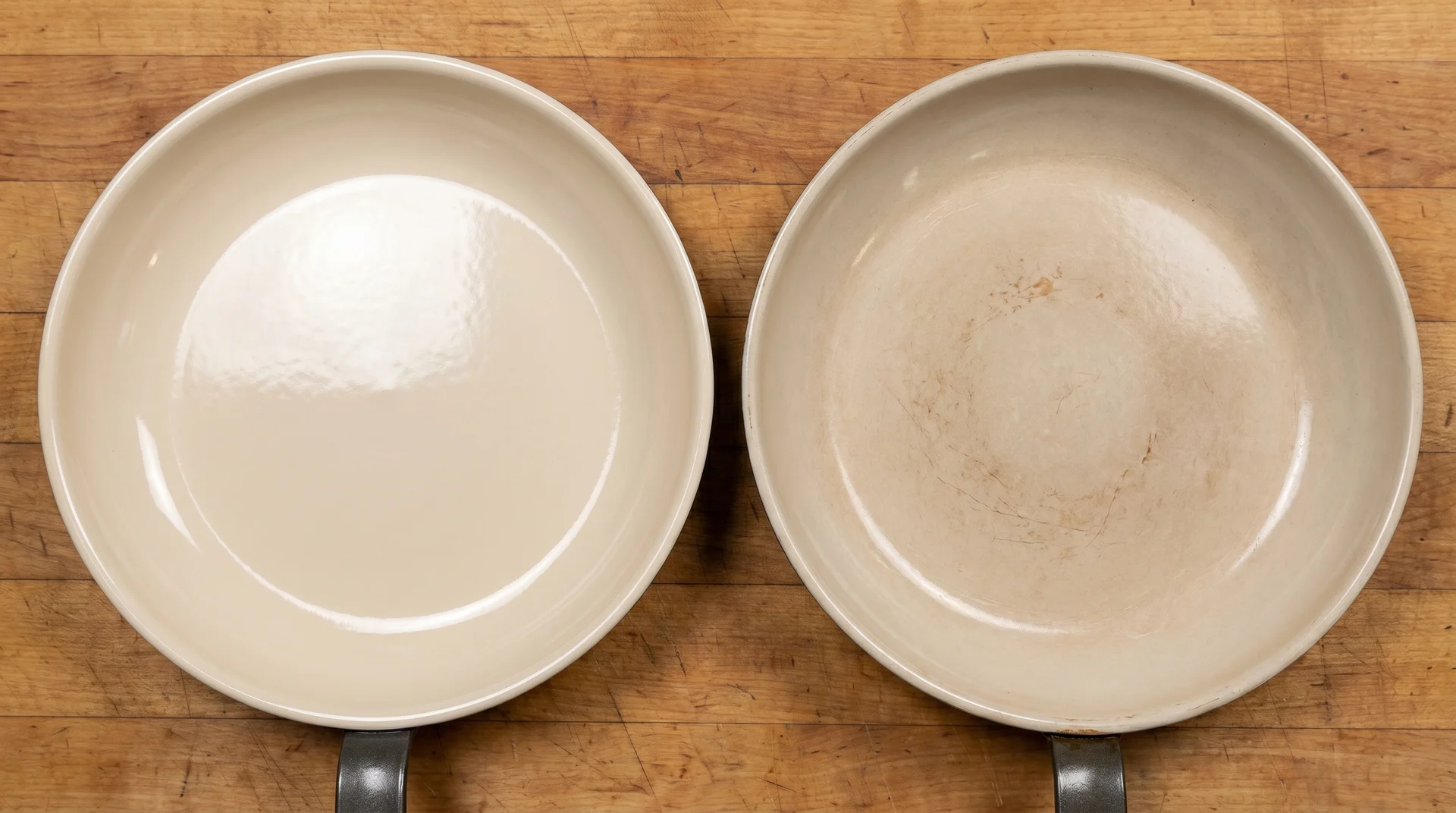
Violate those care conditions regularly, and you can cut these timelines significantly. Coating failure is gradual. The pain gets harder on eggs first, then fish, then everything else, and most people notice months after it started.
The base construction sets the lifespan ceiling. A warped aluminum base degrades the coating from below, regardless of how carefully you treat the surface. That’s why hard-anodized pans consistently outlast standard ceramic-coated aluminum in real use.
High Heat Is the Fastest Way to Shorten Coating Life
Ceramic coatings degrade under high heat, and this is the most common reason they fail early.
Low to medium heat is the operating range for any sol-gel ceramic coating. At high heat, the sol-gel coating degrades. The surface hardens, and the non-stick properties don’t recover.
Ceramic is the wrong choice for tasks that require sustained high heat, hard searing, or high-temperature stir-frying. Stainless, carbon steel, or cast iron handles those tasks more reliably.
How to Compare Product Lines Within a Brand
Three questions narrow down any brand’s product lineup faster than reading every product page.
Most brands sell multiple lines at different price points with minimal explanation of how they differ. These questions cut through that quickly:
- Is the base hard-anodized? If yes, expect a longer lifespan and better warp resistance. If no, expect standard ceramic-coated aluminum performance and timelines.
- What is the oven-safe temperature? Under 400°F limits your oven use significantly. At 500°F or above, most home cooking tasks are covered. If you regularly use pans in the oven, this guide to oven-safe ratings across pan types is worth reading before you buy.
- Is the coating name cited in independent testing? GreenPan’s Thermolon Minerals Pro appears in America’s Test Kitchen results by name. A proprietary coating that exists only in brand marketing is harder to evaluate objectively.
One question the list above doesn’t answer: whether these brands are manufactured in the US. None of the mainstream brands in this guide do. Most brand websites also don’t make it easy to compare their own product lines across price tiers.
The most useful purchase decision isn’t a brand choice. It’s a construction type choice, based on what you actually cook. Start with the types table at the top of this piece and let that narrow the list from there.
The coating gets all the attention in ceramic cookware marketing. The base does the actual work. Start there, and the brand list gets much shorter.