

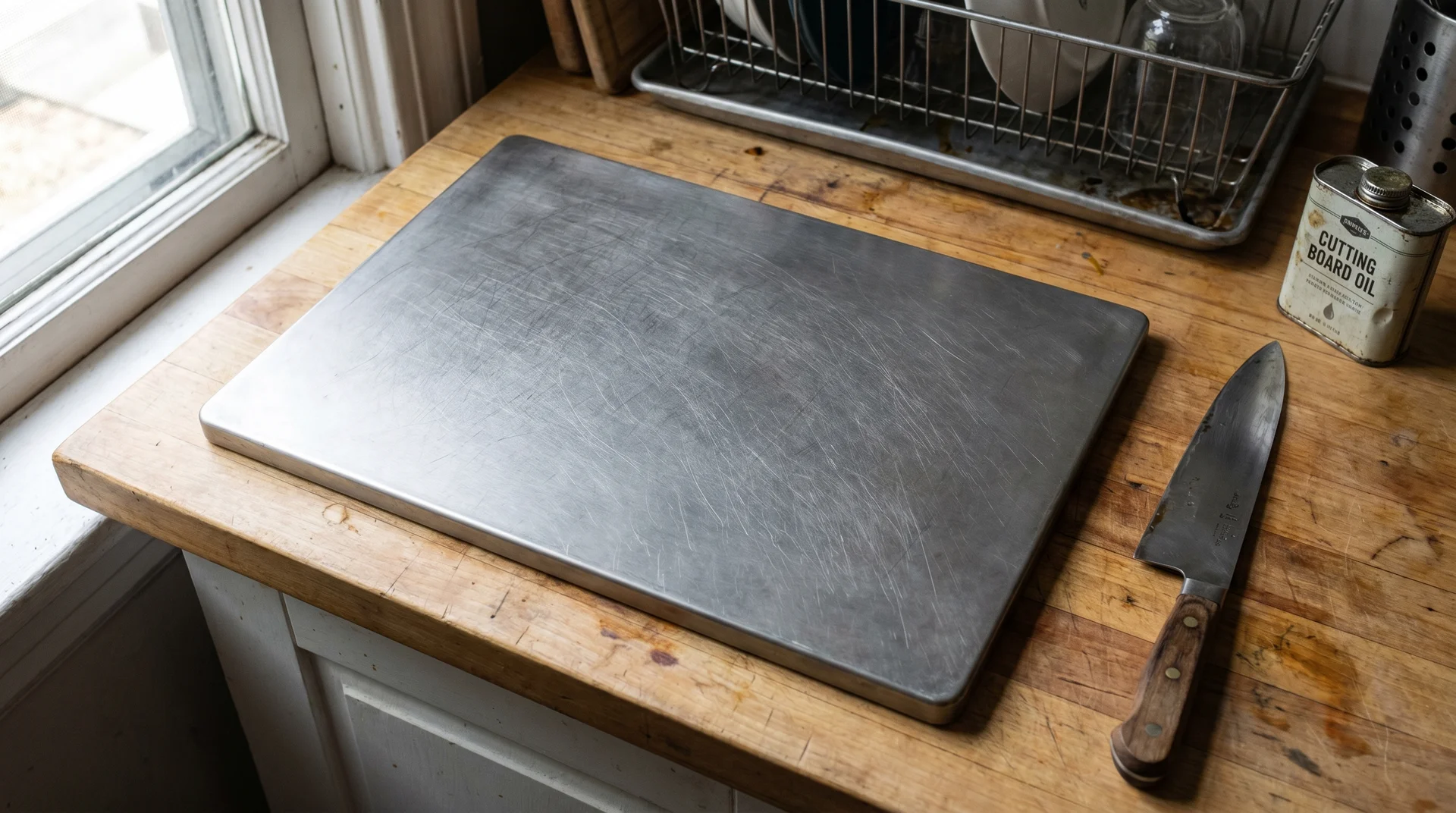
The safety question about titanium cutting boards has a direct answer: they’re food-safe. The surface material is biologically inert, resistant to bacterial adhesion, and not connected to any known toxicity pathway in food contact applications.
The more important question, which almost no one searching this topic knows to ask, is what “titanium” on the label actually means.
Most boards marketed as titanium use a titanium-based surface coating on a steel or aluminum substrate. Understanding that distinction is what changes “is this safe?” from a yes-or-no question into something specific enough to act on.
The Short Answer: Are Titanium Cutting Boards Safe to Use
Titanium cutting boards are safe for food contact. The titanium-based surface treatments used on these boards are biologically inert, resistant to bacterial adhesion, and free of the chemical migration concerns that have pushed many cooks away from plastic.
The toxicity anxiety driving most searches on this topic is not the primary problem with this product category.
The concern that actually deserves attention is what these surfaces do to your knife edges. If you maintain good knives, the surface hardness on a titanium-coated board is a real trade-off that product pages are not going to disclose.
The food safety section covers one honest caveat around coating integrity. But if the core question is whether the board will harm you or your food, it won’t.
For the broader question of what the safest cutting board material is overall, the answer depends on which risk you’re prioritizing. Titanium sits in an unusual position in that landscape, and the comparison section below maps it out against the alternatives most cooks are actually considering.
Read: Safest Cutting Boards to Buy
What “Titanium” Actually Means on a Cutting Board Label?
Solid titanium cutting boards do not exist in the consumer market at any price point that a home cook encounters.
Solid titanium is expensive to machine into large flat surfaces and unnecessary for an application where a surface coating achieves the same food-contact properties.
The Amazon listing that claims “100% Pure Titanium” describes a marketing position, not a material composition.
Solid Titanium vs. Titanium-Coated vs. Titanium-Infused
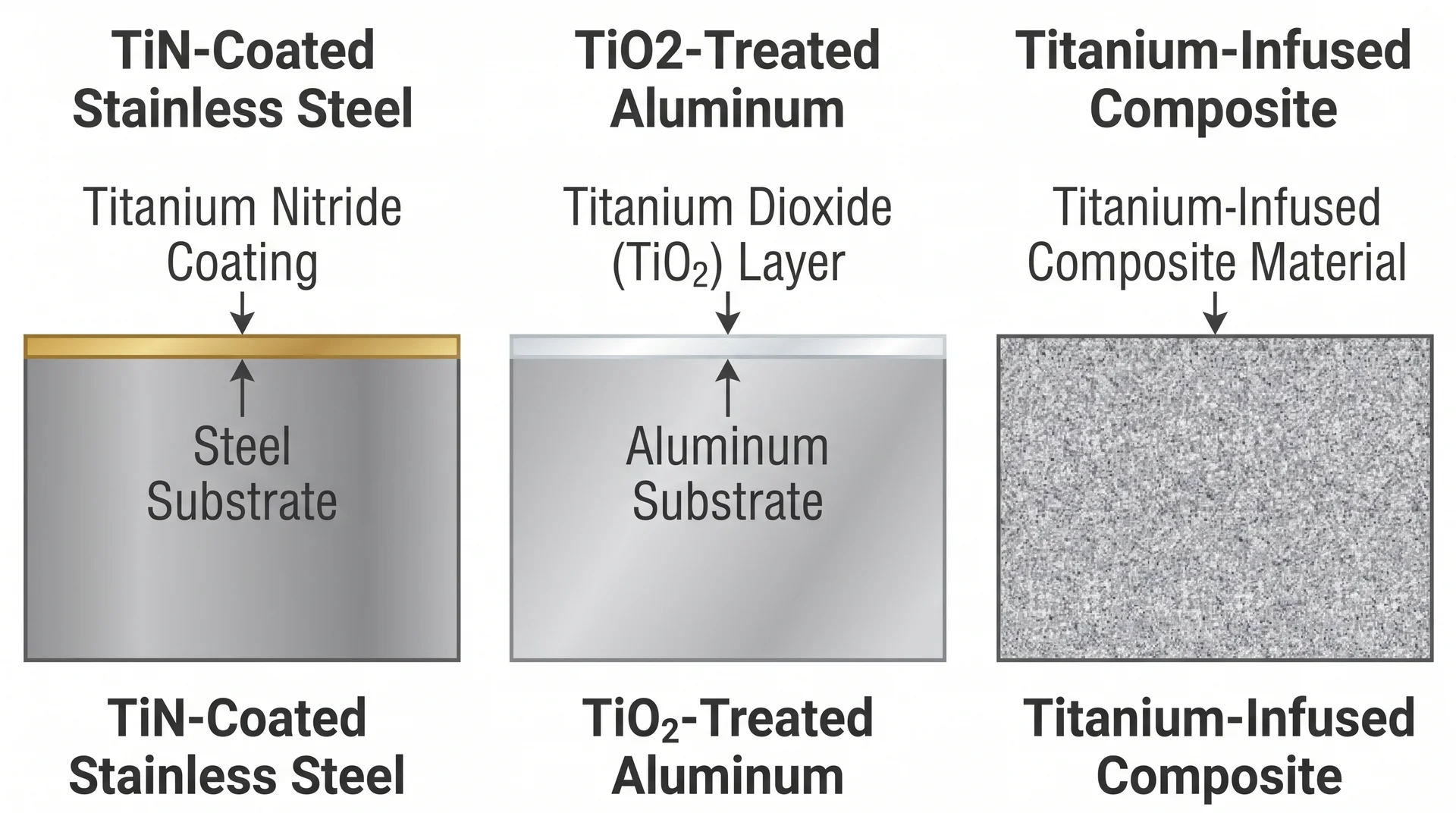
The most common construction in boards marketed as titanium is a stainless steel substrate with a titanium nitride (TiN) coating, applied through physical vapor deposition.
Titanium nitride is the same ceramic compound used to coat surgical instruments, industrial drill bits, and precision cutting tools. Calling the board “titanium” is technically anchored. It’s also incomplete in the way that matters.
A smaller number of products use anodized aluminum with a titanium dioxide surface treatment, sometimes marketed as “titanium-reinforced.”
A few brands apply the label to composites described as titanium-infused, which are the hardest claims to evaluate because the term names an ingredient without disclosing concentration, application depth, or process.
- TiN-coated stainless steel: The most common construction by far. A durable ceramic coating bonded to a food-safe metal substrate. This is almost certainly what you’re looking at.
- TiO2-treated aluminum: Less common. The aluminum substrate introduces a separate consideration if the surface coating is ever compromised, particularly around acidic foods.
- Titanium-composite or titanium-infused: Rare, and often vague. Ask for specific materials documentation before purchasing anything in this category.
Why Brands Use the Label the Way They Do
I spent several years building and scripting a North American ambassador program for a major European cutlery brand, training 12 representatives to translate material specifications into consumer language.
I recognize this pattern immediately. “Titanium nitride-coated stainless steel cutting board” is accurate and complete. It also converts poorly on a product page.
“Titanium cutting board” carries the associations people want: surgical-grade, inert, durable, forward-looking.
I’ve watched the same compression applied to knife steel grades, ceramic cookware coatings, and the various ways “non-stick” gets used to cover surfaces with meaningfully different chemical compositions. The label isn’t a lie. It’s a translation that removes the one detail you’d need to evaluate the product yourself.
Are Titanium Cutting Boards Safe for Your Knives?
The knife question is more immediately consequential for most home cooks than the toxicity question. Almost no brand selling these boards answers it honestly.
Surface Hardness Is the Number That Matters
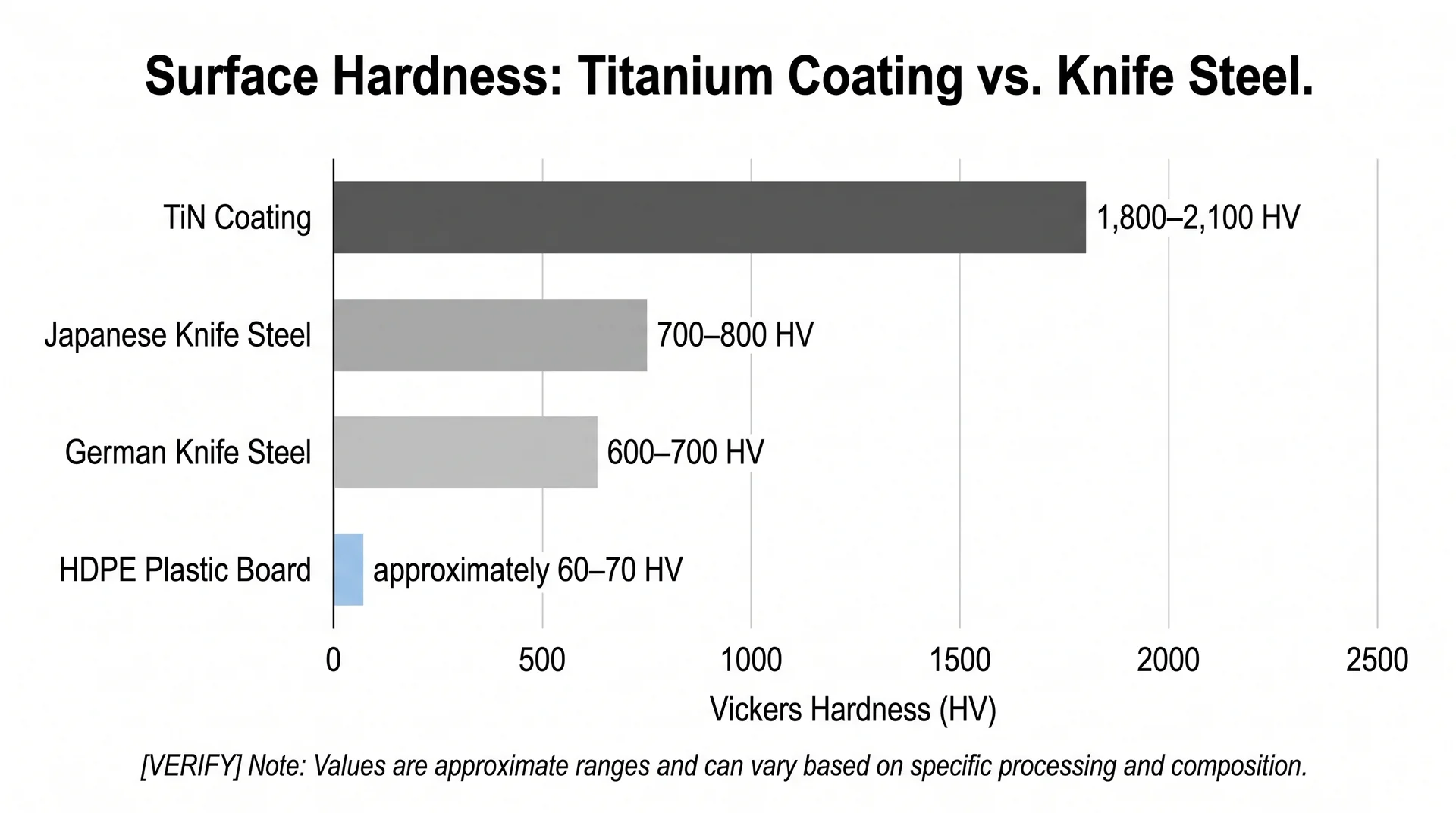
Titanium nitride coatings are significantly harder than steel in virtually any kitchen knife you own.
- TiN coatings measure approximately 1,800 to 2,100 on the Vickers hardness scale.
- Quality German chef’s knives run roughly 600 to 700 HV.
Even harder Japanese knives at 60 to 66 on the Rockwell C scale convert to approximately 700 to 800 HV. The surface of a titanium cutting board is two to three times harder than the blade working against it.
The practical consequence: cutting against a titanium nitride surface is mechanically closer to cutting against glass or unglazed ceramic than it is to cutting against wood or HDPE plastic.
Each stroke drags the edge across a surface harder than the blade steel, which is the condition that degrades an edge over repeated use. I’ve seen multiple brands claim their boards won’t dull your knives. I can’t reconcile that claim with the surface hardness data.
What This Means in Practice
If you own quality knives and sharpen them consistently, the edge degradation on a titanium cutting board is real and worth factoring in before you buy.
If your knives are inexpensive and you’re not maintaining a consistent edge anyway, this trade-off will matter less to you.
How quickly the problem becomes noticeable depends on your cutting technique, the pressure you use, and your blade geometry, so I won’t pretend I can give you a reliable week-by-week timeline. That genuinely varies too much by cook.
What the brand messaging means when it says “won’t dull your knives” is probably: a casual home cook with an inexpensive knife won’t notice dramatic, immediate damage. That’s a narrow claim, and it doesn’t hold for everyone holding this product.
The Professional Kitchen Reference Point

Professional kitchens don’t use hard metal or hard-coated surfaces for primary prep work.
The industry standard is HDPE, high-density polyethylene, or NSF-rated composite board. The reasoning is operational: at commercial prep volume, edge preservation is an infrastructure decision, and cutting against a surface softer than the blade is the straightforward answer.
HDPE doesn’t photograph well and doesn’t generate compelling content on social media.
That aesthetic gap is doing significant work in the titanium board’s marketing, and I think it’s worth naming directly. The professional choice is unglamorous and correct.
Titanium Cutting Boards and Food Safety: What the Research Actually Covers
The food safety case for titanium cutting boards is solid on one condition: the coating is intact. Knowing where that case holds and where it thins out is more useful than taking the non-toxic label at face value.
The Heavy Metals Question
Titanium is not a heavy metal in the toxicological sense. It’s biocompatible, used in orthopedic implants and surgical instruments, and not connected to the contamination pathways that make actual heavy metals a food safety concern. The heavy metals anxiety that brings some people to this search doesn’t apply to titanium specifically.
The more useful question is what sits under the coating and what becomes relevant if that coating is compromised.
- On a TiN-coated stainless steel board, a scratched surface exposes stainless steel, which is a recognized food-contact material under FDA food contact material regulations.
- On an aluminum-substrate board, deep scratches open a different conversation, particularly around acidic foods.
NSF/ANSI Standard 51 governs food equipment materials and is the framework a product needs to meet to make formally verified food-contact safety claims. Most titanium cutting boards in the consumer market don’t carry this certification. That’s not the same as being unsafe. It is, however, the accurate statement of where the independent verification actually stands, and it’s worth knowing before you treat the non-toxic label as settled.
Scratches and Coating Integrity: The Honest Answer
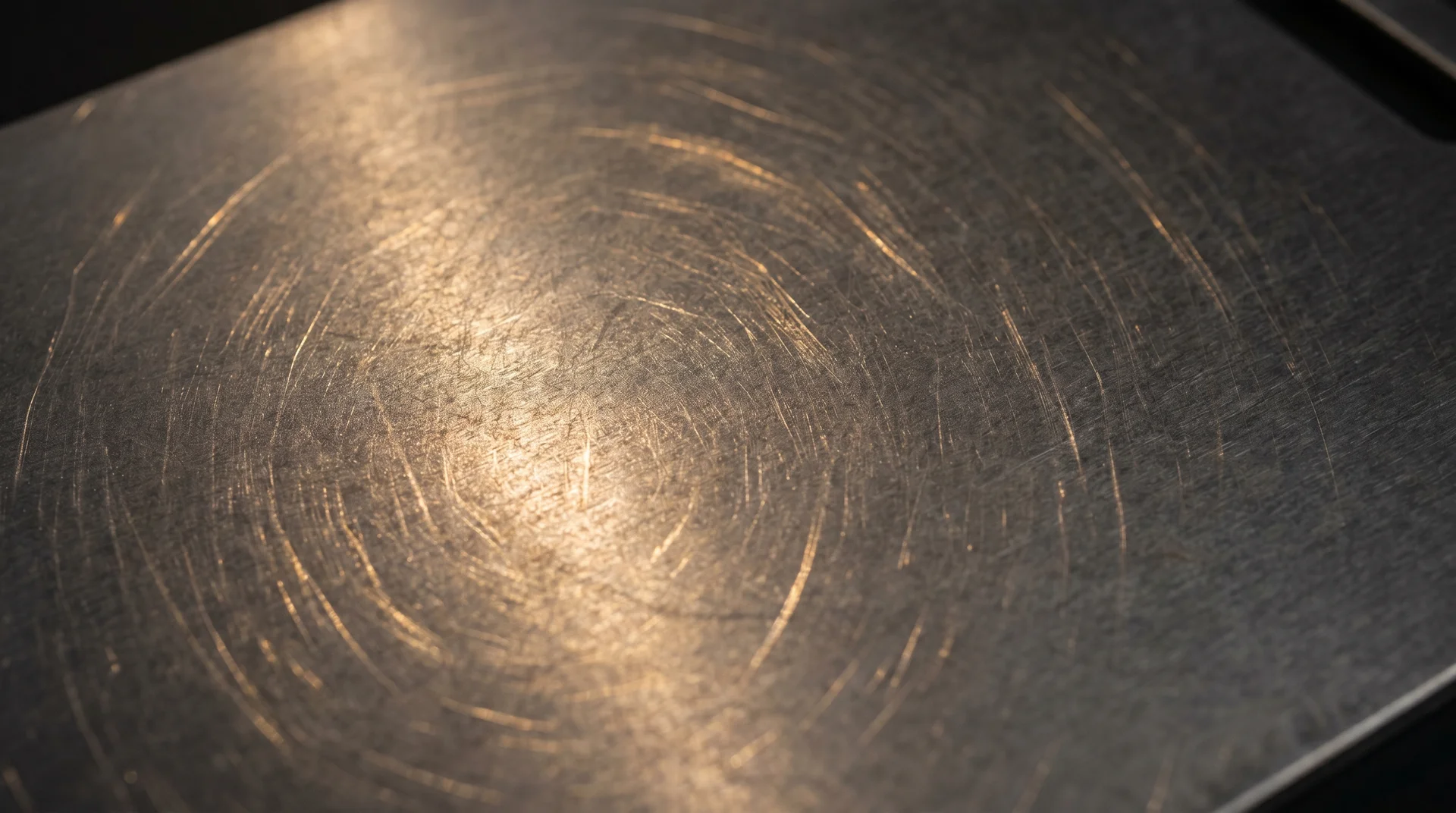
Light surface scratches on a titanium-coated board are not a food safety concern. The TiN coating remains bonded to the substrate through minor surface wear, and the material itself is inert.
This answers the specific question that comes up in Amazon reviews and product comment sections: scratch marks on a titanium board do not release anything toxic into your food.
Deep scratches that reach the substrate introduce a different situation.
- On a stainless steel substrate, the exposed material is itself a recognized food-contact surface, so the safety case holds.
- On an aluminum-substrate board, repeated contact between acidic foods and exposed aluminum is worth avoiding, particularly if the board is visibly worn rather than lightly marked.
Inspect the surface periodically and replace any board where the substrate is clearly exposed over a significant area.
Acidic Foods and Surface Reactivity
Titanium and titanium nitride are highly resistant to acid corrosion, which is part of why TiN coatings are used in environments where inertness against aggressive compounds matters.
Tomatoes, citrus, vinegar-based prep: none of these interact with the coating in any meaningful way.
The substrate distinction matters here, as it did in the scratch section.
Aluminum-substrate boards with a compromised coating and regular acidic food contact are the one combination in this product category where I’d recommend replacing the board rather than continuing to use it.
When the Non-Toxic Claim Holds and When It Doesn’t
“Non-toxic” has become close to meaningless as a kitchen product descriptor. I’ve watched it applied to cutting boards, cookware coatings, and cleaning products with widely varying accuracy.
For titanium cutting boards specifically, the claim is defensible for an intact surface, and the material basis for it is legitimate.
The honest version: the materials in these boards are not associated with known toxicity pathways in food contact applications when the coating is undamaged.
What the non-toxic label doesn’t cover is what the surface looks like after 18 months of daily use, and whether coating integrity holds through repeated mechanical stress and dishwasher cycles.
Knowing whether you’re working with an intact surface or a compromised one is exactly what the comparison below helps you think through.
Titanium vs. Other Cutting Board Materials: A Practical Safety Comparison
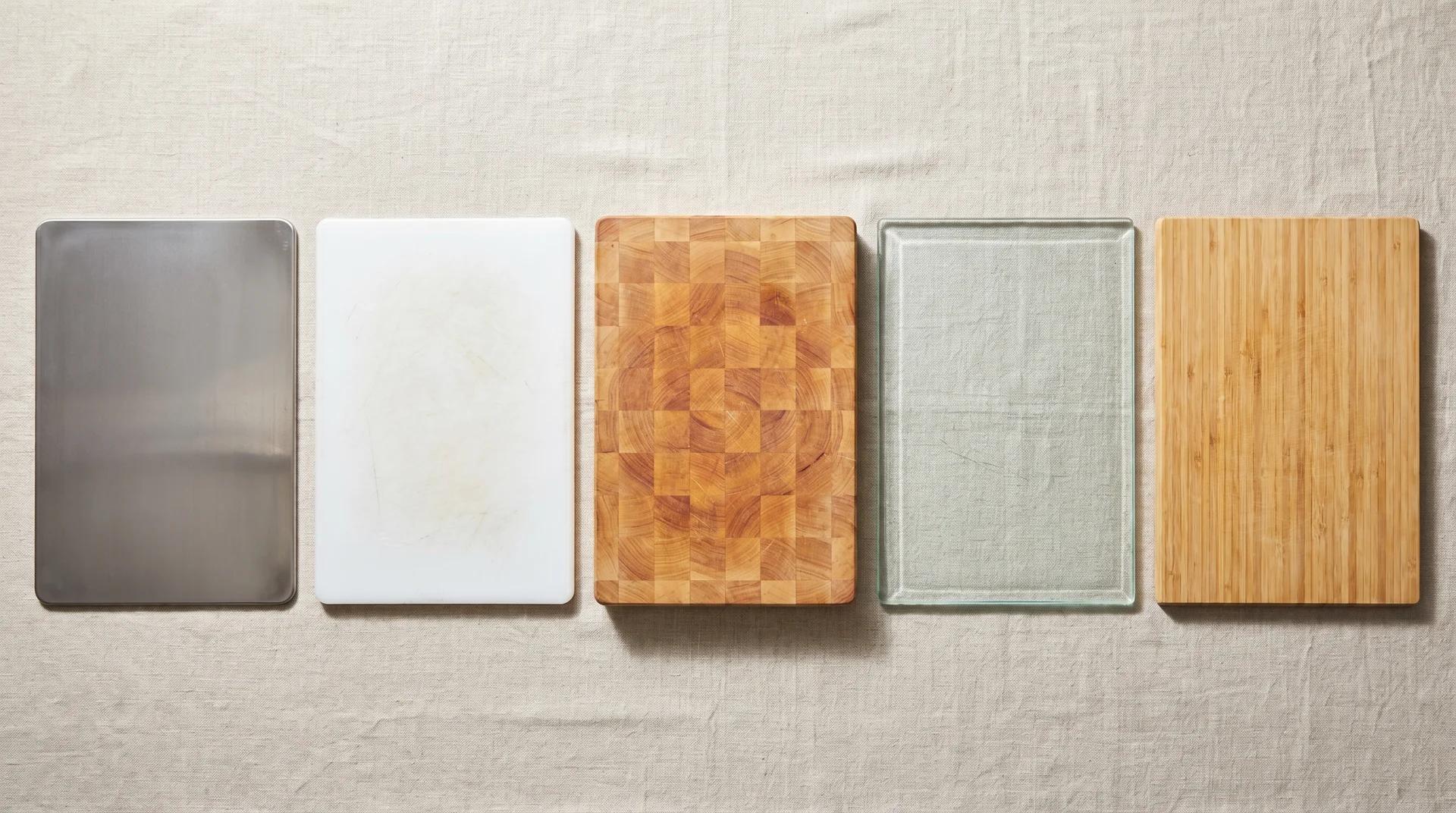
Where titanium sits in the cutting board safety landscape depends on which risk you’re prioritizing. This table covers the dimensions that matter for the decision most people are making.
| Material | Food Safety Profile | Impact on Knife Edge | NSF Certification Available | Primary Failure Mode |
|---|---|---|---|---|
| Titanium (TiN-coated steel) | Food-safe on intact surface; non-porous; acid-resistant | High: coating significantly harder than knife steel | Rarely in the consumer market | Coating scratch exposes substrate; substrate determines next step |
| HDPE plastic (NSF-rated) | Food-safe when certified; microplastic release from deep grooves in worn boards | Low: soft surface preserves edges | Widely available | Deep grooves harbor bacteria; boards need replacing when visibly worn |
| Hard maple or walnut | Food-safe with maintenance; surface demonstrates natural antimicrobial properties | Low: soft surface preserves edges | Available for commercial grades | Cracking or warping without regular oiling; not dishwasher-safe |
| Glass or ceramic | Food-safe; fully non-porous | Very high: edge damage, rapid and significant | Yes | Shattering risk; poor grip; audibly unpleasant during use |
| Bamboo | Variable; some products use adhesive binders that aren’t fully disclosed | Moderate: harder than wood | Limited | Surface splitting; adhesive degradation with repeated washing |
The health impact of those particles is an active research question, not a settled one. Moving away from a worn plastic board is reasonable.
Moving to titanium specifically as the solution trades one partially-understood risk for a surface that’s harder on your knives and that carries less long-term independent testing behind it than certified HDPE does.
The response most food safety researchers point to for the microplastic concern is replacing worn plastic boards regularly, not switching materials. That’s less satisfying as advice, but it’s more consistent with where the evidence currently sits.
Read: Are Plastic Boards Safe to Use?
Dishwasher Safety and Day-to-Day Care
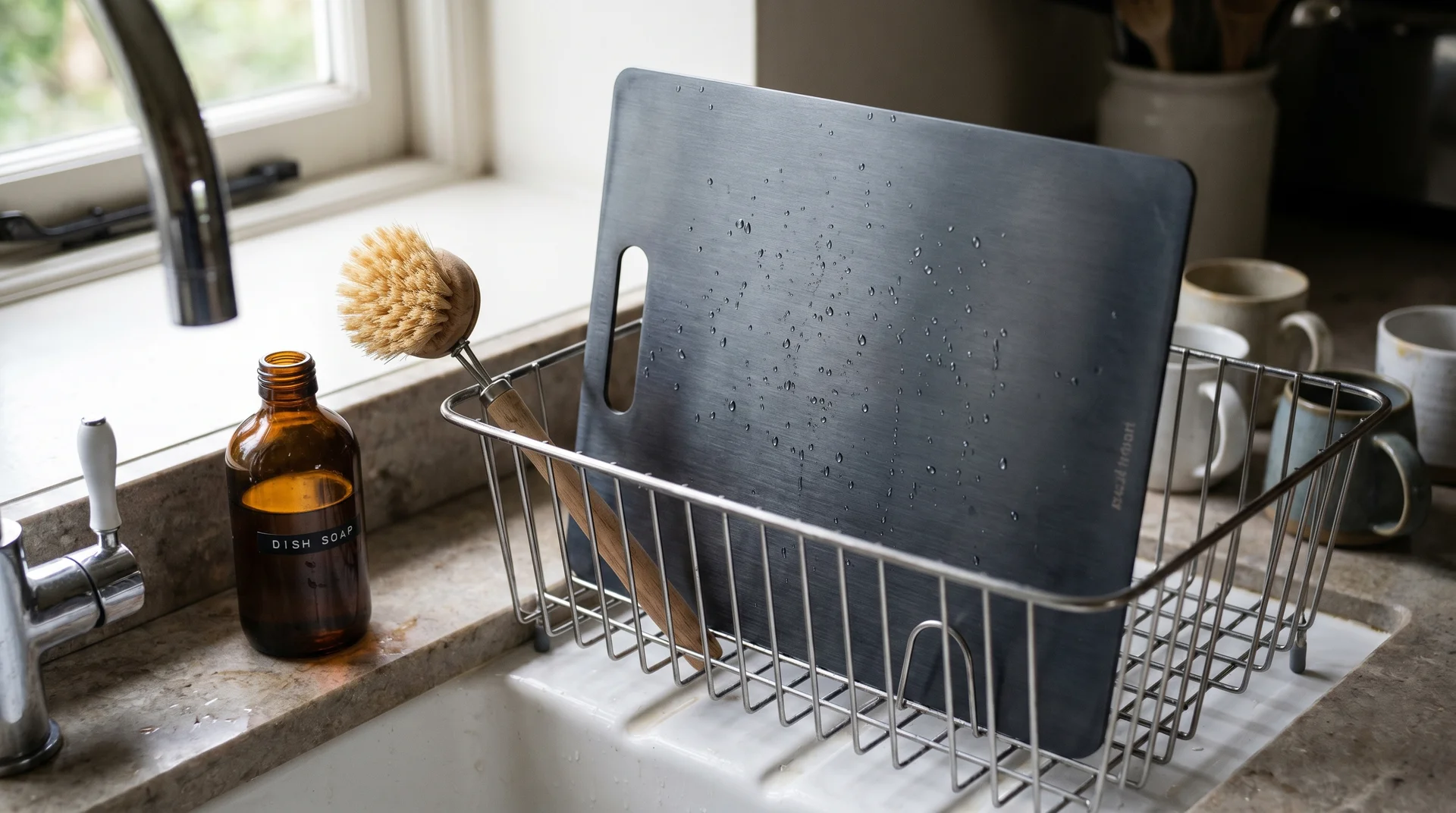
These boards use a titanium nitride coating on a steel substrate, and the dishwasher question is really about what repeated heat cycles do to that coating over time. Most titanium cutting boards are marketed as dishwasher-safe, and that claim is generally accurate for occasional use.
Thermal cycling, the expansion and contraction from repeated high-heat exposure, affects coating adhesion on bonded surfaces over time. How quickly this matters depends on the quality of the specific PVD application and how frequently the board goes through a full cycle.
In my experience testing coated kitchen surfaces, the ones that age fastest are the ones used in the dishwasher as the daily default rather than as an occasional convenience.
Hand-wash when it’s practical, and use the dishwasher when you need to. That’s my honest recommendation, and it’s not about toxicity. It’s about keeping the surface you paid for intact long enough to find out whether it was worth buying in the first place.
What to Actually Look for If You’re Buying a Titanium Cutting Board?
Two brands dominate the titanium cutting board market right now, Tivano and Katuchef, and both leave the same information off their product pages.
Both use a titanium nitride coating on a stainless steel substrate. Both make non-toxic claims. Neither carries NSF 51 certification as of today.
The safety claims rest on the known material properties of TiN and stainless steel, which is a reasonable basis for the claim. Understanding that’s the basis, rather than formal third-party certification, is worth knowing before you buy.
Before purchasing any board in this category, confirm the following:
- Substrate material: Stainless steel or aluminum? This determines what’s exposed if the surface is ever deeply compromised and matters most for the acidic foods and scratch questions addressed earlier.
- Coating type and application process: PVD-applied titanium nitride, or a different process? A brand that can’t specify the process is describing a marketing category, not a product construction.
- Food-contact certification: NSF 51 or equivalent. Absence of certification doesn’t mean the board is unsafe. It means the safety case rests on material-level reasoning rather than product-level third-party testing, and you’re making that call yourself.
- Warranty coverage on the coating: If the warranty doesn’t cover surface degradation, that’s informative about the brand’s confidence in how the coating holds up under actual kitchen use.
Individual board reviews are covered separately under an 18-month retesting policy, which exists because production standards can shift after an initial review is published.
That’s the scope boundary for this piece: if you’re deciding specifically between Tivano and Katuchef, come back for the updated testing notes on those products.
The translation I described at the start of this piece is what makes this decision harder than it should be. If the product page read “TiN-coated stainless steel, surface significantly harder than most knife steel, no NSF 51 certification,” you’d have what you need to decide in thirty seconds.
- If your knives are inexpensive and you’re not maintaining a regular edge, the non-porous surface, acid resistance, and ease of sanitizing are genuine advantages. A titanium cutting board is a defensible choice for your kitchen.
- If you own quality knives and sharpen them consistently, the edge trade-off is real and deserves more weight than the product page gives it. Factor that in before you check out.
Both sets of material properties are accurate. The label just isn’t where the trade-off gets named.