

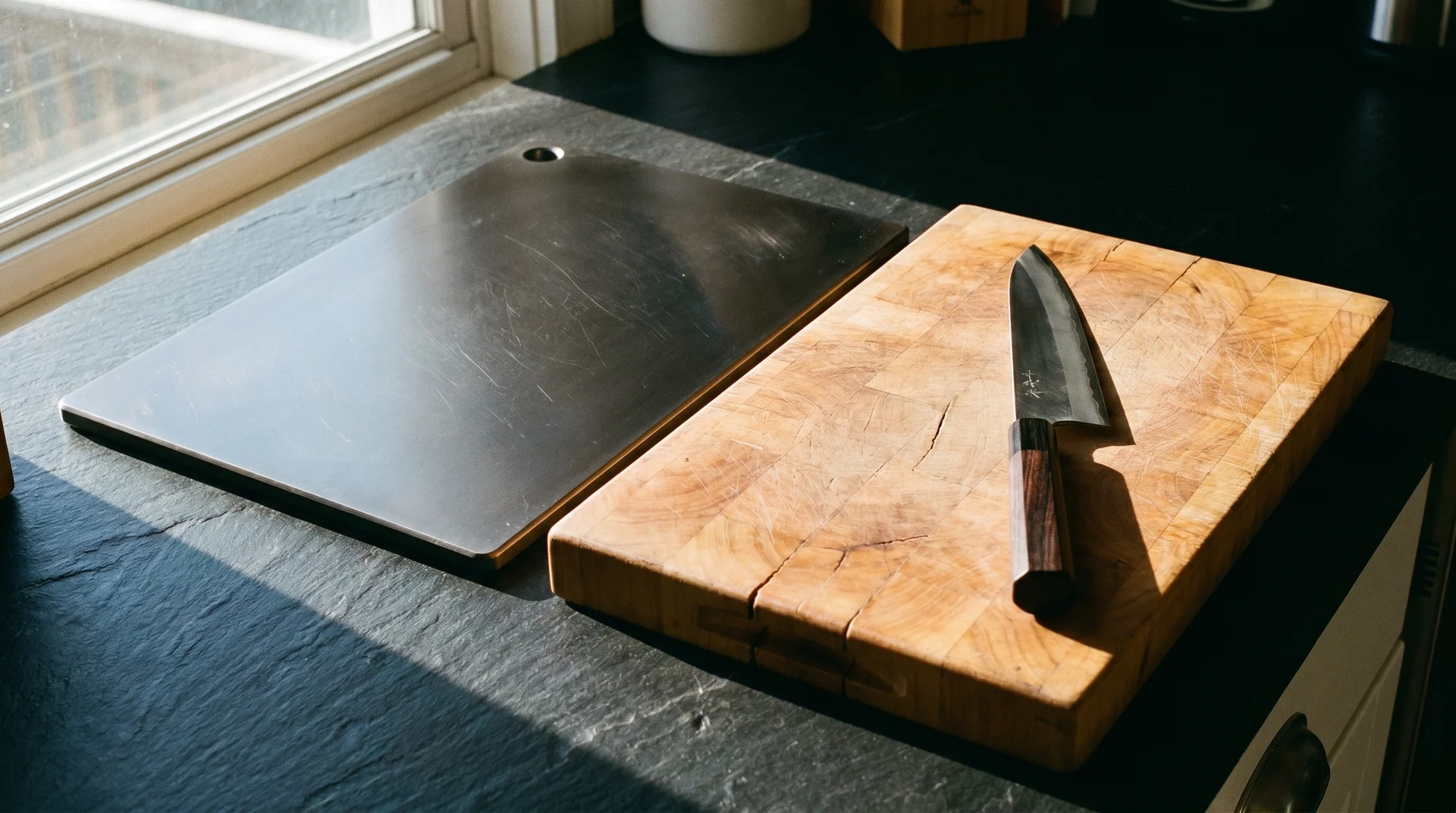
Most titanium cutting boards are not solid titanium. That is the thing you need to understand before the pros and cons mean anything.
You’re most likely evaluating a titanium nitride-coated stainless board or a titanium-infused plastic one.
This piece evaluates both, tells you where they earn their price, and says plainly who shouldn’t buy either.
What “Titanium Cutting Board” Actually Means
The term covers three distinct product types, and each one is a different board.
Solid Titanium vs. Titanium-Coated vs. Titanium-Infused Explained
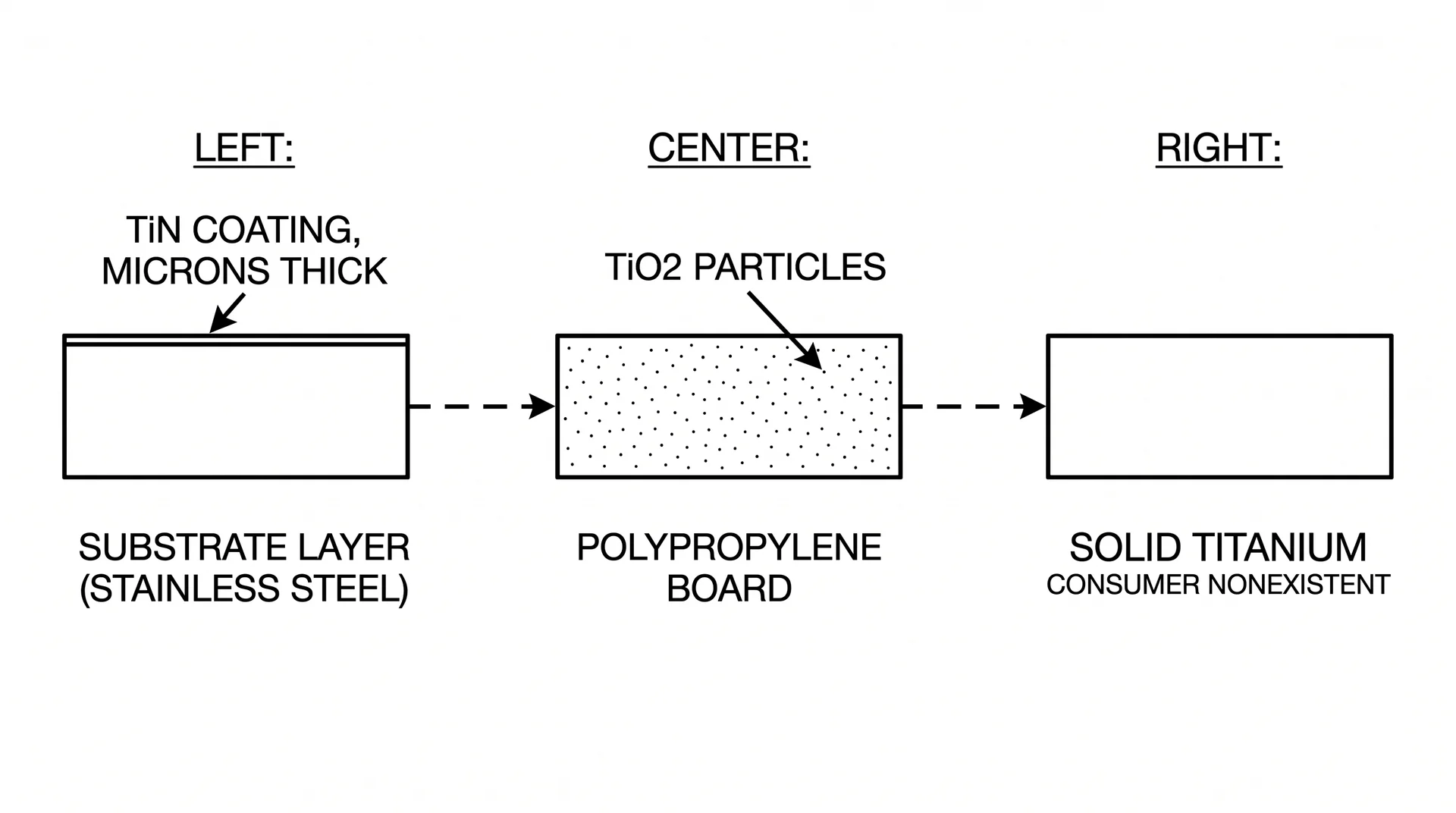
Most products sold as titanium cutting boards fall into one of two coating-based categories, and neither is solid titanium.
- Titanium-coated: A stainless steel substrate with a thin titanium nitride (TiN) coating applied via physical vapor deposition. This is the dominant product type in the $80–$200 range. The titanium layer measures only microns thick. It’s a surface coating on the underlying steel, not the board’s structural material.
- Titanium-infused: A polypropylene or composite board with titanium dioxide (TiO2) particles incorporated into the material. Manufacturers market this primarily for antibacterial properties. The cutting surface behaves like standard plastic because, structurally, it is plastic.
- Solid titanium alloy: Effectively nonexistent at consumer prices. If a board under $500 is marketed this way, read the full materials specification before you believe it.
Of the three types, titanium-infused plastic is where the branding does the most work and the material science contributes least.
I keep a handwritten test journal, coffee-stained and covering several years of use, and this product type appears in it more often as a cautionary note than as a recommendation.
Why the Distinction Changes the Evaluation?
The product type you’re actually buying determines whether the pros and cons in this piece apply to you.
- Titanium nitride is genuinely hard. Coatings in this category run between 1,800 and 2,100 on the Vickers hardness scale. That hardness is what makes the surface scratch-resistant, non-porous, and stain-tolerant. It’s also what creates the knife compatibility problem covered below.
- In titanium-infused plastic boards, titanium dioxide serves as an antimicrobial additive. The hardness-related claims in most titanium board marketing don’t apply to this type. If what you’re evaluating is polypropylene with titanium mixed in, focus on the antibacterial evidence, which is more modest than the packaging implies.
What Titanium Cutting Boards Are Actually Good At
Titanium-coated boards have real advantages, and the hygiene case is the strongest.
A titanium cutting board is a good buy for specific kitchen situations. It’s the wrong choice for others, and the difference almost always comes down to the knife.
Non-Porous Surface and Bacterial Resistance
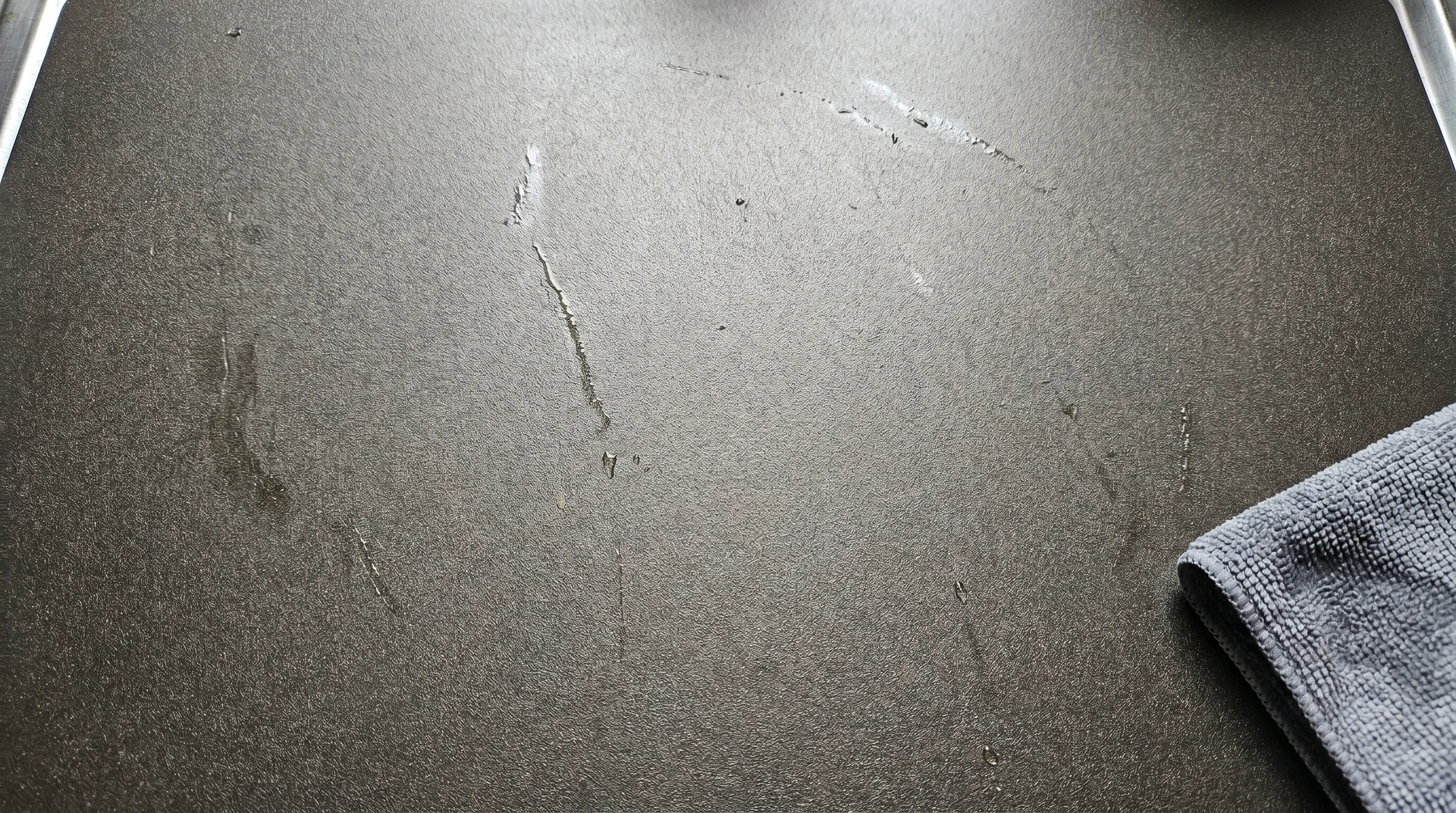
The food safety argument for titanium-coated boards is the most credible case they make, and it’s grounded in USDA guidance.
The USDA Food Safety and Inspection Service recommends non-porous cutting surfaces for raw meat preparation. Porous materials develop micro-grooves over time, and standard cleaning can’t fully address what accumulates in them. A titanium-coated stainless board doesn’t develop those grooves.
It also doesn’t absorb liquids or stain from turmeric, beets, or raw poultry runoff. For a cook doing frequent raw protein prep, that’s a practical advantage that holds up over years of use.
The non-porous advantage is real, but context matters more than the marketing admits.
A well-maintained polypropylene board meets the same non-porous standard when its surface is intact. The titanium board’s durability case is that it stays that way longer, because it doesn’t score the way plastic does.
That’s a hygiene-durability argument, and it’s the honest version of what most titanium board marketing oversimplifies.
Durability: Resistance to Scoring, Staining, and Warping
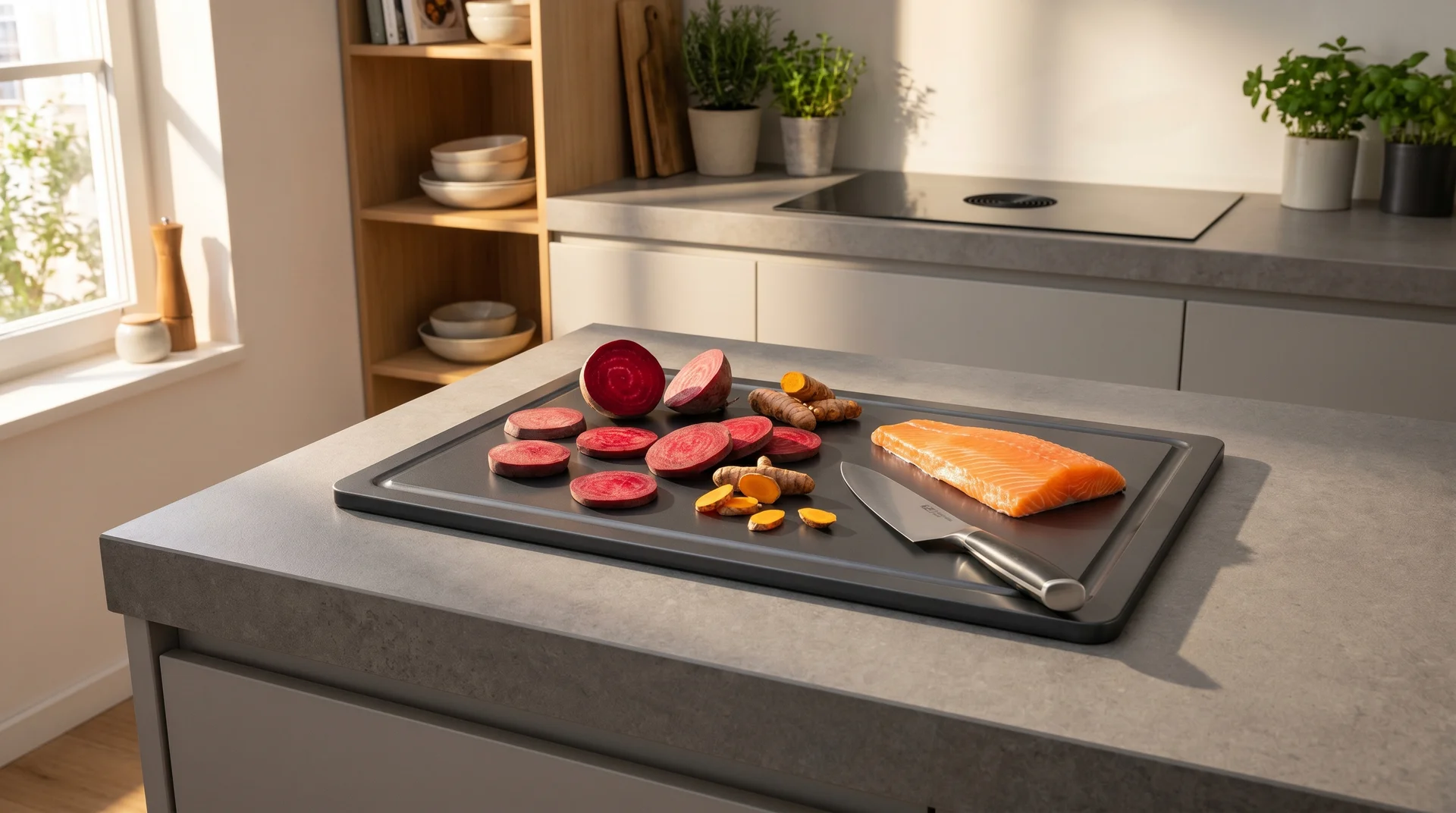
Titanium-coated boards don’t warp, don’t stain from pigment-heavy produce, and don’t develop the surface scoring that shortens a plastic board’s useful life.
Wood warps when it’s wet and dried unevenly. It absorbs color from beets and turmeric, requires regular oiling, and will crack under neglect. A titanium-coated board requires none of that maintenance.
For a cook who isn’t willing to commit to wood care, that’s a real point in its favor.
One caveat worth knowing before you buy: the titanium nitride coating is microns thin. If it chips or cracks from a board edge impacting a counter or a fall, the underlying stainless steel is exposed.
The corrosion resistance of that steel then depends on which grade the manufacturer used, and that information is rarely printed on the box.
Chemical Resistance and Cleaning Compatibility
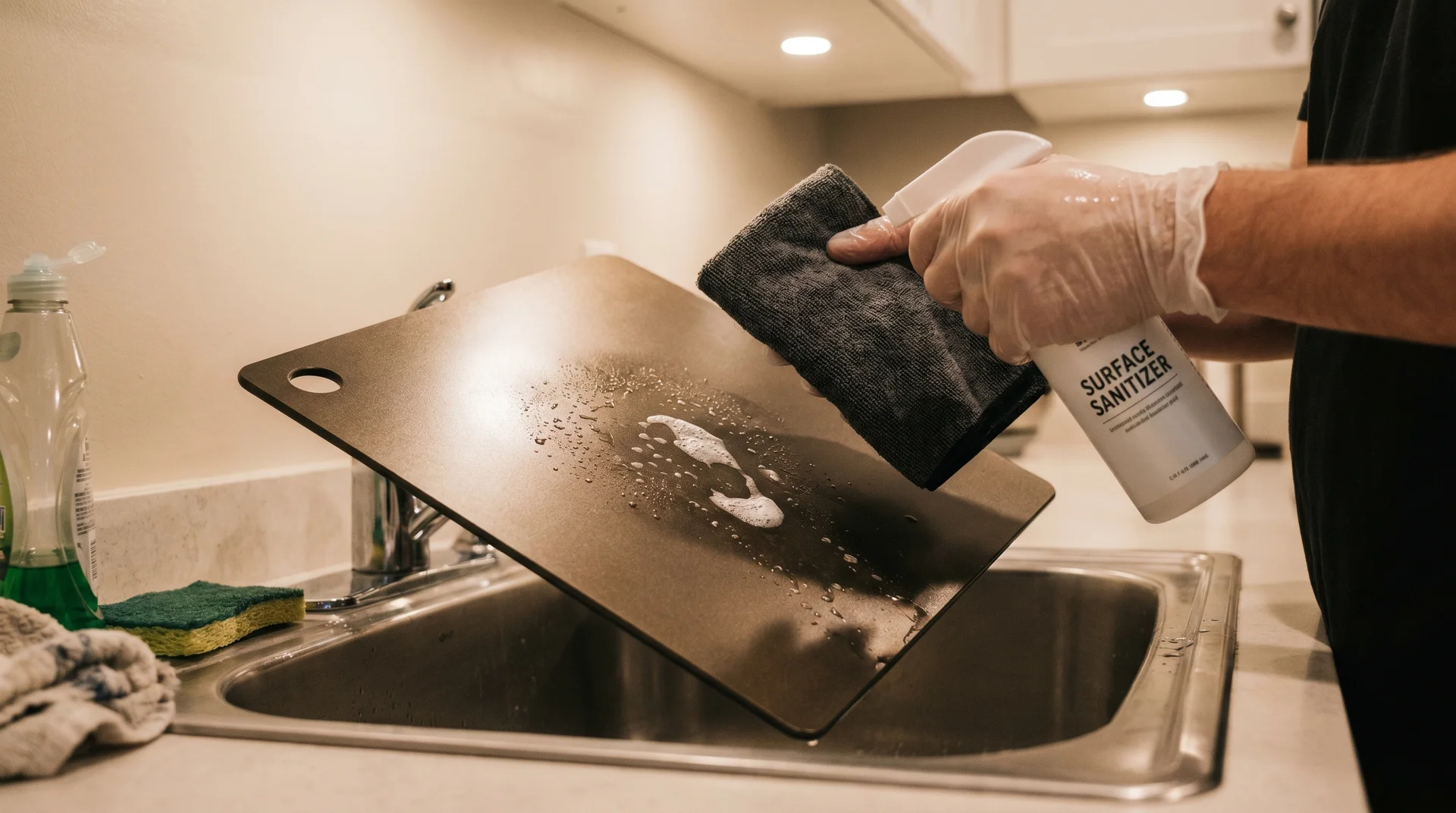
Titanium-coated surfaces tolerate a wider range of cleaning agents than wood or standard plastic, without surface degradation from repeated use.
Diluted bleach solutions and most household sanitizers that would strip a wood finish or degrade polypropylene over time have less impact on a titanium nitride surface.
For a cook who sanitizes aggressively after protein work, this is a meaningful practical advantage.
The Real Cons of a Titanium Cutting Board
The cons are the reason most home cooks shouldn’t buy this board.
What a Hard Surface Does to Your Knife Edge
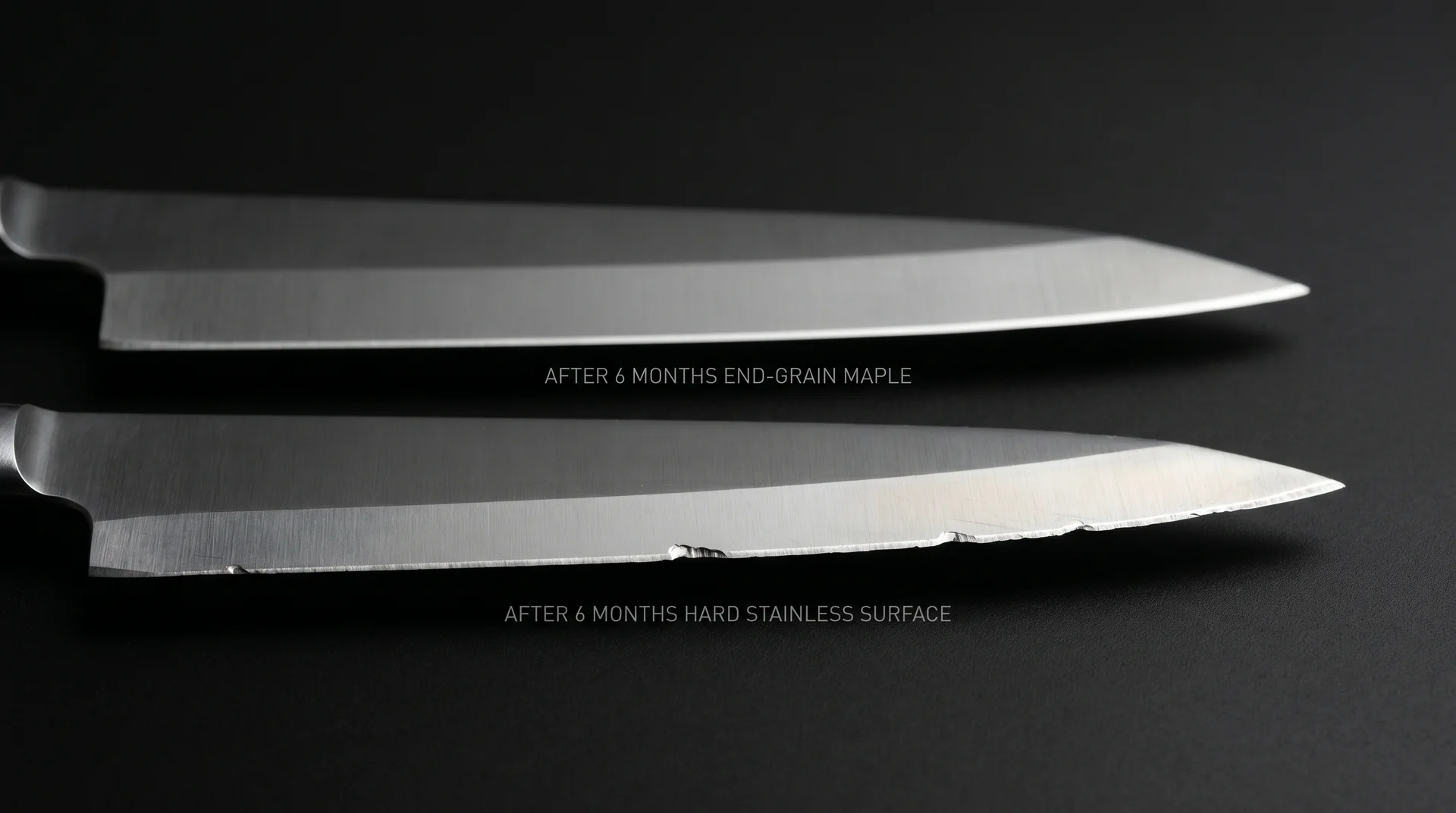
A titanium-coated cutting board is, in most cases, measurably harder than your knife blade, and the consequences accumulate over months.
The mechanism deserves more than the usual summary of “it dulls knives.” Here is what actually happens at the edge.
- Titanium nitride coatings run 1,800–2,100 on the Vickers hardness scale.
- A typical high-carbon or stainless knife blade converts to roughly 600–900 Vickers, depending on steel grade.
That means the cutting surface runs two to three times harder than the steel contacting it.
On end-grain wood, the fibers part slightly and close around the blade. On a hard metal surface, the edge yields instead.
The result is micro-chipping and accelerated edge rollover, showing up faster than you’ll see on maple or a quality polypropylene board.
The damage is cumulative and quiet. Six months in, it shows up at the sharpening stone.
I tested my own Japanese knives on a titanium-coated board for three months in my own kitchen, not in controlled conditions. Edge degradation was clearly visible by week six against my wood baseline.
The impact isn’t equal across knife types. German knives with lower-hardness steel and convex bevels handle hard cutting surfaces considerably better than Japanese knives do. Japanese blades with thin bevels and higher Rockwell ratings are the most vulnerable.
Grip & Noise
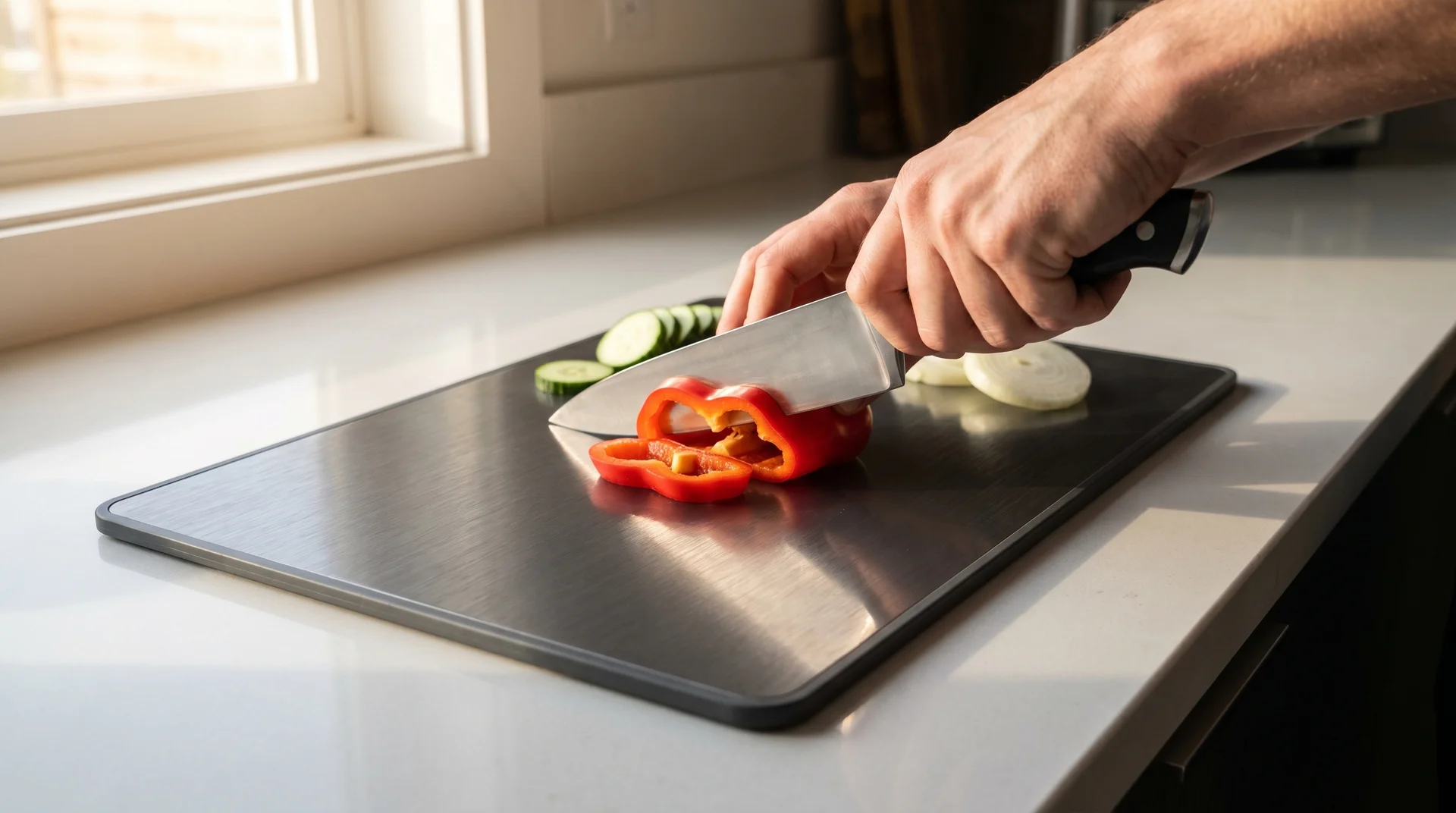
Cutting on a titanium-coated board is louder, harder, and less forgiving under the hand than any wood or plastic surface you’re likely to own.
The acoustic feedback through the knife handle is metallic and sharp. It isn’t the dull thud of end-grain wood or the quieter contact of polypropylene.
In an open kitchen or an apartment with resonant countertops, this becomes a daily presence you’ll either learn to ignore or grow to resent.
Food slides more easily on a smooth metal surface than on textured wood or matte plastic. Many boards in this category ship with rubber feet, and these work until they wear, compress, or detach.
At that point, you’re stabilizing the board with your non-cutting hand. That combination starts to make the price tag harder to justify.
Weight, Price, and the Value Question
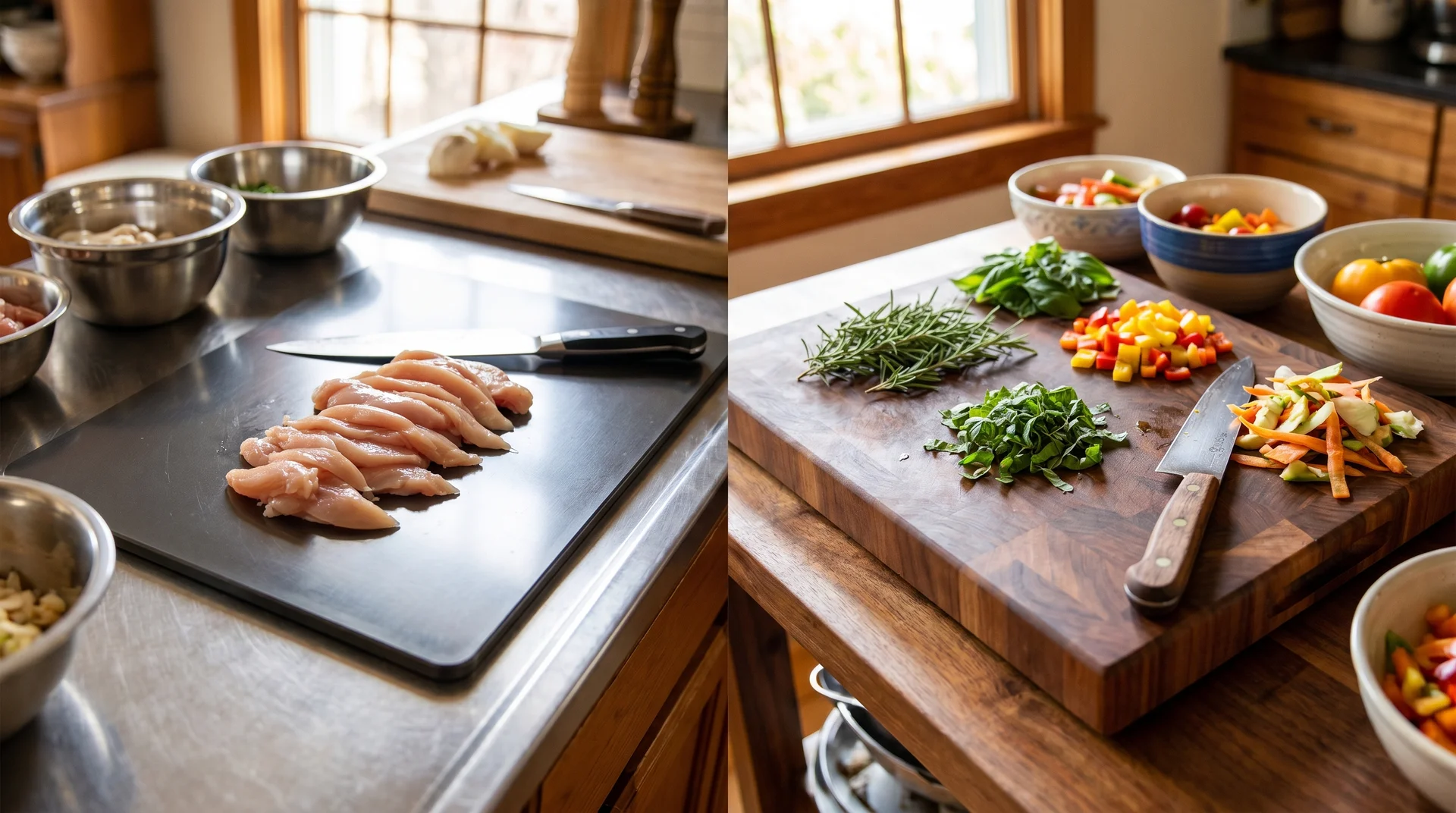
Titanium-coated boards carry a significant price premium over materials that outperform them on knife care and daily cutting experience.
A quality titanium-coated board runs $80–$200. A quality end-grain maple or walnut board runs $60–$150 and performs better for edge retention and cutting feel. The titanium board wins on sanitizability and stain resistance.
The wooden board wins on everything else relevant to daily cooking.
If the hygiene advantages are genuinely what you’re buying for, the price is defensible. If you’re buying because titanium sounds more durable than wood, end-grain hardwood is not fragile either.
Titanium vs. Wood vs. Plastic: Which Cutting Board Material Is Best?
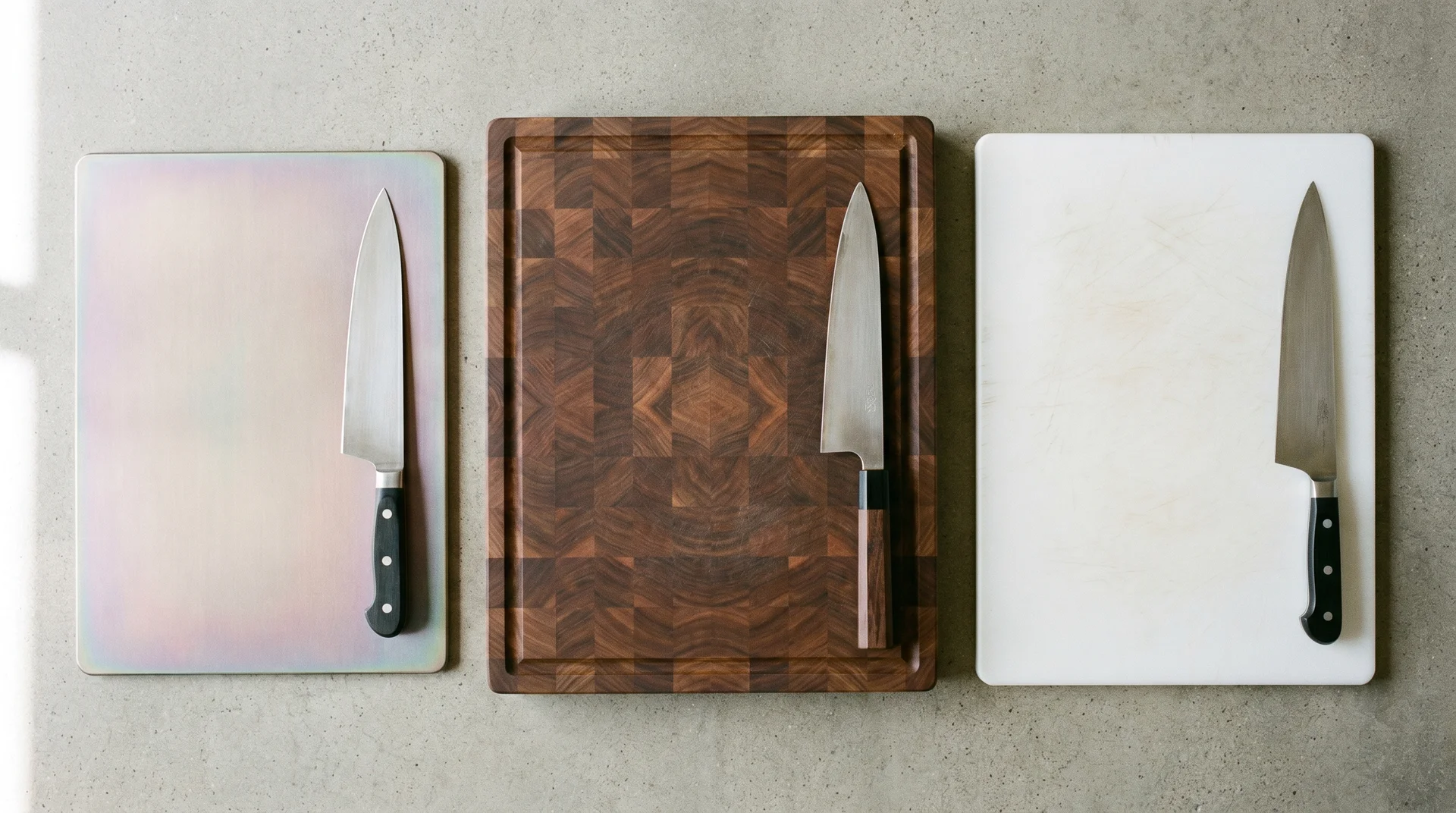
The right answer depends entirely on what you need the board to do.
| Attribute | Titanium-Coated | End-Grain Wood | Polypropylene Plastic |
|---|---|---|---|
| Knife friendliness | Poor – hard surface causes edge micro-chipping over time | Excellent – wood fibers yield and recover around the blade | Good when new; worsens as surface scoring accumulates |
| Bacterial resistance | Excellent – non-porous, surface doesn’t score | Good – dense grain helps; requires consistent maintenance | Good when new; compromised once scoring begins |
| Stain resistance | Excellent | Fair – absorbs pigment from turmeric, beets, poultry | Fair – scored surfaces stain readily |
| Warp resistance | Excellent | Fair – requires consistent oiling and even drying | Excellent |
| Dishwasher-safe | Yes | No | Yes |
| Cutting feel and noise | Hard, loud, metallic feedback through the handle | Quiet, solid – preferred by most experienced cooks | Moderate – quieter than metal, softer feel than wood |
| Typical price range | $80–$200 | $60–$150 | $15–$60 |
| Maintenance required | Low | Moderate – oil every 4–6 weeks, dry flat | Low – replace when the surface is heavily scored |
America’s Test Kitchen’s published cutting board evaluations have consistently favored end-grain wood and quality polypropylene for everyday home use. On knife-friendliness and surface recovery, the titanium-coated board doesn’t compete.
Which cutting board material is best for most home cooks?
End-grain hardwood is specifically chosen because it protects the knife investment over time while performing well across every other daily cooking task.
The titanium board earns a narrower recommendation, and what that looks like depends on how you actually cook.
Who Should Buy a Titanium Cutting Board?
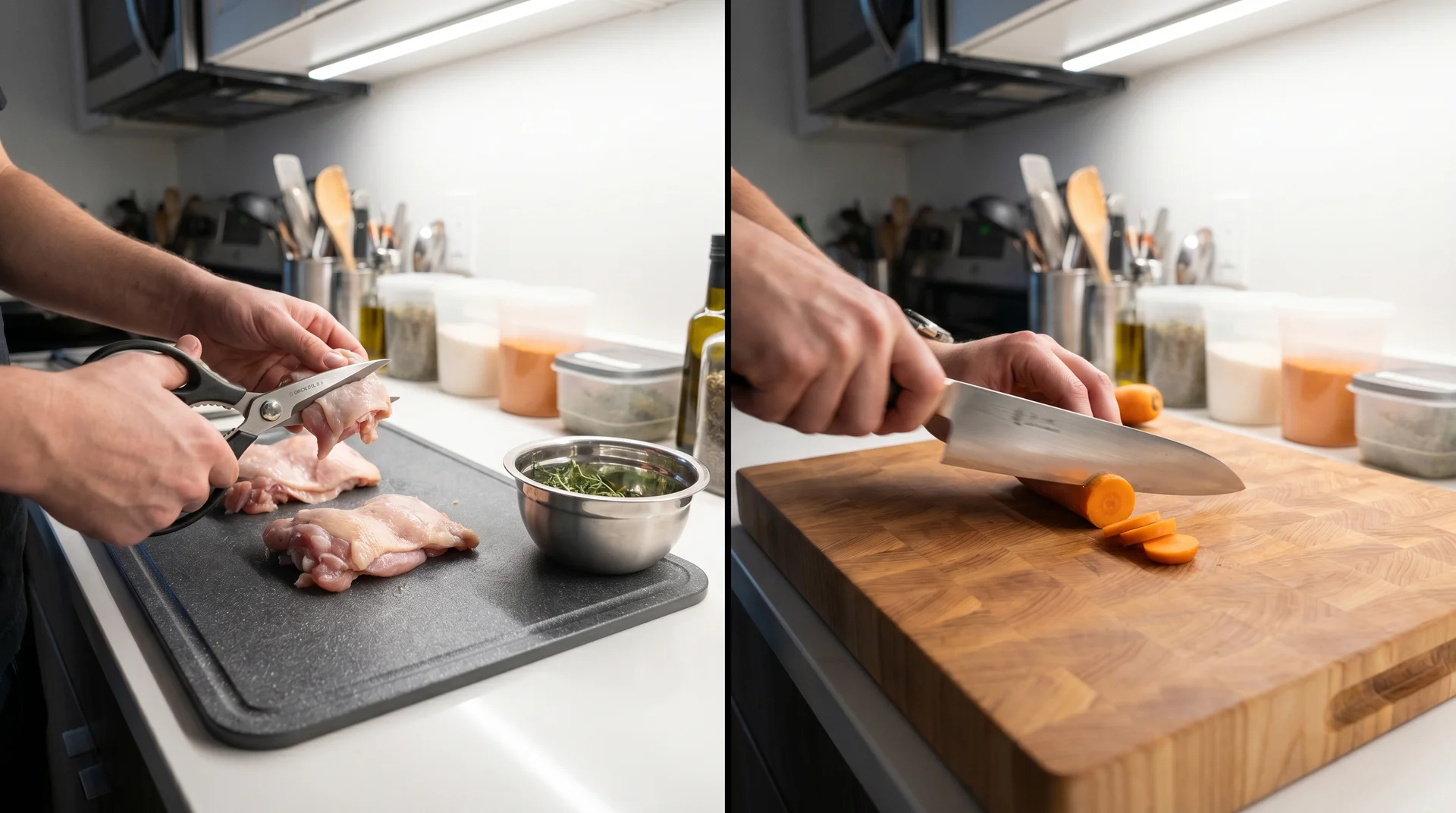
The purchase case is specific, and that specificity is not a criticism of the product.
The Kitchen Scenarios Where Titanium Makes Sense
Titanium-coated boards earn their price when food safety is the primary driver, and the cook’s knife collection can absorb harder cutting surfaces.
The clearest fit is a household doing frequent raw protein prep: poultry, fish, or raw meat several times a week, where non-porous hygiene is a genuine priority.
If that describes your kitchen and you use German-style knives with tougher, more convex bevels, the board’s advantages are real, and the edge-wear trade-off is manageable.
A second reasonable fit: someone who has lost wood boards to warping or neglect, doesn’t want to maintain an oiled surface, and wants better hygiene credentials than a scored plastic board provides. The cutting experience trade-off is real. For a cook who isn’t doing daily precision knife work, it’s not fatal.
When to Use a Different Board
If you own Japanese knives, a titanium-coated cutting surface will degrade your edges faster than any alternative you’re likely to consider.
As the knife mechanics section covered, the damage accumulates over months, not sessions. You’ll notice it at the sharpening stone before you notice it at the board.
Japanese knife owners should look at end-grain hardwood first. For maximum blade gentleness, a hinoki cypress board is worth considering: it’s softer than maple, closes around the blade edge exceptionally well, and is used as a knife-preservation surface in professional Japanese kitchens for exactly that reason.
For a high-volume home cook doing an hour or more of knife work daily, the cumulative edge wear on a hard cutting surface adds real cost in sharpening time, steel removal, and knife longevity. An end-grain maple board at $90 is a better investment in that kitchen than a titanium board at $160.
The Verdict on Titanium Cutting Boards
Titanium cutting boards solve a specific problem well and create a different one quietly.
If hygiene is your primary concern, you do significant raw protein work, and your knives are German-style steel with forgiving bevels, a titanium-coated board is a defensible buy.
I’ve used one in rotation alongside my wood boards for eight months, and I wouldn’t call that a full conclusion yet. The edge wear data takes longer to accumulate than most reviewers wait to find out.
The end-grain hardwood board remains the stronger recommendation for most home cooks.
As we established at the start of this piece, most titanium cutting boards have a micron-thin coating on stainless steel.
Once you understand what you’re actually evaluating, the $150 premium becomes harder to justify against a board material that has been protecting knife edges for decades.