

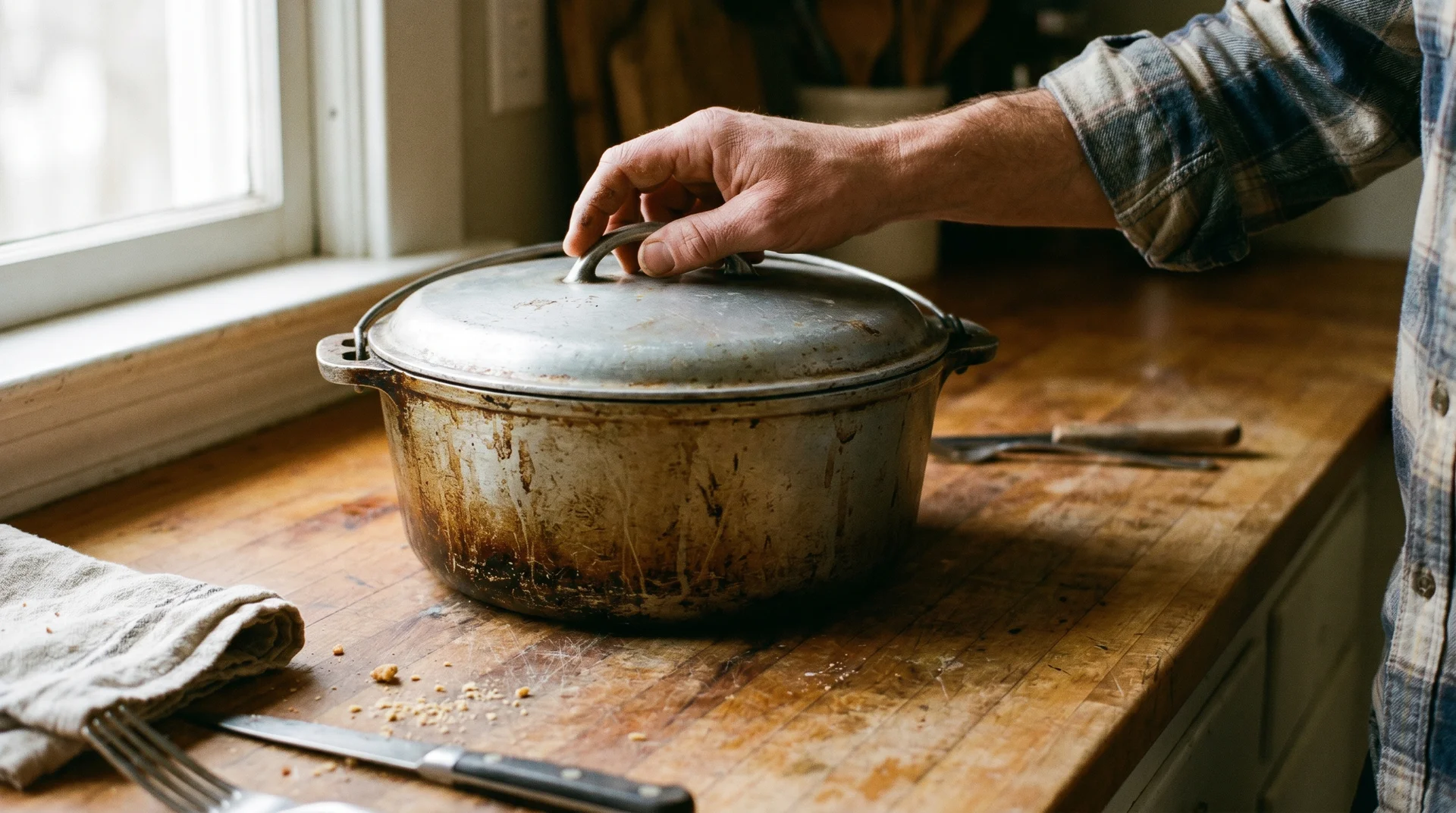
It covers hard-anodized Calphalon, bare vintage Magnalite, cheap imported nonstick sets, and Hindalium kadais that the FDA pulled from shelves in 2025.
What is true for one is not automatically true for the others. This piece tells you which category your pan belongs to, and what to do with it.
The Short Answer on Cast Aluminum Safety
Cast aluminum is safe for most everyday cooking, with specific exceptions. Hard-anodized or intact-coated cast aluminum, not on the FDA’s 2025–2026 lead-recall list, is fine for daily use.
Bare or scratched aluminum used with acidic foods for long periods, or imported cookware made from Hindalium or Indalium alloys, is a different situation.
Health Canada’s guidance on cookware safety, one of the clearer government resources on this topic, recommends hand-washing aluminum cookware, using non-metal utensils on coated surfaces, and replacing any pan that shows pitting or deep scratches.
| Your Pan Situation | Safety Verdict |
|---|---|
| Hard-anodized cast aluminum, intact surface | Safe for everyday cooking |
| PTFE or ceramic-coated cast aluminum, coating intact | Safe while coating holds; follow care instructions |
| Bare cast aluminum, no scratches or pitting | Safe; avoid prolonged acidic cooking over 30 minutes |
| Scratched or pitted bare aluminum | Replace; surface damage increases leaching meaningfully |
| Hindalium, Indalium, or brass-alloy imported cookware | Check the FDA list; most on the current list should be discarded |
What “Cast Aluminum” Actually Means
Cast aluminum starts as molten metal poured into a mold.
That process produces cookware with thicker, denser walls than stamped or rolled aluminum. Heat is distributed more evenly. The material resists warping better.
Cast pieces also tend to be heavier, which affects how they handle on the stovetop.
Die-cast aluminum, made by forcing the molten metal into a mold under pressure, produces even denser walls and tighter consistency than sand-casting does.
None of this determines safety. The casting method makes a pan more durable. What determines safety is the surface.
Surface Treatment Is the Actual Safety Variable
Most people ask whether their pan is aluminum. The right question is what surface treatment it has.
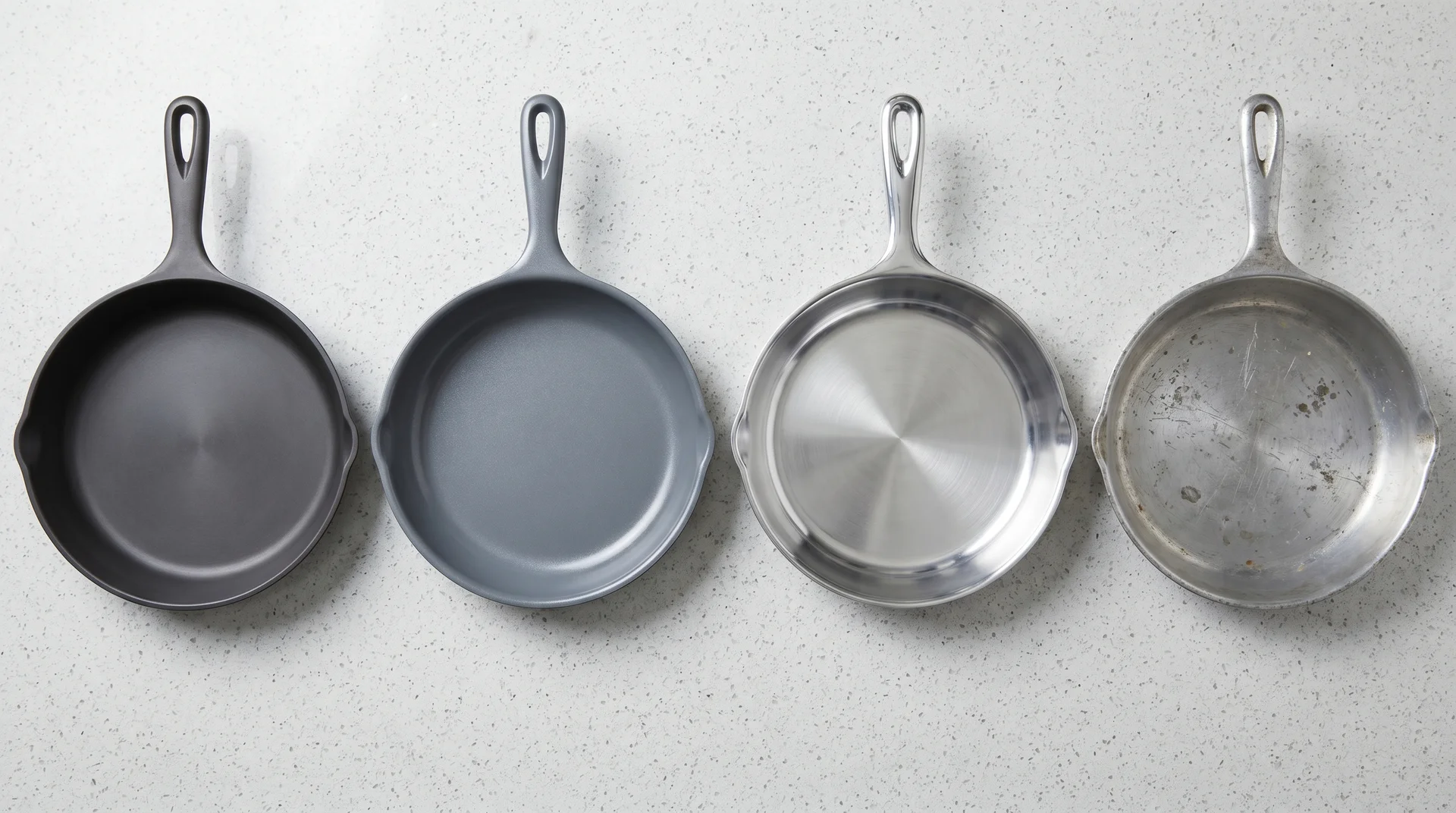
Three surface types cover most cast aluminum cookware in the US market:
- Bare (untreated) aluminum: The metal contacts food directly. It reacts with acidic ingredients and allows more aluminum to migrate into food than treated surfaces do, particularly at high heat over long cooking times.
- Hard-anodized aluminum: An electrochemical process converts the aluminum surface into a dense aluminum oxide layer. This is not a coating applied on top of the metal. It is the aluminum surface itself, transformed. It is harder than stainless steel and significantly less reactive than bare aluminum.
- Coated aluminum (PTFE or ceramic): A separate layer applied over the base aluminum. Safety depends entirely on that coating staying intact. A scratch through it returns you to the bare aluminum situation beneath.
I’ve tested coated cast aluminum surfaces under regular home-kitchen conditions, and coating failure drives more replacements than the aluminum underneath ever does. The aluminum is rarely the problem. The coating is.
How Aluminum Leaches Into Food? When Does It Actually Matter?
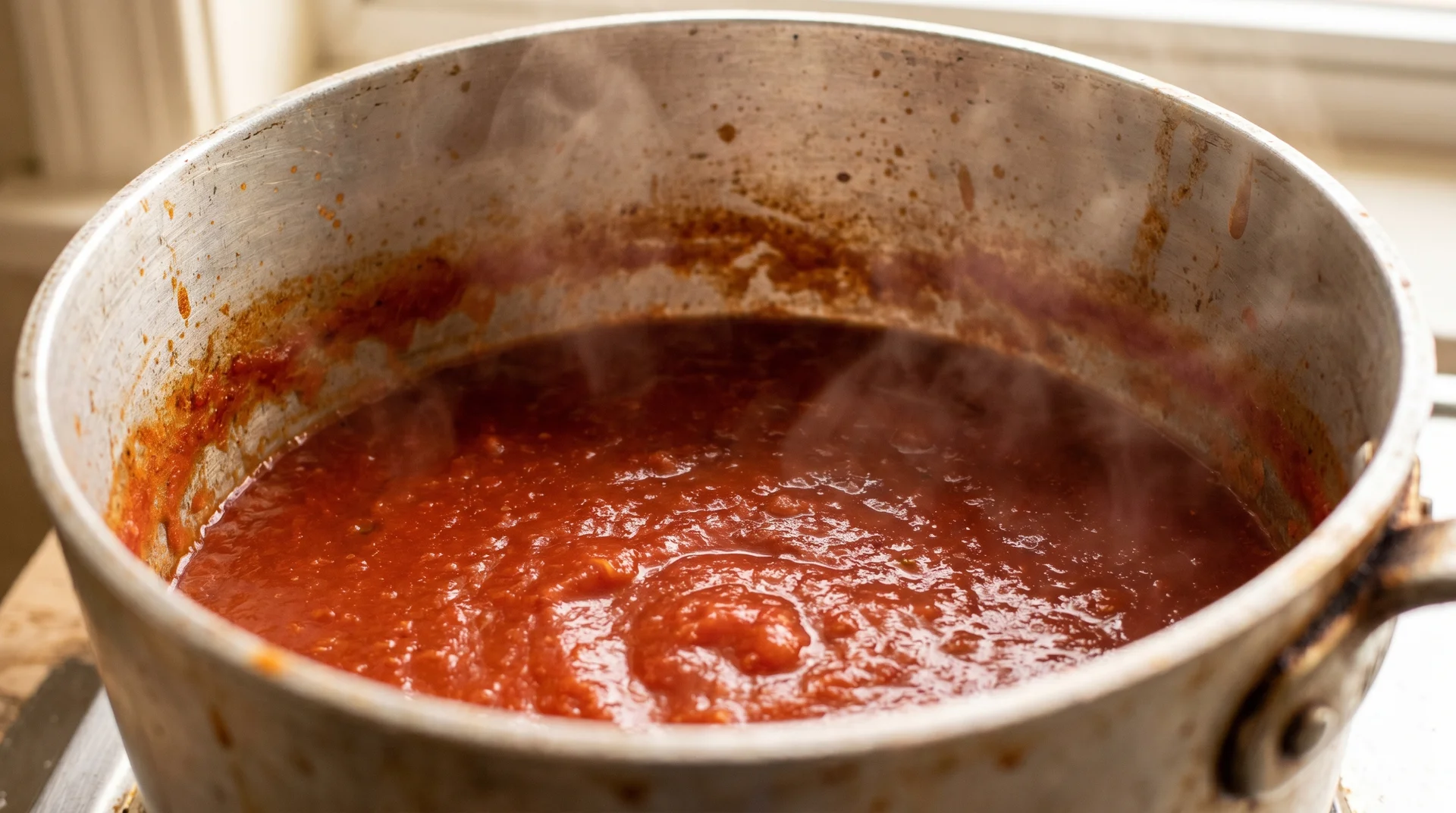
Four factors drive leaching:
- the acidity of what you are cooking,
- cooking temperature,
- how long food stays in contact with the metal, and
- the condition of the pan’s surface.
Changing any one of these changes the amount of aluminum that moves.
Acidic foods are the main practical variable. Tomato sauce, lemon-based braises, vinegar reductions, citrus curds, and rhubarb all lower the pH of what is in the pan and accelerate leaching into the food.
Cooking them briefly in bare aluminum is a different situation from simmering them for two or three hours. A scrambled egg in a bare aluminum pan is not a meaningful concern. A weekly bolognese in a scratched bare pan, over the years, adds up.
The European Food Safety Authority set a Tolerable Weekly Intake, the estimated safe upper limit for aluminum consumption, of 1 mg per kilogram of body weight per week in their 2008 Scientific Opinion. For a 70 kg adult, that is roughly 10 mg per day.
A 1985 study by Greger, Goetz, and Sullivan, published in the Journal of Food Protection, estimated that aluminum cookware and foil together contribute approximately 3.5 mg per day to the average diet, well below that threshold under normal cooking conditions.
The WHO and FAO Joint Expert Committee on Food Additives reviewed the same evidence in 2011 and set its limit at 2 mg per kilogram of body weight per week, exactly double the EFSA figure. I think that gap is worth naming honestly. Two credible scientific bodies, same evidence base, a factor of two apart. The safety science on dietary aluminum is not as settled as either body’s confident language suggests.
A mouse study using boiled water from aged pots is not directly equivalent to human exposure from normal cooking. What it confirms is that older, degraded pots behave differently from new ones, which is consistent with everything else we know about surface condition and leaching.
The leaching conditions above apply directly when assessing any specific pan, whether new or inherited. Surface condition and cooking habits matter more than the material itself.
The One Group That Should Actually Be Careful
People with severe kidney disease or who are undergoing dialysis face a different risk from aluminum than the general population does.
Healthy kidneys excrete aluminum efficiently. When kidney function is significantly impaired, aluminum accumulates rather than being cleared.
This is the one clinically recognized higher-risk population for aluminum from cookware. If this applies to you or someone in your household, speak directly with a nephrologist rather than relying on general guidance about safe thresholds.
The Alzheimer’s Connection:
What the Research Shows
The Alzheimer’s Association’s position is direct: “Studies have failed to confirm any role for aluminum in causing Alzheimer’s disease.”
The fear has a specific origin worth understanding. In 1965, researchers injected aluminum compounds directly into rabbit brain tissue and observed protein tangles that resembled Alzheimer’s pathology. That finding circulated widely.
Follow-up research found that the rabbit tangles were biologically different from human Alzheimer’s tangles, not the same process. Subsequent large-scale epidemiological research did not confirm any causal link between dietary aluminum exposure and dementia in humans.
That is where the science lands.
There is a real aluminum-neurological connection in the clinical literature, but it is dialysis encephalopathy: a condition that historically affected dialysis patients who received aluminum-containing phosphate binders as treatment. That is a therapeutic context with no relevance to cooking in an aluminum pan at home.
The FDA 2025–2026 Lead Alert: Is Your Pan on the List?
The FDA’s 2025 cookware recall is about lead, not aluminum. That distinction matters.
The recall does not say cast aluminum cookware is unsafe.
It says that specific imported cookware, made from aluminum alloys called Hindalium or Indalium and from brass, may leach significant amounts of lead into food under normal cooking conditions. Lead is a separate problem entirely, and there is no known safe level of lead exposure.
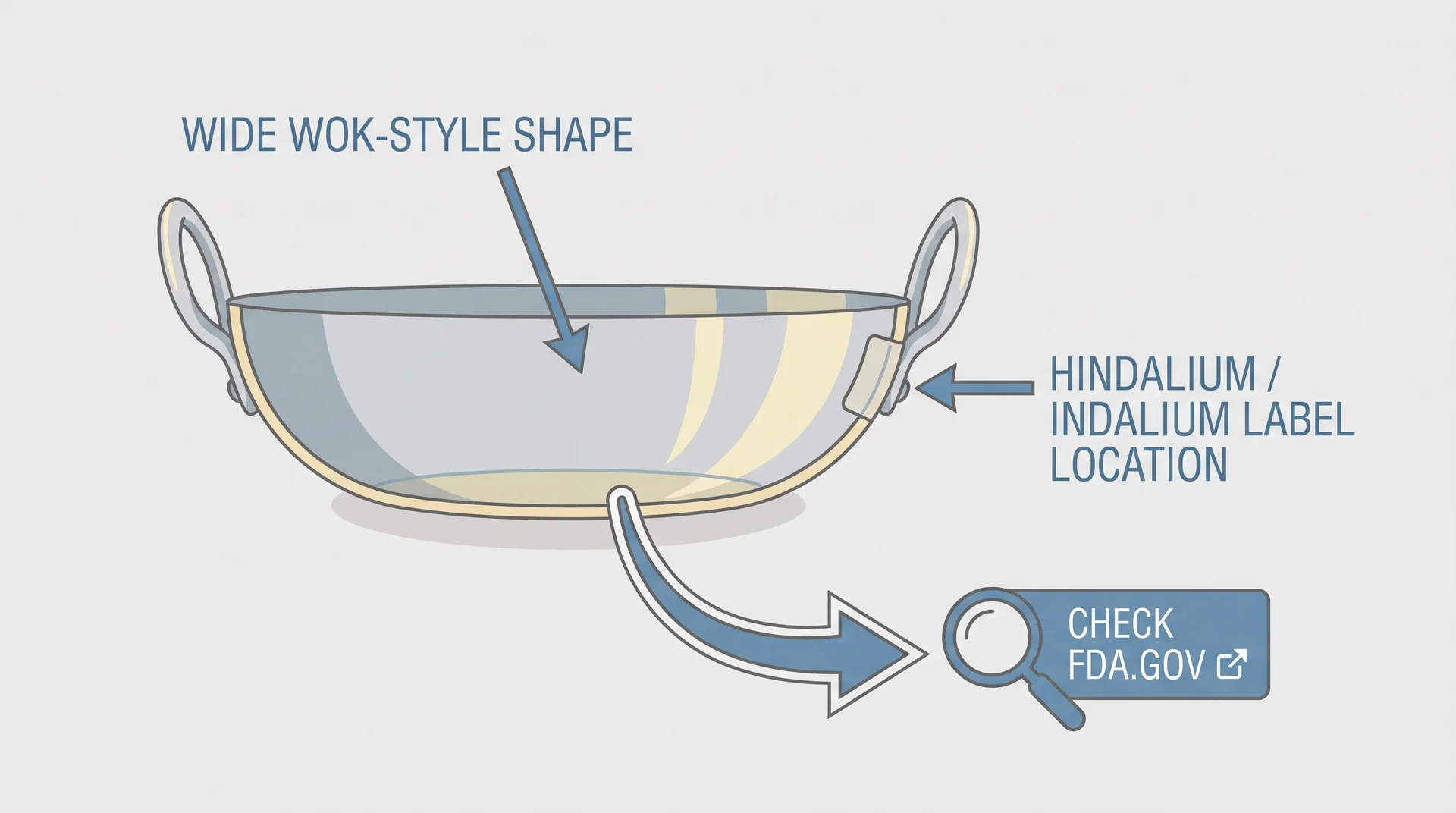
Hindalium and Indalium are informal names for uncontrolled aluminum alloys common in some South Asian cookware manufacturing. The lead risk comes from manufacturing impurities in these specific alloys, not from aluminum itself.
This is a sourcing and quality-control problem, not a statement about cast aluminum as a material category.
The FDA first issued the warning in August 2025 after state and federal testing found specific products leaching lead at levels that made food unsafe. The list grew through four documented updates:
- August 2025 (4 products): Included the Kadai/Karahi Tiger White by Saraswati Strips Pvt. Ltd., sold at Mannan Supermarket in Jamaica, New York
- October 2025 (approximately 10 products): Six additional products added following expanded testing
- November 24, 2025 (19 products): Added Sonex Cookware from Alanwar Food Corp. in Brooklyn, New York; IKM aluminum saucepan and aluminum kadai from India Metro Hypermarket in Fremont, California; Silver Horse aluminum caldero 28, degda 24, and degda 20 from Punjab Supermarket in Rosedale, Maryland; Kraftwares India brass tope and aluminum kadai size 5 from India Metro Hypermarket in Fremont; IKM 4-quart Pital Brass Pot from India Cash and Carry in Fremont; and additional products across New York, New Jersey, and Maryland
- December 3, 2025 (21 products): 3B Cookware Aluminum Deg Style Patila #4 from India’s Fine Foods in West Sacramento, California; handmade brass tope from Diya Handicrafts in Chicago, Illinois
- January 23, 2026: IKM of San Jose, California, issued a voluntary recall of four additional products: A-cook Aluminum Kadai size 5 (43 pieces); Brass Tope (10 pieces); IKM 4-quart Pital Brass Pot (9 pieces); and IKM Aluminum Saucepan wooden handle 9″ (56 pieces)
The FDA advises discarding any affected cookware immediately. Do not donate it and do not try to refurbish it. The current full list, which the FDA continues to update, is at fda.gov. Check that page directly rather than relying on any secondary source, including this one.
Mainstream Western cast aluminum brands are not on this list. Calphalon, All-Clad HA1, Nordic Ware, and similar brands are not implicated in this recall.
How to Identify Hindalium or Indalium Cookware
Look for specific labeling and traditional pan styles before assuming your imported cookware is safe.
- Labels reading “Hindalium,” “Hindolium,” “Indalium,” “Indolium,” or “Pure Alluminium Utensils.”
- Traditional South Asian cookware styles: wide wok-style kadai or karahi, deg or degda pots, pital topes with a brass-like gold color
- Purchased from South Asian specialty grocery stores in California, New York, New Jersey, Maryland, or Illinois
If you are uncertain whether your pan is on the current list, check the FDA page directly rather than this article or any other secondary source. The list has been updated five times since August 2025, and the agency has stated it will continue adding products as testing progresses.
Vintage Magnalite, Wagner, and Club Cookware
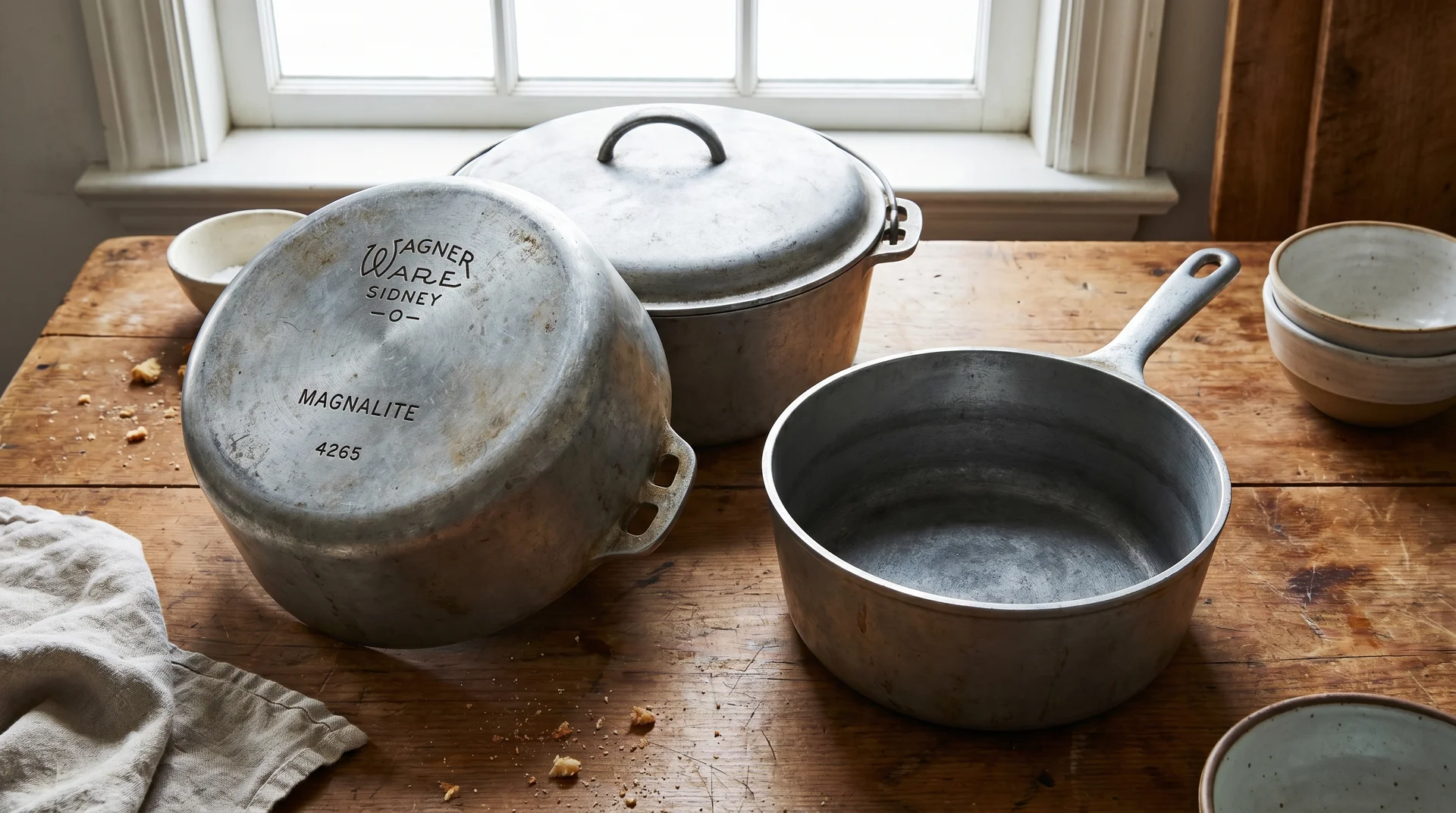
Vintage Magnalite is a cast magnesium-aluminum alloy, not standard cast aluminum cookware.
Wagner Ware developed the Magnalite line in 1934 as a deliberate improvement on plain aluminum. The proprietary alloy combined aluminum and magnesium to improve heat distribution and to build a protective surface over decades of use.
Each piece was poured individually into a mold, producing heavier walls and more consistent thickness than any stamped equivalent. When people say Magnalite cooks differently from regular aluminum pans, they are correct. It is.
The production timeline matters for any safety assessment:
- Wagner Ware era (1934 to late 1970s): Original proprietary alloy; heaviest construction; highest alloy consistency. Identified by “Wagner Ware” plus “Magnalite” plus a model number stamped on the base.
- GHC era (General Housewares Corp, late 1970s to 1999): Same quality range; base reads “GHC” rather than “Wagner Ware.”
- American Culinary Corporation era (post-1999): Different alloy, lighter weight, often overseas manufacturing. When people debate Magnalite safety, they are almost always talking about pre-1999 pieces. Modern “Magnalite Classic” is a different product.
Vintage Magnalite has no PTFE coating, no ceramic coating, and no formal hard-anodization. Its protection comes from a natural aluminum oxide layer that builds up through decades of use.
That layer operates on the same principle as anodization: a barrier between food and the reactive bare metal beneath. It is not as robust as a formally anodized surface, but it works.
Dishwashers damage cast aluminum cookware more quickly than acidic cooking does in a normal home kitchen.
Modern dishwasher detergents run at high alkalinity. That strips the natural oxidation layer efficiently. A pan that spent 40 years building a protective cooking surface can lose most of it in a handful of wash cycles.
What remains is closer to bare aluminum than to a seasoned cooking surface. This is why the forums on this topic are full of inherited Magnalite anxiety: someone puts the pan in the dishwasher for a few years, reads that bare aluminum leaches more readily, and wonders what they have done to it.
The pan is not necessarily ruined, but it needs attention before heavy use.
- Wash with mild soap and warm water,
- dry completely on low heat on the stovetop,
- then coat the interior lightly with a neutral oil and heat on medium until it just begins to smoke.
- Let it cool and repeat twice.
This will not replicate forty years of natural seasoning, but it gives the surface something to work with.
Assessing a Vintage Piece Before Using It
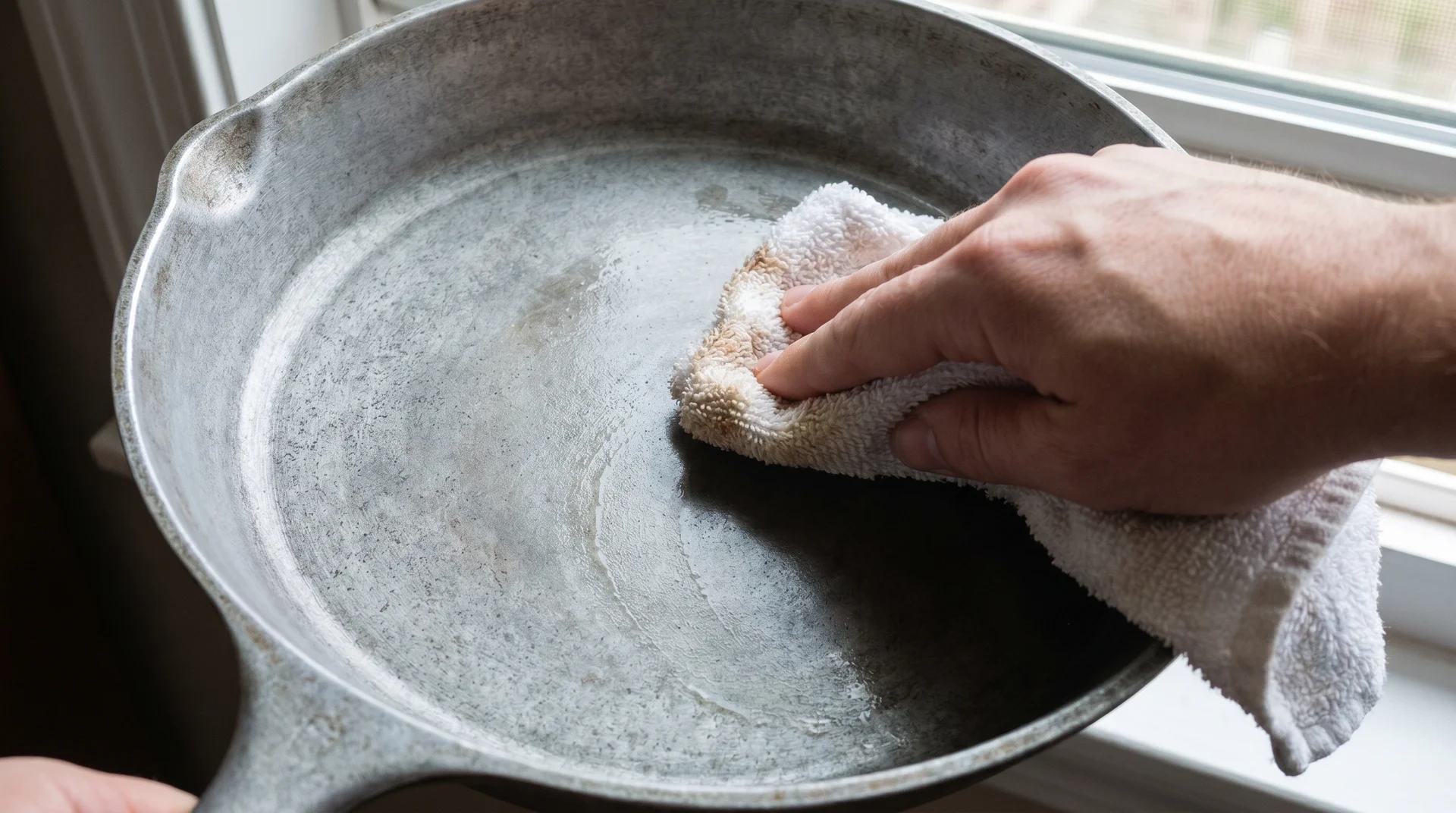
Run through these checks before cooking in any inherited or thrift-store cast aluminum piece.
- No pitting: small holes or cratering in the metal surface itself, distinct from discoloration
- No dark metallic residue when you wipe a damp white cloth firmly across the interior
- Surface looks evenly dull or lightly grey, not shiny and stripped
- Handles are firm and uncracked; original Bakelite becomes brittle with age and can fail without warning
The acidic food guidance from the leaching section applies directly to bare-metal vintage cookware: keep contact time under 30 minutes for tomatoes, citrus, and vinegar.
One pot of tomato soup is not a concern. A slow braise every Sunday in an uncoated Magnalite, over the years, is not the same.
Club and Guardian Service Ware from the same era follow the same guidelines: bare cast aluminum, natural oxidation layer, hand-wash, limit prolonged acidic cooking.
When to Replace a Cast Aluminum Pan
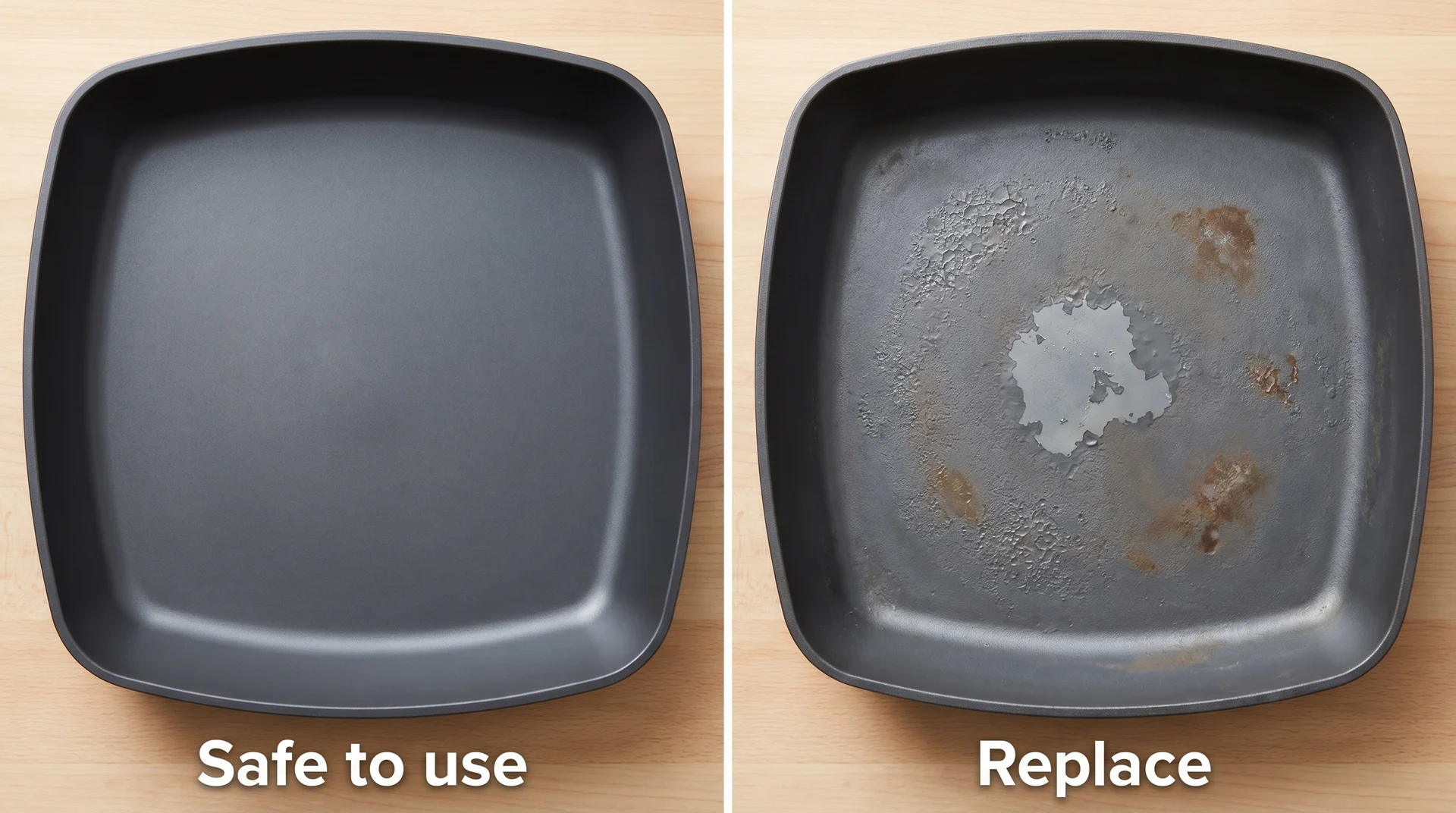
Not every scratch means a pan needs replacing.
The distinction that matters is between a scratch through a PTFE or ceramic coating and a scratch through the anodized layer itself.
A scratch through a PTFE coating compromises the non-stick performance and exposes the primer or bare aluminum beneath. A scratch through the anodized layer reaches the reactive metal directly. Both need attention. They are not the same problem.
Replace a cast aluminum pan when you see any of these:
- Pitting or cratering in the metal surface itself, below the coating level
- A coating that flakes or peels visibly while cooking
- A persistent metallic taste in food that was not there before
- Dark metallic residue transfers onto light-colored foods like eggs or white fish
- Significant warping that prevents the pan from sitting level on a burner
A single fine surface scratch on an intact anodized pan is a gray zone. I can’t tell you with certainty that it is fine, because the answer depends on how deep the scratch goes and on the manufacturing quality of the anodized layer, which varies considerably between a $40 pan and a $180 pan.
Cook non-acidic food in it, check it every few months, and replace it if the scratch expands or if any of the signs above appear. That is the honest answer, and any article that gives you more certainty than that is working from less information than they are letting on.
Cast Aluminum Brand Quick Reference
Common cast aluminum brands differ significantly in surface type and coating quality.
The table below covers the brands most people actually look for. Where I’ve flagged limited independent data, it means safety claims rely on manufacturer marketing rather than published third-party testing.
That is not an automatic disqualifier, but it means coating durability is harder to confirm than the packaging suggests. There is a real quality gap between an anodized layer on a commercial-grade Calphalon and on a $35 Amazon import, even if both are described the same way on the label.
| Brand | Surface Type | PFOA/PFAS-Free | Country of Manufacture | Verdict |
|---|---|---|---|---|
| Magnalite (vintage Wagner/GHC, pre-1999) | Bare cast Mg-Al alloy; natural oxidation layer | No coating applied | USA | Generally safe; hand-wash only; avoid prolonged acidic cooking; inspect for pitting before use |
| Magnalite Classic (post-1999, ACC) | Lighter alloy; coated versions vary by line | Varies by line | Overseas | Lower quality than vintage; verify surface type before purchase; not equivalent to pre-1999 pieces |
| Calphalon Signature / Premier | Hard-anodized aluminum | Yes | USA / international | Safe, reliable anodized surface; hand-wash extends useful life significantly |
| All-Clad HA1 | Hard-anodized aluminum | Yes | USA | Safe, commercial-grade anodization holds up under sustained regular use |
| Nordic Ware (bakeware) | Bare cast aluminum, uncoated | N/A (no coating) | USA (Minneapolis) | Safe for baking; do not store acidic food in it; hand-wash recommended |
| Carote | Ceramic-coated cast aluminum | Claimed PFOA-free | China | Safe while coating is intact; coating durability varies significantly across their lines |
| Country Kitchen | Ceramic-coated cast aluminum | Claimed non-toxic | Varies | “Non-toxic” is marketing language, not a certification; look for specific PFOA/PFAS-free documentation |
| NutriChef | Ceramic-coated cast aluminum | Claimed PFOA/PFAS-free | China | Limited independent test data; coating durability claims unverified by third parties |
| Gotham Steel | Titanium/ceramic coating over aluminum | PFOA/PFAS-free | China | Safe while coating holds; sustained high-heat use degrades performance faster than the advertising implies |
Safe Use Rules for Cast Aluminum Cookware
Six rules cover the large majority of the actual risk.
- Hand-wash when possible. Dishwasher alkalinity degrades both formal coatings and natural oxidation layers faster than most people expect. This is the most consistent source of preventable surface damage across every brand I’ve seen, regardless of price.
- Use wooden, silicone, or nylon utensils on any coated surface. Metal utensils scratch PTFE and ceramic coatings. Once the coating is compromised, you are cooking on whatever is underneath it.
- Keep acidic cooking times short in bare or uncoated aluminum. Under 30 minutes at normal cooking temperatures is reasonable for most acidic dishes. A prolonged low simmer in a scratched or bare pan changes that calculus.
- Don’t overheat a PTFE-coated pan. Above 500°F (260°C), PTFE begins to decompose and releases fumes. This matters especially if you keep birds: PTFE fumes at concentrations that are unpleasant for humans are lethal to birds.
- Replace pans that show pitting, flaking coating, or persistent metallic taste. Surface condition is the variable. Monitoring it takes ten seconds when you are washing up.
- Check the FDA list if your pan is an imported South Asian-style cooking vessel. The list at fda.gov is still being updated. Check it directly, not through any secondary summary.
End Note
Two questions come up often that this piece doesn’t cover in full. Whether cast aluminum works on an induction cooktop depends on whether the base contains iron or steel, not on the aluminum itself. That’s a performance question handled in a buying guide, not a safety question.
Whether the PFAS chemistry in specific nonstick coatings poses additional health risks beyond what’s covered here is a real question with its own body of research. That’s a different article, and it needs different criteria.