

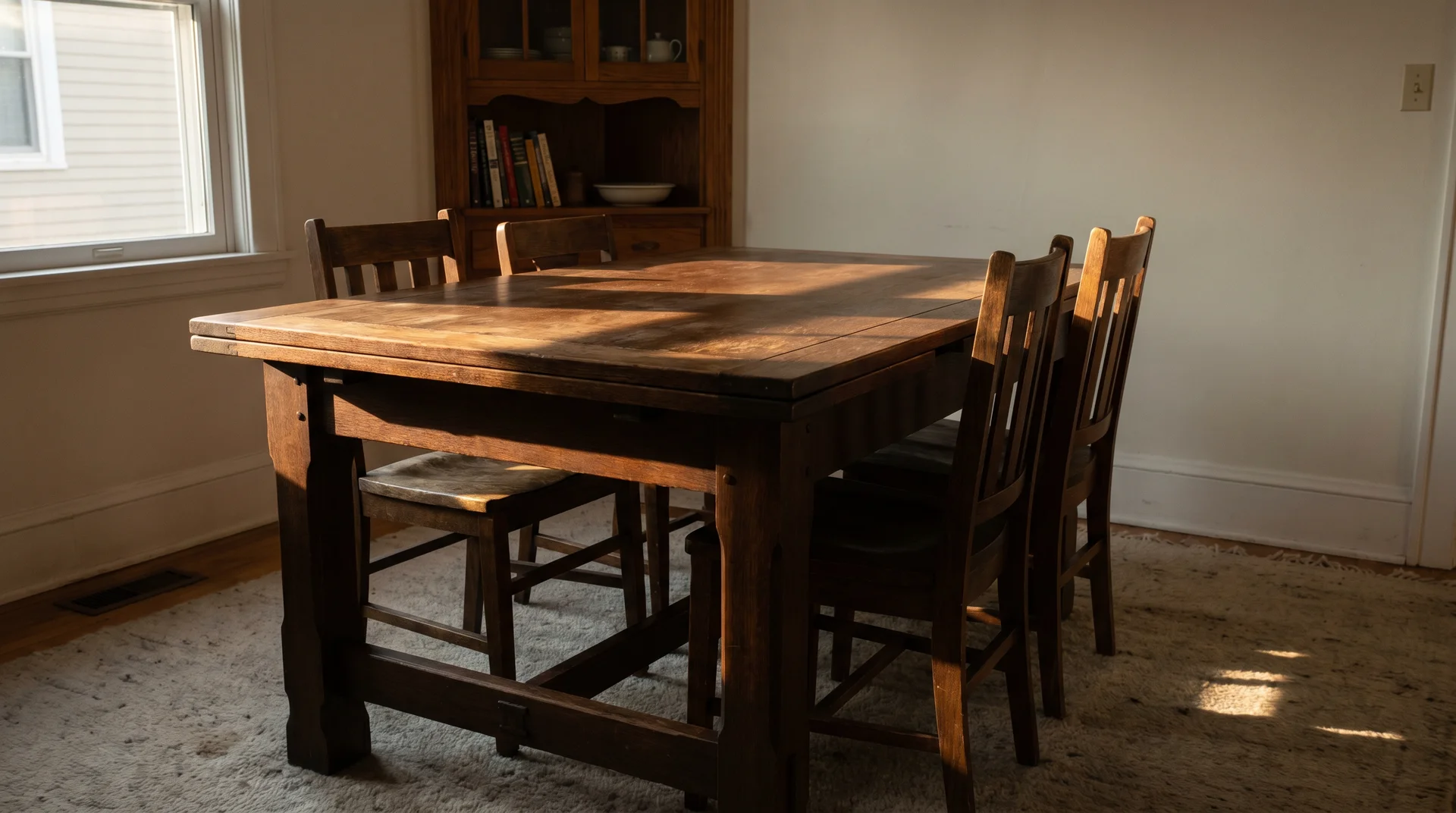
The standard dining table height is 28 to 30 inches from the floor to the tabletop.
The more useful question is whether that number will work with your specific chairs. This piece answers that.
What Standard Dining Table Height Is
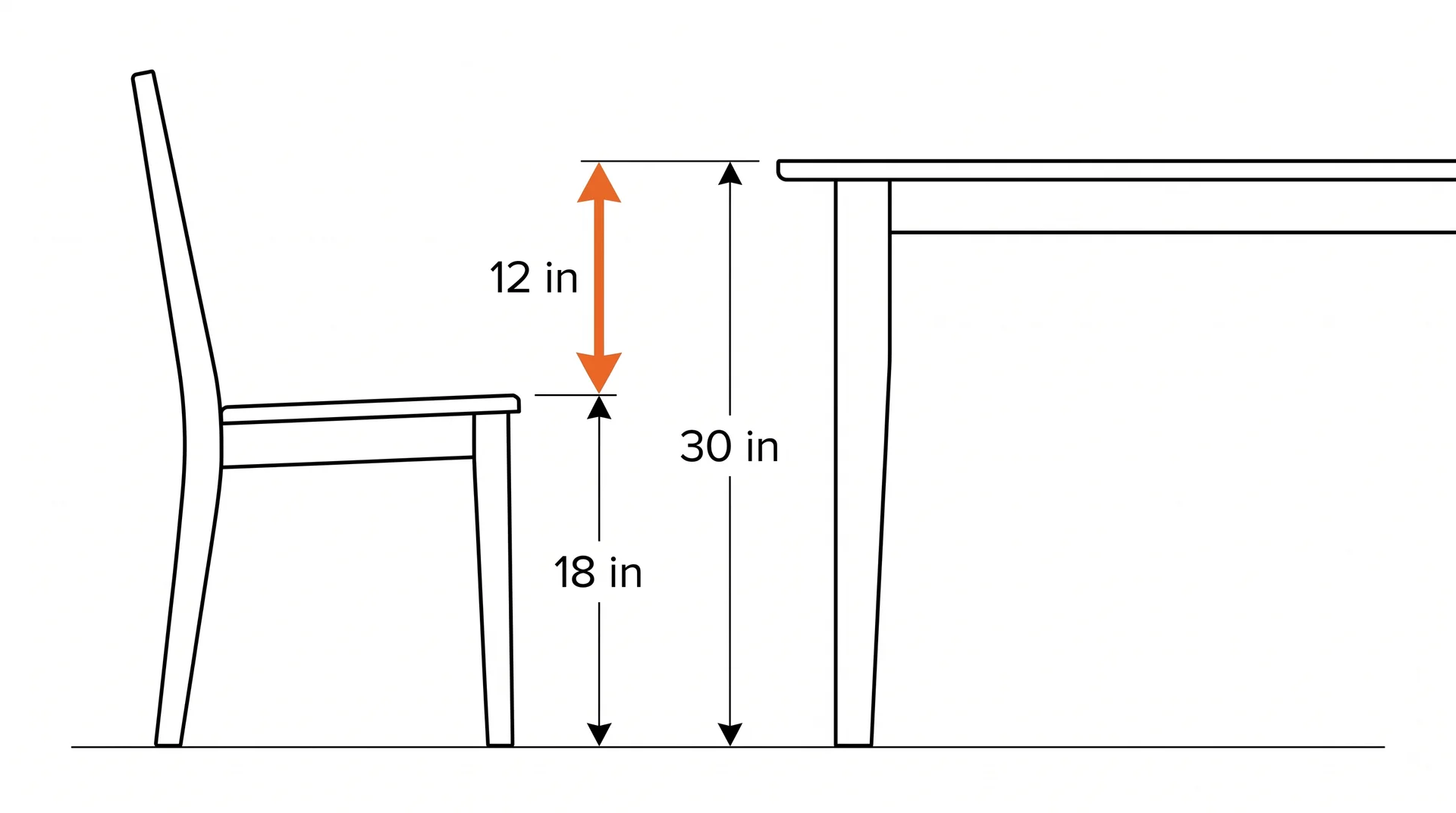
Standard dining tables measure 28 to 30 inches from the floor to the tabletop surface.
Thirty inches is the most common manufactured height in the US. The chair seat height that pairs with a 30-inch table is 17 to 19 inches.
Those two numbers together produce the measurement that actually determines comfort: the gap between the seat and the tabletop surface.
The Seat-to-Tabletop Gap
That gap should be 10 to 12 inches. Ten inches suits a more relaxed seated posture. Twelve-inch suits people who prefer to sit upright.
For most households eating at the table every day, 10 to 11 inches is where the setup stops feeling like a compromise. The gap matters more than the surface number.
The 2010 ADA Standards for Accessible Design require dining surfaces between 28 and 34 inches high, with at least 27 inches of knee clearance underneath for wheelchair access.
A standard dining table satisfies the surface height requirement. Whether the apron design satisfies the knee clearance requirement is a different question, and one worth asking if accessibility matters for your household.
Is 32 Inches Too High for a Dining Table?
At 32 inches, most standard chairs produce a seat-to-surface gap of 13 to 14 inches. For everyday dining, that is noticeably high.
Chairs with a 20 to 22-inch seat height can make a 32-inch table work. The issue is never the surface number on its own. It’s always the relationship between the two numbers, and that relationship is what the next section addresses.
The Measurement That Matters More Than Table Height
The measurement that actually determines daily comfort is the clearance between the seat top and the underside of the table’s apron rail.
What the Apron Is
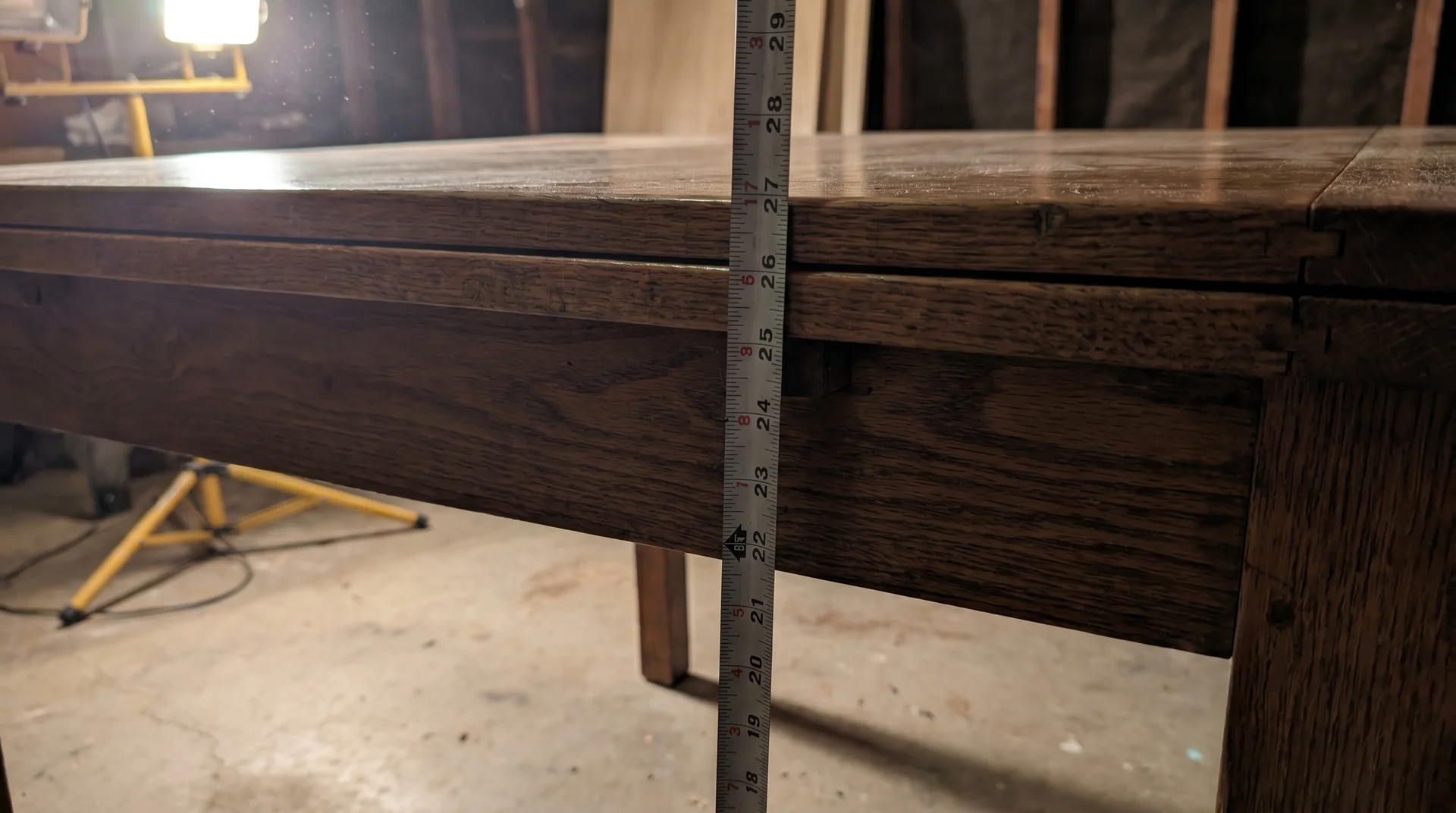
The apron is the horizontal frame rail that runs just below the tabletop, connecting the legs. It is not the tabletop. It reduces the effective clearance below the table’s listed surface height.
A table at 30 inches with a 4-inch apron leaves roughly 26 inches of clearance underneath. For someone in an 18-inch chair, that’s an 8-inch gap between seat and apron. That feels cramped during a long meal.
The right measurement is floor to apron underside, not floor to tabletop surface. That number is what your chair seat and your knees are working against every day.
I’ve reviewed enough dining table spec sheets to say this plainly: almost none list apron underside height. You have to measure it yourself or ask the retailer before buying.
The Armchair Problem
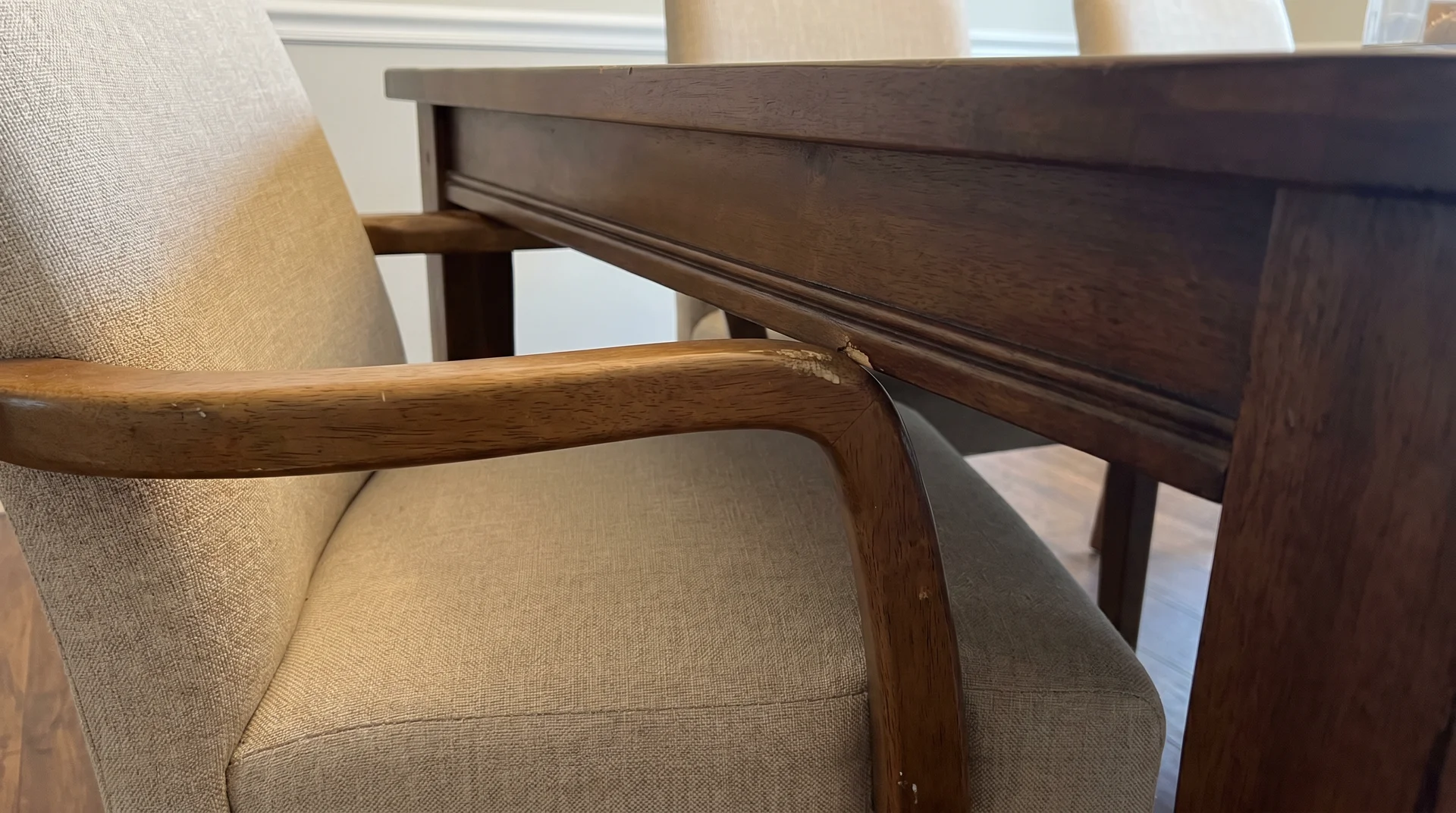
If your dining chairs have armrests, the armrest height must be lower than the apron underside height. If it isn’t, the chair physically cannot push under the table.
This is the most common dining furniture mismatch I’ve seen, and it’s rarely addressed before the purchase. The chair and table both look right. The armrests hit the apron rail and the chair sticks out into the room whenever someone stands up.
There is no fix for this. The chair is incompatible with that table.
Deep decorative aprons eliminate a significant number of armchair options. If you’re buying armchairs, check the apron depth before committing to a table design.
The Manufacturer Seat Height Problem
The seat height listed on a spec sheet may not match the actual seat height of the chair you receive.
Some manufacturers measure to the top of the seat frame. Others measure to the top of the cushion. The difference can be an inch and a half, which is enough to push the seat-to-tabletop gap outside the comfortable range. You won’t know it until the chairs are already in your dining room.
Measure your actual chairs by sitting in them and having someone measure from the floor to the top of where you’re sitting. This costs nothing and can prevent years of dining in a setup that never quite feels right.
Standard Height vs. Counter Height vs. Bar Height
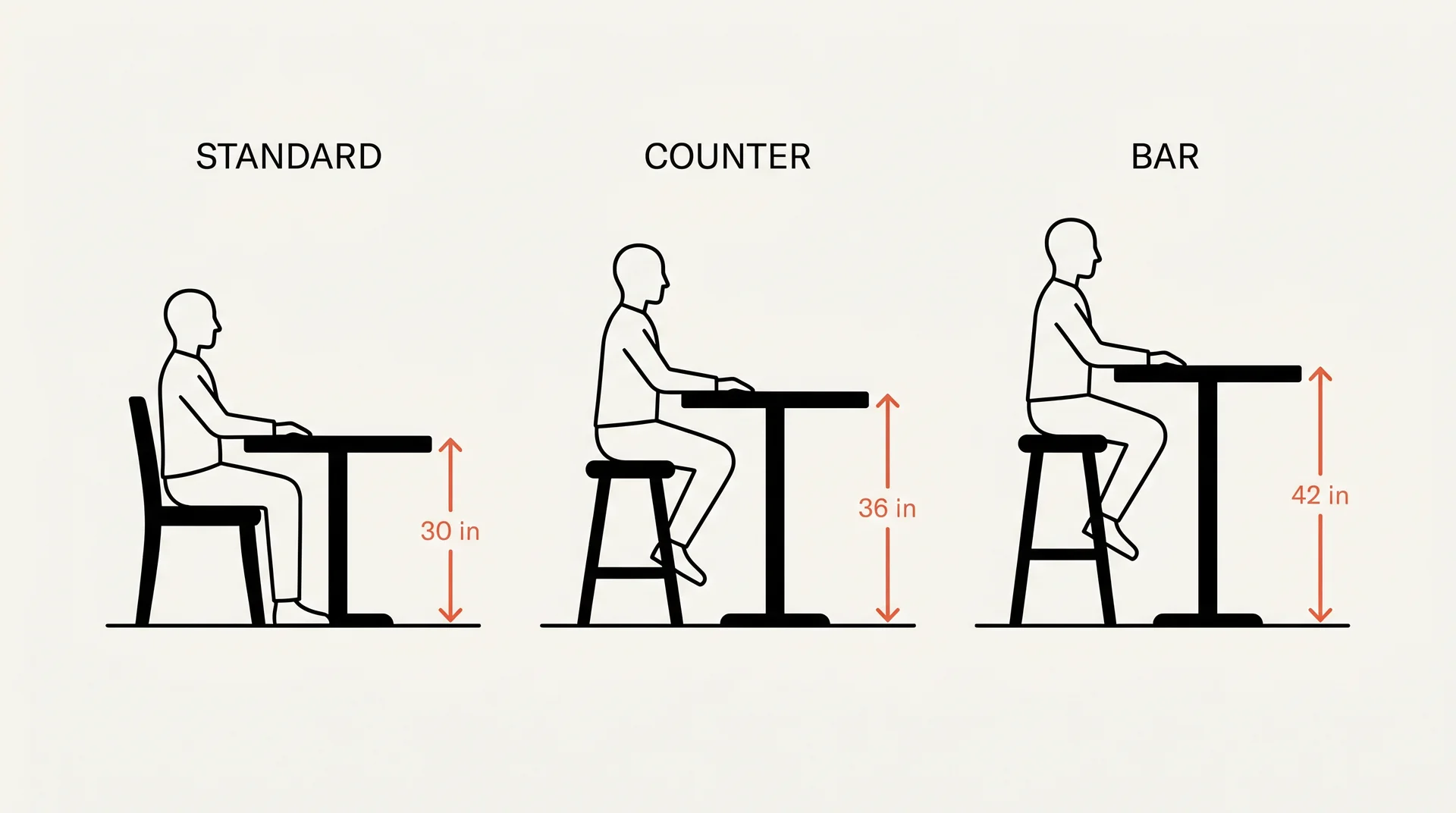
Three height categories exist for dining tables, and they are not interchangeable.
Counter height is the most common accidental purchase in this category. It looks similar to standard height in product photos, and the difference isn’t always prominent in the listing title.
Buyers who expect standard dining height and order counter height end up with a table 6 inches taller than planned, chairs that don’t work, and an expensive return.
| Category | Table Height | Paired Seating Height | Primary Use | Key Limitation |
|---|---|---|---|---|
| Standard (dining) | 28–30 in | Chair seat: 17–19 in | Seated meals, everyday dining | Widest chair selection; most accessible for children and wheelchair users |
| Counter | 34–36 in | Stool seat: 24–26 in | Casual dining, kitchen islands | Feet don’t reach the floor; a footrest is required for comfort |
| Bar | 40–42 in | Stool seat: 28–33 in | Socializing, standing-adjacent | Not practical for households that sit down to eat daily |
Counter height works well in smaller spaces. It reads visually lighter than a standard table at the same footprint, which is a real advantage in a tight room.
Feet dangling for two hours is genuinely uncomfortable, though. If your household eats long dinners or uses the table for work or homework, counter height is the wrong choice, regardless of how it photographs.
Bar height is a socializing surface, not a dining category. If you’re considering it for a household that sits down to eat daily, the seating position is too elevated for extended meals, and the footrest requirement creates fatigue over time.
When Standard Height Doesn’t Work for Your Household
Standard height was built around adults of average stature.
Taller adults often find 30 inches too low. The angle from the seat to tabletop becomes too acute, raising the shoulders and creating fatigue during longer meals.
A 31-to-32-inch table can help. The chair seat height should then be 20 to 21 inches to keep the seat-to-surface gap in the right range.
Shorter adults are better served by the 28-inch end of standard, paired with a chair at 16 to 17 inches. The gap lands comfortably at that combination. The challenge is that chairs at 16 to 17 inches are harder to find in standard furniture ranges than they should be.
Children are better served by standard height than by counter or bar height. A child can climb into a standard dining chair with minimal help. Getting a child in and out of a counter-height stool daily is a friction point most families don’t anticipate before buying.
Mixed-height households have no clean answer. Twenty-nine inches is the most commonly cited compromise. It won’t be perfect for anyone at either end of the height range. It won’t be actively uncomfortable for anyone either.
That’s the realistic trade-off. I’d rather say it plainly than imply there’s a number that makes everyone comfortable at the same table.
For wheelchair accessibility, surface height alone doesn’t determine compliance. The 2010 ADA Standards require four conditions:
- Surface height: 28 to 34 inches
- Knee clearance underneath: 27 inches minimum height
- Clearance between table legs: 30 inches minimum width
- Depth clearance: 19 inches minimum
A table at standard height with a deep apron can satisfy the surface requirement and still fail on knee clearance.
Pedestal-base tables are particularly prone to this because the central post often obstructs the knee clearance width even when the surface height is correct.
Getting the apron-to-clearance relationship right before you buy is easier than correcting it afterward.
The Options for Fixing a Height Mismatch
The fixes are limited. Prevention is the better tool.
If you’re already living with a mismatch, these are the options:
- Table too tall: Trim the legs, if construction allows. This works on solid wood legs only. Remove the tabletop, trim each leg by the same amount, reassemble, and recheck. It’s a real fix and a real commitment.
- Table too short: Furniture risers work. They typically add 2 to 6 inches. They also change the visual weight and proportion of the table in the room, which may or may not matter to you.
- Chair seat too high: No practical fix. Return or replace the chairs.
- Armrests hitting the apron: No fix. This is a prevention problem, not a repair problem. It’s why the apron measurement in the next section comes first.
One clarification worth making: adjustable leg levelers give a quarter to a half inch of range. They are for correcting an uneven floor. They are not a height correction tool.
If the problem is aesthetic rather than functional, meaning the table looks proportionally wrong in the room rather than being physically uncomfortable to sit at, that’s a different article, and it needs different criteria. This piece covers height as a comfort and compatibility problem.
Three Measurements to Take Before You Buy
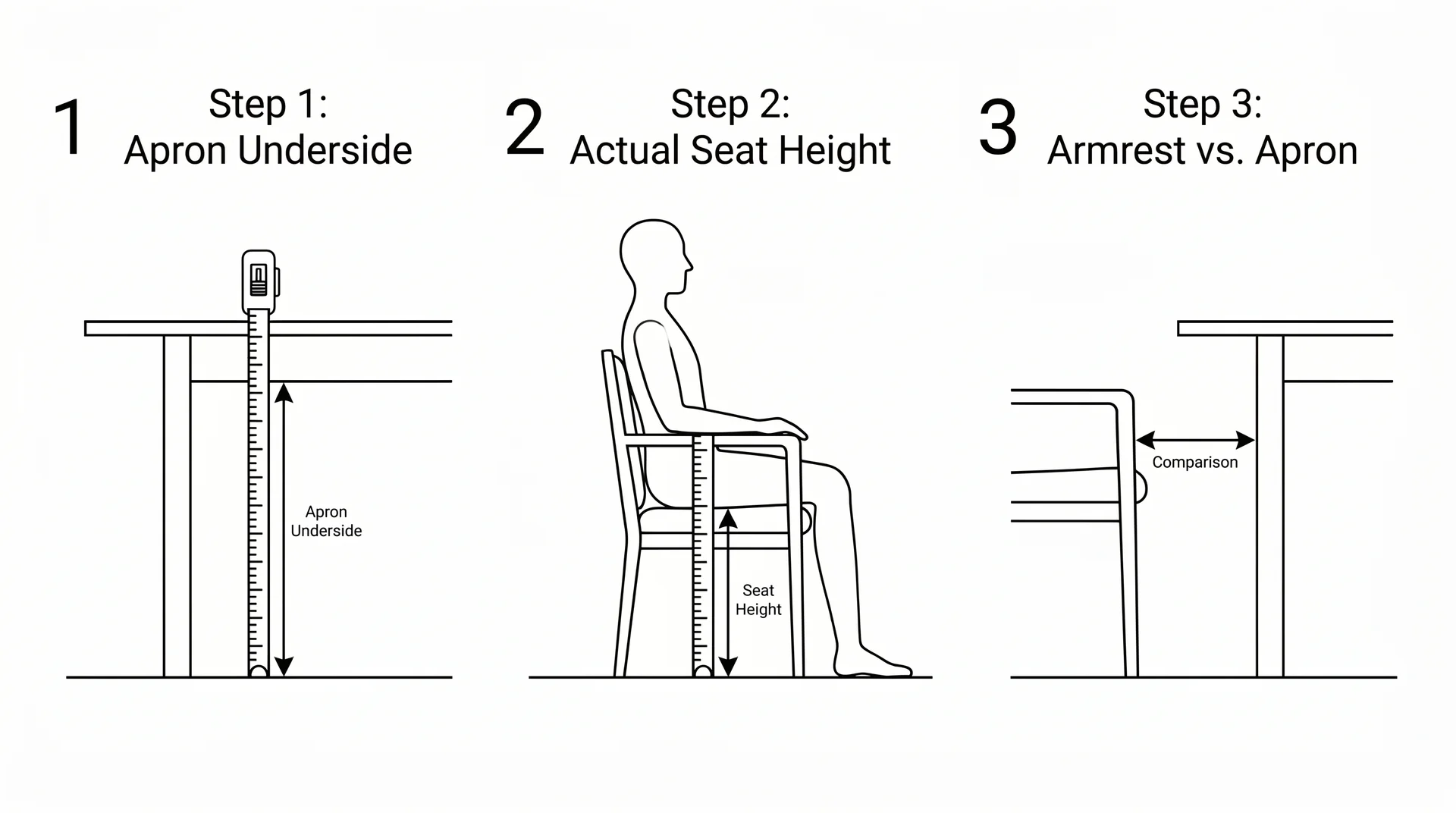
Three measurements will prevent every common height mismatch before the delivery truck arrives.
- Measure the table’s apron underside height. Floor to the underside of the apron rail, not the tabletop surface. This is your actual legroom number. If shopping online, ask the retailer for the apron depth. Subtract it from the listed surface height to get the clearance figure.
- Measure your chairs’ actual seat height. Sit in them and have someone measure from the floor to the top of where you’re sitting. Do not use the spec sheet without verifying. Manufacturers measure inconsistently, and the difference matters.
- If your chairs have armrests, measure the armrest height. Compare it to the apron underside measurement from step 1. The armrest must clear the apron. If it doesn’t, the combination won’t work regardless of how both pieces look.
If buying a table and chairs as a set, run steps 1 and 3 against the spec sheets before ordering. Then measure the delivered pieces before the return window closes.
Sets within the same product line can still have armrest-to-apron conflicts, and that’s the kind of thing you only discover after the packaging is gone.