
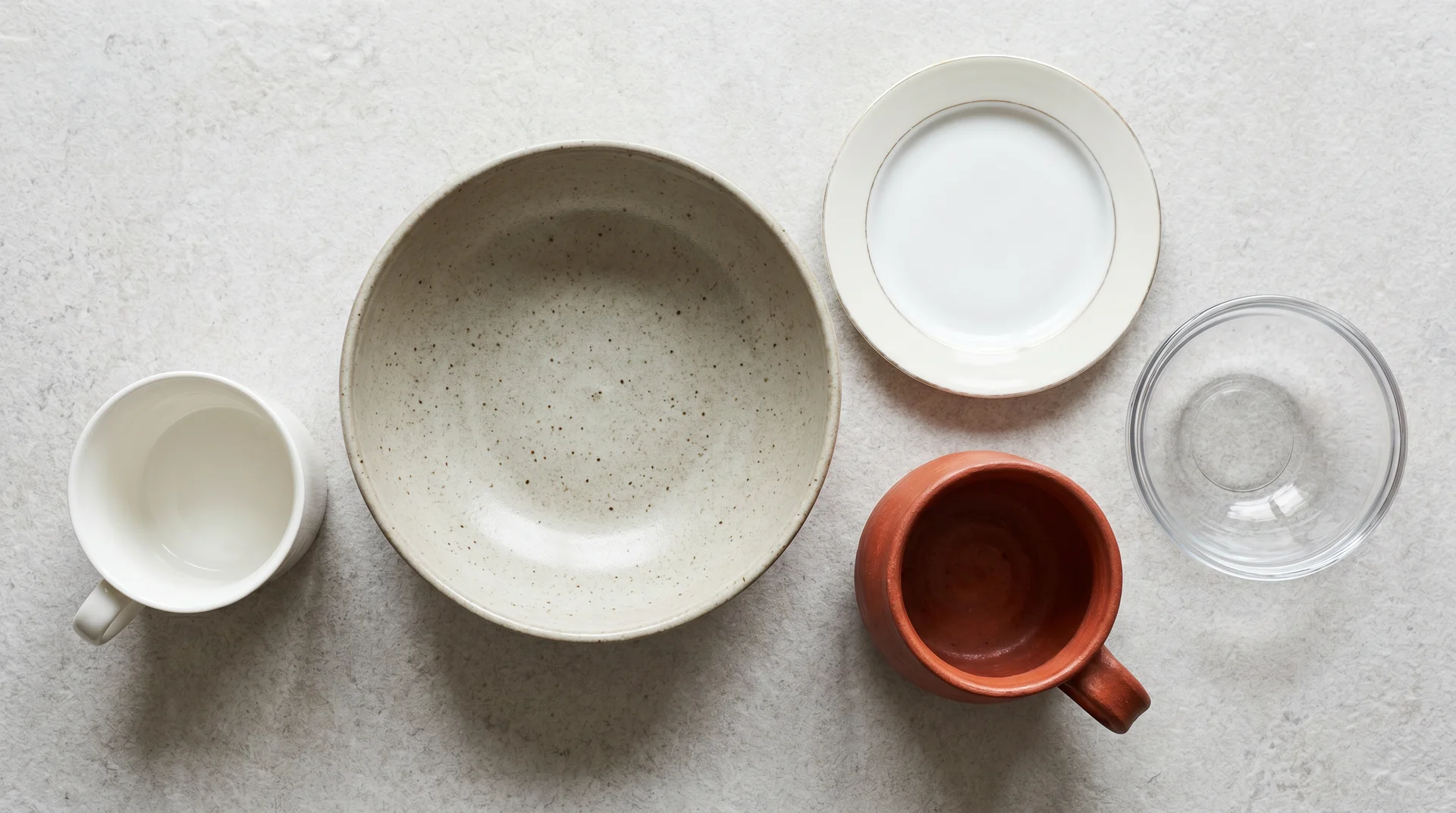
Most ceramic dinnerware is microwave safe.
The answer depends on which type of ceramic you have and what went into the glaze. Those two things are not the same question, and most articles about this topic treat them as if they are.
Is Ceramic Microwave Safe?
Most ceramic dinnerware is microwave safe, but the answer depends on the type of ceramic and what is in the glaze.
- Stoneware and porcelain from labeled, established brands are generally fine.
- Earthenware, handmade pottery, and anything with metallic trim require more scrutiny before you use them regularly for hot food.
The label on the bottom of your dish tells you the manufacturer tested it. It does not tell you the clay body, the firing temperature, or what compounds went into the glaze.
For modern dinnerware from established US or European brands, that distinction rarely matters. For vintage pieces, handmade pottery, or anything imported without a verifiable label, it matters considerably.
Four Types of Ceramic and How They Behave in the Microwave
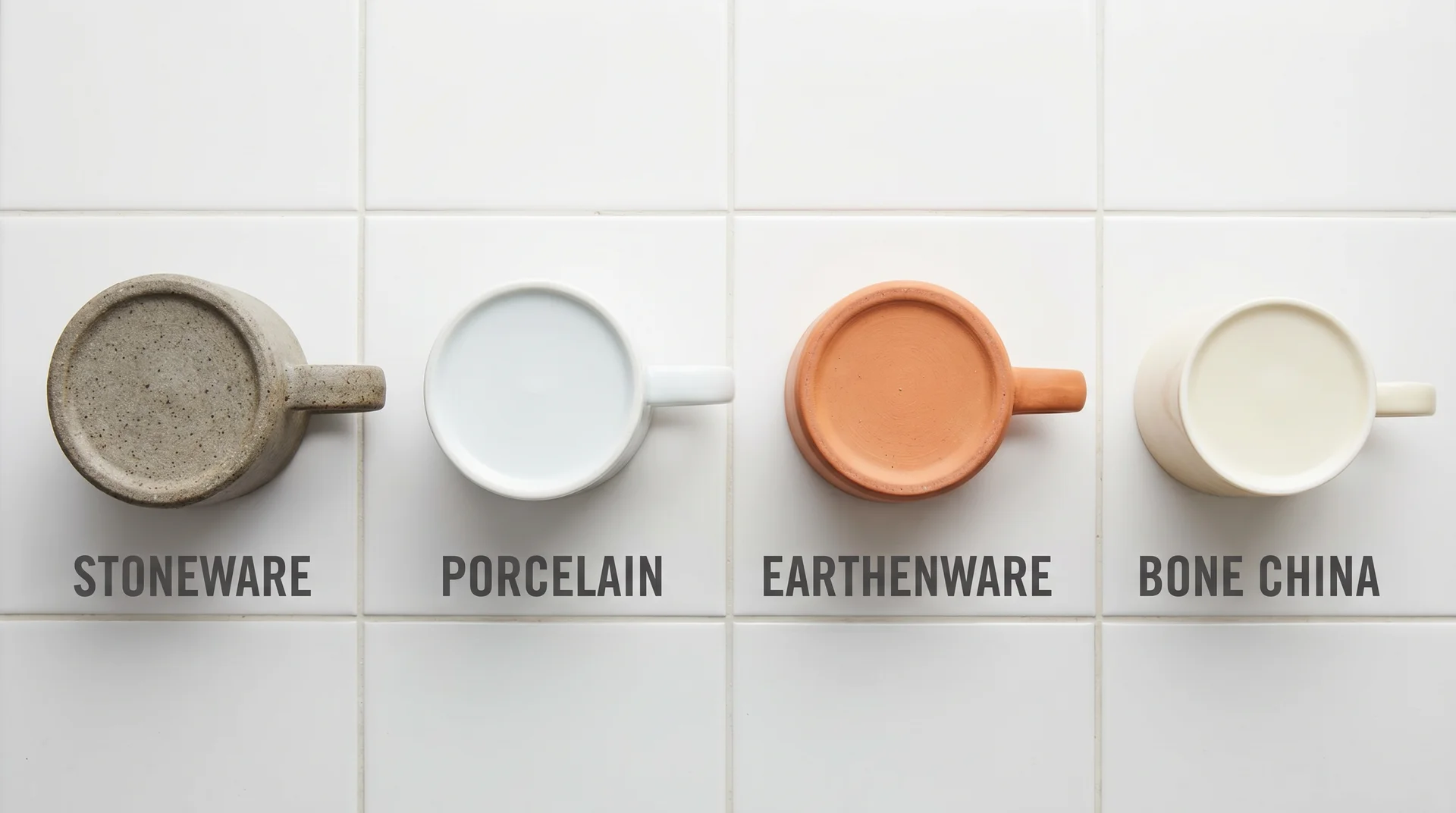
Ceramic is not one material.
It is a family of fired clay products with different structures, porosities, and glaze chemistries. Understanding those differences explains most of what confuses people about using ceramic in the microwave.
Stoneware
Stoneware is dense, durable, and usually microwave safe, but it absorbs heat. Your dish will get warm while your food heats up.
That heat absorption is a performance issue, not a safety issue. The ceramic is taking in some of the microwave energy that should be going into your food. Your stoneware mug will come out warm when your coffee comes out hot. That is normal for the material.
I’ve tested stoneware from a dozen different brands in my own kitchen over the past few years, not in controlled conditions. The difference between a cheap piece and a well-made one is noticeable. The cheap piece scorches your hand. A quality, high-fired stoneware piece is warm but manageable.
Most stoneware sold by established brands is fired at temperatures high enough to produce a dense, stable clay body with a non-reactive glaze.
Speckled stoneware with high iron content in the clay is worth a manufacturer’s check before regular microwave use. That is an edge case, but it comes up.
Porcelain
Porcelain is the most microwave-efficient ceramic type. It absorbs the least heat and lets microwave energy pass through cleanly to the food.
Porcelain is made from kaolin clay fired at very high temperatures. That process produces a dense, non-porous material that does not absorb moisture and does not trap microwave energy in the dish walls. Your food heats up. The plate stays close to room temperature.
The one exception is metallic glaze. Gold rims, silver edges, or any metallic decorative finish disqualify a porcelain dish from the microwave. The metallic content will arc. That is true regardless of how expensive or well-made the underlying piece is.
Earthenware
Earthenware is the ceramic type most likely to cause problems in the microwave, and it is the one most people cannot identify by name.
It is fired at low temperatures and is naturally porous. Those pores absorb moisture from washing and storage. When you microwave earthenware, the trapped moisture heats up fast. The dish comes out dramatically hotter than the food inside it.
That heat-absorption problem is only part of the concern. The glaze history is the other part.
Bright orange, red, and yellow earthenware glazes have historically used lead and cadmium compounds to create intense colour. This is especially true of folk pottery, imported decorative ceramics, and anything made before modern regulatory standards became widespread.
Acidic foods pull more from a compromised glaze than neutral foods do. Tomato sauce, citrus-based dishes, and coffee are the categories to think about. If you have earthenware with vivid warm colours and no verifiable label, using it regularly for hot acidic food in the microwave is not a risk worth taking.
Earthenware is also more vulnerable to thermal shock, which is what happens when a dish expands or contracts too rapidly from a sudden temperature change. Going straight from the refrigerator to the microwave is the most common cause. Cracking is the result.
Bone China
Bone china is typically microwave safe and heats food more evenly than stoneware.
Like porcelain, it is a high-fire, non-porous material that does not absorb much moisture during regular use. The metallic-trim rule applies here as well.
Bone china from a recognised brand is a low-concern category for microwave use. The trim question comes up again in its own section, and it applies to every ceramic type without exception.
A Dish Hotter Than Its Food Is Telling You Something
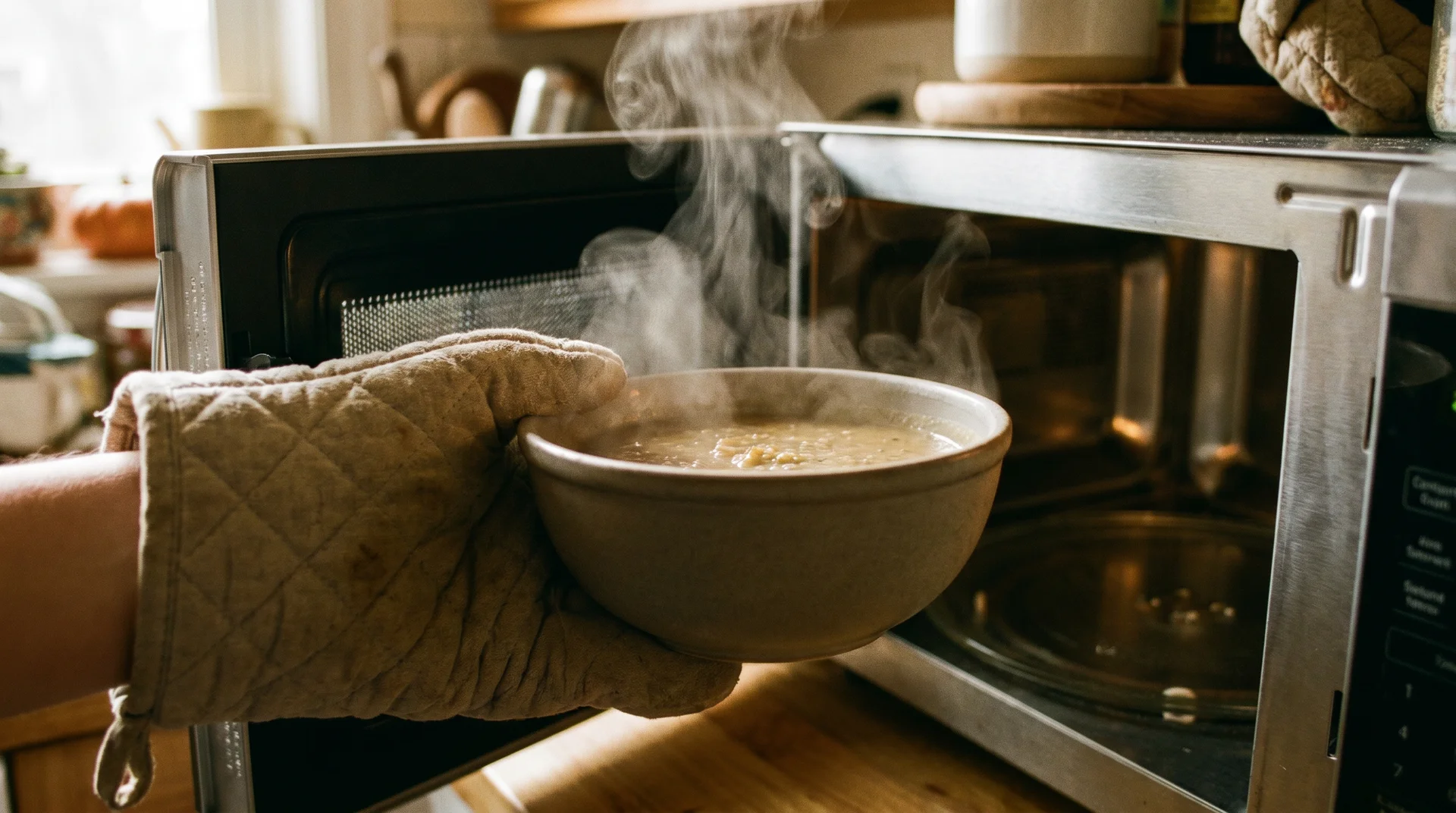
Pay attention when that happens.
Microwave energy is designed to pass through the container and heat the food. A dish that gets dramatically hotter than its contents is absorbing that energy instead of transmitting it. The mechanism is moisture. Porous ceramics absorb water during washing and storage. That trapped water heats up when the microwave runs, which heats the dish from the inside out.
The safety question and the performance question are separate. A warm dish is not automatically an unsafe one. A very hot dish with a cracked or worn glaze is different, because cracks break the sealed surface and can allow metals to migrate into food over time.
Here is what different outcomes tell you:
- Dish warm, food hot: Normal stoneware behaviour. Use oven mitts. No safety concern.
- Dish very hot, food barely warm: Significant energy absorption. Likely a porous, low-fire piece. Retire it from microwave use.
- Dish hot with visible cracks or chips: Stop microwaving it, regardless of what the original label said.
The condition of the glaze is not static. A dish that was genuinely microwave safe when you bought it may not be after three years of daily use and a few chips.
How to Tell If Your Ceramic Is Microwave Safe
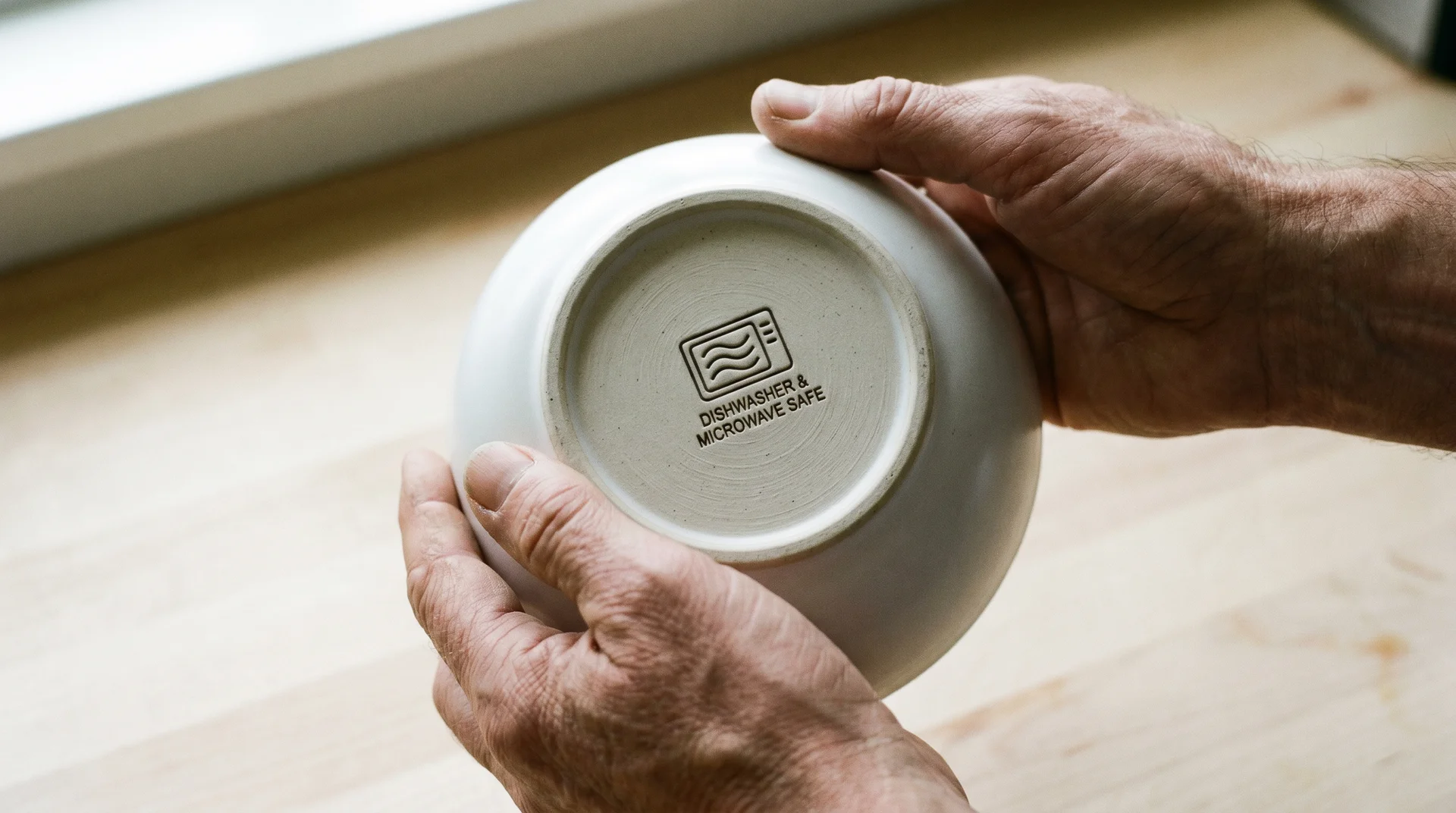
Start with the bottom of the dish.
Look for the words “microwave safe” or “microwave friendly.” Both mean the same thing.
Some manufacturers use a symbol instead: two or three wavy horizontal lines, sometimes shown above a small box or dish outline.
If you see that symbol, the piece has been tested and cleared for microwave use by the manufacturer.
Worth noting here: microwave safe does not mean oven safe.
Those are tested separately, and the labels are not interchangeable. A dish that performs fine in the microwave may crack in a conventional oven.
If there is no label, check the manufacturer’s website first. If that returns nothing, use the water test.
The Water Test
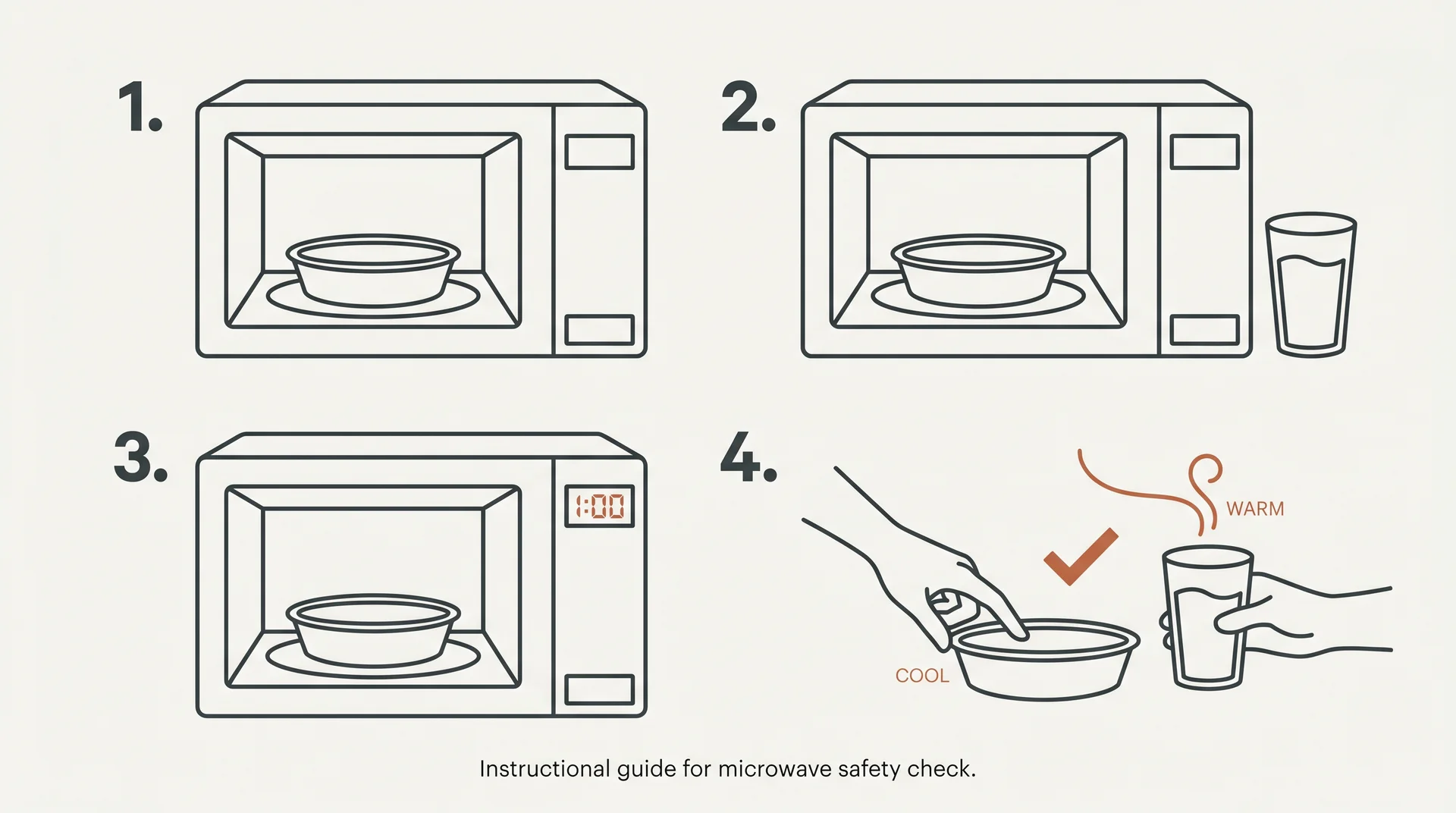
The water test tells you whether your dish absorbs microwave energy. It does not tell you what is in the glaze.
Michigan State University Extension documents this as the standard check for unlabelled containers. It takes sixty seconds.
- Place the empty dish you want to test inside the microwave.
- Fill a separate cup or glass with one cup of water and place it next to the dish. The two should not touch.
- Microwave on high for one minute.
- Carefully check the temperature of both immediately after.
Results:
- Water warm, dish cool or room temperature: The piece is likely microwave safe.
- Water warm, dish slightly warm: Use for reheating only, not extended cook times.
- Water barely warm, dish hot: Do not microwave this piece.
Mark the result at the bottom with a permanent marker. Wavy lines for safety. A crossed-out symbol indicates that it failed. You will not want to repeat the test every time you reach for that dish.
What the test does not tell you is whether the glaze contains lead or cadmium. A dish can pass the heat test and still have a problematic glaze if it is vintage or sourced from a market with different production standards.
For everyday modern dinnerware, that distinction is largely academic. For inherited earthenware or folk ceramics from overseas, it is not.
The Glaze Is the Safety Variable, Not the Clay
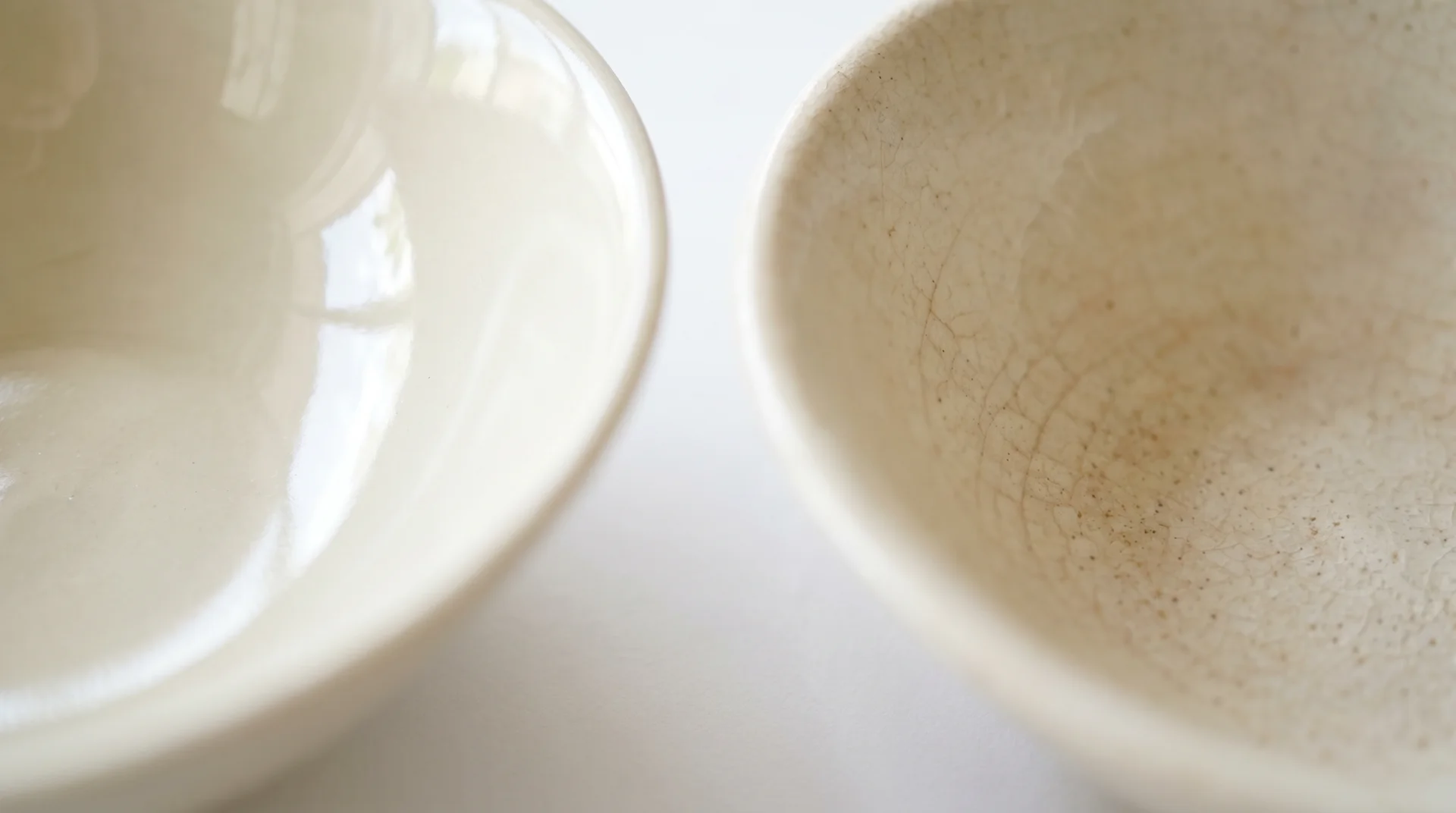
The clay body determines how the dish heats. The glaze determines whether it is safe to eat from.
Glazes seal the porous surface of fired clay and create the smooth finish on most ceramic dinnerware. They are made from silica, metal oxides, and other compounds fused at high temperatures.
In modern, regulated production, those compounds are tested to confirm they do not transfer into food at harmful levels.
The FDA sets specific action levels for leachable lead and cadmium in ceramicware sold in the US. These are detailed in the agency’s Compliance Policy Guide for ceramic dinnerware, document CPG 7117.06.
When you see “lead-free” and “cadmium-free” on a label from a brand selling in the US, independent testing confirmed it. That is not just the manufacturer’s claim.
That regulatory structure covers what is sold through compliant US channels. It does not cover every piece imported informally or sold through markets with different enforcement standards.
A “microwave safe” label on imported goods reflects the seller’s claim. It does not mean a US laboratory tested that specific glaze.
Acidic foods make this more consequential. Hot acidic foods, including tomato sauce, coffee, and citrus-based dishes, draw more from a glaze than neutral foods do. A piece used once for reheating soup is a different situation from the same piece used daily for morning coffee for years.
Handmade, Vintage, and Imported Ceramics
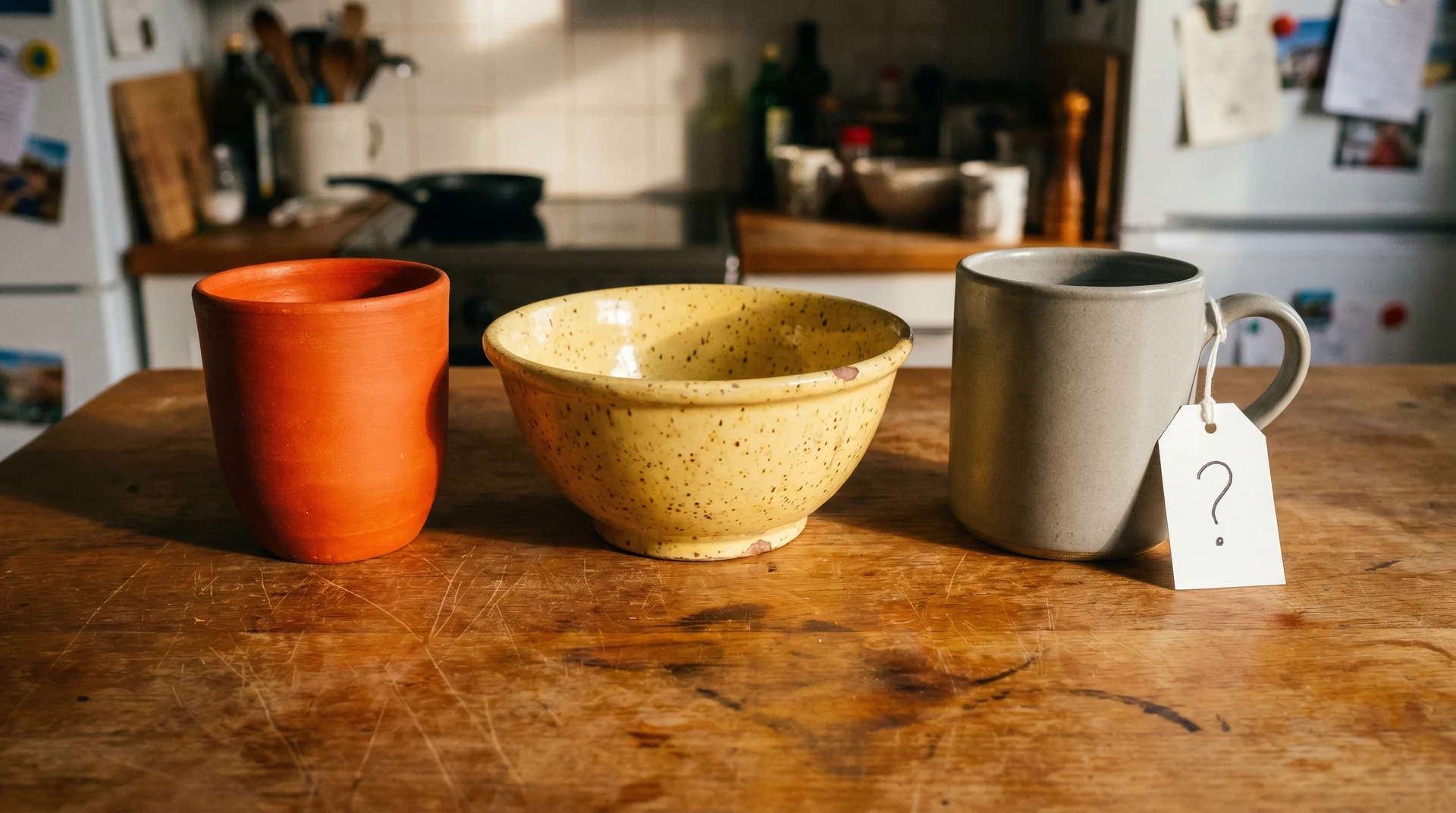
Handmade ceramics from craft fairs or small studios can be microwave safe.
Without knowing the clay body, the firing temperature, and the glaze composition, there is no way to confirm that without asking the maker directly.
White and neutral-toned stoneware or porcelain fired at high temperatures by an experienced potter is generally lower risk. Some potters and ceramic makers note that black and red clay bodies tend to absorb more microwave energy, which is a performance concern rather than a safety one, but worth asking about before regular use.
Bright orange, red, and yellow low-fire glazes carry a different concern.
A study published in an environmental science journal found that US-made ceramic dishes from before 1970 exceeded FDA lead action levels in over half the pieces tested when exposed to acidic solutions.
Folk pottery and imported earthenware with vivid warm colours have the same historical association with lead-based pigments. The FDA specifically flags this category in its consumer guidance on handmade and antique ceramics.
Vintage ceramics from before the mid-1980s are not automatically unsafe. They are unknown. Unknown matters when you are using a dish for hot food every day.
Here is what you can and cannot determine at home. The water test tells you about heat absorption. A hardware store lead test kit gives you a basic surface screen. Neither gives you a complete picture of a glaze’s composition.
A lab test is the only complete answer. For most everyday situations, the more practical answer is to use a different dish.
The Metallic Trim Rule Has No Exceptions
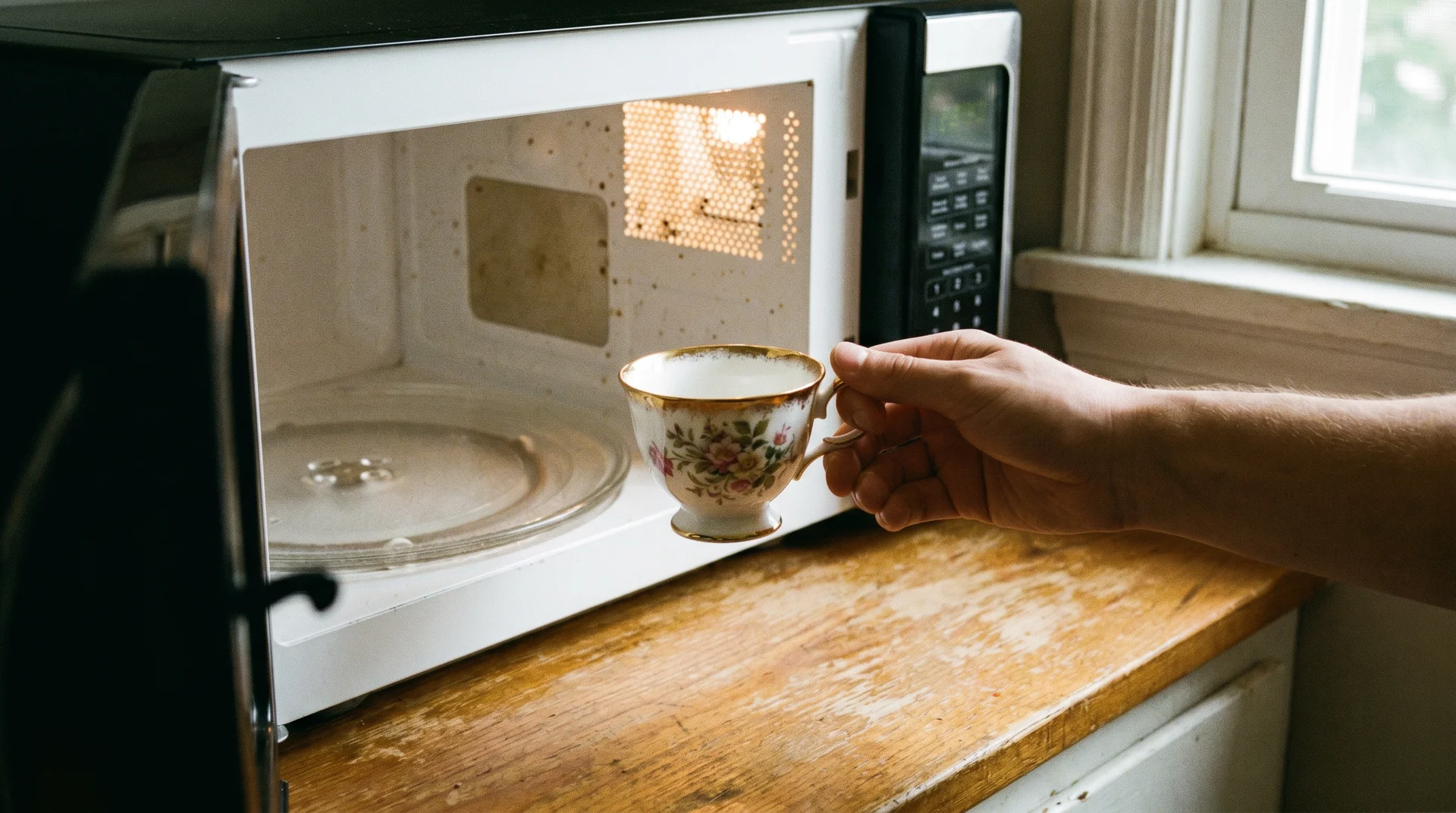
Any ceramic piece with metallic decoration cannot go in the microwave.
Gold rims, silver edges, metallic patterns, and luster glazes all contain metallic compounds that create arcing when exposed to microwave radiation. Arcing means sparks. Sparks can damage the magnetron and, if sustained, create a fire risk.
This applies to everything: fine bone china with a gilt rim, everyday plates with a silver edge, handmade mugs with metallic luster glaze.
The quality of the underlying ceramic does not change the rule.
What to Do When You Are Not Sure
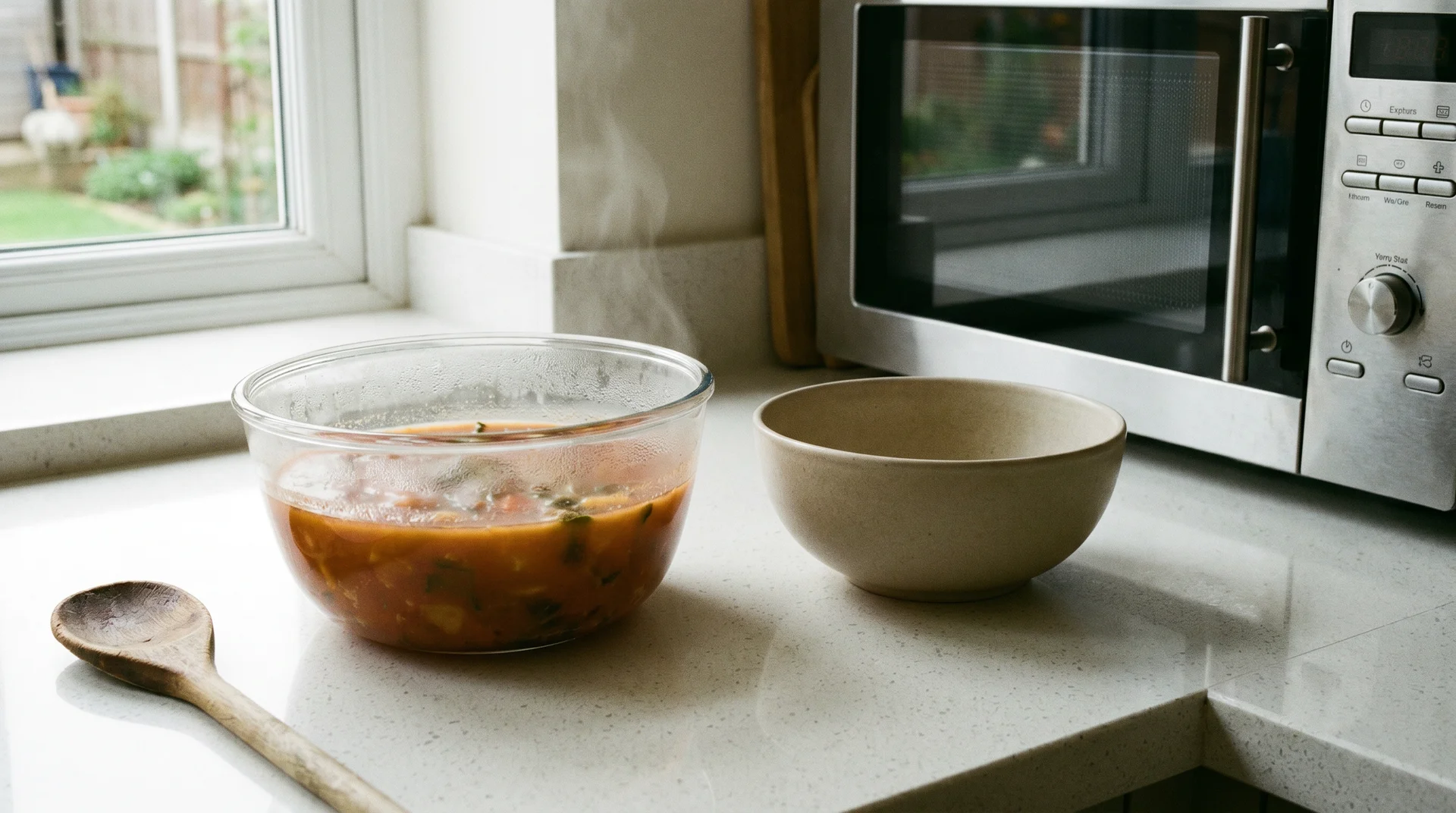
When you are genuinely uncertain about a dish, use a different one.
A plain glass bowl or mug is transparent to microwave energy. It absorbs no heat and has no glaze chemistry to worry about.
The cheapest glass container in your cabinet is probably the most microwave-efficient thing you own.
Ceramic has real advantages in durability and heat retention. The microwave is not where it outperforms glass.
For everything else, this framework covers most situations.
| Your Situation | What to Do |
|---|---|
| Labeled “microwave safe,” US or EU brand | Use normally |
| No label, modern production, plain glaze | Run the water test |
| No label, vintage, handmade, or imported with uncertain origin | Water test first, plus a hardware store lead test kit if used regularly for hot acidic food |
| Any metallic trim or decoration | Do not microwave, no exceptions |
| Cracked or chipped glaze, any source | Retire from microwave use, regardless of original label |
That last row connects to something from earlier in this piece. A dish that passes the water test at purchase does not have permanent clearance. The glaze you are working with today is not the same as the one that left the factory three years ago.
I keep a running list of pieces in my kitchen that have been moved out of microwave rotation. Not because they failed dramatically, but because they chipped, developed surface cracks, or accumulated enough daily use that I am no longer confident in the surface.
A proper kitchen audit would be a more systematic approach. Mine has been half-finished for months.