


The smell coming from your dishwasher is diagnostic data. Identify it correctly, and you’ll know whether you have a five-minute fix or a genuine fire hazard.
Most burning smells fall into one of three categories. Each has a distinct character, and each calls for a different response.
Three Types of Burning Smell and What Each One Means
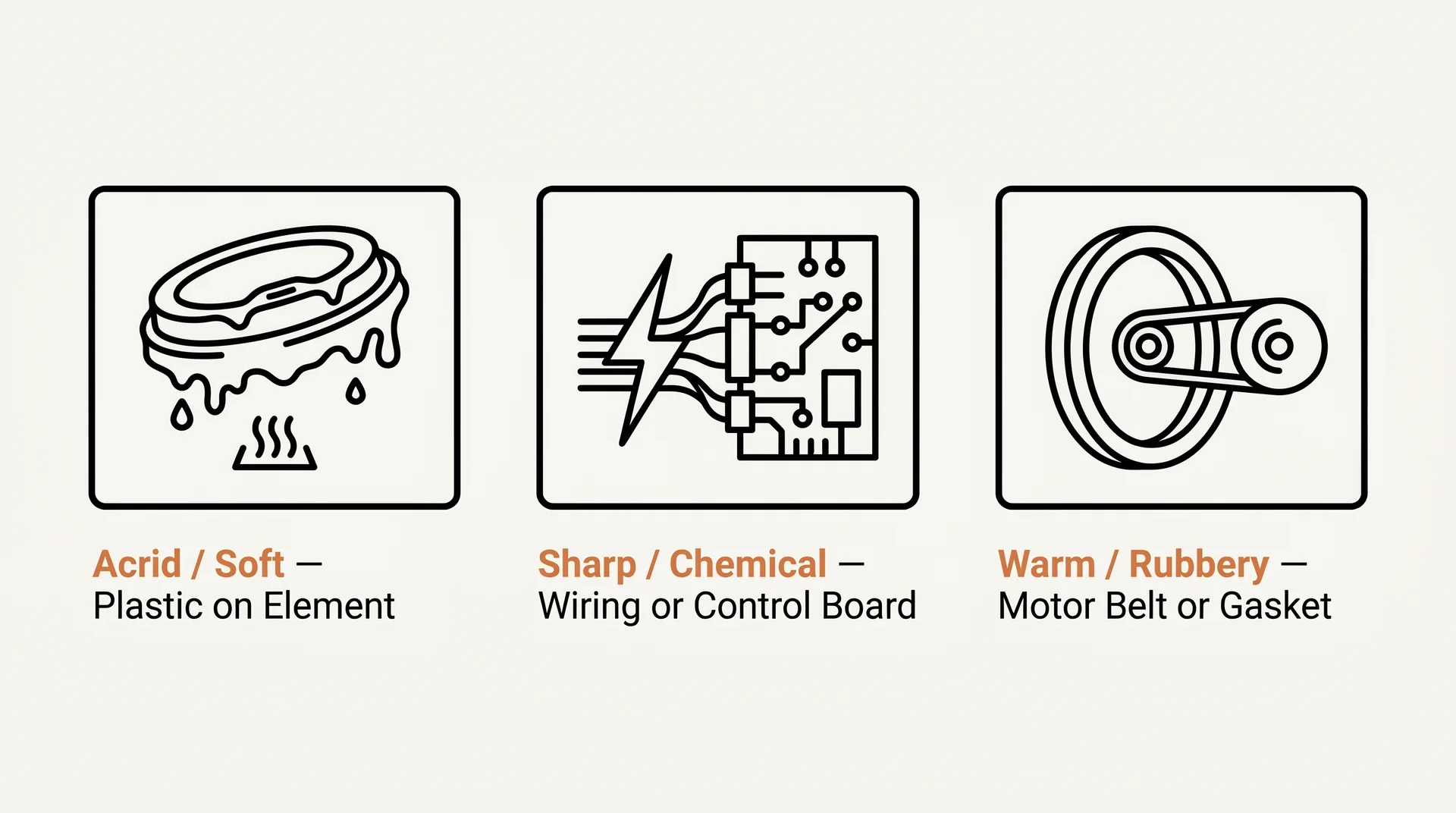
Some burning smells are harmless once the cause is removed. Others mean you should cut the power before doing anything else.
Before you open the dishwasher door, stand next to the closed machine and identify what you’re smelling. Opening the door disperses the odor immediately. That makes the most important step in this entire process significantly harder to complete.
The smell at the door seal, before it escapes into the kitchen, is your clearest diagnostic signal.
Burning Plastic Smell
A burning plastic smell means something plastic has most likely contacted the heating element at the base of your dishwasher tub. It is acrid but not sharp.
The heating element is the curved metal rod sitting along the bottom of the tub. The smell resembles a melting grocery bag or a heated food container lid. It is not an electrical fault.
This is the cause of the majority of burning-smell reports.
- Stop the cycle.
- Let the machine cool fully before you open it or touch anything inside.
A smell that clears after you remove a melted lid is not an emergency. If the smell returns at the same intensity after two clean cycles is a problem that warrants the full inspection sequence described in the section below.
Sharp Electrical or Chemical Smell
An electrical burning smell is sharp, chemical, and often faintly metallic.
Some people describe it as ozone. Others compare it to the interior of an overheated electronics device.
Either description points to the same source: a wiring harness (the bundle of insulated wires running electrical current through the machine), a control board (the circuit board that manages the dishwasher’s functions), or a motor component experiencing a fault.
Cut power at the circuit breaker. Not at the dishwasher switch
Do not run another cycle to see whether the smell disappears. Do not open the door if there is visible smoke inside the unit.
Restore power only after a qualified technician has inspected the appliance.
Burnt Rubber Smell
A burnt rubber smell is warmer and less sharp than an electrical smell. It resembles a worn motor belt or a rubber hose left too close to a heat source.
The source is usually a degrading motor belt, a worn door gasket, or a deteriorating drain hose. This smell is most common in machines eight or more years old.
It is not an immediate fire risk, the way an electrical smell is. The dishwasher should not continue running until a technician identifies the cause.
If you have identified your smell type, the sections below walk through each one. If you have an electrical smell, skip directly to the fire hazard section.
Why Do New Dishwashers Smell?
A brand-new dishwasher can produce a faint burning smell during its first few cycles.
Protective coatings on the heating element and interior components burn off during initial use. The smell is mild and has a factory quality to it. It fades after one or two cycles and does not return.
A normal break-in smell gets weaker with each cycle. A real problem returns at the same intensity or stronger. If the smell is coming back after three cycles, something else is happening.
What to Do when a Plastic Burning Smell Comes from Your Dishwasher?
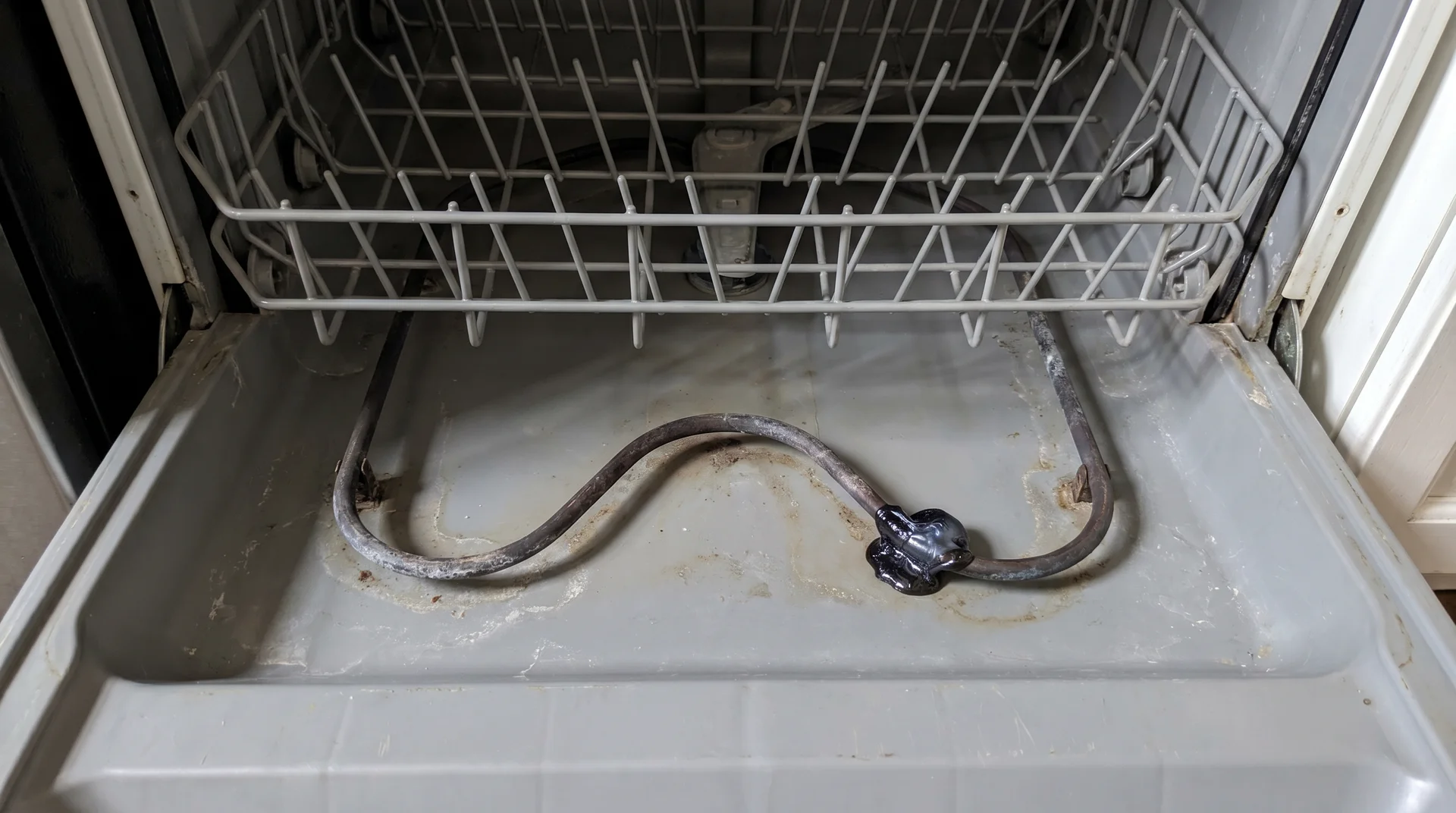
Plastic on the heating element is the most common cause of a dishwasher burning smell.
The inspection sequence below takes about fifteen minutes. Each step exists for a specific reason. Skipping any step either creates a burn risk or produces an incomplete diagnosis.
Before You Touch Anything
Cut power to the dishwasher and wait at least thirty minutes after the cycle ends before touching anything inside the tub.
The heating element retains heat well after the cycle indicator clears. The surface can remain hot enough to cause burns even when the machine has been off for ten minutes.
There is an immediate burn risk from residual element heat. The thirty minutes are the protocol and not a suggestion.
What to Look For at the Bottom of the Tub
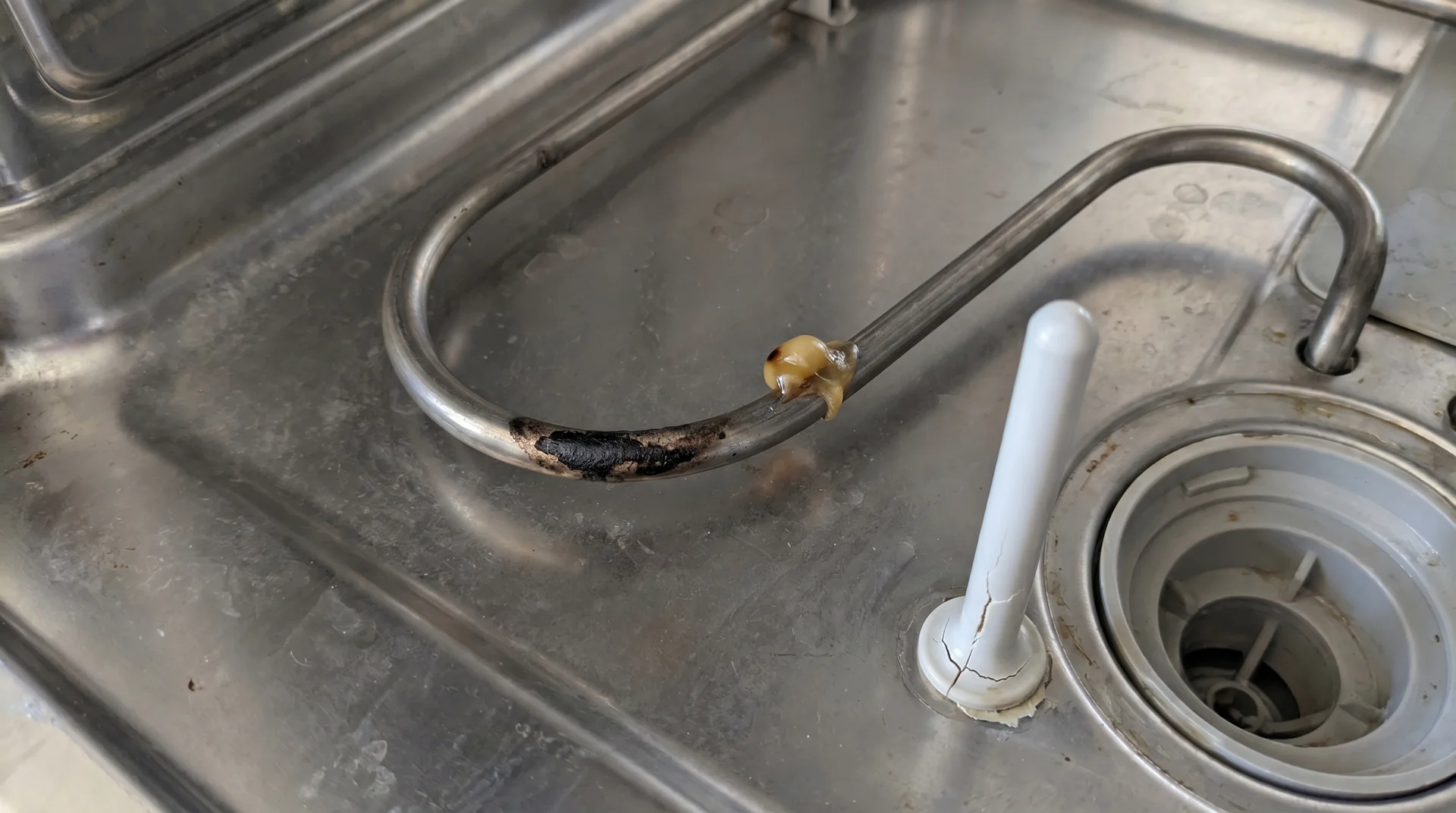
Pull the lower rack out completely and examine the heating element along its full length.
Melted plastic on the element looks like darkened spots, a yellowish or brownish residue, or, in some cases, a partial object fused to the coil surface. Smell intensity usually corresponds to how much material is in contact with the element.
Also, check the drain housing area and the rack tines nearest to the element.
Damaged rack tine coating can melt and drip if the protective vinyl covering is cracked or worn through. This is easy to miss on a quick inspection.
If you find plastic residue and it is the only anomaly visible, you have identified the source.
How to Remove Melted Plastic from the Heating Element
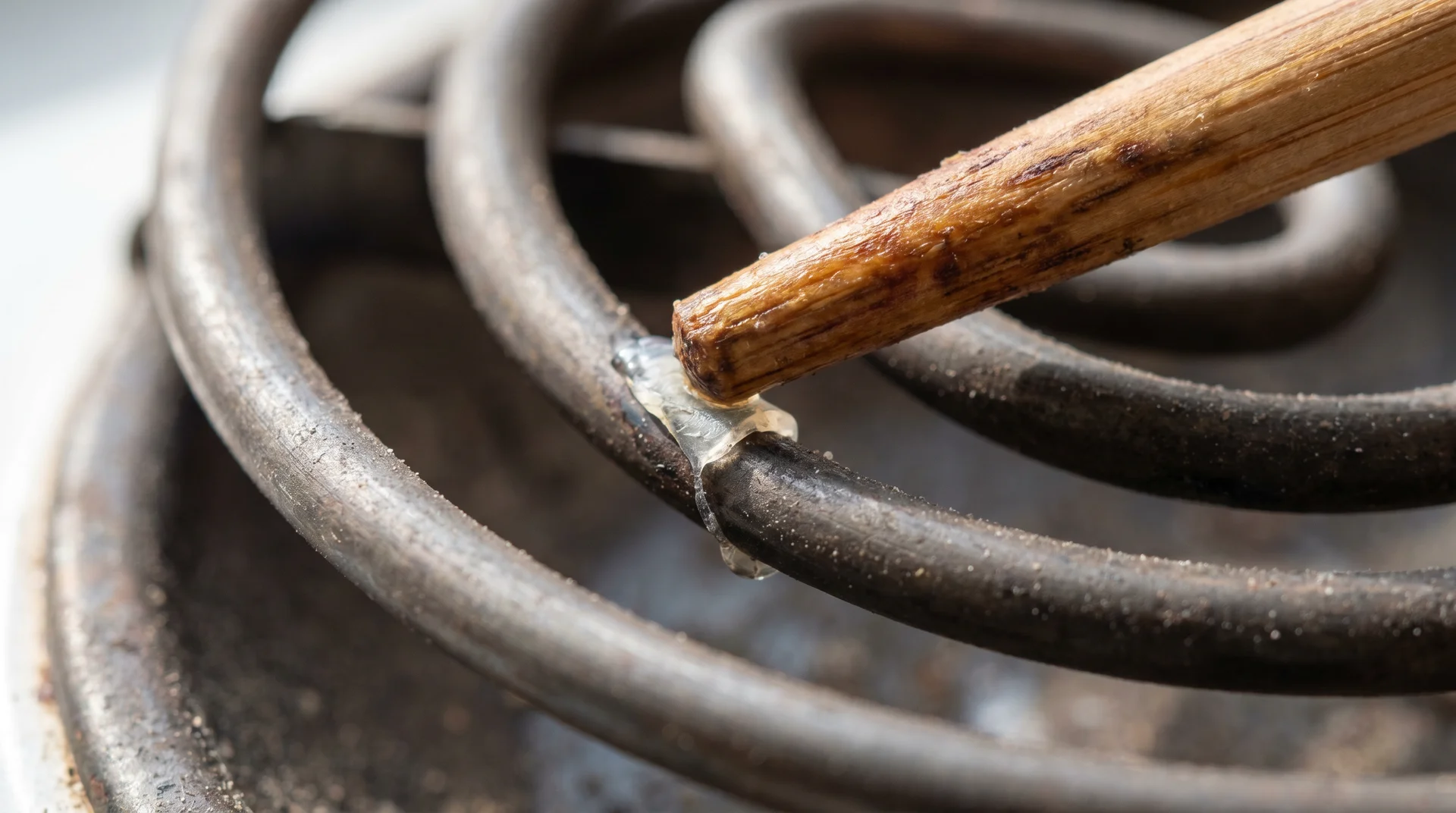
Use a wooden or silicone tool only. Never use metal on the heating element surface.
Do not force material that has fully bonded to the coil. Forcing bonded residue damages the element’s surface coating and accelerates corrosion.
A thin layer of fused residue burns off on its own over one or two cycles.
If you force it, you risk shortening the element’s usable life, which is a more expensive problem than the plastic that started it.
When the Element Itself Is the Problem
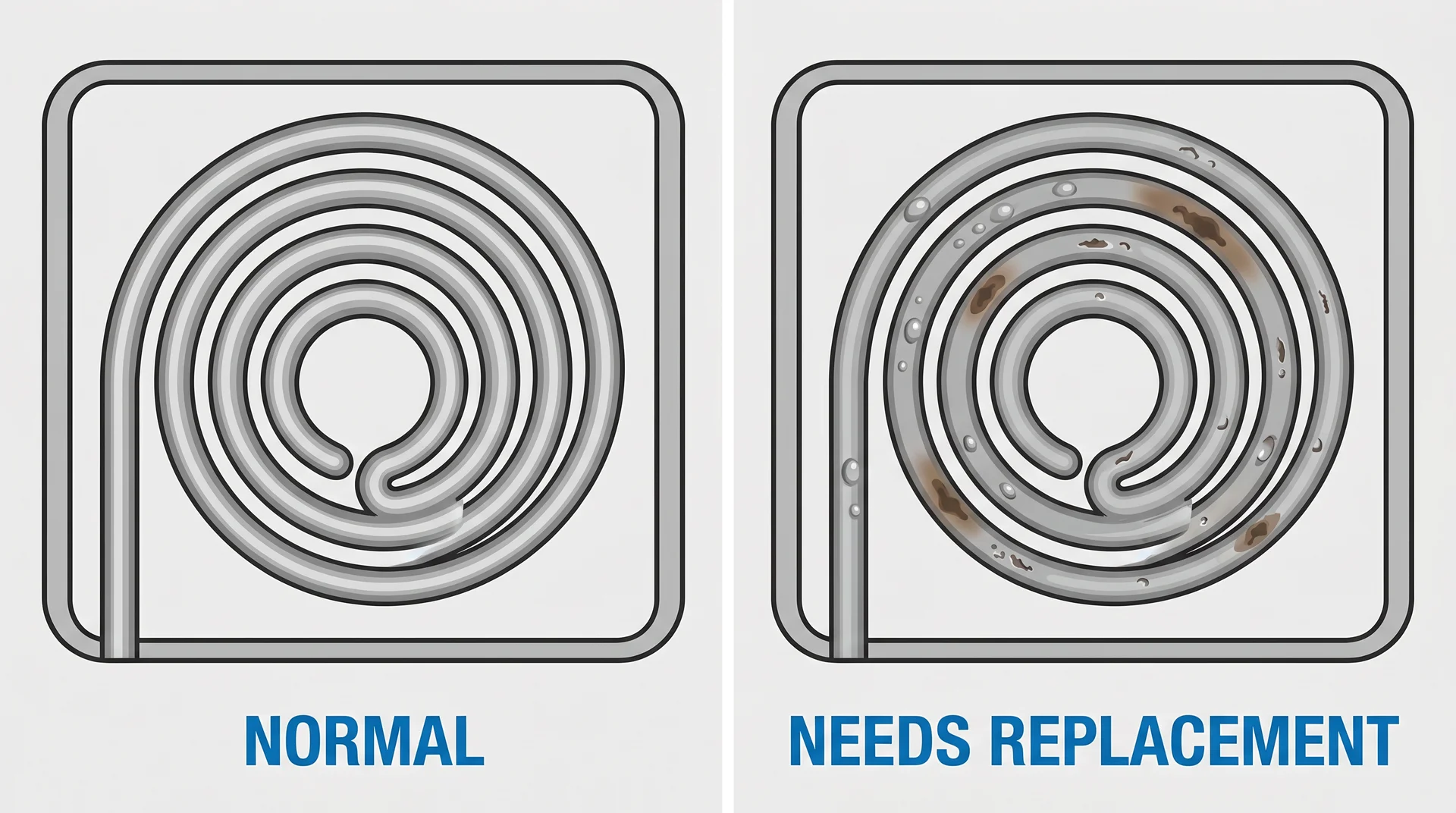
An element showing blistering, visible cracks, or discoloration without any plastic source is failing. That is a component problem.
A failing heating element requires replacement. This is not a DIY repair for anyone without appliance repair experience.
The process involves disconnecting power at the circuit breaker, accessing the element terminals beneath the tub floor, and working with electrical connections. The risk is not proportionate to the cost savings on a service call.
Element replacement typically costs between $150 and $250 for parts and labor combined.
On a machine over ten years old, that figure deserves honest consideration against replacement cost.
How to Prevent Plastic from Reaching the Element
Most plastic-on-element incidents are preventable with consistent loading habits.
- Load all plastic items on the top rack only. The heating element sits on the tub floor directly below the bottom rack.
- Check that lightweight plastic lids are secured or removed before running a cycle. They dislodge easily from the rack during the wash.
- Remove food packaging material from dishes before loading. Thin plastic film from deli containers is the most frequent offender.
- If your dishwasher offers a condensation-dry setting rather than a heated-dry setting, using it eliminates the heating element from the drying phase entirely and removes the risk.
CPSC Recalls: When a Burning Smell Is a Fire Hazard
An electrical burning smell from a dishwasher is a documented fire risk.
The CPSC has recorded multiple dishwasher recalls specifically linked to fire hazards. GE, Maytag, BSH (which covers Bosch, Gaggenau, Jenn-Air, and Thermador), and Cove Appliance have all issued CPSC recalls for heating element failures or power cord overheating events that resulted in fires.
These produced documented property damage. Some fires spread to adjacent cabinetry before being contained.
These are not theoretical risks. They are documented incidents on public record at cpsc.gov.
Every one of those situations started with a smell. It takes three minutes. It may resolve the entire situation at no cost.
Check the CPSC Recall Database Before Calling a Technician
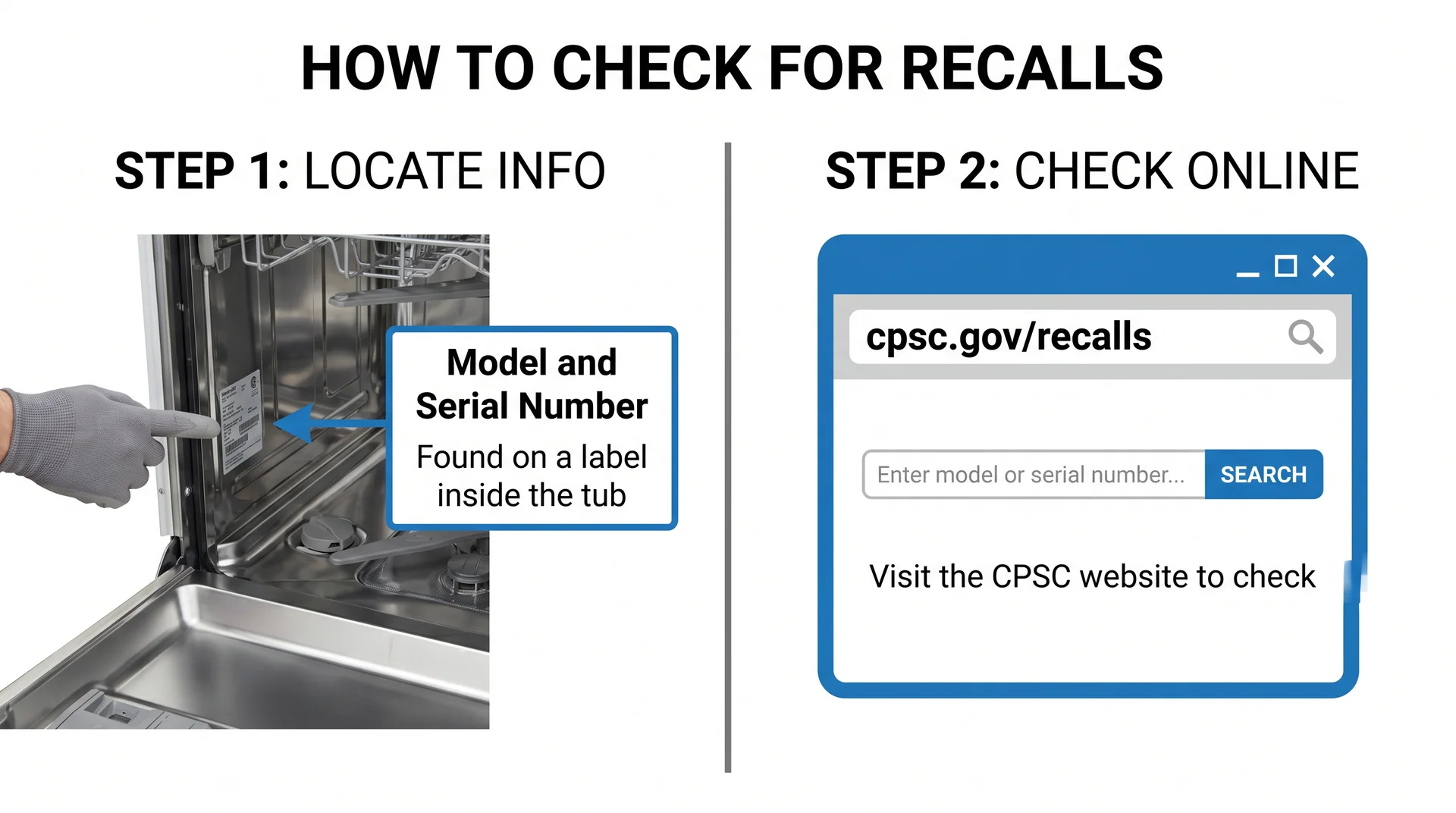
Before you schedule a service call, spend three minutes at cpsc.gov and check whether your model is under an active recall.
Search the recall database by brand name. Your model and serial number are on a label inside the tub, on the front left side panel in most brands. Use a flashlight if needed.
If your model is under an active recall, the manufacturer is typically required to repair or replace the unit at no cost.
That changes the entire cost calculation before you have spoken to anyone. Do this step second, immediately after cutting power and before calling a service company.
The Electrical Smell Protocol
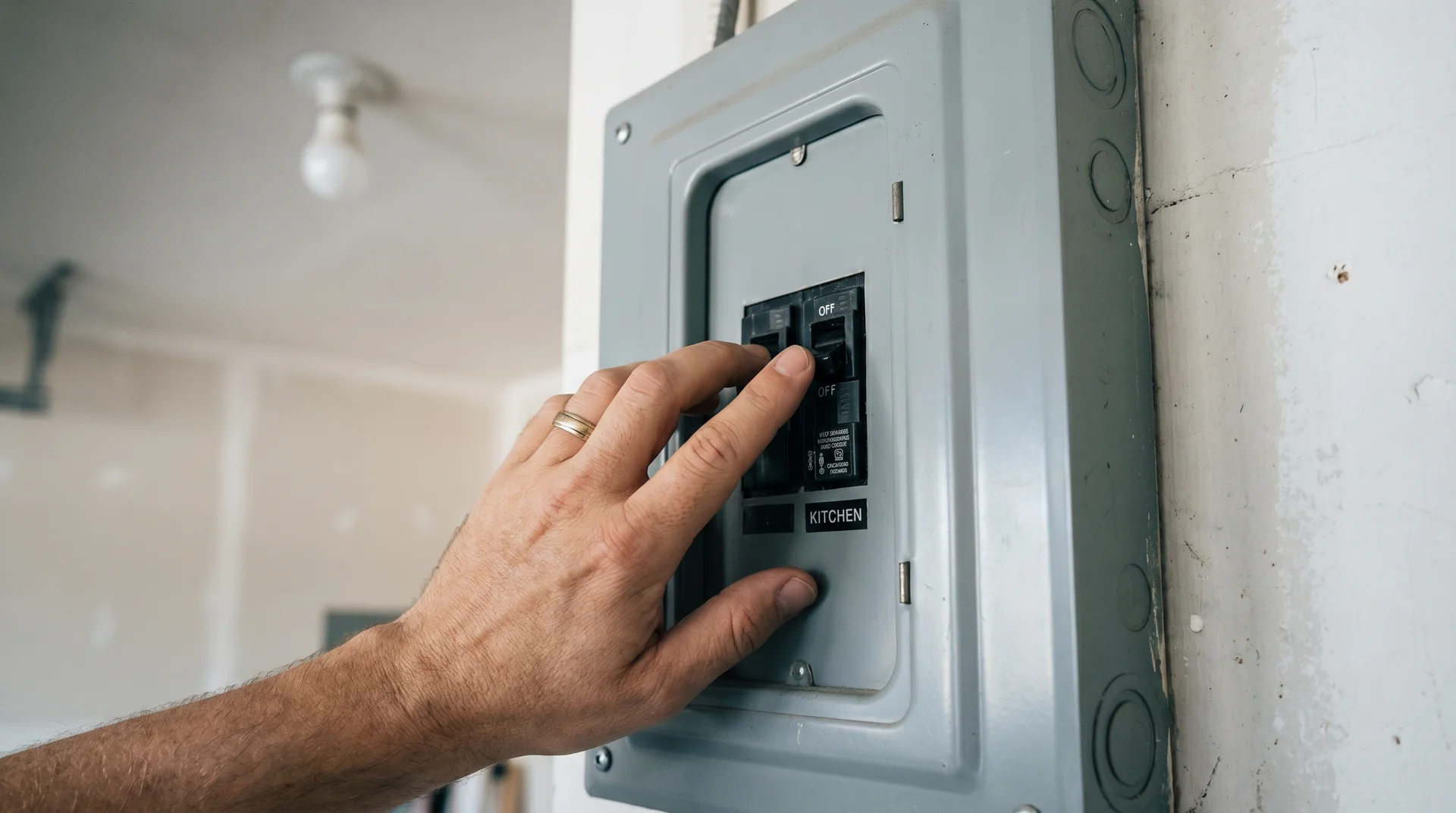
Sharp chemical smell, any visible smoke, or a burning smell accompanied by crackling or popping: cut power at the circuit breaker before doing anything else.
The components most likely to produce an electrical burning smell are the control board (inside the upper door panel) and the wiring harness running through the lower access area beneath the door.
Sequence, in this order:
- Cut power at the circuit breaker. Not at the dishwasher power button.
- Do not open the door if smoke is visible inside the unit.
- Let the unit cool fully before approaching it for inspection.
- Call a technician for a full electrical inspection before restoring power.
Do not run a test cycle. Do not assume it was a one-time event.
Each step in that sequence eliminates a specific failure mode.
Skipping the circuit breaker step leaves the fault active. Running another cycle continues the exact condition that produced the smell in the first place.
Age and Risk
A dishwasher over ten years old with an electrical burning smell is a different situation than the same smell in a newer machine.
Wiring insulation degrades over the years of heat cycling.
Thermal fuses (small safety components designed to cut power if the element overheats) lose reliability with age.
A control board that has experienced a decade of heat and humidity is not the same component it was when it was new.
The threshold at which repair becomes the wrong call is not a fixed number.
How to Clear the Smell Once the Problem Is Fixed
Fixing the source does not always clear the smell immediately. Plastic residue and heat-scorched material leave odor compounds on interior surfaces. What clears those compounds depends on which type of smell you started with.
What Actually Works and What Doesn’t
- For plastic residue odor, run one or two empty hot cycles. Remaining bonded residue burns off during the cycle without additional intervention.
- For general heat odor after source removal, wipe the tub interior with a damp cloth once it has cooled fully. Then place a dishwasher-safe cup of white vinegar on the top rack and run an empty hot cycle.
The label on most commercial dishwasher cleaners says the product eliminates dishwasher odors, but it’s only for food residue and detergent buildup.
Electrical burning smells and rubber degradation smells come from failing components, not from surface contamination. Running a cleaning cycle when the source is a faulted wiring harness addresses nothing and delays the actual fix.
My father spent thirty years as a commercial kitchen inspector in Baltimore and has strong views on bleach. He is not entirely wrong. He is also not entirely right, and the distinction that matters here is the same one.
A cleaning agent, however effective against surface contamination, does not address an odor that comes from a component failure.
Cleaning the Filter While the Rack Is Already Out
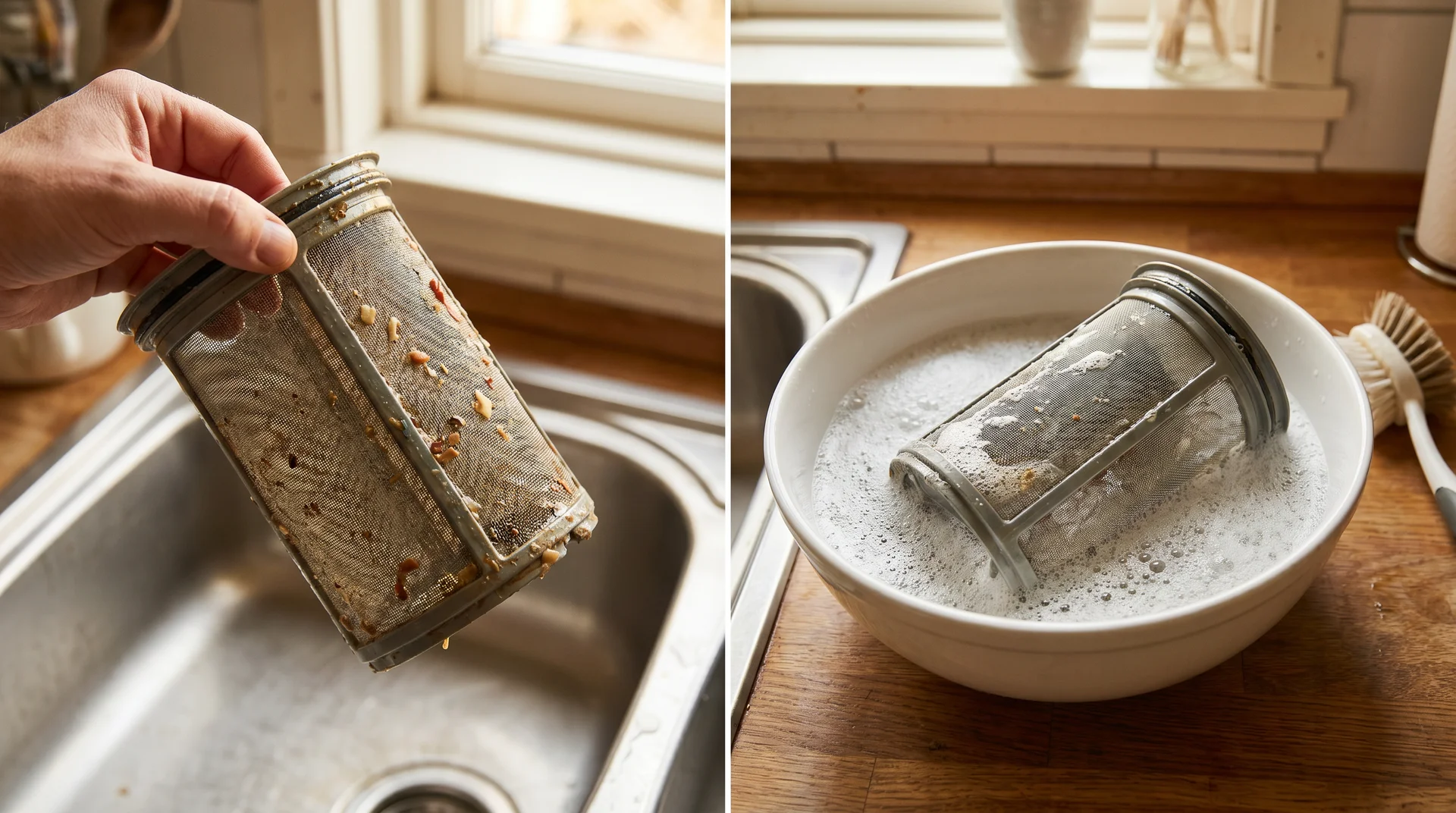
If you’ve had the lower rack out for the plastic inspection, clean the filter before reassembling everything.
The filter sits at the center of the tub floor in most models. It is a cylindrical component that twists and lifts out. Just remove it, rinse under running water to dislodge loose debris, soak in warm soapy water for ten minutes, then rinse again before reinstalling.
Embedded food particles in the filter mesh won’t release without adequate soak time. A clogged filter adds mechanical strain to the pump motor.
When to Call a Technician and When to Stop Using the Dishwasher Entirely
These are two different decisions, and they don’t always land at the same time.
Calling a technician means you schedule an inspection before running the dishwasher again. Stopping use entirely means the machine does not run again under any circumstances until a technician has cleared it. The criteria for each are different.
Call a Technician If Any of These Apply
Schedule an inspection, and do not run the dishwasher again, if any of the following are true.
- You detected a sharp electrical or chemical smell with no visible plastic source in the tub
- The burning smell returned at the same intensity after removing the plastic and running two clean cycles
- The heating element shows blistering, visible cracking, or discoloration without an external cause
- You have a consistent burnt rubber smell, and the machine is over eight years old
- Any interior component shows heat distortion that was not there before
Stop Using the Dishwasher Entirely If Any of These Apply
Under the following conditions, the machine should not run again until a technician has inspected and cleared it.
- Any visible smoke inside or outside the unit during or after a cycle
- A burning smell accompanied by crackling, popping, or any sparking
- The control panel stopped responding during or after the smell appeared
- A burn mark, scorch residue, or visible char on the door panel, interior wall, or lower access area beneath the door
The distinction between these two lists matters. The first list covers situations where the machine is likely repairable but needs professional assessment first. The second list covers situations where continued use creates a fire risk regardless of what the assessment eventually finds.
The Repair-or-Replace Question
That calculation depends on your specific diagnosis, your machine’s age and brand, local labor rates, and parts availability for your model number.
Answering it here, before knowing which component has failed, produces advice that fits some situations and misleads others.
Get the diagnosis first. The technician’s assessment is the only input that makes the cost calculation meaningful.