
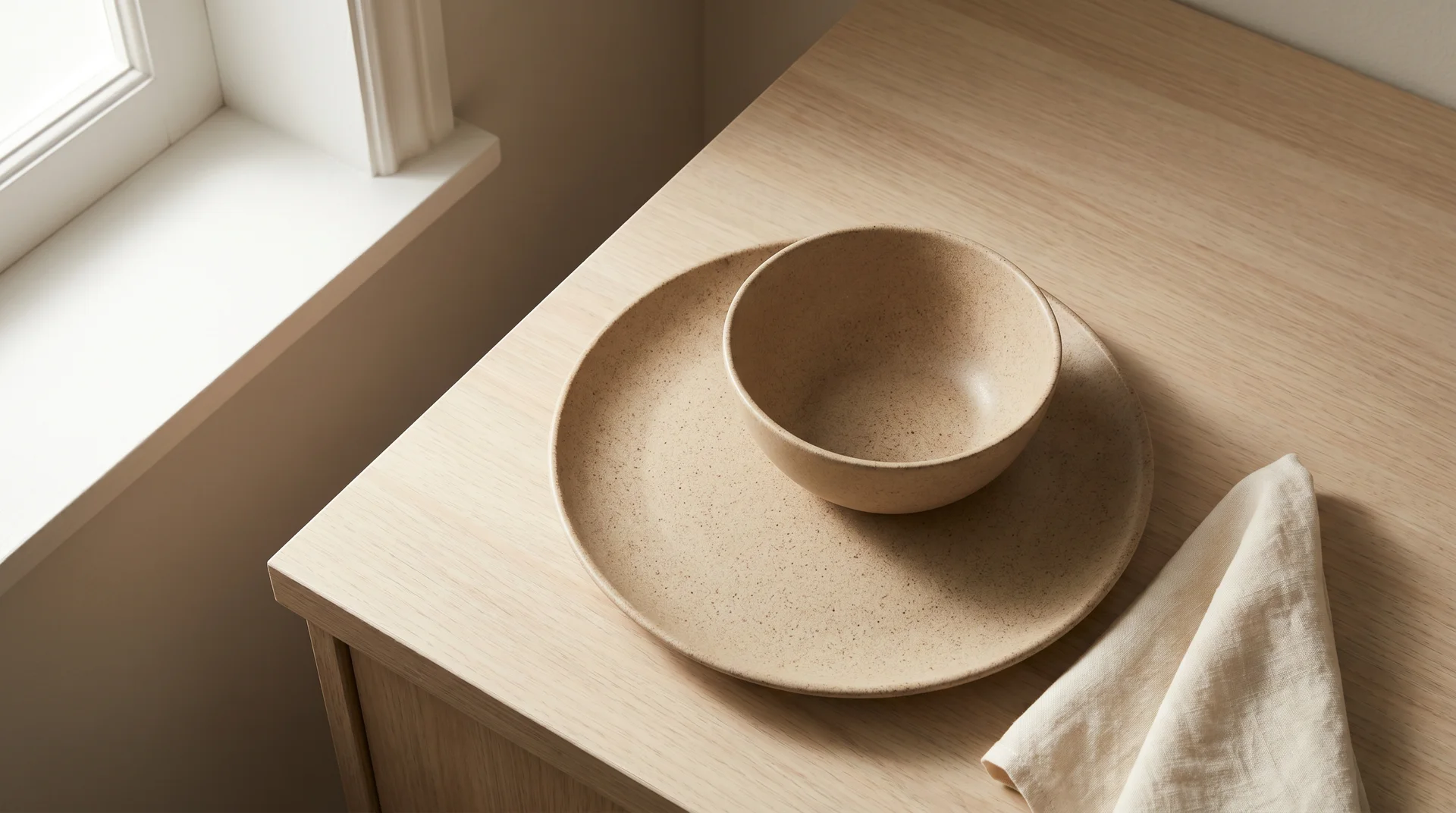
Most wheat straw dinnerware is a composite of two materials, not one.
It combines wheat stalk fiber with a plastic binder, and the binder is what determines how the product actually performs. The fiber is a real agricultural byproduct diverted from waste.
What holds the plate together and what determines every practical characteristic, from microwave tolerance to end-of-life disposal, is usually polypropylene, a food-grade plastic.
This piece covers what wheat straw dinnerware is made of, what the safety record shows, and where the eco claims hold up versus where they don’t.
What Wheat Straw Dinnerware Is Actually Made Of
The Wheat Fiber Part
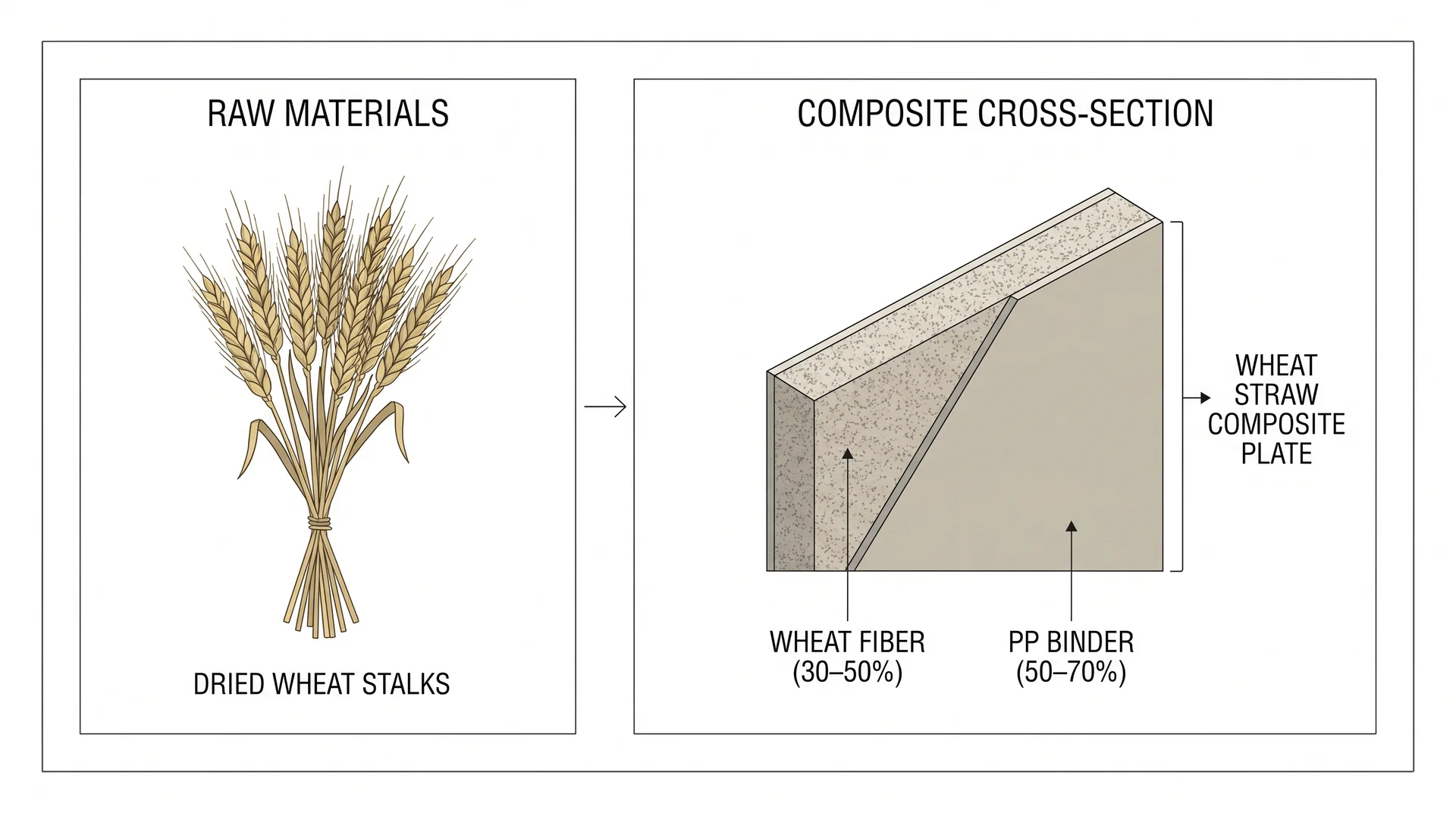
The wheat straw in these plates is the leftover stalk of the wheat plant, harvested after the grain has been removed.
Farmers typically burned it or discarded it as agricultural waste. Processing it into dinnerware diverts that material from landfill or open burning. That part of the eco story is accurate.
The fiber gets cleaned, dried, and ground into particles. Blended into a molded product, it creates a matte, speckled surface that looks and feels different from standard plastic.
Hold a wheat straw plate, and you’ll notice it immediately: the texture has a subtle organic grain to it, and the weight sits somewhere between ceramic and standard plastic in the hand.
That tactile quality is what resonates with buyers looking for something that doesn’t feel synthetic. The fiber provides that impression. But raw fiber alone can’t hold a plate shape. That’s what the binder is for.
The Binder
The binder determines almost everything about how wheat straw dinnerware performs in a real kitchen.
In the majority of products on the market, that binder is polypropylene, also labeled PP or #5 plastic. Polypropylene is a food-grade plastic. It’s BPA-free, widely used in food containers, and considered safe under normal use conditions by the FDA.
The wheat fiber typically makes up 30 to 50 percent of the composite, depending on the manufacturer. The remaining 50 to 70 percent is plastic.
Some manufacturers use PLA (polylactic acid) as the binder instead. PLA is derived from plant starch, usually corn or sugarcane.
PLA-based sets are genuinely compostable under industrial conditions. They also have lower heat tolerance and are generally not microwave safe. They’re less common and typically more expensive than PP-based sets.
I’ve reviewed enough kitchenware specifications to know that the marketing front of a product and the material spec are rarely the same conversation.
How to Read a Wheat Straw Product Label Before You Buy
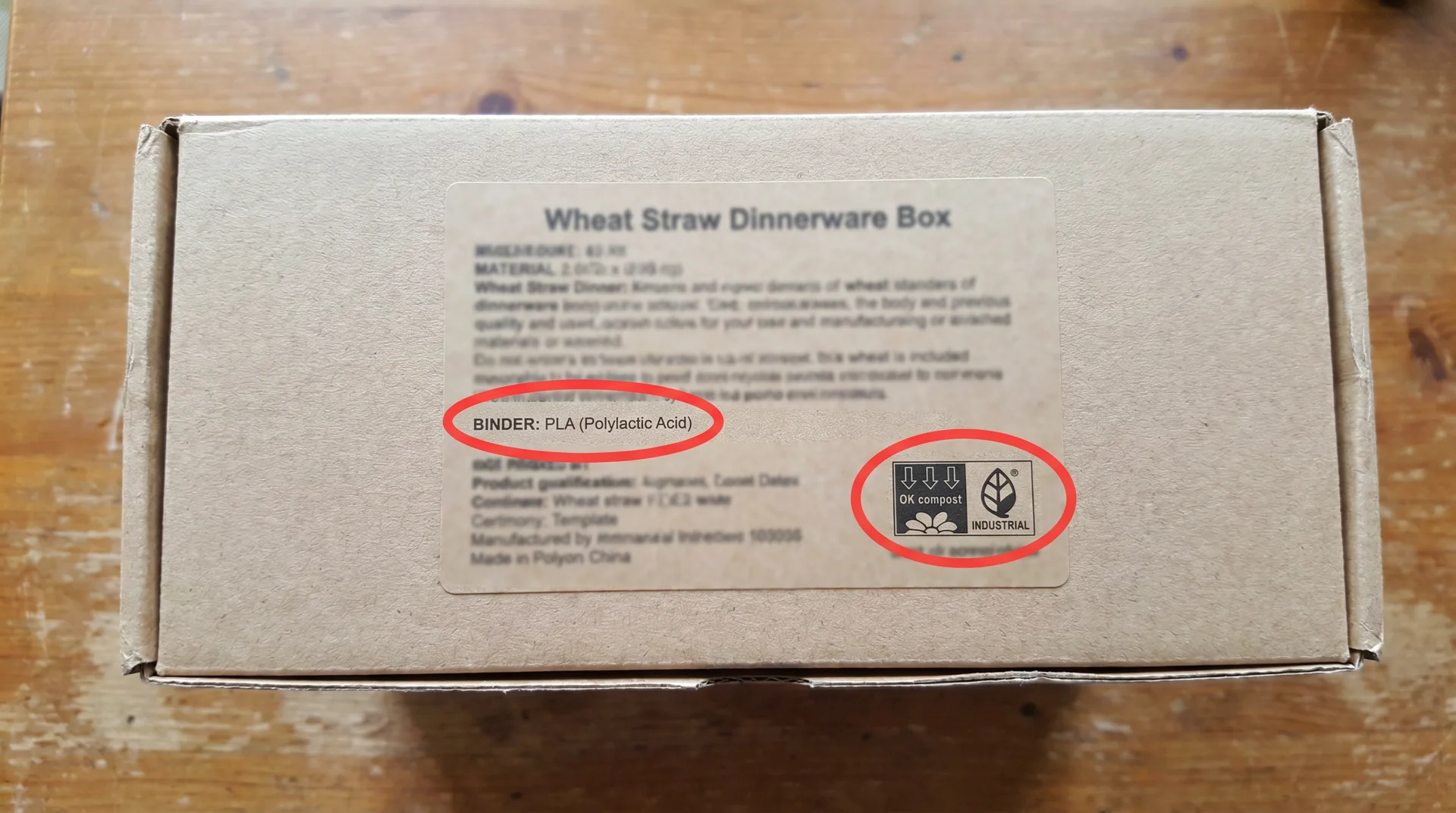
Polypropylene (PP) and polylactic acid (PLA) are the two most common binders.
PP is the standard food-grade plastic binder. PLA is the plant-based, compostable alternative with different heat tolerances. Everything else on the label follows from which one the product uses.
- What is the binder material? Look for “PP,” “polypropylene,” “PLA,” or “polylactic acid” in the materials list. If the listing says only “wheat straw” with no binder mentioned, that’s a gap worth investigating. Every molded plate has a binder. The question is whether the manufacturer discloses it.
- What percentage is actually wheat straw fiber? Higher fiber content means less plastic per unit. A product at 50% fiber is meaningfully different from one at 20%. This number is rarely stated upfront, but sometimes appears in the full product specifications.
- What about food-safety certification? Look for FDA compliance statements for the US market, or LFGB certification for European standards. These confirm that the full composite — binder, fiber, and colorants — has been tested for food contact safety.
“BPA-free” on its own means almost nothing as a safety indicator. It confirms the absence of one specific compound. It says nothing about the binder type, the heat tolerance, or what happens to the material over repeated dishwasher and microwave cycles.
Is Wheat Straw Dinnerware Safe to Use
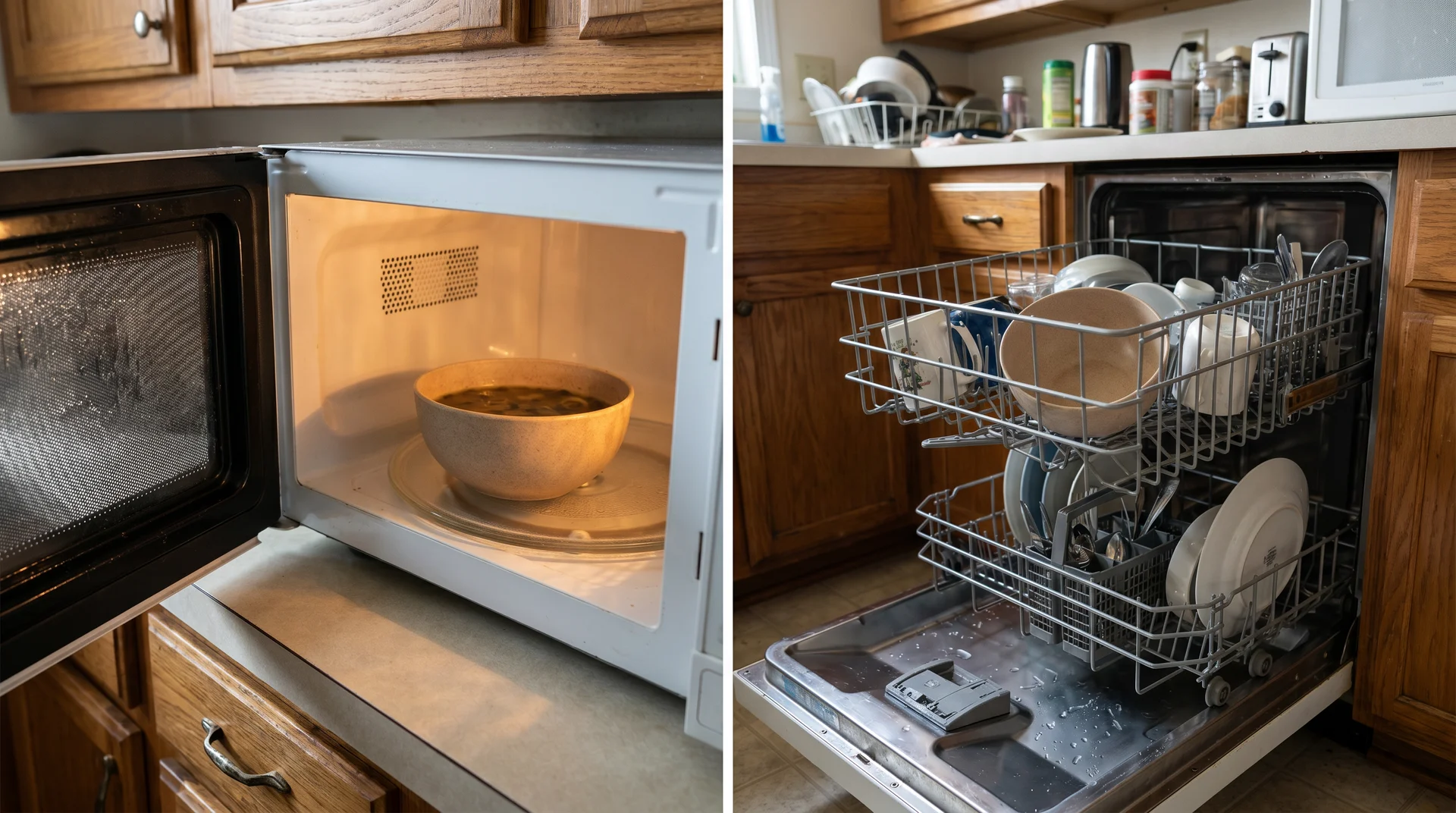
For most everyday uses, quality wheat straw dinnerware is safe.
The key variable is the binder, which we covered in the section above. Products using food-grade polypropylene and certified to FDA or LFGB standards are considered safe for food contact under normal conditions.
The concern is heat exposure and products that use inadequate or undisclosed binder materials.
The UK FSA Warning
The UK Food Standards Agency issued warnings about plant-fiber composite tableware, and the specific context matters for US buyers.
In 2022, the FSA and Food Standards Scotland told industry to stop selling food contact materials containing plant-based materials, including wheat straw, combined with unauthorized binders. They cited insufficient evidence that such products were safe for long-term use.
In 2024, the FSA’s Committee on Toxicity reviewed new evidence. Their finding was specific: plant-based fibers in plastic materials can cause formaldehyde and melamine to migrate into food above legal limits. This happens when the binder is a melamine-formaldehyde resin, not food-grade polypropylene.
The warning targets products where melamine-formaldehyde is used as the binder and not all wheat straw products.
If your product lists polypropylene as the binder and carries FDA or LFGB certification, it is not the product the FSA was warning about. If the materials list doesn’t specify the binder clearly, that’s the reason to ask before buying.
I looked at the FSA source documents and the FDA materials guidelines before writing this section, not the product listings, and I’ve tested this product category across several sets over roughly 18 months.
The FSA findings are the reason the binder material comes first in any evaluation I do, before anything else on the label.
Microwave and Dishwasher Use
PP-based wheat straw dinnerware is microwave safe for reheating, not for extended cooking cycles.
Polypropylene can typically handle temperatures up to around 248°F (120°C). Short reheating sessions at medium power stay within that range. Extended cooking, high-power settings, and foods that concentrate heat intensely push past it.
Note that it is hard for me to tell you the safe reheating window. Since it varies by product, depending on the specific PP blend and the fiber-to-plastic ratio.
I’ve seen manufacturers list two minutes; others list three minutes at a maximum of 420°F.
If you’re buying these plates specifically for young children who will use them for daily microwave reheating, check that the product carries FDA compliance documentation or LFGB certification before purchasing.
That certification confirms the full composite has been tested for food contact safety under heat conditions, not just the fiber in isolation.
For dishwashers: PP-based sets hold up well to standard home cycles. Skip the high-heat drying setting, which warps lower-quality products over time. The top rack is the safer default for any composite dish.
Smell of Wheat Straw Dinnerware: Does It Go Away or Not?
New wheat straw products often have a faint grain-like or grassy odor. This is normal and expected.
It comes from the natural fiber component, not the plastic binder. It typically fades after a few hand washes or dishwasher cycles.
If the smell persists after five or six washes, or if the odor is chemical rather than grain-like, check the product certifications.
A persistent chemical odor from a heated plate is a signal worth taking seriously. The eco branding on the box is not a substitute for the certification label inside it.
The Eco Claim of Wheat Straw Dinnerware
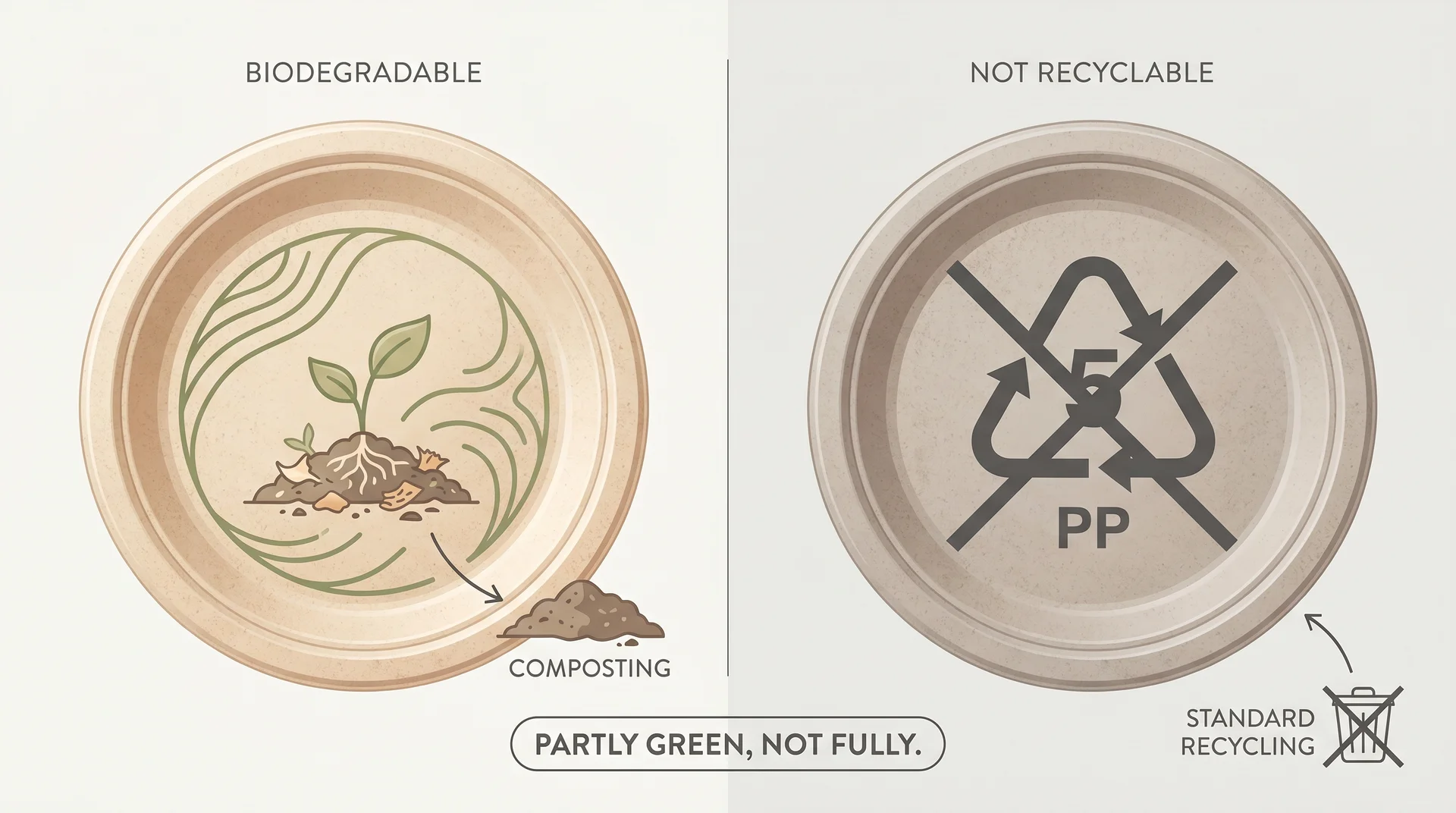
PP-based wheat straw dinnerware reduces plastic content per unit. It does not eliminate plastic, and it is not biodegradable.
PP is a food-grade plastic. It’s durable and widely considered safe, but it doesn’t break down in soil or compost.
The composite uses agricultural byproducts that would otherwise be burned or discarded. That’s a legitimate environmental benefit.
And because the plant fiber adds structural strength, manufacturers use less petroleum-derived plastic per plate than a purely synthetic product of the same thickness.
But neither of those facts makes the product biodegradable.
Because the product is a fused composite of PP and plant fiber, it can’t be processed through standard plastic recycling streams. The two materials can’t be cleanly separated at disposal. So at the end of life, these plates go to the landfill.
The biodegradable and compostable claims on some packaging are technically true only for PLA-based products under industrial composting conditions.
For PP-based sets, calling the product “biodegradable” is the most widespread greenwashing in this product category. It’s worth naming it directly.
Whether wheat straw dinnerware represents a net environmental positive depends on how long you use it and what you’re replacing. That’s a life-cycle question, and it needs a different methodology than this piece covers.
PLA-Based Sets
PLA-based wheat straw dinnerware is genuinely compostable, but it comes with real trade-offs.
Under industrial composting conditions, PLA breaks down within roughly 90 to 180 days. In a backyard compost bin, decomposition takes longer and depends on heat and moisture levels.
PLA has a lower heat tolerance than PP, which is why these products are generally not microwave safe.
If end-of-life composting is a priority and you won’t be microwaving these plates, a PLA-based set is the more honest eco choice. They’re harder to find and usually more expensive. That trade-off is worth knowing before you commit to the category.
Wheat Straw vs. Bamboo vs. Melamine
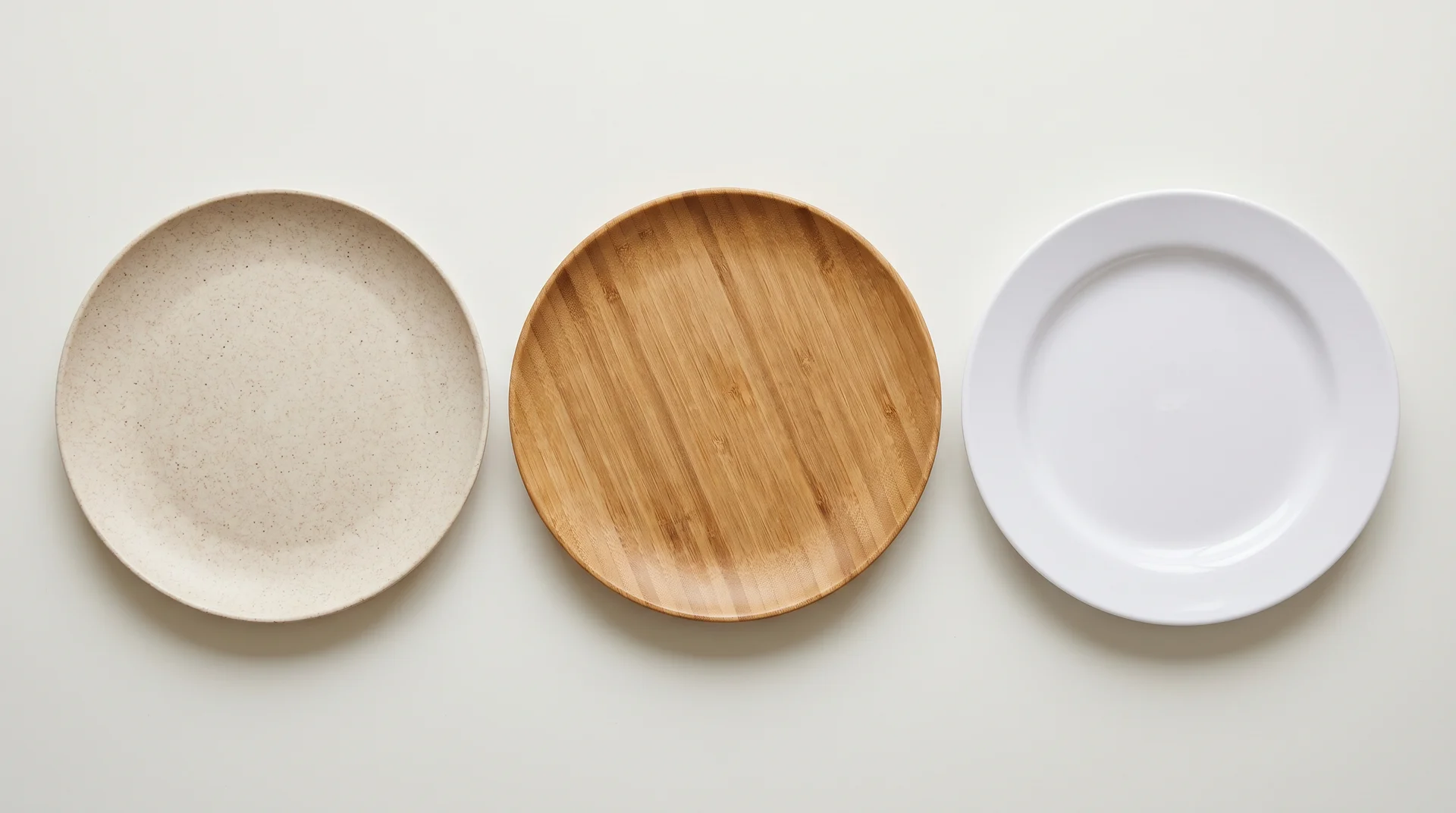
The differences between these three materials matter in daily use.
| Feature | Wheat Straw (PP) | Bamboo Composite | Melamine |
|---|---|---|---|
| Microwave safe | Yes (short reheating) | No | No |
| Dishwasher safe | Yes | Varies by product | Yes |
| Shatter-resistant | Yes | Generally yes | Chips over time |
| Biodegradable | No (PP binder) | No (melamine binder) | No |
| Regulatory concern | Low with certified PP | FSA-flagged (2022, 2024) | Higher at heat and acidity |
| Stain resistance | Moderate | Moderate | High |
Why Melamine Is the More Relevant Comparison
Most buyers choosing wheat straw are actually replacing melamine, and the microwave safety difference is the deciding factor.
Melamine has been the standard shatterproof dinnerware material for outdoor and children’s use for decades. The problem is that melamine is not microwave safe.
The FDA has set limits for melamine migration into food, and those limits can be exceeded when melamine dishes are exposed to high temperatures or prolonged contact with acidic foods.
Microwaving food in melamine dishes is the scenario most likely to push past those limits.
For households that regularly microwave food in children’s plates, the shift to PP-based wheat straw dinnerware is a meaningful practical improvement.
Where Wheat Straw Dinnerware Actually Works Well
Wheat straw dinnerware earns its price in specific use cases.
Kids and Everyday Family Use
The combination of shatter resistance, light weight, and microwave safety makes this material well-suited for households with young children.
It drops without breaking. It’s light enough for a five-year-old to carry without difficulty. And because it’s microwave safe for reheating, you don’t need to transfer food to a different dish to warm it. Melamine can’t offer that. Ceramic breaks.
For that specific combination of needs, wheat straw outperforms both alternatives cleanly.
Camping, Outdoor, and Travel
The weight and durability combination make wheat straw a sensible outdoor option.
Ceramic breaks in a bag. Metal conducts heat in ways that make eating uncomfortable and doesn’t stack efficiently.
A complete wheat straw set for four is lighter and more compact than a comparable ceramic set.
For camping and travel, those are the criteria that matter most. Wheat straw scores well on both.
Where It Falls Short

Staining from pigmented foods is the most consistent real-world complaint, and it’s legitimate.
Tomato-based sauces, turmeric, beet juice, and strongly colored foods leave marks on the matte surface. The same porous texture that makes these plates look and feel less synthetic than standard plastic also holds onto color. Dishwashing reduces staining but rarely eliminates it entirely.
I keep a wheat straw set for outdoor use and for my kids at breakfast. For everyday dinner plates in a kitchen that does a lot of tomato-based cooking, ceramic handles are better suited to daily use.
The staining problem is real, and I haven’t reviewed a single product label that acknowledges it. If you cook heavily pigmented food regularly, factor staining into the decision before buying.
Frequently Asked Questions
Are Wheat Straw Plates Gluten-Free?
Yes. Wheat straw dinnerware is gluten-free.
The gluten protein exists in the wheat grain, not the stalk. The high-heat processing used in manufacturing removes any residual protein from the fiber before it becomes a plate, according to manufacturers of the material.
People with celiac disease raise this question reasonably. The consistent answer across the product category is that the material does not contain gluten.
Look for an explicit gluten-free label or check the manufacturer’s safety documentation if you need confirmation for a specific product.
How Long Does Wheat Straw Dinnerware Last?
With normal use and proper care, a quality PP-based set will last several years before showing meaningful wear.
Lifespan shortens significantly with high-heat dishwasher drying cycles, frequent high-power microwave use, and abrasive scrubbing. When the surface starts to feel rough, shows visible stress marks, or develops small surface flakes, replace the set. Material degradation isn’t always visible before it becomes a problem worth addressing.
Can You Serve Hot Soup in Wheat Straw Bowls?
Yes, serving food at normal meal temperatures is well within the material’s safe range.
The temperature concern for PP-based dinnerware applies to sustained heat exposure in a microwave, not to serving temperature.
Hot soup straight from the pot is fine to serve in a wheat straw bowl. The relevant limit is extended to high-heat cooking cycles, not the normal act of filling a bowl and eating from it.