
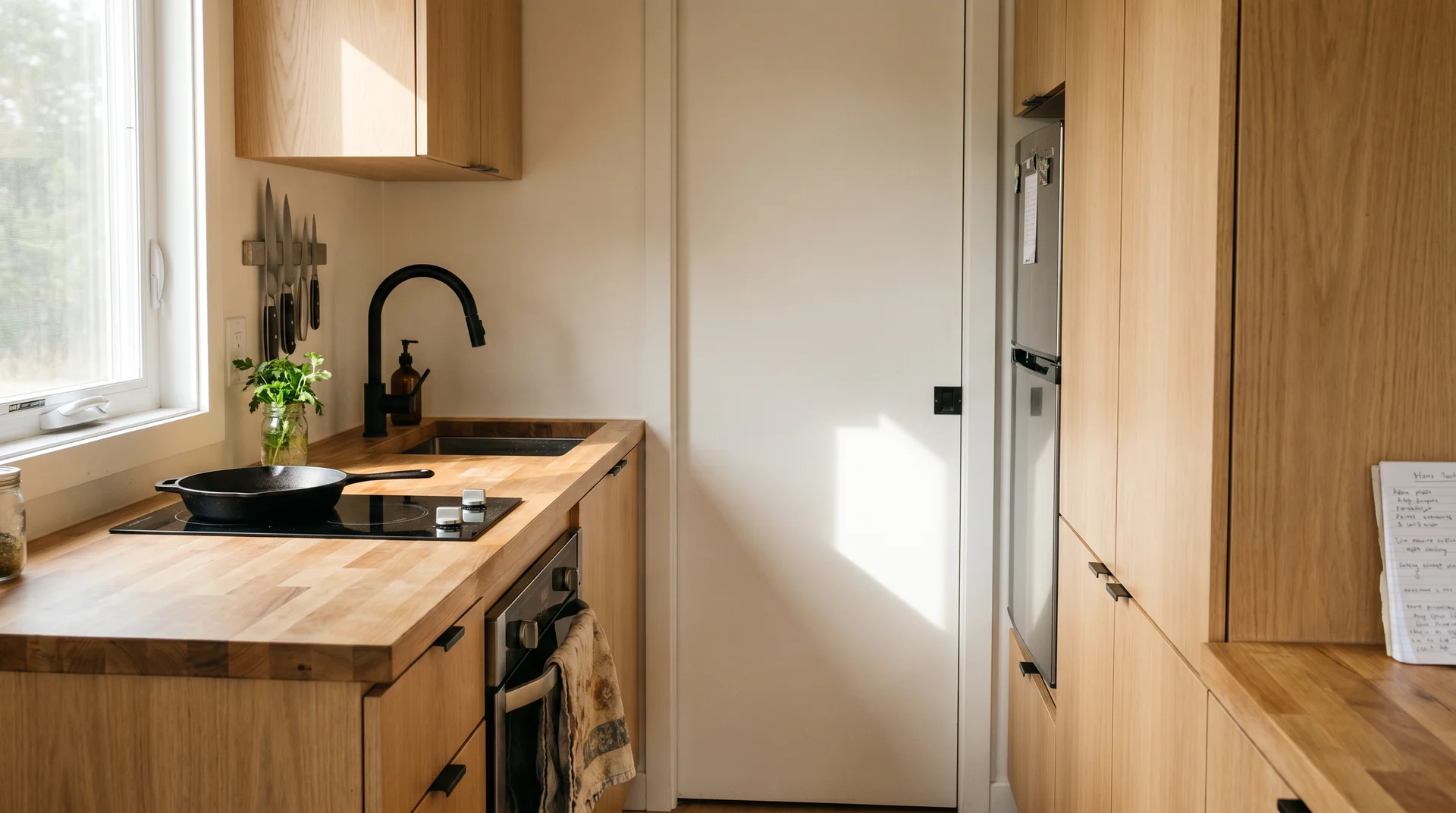
Most tiny house kitchen lists start with a mood board. This one starts with a correction.
Yes, you can have a full, functional kitchen in a tiny house. What “full” means depends on how you actually cook, not on which layout photographs best.
A tiny kitchen that looks good and one that functions well are often different things. The design decisions that produce the first can actively undermine the second.
What follows is organized by the order in which those decisions should actually happen: layout, then appliances, then storage, then aesthetics.
How Much Space Does a Tiny House Kitchen Actually Need?
Square footage is not the most important number in a tiny house kitchen.
Counter depth governs how you physically use the space. Standard residential counters run 25 to 26 inches deep.
Most tiny houses on wheels use 22 to 24 inches, a difference that changes your arm position during prep work, limits which cutting boards sit flat on the surface, and determines whether most appliances can be operated comfortably.
Planning a tiny kitchen as if it has standard counter depth is one of the most common early mistakes in the process.
| Kitchen Size | Square Footage | What Typically Fits | Best For |
|---|---|---|---|
| Compact galley | 30–40 sq ft | 2-burner cooktop, under-counter fridge, single sink, 6–8 ft counter run | Solo cooks, minimal cooking habits |
| Comfortable compact | 40–60 sq ft | Full-size sink, 24-inch refrigerator, 24-inch range or convection microwave, L or galley layout | Daily cooking, occasional guests |
| Generous tiny kitchen | 60–80 sq ft | Full-size shallower appliances possible, seating for one or two | Regular home cooking, two people cooking simultaneously |
Square footage is a starting point. Counter depth at whatever footprint you choose is the decision that shapes everything else in the kitchen.
Do This Before You Look at a Single Idea
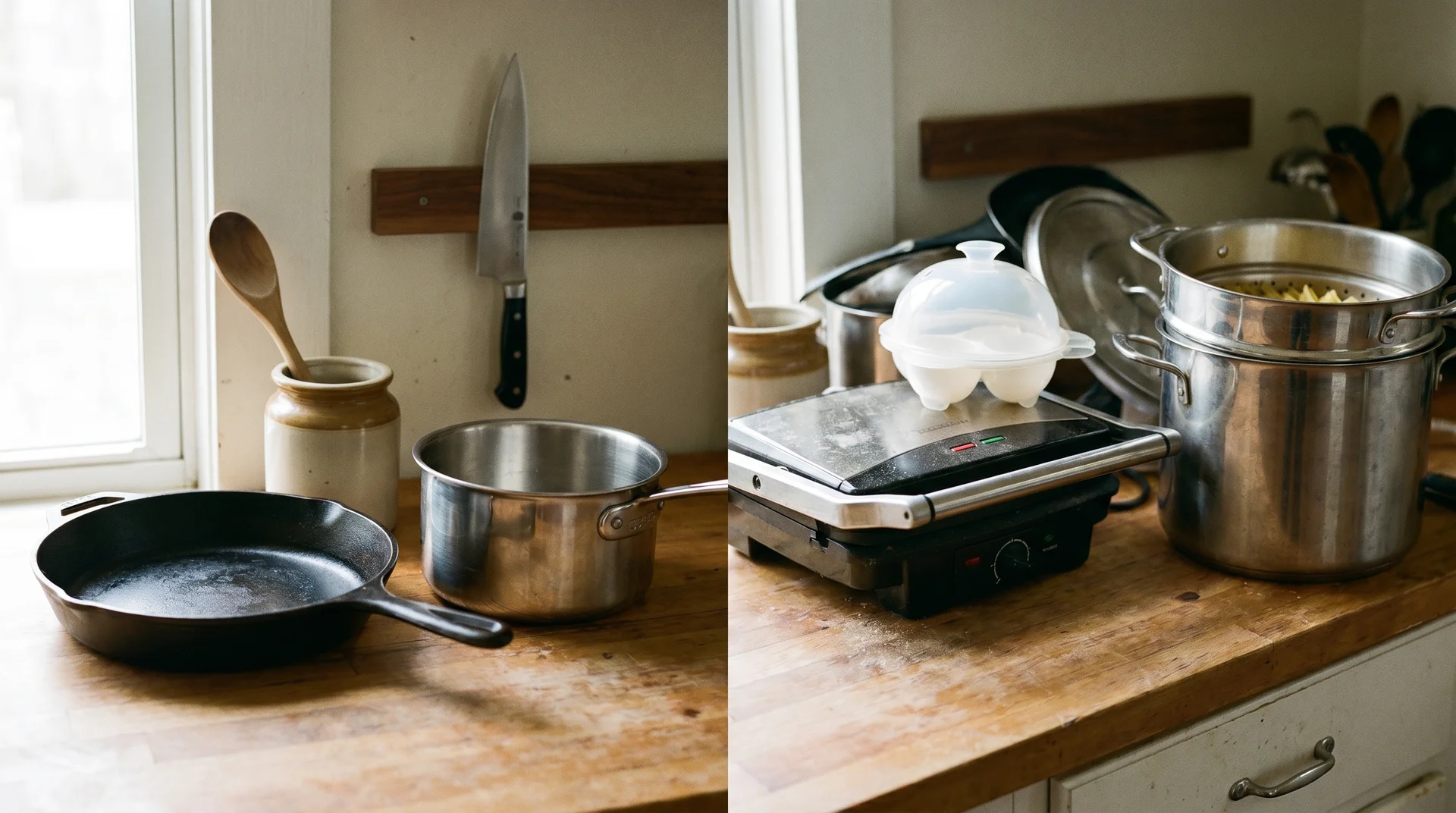
The equipment audit comes before anything else.
Most people bring their full kitchen into a tiny house and then look for storage for all of it. That’s the wrong sequence. The tools you keep determine the storage depth you need. Storage depth affects layout options. Those layout options constrain your appliance choices.
Three questions resolve the audit before you touch a floor plan:
- What do I cook at least three times a week? Keep the equipment that those meals require. The rest finds a new home.
- How many people cook in this kitchen simultaneously? A solo cook can work in a significantly narrower space than two people sharing a prep surface.
- What is my primary heat source? Electric service, propane, or solar determines whether a fixed range is practical or a portable cooktop is a better fit.
I keep a running record of kitchen tools I’ve tested and set aside things that created more friction than they solved.
Building a tiny kitchen starts with your version of that record. Call it the donation pile, and build it before you buy a single shelf.
Choose the Right Layout
Your layout should follow your cooking habits, not the photos you saved to a folder.
1. The Galley Kitchen Layout
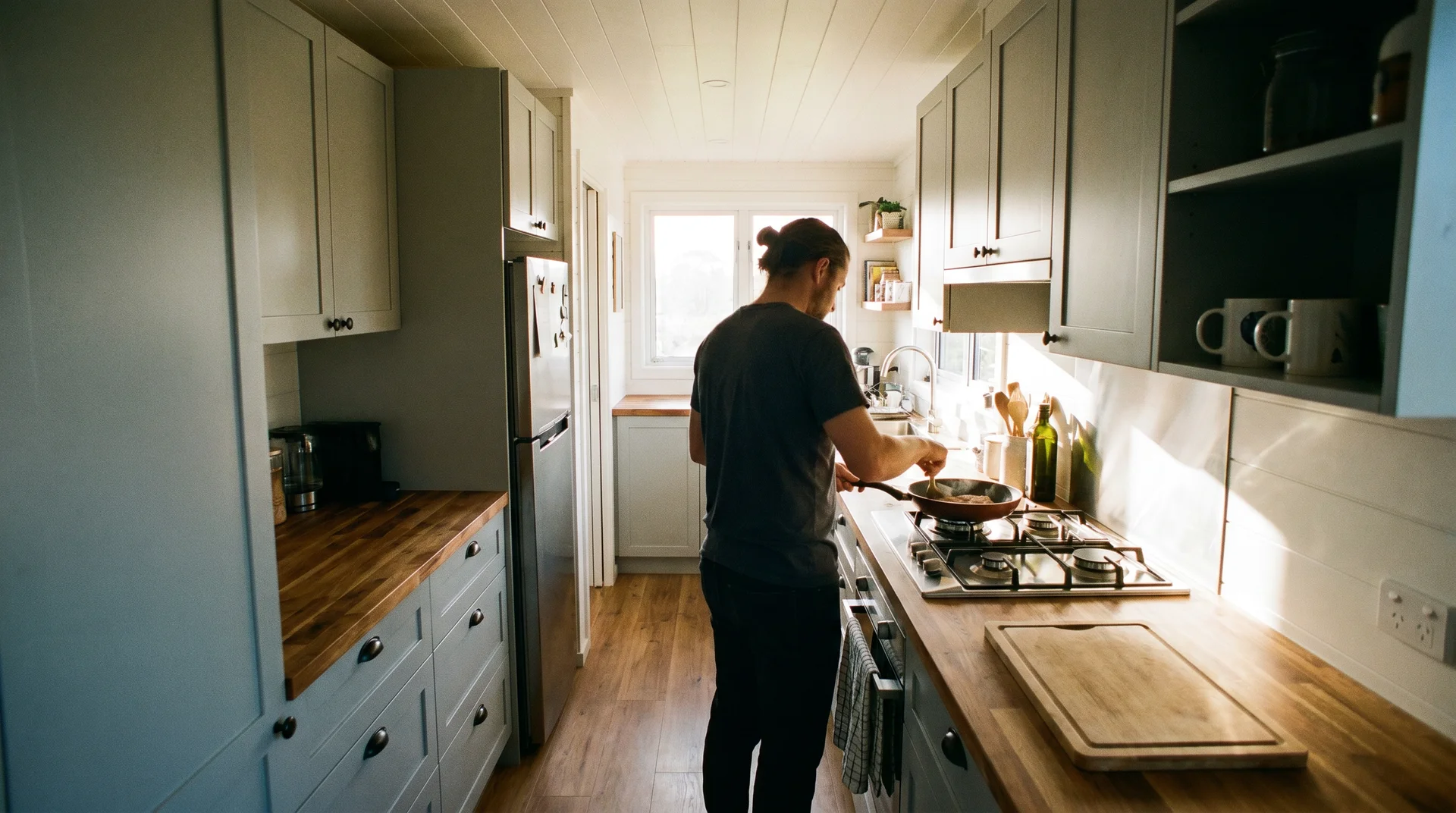
The galley layout is the most practical starting point for most tiny house kitchens, and it’s the one format with a track record in actual production kitchens.
It puts your four primary work stations within two steps of each other:
- The sink
- The cooktop
- The refrigerator
- A prep surface
I’ve worked a galley line for most of my restaurant years, not as a curious home cook but as someone running production-level output in exactly this format. The efficiency of the movement pattern is real. I wouldn’t recommend it as confidently if I hadn’t seen what it looks like when it’s wrong.
The honest challenge is when two people cooking together in a standard THOW galley is genuinely awkward.
It works brilliantly for solo cooks. If your household regularly has two cooks active simultaneously, a galley will create friction every single time.
2. The One-Wall Kitchen
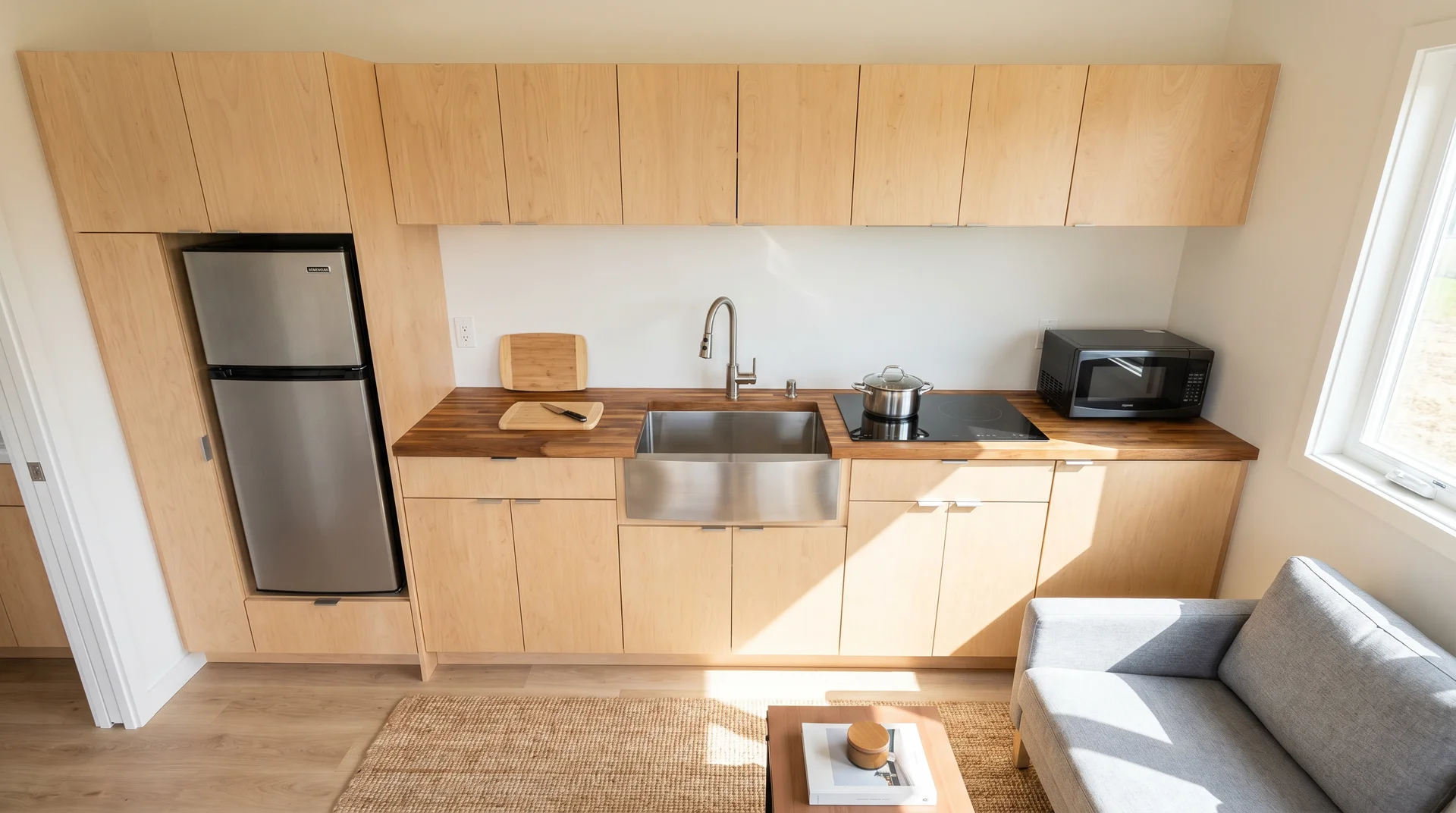
A one-wall kitchen runs all work along a single wall and suits open-plan tiny houses where the kitchen flows into the living space.
You need at minimum 8 linear feet to fit a sink, a two-burner cooktop, and a compact refrigerator with workable prep space between them.
Prep space is the one you cannot sacrifice.
3. The L-Shape Layout
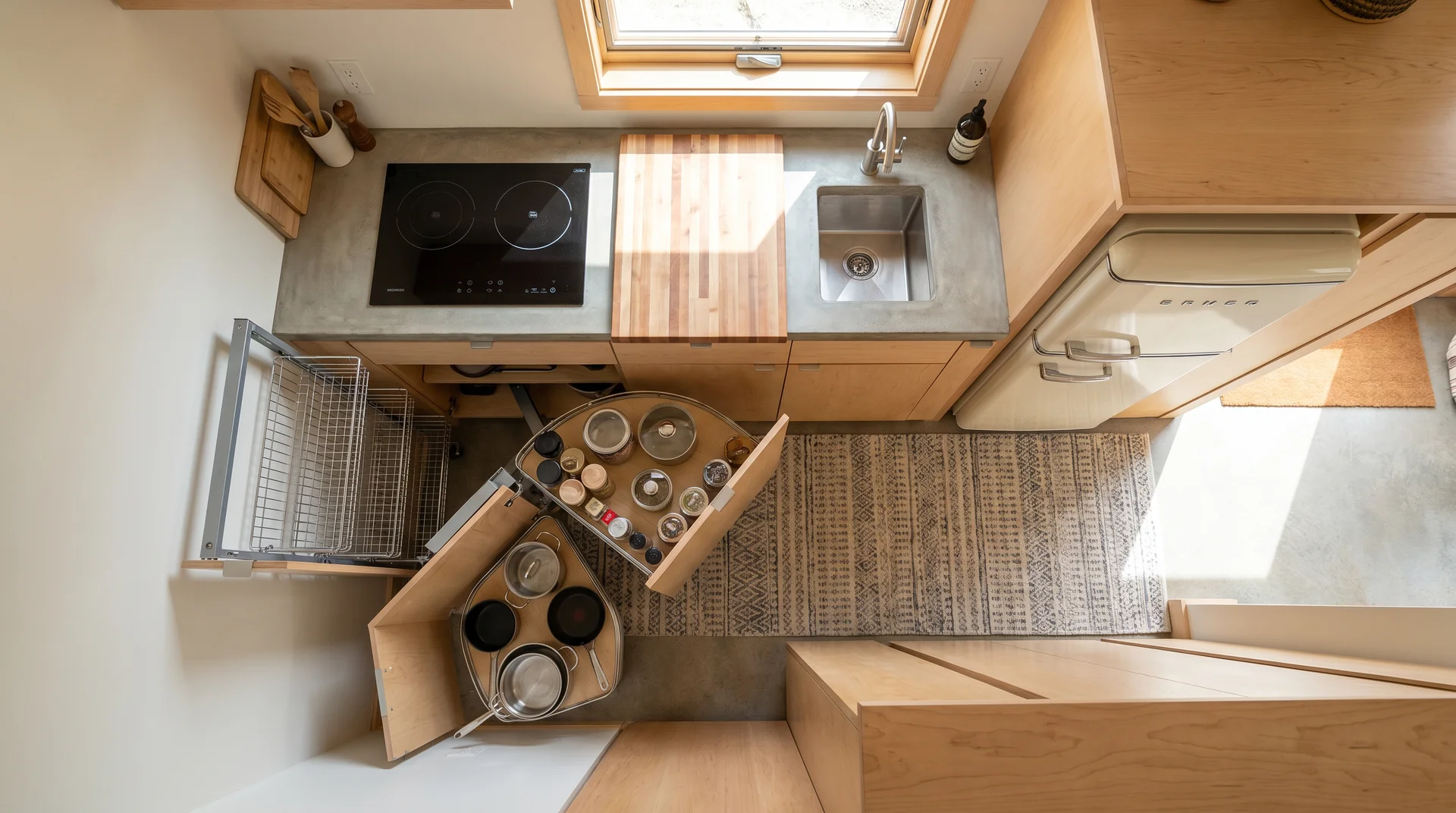
The L-shape creates a natural work triangle in a compact footprint, with one persistent problem that most planning guides skip.
It works well in a 6-by-6-foot corner when plumbing placement supports it. The inside corner of the L is almost always wasted space unless you specify pull-out shelves or a lazy Susan at the design stage, not after.
Do not plan to address that corner later. Retrofitting access to an inside cabinet corner in a finished tiny house is significantly harder than specifying it from the start.
4. The Under-Stairs Kitchen
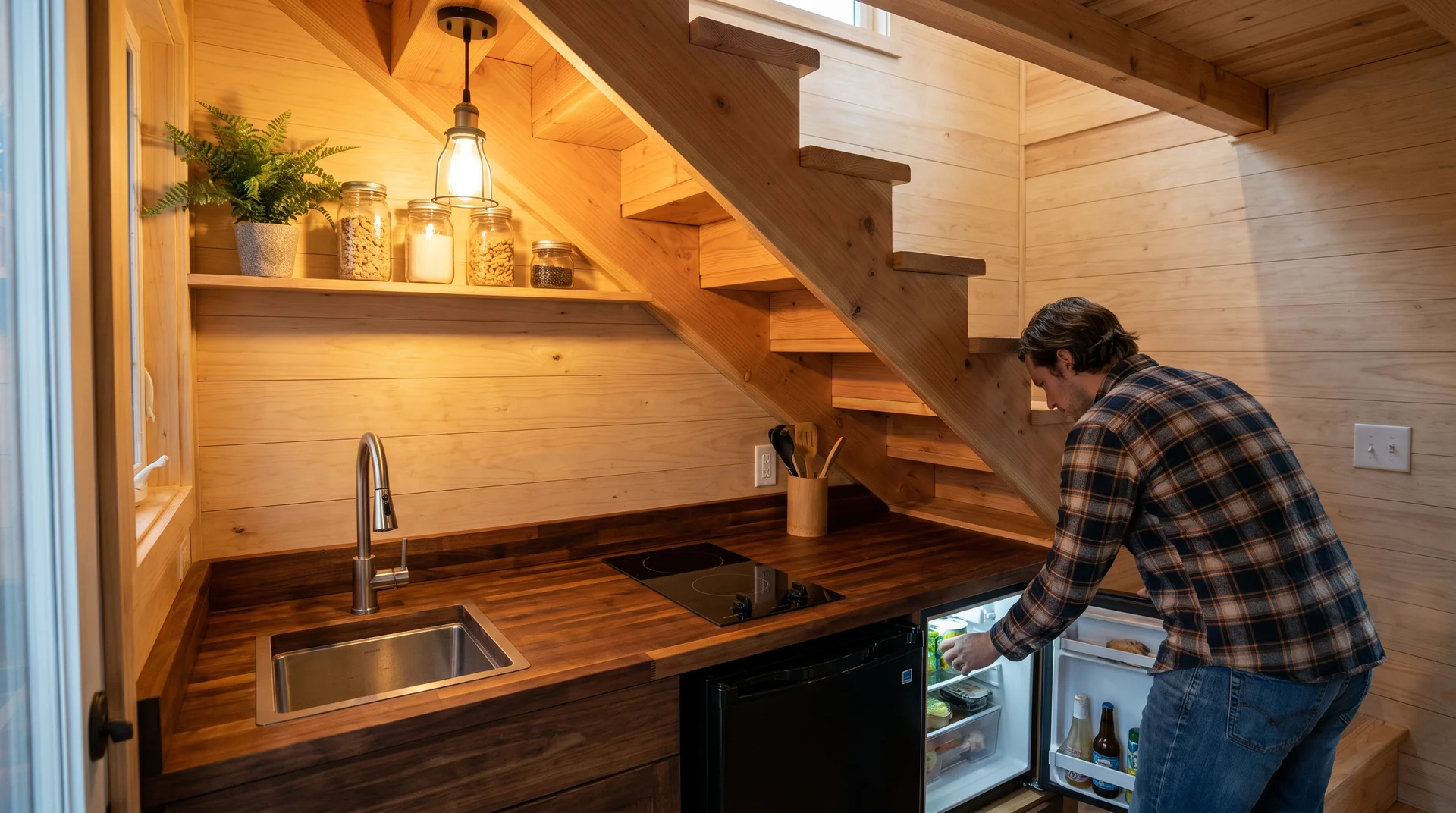
Under-stair kitchens make use of vertical dead space that most THOW builds leave entirely unused.
The sloped ceiling limits which appliances fit. Compact RV and marine appliances are often the only models that clear the profile without modification. Anyone over about 5’9″ works at an uncomfortable angle toward the back of the space.
Where it works: a straight staircase with at least six feet of clearance underneath. Plan this area for prep work and quick meals rather than elaborate cooking sessions.
5. The Pass-Through Counter
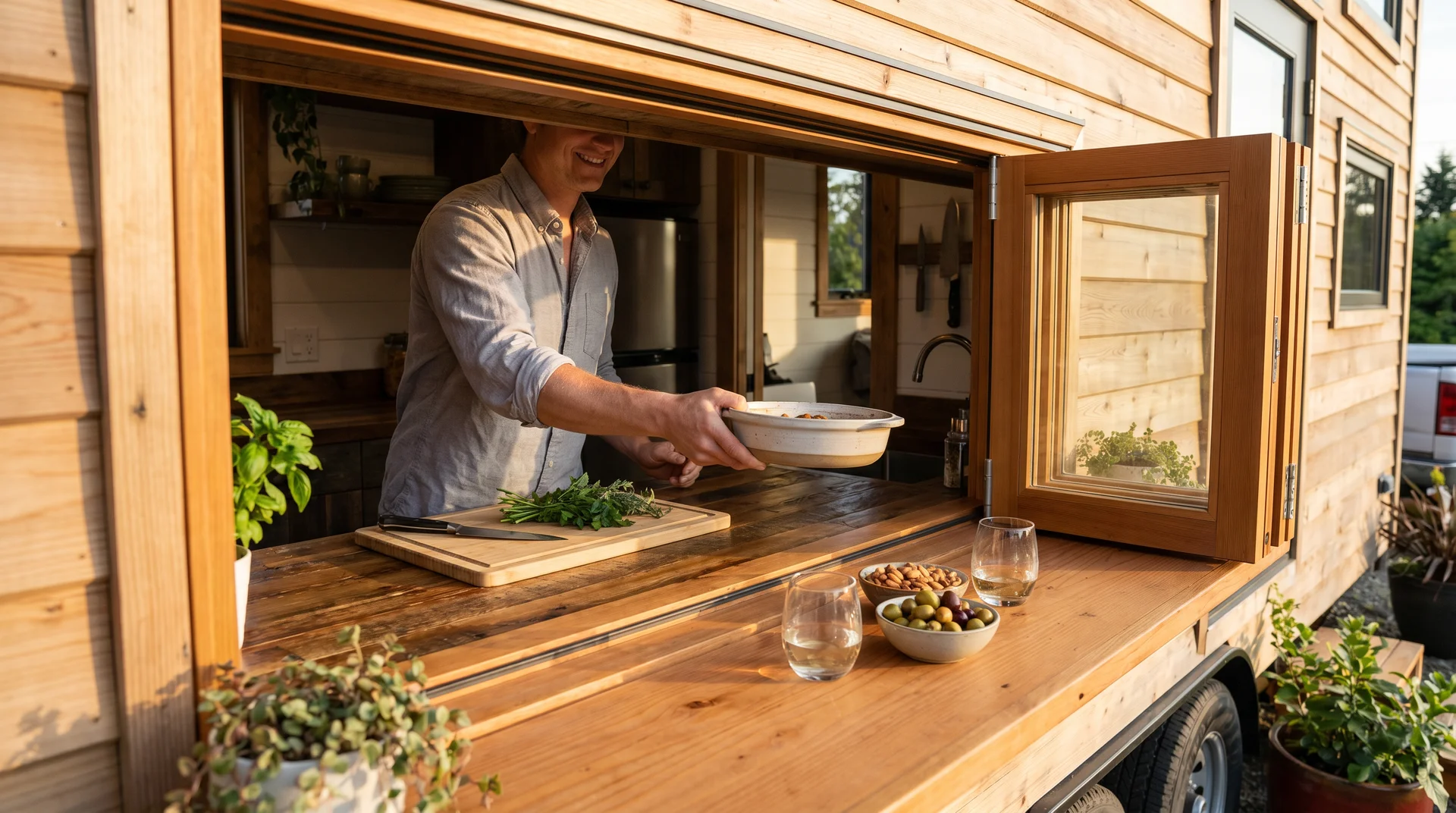
A pass-through window to an outdoor deck extends usable counter space without adding a single square foot inside.
It opens the kitchen to the outdoor space in warmer months, which matters considerably in a small footprint. If your build allows it, it’s one of the most efficient ways to stretch a tiny kitchen without expanding the interior.
Pick the Appliance
The most common appliance mistake is buying everything you had before, just in a smaller size. Compact appliances are not straight substitutes for full-size ones.
They perform differently, they have real limitations, and no one who sells them will tell you this upfront.
6. An Induction Cooktop Instead of a Gas Range
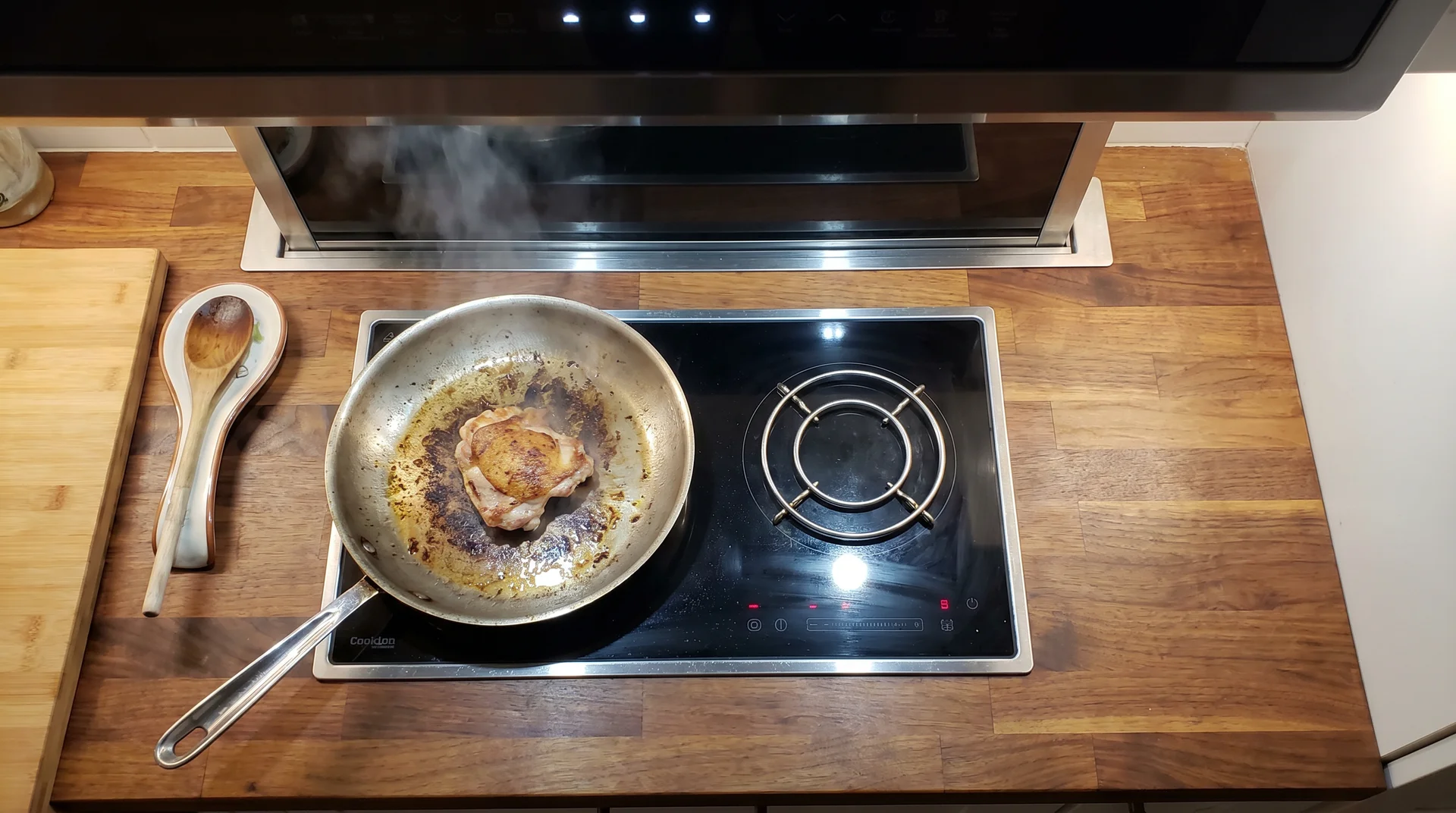
An induction cooktop is the right choice for most tiny house kitchens, and it is not a full replacement for a four-burner range.
I’ve used a two-burner induction setup as my primary cooktop for a full season in my own kitchen, not in a controlled test environment.
The limitation shows up when you’re cooking more than one component at a time. Weeknight dinners with one or two things running simultaneously generally work well.
A multi-dish meal with a sauce, a protein, and a vegetable all requiring active heat at once: you’re coordinating timing in ways a four-burner range would not require.
Induction doesn’t produce combustion gases. Steam and cooking odors in a 200-square-foot space are still a real problem. Ventilation is required regardless of cooking method.
7. A Convection Microwave as Your Primary Oven
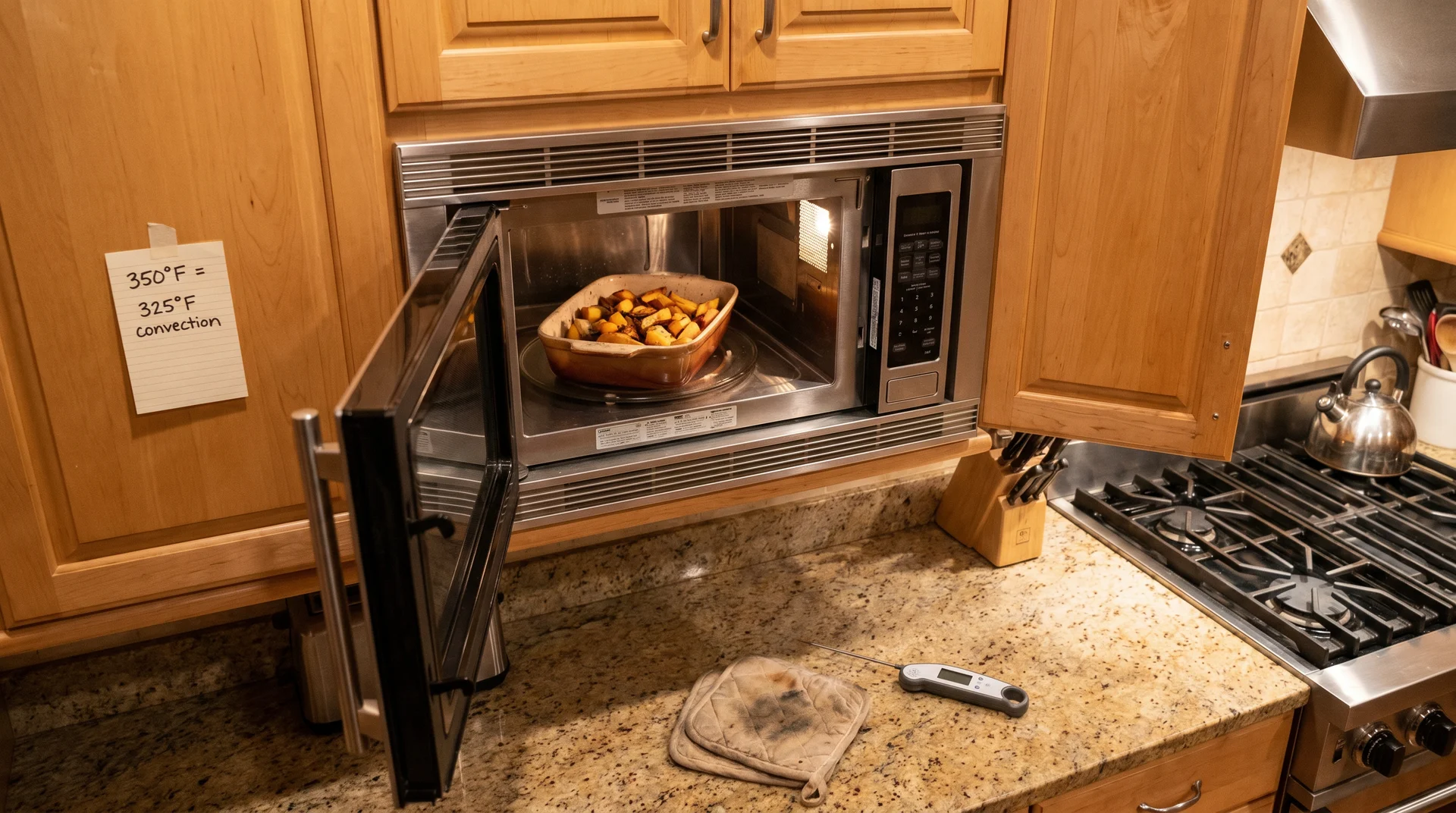
A true convection microwave can replace a full oven for most everyday cooking, but it is not the same appliance, and it requires adjustment.
A true convection microwave uses a heating element and a fan to circulate hot air. That is different from a standard microwave with a convection button, which is a different category of machine entirely.
Baked goods in a real convection microwave cook faster and run about 25 degrees lower than most recipe instructions assume.
Roasted proteins and vegetables work well. Most everyday baking does too. Anything requiring a stable, consistent temperature over a long bake is where performance starts to fall short.
8. Under-Counter Refrigeration
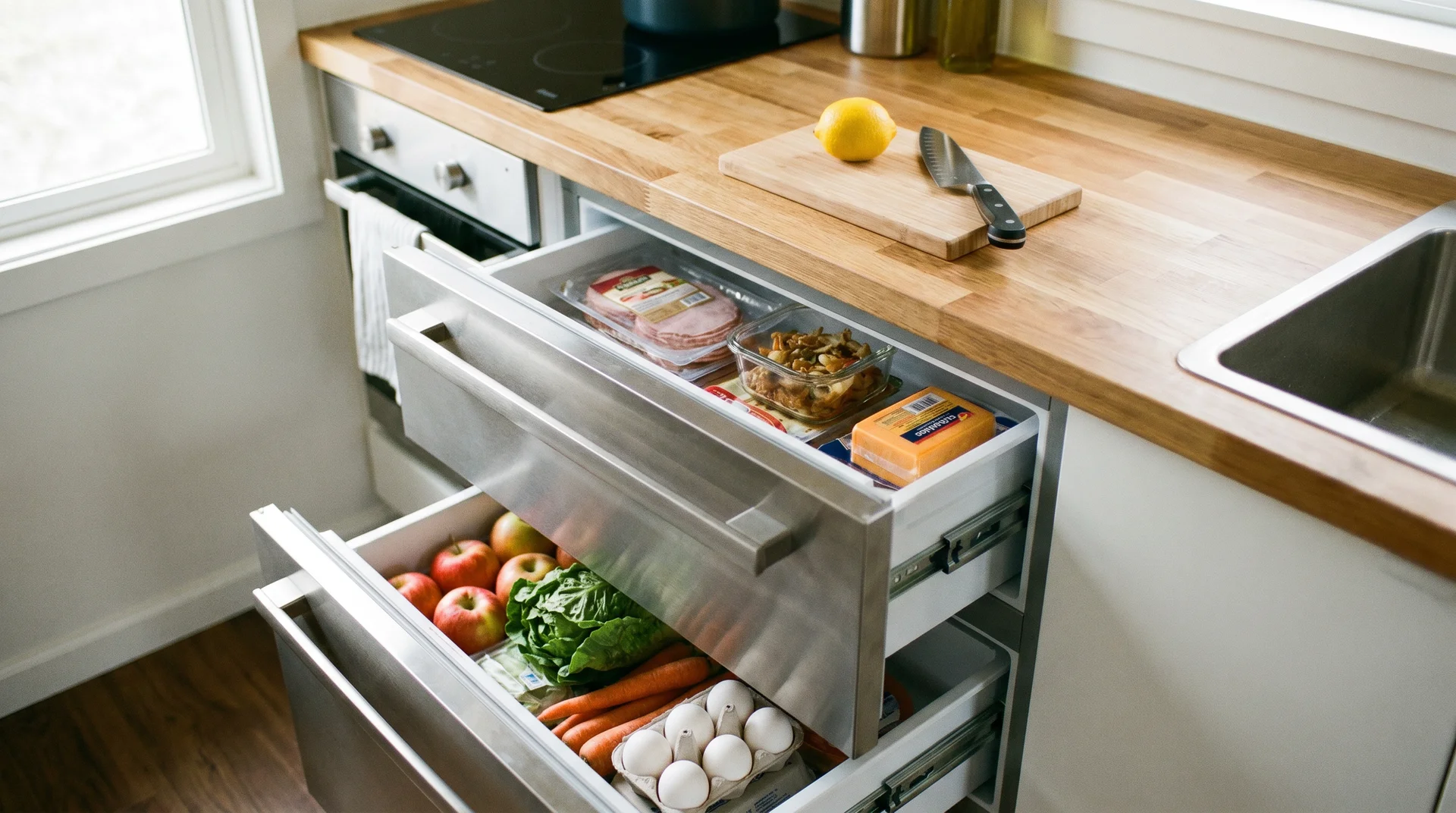
Under-counter refrigerators free the full wall height above the unit for shelving or upper cabinetry, at a real performance cost.
RV-style and apartment-size refrigerators maintain temperature less evenly than full-size models. For daily grocery use, this is manageable.
For batch cooking where you’re storing large quantities at once, it becomes a genuine issue.
Drawer-style refrigerators installed under the counter offer better ergonomic access in a narrow galley than a swing-door unit.
They are more expensive and worth researching before ruling out on price alone.
9. Outlets Inside Cabinets for Countertop Appliances
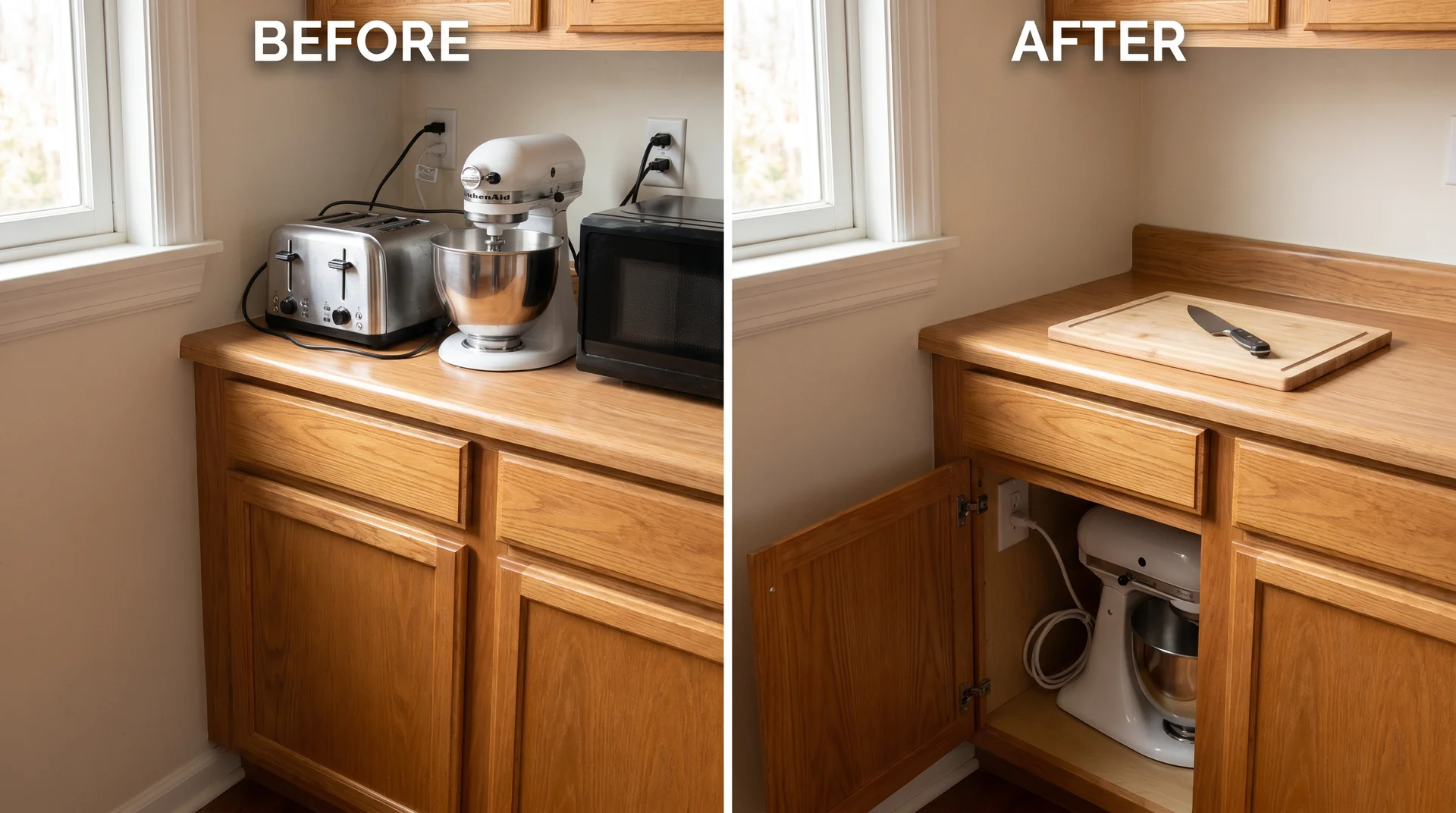
Wiring outlets inside a base cabinet keeps essential appliances off the counter while keeping them within reach.
A microwave, a toaster, or a stand mixer lives inside the cabinet and gets pulled forward for use. The counter stays clear the rest of the time.
This is a build-stage decision, not something you add after the kitchen is finished. If you’re designing a THOW kitchen from scratch, this is one of the highest-impact wiring choices you can make at low incremental cost.
10. The Single Multifunctional Appliance Rule
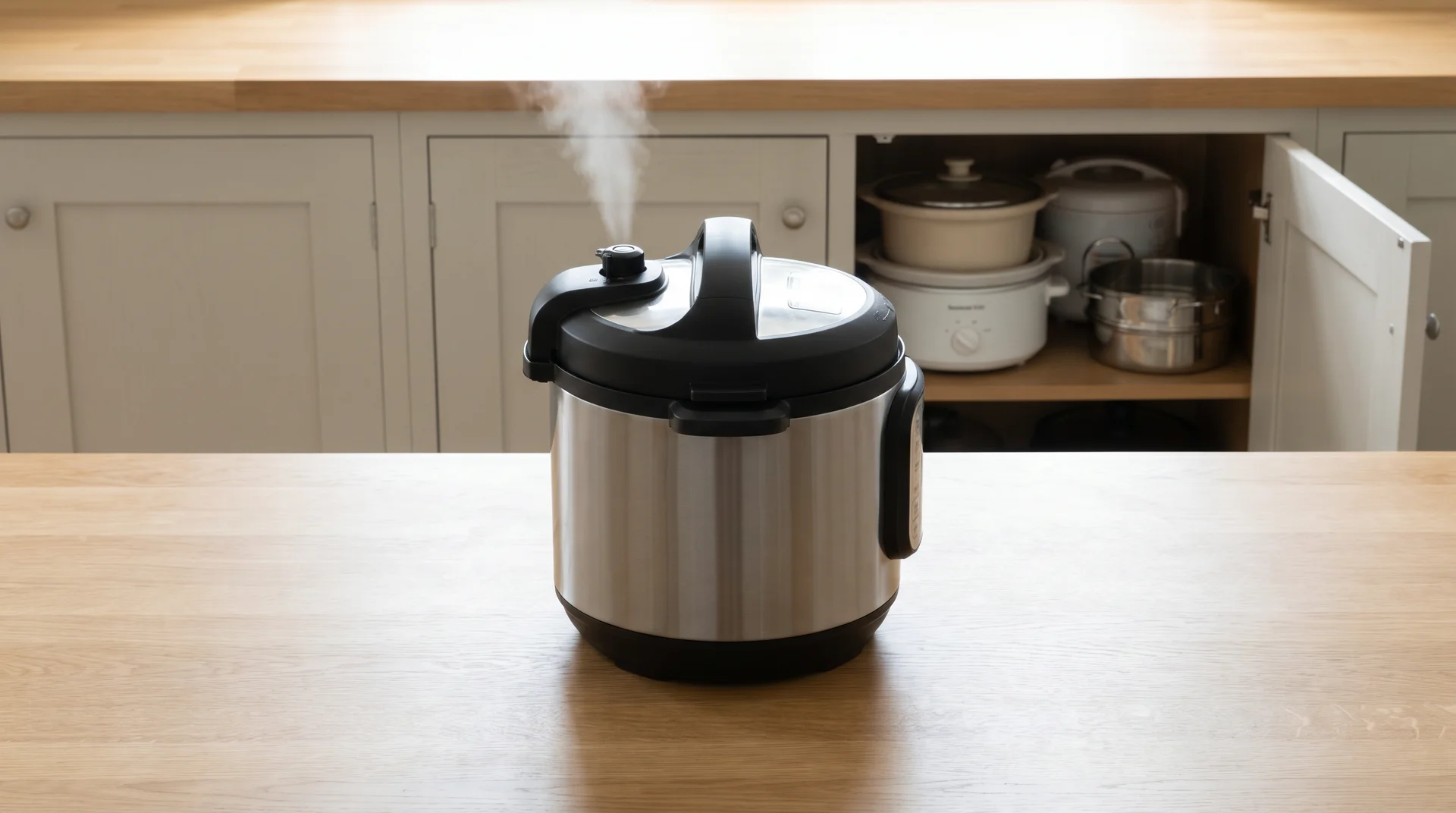
One well-chosen multifunctional appliance replaces several single-purpose ones. Two multifunctional appliances compete for the same space and cancel each other out.
A high-quality multi-cooker replaces a slow cooker, a pressure cooker, and a rice cooker.
A combination air fryer and toaster oven can replace two or three countertop appliances.
The mistake is buying one, discovering how useful it is, and then buying a second to add capability.
Storage Ideas
Counter space is the storage problem people ignore until they’ve moved in.
Most tiny kitchen storage advice focuses on where to put things. The more useful question is how many things actually need to be there.
11. Vertical Storage
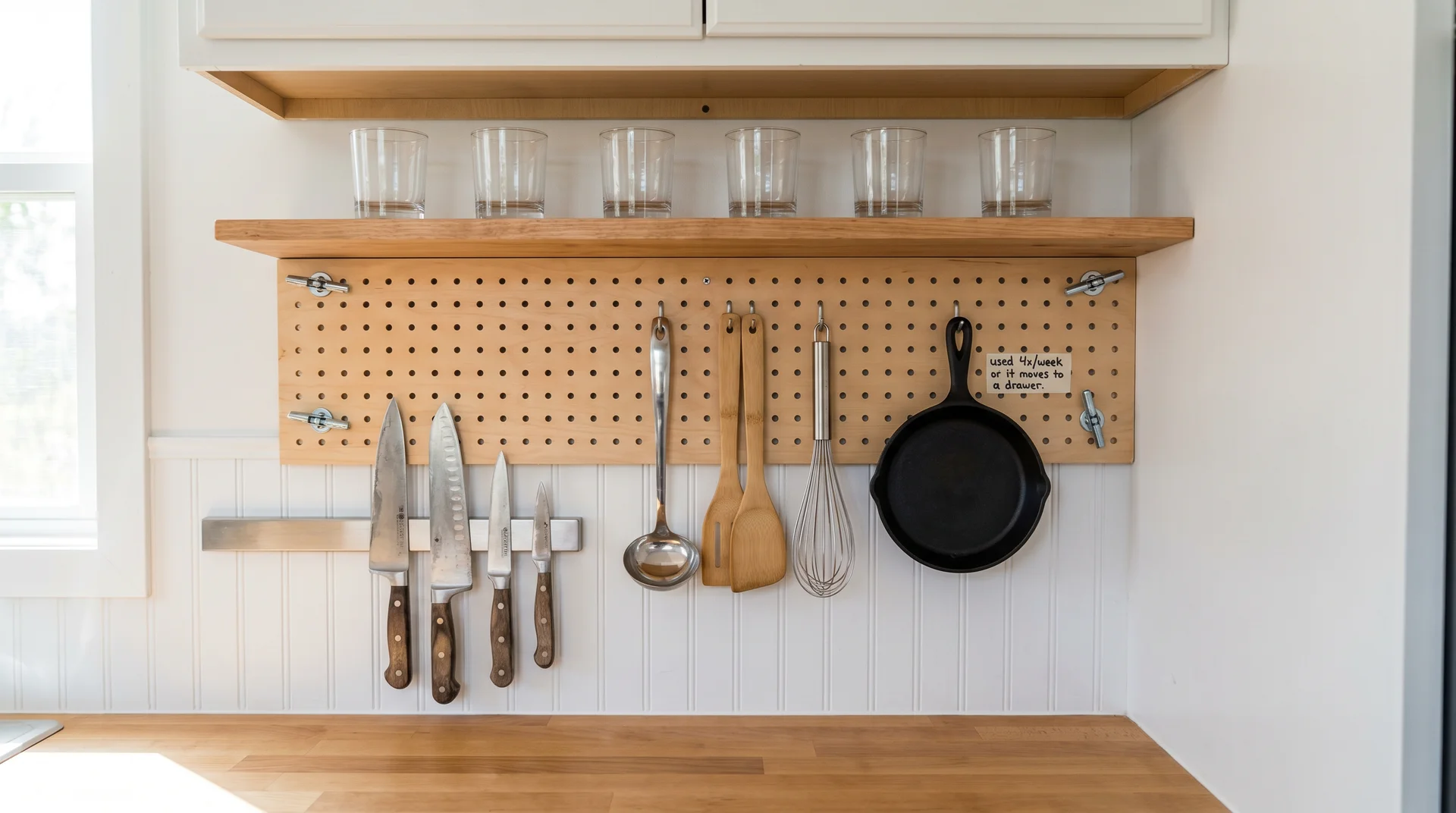
Vertical storage adds meaningful capacity above the counter. It works only when what’s stored there gets used regularly.
Magnetic knife strips, pegboards, ceiling pot racks, and wall-mounted rails are all genuinely useful for daily-use items. For anything used less than three or four times a week, they create visual clutter that makes the kitchen feel smaller than it is.
There is a THOW-specific problem most content ignores: vibration over road miles loosens standard wall anchors over time. Any vertical storage in a tiny house on wheels needs structural backing or toggle bolts installed behind the wall surface, not standard drywall anchors.
12. Open Shelving
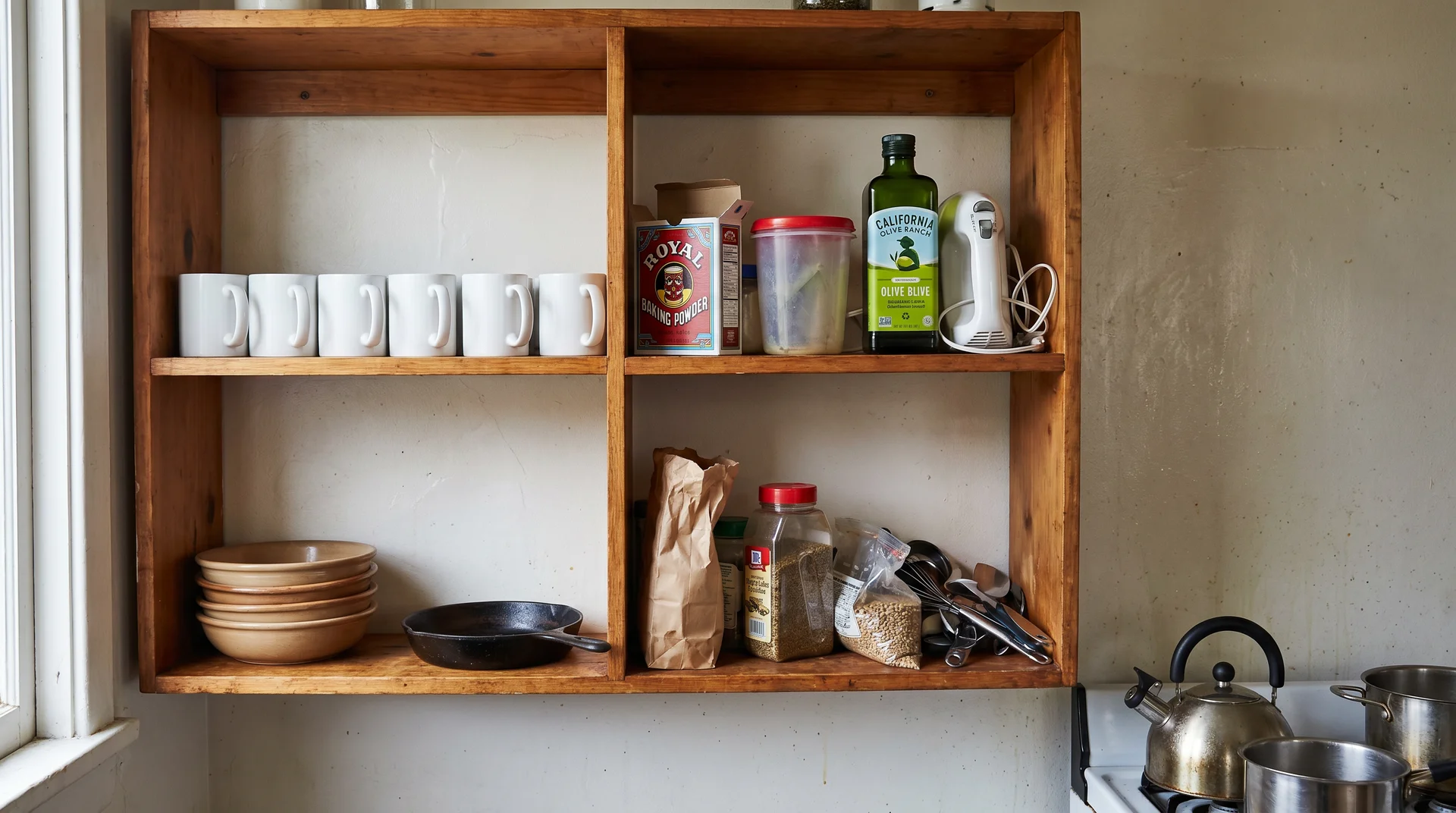
Open shelving makes a small kitchen feel more open and requires a level of daily organization that most people underestimate before they move in.
Items that work well on open shelves:
- Daily-use glasses and mugs
- A small, matched set of bowls or plates you actually like looking at
- Cast iron cookware, which should be stored dry anyway
Items that do not work well on open shelves, especially near a cooking surface:
- Baking supplies are used a few times a month
- Mismatched food storage containers
- Anything that collects airborne grease when it sits near heat
Open shelving near a stovetop accumulates grease. Items stored there need to be wiped down more often than most people anticipate. That’s not a reason to avoid it. It’s a reason to be deliberate about what you put there.
13. Pantry Alternatives
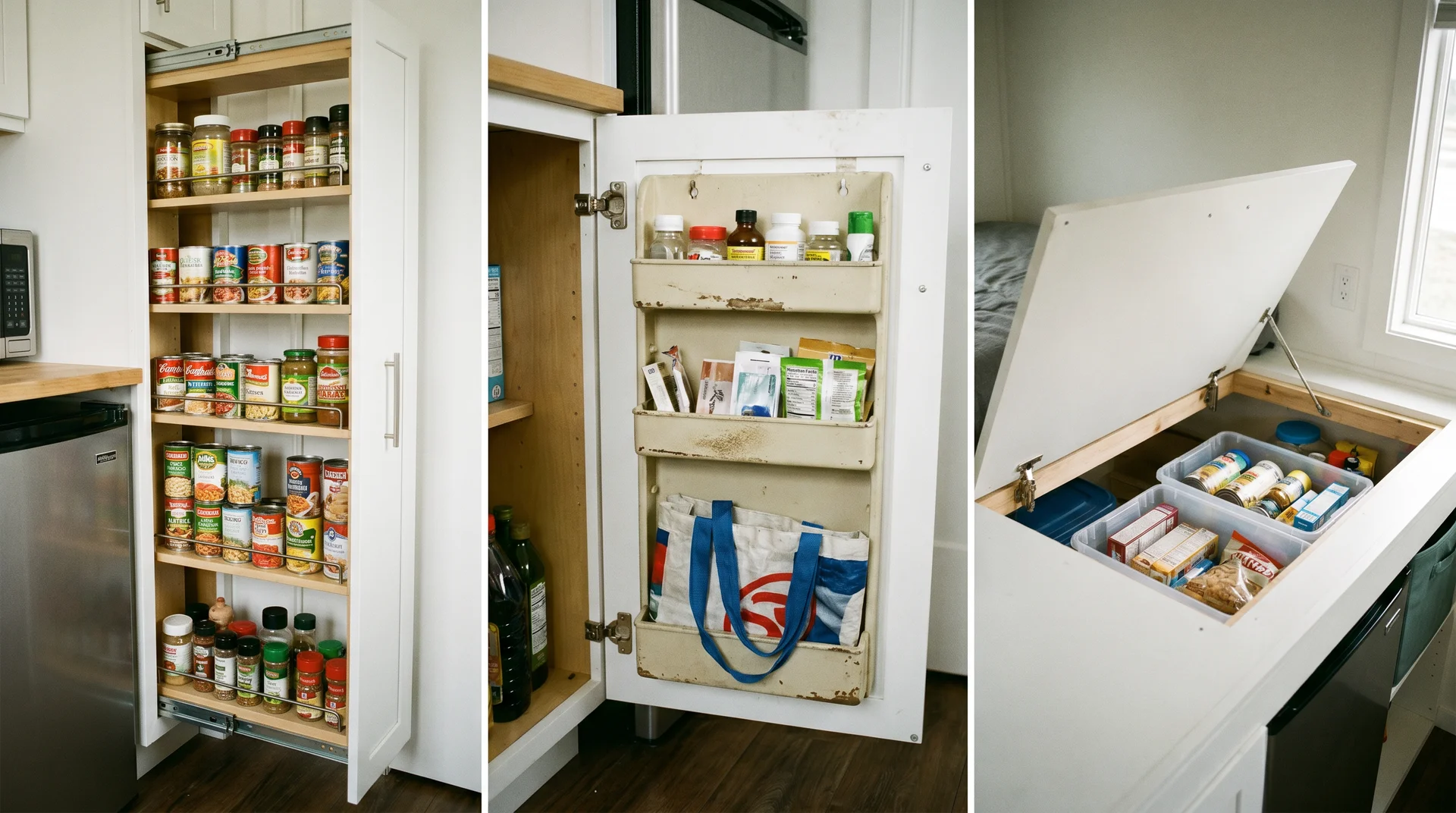
A tiny house kitchen rarely has a dedicated pantry, and none of the common substitutes are as convenient as having one.
That’s the honest framing. Here’s what actually works:
- Pull-out pantry tower installed in the gap beside the refrigerator. Specify this at build time, not after
- Over-door organizers fitted inside the base and wall cabinet interiors
- Under-bed or under-stair storage for shelf-stable dry goods in a THOW loft
All three are better than discovering the problem after the kitchen is finished. None of them is as convenient as a dedicated pantry, and acknowledging that upfront makes the decision easier, not harder.
14. The Zone Method
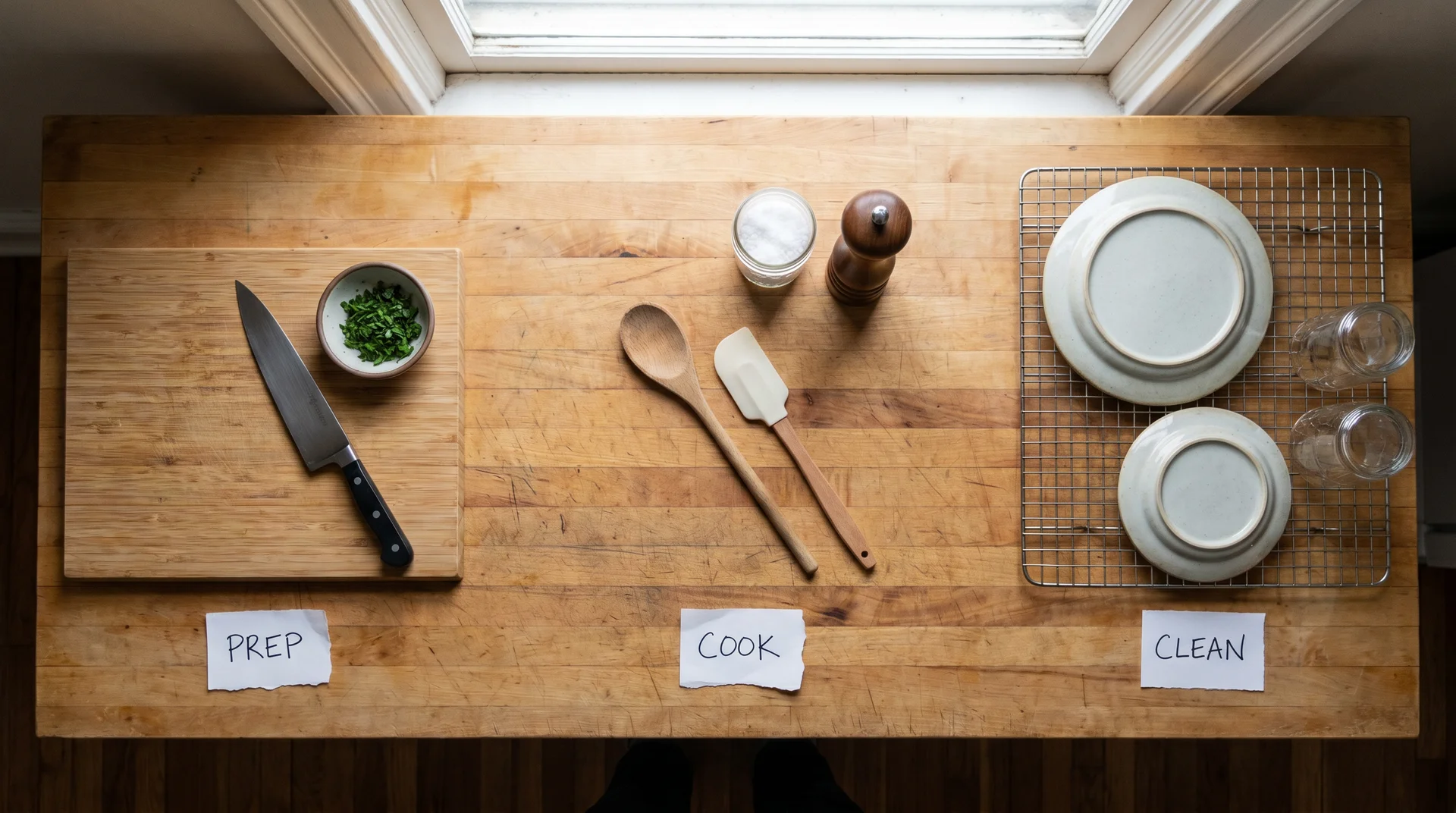
Grouping items by task, not by category, is the fastest way to reduce friction in a tiny kitchen.
Most people organize by category: all pots together, all bowls together, all baking equipment in one cabinet. Task-based zones are more functional:
- Dishes and glasses near the sink
- Cooking tools and spices near the cooktop
- Prep equipment at your primary prep surface
In a tiny kitchen, a zone might be 18 inches wide. The principle holds at any scale.
Aesthetics
A kitchen that functions well but feels oppressive to spend time in is still a problem worth solving.
The three ideas below address how the space feels, each with a functional requirement that the aesthetic outcome depends on.
15. Counter-Height Windows and Under-Cabinet Lighting
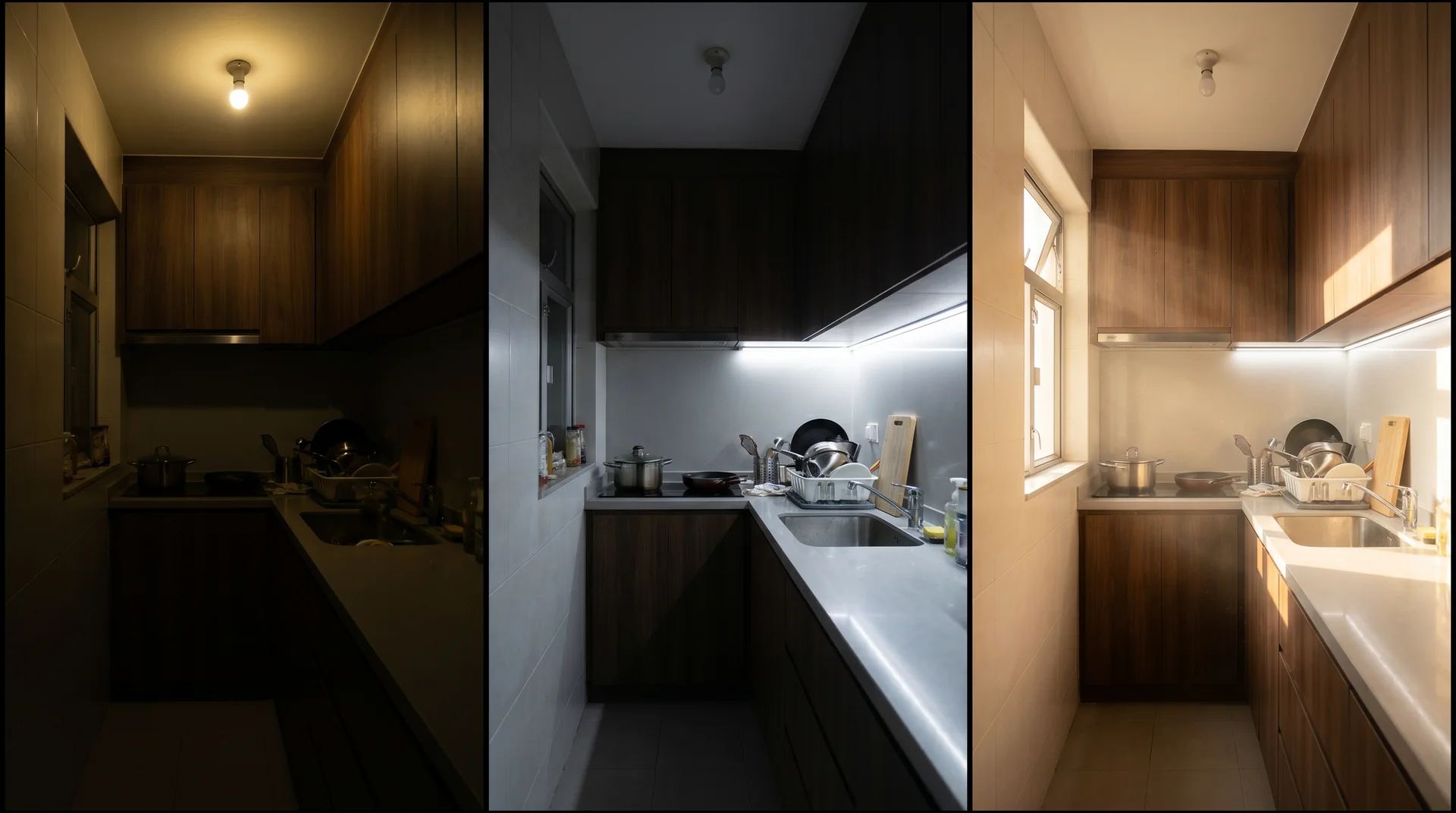
A tiny kitchen lit only by a single overhead fixture feels confined, regardless of how well the layout works.
Under-cabinet lighting illuminates the prep surface directly and makes the counter feel less enclosed. A window positioned at counter height adds considerably more than one centered above it.
A skylight, the strongest option for natural light in a small footprint, is a build decision, not a retrofit.
16. Light Colors as a Spatial Decision
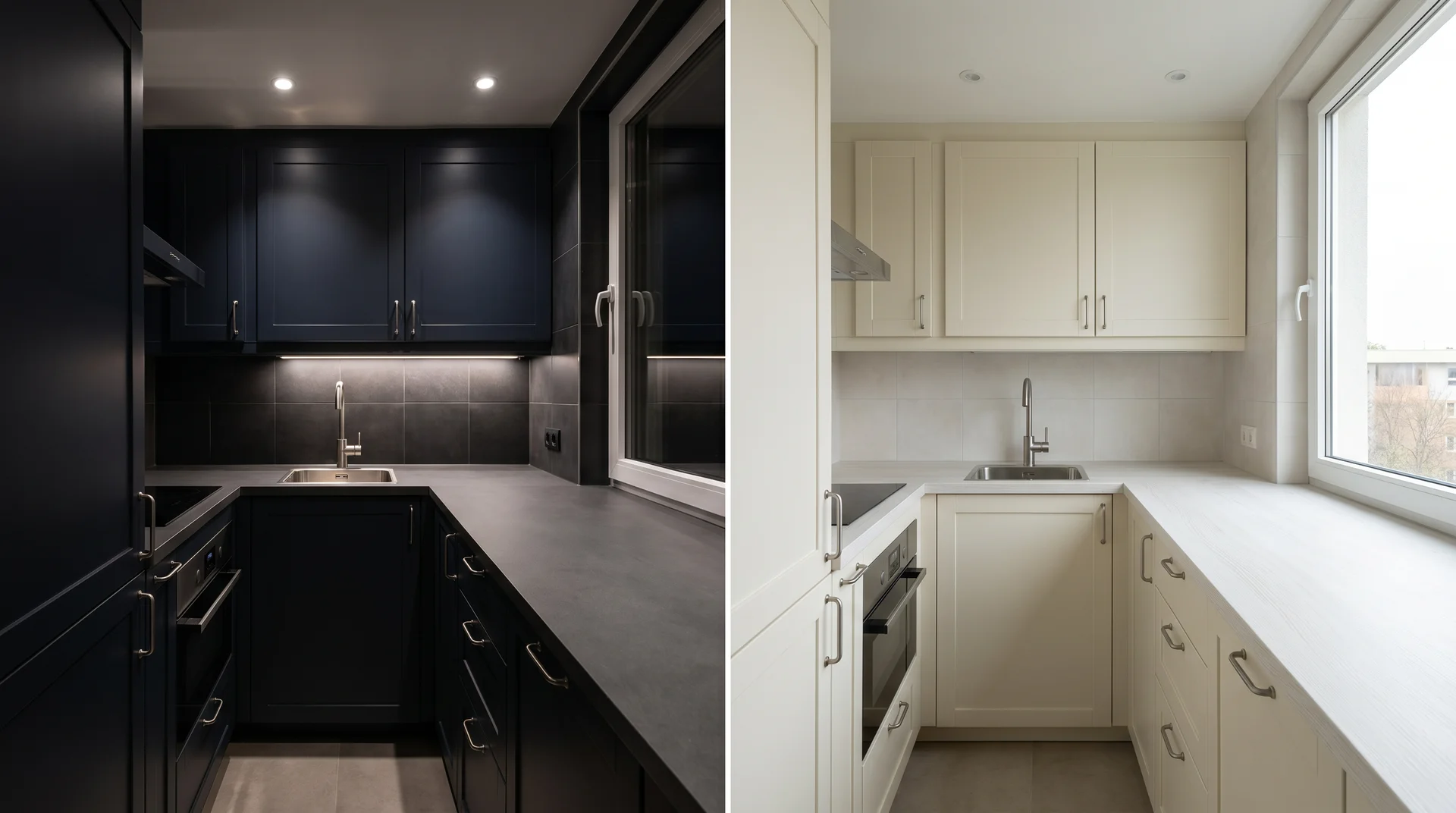
Light cabinetry and light walls reflect more light and make the space feel less confined. This is physics, not a style preference.
Darker finishes absorb light. In a tiny kitchen with limited window placement, dark cabinets can make the space feel like a storage closet.
If your THOW has generous natural light, darker finishes are workable and can look genuinely good. If natural light is limited, dark finishes compound that problem every day.
17. The Fold-Down Table
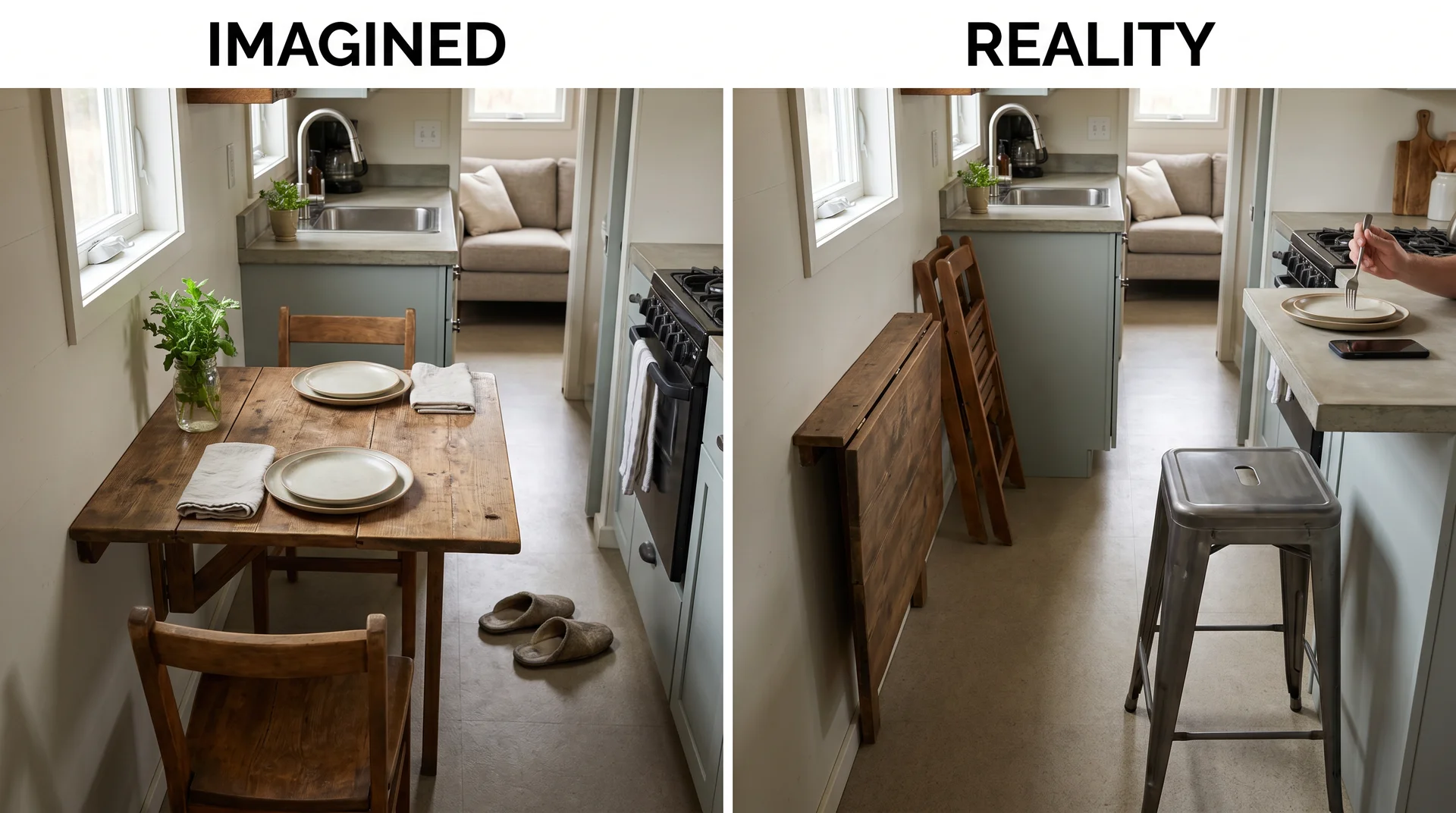
A fold-down dining table is one of the most commonly cited post-move-in regrets in THOW community discussions.
The honest question before specifying one: how often do you actually sit at a table for a full meal? Not ideally. Actually. If the answer is several times a week, the fold-down earns its wall space.
If the answer is twice a week or less, it’s a large piece of hardware serving an aspiration rather than a habit.
Ventilation: The Idea Every Tiny House Kitchen Article Skips
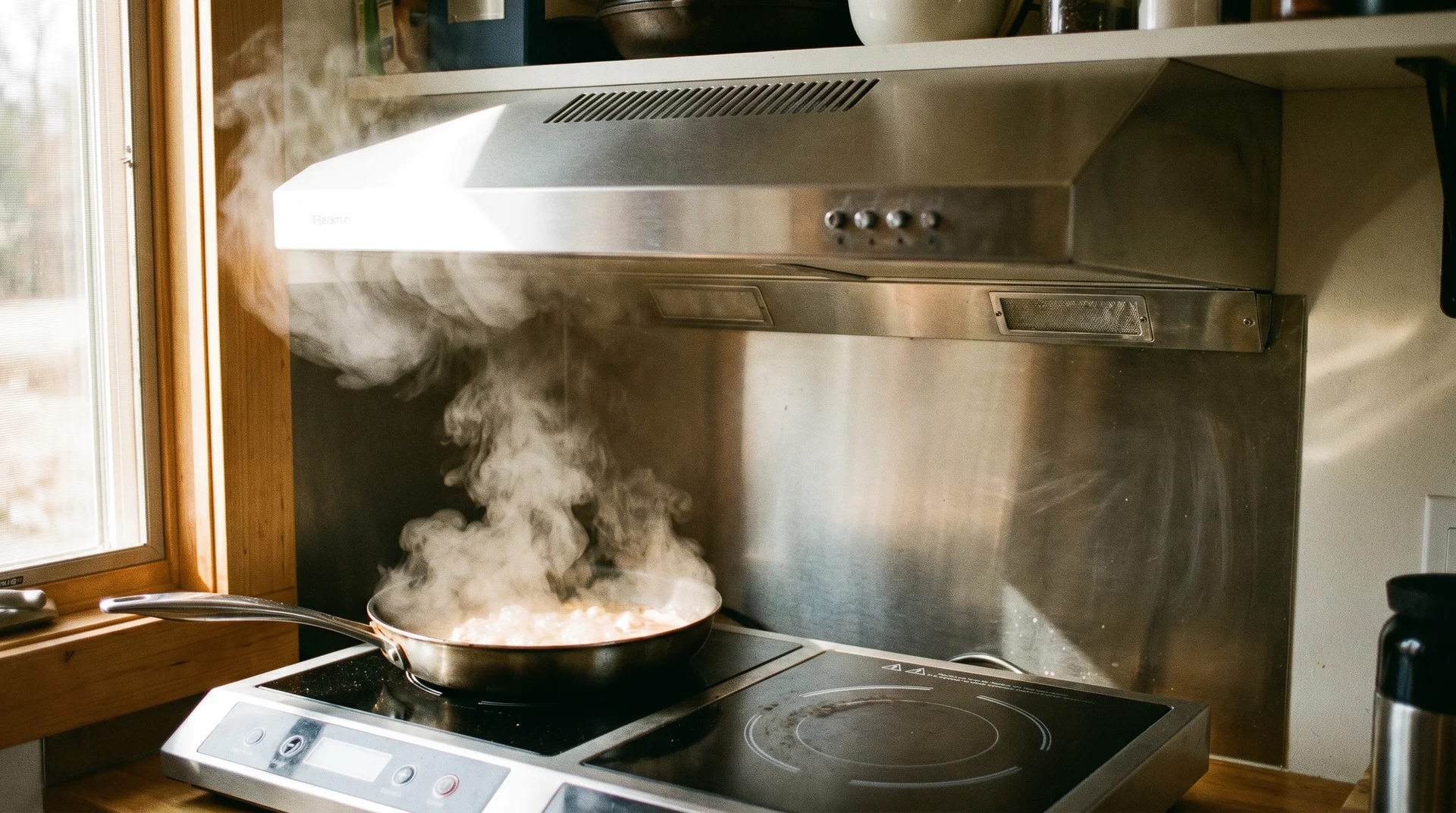
Every popular tiny house kitchen article recommends an induction cooktop. Almost none mention that induction does not eliminate steam, cooking odors, or airborne grease.
Steam and grease vapor accumulate quickly in a 200-square-foot space. In a sealed, tiny house in cold weather with windows closed, a single sauté session is enough to make this problem obvious.
Ventilation options for a tiny house kitchen:
- Recirculating range hood: filters air through charcoal media and returns it to the room. No exterior wall penetration required. Removes grease particles but does not remove humidity or cooking odors as effectively as a ducted system.
- Ducted range hood: moves air entirely to the outside. Requires a penetration through an exterior wall, which affects insulation and weatherproofing. More effective for odor and moisture removal.
For most tiny house cooking loads, a hood rated in the range of 100 to 150 CFM (cubic feet per minute is the standard measure for air volume moved by a ventilation fan) handles the job for everyday cooking. This is a build decision.
Residential fire safety guidance is consistent on the point that grease accumulation from inadequate ventilation in a cooking space is a real fire risk, not a theoretical one.
My father spent thirty years inspecting commercial kitchens and would tell you that operators always think they can minimize the hood. He is not entirely wrong about the instinct. He is wrong about the outcome, though.
Three Questions Before You Finalize Anything
These three questions resolve the layout-appliance-storage-aesthetic sequence faster than any single idea in this list.
- What do I cook most often? The meals you make regularly determine which appliances cannot be compromised and which can be eliminated entirely.
- How many people use this kitchen at once? Two people cooking simultaneously need at least 36 inches of clear aisle space, per NKBA kitchen design guidelines. One person can manage considerably less.
- What is my primary power source? Electric service, propane, or solar determines whether a fixed range is the right appliance or whether a portable induction cooktop serves better.
One honest caveat: how much you’ll actually cook in a tiny house and how much you think you’ll cook are often different things. That gap tends to show up in the first year, not the first month.
Plan for who you actually are in the kitchen. That person and the person you intend to become are frequently not the same, and a layout built for the second one frustrates the first one every day.