

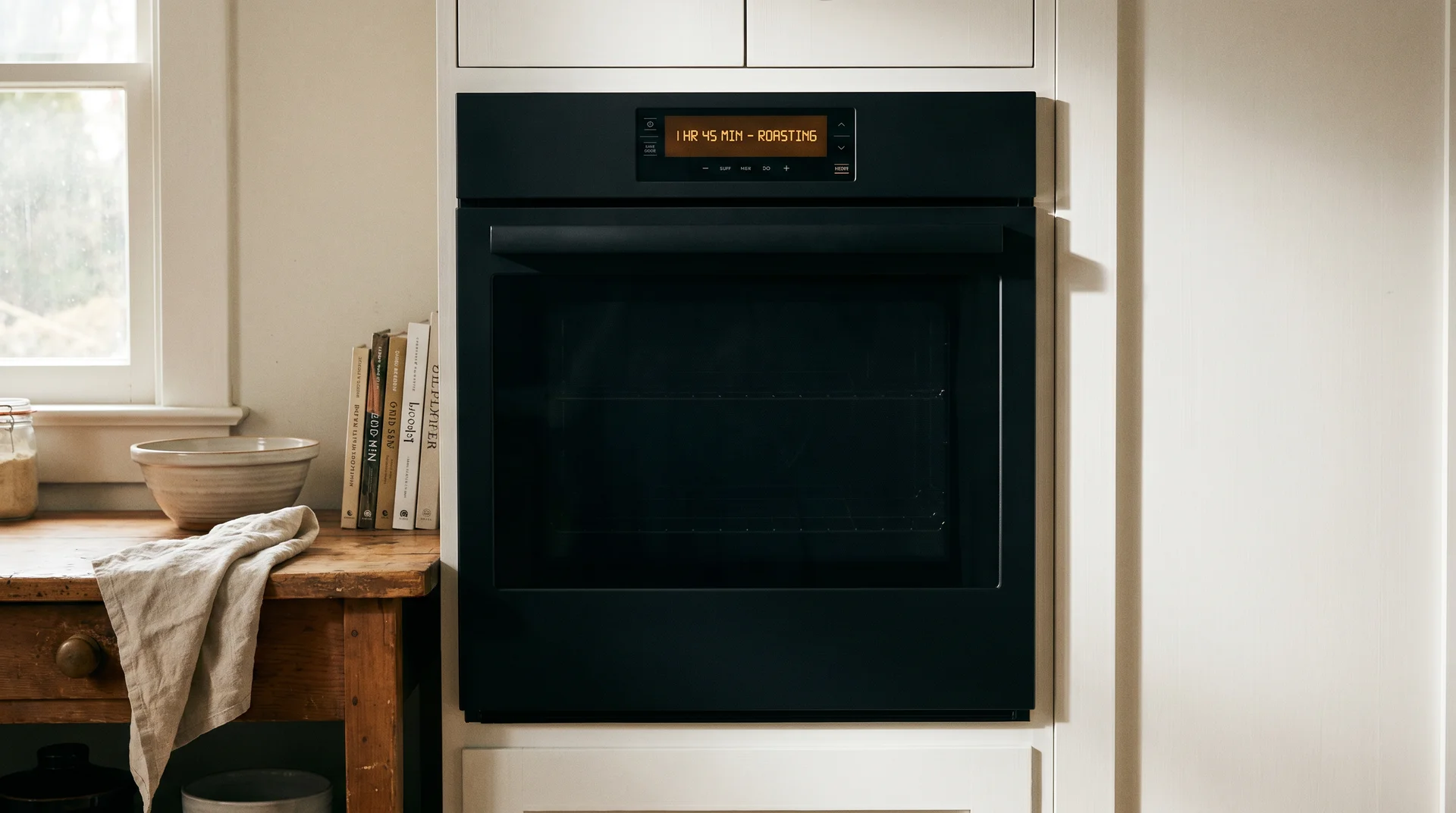
A self-cleaning oven takes 1.5 to 6 hours to complete its cycle, depending on the cleaning method and how dirty the oven is. Add another 1 to 2 hours of cooldown before the door unlocks.
The time on the display is the cycle. It’s not when your oven becomes usable again.
How Long Does a Self-Cleaning Oven Take?
The answer depends on which type of self-cleaning your oven uses.
| Cleaning Method | Cycle Time | Cooldown | Total Downtime |
|---|---|---|---|
| High-heat (pyrolytic) | 1.5 to 6 hours | 1 to 2 hours | 3 to 8 hours |
| Steam clean | 20 minutes to 1.5 hours | ~30 minutes | 1 to 2 hours |
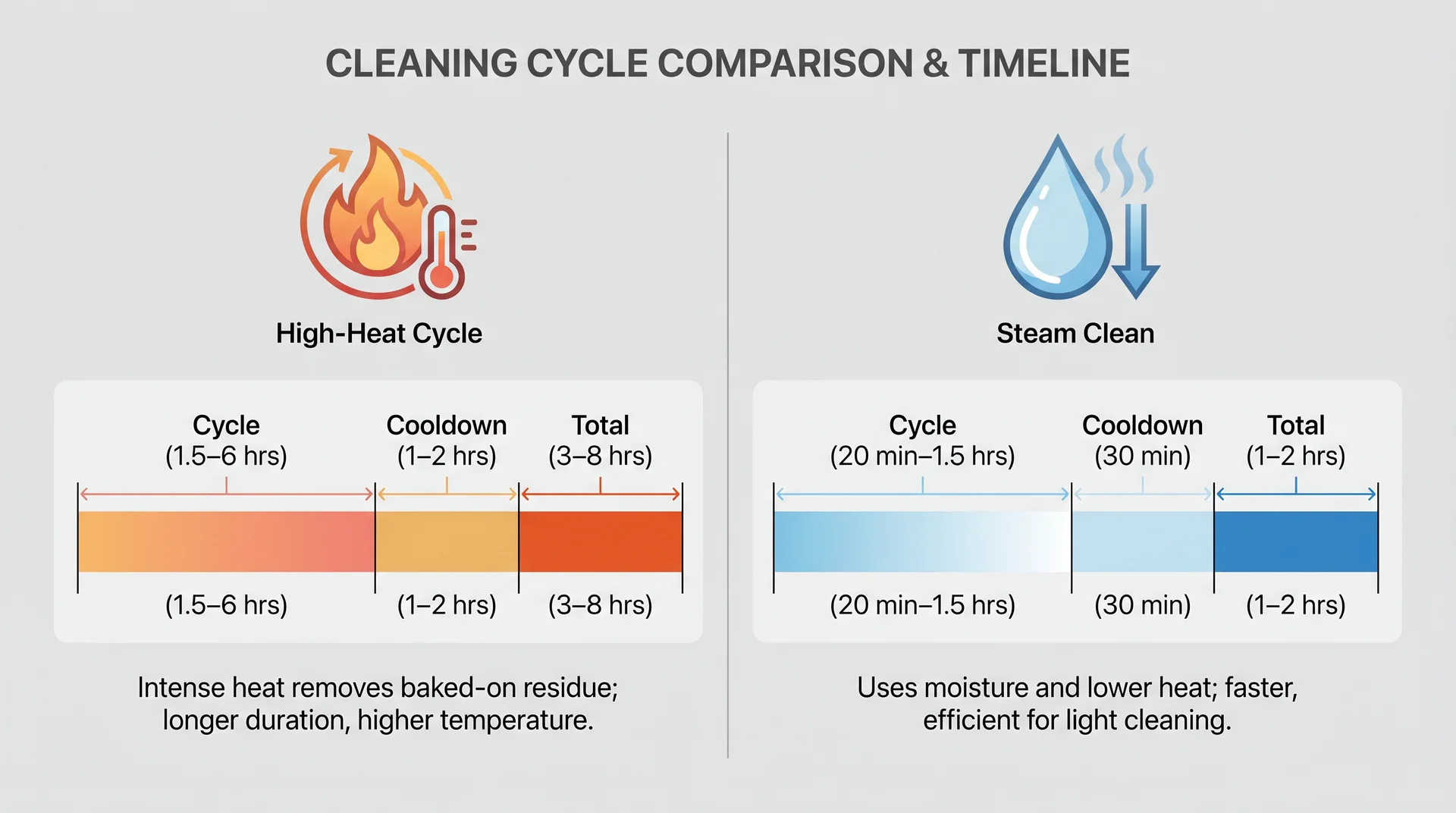
If you need the oven by a specific time tonight, check this table before you press start.
High-Heat Self-Cleaning
High-heat self-cleaning heats the oven to between 800°F and 900°F and incinerates food residue into ash.
This process has a formal name, pyrolytic cleaning, meaning thermal decomposition of organic material, but the practical upshot is simpler: everything in there burns down to a fine powder you can wipe away. No chemicals involved.
The door locks automatically at the start and stays locked until the interior temperature drops to around 600°F.
- Whirlpool ranges typically run 2.5 to 4.5 hours.
- Maytag wall ovens run 4 to 6 hours.
- GE electric ranges average 2 to 4 hours.
Your model’s manual has the specific number. But the soil load, or how dirty the oven is, is what actually moves that number up or down.
Steam Cleaning
Steam cleaning uses water and lower heat, around 250°F to 400°F, to soften light grease so you can wipe it away. The cycle runs 20 to 50 minutes, the door typically doesn’t lock, and the cooldown is short.
Consumer Reports tested over 100 self-cleaning ovens and found that steam works well on light soil. It does not work on accumulated baked-on grease. That limitation doesn’t come through clearly in most manufacturer descriptions, but remember that steam isn’t a substitute for the high-heat cycle when the oven has been neglected for months.
Use steam regularly, between high-heat cycles, to stay ahead of buildup. That’s the right use case for it.
The Cooldown Period Is Part of the Time
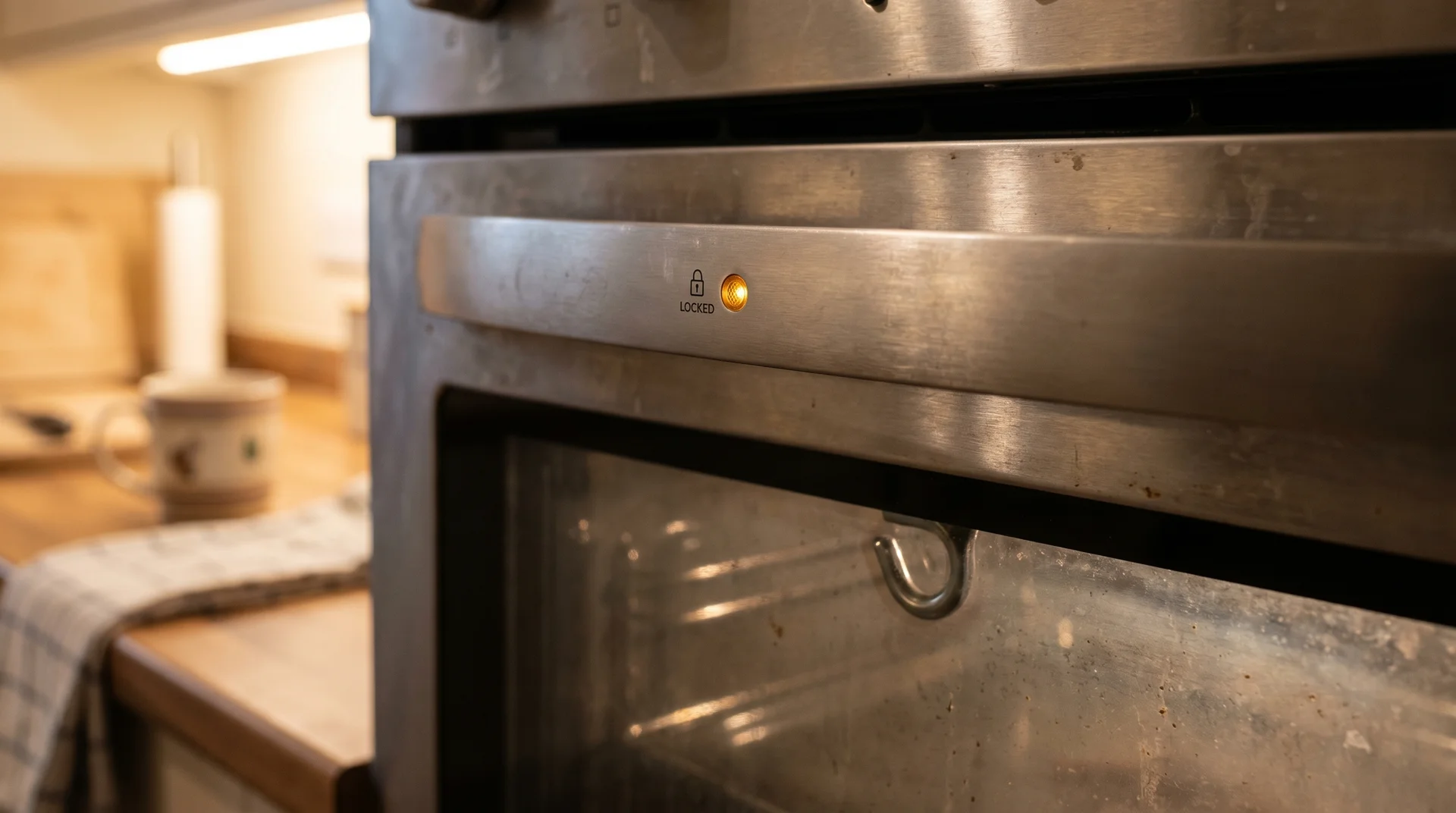
After a high-heat cycle, the oven needs 1 to 2 hours to cool below the temperature threshold that releases the door lock.
Angi’s breakdown of total self-clean time, including prep, cycle, and cooldown, puts the full process at between 4 hours 15 minutes and 6 hours 45 minutes for a standard high-heat cycle. After a steam cycle, the cooldown is about 30 minutes.
This is where the planning gap lives. Someone starts the cycle at 3 pm, expecting to be done by 6. They’re still staring at a locked oven door at 7.
Don’t try to force the door during cooldown. The door lock has a thermal interlock that won’t release until the temperature drops.
Forcing it doesn’t open it; it damages the latch mechanism. If the cycle is completed and the door still hasn’t unlocked after 2 hours, that’s when you check the manual or call the manufacturer.
Before You Start: Remove the Oven Racks
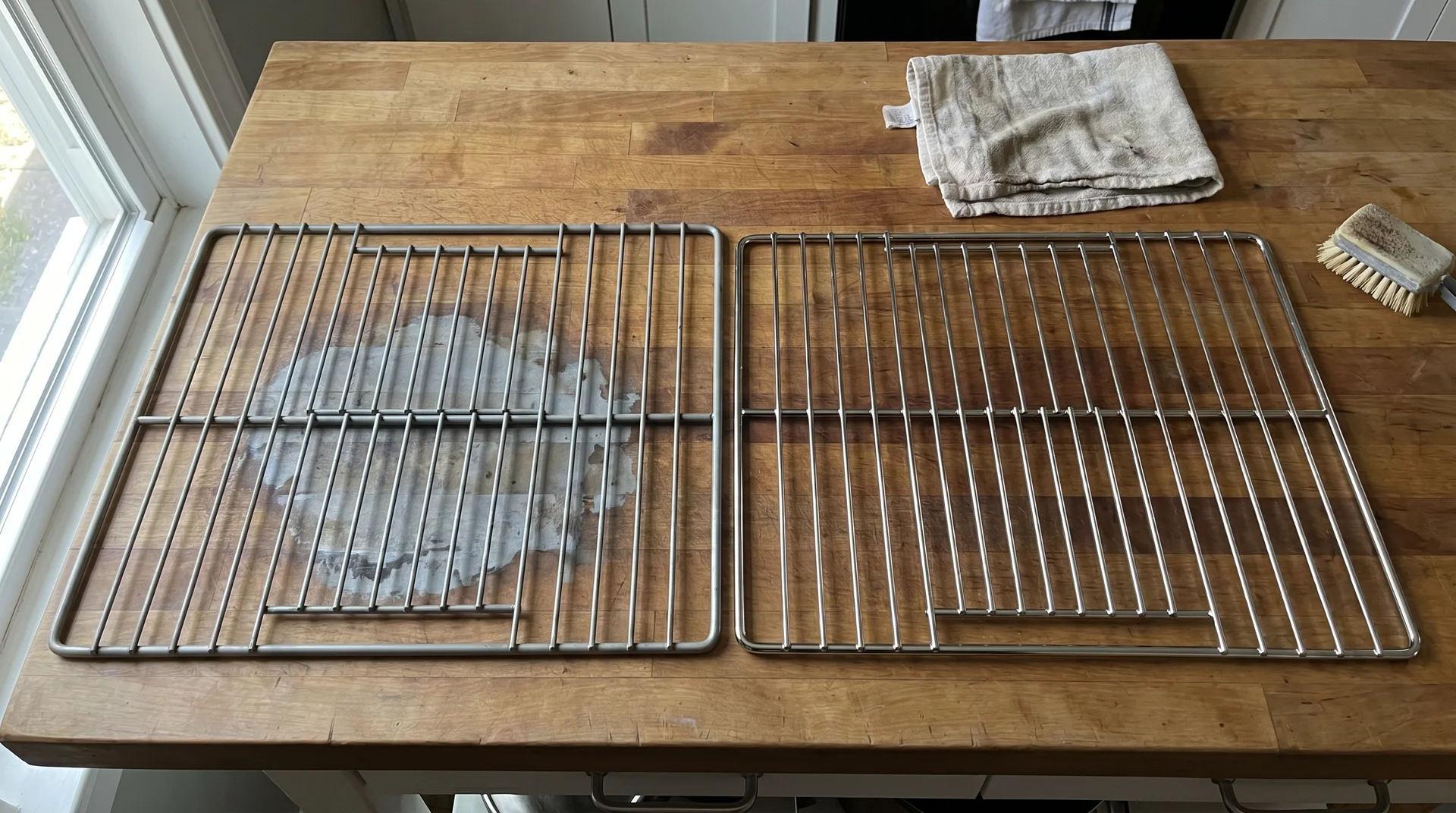
Two things get damaged in self-cleaning cycles because people don’t know to remove them first.
Oven Racks
Remove your oven racks before any high-heat self-clean cycle.
At 800°F to 900°F, chrome plating oxidizes. The racks turn a dull grey color, get discolored, and lose their glide. Warping is possible, but more common with cheaper chrome racks than heavy-gauge stainless.
Difficulty sliding is a functional problem. Stiff racks put stress on the porcelain channel they slide into every time you use the oven. That wear consistently adds up.
If you’ve already run the cycle with the racks in, let everything cool completely, then check whether they still slide smoothly. If they’re catching, it’s worth addressing before it damages the rails.
Clean racks separately. A sealed plastic bag with a cup of ammonia left overnight loosens heavy buildup without heat. Baking soda paste works for lighter residue. Neither method damages the chrome.
Everything Else to Clear Out
Before starting, pull these out:
- The broiler pan or any cookware left inside
- Aluminum foil from the oven floor bonds to the enamel coating at high heat
- Large loose food debris, a quick wipe beforehand, reduces combustion load and cuts smoke
- Anything stored in the drawer beneath the oven
The storage drawer matters more than people expect. It is directly below the oven cavity, and heat transfers down significantly during a self-clean cycle.
There are documented fire incidents from items in storage drawers igniting when the owners left the house. If you’re not sure whether your drawer is a storage drawer or a warming drawer, check the manual before running the cycle.
Soil Load Changes the Time
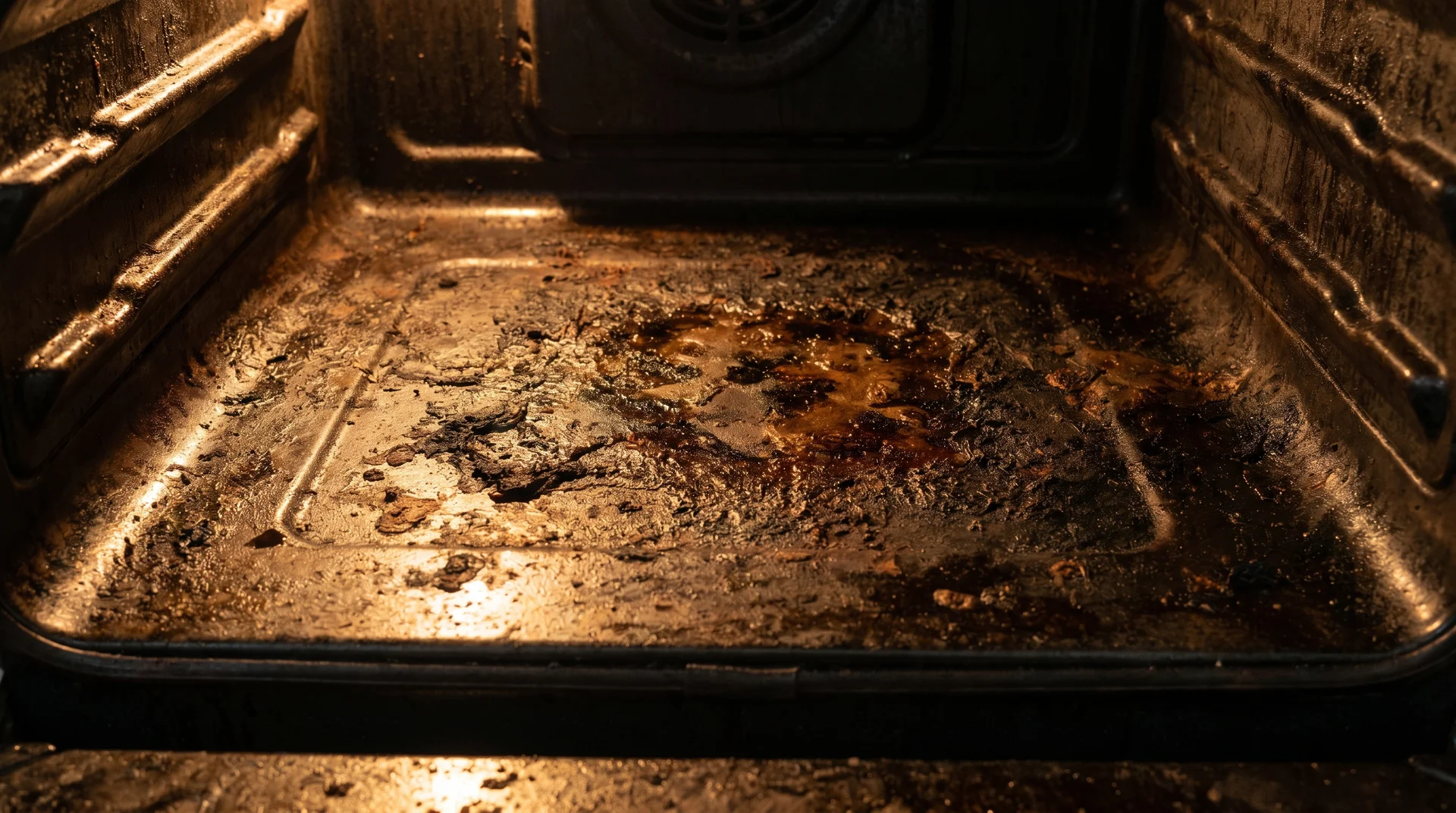
The self-cleaning cycle heats your oven to 800°F or higher and burns residue into ash, and the amount of residue determines how hard that process has to work.
This is what the “1.5 to 6 hours” range is actually describing.
- A lightly soiled oven burns clean closer to the lower end.
- An oven with months of accumulated grease and carbonized spillovers runs longer, produces more smoke, and generates more heat inside the cavity as that material combusts.
There’s a practical limit here.
If your oven has heavy, pooled grease like visibly accumulated on the floor, thick carbonized buildup on the walls, the high-heat cycle is not the right first step. That level of soil produces significant smoke during the cycle. It can produce visible flames inside the oven cavity. Not catastrophic flames, but enough to alarm anyone who wasn’t expecting it.
I’ve watched a first-time self-clean cycle on a years-neglected oven produce smoke output that made the owners genuinely unsure if something had gone wrong. It hadn’t. But it could have.
The better approach is to wipe out loose debris and surface grease manually before running the cycle. This reduces combustion load, shortens the effective cycle duration, and keeps smoke in a range your ventilation can handle. Pre-clean first, then run the cycle.
What to Do While the Oven Is Running
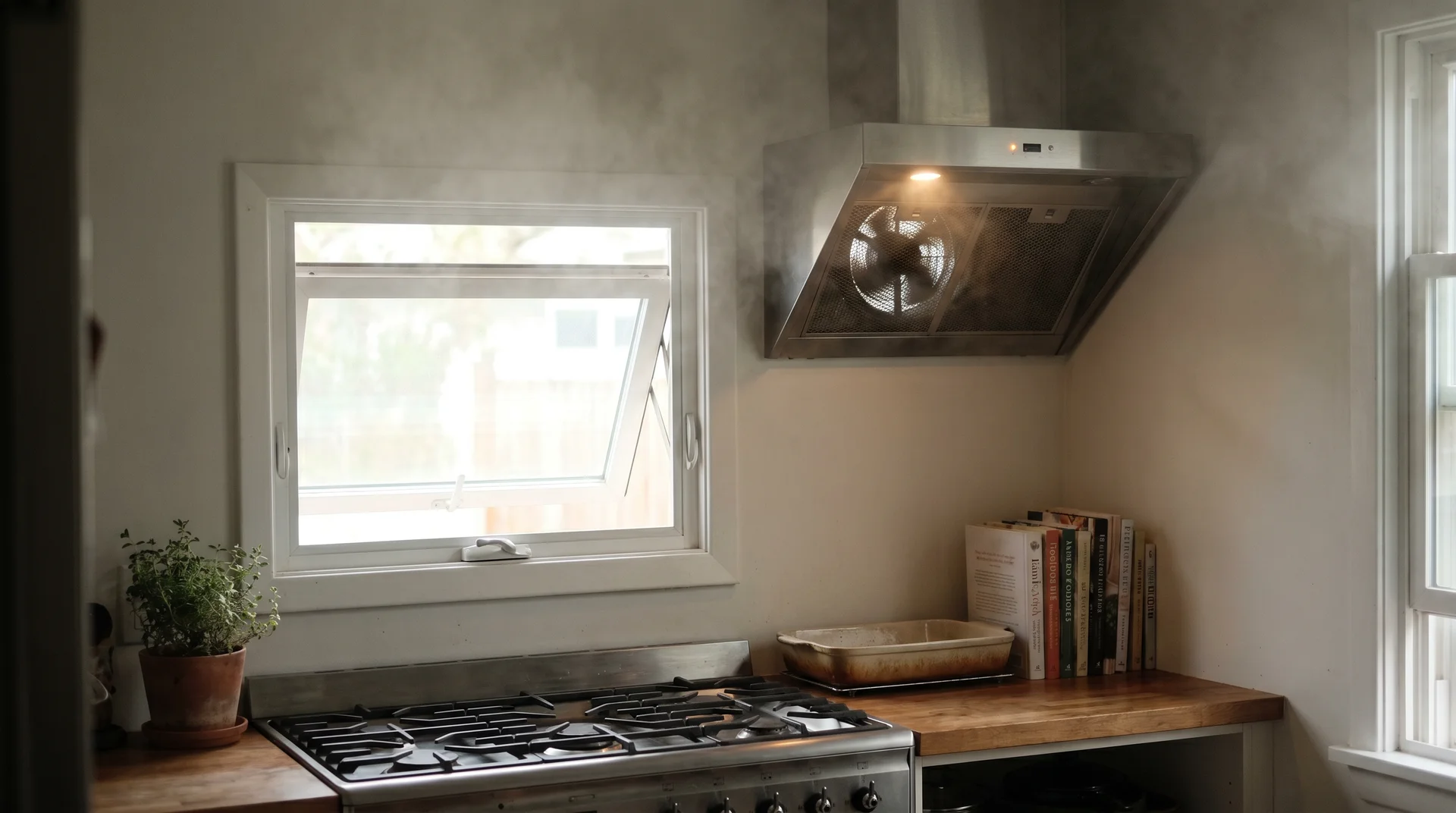
Ventilate first, stay home, and know what to do if you need to stop the cycle.
Ventilation
Open windows and run the range hood exhaust fan before the cycle starts.
The fumes during a high-heat cycle come from two sources.
- The first is combusting food residue. This produces smoke that smells like a badly burnt pan, but concentrated and sustained.
- The second, relevant mostly for newer ovens on their first or second self-clean cycle, is the enamel coating off-gassing at temperatures it hasn’t reached before. That smell is sharper and more chemical. It diminishes after the first couple of cycles.
Cornell University Extension advises staying out of the kitchen and ventilating as much as possible for the duration. That’s sound advice. Smoke output is directly proportional to soil load. A well-maintained oven produces far less than a neglected one.
If you have pet birds, they need to be out of the house entirely during the self-clean cycle. Not in another room. Out of the building.
Birds have highly efficient respiratory systems that make them acutely sensitive to combustion byproducts. There are documented cases of birds dying even when owners moved them to a separate room and followed every other instruction in the manual.
The fumes that are an unpleasant inconvenience for humans are genuinely fatal for birds. This is not a precaution to treat as optional.
Should You Leave the House
Stay home, but you don’t need to watch the oven the entire time.
Don’t leave the oven unattended during a high-heat cycle. If something goes wrong, like a grease fire in the cavity, unusual smoke, or a door seal issue, you need to be there. That means being in the house and checking periodically.
My own practice is to check every 30 minutes during the active phase. I’m not looking for anything specific most of the time. I’m confirming the smoke level is what I’d expect, and the oven is behaving normally. It usually is. The times it hasn’t been, I was glad I was home.
What If You Cancel the Cycle Midway
Cancelling a self-clean cycle mid-run doesn’t damage the oven, but it does leave a harder mess. A fully completed cycle reduces residue to dry ash that wipes away easily.
A cancelled cycle leaves partially combusted material, which is sticky, carbonized, and harder to remove than the original buildup.
If you need to cancel, press cancel, let the oven cool completely, and plan to either run a full cycle another day or clean manually. Either is a reasonable path.
The thermal interlock applies regardless of why the cycle ended. Don’t try to open the door before the oven has cooled to the unlock threshold, whether you cancelled or the cycle ran normally.
Steam Clean vs. High-Heat: Which One to Use
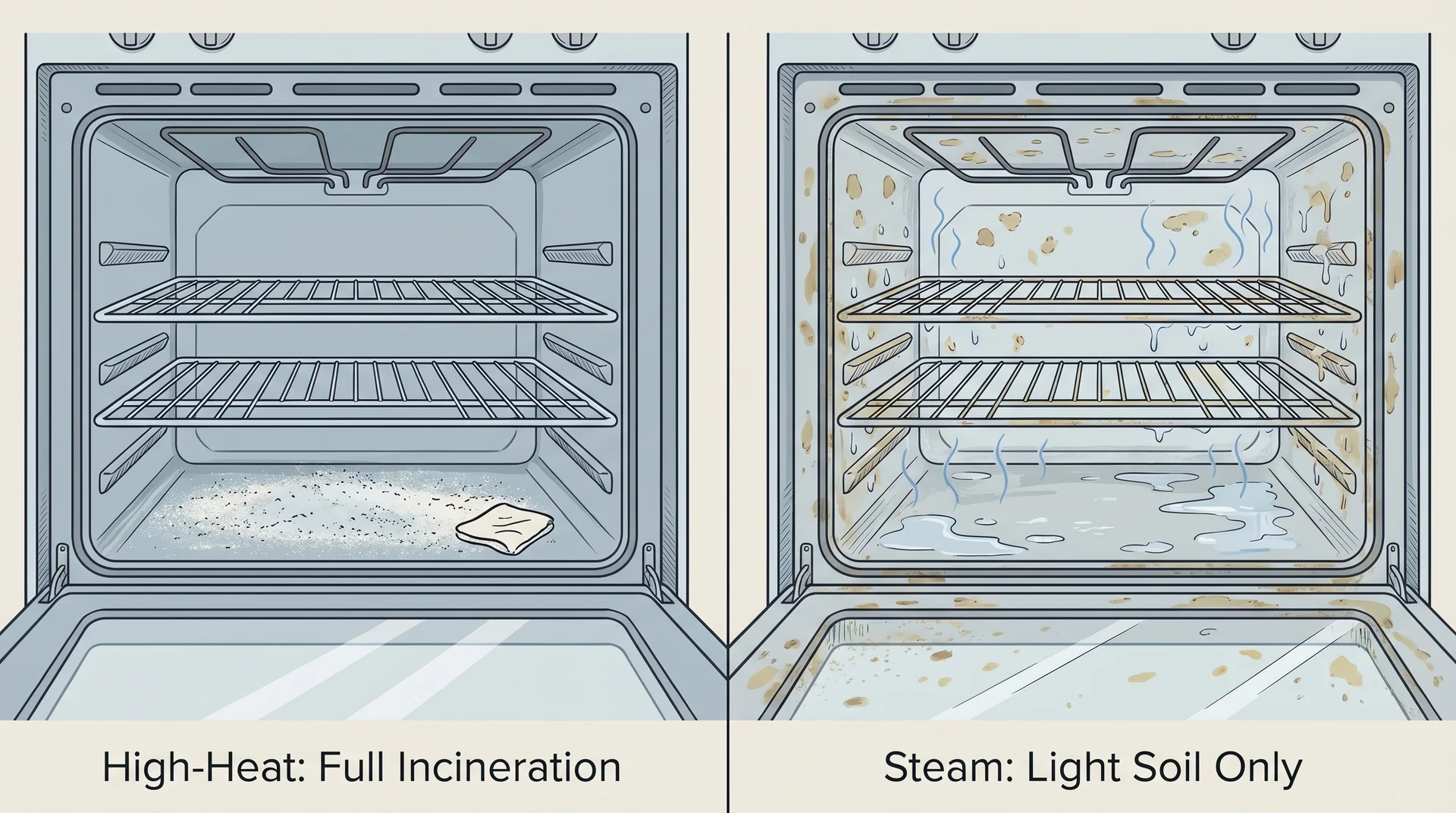
The label says these are equivalent alternatives. The independent test data says they aren’t.
- Steam cleaning is the right tool for light, recent spills. The kind that accumulated over the past few weeks of normal cooking. It’s faster, uses less energy, produces no smoke, and doesn’t lock the door. For that use case, Consumer Reports testing confirms it works well.
- High-heat cleaning is the right tool for anything beyond light maintenance. Baked-on grease, carbonized spillovers, residue that’s been building through multiple cooking sessions. Steam won’t touch that. The temperature isn’t high enough to break down carbonized organic material.
Several manufacturers introduced low-heat and steam-only systems in the 2010s with strong marketing claims about convenience.
Consumer Reports tested AquaLift, Whirlpool’s low-heat system, used across Whirlpool, Maytag, Jenn-Air, and KitchenAid ranges across more than 100 models and rated it poor for cleaning effectiveness in every one. The oven floor cleared reasonably. The walls and door were not as clean.
A practical step for you is to use steam every few weeks to stay ahead of buildup.
Run a high-heat cycle every 3 to 6 months for actual accumulated grime. That frequency keeps the high-heat cycle manageable; the oven never reaches a state where the combustion load is a problem.
How Often to Run the Self-Cleaning Cycle
Every 3 to 6 months is the right interval for a regularly used oven.
The Thermal Stress Problem
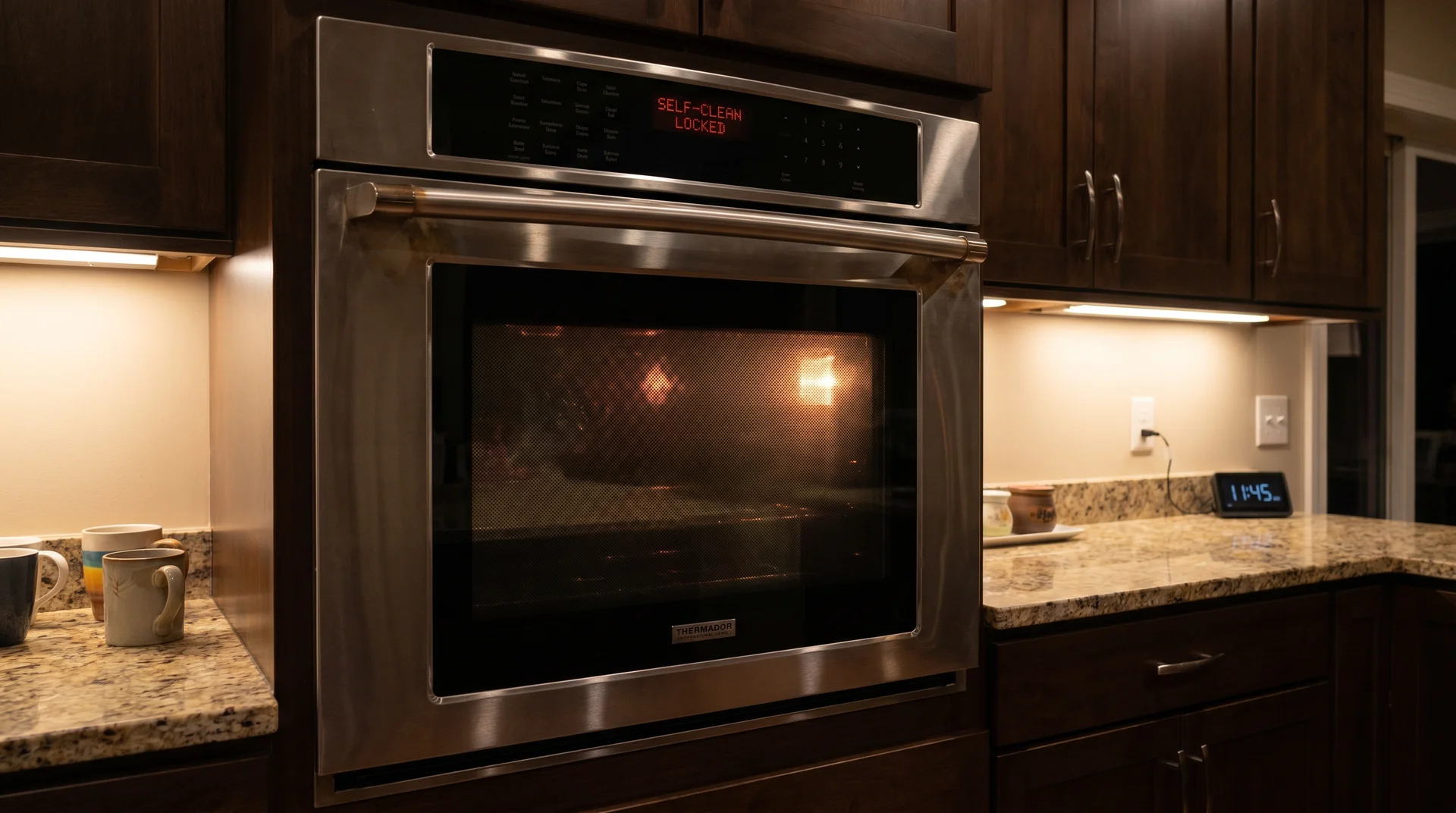
At 800°F to 900°F, door hinges, door seals, latch mechanisms, and control boards all experience thermal stress that normal cooking at 350°F to 450°F doesn’t produce.
These components are designed to handle the self-clean cycle. They’re not designed to handle it weekly. Some appliance repair professionals recommend limiting high-heat cycles to once or twice a year to reduce cumulative wear. Steam cleaning, run more often, is lower-impact.
Regular wiping of spills before they carbonize is the single most useful thing you can do between cycles. It reduces how hard the self-clean cycle has to work when you do run it, and as we covered earlier, a lighter soil load means a shorter cycle and less smoke.
My father spent thirty years inspecting commercial kitchens for Baltimore City. His position on oven cleaning has always been that high heat solves everything. He is not entirely wrong. He is also not entirely right.
Because in a home oven, frequency and starting condition interact. Running the cycle every 4 months on a well-maintained oven is a different proposition than running it once a year on a neglected one.
When to Skip the Cycle
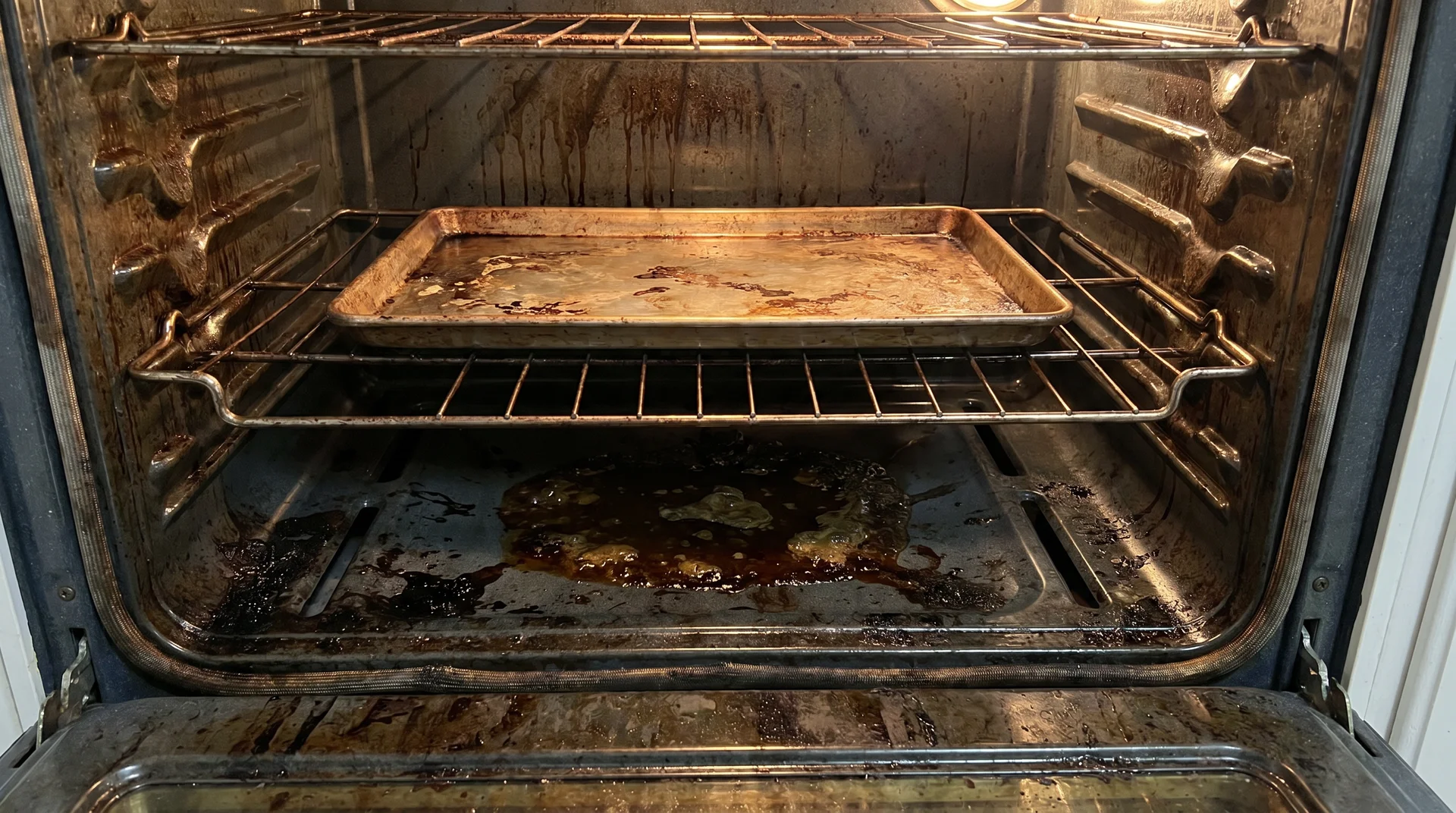
If the oven is heavily soiled with pooled grease or thick carbonized buildup, pre-clean manually before running the self-clean cycle.
Exactly how bad is “too dirty to start with the self-clean cycle” is genuinely hard to quantify. It depends on the type of grease, how long it’s been there, and how well your kitchen ventilates.
I don’t have a precise threshold for you.
What I can tell you is that visible pooled grease on the oven floor is the signal.
That amount of combustible material in a 900°F environment is where you go from “unpleasant smoke” to “visible flames and a real question about whether to intervene.”
What to Do After the Oven Completes the Cleaning Cycle?
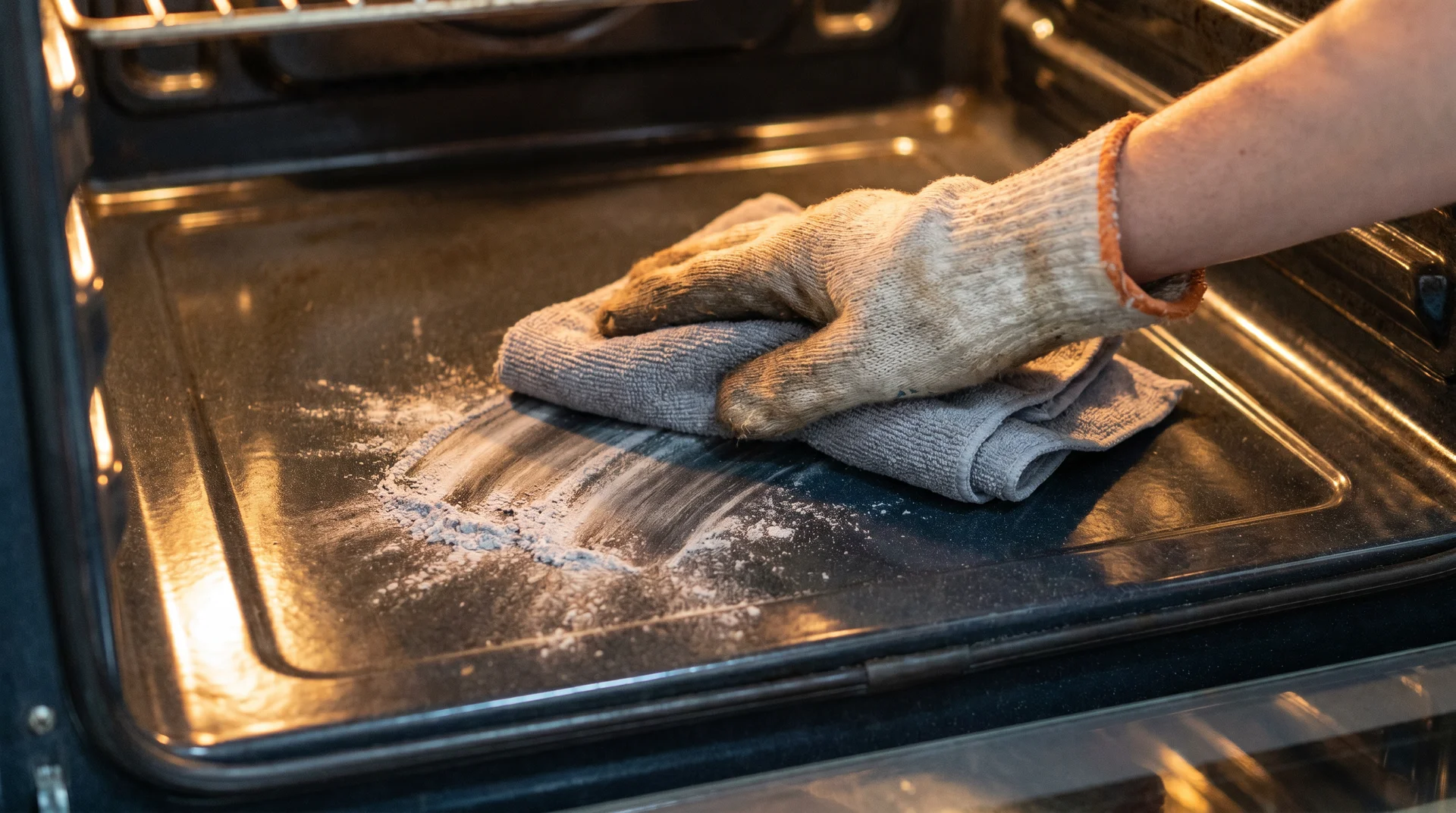
The cycle doesn’t leave a clean oven. It leaves an oven full of ash.
Once the oven has fully cooled and the door unlocks, wipe the interior with a damp cloth or damp paper towels. The ash is light and comes off easily. Corners and the area around the door seal tend to hold more of it, so a soft brush or barely-damp cloth works better there than scrubbing.
A few things to get right on the wipe-down:
- Wait for the oven to cool completely. Residual heat makes ash harder to remove cleanly.
- Use water or a small amount of mild dish soap only. The interior of a self-cleaning oven has a special porcelain enamel coating. Commercial oven cleaners, the caustic kind, degrade that coating over time. Once the coating is compromised, the self-cleaning feature becomes less effective, and the interior is harder to keep clean.
- Don’t run the oven again before clearing the ash. It’ll smoke on the next cook cycle.
You don’t need to rush.
I keep a whiteboard in my kitchen that tracks what surfaces were cleaned and when. The self-clean cycle goes on it. Not because I’d forget, but because seeing the gap between cycles in writing is the most reliable way I’ve found to run them on a schedule rather than in response to a problem.