
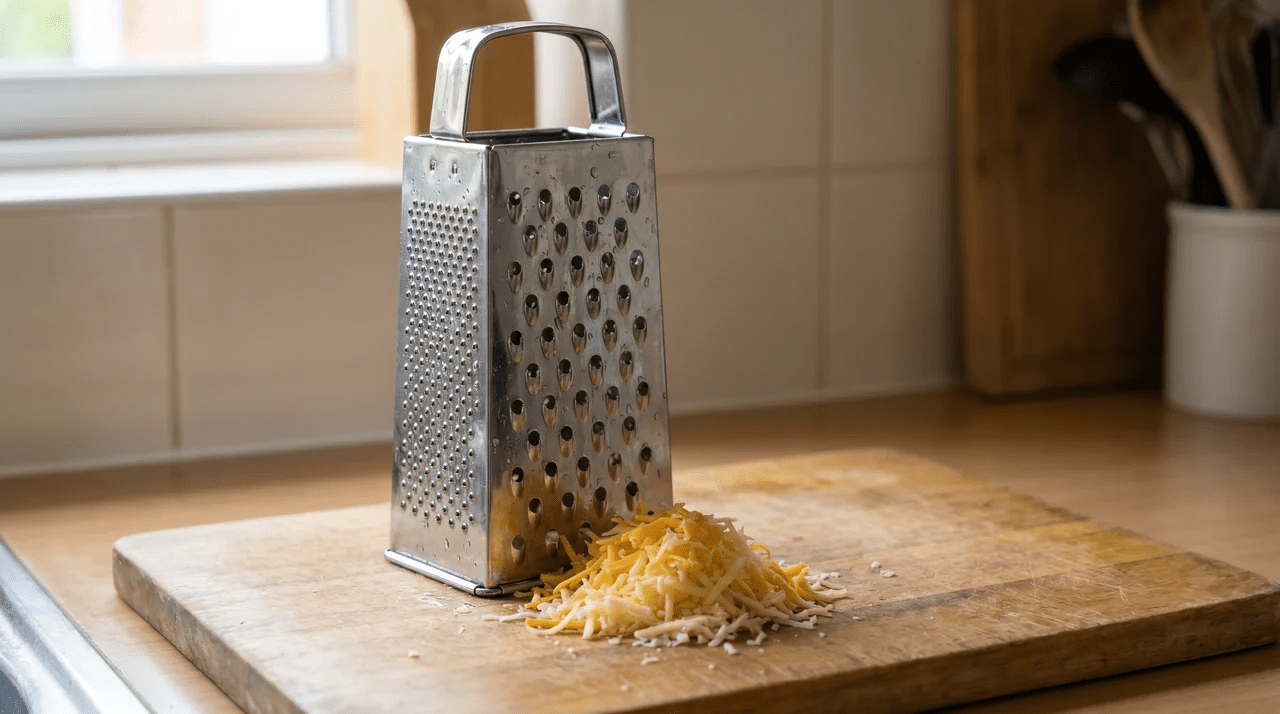
Most people reach for their grater exactly once when a recipe needs shredded cheese. Then it goes back in the drawer.
But a grater handles a lot more than that. Vegetables, aromatics, whole spices, citrus zest; the tool was built for all of it. The problem isn’t the grater. It’s that most of us were never really shown what it can do, or why the different forms exist.
That’s what this guide is for.
What Is a Grater?
A grater is a kitchen tool with sharp-edged holes or a textured cutting surface. You press solid food against it and drag. The edges pierce the food with each pass and break it into smaller pieces.
That basic idea stays the same across every form the tool takes. Flat grater, box grater, or rotary, only the form changes. The contact between food and cutting edge doesn’t.
Here’s one thing worth knowing straight away. A grater is not a slicer. A slicer cuts through food with one clean movement. A grater fractures the surface. That friction breaks cell walls and releases moisture, which is why grated food feels softer and more compressed than the same ingredient sliced thin.
That difference matters more than most people think, especially when you’re choosing which tool to use.
What Are the Different Types of Graters?
There are three main types: box, microplane, and rotary. Each one is built to produce a different result, and the reason isn’t just hole size. The cutting mechanism itself works differently depending on the type.
Here’s how each one actually works.
Box Grater
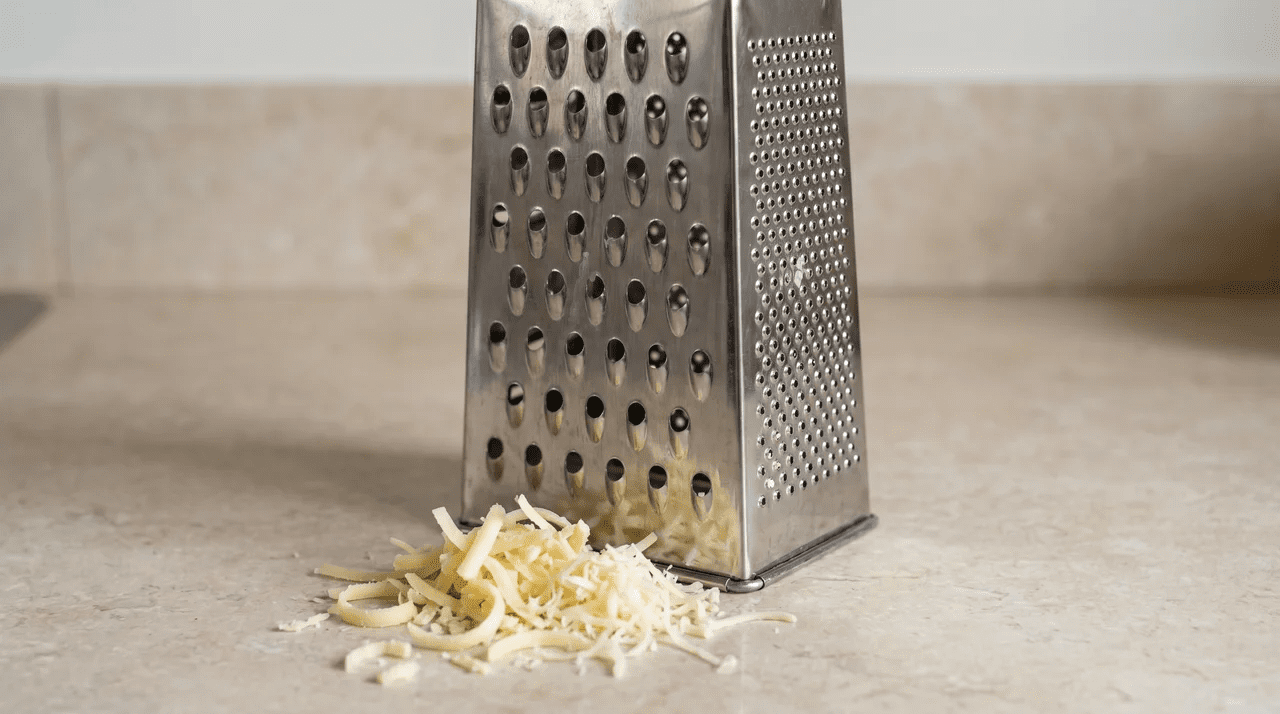
The box grater is the one sitting in most kitchen drawers right now.
It has four sides, and each side does something different. The large-holed face coarsely shreds. The small-holed face produces finer shreds. The slicing face cuts thin, intact strips. The ultra-fine face zests and powders.
Here’s the part most people miss. The two grating faces work by abrasion; the teeth tear the food apart as it moves across them. The slicing face works by shearing, a completely different action that cuts through the food rather than fracturing it. That’s why the output looks different. Shredded zucchini and sliced potato don’t just look different, they came off the grater through two different physical processes.
The ultra-fine face trips up almost everyone at first. It only works on very dry, very hard foods like aged Parmesan, whole nutmeg. Anything with more moisture clogs it immediately. I’ve watched people try to zest a lemon on it and give up, thinking the grater was the problem. It wasn’t, they just needed the microplane.
Microplane / Rasp Grater
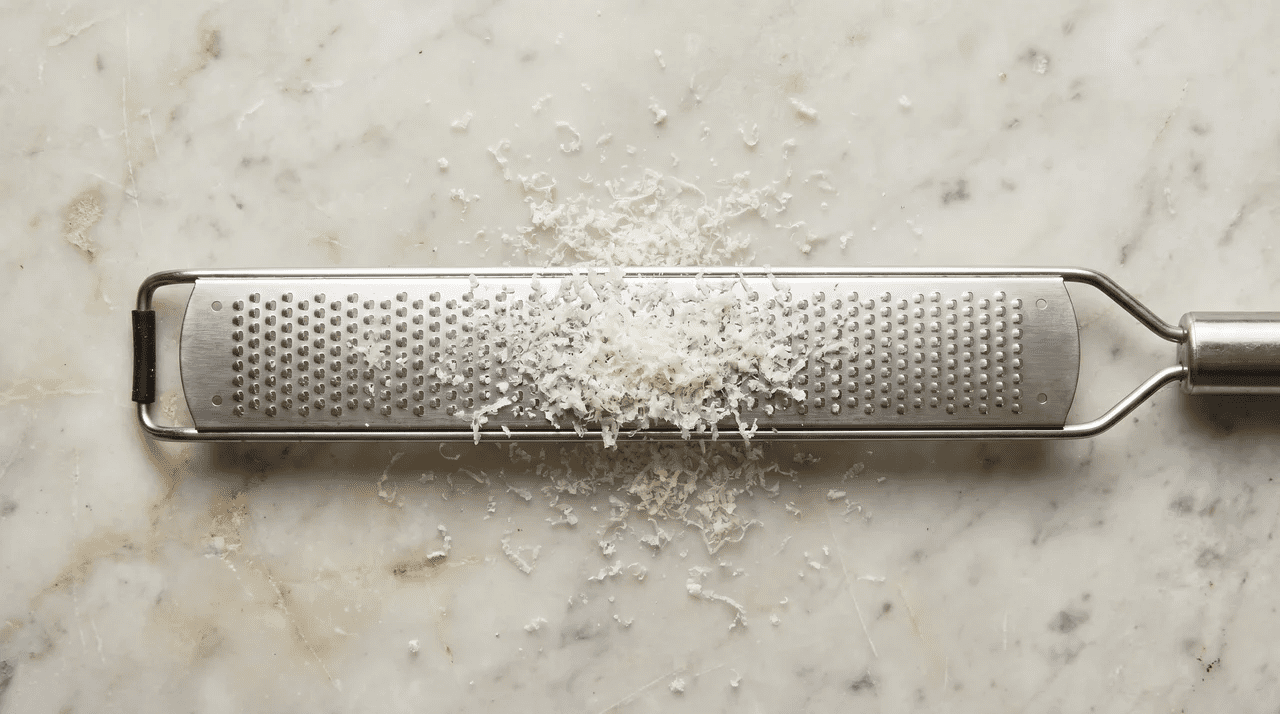
A microplane, also called a rasp grater, is long, narrow, and flat, with extremely fine teeth.
It doesn’t shred. It produces powdery, airy shavings.
The teeth are so fine that they rupture more cell walls per pass than any other grater type. That’s not a small thing. More broken cells means more aromatic compounds released, which is why microplane-grated garlic hits harder than minced garlic from the same clove.
You’re not just changing the texture. You’re changing the flavor intensity.
The failure point is moisture. Soft or wet foods collapse into the teeth and clog them fast. The microplane is the right tool for hard cheese, ginger, citrus zest, garlic; not for anything that can’t hold its structure under pressure.
Rotary Grater
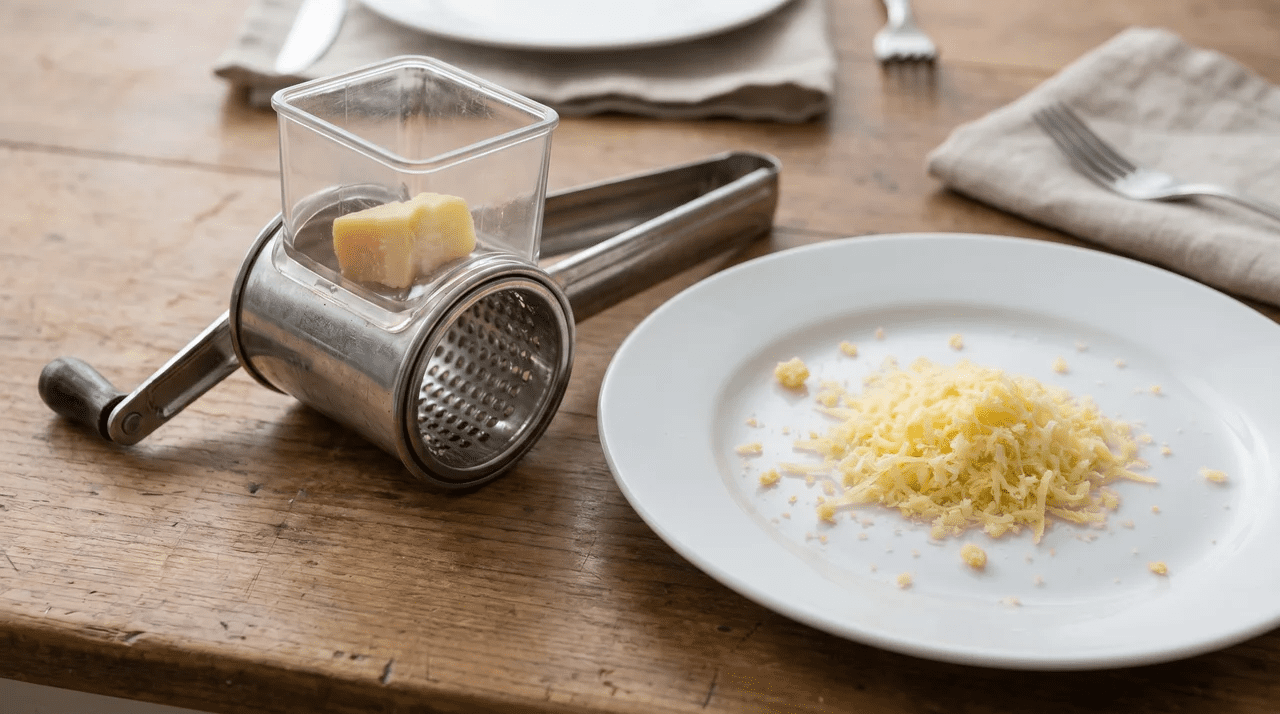
A rotary grater works differently from the other two.
Food sits in a hopper. You press it down against a spinning drum and turn the handle. The drum does the grating. Your hand never touches the cutting surface.
It’s designed mainly for hard cheese, the kind you grate directly over a plate at the table. It’s tidy, controlled, and easy to portion.
The trade-off is cleaning. The drum lifts out, but food particles get packed into the housing around it and a quick rinse won’t shift them. If you’re grating in any kind of volume, that adds up fast. I think the rotary grater earns its place at the table literally, but it’s not the right tool for everyday kitchen prep.
What Is a Grater Used For?
A grater handles a much wider range of foods than most people use it for.
Hard vegetables like carrots, zucchini, or potatoes work well on the coarse face of a box grater. Firm fruits like apples behave the same way. Whole spices like nutmeg belong on the ultra-fine face or a microplane. Hard chocolate and frozen butter grate cleanly on the coarser box faces.
For aromatics, the type of grater you use actually changes the result. Microplane-grated garlic releases more flavor than the same garlic on a coarse grater because finer abrasion breaks more of the cells that hold the volatile compounds responsible for taste and aroma. If a recipe says “grated garlic,” that word choice matters. A microplane is doing something a box grater can’t fully replicate.
One category the grater simply doesn’t handle well: soft, high-moisture foods. Fresh mozzarella, ripe tomatoes, or avocados collapse through the holes instead of shredding. No amount of technique fixes that. It’s just not the right tool.
Wrapping Up
A grater is one of those tools that most kitchens have and most people underuse.
Once you know what the different types actually do and why the box grater’s four faces work differently from each other, you stop reaching for just the one side you recognize. You use the right face for the right job.
Garlic hits harder. Zest comes off airy instead of shredded into a wet paste. The potato strips hold their shape on the way into the pan. These are small shifts, but you taste every one of them in the finished dish.
Frequently Asked Questions
What is the difference between a grater and a shredder?
Most manufacturers and cooks use the terms interchangeably. In practice, “shredding” usually refers to longer, thicker strips; the output of a coarse grating face. “Grating” implies finer, more broken-down results. Many box graters are sold as grater-shredders because different faces produce both, depending on which side you use.
What are the four sides of a box grater for?
The large-holed face coarsely grates cheese and vegetables. The small-holed face gives you finer shreds. The slicing face cuts thin, intact strips. The ultra-fine face zests citrus, powders aged hard cheese, and handles whole spices like nutmeg. Each face uses a different cutting action and produces a different texture.
Is the correct spelling “grater” or “greater”?
“Grater” with one ‘e’ is the kitchen tool. “Greater” with two ‘e’s is the comparative adjective meaning larger or more significant. They sound identical when spoken. Their meanings have nothing to do with each other.
What can I use if I don’t have a grater?
A sharp knife handles coarse grating through fine mincing. A food processor with a shredding disc manages larger volumes. A vegetable peeler gives you thin strips of citrus zest or firm cheese. For fine results close to a microplane, a mortar and pestle is the best manual alternative for garlic, ginger, or whole spices.