

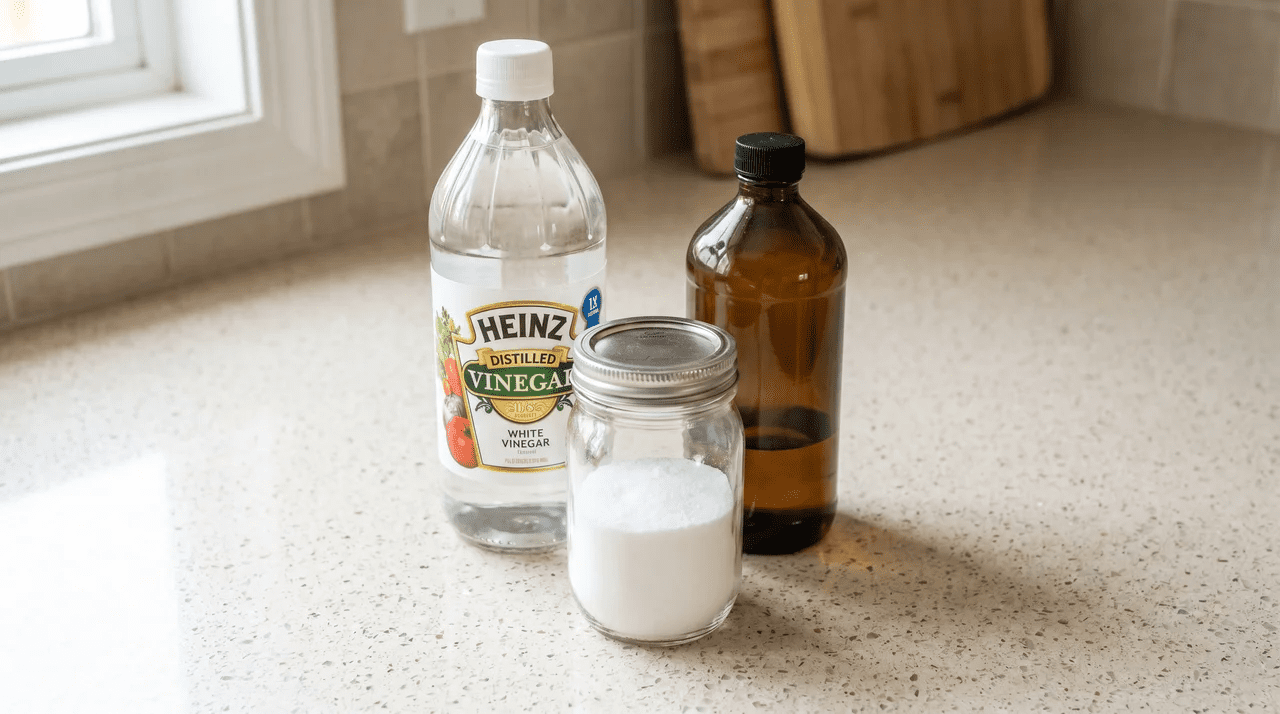
If you’ve run out of rinse aid, making your own is simpler than you’d think. Maybe you’re trying to cut synthetic chemicals from your kitchen. Either way, the recipes here take under five minutes.
Three ingredients work: white vinegar, citric acid, and hydrogen peroxide. You probably have at least one of them right now.
The choice of ingredient matters more than most people realize. Each one works differently, and picking the wrong one for your water type is why DIY rinse aid disappoints so many people who try it.
This guide covers all three recipes with exact quantities. It also covers the mistakes that cause the formula to fail even when the recipe itself is right.
Which DIY Rinse Aid Option Is Right for Your Situation?
White vinegar, citric acid, and hydrogen peroxide each work differently. The right choice depends on your water type and what problem you’re actually trying to fix.
All three reduce water’s surface tension, the property that makes water bead up on glass. When surface tension drops, water sheets off instead of beading and drying into spots. That’s what every rinse aid, commercial or homemade, is built to do.
The difference shows up in hard water.
Hard water carries dissolved calcium and magnesium that bond to glass over repeated cycles. That’s the white haze you see on glasses over time, and surface tension reduction alone won’t clear it.
Citric acid dissolves that bonded mineral scale through a process called chelation. It binds to calcium and magnesium ions and pulls them off the glass. White vinegar at 5% acidity is partially effective, but not concentrated enough to fully clear deposits that have already bonded.
Hydrogen peroxide oxidizes film and lifts it off surfaces. It doesn’t chelate minerals.
I’ve seen people swap vinegar for hydrogen peroxide in hard water areas and still end up with cloudy glasses. It’s a solid fix for film. It’s not the right fix for minerals.
In soft water, any of the three gives you clean results. In hard water, citric acid is the only option that clears what’s actually stuck to the glass.
How to Make DIY Dishwasher Rinse Aid
All three formulas go into the standard rinse aid dispenser on your dishwasher door. The amounts are small by design. Most dispensers hold just enough for three or four cycles at a time.
White Vinegar Rinse Aid
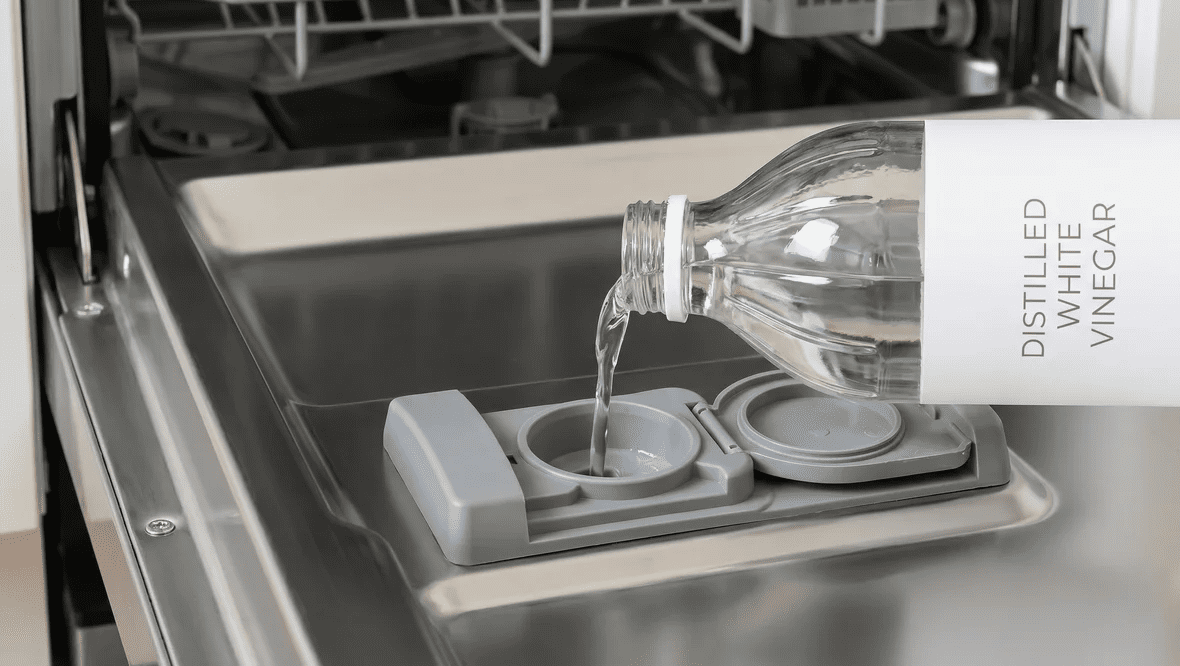
Pour distilled white vinegar, standard 5% acidity, directly into the rinse aid dispenser. Close the lid and run a normal cycle.
I use the dispenser over the glass-on-rack approach. It keeps the vinegar concentrated for the final rinse, where it does the most work.
If you’d rather skip refilling every few loads, the glass-on-rack method works. Pour half a cup of vinegar into a small upright glass and place it on the top rack before starting.
Just know it releases vinegar across the full wash cycle, not just the final rinse. In hard water areas, that makes it noticeably less effective at clearing mineral spotting.
Citric Acid Rinse Aid
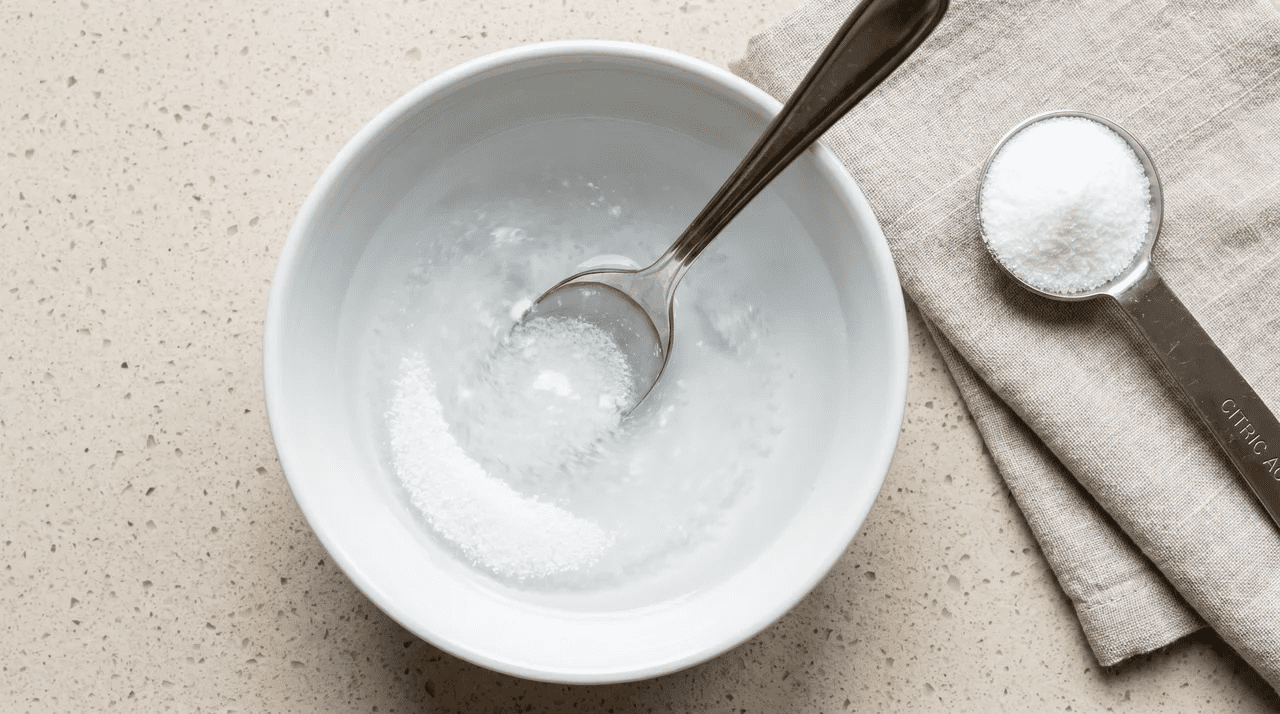
Dissolve 2 tablespoons of citric acid in ¼ cup of boiling water. Stir until no granules remain at the bottom.
Add 5–10 drops of lemon essential oil if you want a light scent. Let the mixture cool completely before pouring it into the dispenser.
The cooling step is the one I see people skip most. Don’t.
Hot liquid poured into the dispenser compartment can warp the plastic housing. That affects how the compartment opens on future cycles.
There’s also a performance reason. A formula that hasn’t fully cooled spreads less evenly during the first rinse. You won’t get as consistent coverage across the load.
If you’re making this for the first time, the cooling step is what to pay attention to. It looks like a minor detail. It isn’t.
Hydrogen Peroxide Rinse Aid
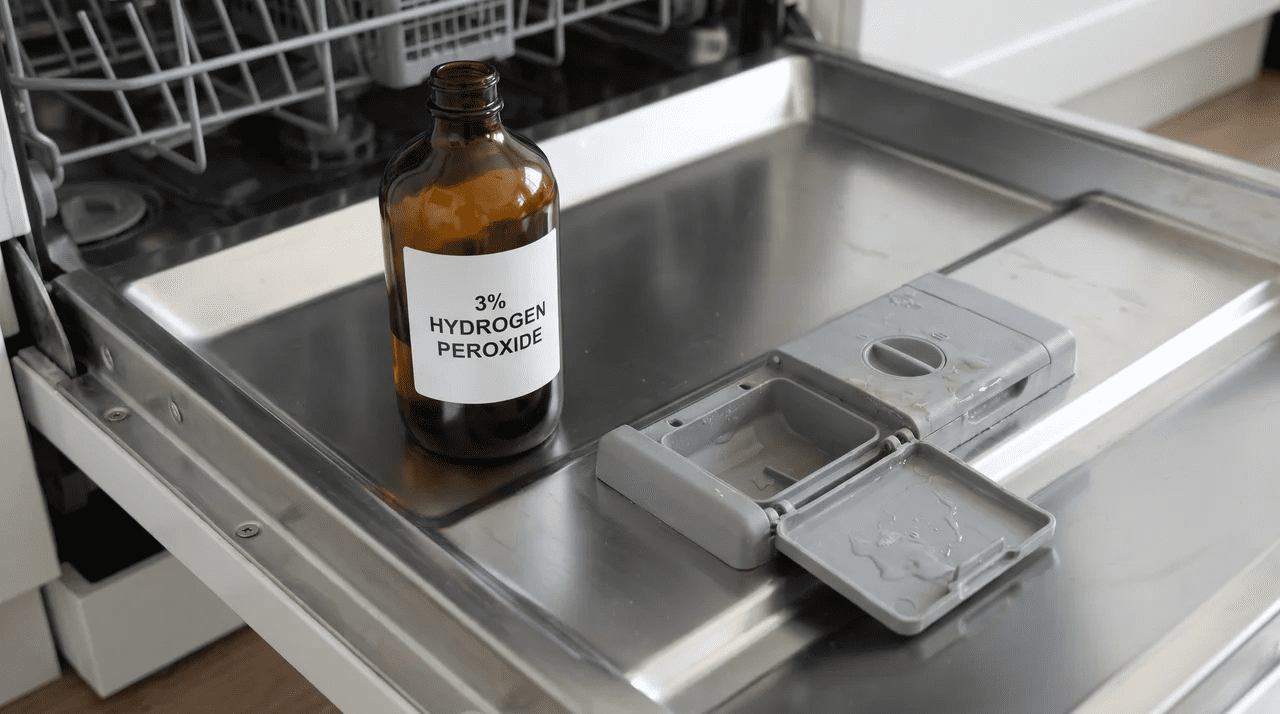
Fill the dispenser directly with undiluted 3% hydrogen peroxide, the standard pharmacy version. You don’t need to mix or dilute anything.
Don’t use a higher concentration. The 3% level is exactly right for rinse aid use, and anything stronger adds no benefit.
Hydrogen peroxide lifts detergent residue and soap film, and disinfects the dishwasher interior well. In soft water areas, you’ll get clean, residue-free results.
In hard water areas, it won’t break down bonded mineral deposits the way citric acid does. I’d reach for it when film or odor is the issue. That’s where it earns its place.
What to Avoid So Your DIY Rinse Aid Actually Works
DIY rinse aid works when applied correctly. Most of the failures I’ve seen trace back to one of three specific mistakes.
Don’t mix homemade formula with leftover commercial rinse aid. Commercial formulas contain synthetic surfactants, the active agents that help water spread and lift residue. They interact unpredictably with acid-based homemade formulas inside the dispenser. You end up with a residue neither formula would create on its own. Let the dispenser run completely empty before switching.
Don’t use cleaning vinegar instead of standard white vinegar. They look identical on the shelf. The difference is acidity: standard white vinegar runs 5%, while cleaning vinegar runs 6–10%. That higher concentration gradually degrades the rubber door seals and gaskets with repeated exposure. Standard white vinegar at 5% doesn’t have that effect.
If you’re in a hard water area, use the built-in dispenser, not the glass-on-rack method. The dispenser holds the formula through the full wash and releases it only at the final rinse. From the glass, vinegar spreads across every stage of the cycle. By the time it reaches the final rinse, the concentration is too diluted to do much for mineral deposits.
Get those three things right and the formula does the rest.
Wrapping Up
Your water type is the first decision. In soft water, white vinegar is the simplest option. No prep, no waiting. Just fill and go.
In hard water, citric acid is worth the extra five minutes. It’s the only formula that clears what’s actually bonded to your glass, not just how water runs off it.
Hydrogen peroxide sits in its own category. It’s built for film and odor, not mineral spotting.
Two things to get right before you start. First, drain the dispenser completely before switching from a commercial formula. Second, use standard white vinegar, not cleaning vinegar.
Those two details account for most of the failures I’ve seen from people who did everything else right.
When you match the right formula to your water type, the difference shows up in the first load.
Frequently Asked Questions
What can you use instead of rinse aid in a dishwasher?
Distilled white vinegar, citric acid dissolved in hot water, and undiluted 3% hydrogen peroxide all work as replacements. Vinegar and citric acid break down deposits through acidity. Hydrogen peroxide lifts film through oxidation. In hard water areas, citric acid is the strongest option for clearing mineral spotting on glass.
Is it okay to use vinegar instead of rinse aid in the dishwasher?
Yes. Distilled white vinegar is safe for most dishwashers when used in the dispenser or the glass-on-rack method. Use standard 5% acidity only, not cleaning vinegar. Cleaning vinegar runs 6–10% acidity and gradually degrades rubber door seals with repeated use. Standard white vinegar at 5% doesn’t have that effect.
Can you use hydrogen peroxide as a dishwasher rinse aid?
Yes. Fill the dispenser with undiluted 3% hydrogen peroxide, the standard pharmacy version. It lifts film and disinfects the interior effectively. In hard water areas, it won’t dissolve bonded mineral deposits the way citric acid does. If cloudy glassware is your main problem, citric acid is the better choice.
How much citric acid do I use as a rinse aid?
Dissolve 2 tablespoons of citric acid in ¼ cup of boiling water. Stir until fully dissolved, then let it cool completely before pouring it into the dispenser. Don’t skip the cooling step. Hot liquid can warp the plastic dispenser compartment. Add 5–10 drops of lemon essential oil before cooling if you want a light scent.