
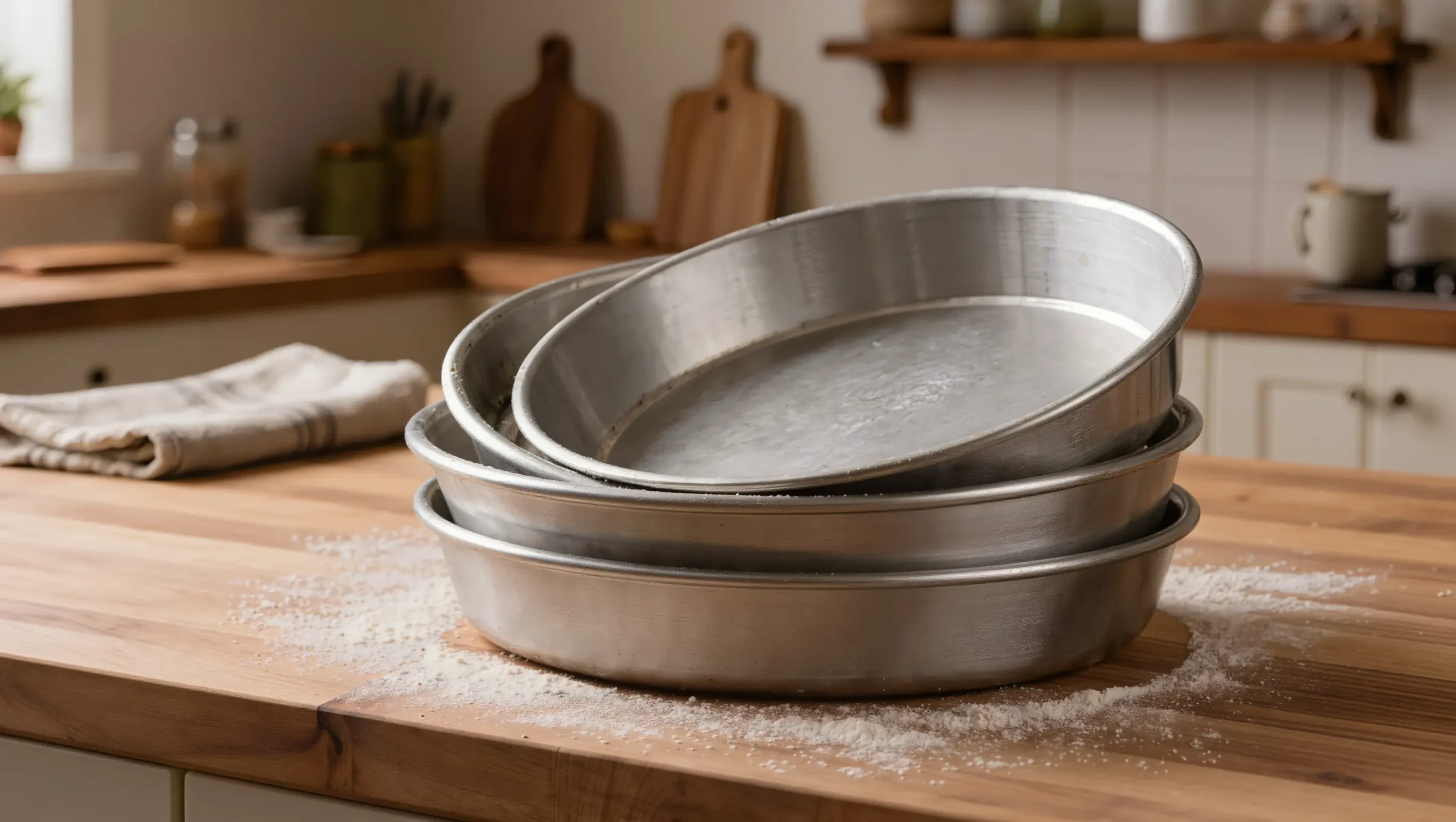
The best aluminum baking sheet for most kitchens is the Nordic Ware Naturals Half Sheet. It bakes evenly, shrugs off warping, and costs around $20.
Here’s what I’d tell you before you buy anything. Most people don’t need a better pan. They bought the wrong gauge, then blamed the cookies.
I’ve baked on bare aluminum half sheets for years, in a professional kitchen and at home.
The pans that survive aren’t the prettiest ones. They’re the heaviest, and they get treated right.
Best Aluminum Baking Sheets at a Glance
Every pan below is bare or near-bare aluminum, chosen for one specific job.
Start with the category that matches what you actually cook.
| Pick | Best For | The Verdict |
|---|---|---|
| Nordic Ware Naturals Half Sheet | Best overall | The default. Buy this if you buy one. |
| Restaurant-supply bare aluminum (Winco) | Best budget | A few dollars, no logo, lighter gauge. |
| Vollrath Wear-Ever 5314 | Best commercial-grade | NSF restaurant pan. Outlives most kitchens. |
| Made In Sheet Pan | Best for roasting | 3004 alloy, rolled rim traps juices. |
| Fat Daddio’s Natural Half Sheet | Best warp resistance | 18-gauge, won’t warp, rolled rim. |
| USA Pan Half Sheet | Best aluminized steel | Coated, not bare. Read the note. |
| Nordic Ware bare-aluminum sheet | Best cookie browning | Even bottoms, no dark edges. |
| Nordic Ware Quarter Sheet | Best for small kitchens | Fits tight ovens and small batches. |
| Nordic Ware Bigger Sheet | Best oversized | Big batches and full roasts. |
| Nordic Ware Naturals 2-Pack | Best value | Two workhorses, less per pan. |
| Fat Daddio’s ProSeries (Anodized) | Best for acidic foods | Non-reactive surface, browns differently. |
If you scanned that and grabbed the first one, good. The rest of this guide is for the people who’ve bought the wrong pan twice.
How These Baking Aluminum Sheets Were Tested?
I test pans the way you actually use them, not in a lab.
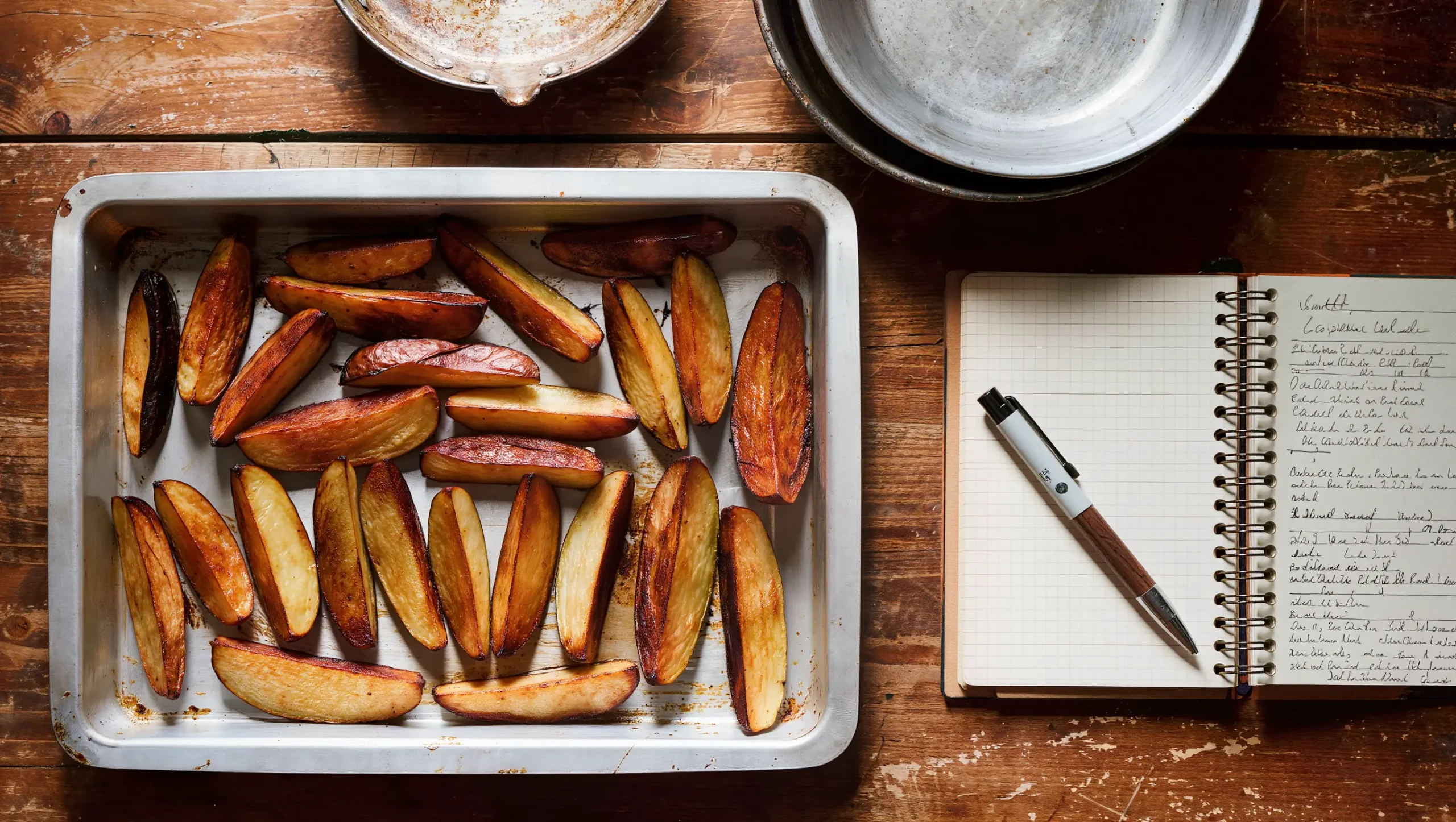
That means cookies, sheet-pan dinners, and roasted vegetables in a real home oven. I track how each pan behaves over months, not just one bake. I keep it all in a handwritten kitchen journal, older than some of these brands.
I mark a confidence level on everything. Tested once means tested once. A pan I’ve run for a year earns more trust than one I baked twice.
There’s a reason I’m this careful. In 2020, I gave a glowing recommendation to a brand that quietly changed its production. I published a correction and pulled the pick. Then I built an 18-month retesting policy on the spot. That policy sits behind every name on this list.
The Best Aluminum Baking Sheets
These are ranked by how useful each pan is to a normal kitchen, not by price.
I tested far more than eleven. The ones that didn’t make the cut went into a drawer of tools I won’t recommend. They stayed there for a reason.
Nordic Ware Naturals Half Sheet
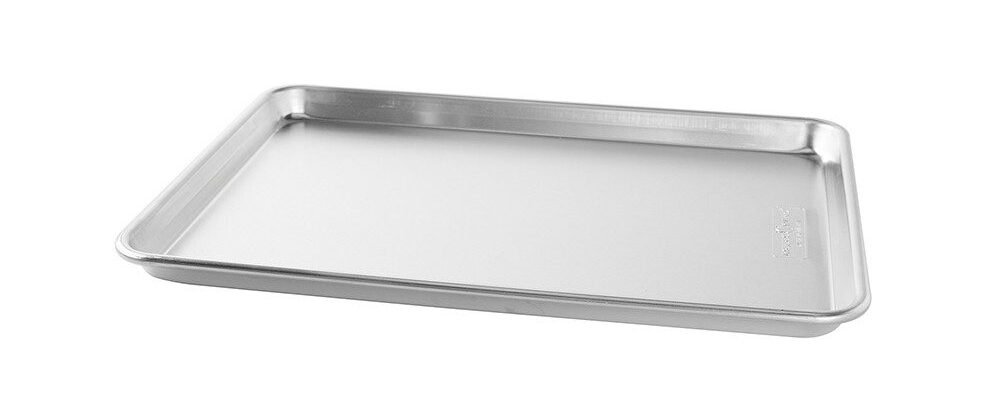
This is the pan to buy if you only buy one.
It’s bare aluminum with a steel rod rolled into the rim. That rim is what keeps the pan flat when the oven gets hot. The aluminum spreads heat evenly, so cookies brown the same on the left as on the right.
I’ve used mine for years, and it has never warped on me once. The surface discolors over time. That’s normal, and I’ll explain why it doesn’t matter later.
A Restaurant-Supply Bare-Aluminum Pan
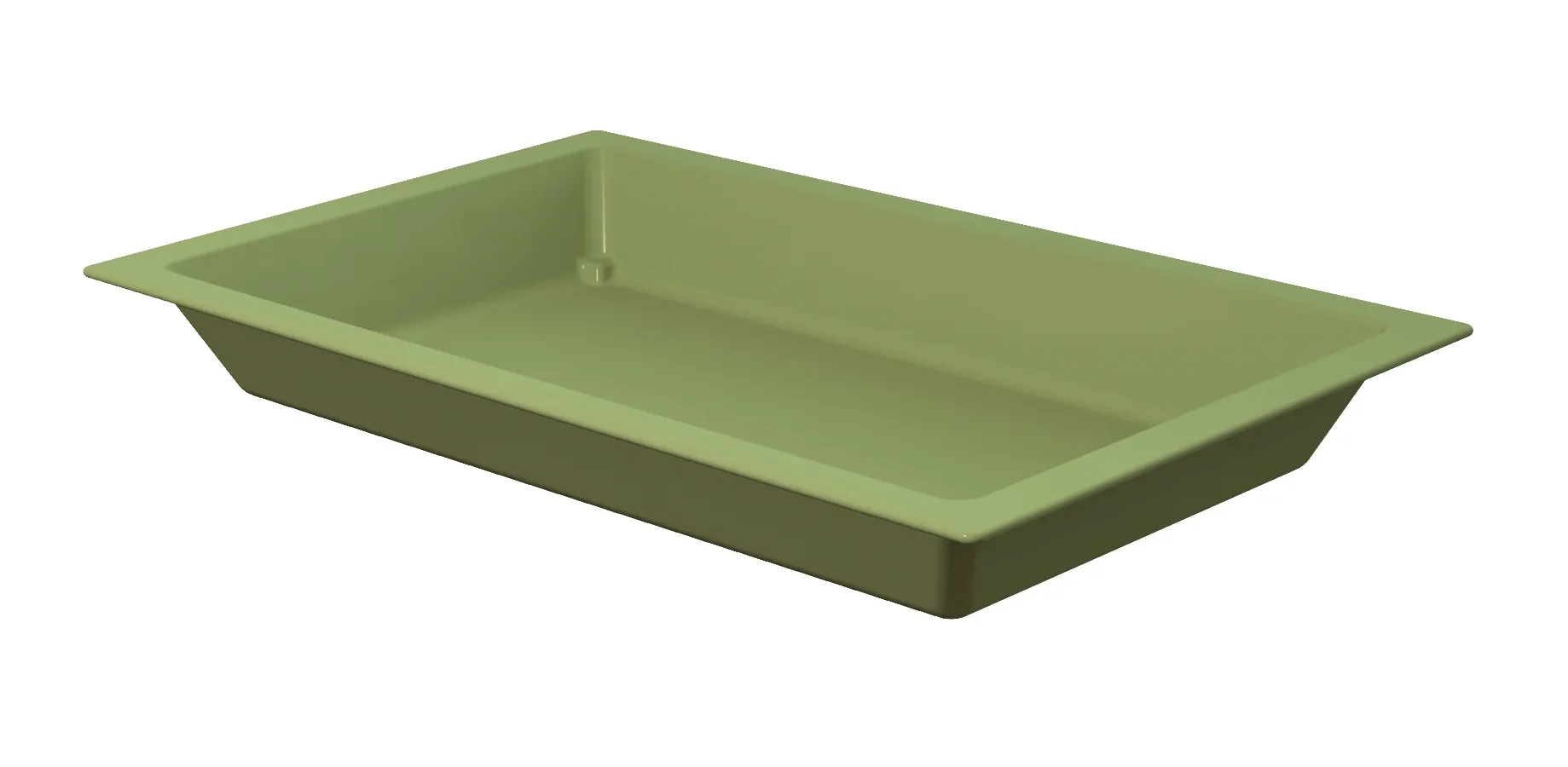
The cheapest honest pan is the one with no brand on it.
Restaurant-supply shops sell plain, bare-aluminum half sheets for a few dollars each. Brands like Winco and Update International make them.
The gauge runs lighter than a Nordic Ware, so handle them gently. For a starter pan or a second tray, they’re hard to beat on price.
Vollrath Wear-Ever 5314
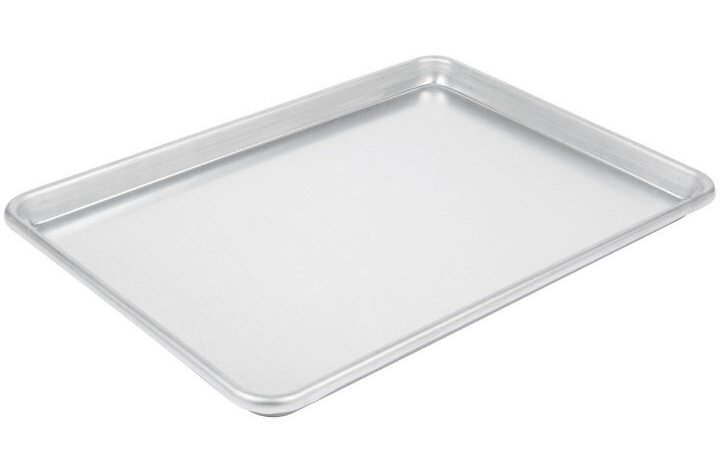
Buy this if you want a pan that outlives your kitchen.
This is a real restaurant pan. It’s NSF-certified, which means it’s built to a commercial durability standard. It’s made from thick 13-gauge aluminum, the heaviest pan on this list.
One trade-off is honest: it looks industrial, and it isn’t trying to be pretty.
Made In Sheet Pan
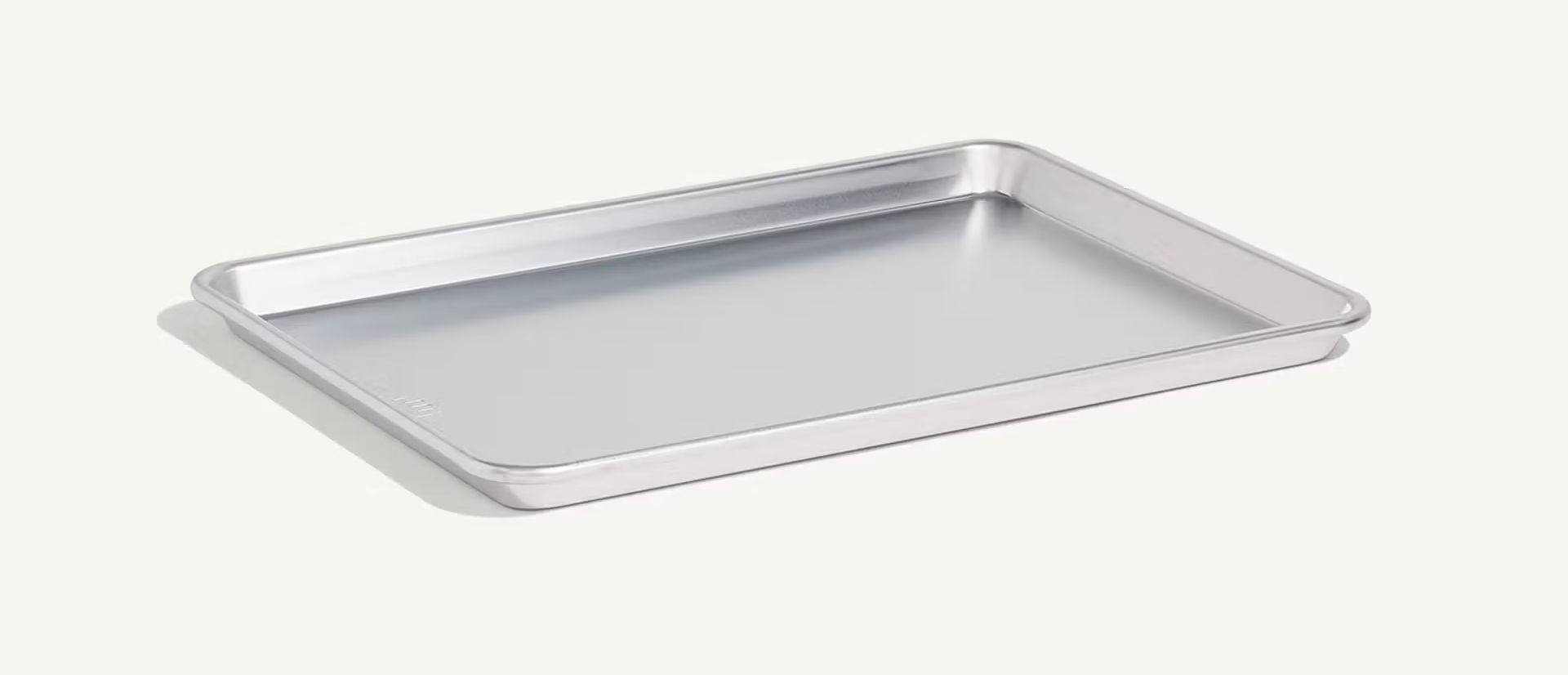
The rolled rim is the reason to pick this one.
Made In builds this from 3004 aluminum, a heavier alloy, with a fully enclosed rim. That rim traps fat and juices instead of letting them run to the oven floor.
For a tray of chicken thighs or roasted vegetables, that matters.
Fat Daddio’s Natural Half Sheet
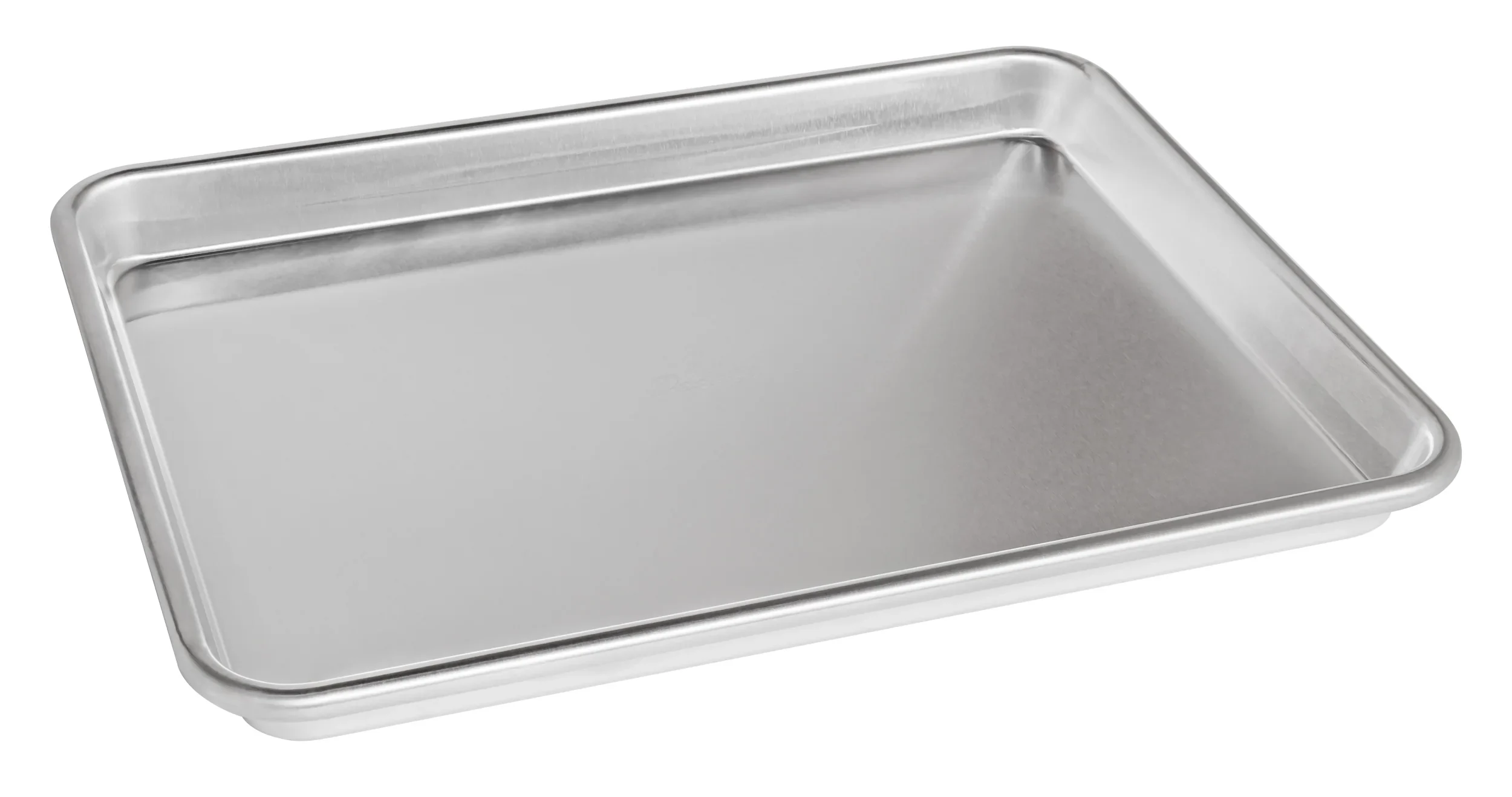
If your pans keep buckling in the oven, go heavier, and this is heavier.
It’s 18-gauge bare aluminum with a wire-reinforced rolled rim. The thicker the aluminum, the harder it is to twist. Bakeries run these all day because they stay flat through high heat.
A flat pan means your batter sits level and bakes level.
USA Pan Half Sheet
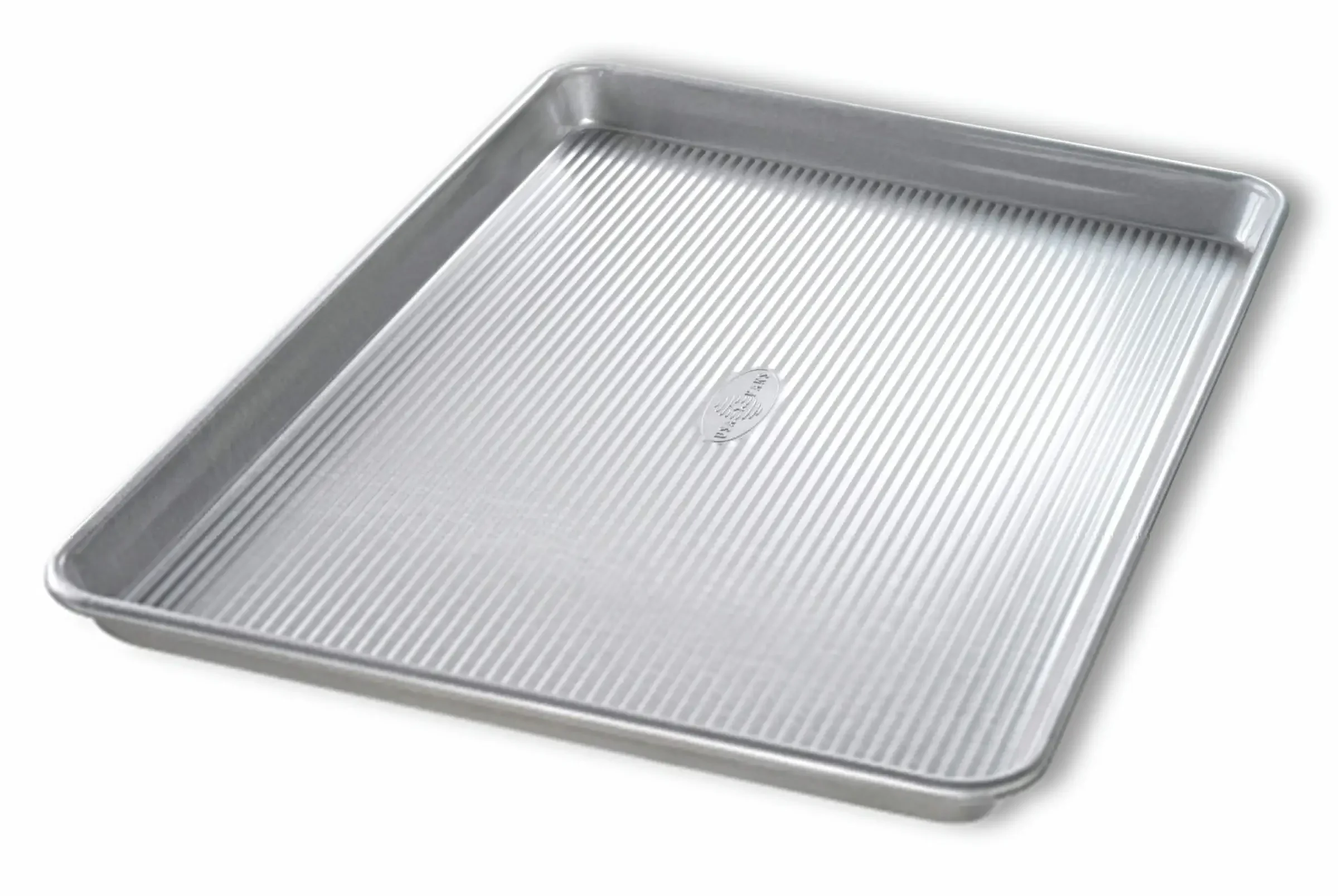
This one isn’t bare aluminum, so know what you’re getting.
Aluminized steel is a steel pan coated in aluminum. It’s steel for strength, with aluminum on the surface for heat.
It browns a touch slower than pure aluminum. The wavy, ridged surface helps air move, though it’s harder to scrub clean.
Nordic Ware Bare-Aluminum Sheet
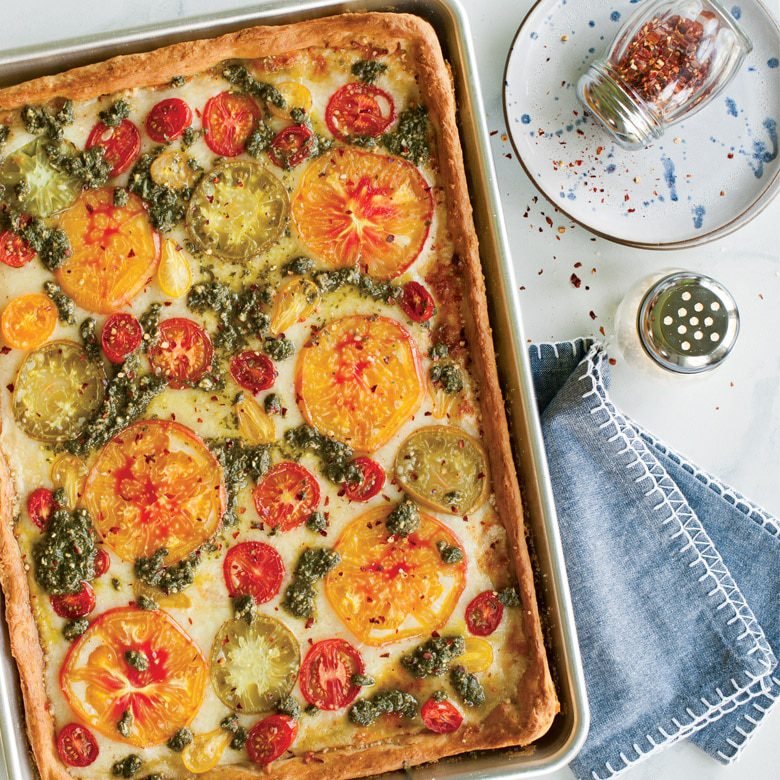
For even, gentle browning on the bottom of a cookie, bare aluminum wins.
Pure aluminum heats fast and evenly. Your cookies don’t get dark edges and pale centers.
If baking is most of what you do, this is the surface you want under the dough.
Nordic Ware Quarter Sheet
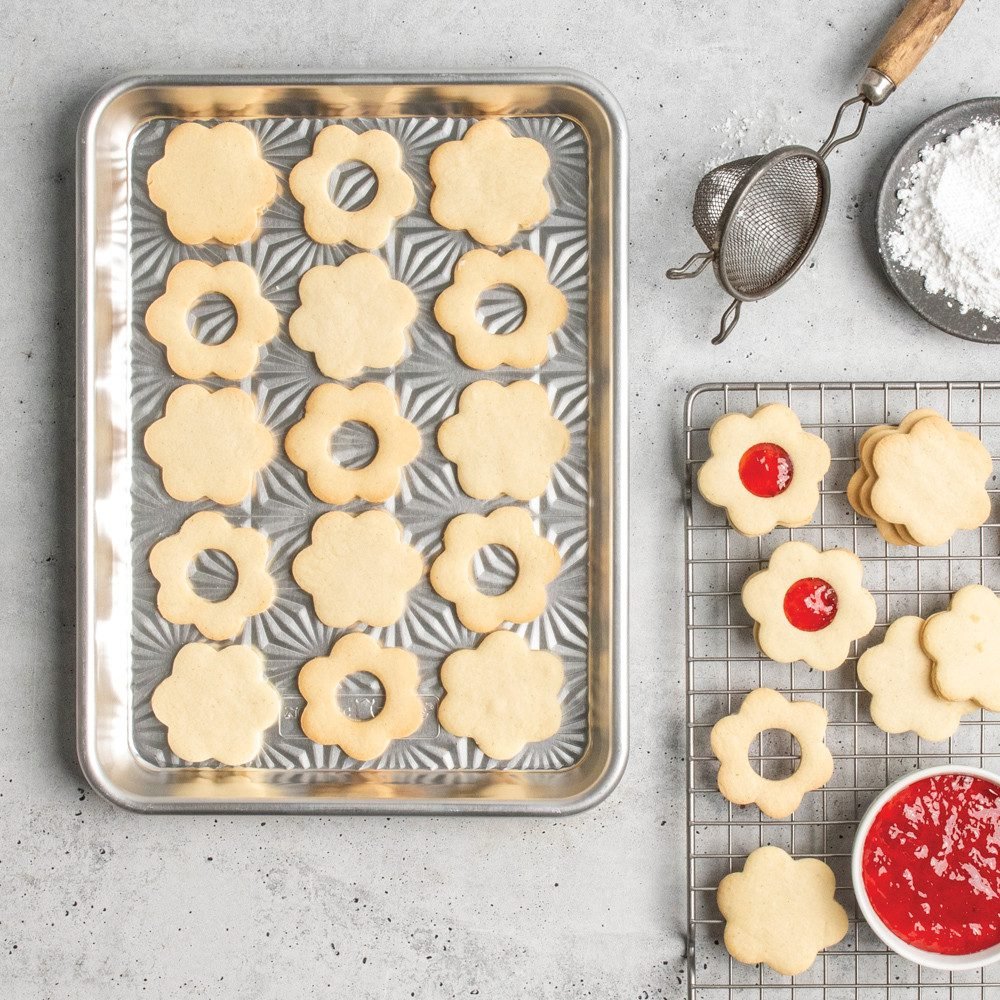
A quarter sheet is half the size of a standard half sheet.
It fits apartment ovens and toaster ovens. It’s right for one or two servings, or toasting nuts without heating a giant pan. I own three.
They get used more than I expected.
Nordic Ware Bigger Sheet
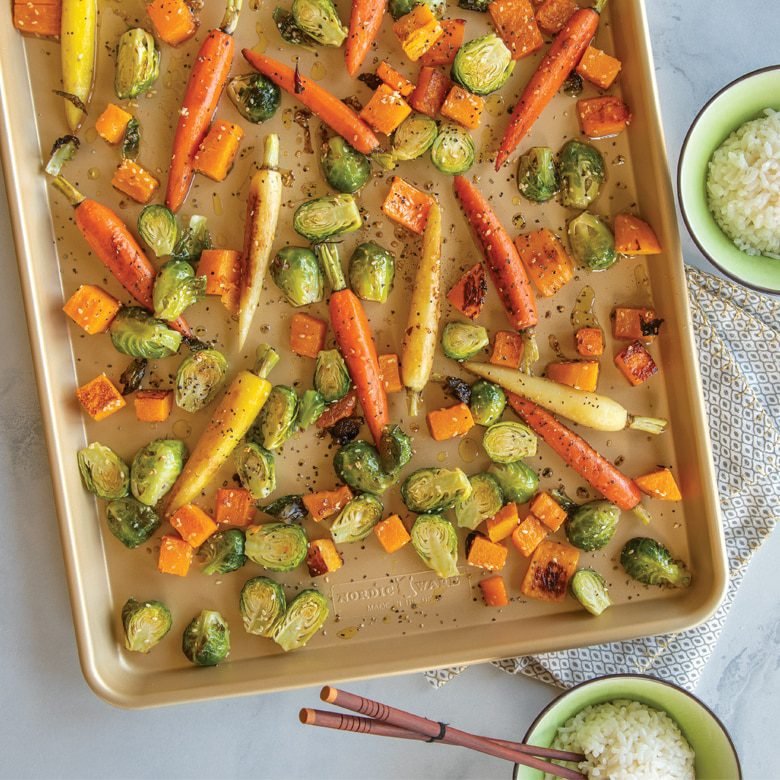
When a half sheet isn’t enough, this is the next size up.
This one’s built for big batches and full roasts. Check your oven width before you buy.
A pan that doesn’t fit is just an expensive lesson.
Nordic Ware Naturals 2-Pack
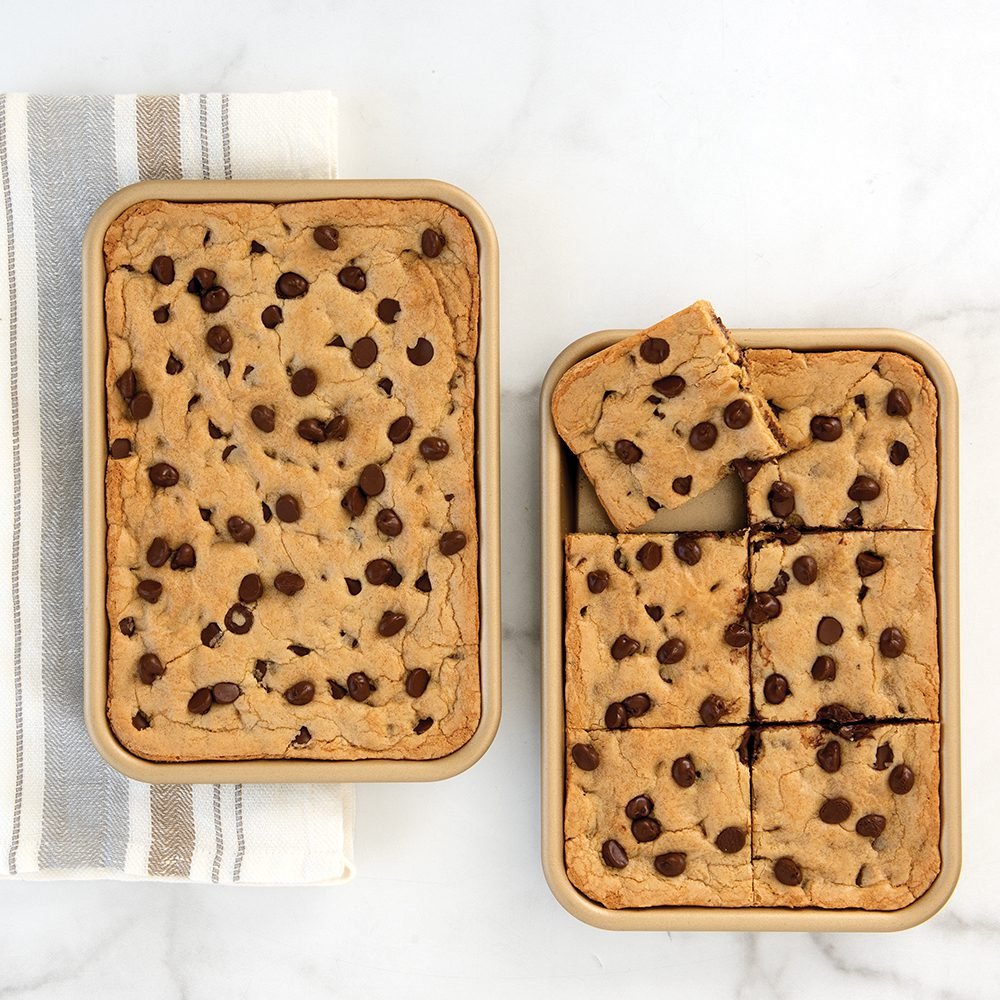
Two of the best overall pans, for less per pan.
Most real cooking uses two sheets at once. One for the protein, one for the vegetables.
Buying the pair is the cheapest way into a kitchen that actually works.
Fat Daddio’s ProSeries Anodized Half Sheet
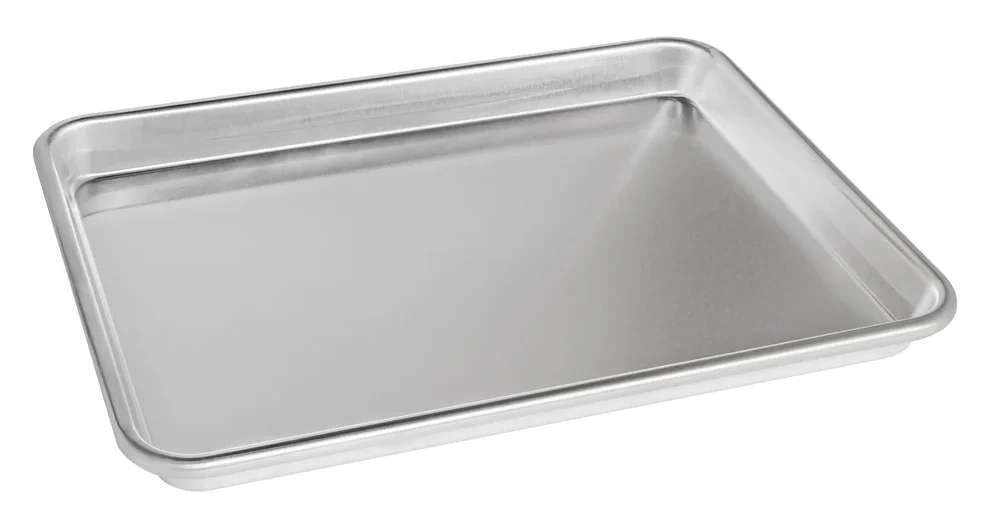
If you roast lemons or cook tomatoes on a sheet pan, get anodized.
Anodized aluminum has a hardened surface that doesn’t react with acid. Bare aluminum can pit and dull when acidic food sits on it hot. This pan skips that problem.
It’s the same Fat Daddio’s quality as the natural pan above, with a darker, tougher surface that browns a little differently.
What to Look For in an Aluminum Baking Sheet
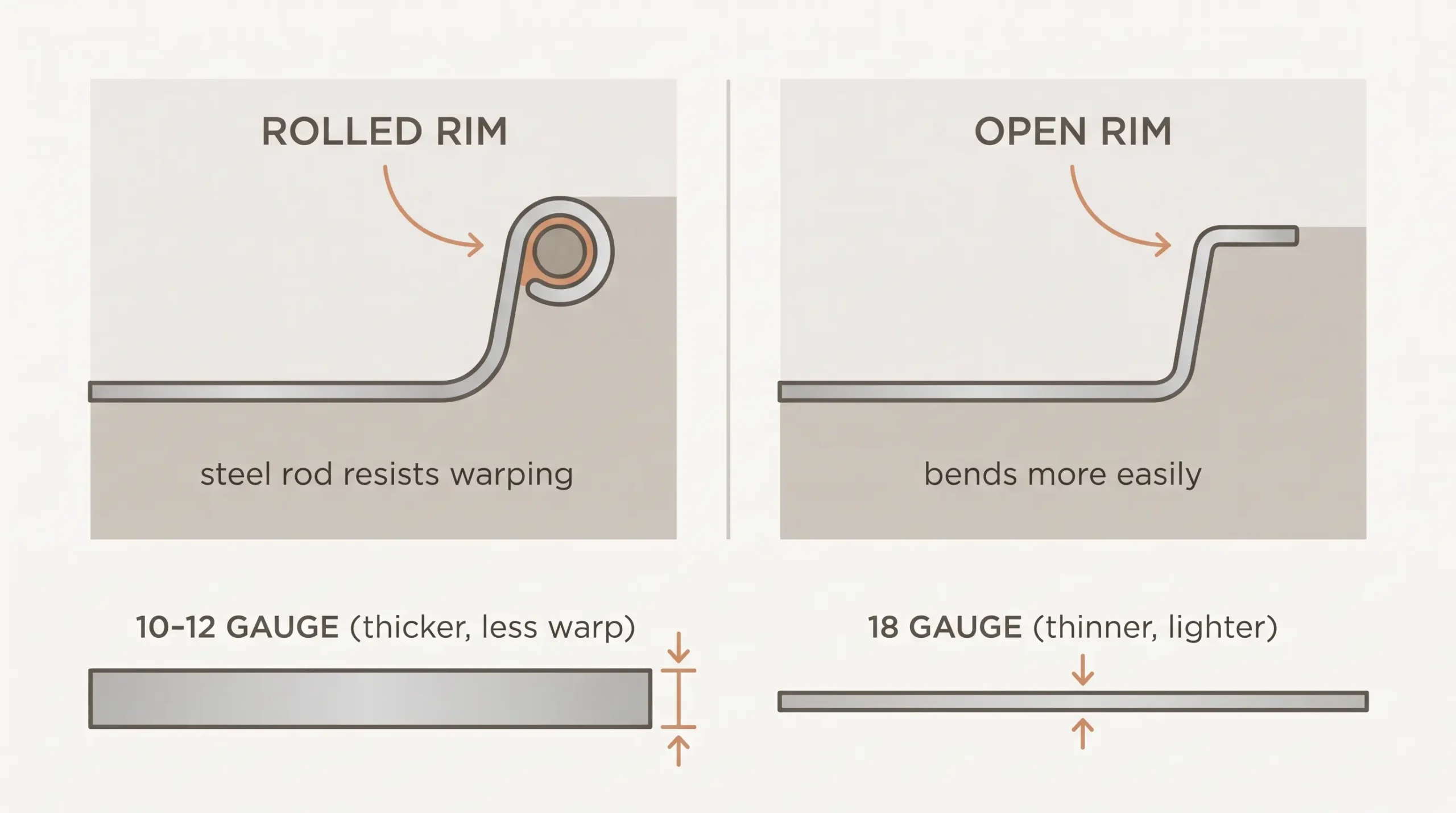
Four things decide whether a pan lasts.
I’ve learned to ignore most of the marketing. Get these right, and the brand barely matters.
Gauge and Thickness
The gauge measures how thick the metal is, and lower numbers mean thicker.
Heavy commercial pans run around 10 to 12 gauge. A thicker pan resists warping and holds heat steadily. A thin one buckles and gives you hot spots. If you remember one spec, remember this one.
Rolled Rim vs Open Rim
A rolled rim has a steel rod sealed inside the edge.
That rod is what stops the pan from twisting under heat. It also gives you something to grip with a mitt. An open, raw edge bends more easily and can feel sharp.
Bare Aluminum vs Aluminized Steel
Bare aluminum browns faster and more evenly; aluminized steel is tougher and browns slower.
Bare aluminum is one metal, exposed, and it’s the industry standard for a reason. Aluminized steel is steel wrapped in aluminum. Neither rusts.
The choice comes down to whether you want faster browning or maximum durability.
Size and Fit
Measure your oven before you fall in love with a pan.
A standard half sheet is about 18 by 13 inches. A quarter sheet is half that. An oversized sheet needs a wide oven. Pull out the tape measure first.
Why Aluminum Pans Warp (and How to Stop It)
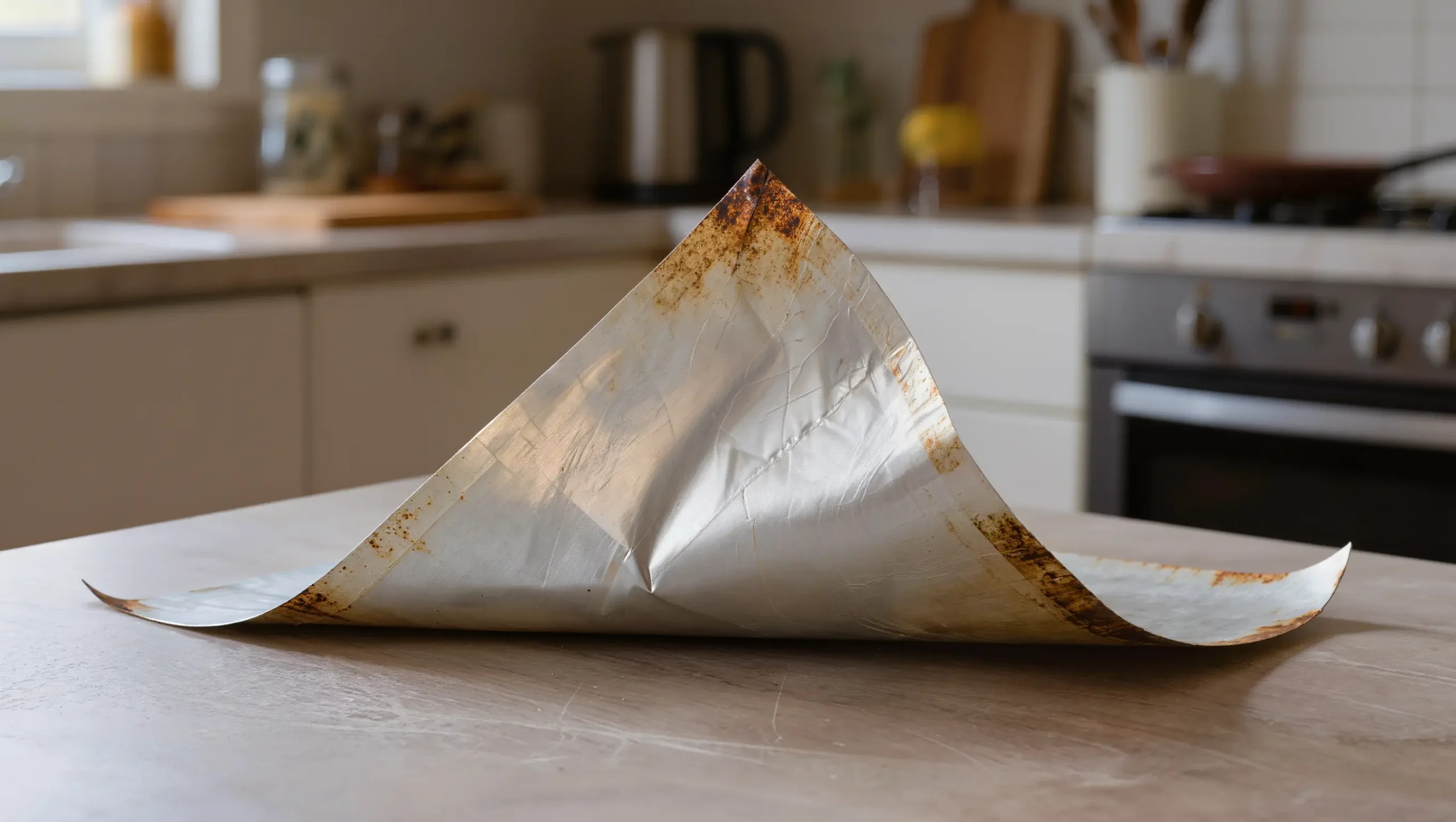
Warping is almost never a defect.
It’s thermal shock. That’s what happens when a pan heats or cools too fast.
The surface expands faster than the core. The pan twists. You hear it as a loud pop in the oven.
I watched this happen daily in a busy kitchen. A pan would come out under the broiler, then hit a cold, wet sink, and buckle on the spot. The pan wasn’t cheap. The handling was rough.
A few habits keep a pan flat for years. None of them cost anything.
- Thin pans and the broiler don’t mix. Skip it, or accept the pop.
- Let a hot pan cool before it touches cold water.
- Never stack a screaming-hot pan onto a cold one.
- Heavier gauge buys you margin if you roast at high heat a lot.
Those four habits prevent most warping you’ll ever see. Buy heavier. That’s most of the fix.
One honest note. Even a great pan can give a small temporary pop as it heats, then settle flat as it cools. Whether that bothers you depends on your oven and your patience.
How to Clean Aluminum Baking Sheets Without Ruining Them
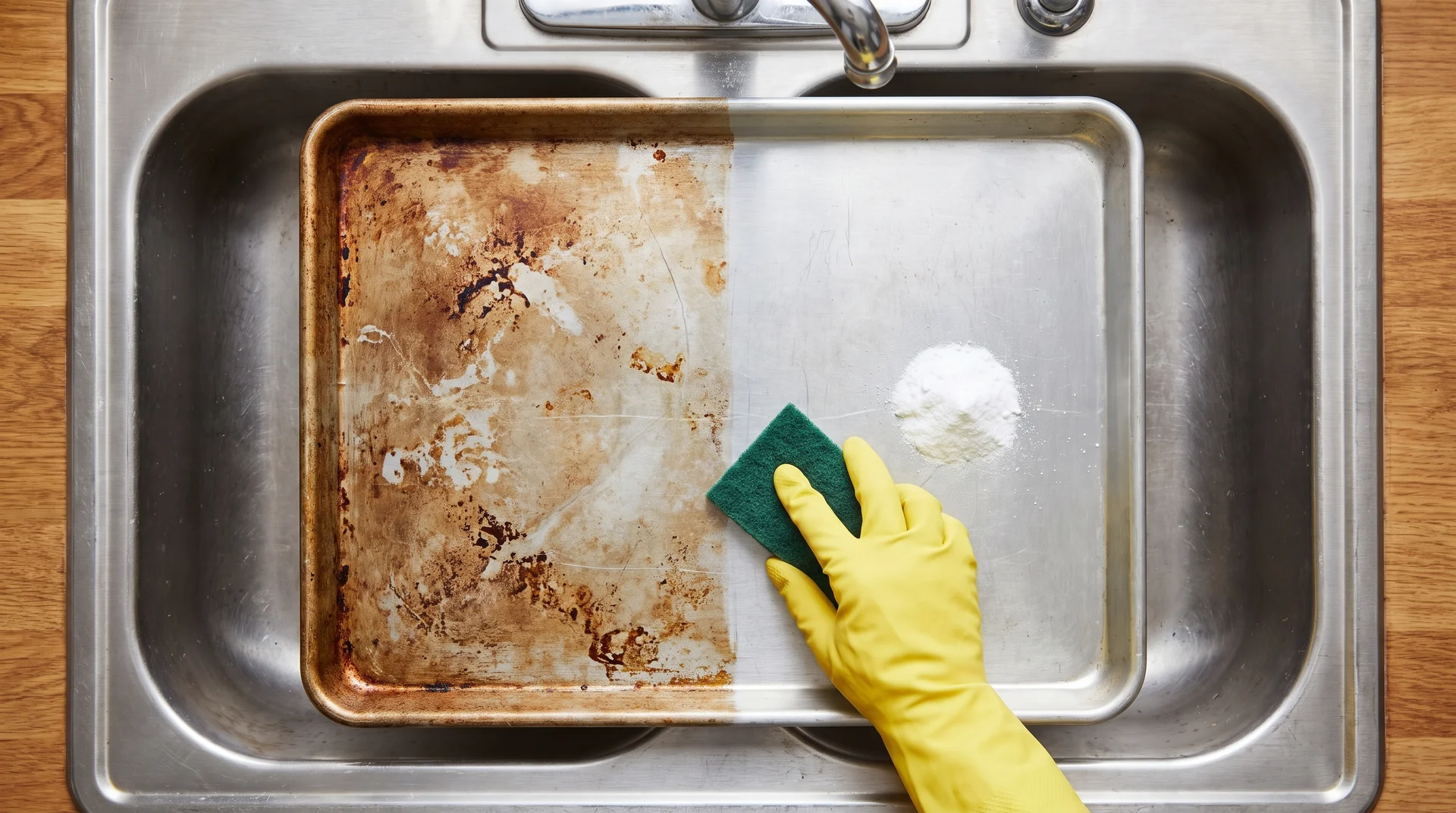
That brown discoloration on your old pan isn’t rust.
Aluminum can’t rust. What you’re seeing is oxidation, a harmless surface change from heat and oil.
It looks worse than it is. The discoloration doesn’t touch your food or signal a dying pan.
People in cooking forums ask about this constantly, usually calling it rust and panicking. It’s the single most common confusion about these pans. So let me be clear about the method, because the wrong cleaner makes it worse.
Wash bare aluminum by hand. Keep it out of the dishwasher, where the harsh detergent causes oxidation and discoloration.
For the brown haze, use an acidic cleaner, not an alkaline one:
- Sprinkle Bar Keepers Friend on a damp pan.
- Scrub gently with a non-scratch pad.
- Rinse well and dry right away.
If you skip the drying step, water sitting on bare aluminum leaves new spots. Cream of tartar or a little vinegar works too. Avoid baking soda on bare aluminum, since it’s alkaline and can darken the surface further.
Are Aluminum Baking Sheets Safe?
Yes, bare aluminum baking sheets are safe for normal baking and roasting.
Cooking on aluminum transfers only a tiny amount into food. Your body handles trace amounts routinely. A pan adds far less aluminum to your day than a single antacid tablet does.
Most “non-toxic” worry online is really about coatings, not the bare metal.
One reasonable caution lives with acidic foods. A tomato sauce or lemon slices can pull a bit more aluminum during long, hot contact. They can also pit the surface over time. If acidic cooking is your norm, the anodized pan higher up this list handles it.
One real safety note, and it’s about where you buy.
In 2025, the FDA warned about cheap imported alloy pans that can leach lead into food. A name-brand bare-aluminum baking sheet isn’t the worry. A no-name import for a couple of dollars might be.
Aluminum vs Stainless vs Nonstick
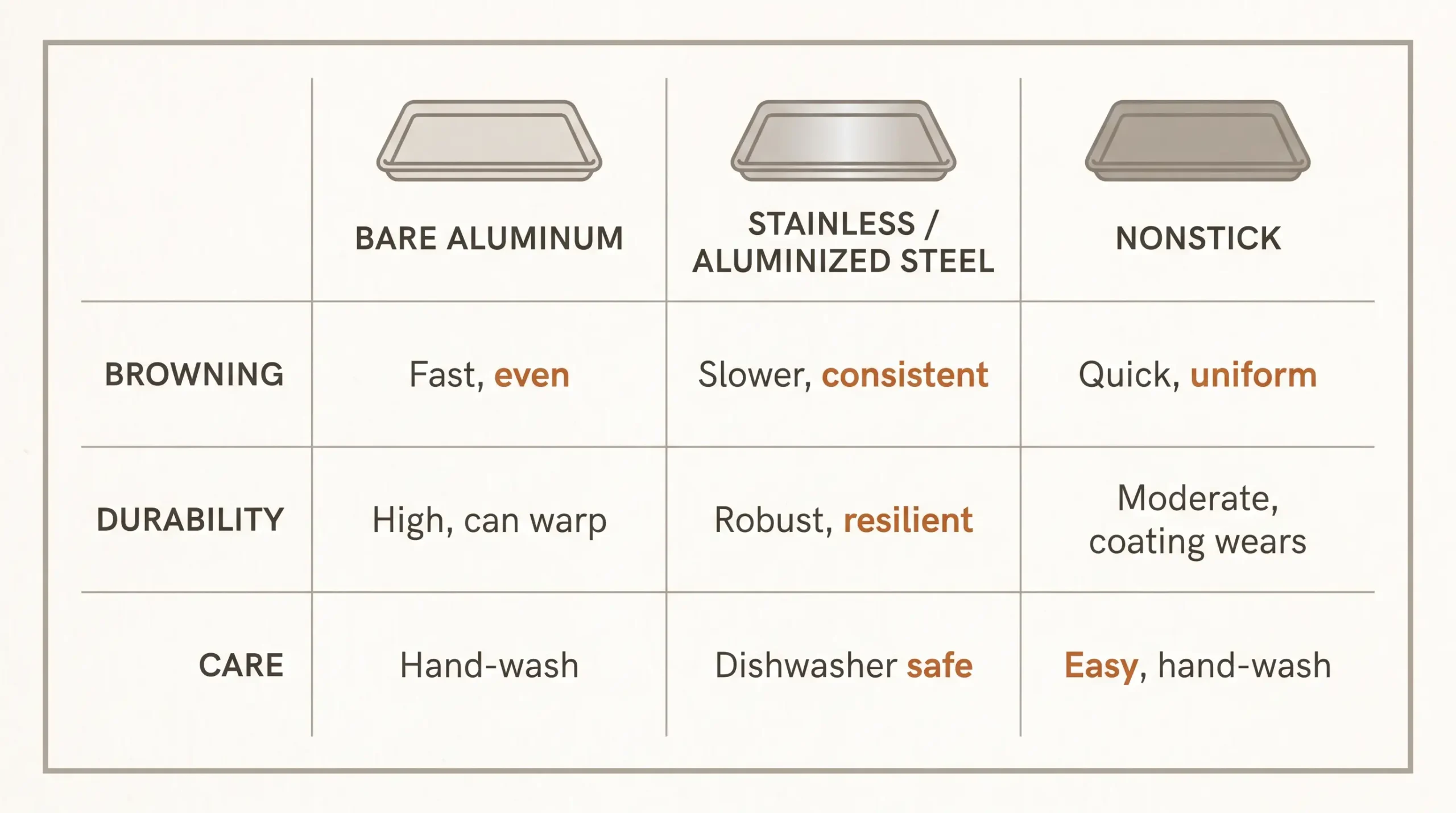
Each material trades one strength for another.
The table sorts them by what most people care about: browning, durability, and care.
| Material | Browning | Durability | Care |
|---|---|---|---|
| Bare aluminum | Fast, very even | High, can warp if shocked | Hand-washing will discolor |
| Stainless / aluminized steel | Slower, even | Very high | Often dishwasher-safe |
| Nonstick | Uneven, often dark | Lower, coating wears | Easy, but the coating is fragile |
For pure baking performance, bare aluminum is my pick, and it isn’t close. If you want easy release and don’t mind replacing pans, nonstick has its place.
That nonstick decision is a different article with different criteria. If a flaking coating is what sent you here, start with our guide to aluminum pans vs nonstick pans before you spend a dollar.
Read:Choosing Between Aluminum or Nonstick Pans?
The Bottom Line
Buy one heavy, bare-aluminum half sheet.
Keep it out of the dishwasher. Stop running it under cold water while it’s hot.
The Nordic Ware Naturals is the easy default. But remember the thing from the top of this page.
The reader who buys the wrong gauge a third time didn’t have a pan problem. They had an information problem, and now you don’t.