
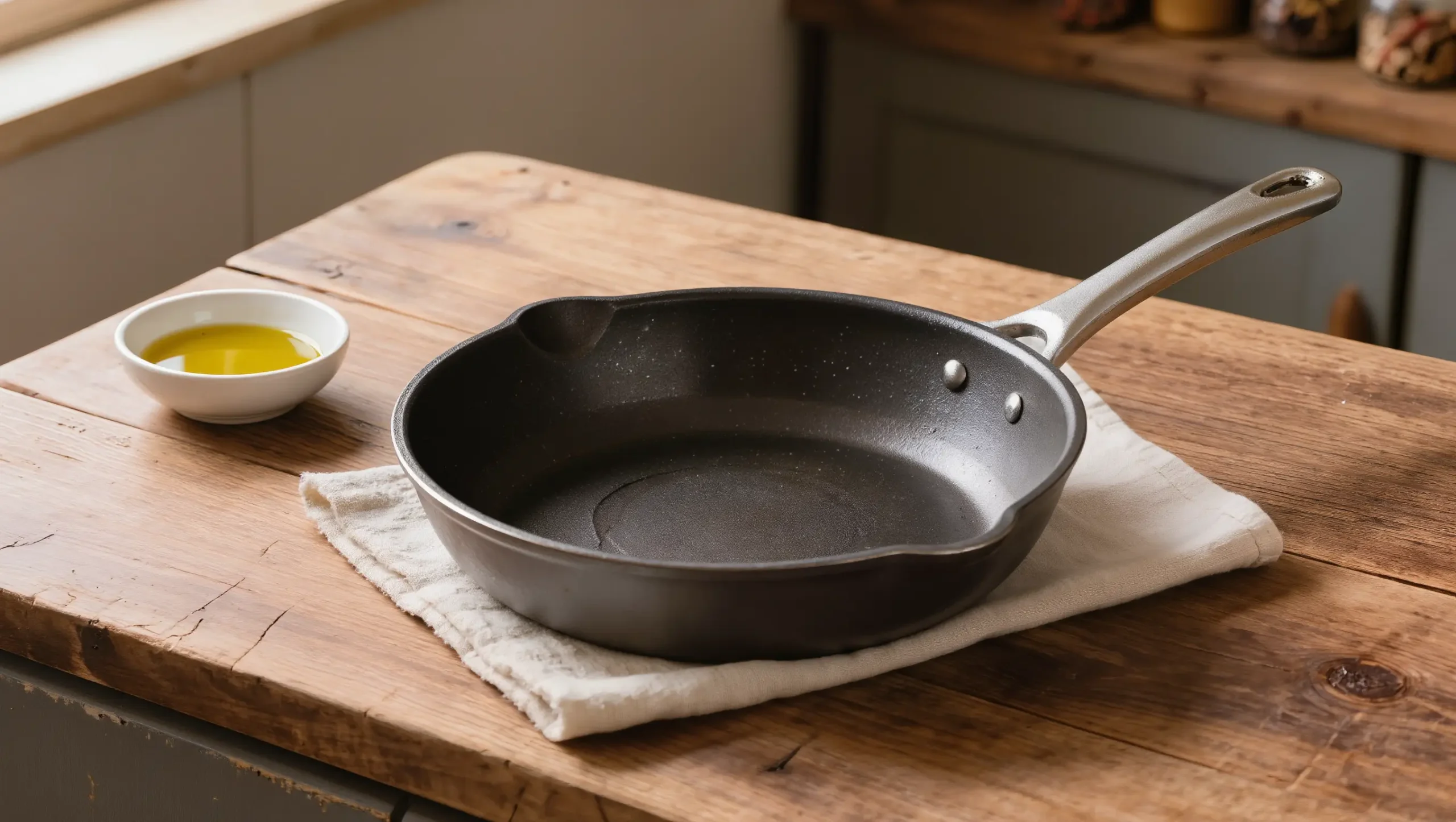
Hard anodized cookware is not a type of nonstick coating.
It’s a type of aluminum, treated to be harder, denser, and non-reactive. Most of what you’ll read about it treats the body of the pan and the cooking surface as the same thing. They’re not.
That confusion produces real mistakes in how people use these pans. Getting the distinction right changes both how you evaluate the purchase and how long the pan lasts.
What Hard Anodized Cookware Actually Is
Hardened anodized cookware is aluminum that has been transformed at the surface level.
The process doesn’t deposit a new material on top. It converts the existing aluminum surface into a different compound. That’s what separates hard anodized from every other aluminum cookware category and from every type of nonstick coating.
The Electrochemical Process in Plain Language
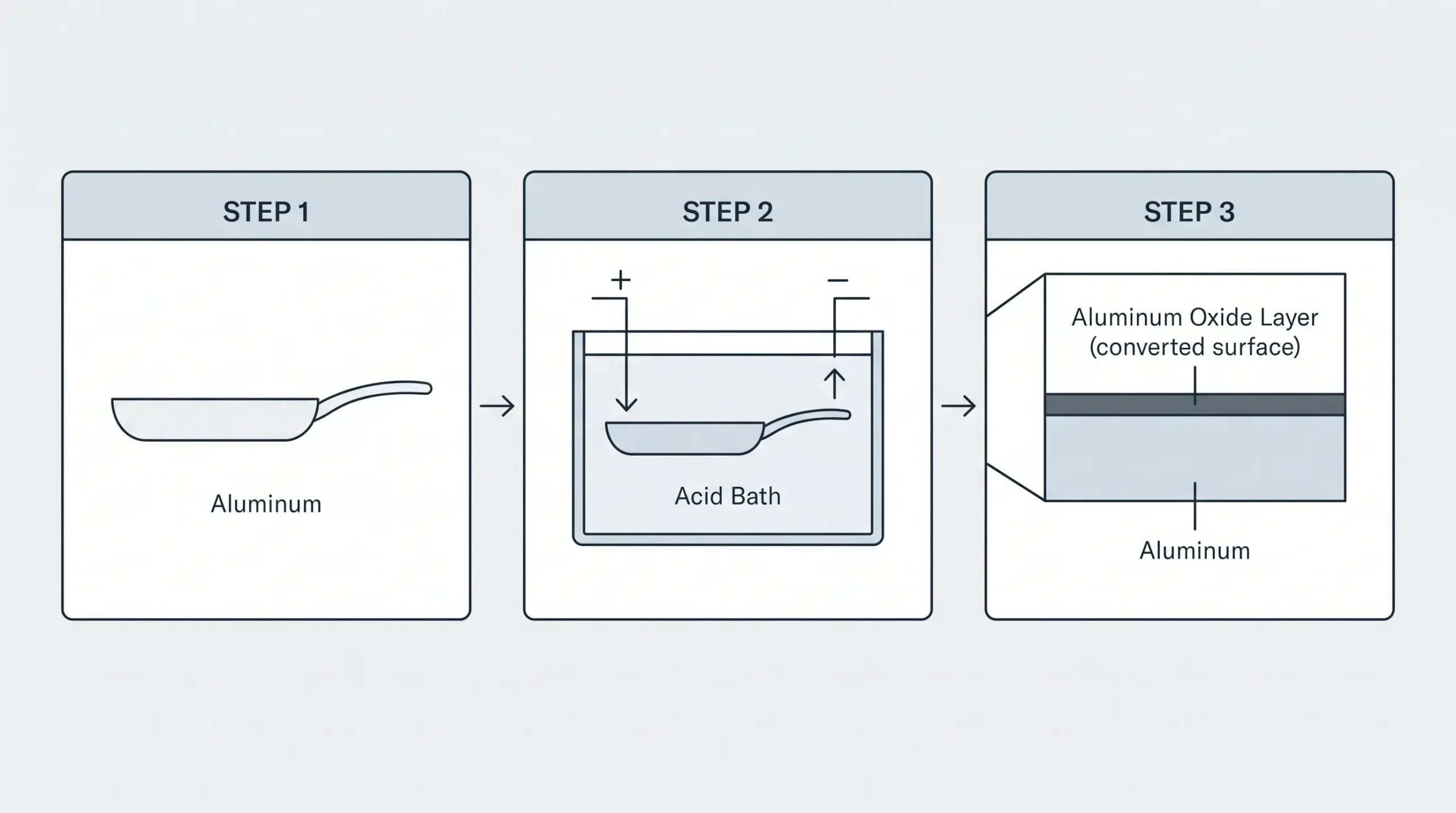
Hard anodizing converts the aluminum surface into a different compound using an acid bath and a controlled electrical current.
Manufacturers submerge the aluminum in an acid solution. A controlled electrical current runs through it.
The current causes oxygen to bond with the aluminum atoms at the surface. That bond forms a dense layer of aluminum oxide.
That layer is not applied to the aluminum. It is the aluminum, converted. This process is called Type III anodizing in manufacturing. It runs at a higher current density and lower temperature than standard anodizing, which is why the resulting oxide layer is so much denser.
Aluminum oxide has three properties that matter for cookware:
- Much harder than the aluminum it formed from
- Non-porous, so food and liquids can’t penetrate the surface the way they can with bare metal
- Chemically stable and non-reactive with food at any temperature a home kitchen reaches
Marketing for this category often claims hard anodized aluminum is harder than stainless steel on the Vickers hardness scale.
That claim is roughly right for the consumer-grade stainless steel used in most kitchen applications. It reflects a real material property, not a brand-generated descriptor.
Hard Anodized vs. Regular Aluminum: The Actual Difference
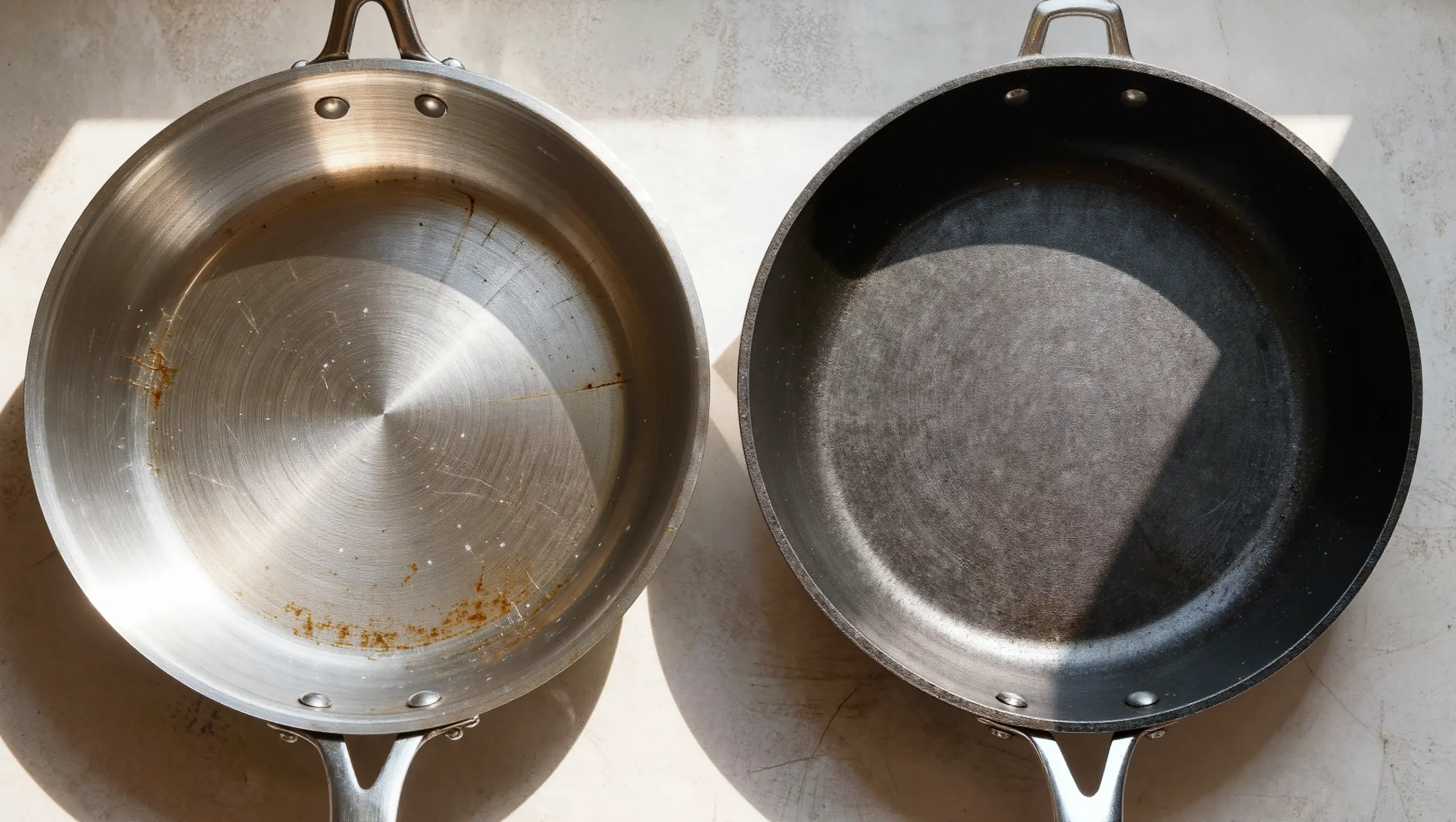
Two things change when aluminum is hard anodized: its hardness and its chemical reactivity with food.
Regular aluminum reacts with acidic ingredients. Tomatoes, citrus, and wine-based sauces pull trace amounts of metal into the food on extended contact. The flavor can turn metallic.
The pan may also discolor with use.
Hardened anodized aluminum doesn’t react. The aluminum oxide surface is chemically stable at every cooking temperature. You can cook tomato sauce or deglaze with wine without concern about metal transfer.
The hardness difference shows up in how the surface holds up over time. A soft sponge leaves bare aluminum showing marks within weeks of regular use. Hard anodized holds its surface texture much longer under the same conditions.
That durability applies to the body of the pan. The cooking surface is a different story.
The Coating Question
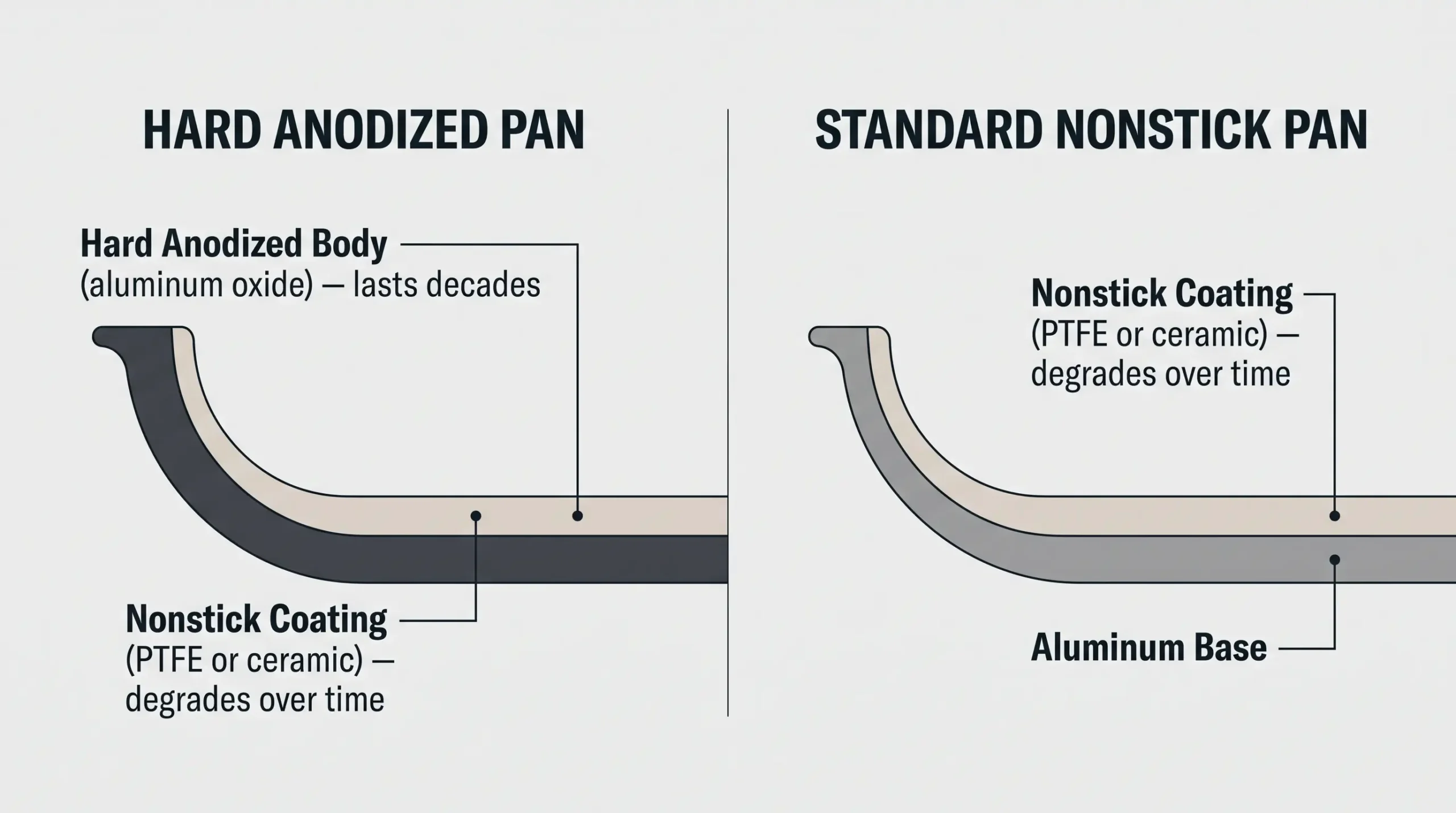
Most hard-anodized pans sold at retail have two components, not one.
The distinction matters more in practice than the electrochemical process does. Missing it affects every maintenance decision you’ll make. The next question is where those differences show up at the stove.
The Body and the Interior
The hard-anodized exterior and the nonstick interior are two different materials with two different lifespans.
Pick up a standard hard-anodized skillet at any kitchen retailer. The dark gray exterior is the hard-anodized aluminum. The interior cooking surface is a PTFE or ceramic nonstick coating applied after the anodizing step is complete.
The practical differences between these two components affect every decision you make about this pan.
- Different materials: the exterior body is aluminum oxide; the interior cooking surface is PTFE or ceramic
- Different durability: the body can last decades under normal use; the coating degrades over time, regardless of how hard the body is
- Different care requirements: the coating determines what utensils you can use, whether the dishwasher is safe, and what temperatures the pan tolerates
The care difference is the one that produces most of the mistakes I see with these pans.
My notes track coated interior performance across multiple pan types, not from a single comparison session. Coated interiors start changing behavior somewhere in the 10-to-14-month range. I’ve seen the same brand fail at 10 months in one kitchen and hold past 18 months in another, and I can’t tell you with confidence which variable matters most.
There’s a running record of hard-anodized pans I’ve tested and set aside over the years. Almost everyone failed at the coating level. The body lasted though.
Hard Anodized Without a Nonstick Coating
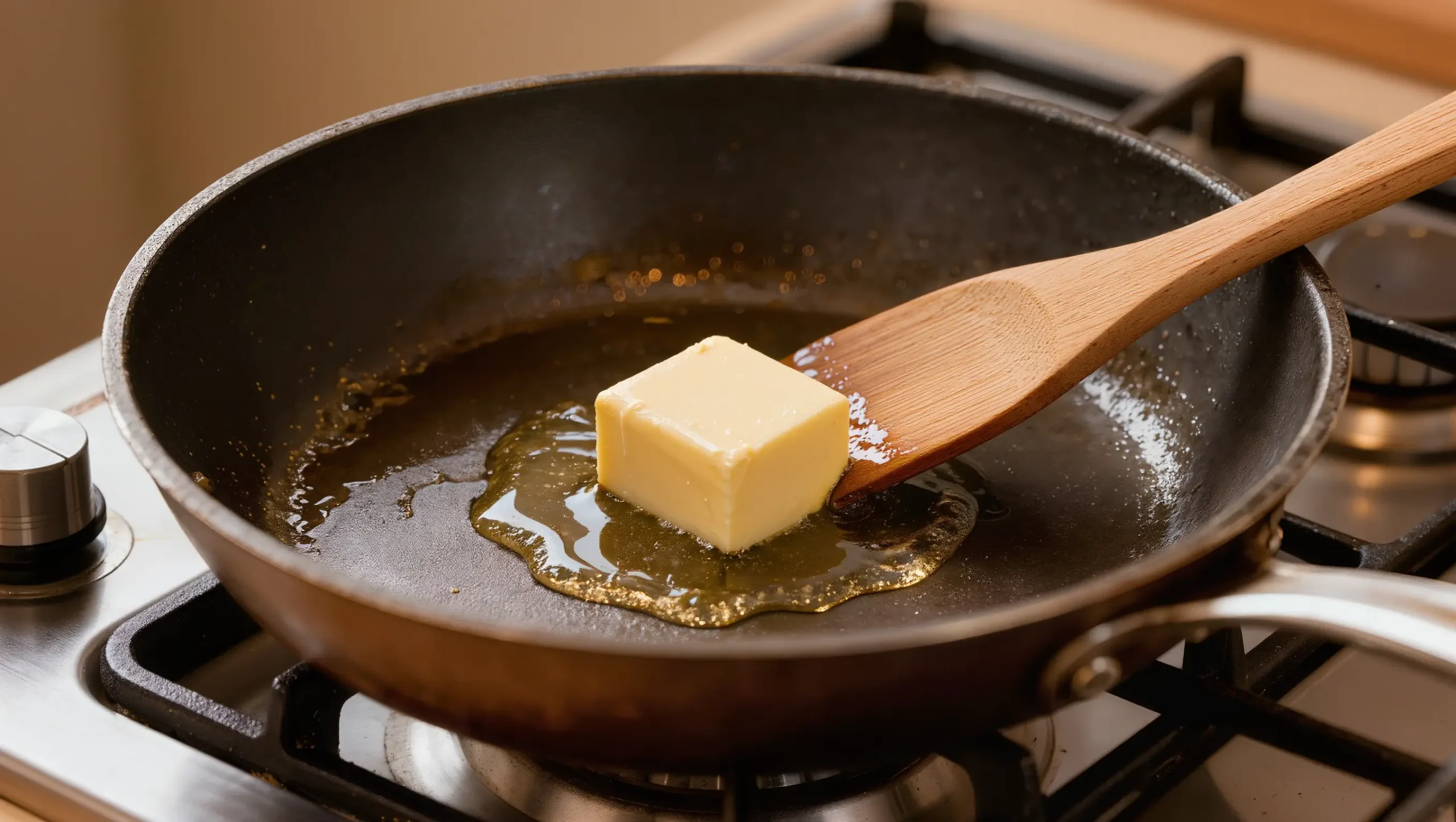
Uncoated hard anodized cookware exists, behaves like a different tool entirely, and is genuinely undersold as a category.
The cooking surface on an uncoated hard anodized pan is the hard anodized layer itself. No PTFE. No ceramic. You’re cooking directly on aluminum oxide.
Aluminum oxide is not nonstick. Food will stick without adequate fat and deliberate heat management. The technique is closer to cooking on stainless steel than on a nonstick pan: moderate heat, some fat, and patience before moving the food.
What you get in exchange is a pan with a cooking surface that won’t eventually need replacing. Uncoated hard anodized tolerates metal utensils. It handles higher oven temperatures without any coating concerns. Dishwasher compatibility depends on the specific pan rather than a blanket hand-wash rule.
| Coated Hard Anodized | Uncoated Hard Anodized | |
|---|---|---|
| Cooking surface | PTFE or ceramic coating | Aluminum oxide |
| Food release | Nonstick with minimal fat | Requires fat and technique |
| Metal utensils | No – damages coating | Yes |
| Dishwasher | No – degrades coating | Check manufacturer guidance |
| Oven temperature | Limited by coating (check label) | Limited by body only – very high |
| Aerosol cooking spray | Avoid – damages coating | Still avoid – residue risk |
| Surface lifespan | Coating degrades over time | Body is indefinitely durable |
Most shopping decisions for hard anodized cookware are really decisions between these two versions. Most labels don’t make that clear.
What Hard Anodized Cookware Handles Well
Hard anodized cookware performs well at moderate heat.
That’s the most accurate summary of where this material excels. The durability is in the body.
The performance ceiling is set by the interior surface, whether that’s a coating or the hard anodized layer itself.
Heat Distribution and What It Means at the Stove
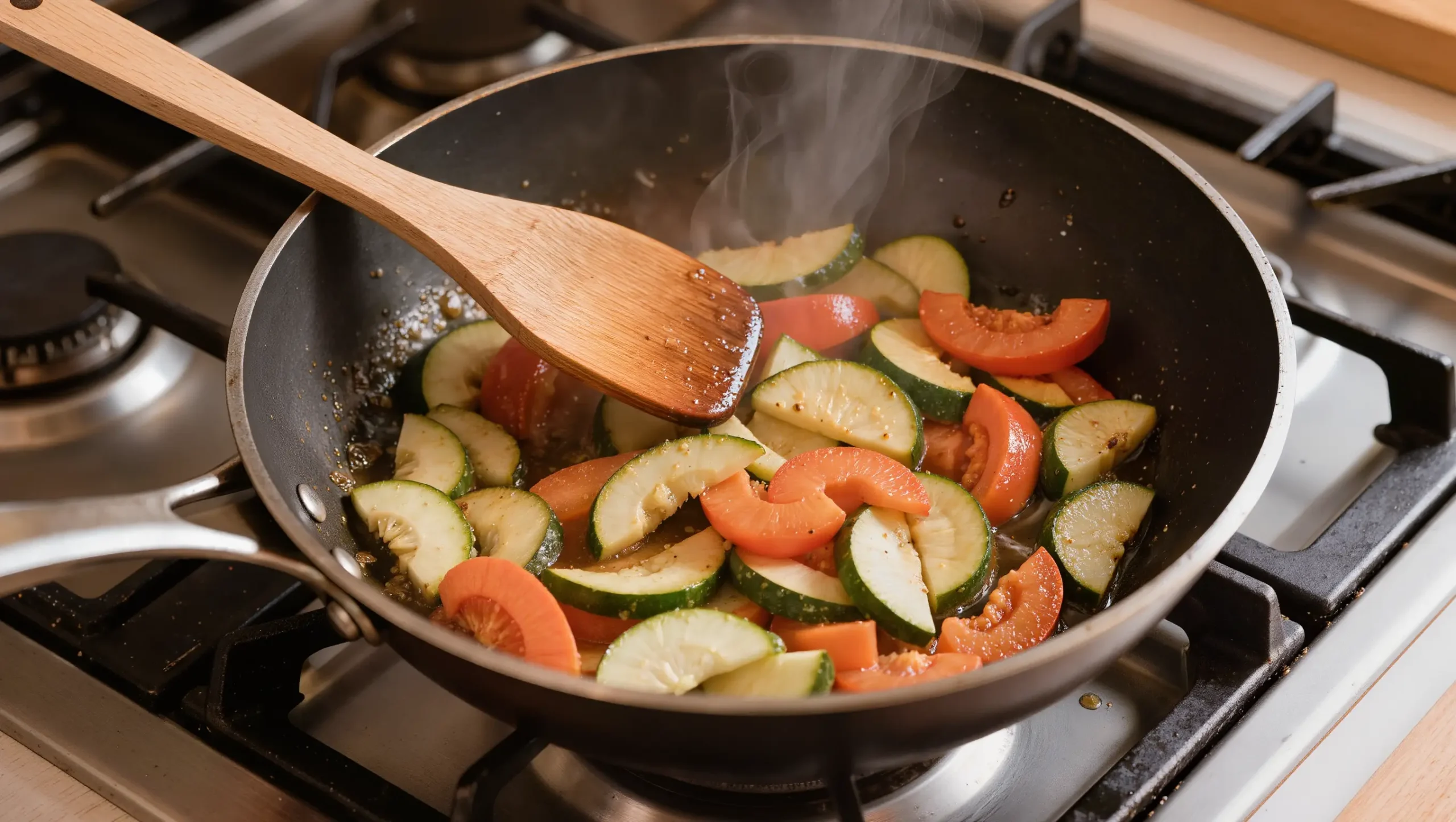
Hard anodized aluminum distributes heat more evenly than bare aluminum, though less evenly than multi-clad stainless steel.
Bare aluminum heats fast and unevenly over a standard home burner. Hot spots form directly over the heat source. Edges run noticeably cooler than the center.
Most quality hard-anodized pans have slightly thicker walls than basic aluminum. That thickness smooths out heat distribution somewhat. The result isn’t as consistent as a bonded stainless pan, but it’s much better than thin bare aluminum.
The heat behavior is very manageable for everyday tasks:
- Eggs and omelettes at low to medium heat
- Sautéed vegetables at medium heat
- Pan sauces and braises that start on the stovetop
The higher oven temperature ceiling is one real practical advantage over standard nonstick.
Most coated hard-anodized pans handle 400 to 500°F in the oven, check the specific pan’s label, since the coating’s limit may differ from the body’s.
Most standard PTFE-coated nonstick pans have a lower capacity.
For full guidance on checking oven safety by pan type, see how to know if a pan is oven safe. If you sear on the stovetop and finish in a hot oven, hard anodized handles that sequence better than a standard nonstick pan.
Read:How to Know if Your Pan is Oven Safe?
Durability Under Real Kitchen Conditions
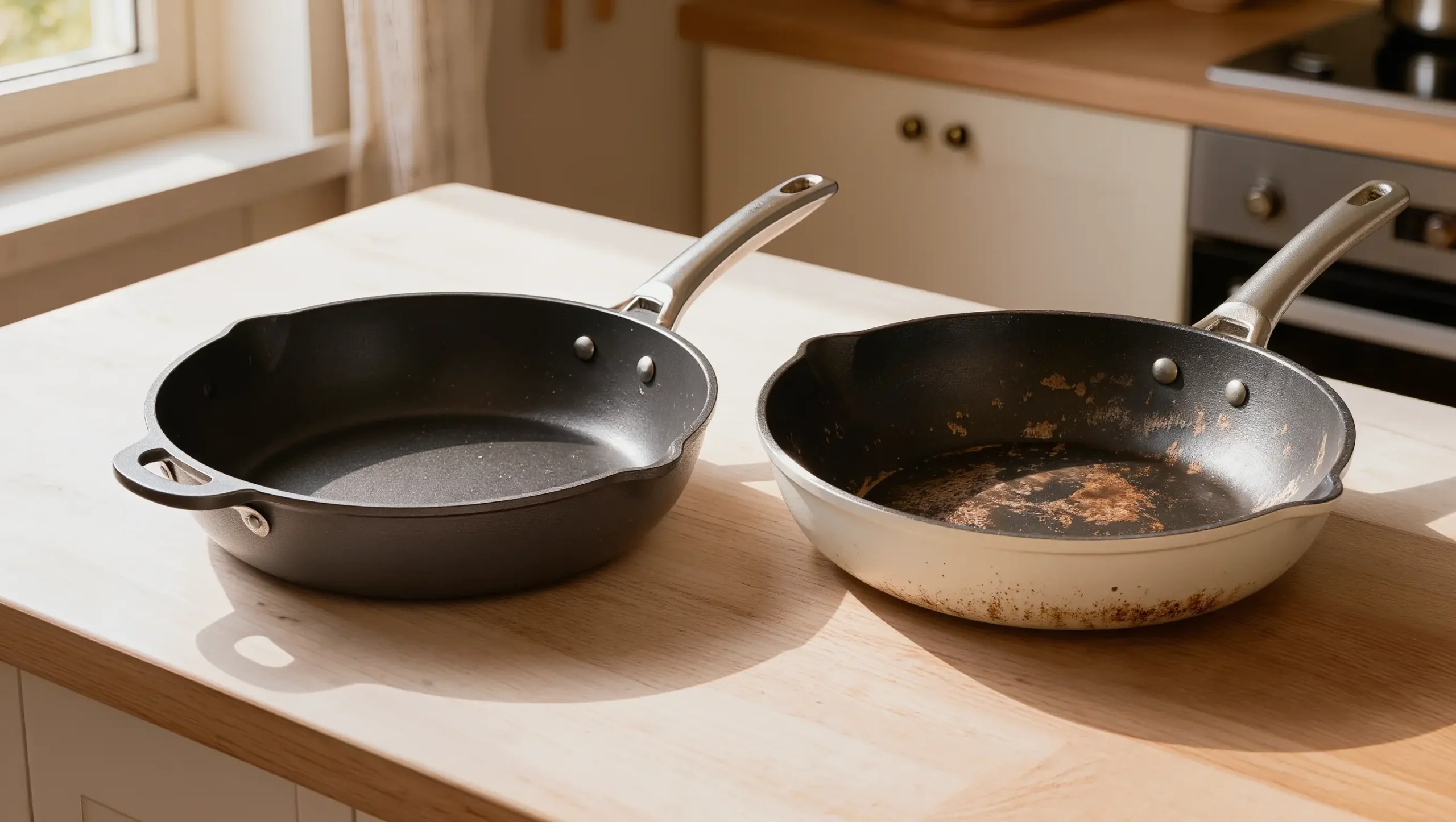
The hard-anodized body handles things that standard thin aluminum doesn’t. Those advantages apply to the body, not to the coated interior of a standard retail pan.
The body resists warping better under thermal stress. It handles stacking without the immediate scratch damage you can inflict on bare aluminum. A metal spatula dragged across the exterior does less damage than the same action on thin bare metal.
The coated interior on a standard retail hard-anodized pan carries the same handling restrictions as any other nonstick surface. Metal utensils damage it. The fact that the body is harder does not protect the coating from metal contact.
These are two different materials inside the same pan. That sentence is the whole guide, really.
The Limitations of Hard Anodized Cookware
The three main limitations of hard anodized cookware are induction incompatibility, aerosol spray damage, and a heat ceiling set by the coating, not the body.
Two of these are described in most buying guides accurately, but without enough context to be useful. One is almost always explained incorrectly.
Induction Compatibility & What “No Induction” Actually Means
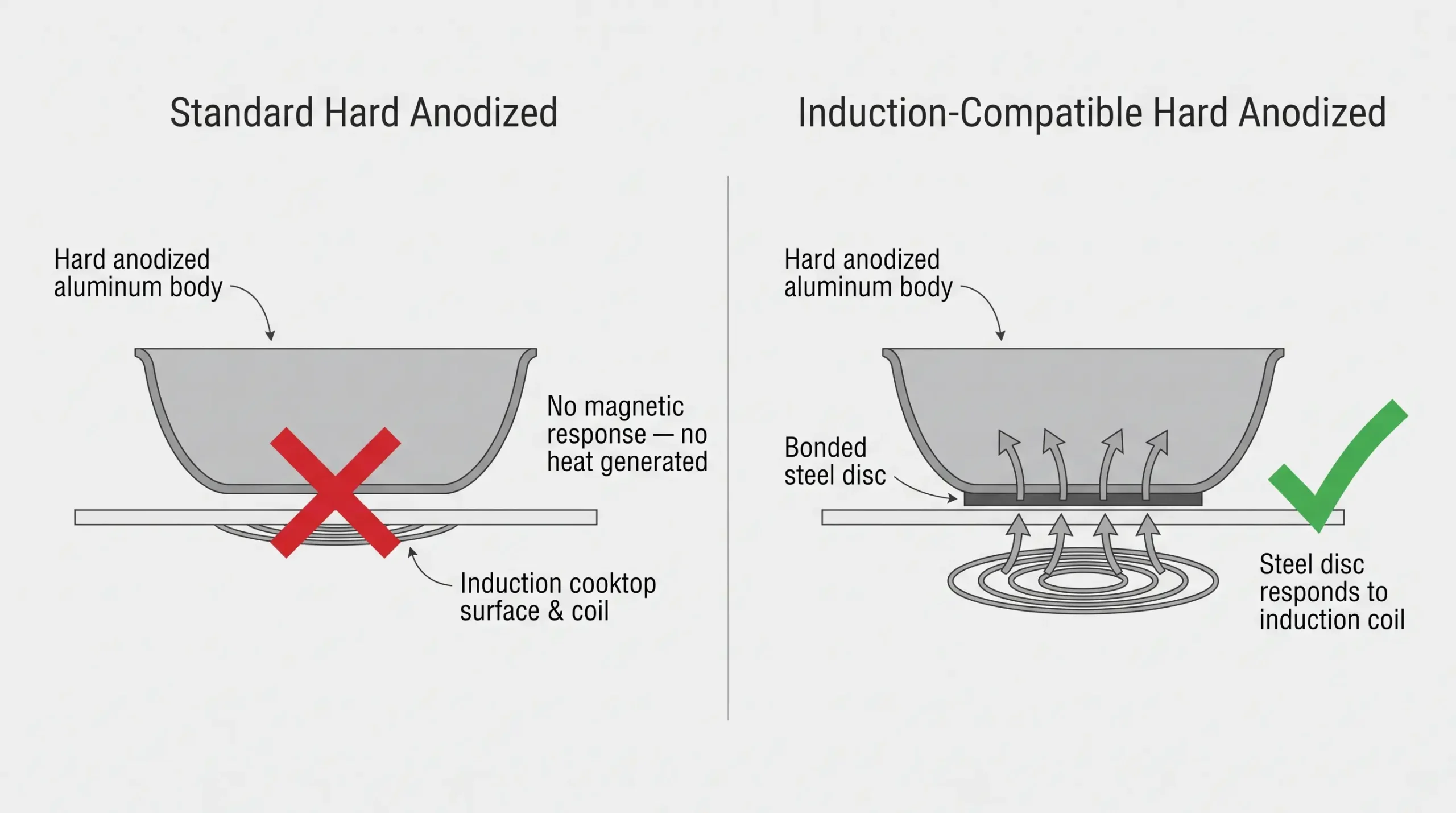
Standard hard-anodized aluminum doesn’t work on induction cooktops because aluminum is not magnetic.
Induction cooktops generate heat by inducing an electrical current in the pan. That requires a ferromagnetic material, one that responds to a magnetic field. Aluminum, anodized or not, is not ferromagnetic. Without a ferromagnetic surface, the cooktop can’t induce a current in the pan.
The test takes five seconds. Hold a magnet to the base of the pan. If it sticks, the pan is induction-compatible. If it doesn’t, it isn’t. This applies to any pan material, not just hard anodized.
Some hard-anodized pans are sold as induction-compatible. These have a ferromagnetic steel disc bonded to the base. The induction element responds to the disc, and heat transfers into the aluminum body above it.
The disc adds slight weight and can alter the heat distribution profile compared to a standard hard-anodized pan.
Aerosol Cooking Spray and Why It’s the Pan-Ending Mistake
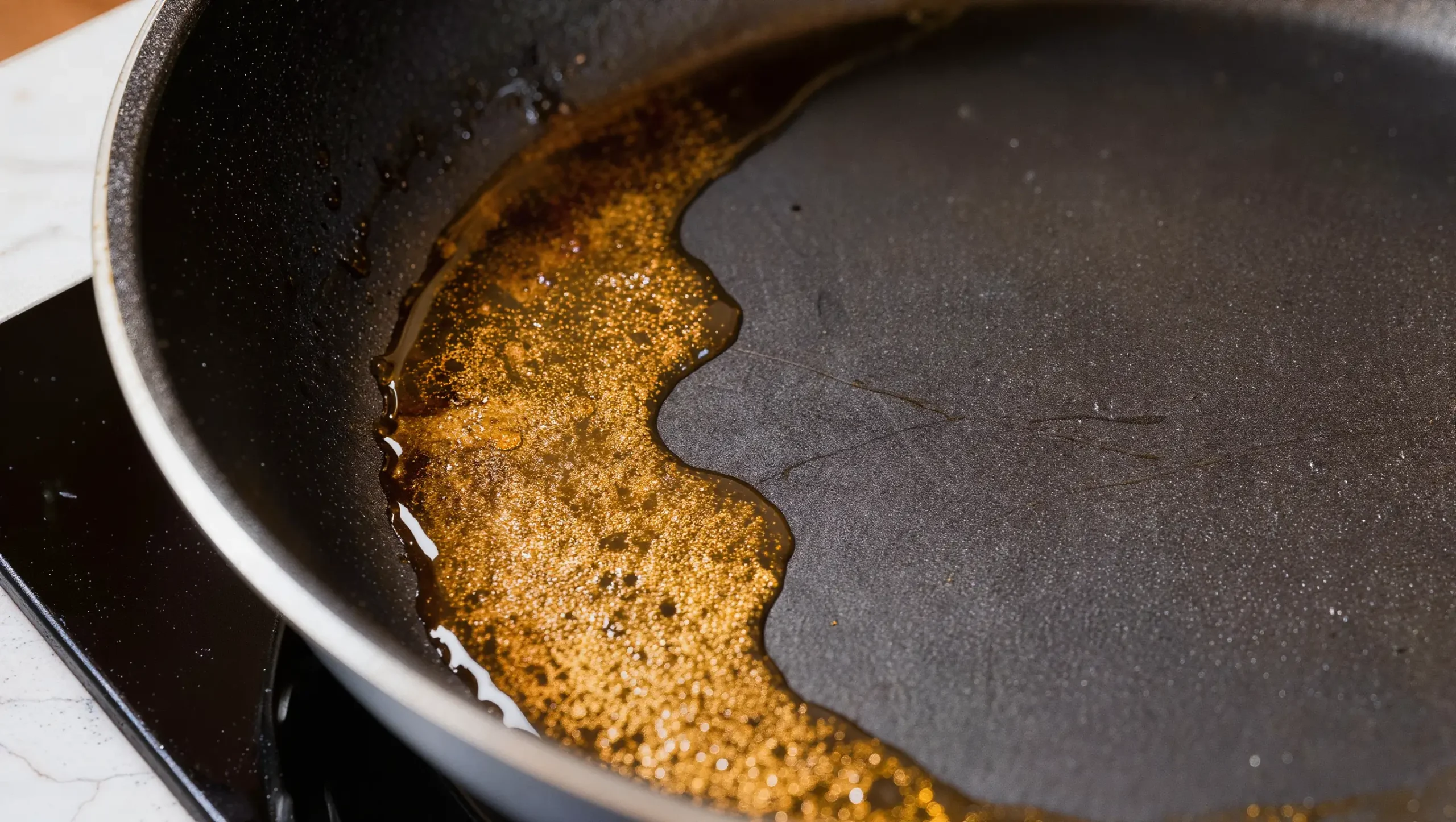
Aerosol cooking sprays permanently damage nonstick surfaces. The damage becomes visible only after it’s already irreversible.
The aerosol spray rule is probably the most ignored care rule I see on hard-anodized pans. People assume the concern is about the oil. It isn’t. The propellant is what causes the damage.
- At cooking temperatures, the propellant deposits a thin film on the cooking surface.
- At higher temperatures, that film polymerizes, meaning it chemically bonds into a solid carbon-based residue, directly onto the nonstick coating.
That residue doesn’t wash off. It builds up with each use of the spray. Eventually, it forms a tan or golden film across the cooking surface.
The pan becomes sticky despite the nonstick coating beneath it. By the time you can see the film, you cannot remove it without abrasive scrubbing that damages the coating further. There is no recovery from that point.
Use a few drops of oil applied with a paper towel or pastry brush instead. The oil causes no problem. The aerosol delivery system does.
The Heat Ceiling on Coated Hard Anodized
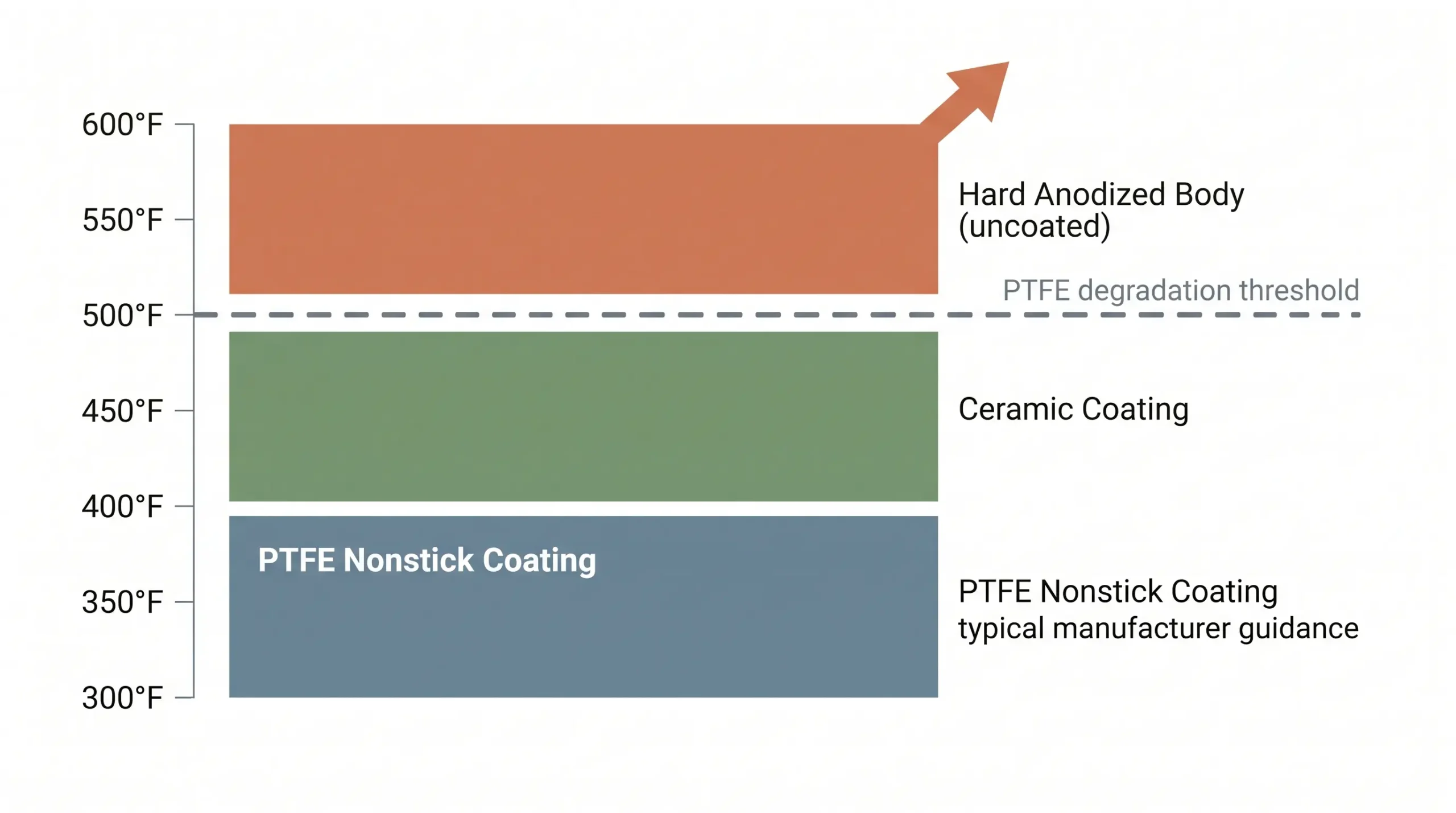
The hard-anodized body can handle high heat. The coating on most retail pans cannot.
If you’re using a coated hard anodized pan, the temperature limit that applies is the coating’s, not the body’s. For PTFE-based coatings, manufacturer guidance typically falls in the 400 to 500°F range for normal use.
The coating degrades faster under sustained maximum heat than under consistent moderate temperatures.
If high-heat searing is a regular part of your cooking, an uncoated hard anodized pan or a different material is the better choice. Which pan to buy for which purpose is a different question. It needs different criteria than this one.
Is Hard Anodized Cookware Safe?
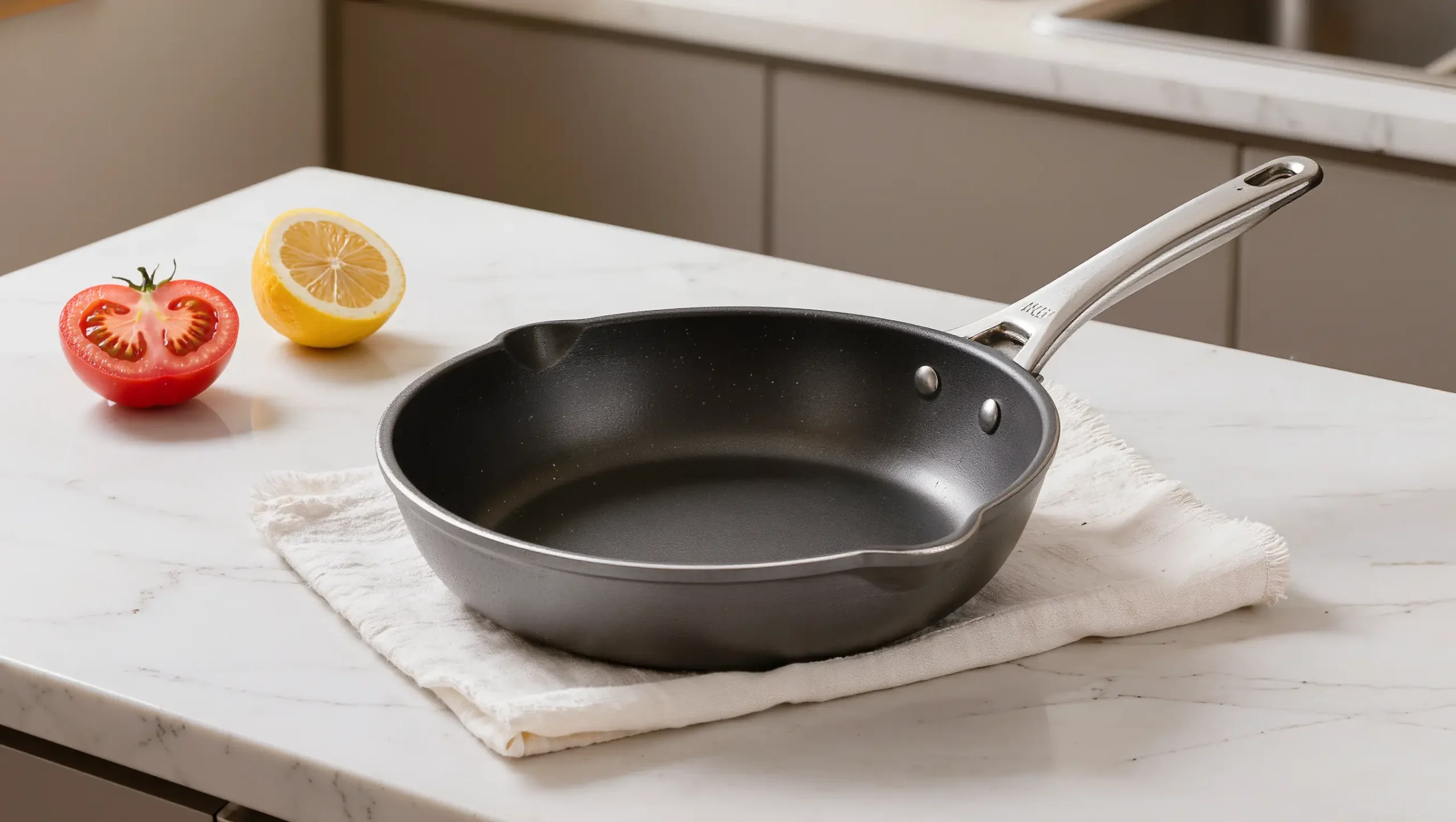
The safety question on hard-anodized cookware is actually two separate questions.
Treating them as one produces an answer that’s accurate enough to be useless. The honest version requires looking at the body and the coating as what they are: different materials with different safety profiles.
The hard anodized layer is aluminum oxide. It’s chemically stable and non-reactive at every temperature a home kitchen reaches. It doesn’t transfer into food. The concern about untreated aluminum leaching into acidic food doesn’t apply here, because the surface is no longer bare aluminum. Aluminum oxide is a stable, non-reactive surface material for food contact.
The coating is where the question actually lives.
| Hard Anodized Body | Nonstick Coating (Coated Pans) | |
|---|---|---|
| Surface material | Aluminum oxide | PTFE or ceramic |
| Non-reactive with food? | Yes, at all cooking temperatures | Yes, at normal cooking temperatures |
| Main documented concern | None | Overheating above ~500°F / 260°C (PTFE) |
| PFOA concern? | Not applicable | Manufacturing only; phased out in the US by 2015 |
For PTFE-based coatings, the cancer concern circulating online traces mostly back to PFOA, a compound used in manufacturing PTFE.
PFOA is a documented carcinogen. It is not PTFE. PFOA was phased out of US manufacturing processes by 2015 under the EPA’s 2010/2015 PFOA Stewardship Program.
PTFE itself, at normal cooking temperatures, is chemically stable and not absorbed by the body.
Overheating is the actual concern. PTFE starts decomposing above about 500°F (260°C), releasing fumes that cause flu-like symptoms in humans and are acutely harmful to birds.
- Avoid empty preheating on high: a dry pan at maximum heat can exceed 500°F in minutes
- Replace damaged pans: a scratched or flaking PTFE surface should be replaced, not cooked on
- Keep birds out of the kitchen: fumes that cause temporary symptoms in humans are acutely toxic to birds at even lower concentrations
Cooking on a PTFE-coated pan at normal stovetop temperatures is not a documented health concern.
For ceramic coatings, the category is PTFE-free and is often marketed as PFAS-free. The long-term evidence base is less complete than on PTFE because ceramic nonstick is a newer category.
If you want a full breakdown of what the evidence currently shows on ceramic cookware safety, that question has its own answer. This question works better as two. What coating is on your pan? What does the evidence actually say about that specific coating?
Read:Is Ceramic Cookware Safe?
How to Cook in Hard Anodized Cookware?
Hardened cookware requires less heat than most cooks expect.
Aluminum conducts heat efficiently. The pan reaches cooking temperature faster than cast iron or heavy stainless. Starting at high heat and adjusting down is the wrong approach for this material.
Heat Management: Start Lower Than You Think
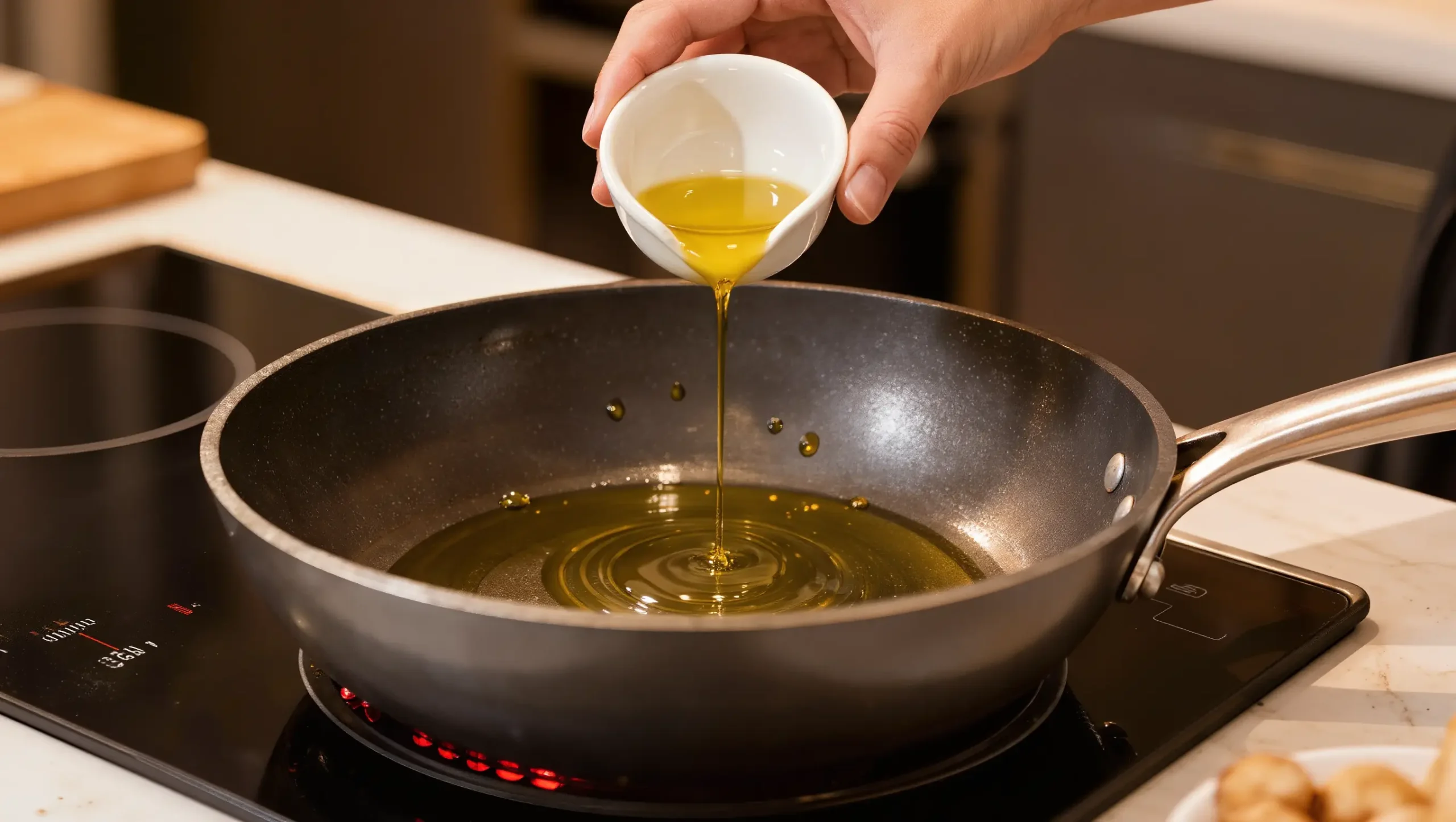
Preheat the pan to medium and let it come to temperature before you add anything to it.
The preheat sequence that works:
- Set the burner to medium.
- Place the pan on the burner.
- Wait 90 seconds to 2 minutes.
- Add fat and let it heat through.
- Add food.
This heats the pan evenly. It also avoids the thermal stress of taking a cold pan to maximum heat in one step.
A pan that feels like it needs another minute is usually already at the temperature for eggs or vegetables. Most people underestimate aluminum’s heat efficiency when they switch from a heavier material. I’ve tracked coated pan performance across different preheating approaches.
Pans regularly preheated at high heat showed coating changes earlier than pans run at consistent moderate temperatures. The testing wasn’t controlled. The pattern showed up anyway.
Fat, Utensils, and What Actually Goes Wrong
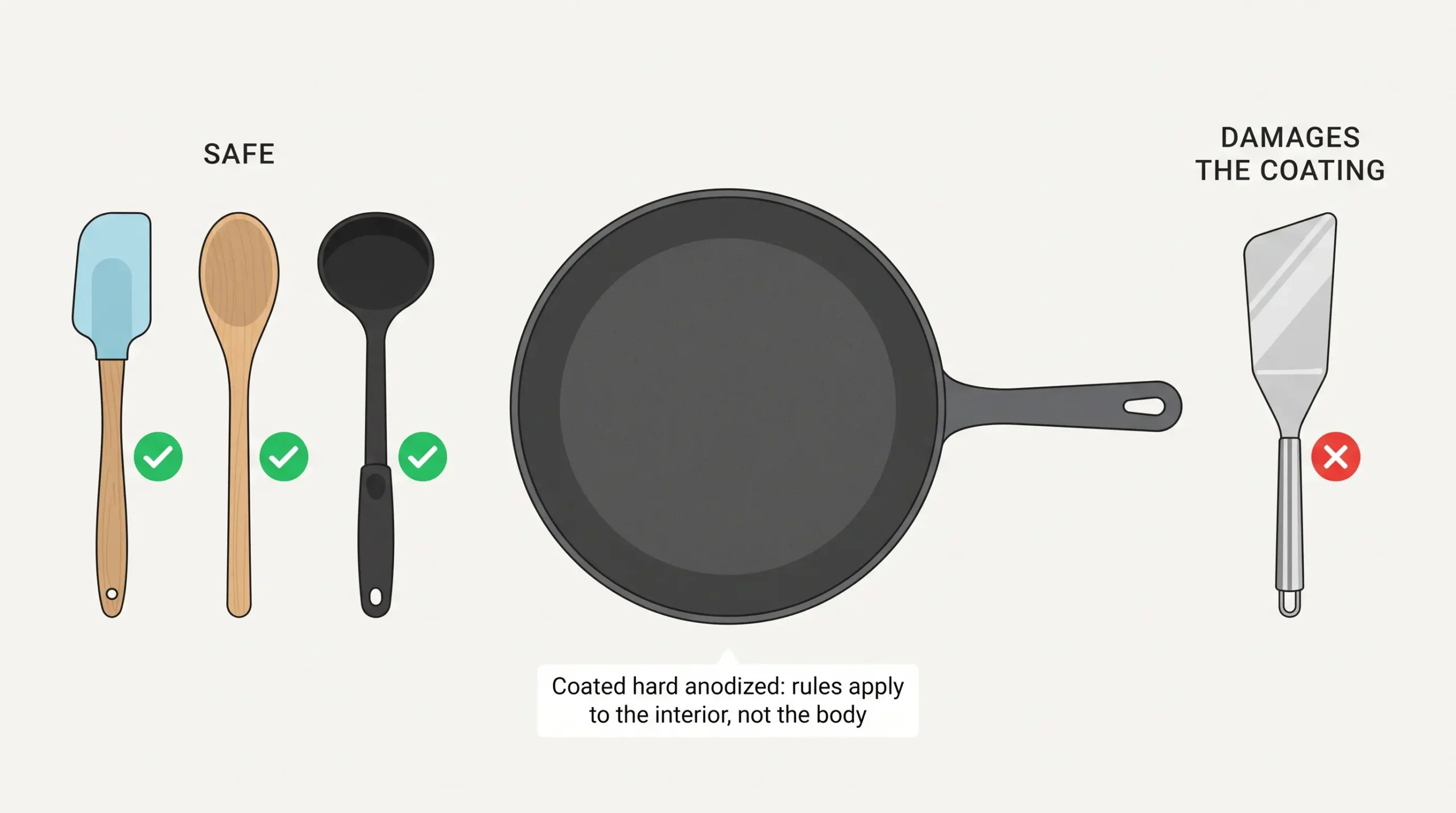
Fat still matters with coated hard anodized pans, even though the interior is nonstick.
The coating reduces food adhesion. It doesn’t eliminate the need for fat in every situation. Protein at moderate heat without any fat will stick to a coated pan.
A small amount of oil or butter prevents this. It doesn’t interfere with how the coating functions.
Utensil rules apply to the coated interior, not to the hard-anodized body. The body could handle a metal spatula. The coating cannot. Silicone, wood, and nylon utensils are safe. Metal utensils scratch the coating surface. Scratches progressively reduce release performance.
If you’re using an uncoated hard-anodized pan, the utensil restriction doesn’t apply to you.
How to Care for Hard Anodized Cookware
Hard anodized cookware has three care rules that actually matter.
Everything else is noise. These three determine whether the pan lasts two years or considerably longer.
Washing
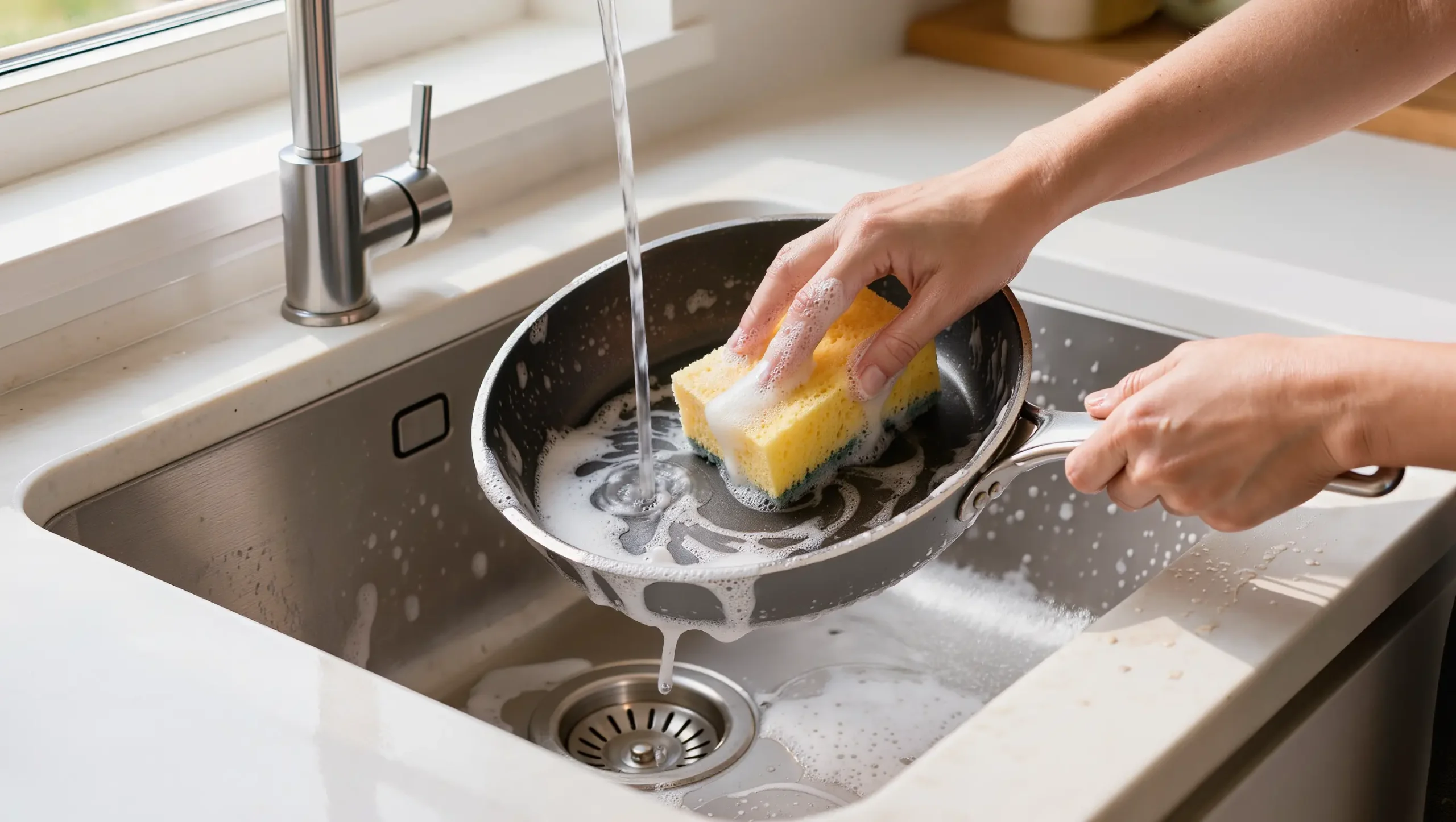
Hand-wash coated hard anodized pans. The dishwasher degrades the cooking surface faster than regular use does.
Dishwasher detergents are alkaline and abrasive. At dishwasher temperatures, they break down the nonstick coating faster than months of normal stovetop use.
Hard anodized surfaces also discolor over repeated dishwasher cycles. The pan doesn’t fail immediately. It degrades earlier than it should.
The washing process is straightforward: warm water, mild dish soap, and a soft sponge. No steel wool or abrasive scrubbing pads. Dry the pan before storing it. For uncoated hard anodized, check the manufacturer’s guidance rather than applying the hand-wash rule universally.
Dealing With Residue
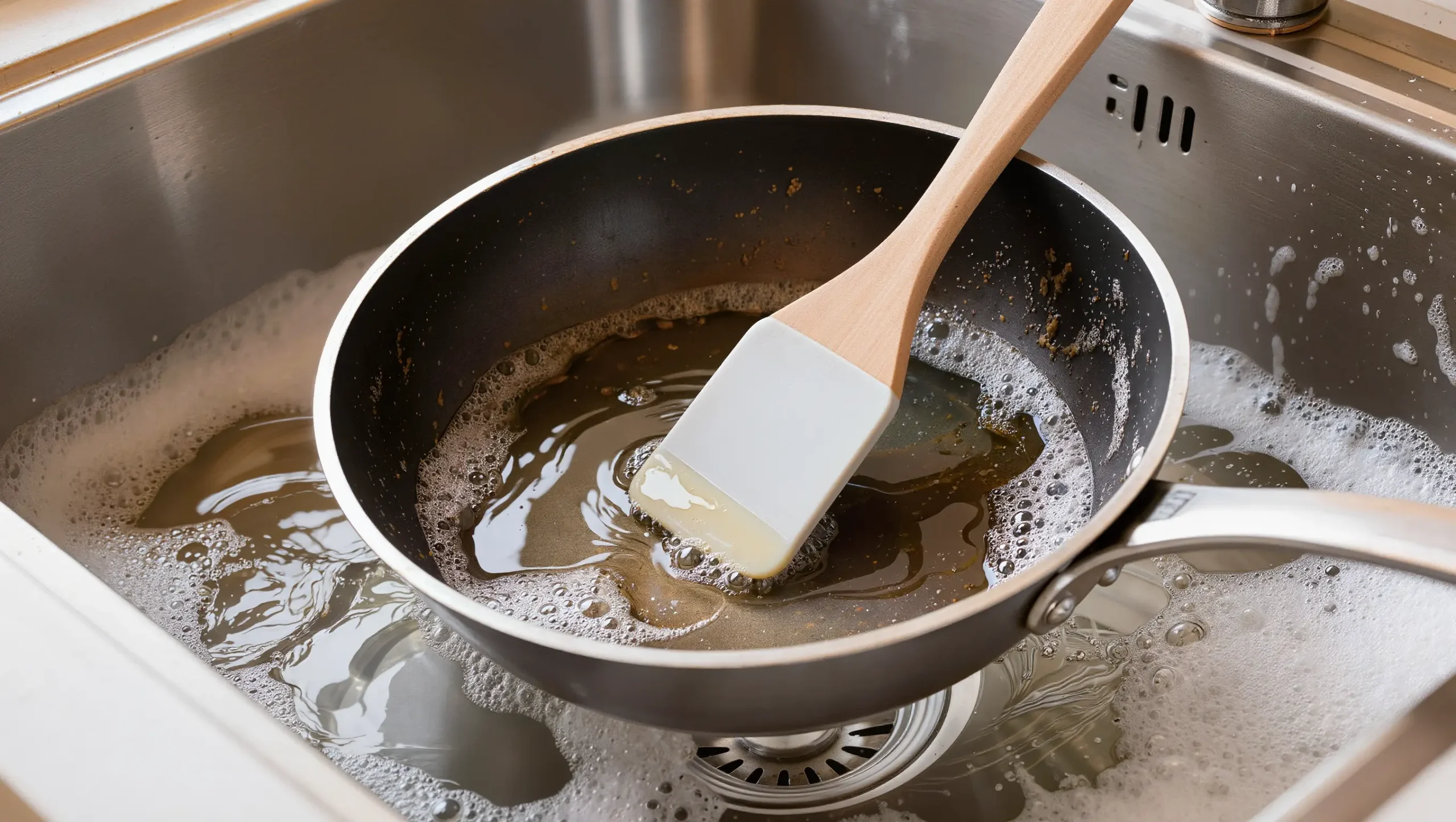
Stubborn residue on hard anodized cookware is almost always aerosol spray buildup or polymerized food from high heat.
Aerosol spray residue is the hardest residue to reverse. It polymerizes into a carbon-based film that bonds to the nonstick coating as it builds up. By the time you can see it, it won’t lift with ordinary washing.
For ordinary stuck food, a long soak in warm soapy water loosens residue without abrasives. A silicone spatula edge can then move it safely.
For aerosol residue, the options narrow to two: scrub lightly with something mildly abrasive, knowing you’re removing coating material at the same time, or accept that the cooking surface has permanently changed.
There is no good option at that stage. The time to prevent it was before the spray was used.
Storage
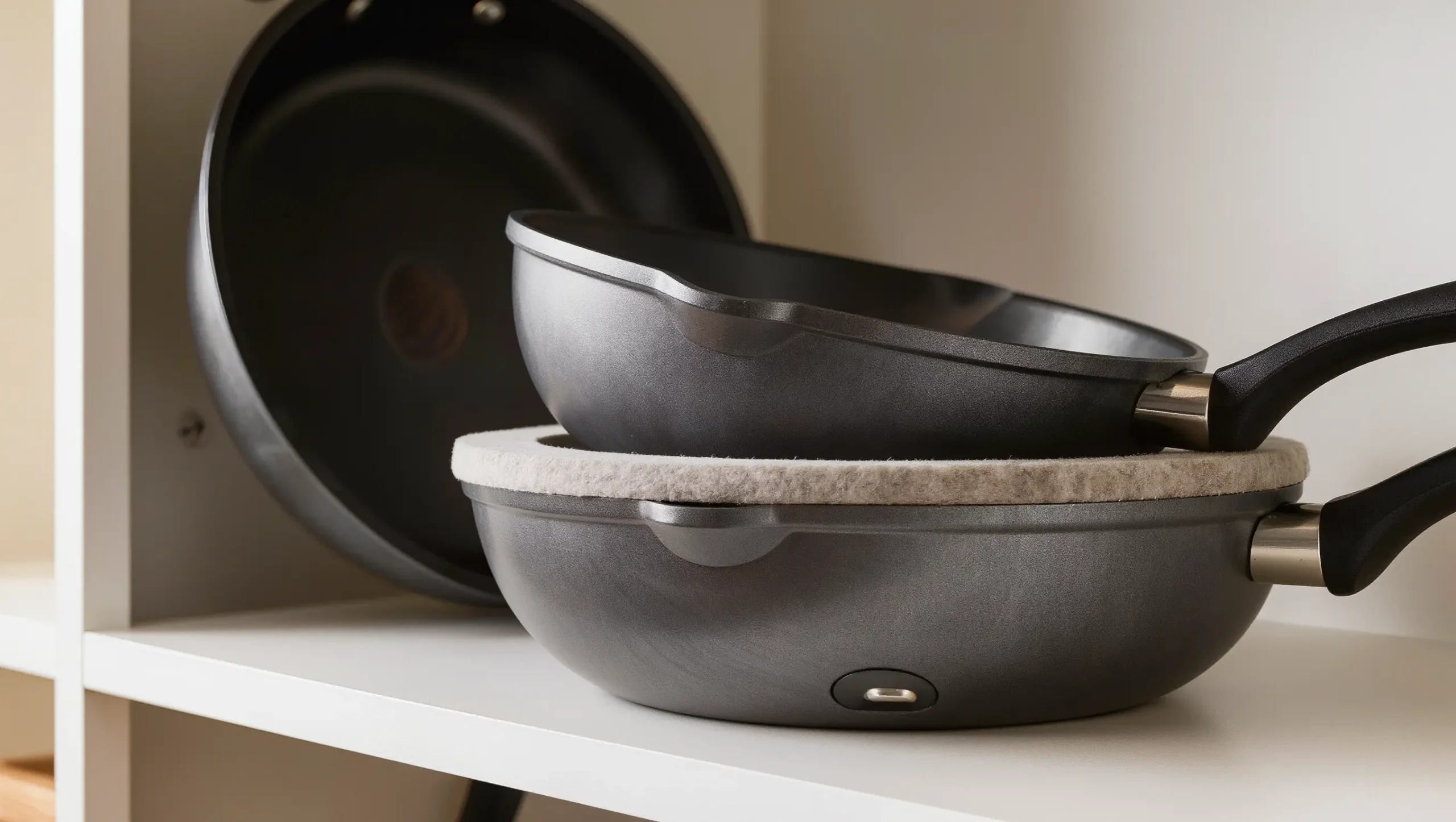
Protect the interior surface when stacking hard anodized pans.
The rim of another pan resting on the interior creates slow, accumulating wear. Over months, circular marks develop on the cooking surface.
They look cosmetic at first. Over time, they compromise nonstick performance in those areas. Pan protectors, felt or silicone discs placed between stacked pans, prevent this. If hanging storage is available, that’s the better option for any coated pan.
What to Take Away From This
Hardened anodized cookware is a good category. The body is genuinely more durable and more chemically stable than standard aluminum. That durability is real, and the non-reactivity with acidic food is a practical improvement that actually matters at the stove.
The care rules for a coated hard anodized pan are the same as for any nonstick pan, because in both cases, you’re managing a nonstick coating.
The hard-anodized body doesn’t change a single rule about utensils, dishwasher use, or aerosol spray. Knowing that is what makes this pan useful rather than frustrating.
Which specific pan to buy is a different piece, with different criteria, and I’m still working through enough testing cycles to make calls I’d stake anything on.
The kitchen tools series at greasebags.com will get to hard anodized recommendations once that testing is complete. What this guide covers is what hard anodized actually is, and that’s the thing you need to understand before any product comparison becomes useful.