
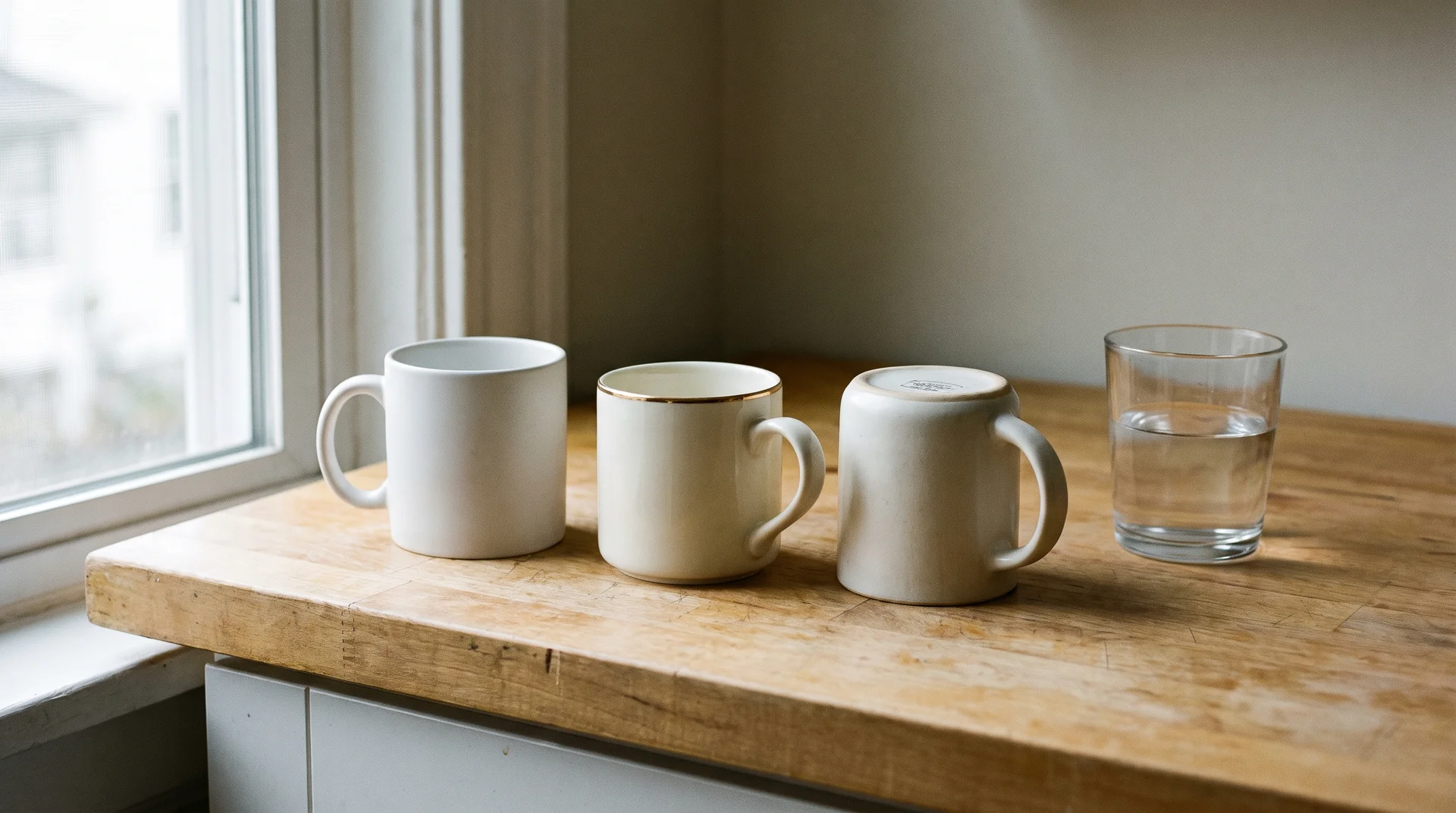
So if you are wondering, “Can I microwave a mug?” Then let me tell you, most mugs are fine to microwave. The ones that aren’t fall into a few specific categories.
A plain ceramic or glass mug with no metal trim is almost always fine. If you’re not sure, a one-minute test gives you a more reliable answer than any label.
What “Microwave Safe” Actually Means
The label is not what most people assume it is.
Most people treat “microwave safe” as a verified designation. They picture some authority confirming the mug has been tested.
The Label Is a Manufacturer’s Decision
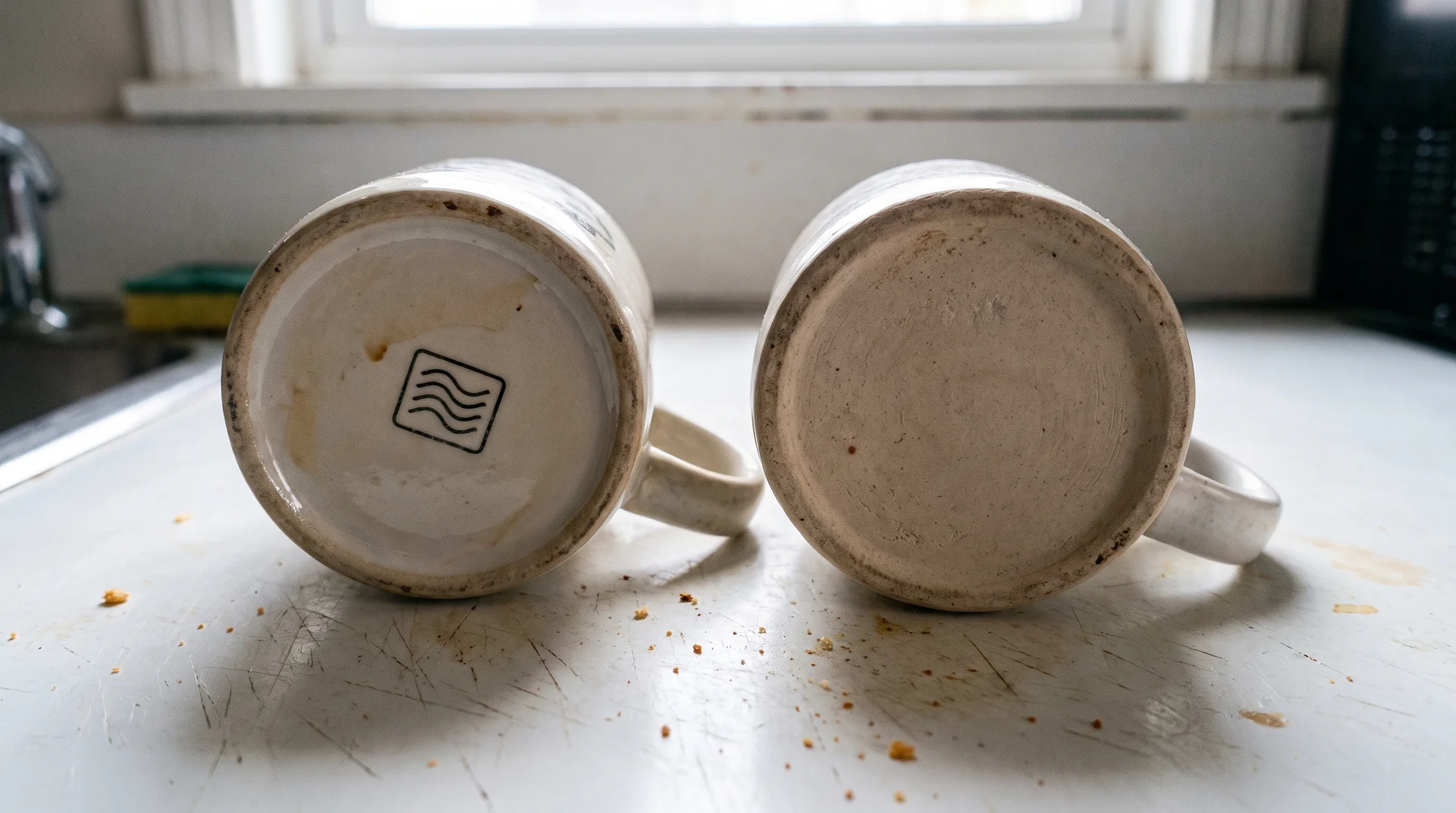
Manufacturers decide whether to call their products microwave safe. No federal agency verifies that claim before it goes on a mug.
The FDA has published consumer guidance on microwave-safe labeling for food contact materials. What that guidance makes clear is that manufacturers self-determine whether their products meet the standard. There’s no pre-market certification process for ceramic or glass drinkware.
This matters in practice. Two mugs with the same “microwave safe” label may have been tested very differently. The label doesn’t specify how.
The label reflects what the manufacturer decided. It doesn’t reflect what an independent body confirmed.
A mug with no label isn’t necessarily less safe than one with a label. It may be older, foreign-made, or produced before labeling conventions were standard.
The absence of a label is a reason to test the mug. It is not a verdict.
What the Wavy Lines Symbol Means
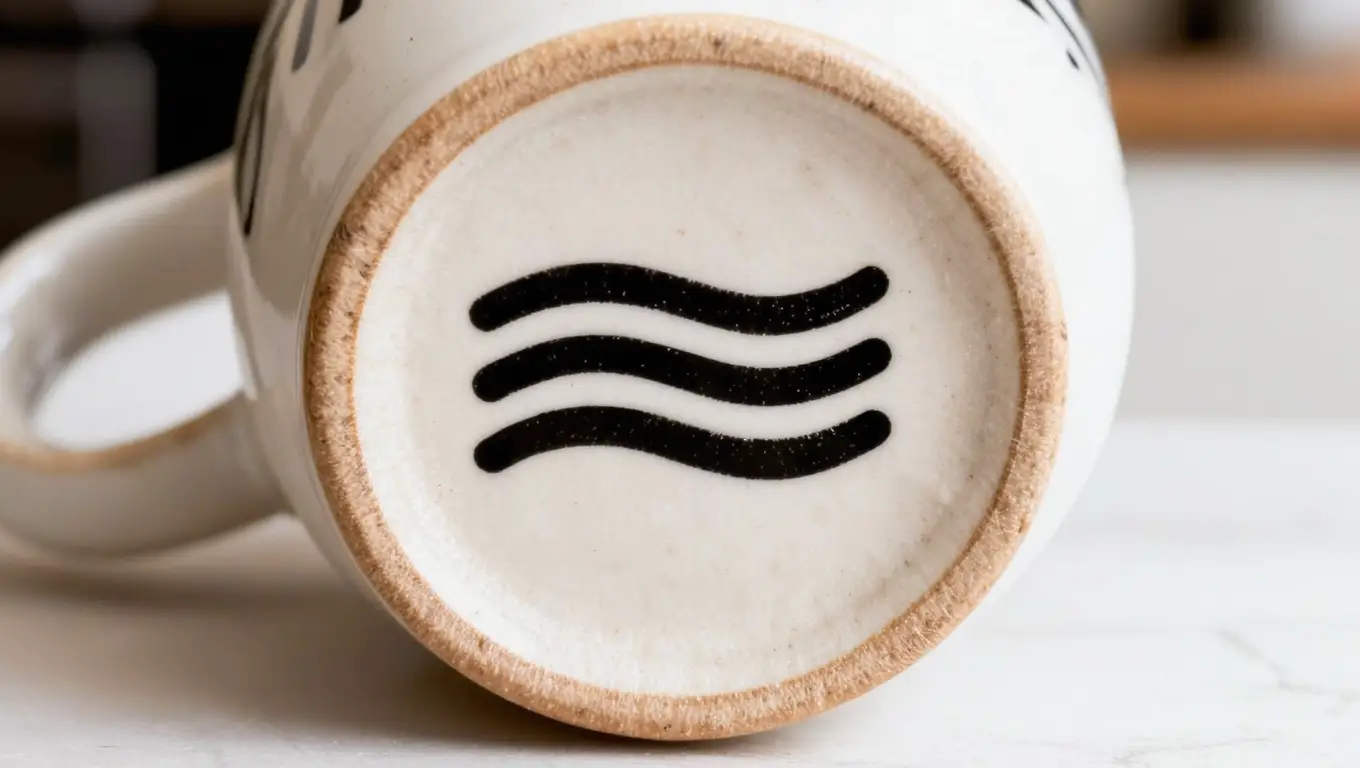
Three wavy horizontal lines are the most common symbol used on mugs and drinkware. It isn’t a certification mark from an independent standards organization. Nobody governs its use the way UL or NSF governs their marks.
The manufacturer applies it based on their own assessment. Treat it as information about the manufacturer’s intent, not as external verification. What the mug is actually made of matters more.
Mug Materials and the Microwave
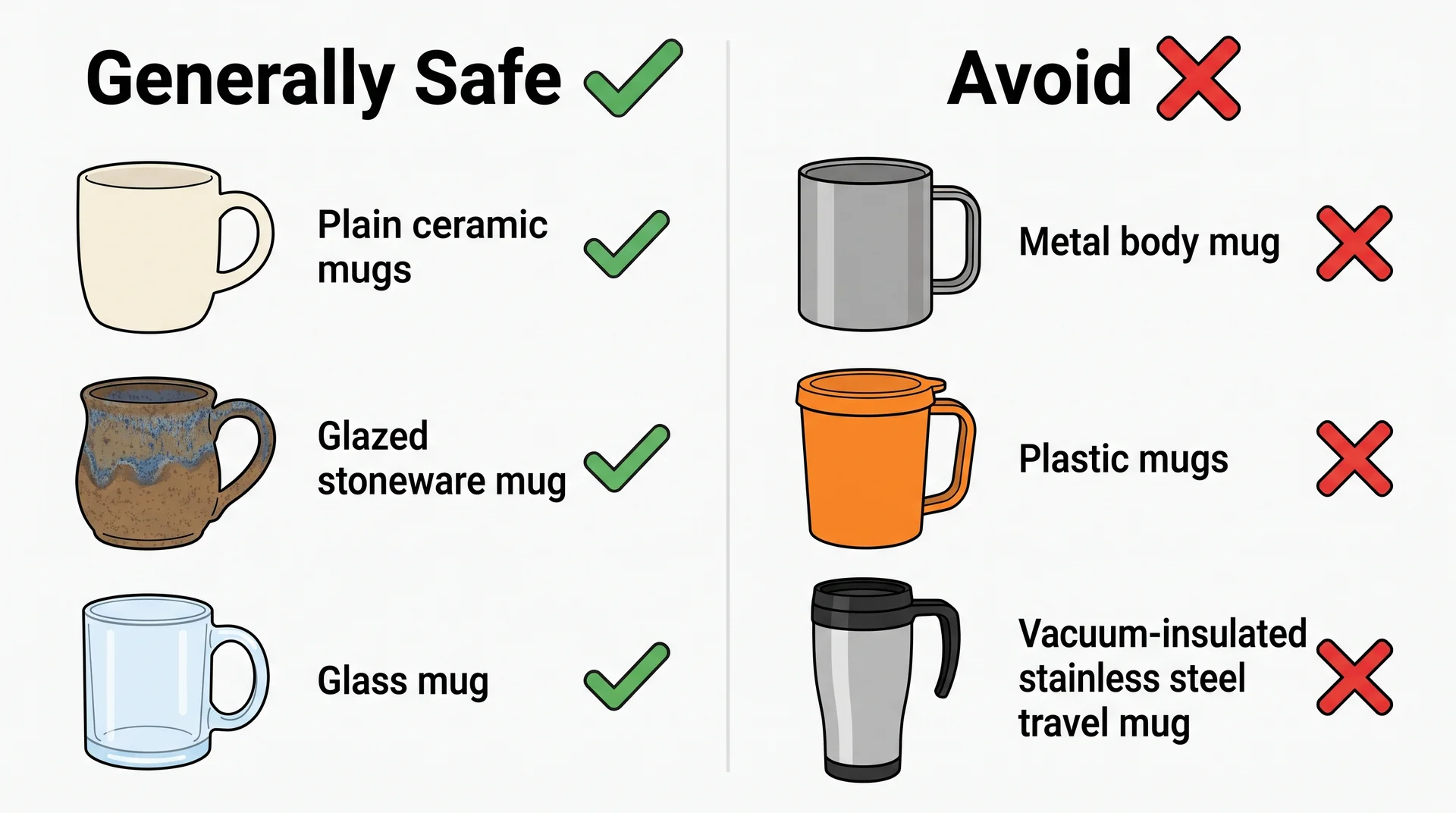
Most mugs fall into two clear categories when it comes to microwave compatibility.
Some materials let microwave energy pass through to the liquid. Others absorb or reflect it.
Materials That Are Generally Fine
Plain ceramic, glazed stoneware, and clear glass are the safe baseline for microwave use.
These materials don’t absorb microwave radiation in any significant way. The water molecules in your drink are what heat up. The mug is essentially a pass-through.
Safe mugs still vary. A thick-walled mug holds more heat from the liquid than a thin-walled one. That’s heat from the liquid, not from the microwave.
A chipped or cracked mug is unsafe regardless of material. Don’t microwave it.
The glaze is the other variable that changes this answer. A ceramic mug with a metallic glaze, even one that looks matte, belongs in the next section. For further reading on ceramic material safety more broadly, see whether ceramic cookware is safe.
Read:Is Ceramic Cookware Safe?
Materials to Avoid
Metal in any form, whether structural, decorative, or baked into the glaze, is the core problem.
Metal reflects microwave energy instead of letting it pass through. That creates arcing, the sparks you’ve probably seen or heard about. Arcing can damage the microwave cavity and, in more severe cases, crack or shatter the mug.
Plastic needs a separate check. BPA-free is a chemical composition claim. Microwave-safe is a heat-tolerance rating, and the two aren’t the same designation.
Unless a plastic mug is explicitly labeled microwave-safe, don’t microwave it.
| Material | Microwave Safe? | Why | What to Check |
|---|---|---|---|
| Plain ceramic | Generally yes | Doesn’t absorb microwave energy; the liquid heats up instead | No metallic decoration, paint, or glaze; no cracks or chips |
| Glazed stoneware | Generally yes | Same as ceramic when the glaze contains no metals | No metallic sheen, iridescence, or lustre in the finish |
| Clear glass | Generally yes | Non-reactive to microwave energy | No metallic paint, trim, or decoration anywhere on the mug |
| Metal-bodied mugs | No | Reflects microwaves; causes arcing | Obvious if structural; also check rims and handle joints |
| Plastic | Depends | Can warp or leach at high temperatures; BPA-free does not mean microwave-safe | Look for an explicit microwave-safe marking on the container itself |
| Vacuum-insulated (stainless) | No | Metal walls reflect and absorb microwave energy | “Stainless steel” or “vacuum insulated” anywhere in the product description |
How to Test Any Mug for Microwave Safety
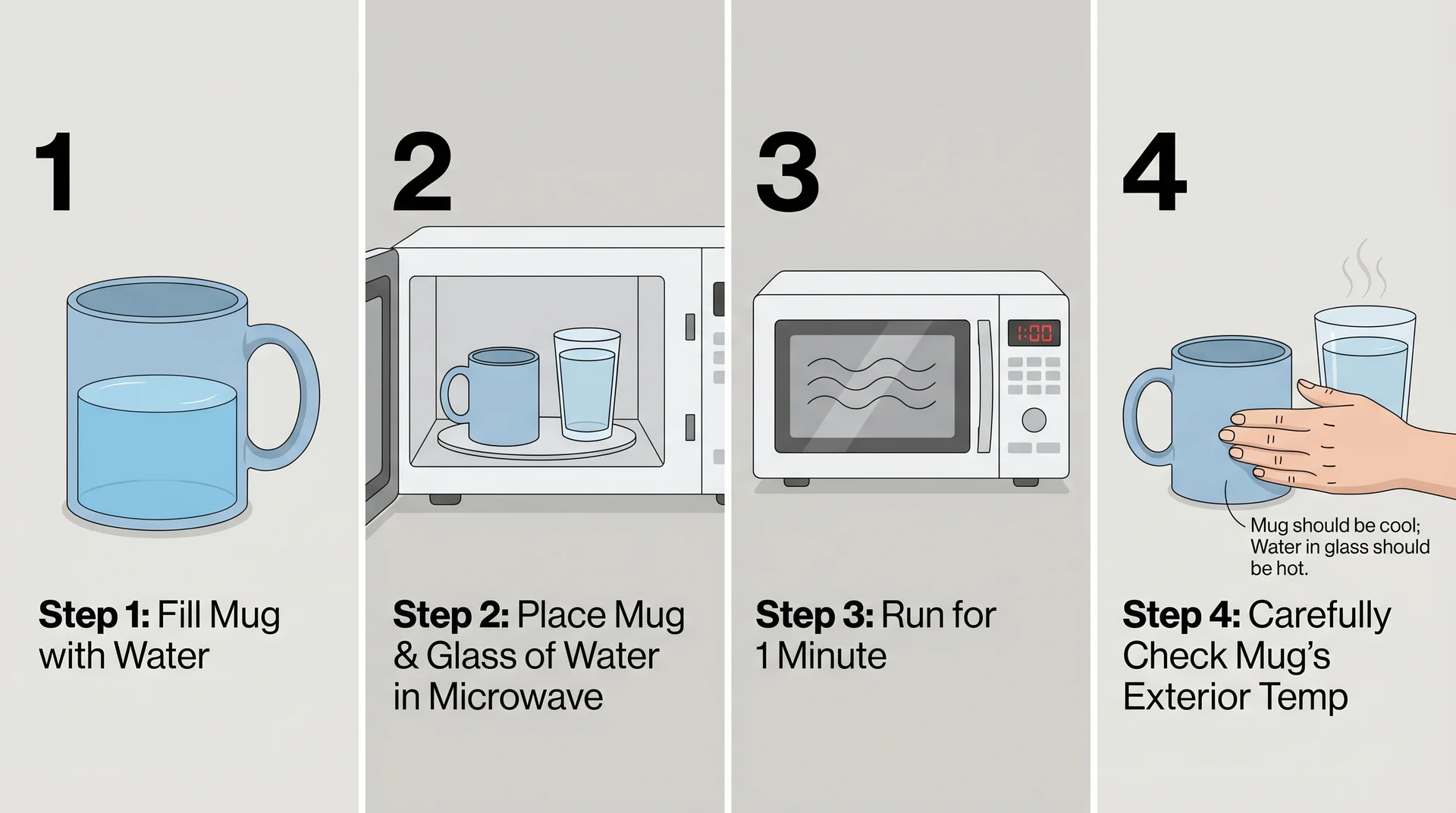
A one-minute test in your own microwave tells you more than any label.
It works for mugs with no label, no brand documentation, and no traceable manufacturer.
I’ve run this test in my own kitchen, across a range of mugs, including unlabeled vintage pieces. The results are consistent enough that I treat it as my first check, not my last resort. Here’s how it works.
- Fill the mug halfway with cold water
- Place a microwave-safe glass of water next to it in the same microwave
- Run both on full power for one minute
- Carefully touch the outside of the mug, not the water inside
The comparison glass gives you a baseline. Without it, a warm mug might just mean the air inside the microwave got hot during the cycle.
What the results mean:
- Mug is cool, water is hot: The mug is fine for microwave use
- Mug is hot, water is cool or lukewarm: The mug is absorbing microwave energy. Don’t use it
- Both are hot: Test again with 30 seconds. If the mug stays noticeably hot, treat it as not microwave safe
One honest limit: the water test doesn’t catch everything. A mug with metallic glaze only on the exterior may pass this test. If there’s any metallic decoration at all, check the mug types section below before relying on this test alone.
The Mug Types That Keep Confusing People
The standard rules stop short of the mugs people are actually asking about.
These specific types come up constantly in community forums and product comment threads. Generic advice doesn’t help anyone holding one of them.
Mugs with Gold, Silver, or Metallic Rims
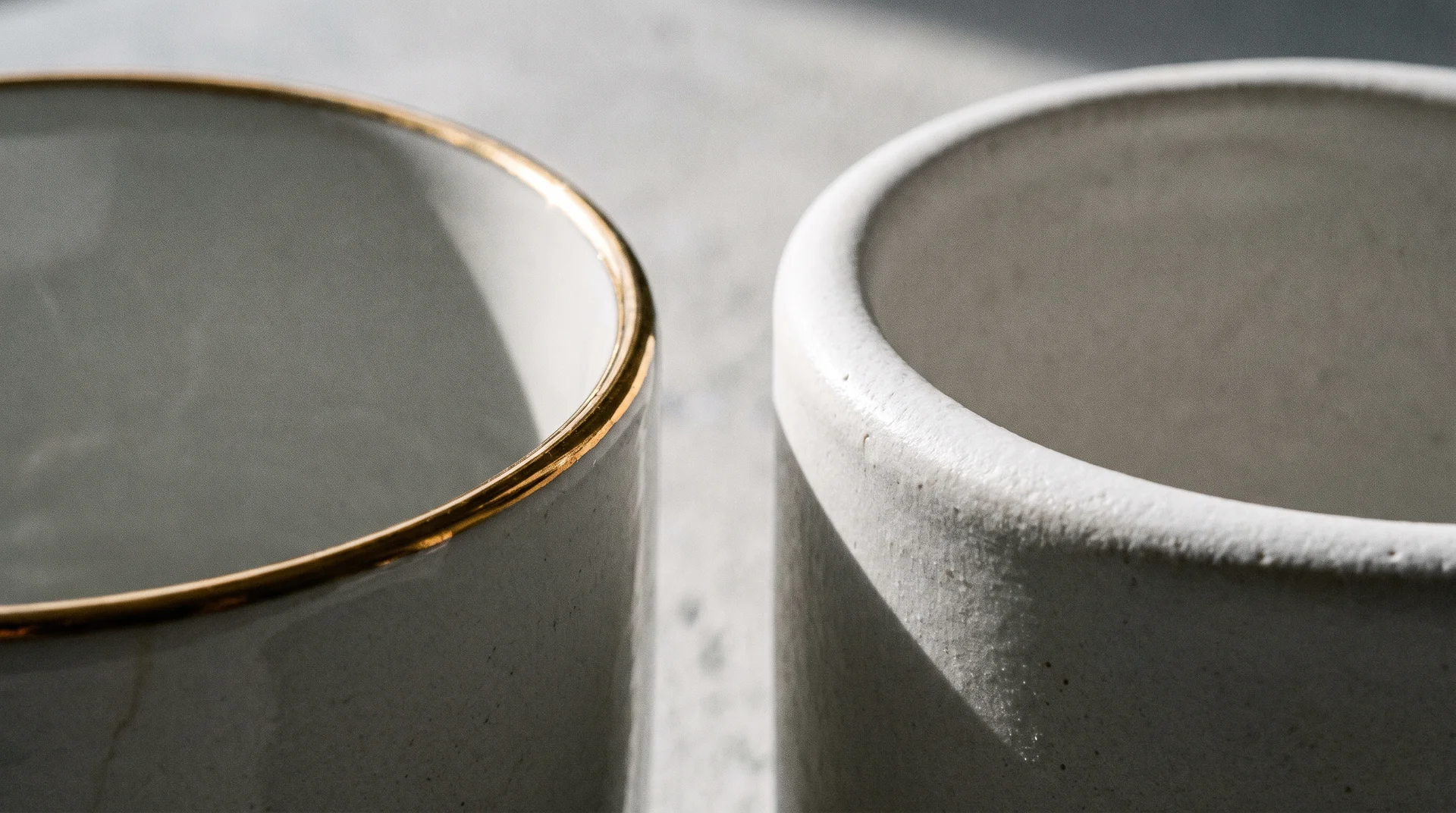
Any metallic rim or metallic decoration makes a mug unsafe for the microwave, regardless of how subtle the decoration appears.
The confusion here isn’t usually about whether metallic is unsafe. It’s about whether the decoration on a specific mug is actually metallic. That distinction is harder to confirm than it sounds.
Exterior metallic paint sits on top of the glaze. You can often see it flaking at the edges on older pieces. A metallic lustre glaze fused at kiln temperature looks like part of the mug itself, because it is. Among the mugs I’ve evaluated and set aside, the baked-in lustre glazes are the most consistently surprising.
Both behave the same way in the microwave: they arc.
If you can’t confirm whether the metallic decoration is exterior paint or kiln-fused glaze, don’t microwave it. Skip the mug. The cost of a sparking incident is not small.
Color-Changing Mugs
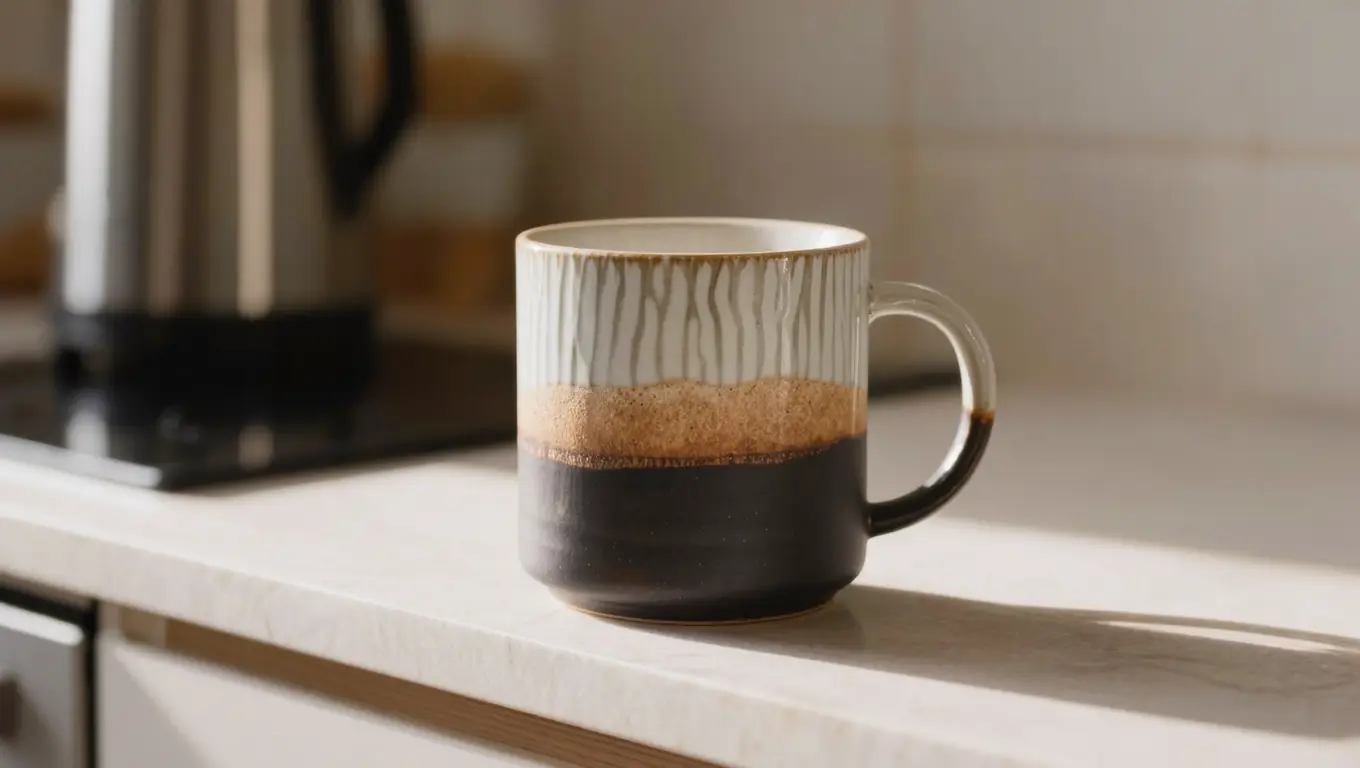
Most color-changing mugs are not safe for the microwave, regardless of what the underlying ceramic is made of.
The ceramic body underneath may be completely fine. The problem is the coating. These mugs use thermochromic pigments, compounds that shift color in response to heat.
Manufacturers apply them over the base glaze in a protective layer. That layer isn’t designed for sustained microwave radiation. It handles temperature. Microwave exposure is different.
The uncertainty here is real, and I want to name it.
Some newer color-changing mugs do carry microwave-safe designations from the manufacturer. I’ve encountered a handful. If you have documentation, check it.
If you don’t, assume no. This is one category I can’t give you a clean rule for.
Handmade and Pottery Mugs
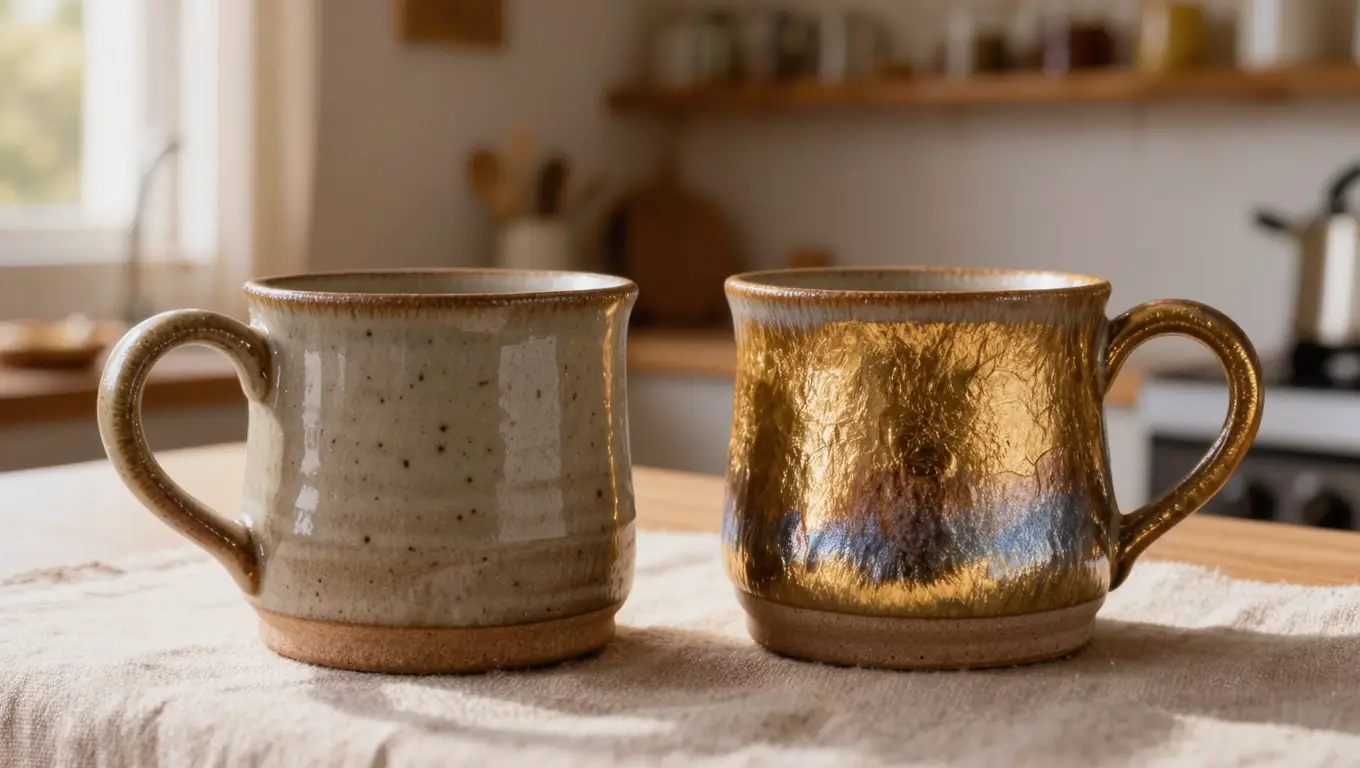
Most handmade pottery mugs are safe to microwave. The variable is the glaze, not the clay.
The idea that handmade pottery is inherently unsafe in the microwave circulates reliably in online discussions, and it’s mostly wrong. High-fire ceramic clays used in functional pottery don’t absorb microwave energy. The clay body isn’t the issue.
The issue is glaze chemistry. Metallic lustres and certain underglazes contain metal compounds. Those behave in the microwave exactly the way metallic paint on a commercial mug does.
The iridescent or high-shine finish is the tell.
If you can ask the potter about the glaze composition directly, do that. If you can’t, and the finish looks unusual, run the water test before making this a regular microwave mug. For a closer look at how firing temperatures and glaze types affect microwave safety, see microwave safety of handmade pottery.
Read:Can You Microwave a Handmade Pottery Safely?
Vintage Mugs with No Label
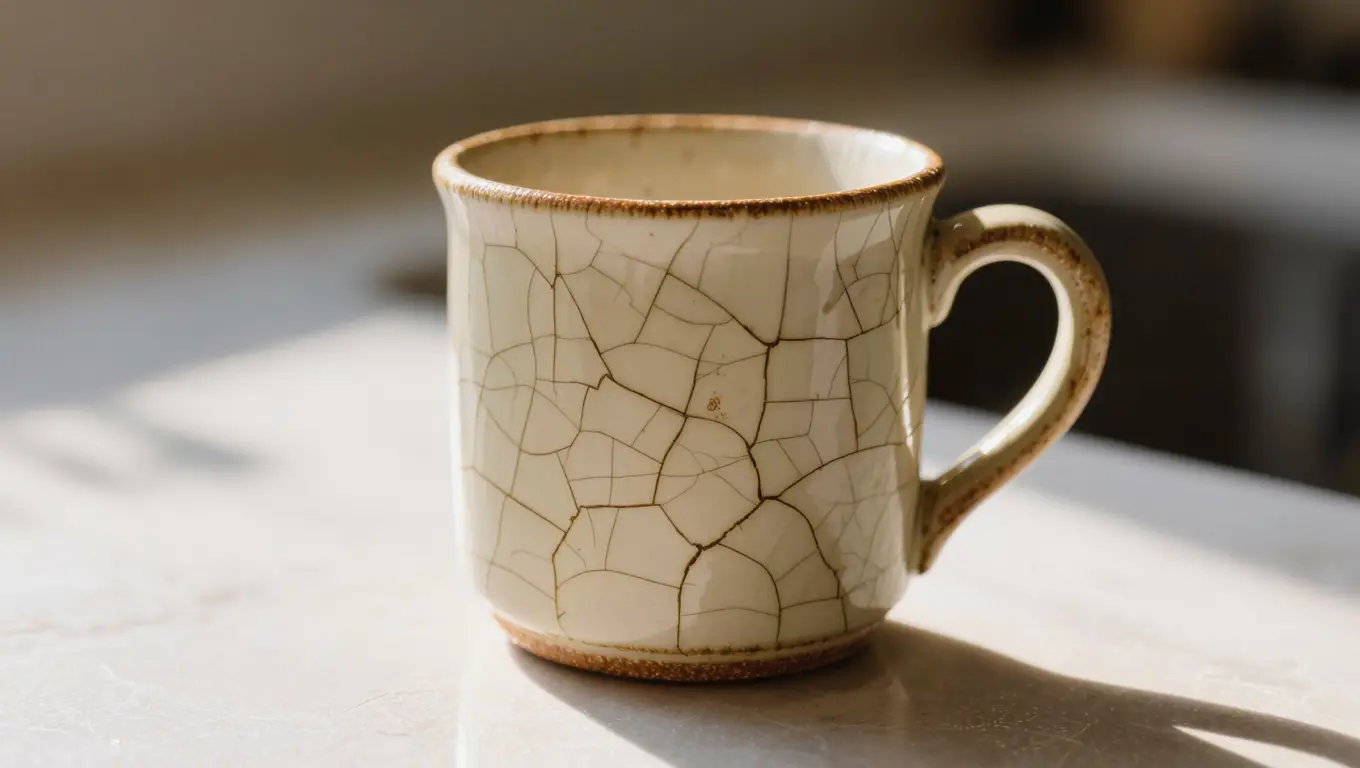
Pre-1980 mugs are worth a closer look before you microwave them regularly.
Older ceramic glazes, particularly those made before the late 1970s, sometimes contained lead or cadmium compounds. Manufacturers used them as colorants and stabilizers. Microwaving a vintage mug doesn’t cause lead to leach into your drink the way acidic liquids can.
But it adds a variable worth considering. Look at the glaze surface carefully. If you see crazing, the network of fine cracks that develops in ceramic glaze over time, don’t microwave that mug.
Moisture accumulates in those cracks.
In the microwave, it heats and expands rapidly. That can crack or shatter the mug.
Insulated and Double-Wall Mugs
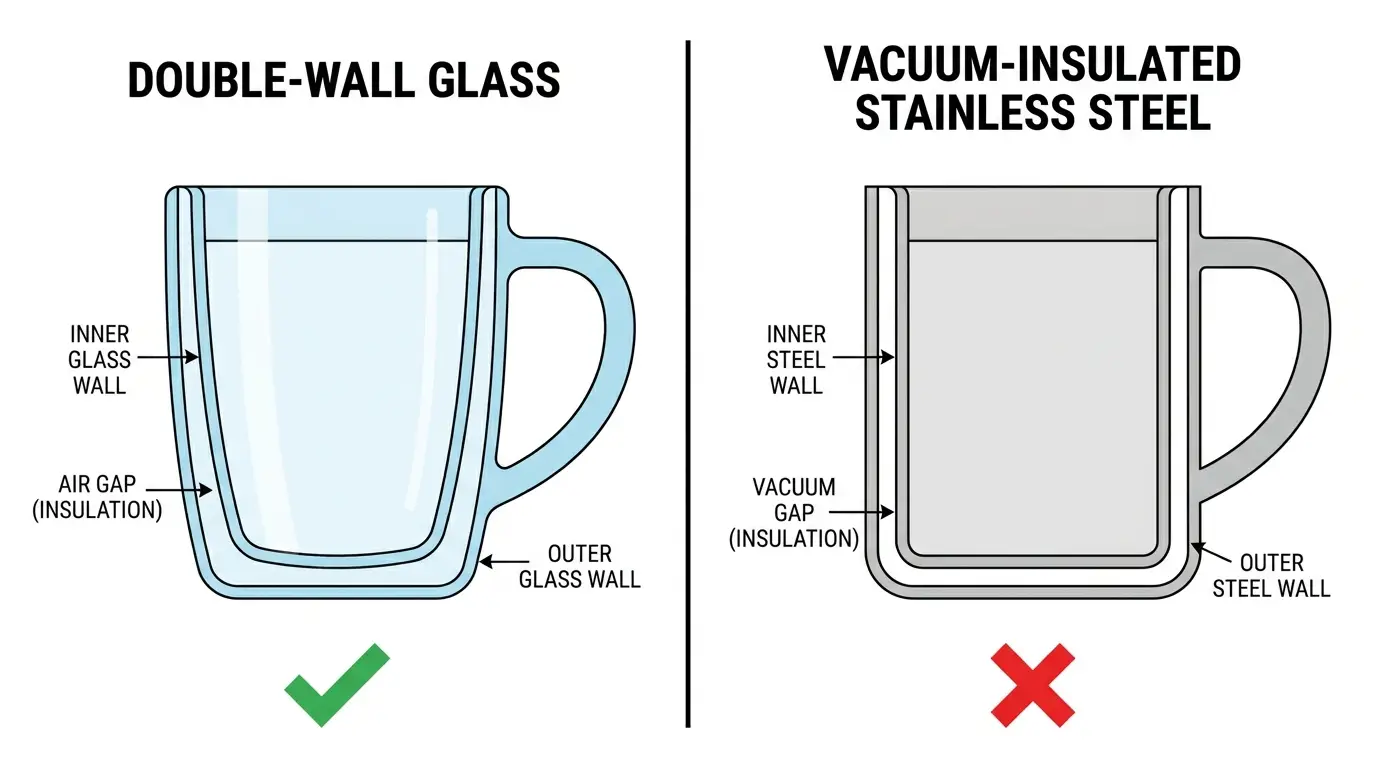
Double-wall glass mugs are generally fine in the microwave. Vacuum-insulated stainless steel travel mugs are not.
The distinction is what’s between the walls. A double-wall glass mug has air between two layers of glass. It’s still glass all the way through.
A vacuum-insulated stainless steel travel mug has metal in its construction. Metal causes the same arcing problem in a microwave regardless of where it sits in the mug’s structure.
The rule for travel mugs is simple.
If “stainless steel” or “vacuum insulated” appears anywhere in the product description, don’t microwave it.
When Your Mug Gets Hot in the Microwave
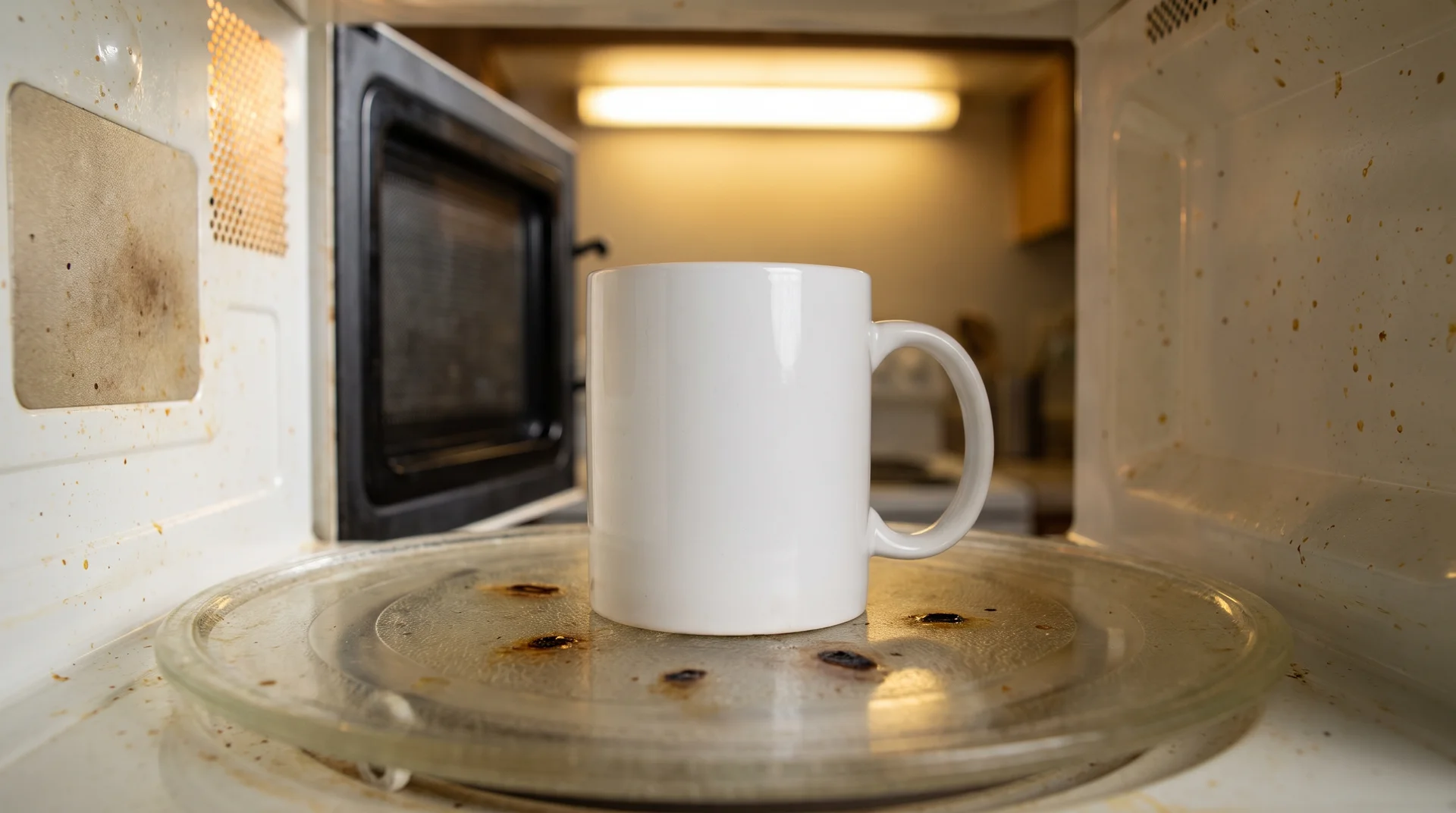
A warm mug isn’t automatically a warning sign.
The question is what’s heating up. A mug that warms because the liquid inside is hot is behaving normally. Thick ceramic walls conduct and retain heat from your drink.
A mug that generates heat from the inside out, while the liquid stays cool, is the problem. A one-minute water test will confirm it. If something already happened and you’re reading this section, run that test before using the mug again.
Handle heating is almost always a separate issue.
Many mug handles have slightly different wall thickness or clay density than the body. That causes uneven heat retention after a longer microwave cycle. A handle too hot to hold after 30 seconds is worth testing.
When an unsafe mug fails in the microwave, here’s what actually happens. Each point to a different material problem.
- Metallic elements cause arcing, the sparks that can damage the microwave cavity and crack the mug
- Cracks in a damaged glaze trap moisture, which expands rapidly in the microwave and can shatter the mug
- Incompatible plastic warps visibly or gives off a chemical smell
If you see or smell any of these, stop the microwave immediately. If sparking occurred, inspect the microwave cavity for damage before using it again.
The Answer for Any Mug You Own
The water test works for every mug you’ll ever be unsure about.
No label is required. One minute in the microwave, with a cup of water alongside it. The mug tells you what it actually does.
Whether you can microwave a stainless steel tumbler or a paper coffee cup is a different question. Those materials fail in different ways. That’s a different article, and it needs different criteria.
A label tells you what the manufacturer decided. A test tells you what the mug does.