
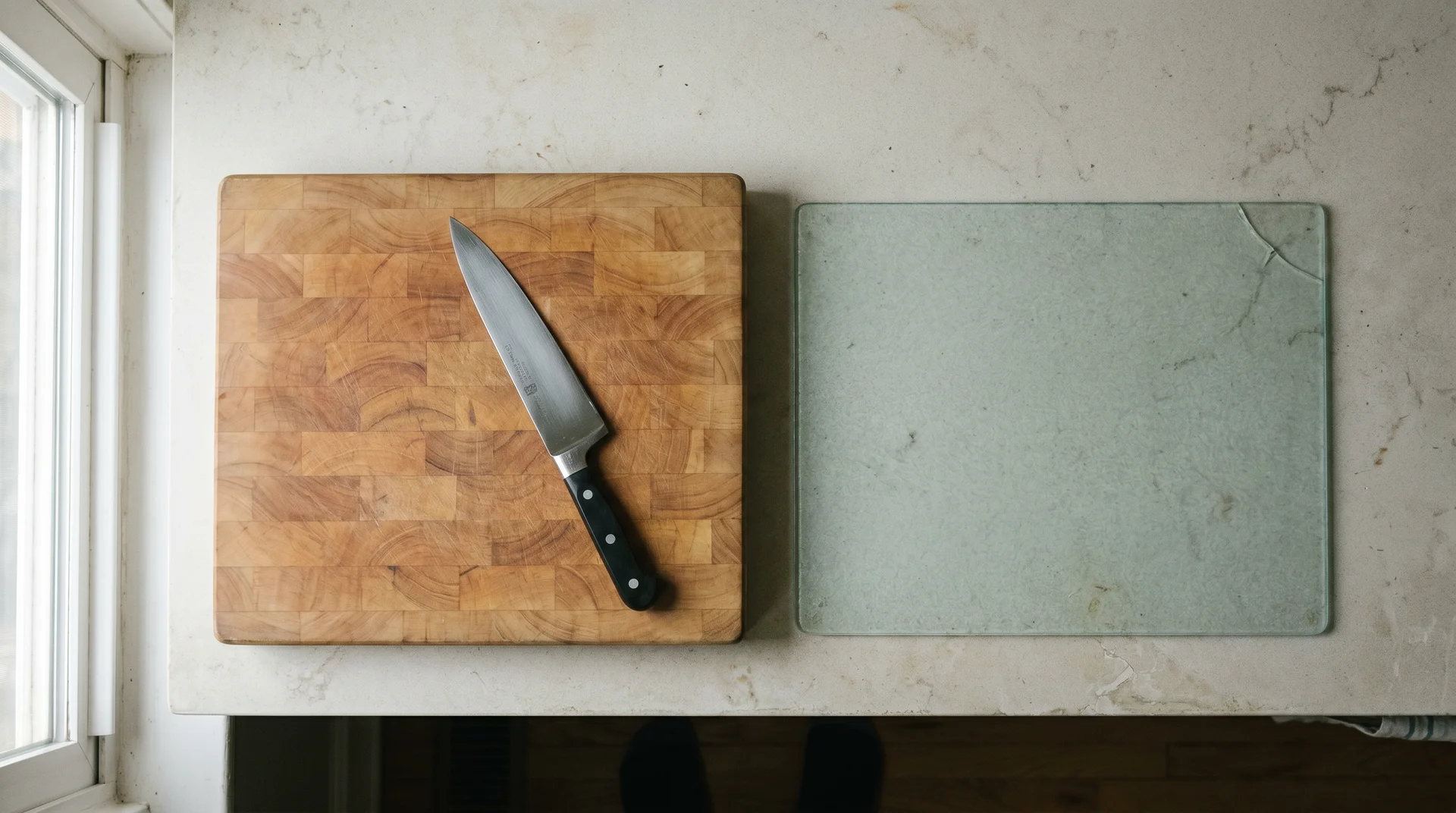
Glass cutting boards are not good cutting surfaces. They are genuinely useful for serving, and that distinction changes what you do with the one in your cabinet.
Most people arrive at this question in one of two ways. They received a glass board as a gift, or they picked one up at a discount store because it looked clean and easy to maintain.
Either way, the answer is the same. What changes is what you do next.
What Glass Does to a Knife Edge?
Glass damages knife edges in a specific way that most coverage gets wrong.
The Hardness Problem Explained in Plain Terms
Glass cutting boards damage knives because tempered glass is harder than knife steel.
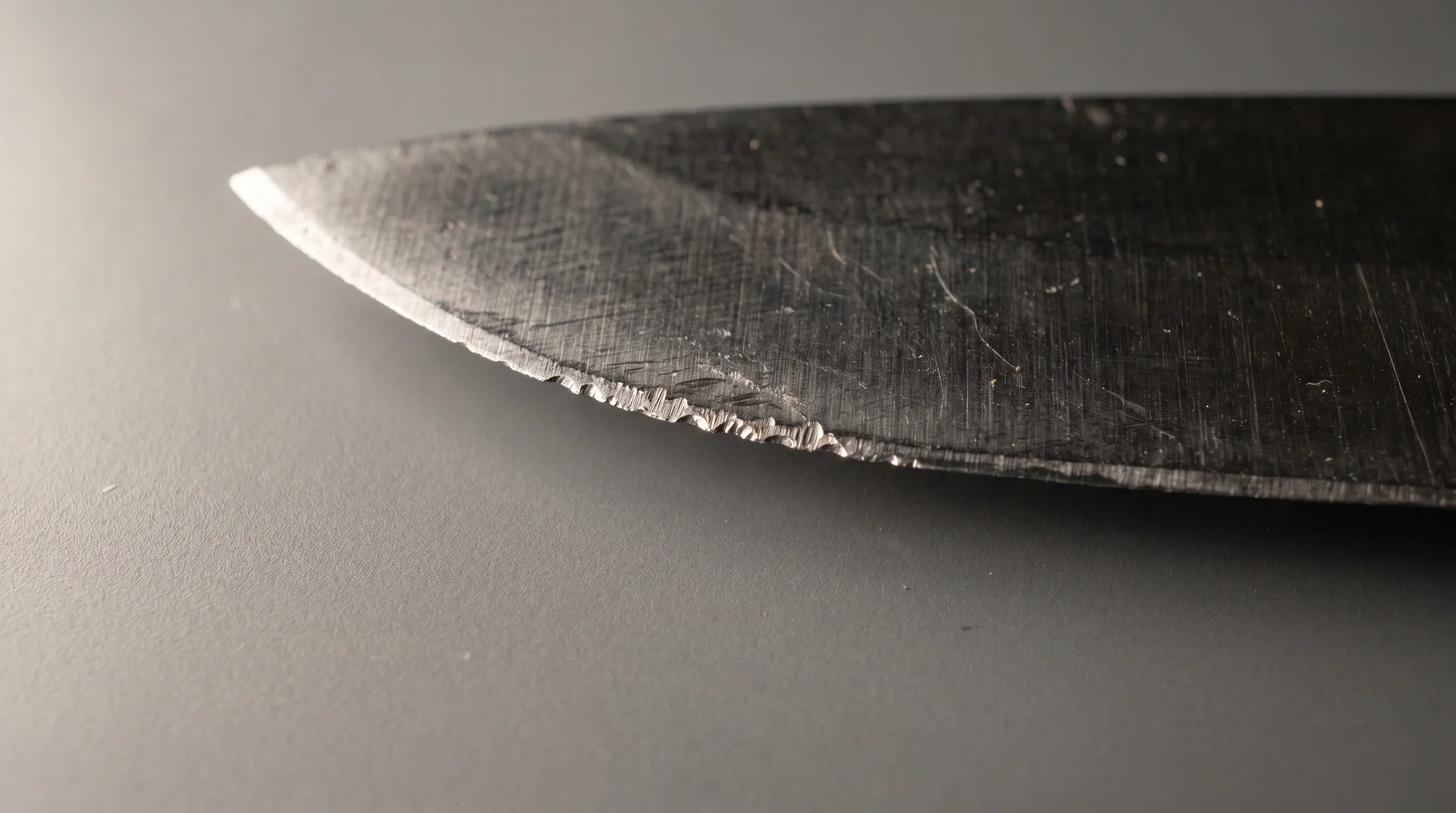
Every stroke on a glass surface causes micro-fractures, small structural cracks along the blade’s cutting edge, and those cracks require full resharpening to fix, not just honing.
- Glass sits between 6 and 7 on the Mohs hardness scale, a standard measure of how easily one material scratches another.
- Hardened steel sits around 4.5 on the same scale. When the surface is harder than the blade, the blade loses something every stroke.
The failure mode is chipping, not gradual wear. A chipped edge has small structural breaks along the blade’s cutting edge shape. A rolled edge, by contrast, has bent slightly out of alignment but is otherwise intact.
That distinction matters because the fix is different. A honing rod realigns a rolled edge in two minutes. It cannot repair chip damage. Chip damage requires a whetstone or mechanical sharpener.
America’s Test Kitchen uses glass cutting boards deliberately to dull new chefs’ knives before testing honing rods. Their equipment team examined the results under a microscope at MIT. The edges were fractured, not rolled.
If you’ve been honing regularly and your knife still feels wrong, the board is likely the reason.
What “Dulling” Actually Looks Like in Practice
The damage accumulates slowly, which is why most people blame their sharpening technique before they blame the board.
A knife damaged by glass still cuts for a while. What changes is feedback. The blade starts to slip across food rather than bite into it, and you add pressure without noticing.
There is also the noise. Metal on glass produces a harsh, resonant sound with every stroke. It is the acoustic version of nails on a chalkboard. It is also a signal that the blade is being worked against a surface it cannot handle.
More pressure is where kitchen injuries happen. A sharp knife in control is significantly safer than a dull knife requiring force.
Are Glass Cutting Boards More Hygienic?
Glass cutting boards have a real hygiene advantage.
They also have a practical limitation that most coverage skips over. Understanding both is what lets you make an actual decision.
Why Non-Porous Sounds Like a Win
Glass does not absorb liquids, so it does not harbor bacteria the way a poorly maintained wooden board can.
The USDA Food Safety and Inspection Service confirms that nonporous surfaces are easier to clean than wood. That category includes glass, plastic, marble, and ceramic.
These surfaces can go in the dishwasher, require no oiling, and do not develop the deep knife grooves that make old plastic boards a bacterial hazard.
On paper, glass wins the hygiene comparison cleanly.
The Chipping Problem Changes the Equation
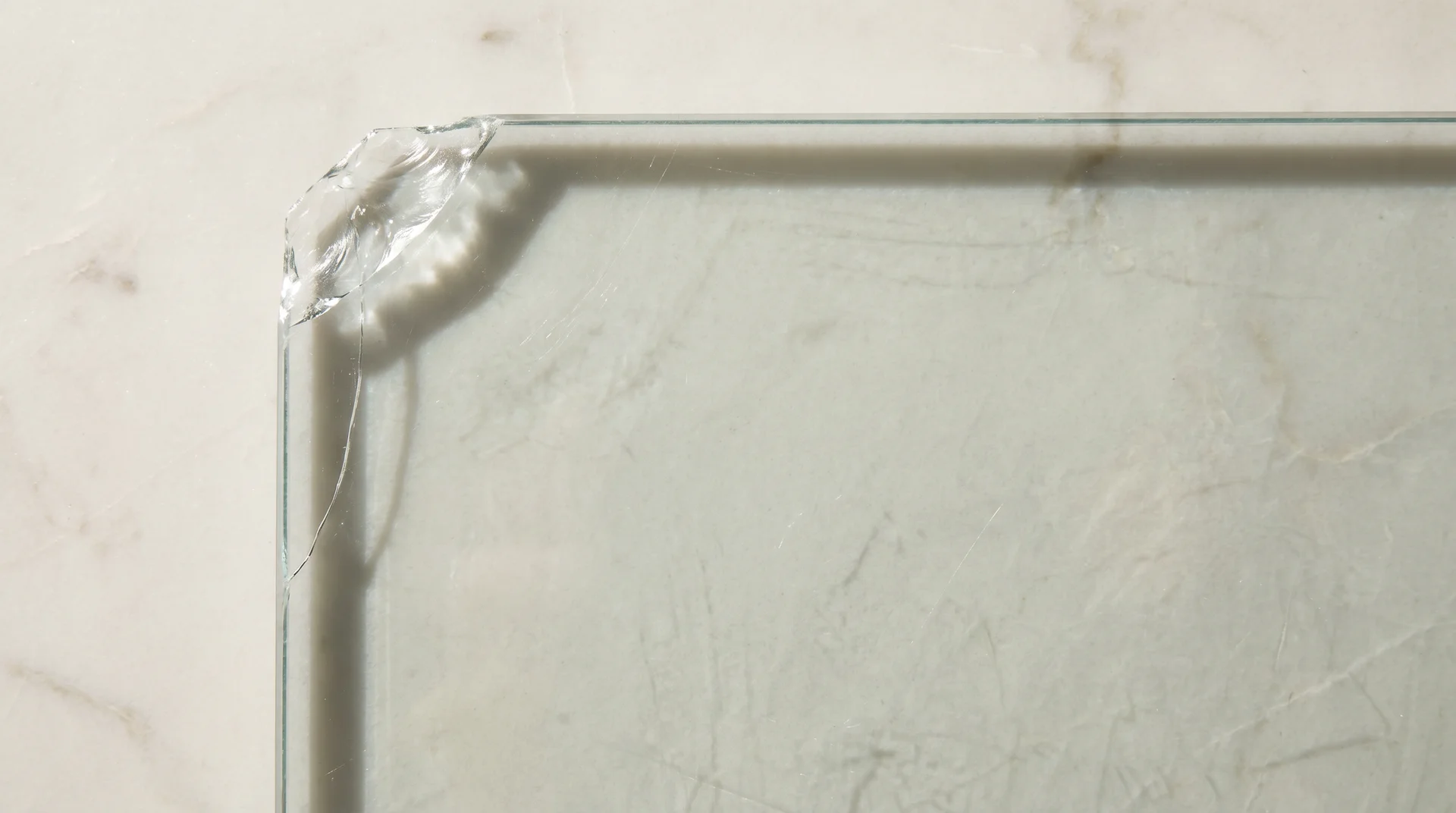
A chipped glass surface traps food particles and bacteria the same way knife grooves do in old plastic boards. The hygiene advantage is only real while the board is intact.
Tempered glass chips when dropped or subjected to repeated impact. Boards get stacked, slid off counters, and knocked around in the course of daily kitchen use.
Once chips form, those surface irregularities trap food in exactly the same way scratched plastic does. The dishwasher does not fix this. The non-porous advantage depended on a surface condition that real kitchens do not reliably maintain.
Whether your specific board has chipped enough to matter is something you can check by feel. Run your finger carefully along the surface and edges, especially the corners. If it feels smooth and intact, and it goes straight into the dishwasher after every use, the hygiene case has some merit.
I’ve never encountered a glass board used regularly for two years that was still flawless. That’s observation from real kitchens, and I’ll name that limit plainly.
What a Glass Cutting Board Is Actually Good For
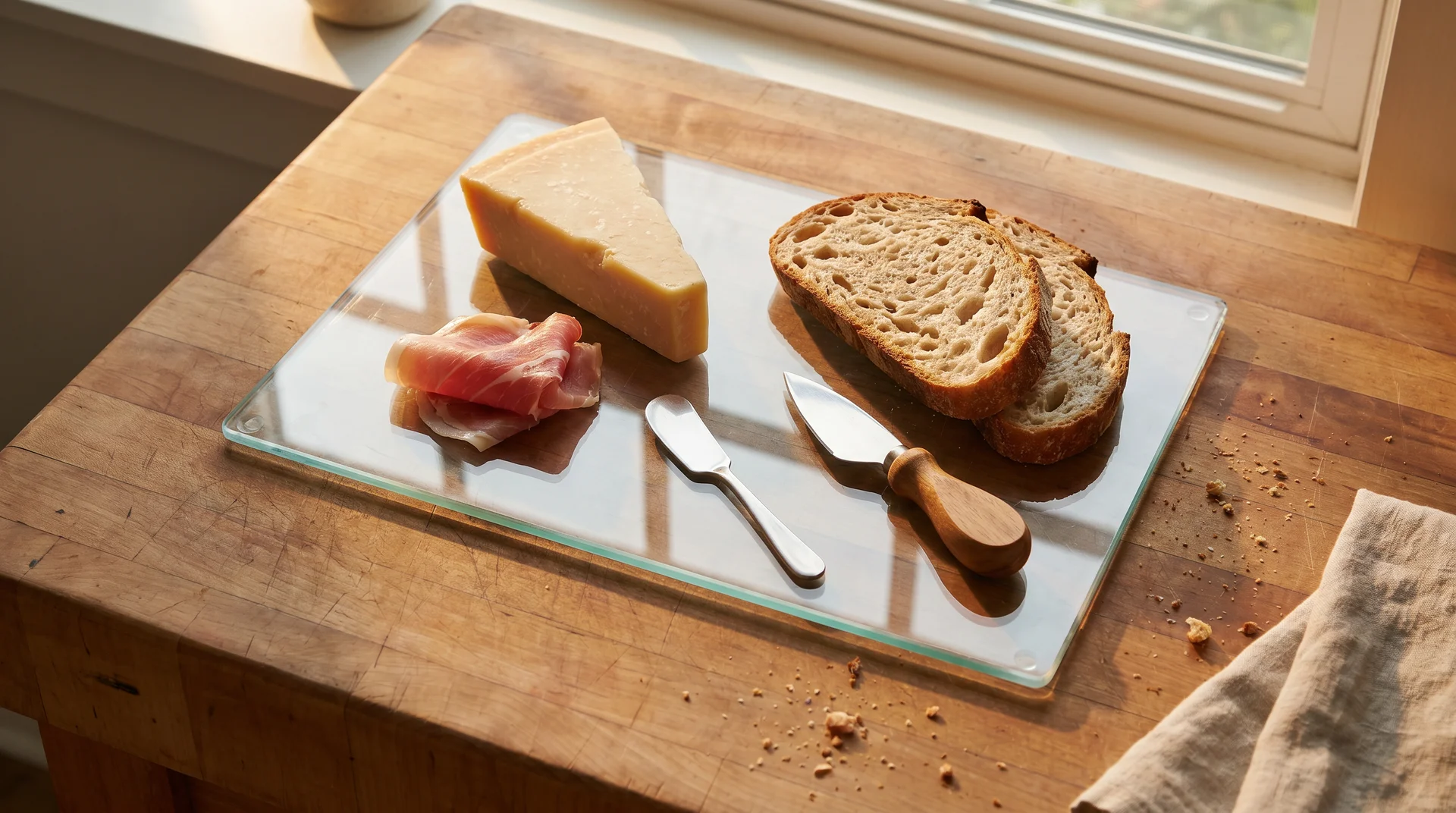
Glass boards are genuinely well-suited to three kitchen roles.
None of them involves a sharp knife. That is the entire constraint, and everything else follows from it.
- Serving. A glass board works well for cheese, charcuterie, bread, and sliced fruit. You are using a spreader, a cheese knife, or nothing at all. None of those tools has the edge geometry that glass damages. Glass also cleans up completely and does not absorb odors, which makes it better than wood for anything going directly in front of guests.
- Trivet. Glass is heat-resistant and stays flat. It will not warp, burn, or discolor under a hot pan or baking dish. That is a legitimate daily-use function for a board that should not be cutting anything.
- Pastry and dough work. Rolling dough on a cool, non-porous, non-absorbent surface works well. Glass stays cool, does not require flouring the way a wooden board does, and cleans up easily. If no sharp knife is involved, none of the damage arguments apply.
One condition that applies to all three uses is that the board must be intact.
Glass fragments in food are a genuine hazard. A chipped board belongs in the recycling bin.
How to Know If Your Glass Board Has Already Damaged Your Knives?
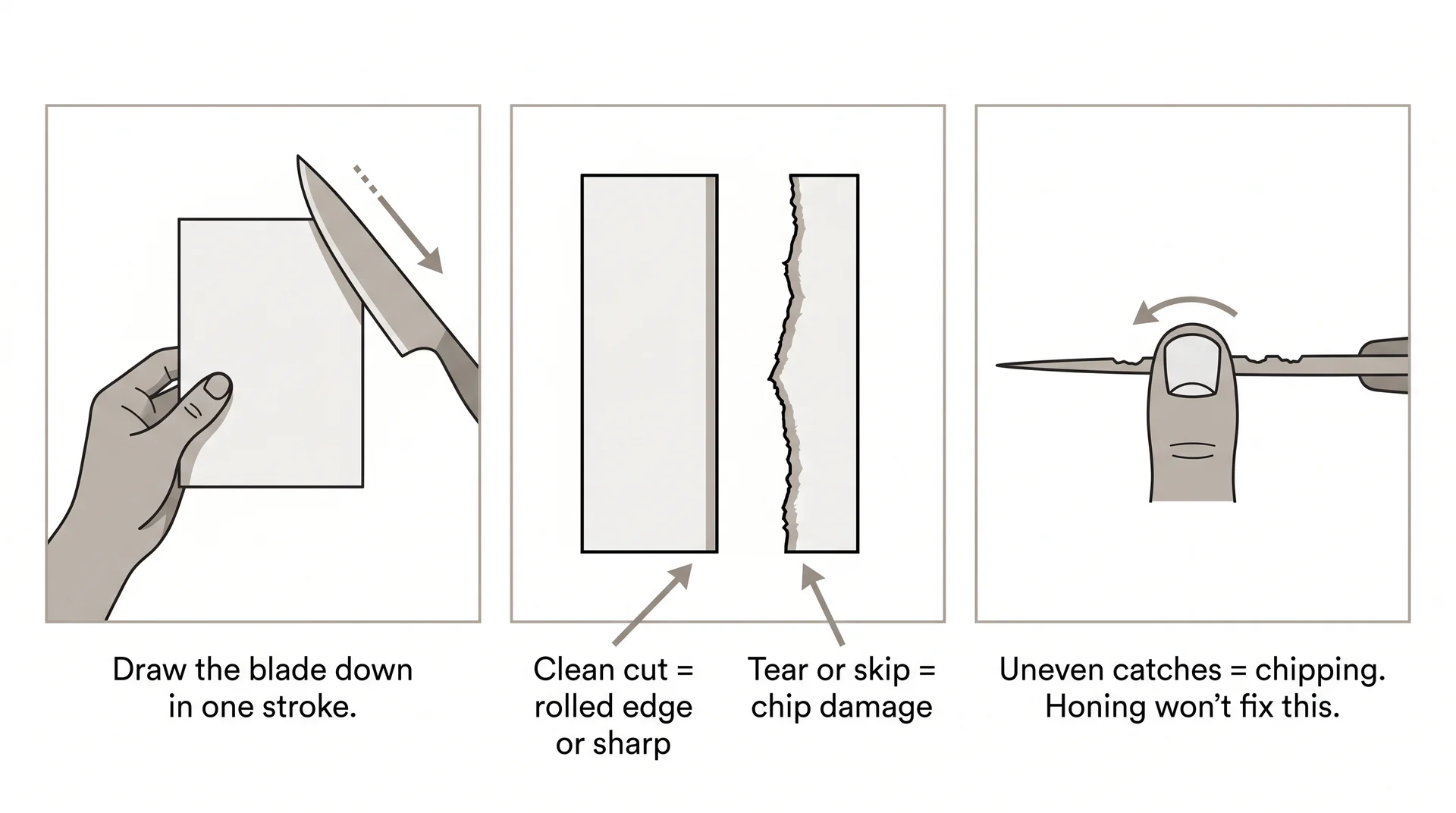
A simple paper test tells you whether your knife has already sustained glassboard damage.
Glass causes chipping rather than gradual dulling. The standard feel-of-the-blade test is not sufficient on its own. Here is the faster, more accurate method.
The Paper Test
The paper test reveals your knife’s edge condition in thirty seconds. It also distinguishes chipping from rolling, which determines what fix you need.
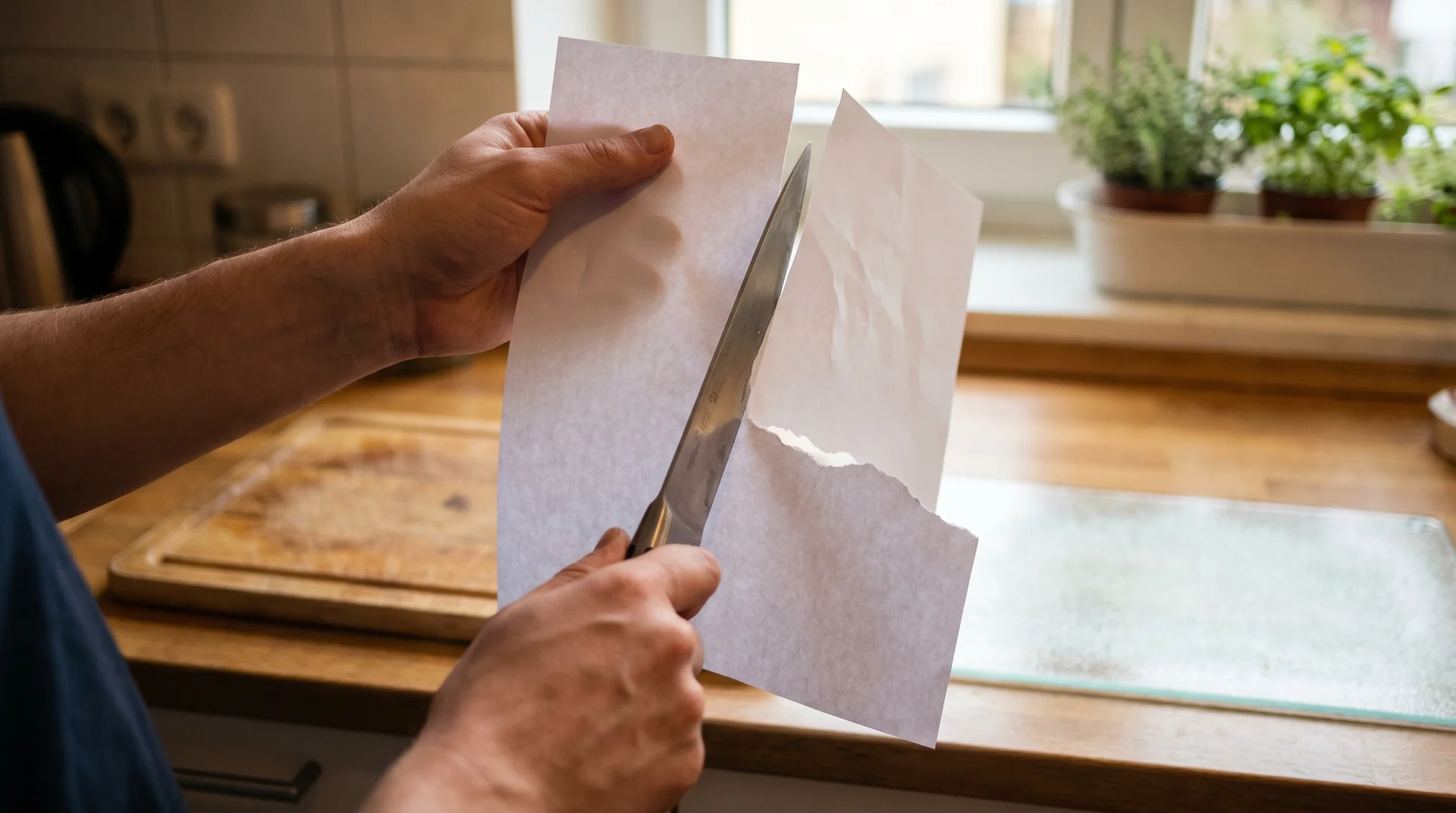
- Hold a piece of printer paper vertically between two fingers.
- Draw the knife edge down through the paper in one smooth stroke.
- A sharp edge cuts cleanly and consistently along the full length of the blade. If the blade drags, tears, or skips, you have damage worth addressing.
- Next, run your thumbnail very gently perpendicular to the blade edge.
A rolled edge catches slightly but feels even along its length.
A chipped edge feels uneven. It catches irregularly at specific points rather than producing consistent drag along the full blade.
What to Do If the Damage Is Already Done
Chipped edge damage requires resharpening on a whetstone or pull-through sharpener. A honing rod will not address it.
A honing rod realigns an edge that has rolled out of alignment. It cannot repair the structural fractures that a glass surface causes. Those are two different problems with two different tools.
Most home cooks can handle this repair themselves with accessible equipment.
For accessible home repair, a pull-through sharpener handles chip damage adequately. I’ve used pull-through sharpeners on glass-damaged edges and tested this in my own kitchen.
I’d call them functional for this purpose, adequate enough that most household cooks will get a usable edge back. For knives worth caring about, a 1000-grit whetstone addresses chip repair. A pass at 3000 grit or higher refines the edge afterward.
What to Use Instead, and How to Choose
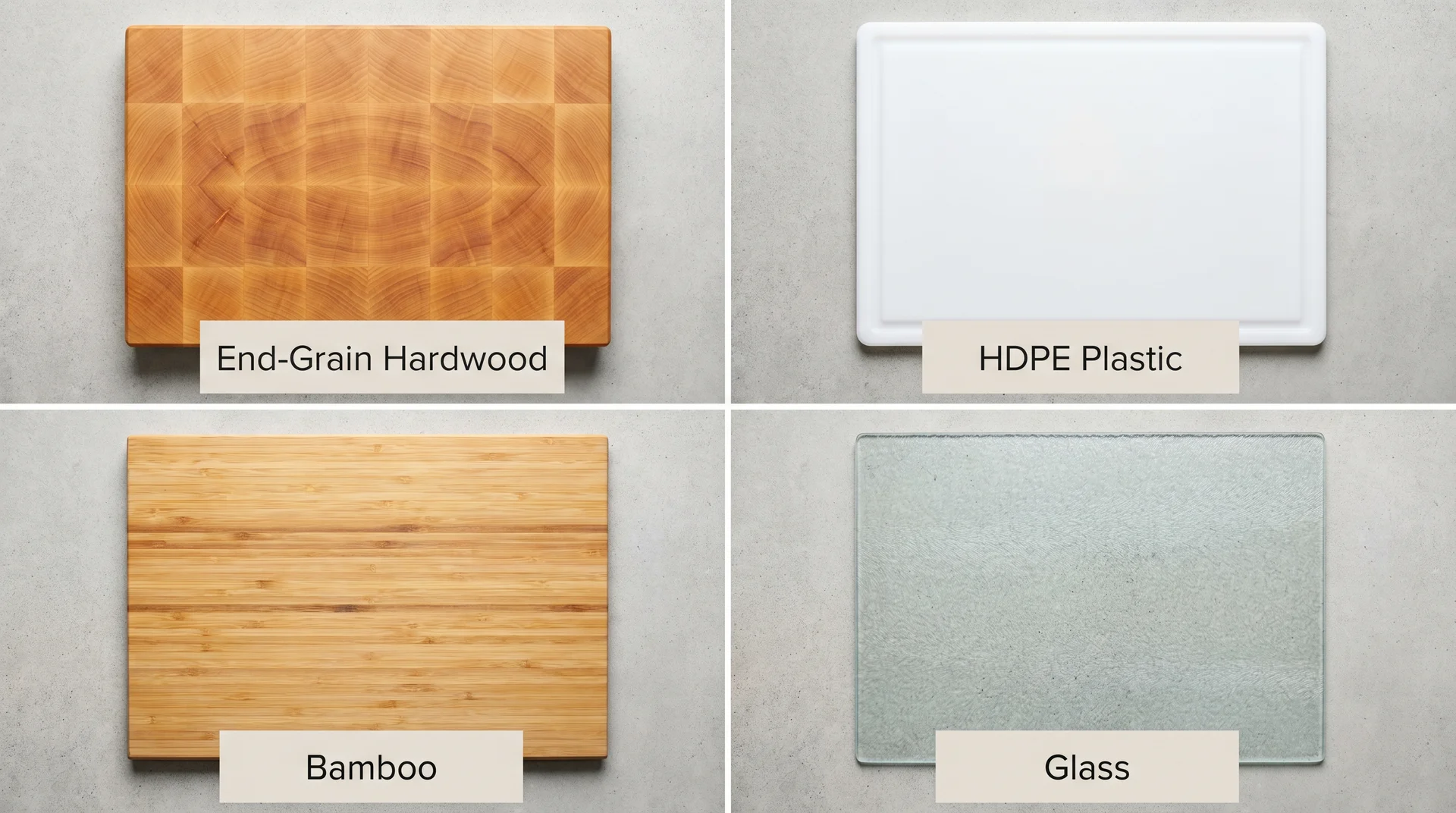
The best replacement depends on how your kitchen actually operates.
The USDA and the University of Maine Cooperative Extension both recommend nonporous surfaces for sanitation ease. That guidance covers materials with very different practical trade-offs. For everyday cooking, the comparison looks like this:
| Material | Knife Impact | Hygiene | Maintenance | Best For |
|---|---|---|---|---|
| End-grain hardwood (maple, walnut) | Gentle — blade enters wood grain rather than striking across it | Good with regular oiling | Oil monthly, no dishwasher | Daily prep, all knife tasks |
| Edge-grain hardwood | Moderate | Good with maintenance | Oiling required | Every day use, more accessible price |
| HDPE plastic (high-density polyethylene, the material in most commercial-grade plastic boards) | Moderate | Excellent — dishwasher safe | Replace when grooves deepen | Raw meat prep, dishwasher households |
| Bamboo | Moderate to hard — harder than most hardwoods | Good | Periodic oiling | Eco-conscious buyers, with caveats |
| Glass | Destructive — causes edge chipping | Excellent when intact | Very low | Serving, trivet, pastry only |
My starting recommendation for most households is a mid-sized end-grain maple board. I’ve been testing cutting surfaces in real residential kitchens, not in controlled environments. End-grain hardwood produces the least edge wear over time, in my experience.
If maintenance feels like a real obstacle, a thick HDPE plastic board is the better practical call. It is dishwasher safe, knife-safe, and inexpensive enough to replace when the grooves get too deep.
The bamboo boards marketed as a premium, eco-friendly option are harder on knife edges than most hardwoods. That is worth knowing before you spend more to get less knife longevity.
There is one genuine uncertainty in this comparison worth naming. The long-term hygiene performance of an end-grain hardwood board depends on consistent oiling and keeping it away from the dishwasher. Some cooks will maintain it correctly for years. Others will oil it once and move on.
If your honest kitchen situation is closer to the second, a plastic board serves you better in practice. Choosing based on how you actually cook is not a compromise. It is the right call.
One Practical Note on Raw Meat and Glass

Glass can handle raw meat prep under one specific condition.
The board must be intact, and it must go straight into the dishwasher after contact. If both conditions hold, the glass’s non-porous surface is genuinely effective for raw meat sanitation.
The USDA recommendation is consistent regardless of board material: use a separate cutting board for raw meat, poultry, and seafood. That protocol applies to wood, plastic, and glass alike. The separation matters more than the surface material.
The knife problem remains. Whatever you are using to portion or butcher meat is being damaged by every stroke on the glass.
A dedicated HDPE plastic board handles raw meat, tolerates the dishwasher, and will not destroy a boning knife. That is the practical solution for most home kitchens.
As noted earlier, the chipping issue applies here, too. A glass board with any surface damage is not a safe surface for raw meat prep. Check the board before using it for anything involving food contact.