
Most carving knife roundups assume you’ve already decided to buy. These four are the picks I’d stand behind for a home cook who carves regularly.
- Best overall: Wüsthof Classic 9-Inch Carving Knife
- Best budget: Victorinox Fibrox Pro 9-Inch Carving Knife
- Best for turkey and bone-in holiday roasts: OXO Good Grips Pro 9-Inch Carving Knife
- Best Japanese-style: Shun Classic 9-Inch Hollow Edge Carving Knife
This covers kitchen carving knives for meat. Wood carving tools share the name and nothing else.
Do You Actually Need a Carving Knife?
Most kitchens don’t actually need a dedicated carving knife.
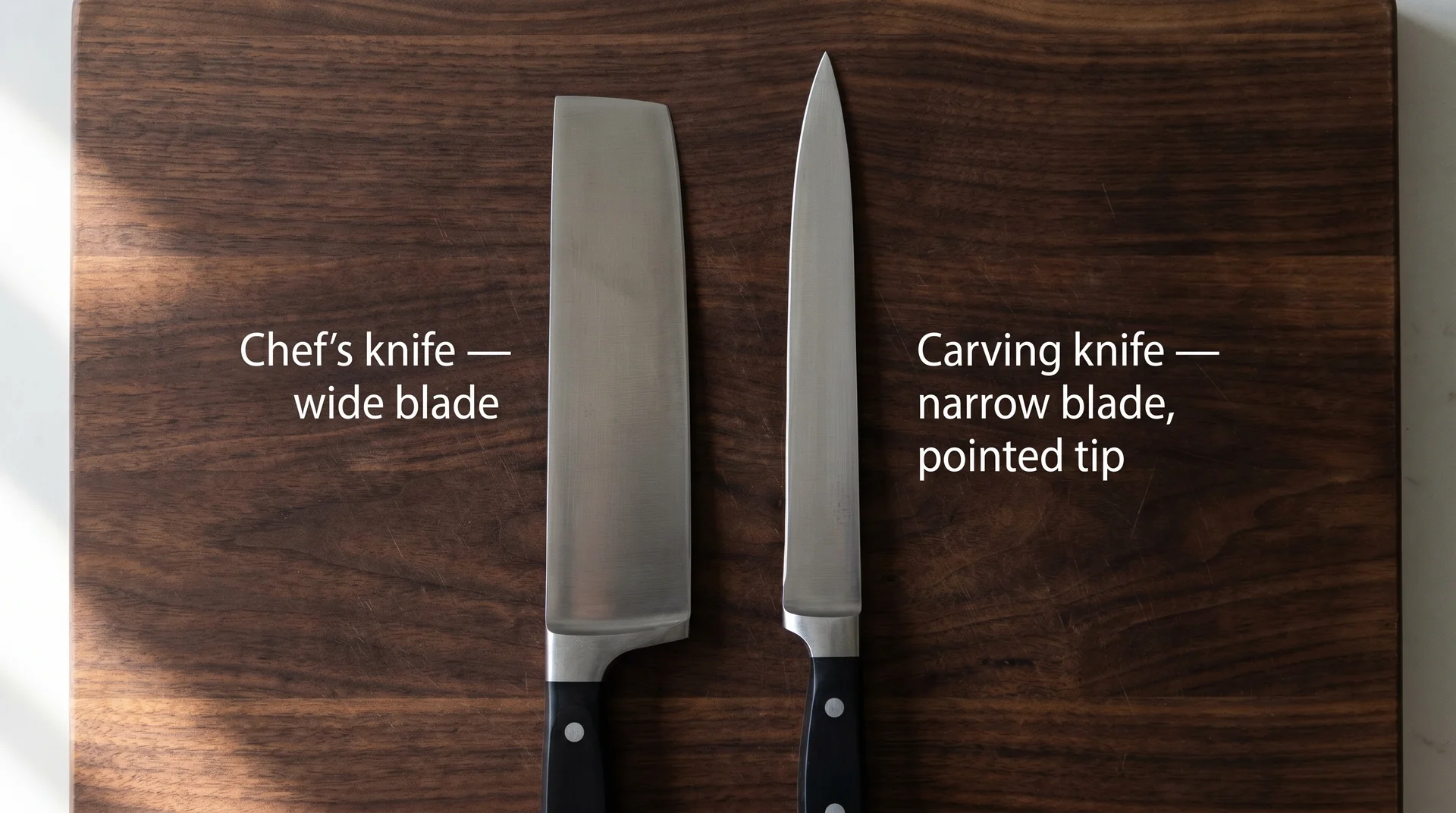
If you regularly carve a whole bird or a bone-in roast, a carving knife earns its place. The blade geometry is genuinely different from that of a chef’s knife. A wide chef’s blade works against you when you need to maneuver around a joint.
If your roasts are usually boneless, your chef’s knife is enough for the task.
A boned leg of lamb, a rolled pork loin, a beef tenderloin. None of these requires a dedicated carving knife. It covers what the right chef’s knife looks like for that kind of work. The blade width isn’t a problem when there’s no bone to work around.
On carving sets, the fork adds stability while you’re holding a large roast in place. A regular serving fork or kitchen tongs do the same job. The knife is the real purchase.
They solve specific problems in certain kitchens, including high-volume cooking and grip limitations.
Carving Knife vs. Slicing Knife
The confusion between carving knives and slicing knives costs people money.
They’re sold side by side and look similar at a glance. They’re not the same knife. Buying the wrong one means spending money on a tool that works against your actual cooking.
Carving Knife
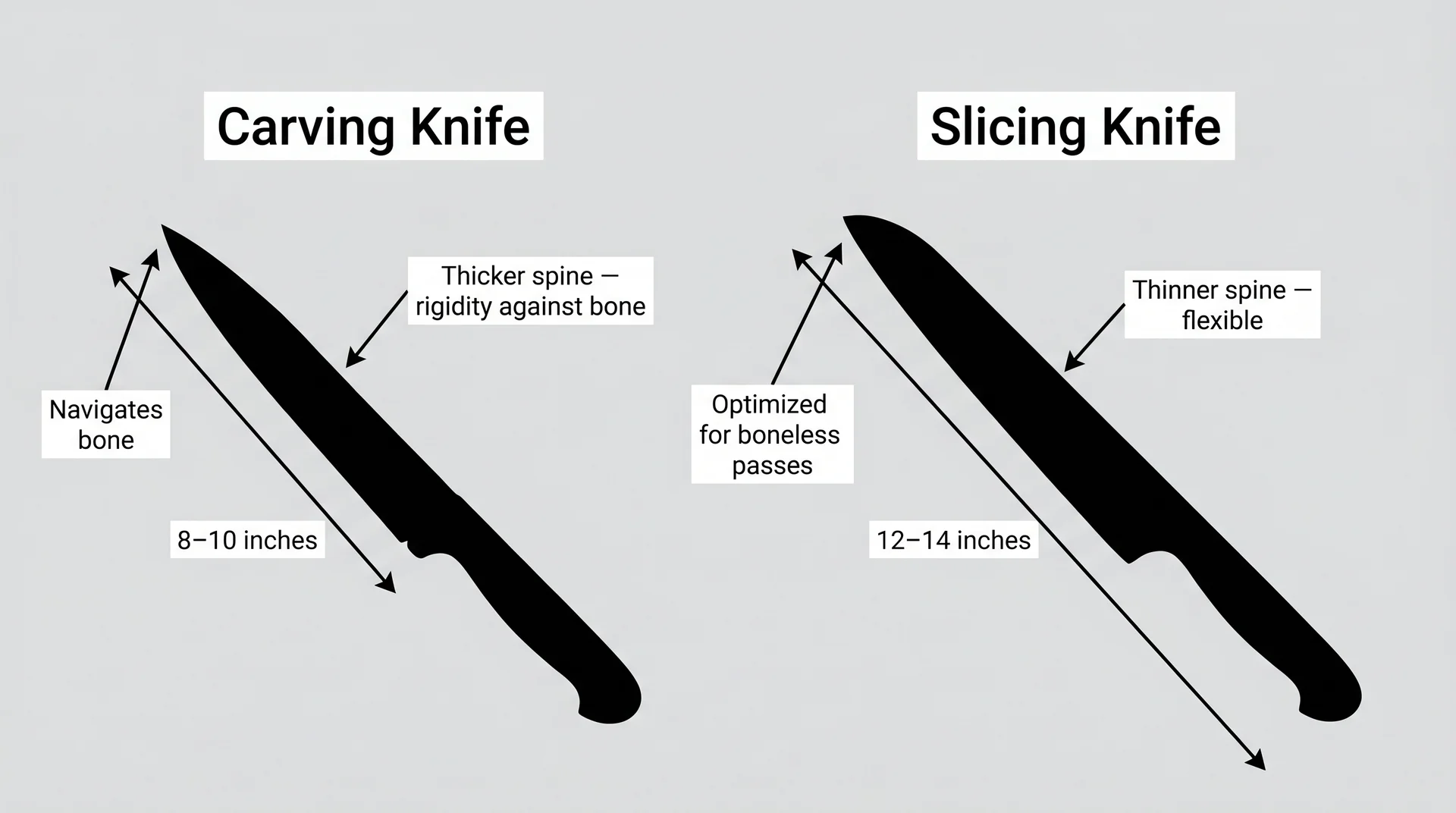
A carving knife has a pointed tip. A slicing knife usually doesn’t.
That pointed tip does specific work. It lets you maneuver around bone, get under the wishbone, and follow the curve of a thigh joint.
It doesn’t tear the meat while doing any of it. A slicing knife’s rounded or flat tip is built for a clean pull across a boneless surface. There’s no anatomy to navigate. Blade length also reflects the task.
- Carving knives run 8 to 10 inches. That gives you enough reach for a whole bird or a standing rib, with enough control to work around bone.
- Slicing knives go longer, 12 to 14 inches.
They’re built for a single long draw across an open cut.
The blade cross-section is the third difference, and the one most buyers don’t know to look for.
A carving knife is slightly thicker through the spine, which helps when the blade presses against bone. A slicing knife is thinner, sometimes noticeably flexible. That keeps the cut smooth on soft or fatty cuts like ham or salmon.
Slicing Knife
If you mostly cook boneless cuts, a slicing knife serves you better than a carving knife.
Boneless prime rib, spiral-cut ham, brisket, whole salmon, pork loin. For any of these, the long, uninterrupted blade of a slicer is the right tool.
I’ve tested this comparison directly. A carving knife feels short and oversteers on those cuts compared to a 12-inch slicer.
If you cook both bone-in and boneless roasts regularly, the carving knife is the more versatile choice. It handles bone-in work that a slicer cannot and performs well enough on boneless cuts. The reverse is not as clean.
What to Look For Before You Buy
Four things matter more than brand when choosing a carving knife.
Most reviews lead with brand and price. I find those are the last two things to check. What actually predicts performance: blade length, blade flex, edge surface, and steel type.
Handle fit is the fifth factor, and it changes significantly between price points.
Blade Length
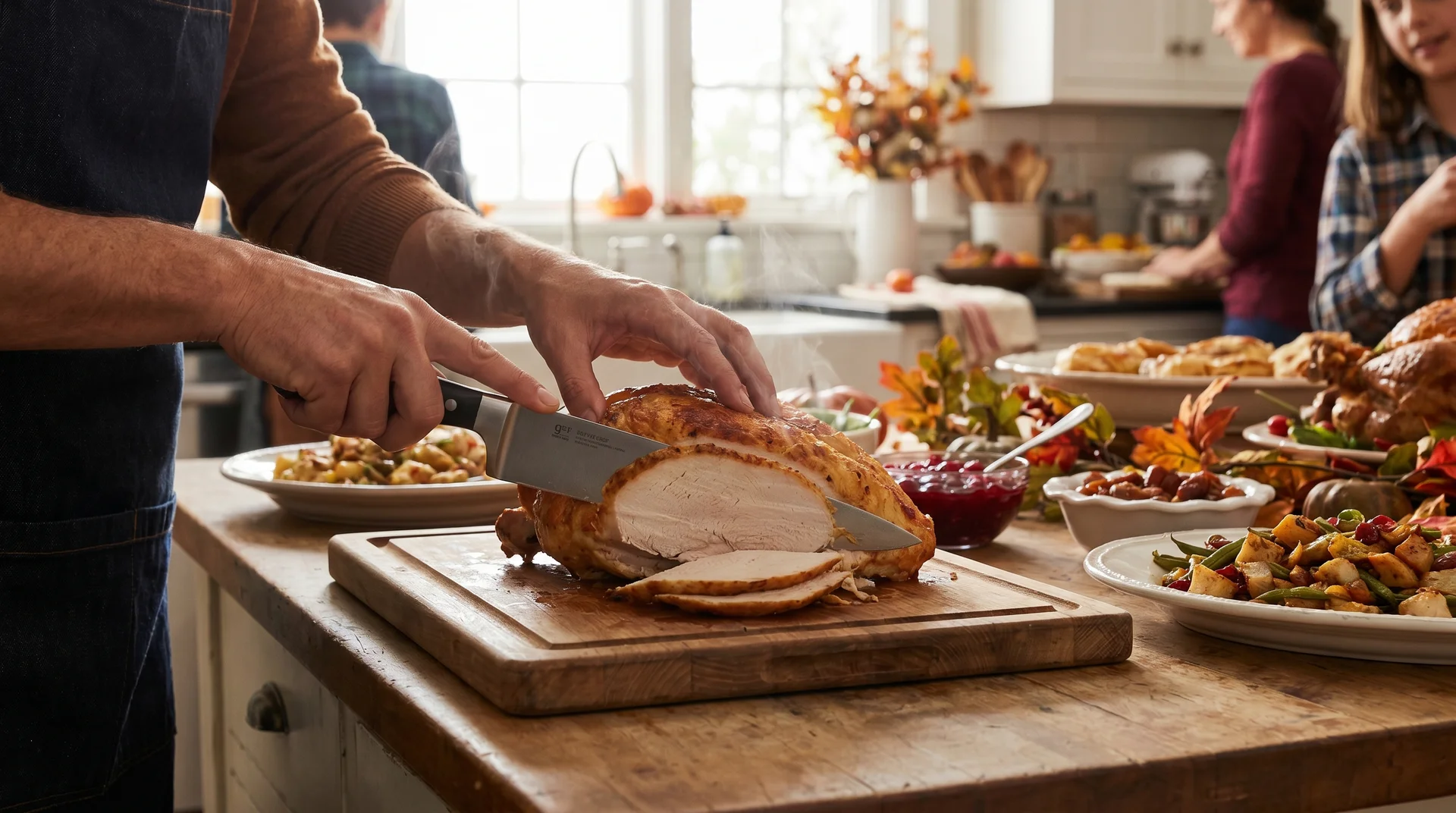
For most home cooks, a 9-inch carving knife is the right blade length.
An 8-inch blade is enough for a smaller bird or a roast under 4 pounds. A 10-inch blade gives you more reach on a full 15-pound turkey or a large standing rib roast.
Beyond 10 inches, the length starts working against you in a home kitchen. The control advantage begins to degrade.
I tested this in my own kitchen, not in controlled conditions. The 9-inch is where most home cooks find the best balance of reach and control. The 12-inch and 14-inch blades belong in professional carving stations. They don’t belong in residential kitchens.
Flexible vs. Rigid
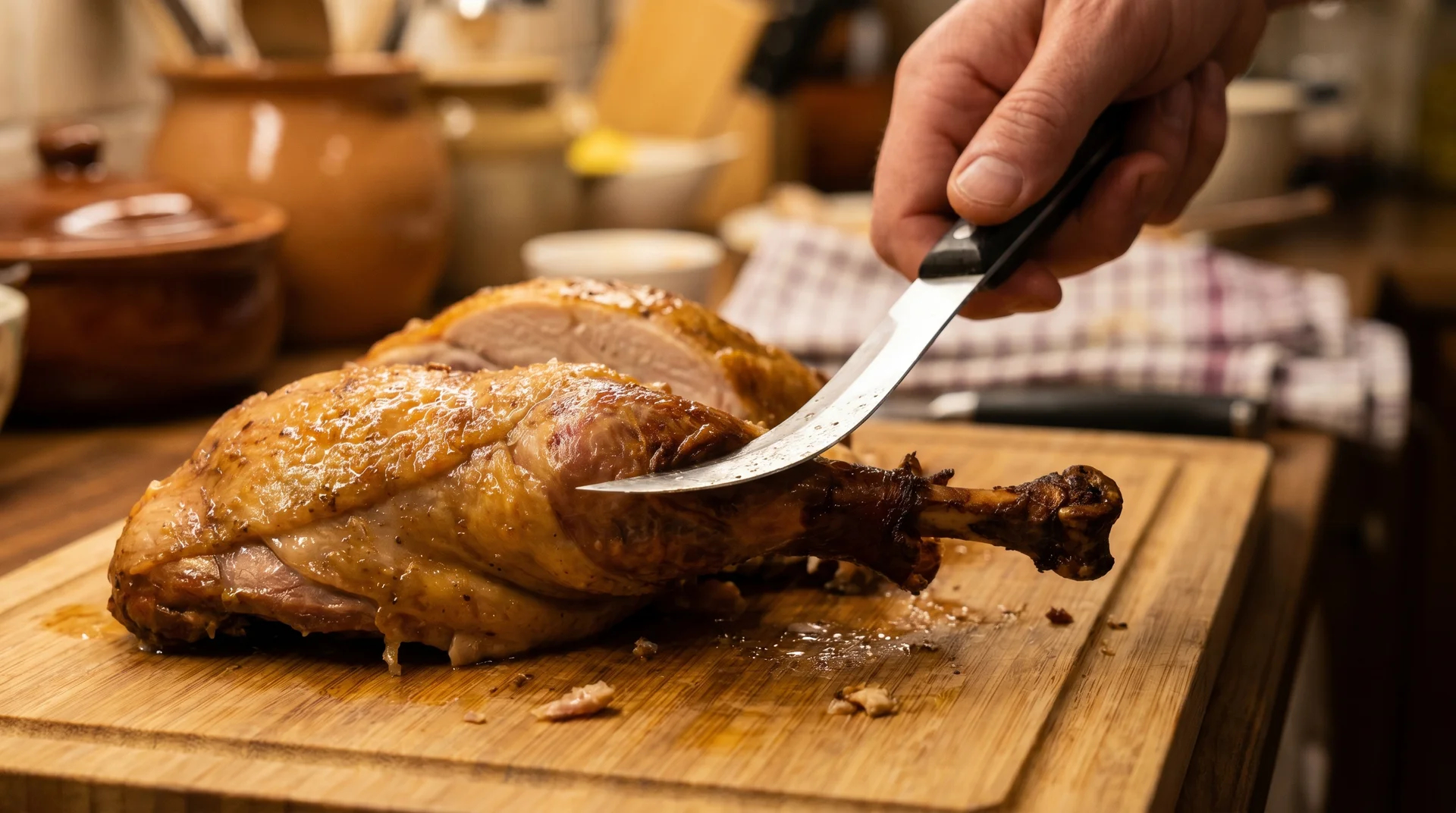
Blade flexibility depends as much on your technique as it does on what you’re cutting.
A flexible blade follows the bone contour. It lets the knife travel around a joint without forcing the angle of the cut. This works well when you’re maneuvering around the thigh joint on a turkey. It also helps when you’re working along the spine of a rib roast.
The blade needs to stay in close contact with the bone for the flex to matter.
If you carve by pressing down rather than pulling along the bone, the rigid blade is more predictable. It gives you more control over those downward strokes through dense muscle.
The right flex depends on how you carve, and that varies more than most buying guides admit.
The honest answer is that I’m not certain which is right for every cook. I’ve seen experienced cooks prefer opposite ends of this spectrum for the same cut.
The Granton Edge
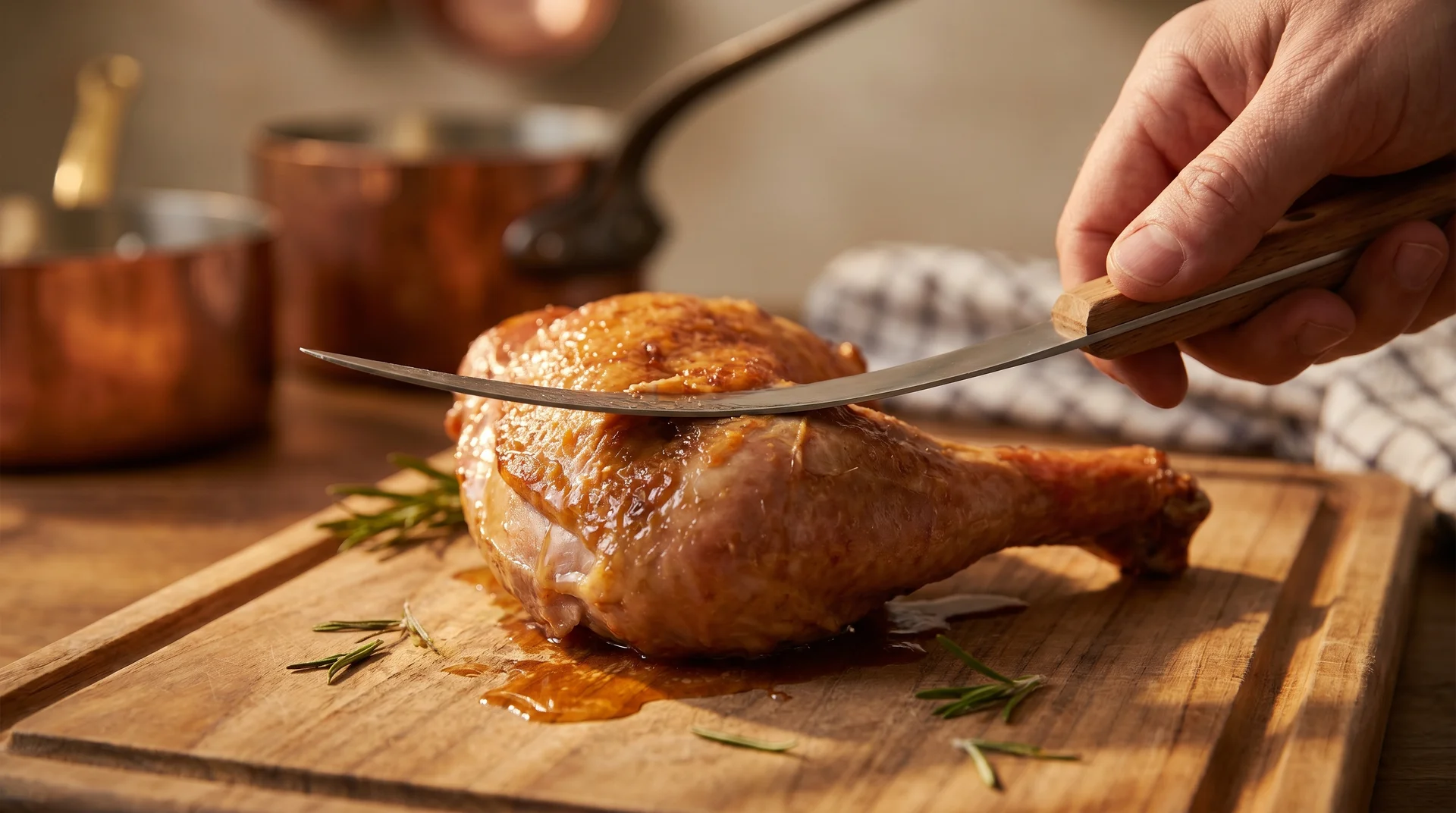
The Granton edge is a real design feature. Its benefit at home carving volume is marginal.
The hollow ovals scalloped into the blade flat are designed to reduce surface contact and prevent sliced meat from sticking. In a professional kitchen, you’re making forty passes over a cut per service. That reduction accumulates, and the difference shows up.
At home, you’re carving one bird or one roast for a single meal. You’re not making enough passes for protein adhesion to build meaningfully.
A granton-edge knife is not worse than a smooth blade. I think the marketing around this feature is stronger than the performance difference in home carving volume.
If the only difference between two comparable knives is the granton edge, pick on price or handle fit instead.
German Steel or Japanese Steel
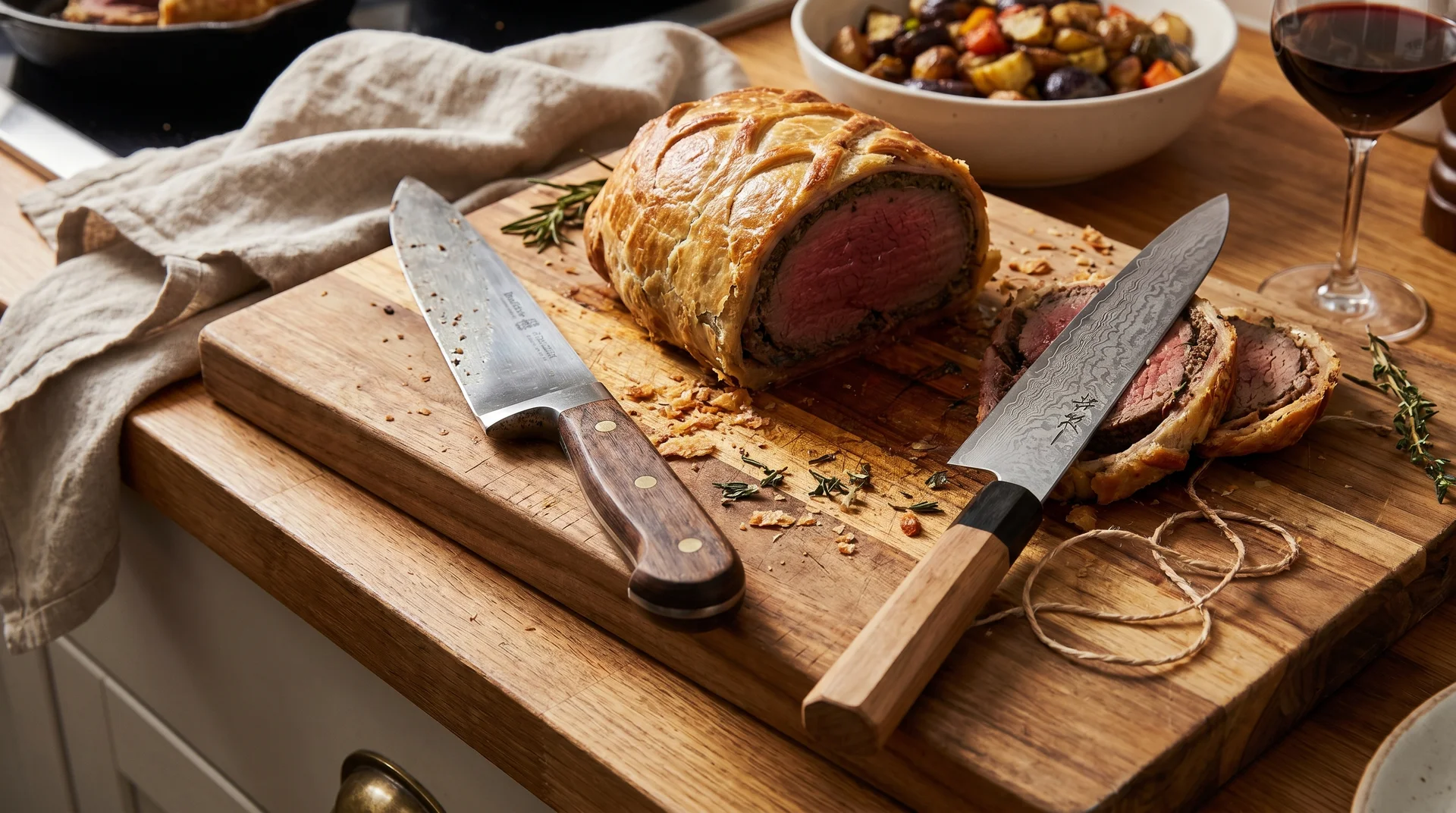
German steel is the more forgiving choice for most home carving knives. Japanese steel holds a better edge longer, with a real trade-off attached.
- German kitchen steel typically runs 56 to 58 on the Rockwell hardness scale.
- Japanese kitchen steel runs higher, often 60 to 65 HRC.
Harder steel takes and holds a keener edge. It also chips under lateral stress rather than bending. On a carving knife, the blade contacts bone, and the cut angle shifts unexpectedly. That distinction matters more here than it does on a chef’s knife used only on a cutting board.
Dr. Larrin Thomas at Knife Steel Nerds has published an extensive metallurgical analysis of kitchen blade steels. His findings show that the edge retention difference between these hardness ranges is real but degrades quickly on hard contact surfaces.
Bone is a hard contact surface. German-hardened steel handles that contact more forgivingly.
For seasonal home use, the practical answer is German-hardened steel.
The Japanese edge advantage is genuine. Holding it requires maintenance discipline. Harder steel that chips on a joint and sits in a drawer isn’t beating softer steel that bends and recovers.
The Best Carving Knives for the Home Kitchen
I tested each of these in my own kitchen under real carving conditions.
The criteria I used for each knife:
- Bone contact behavior on a whole turkey: how the edge handled the joint
- Whether the breast meat is sliced cleanly without tearing
- Handle comfort and control through a full 15-minute carving session
- How the edge responded to honing before use
America’s Test Kitchen uses similar criteria, such as bone contact behavior, edge retention through a session, and handle grip under wet conditions.
| Knife | Best For | Steel | Blade Flex | Approx. Price |
|---|---|---|---|---|
| Wüsthof Classic 9-Inch | Overall / most home kitchens | German X50CrMoV15 (58 HRC) [VERIFY] | Rigid | ~$140–160 |
| Victorinox Fibrox Pro 9-Inch | Budget / forgiving on maintenance | Swiss stainless (softer) [VERIFY] | Semi-rigid | ~$50–65 |
| OXO Good Grips Pro 9-Inch | Turkey / bone-in poultry | German stainless [VERIFY] | Semi-flexible | ~$50–80 |
| Shun Classic 9-Inch Hollow Edge | Edge retention / disciplined sharpeners | Japanese VG-MAX (60–61 HRC) [VERIFY] | Rigid | ~$180–200 |
The “Best For” column is the decision column. Price is a constraint, not a criterion.
Wüsthof Classic 9-Inch Carving Knife
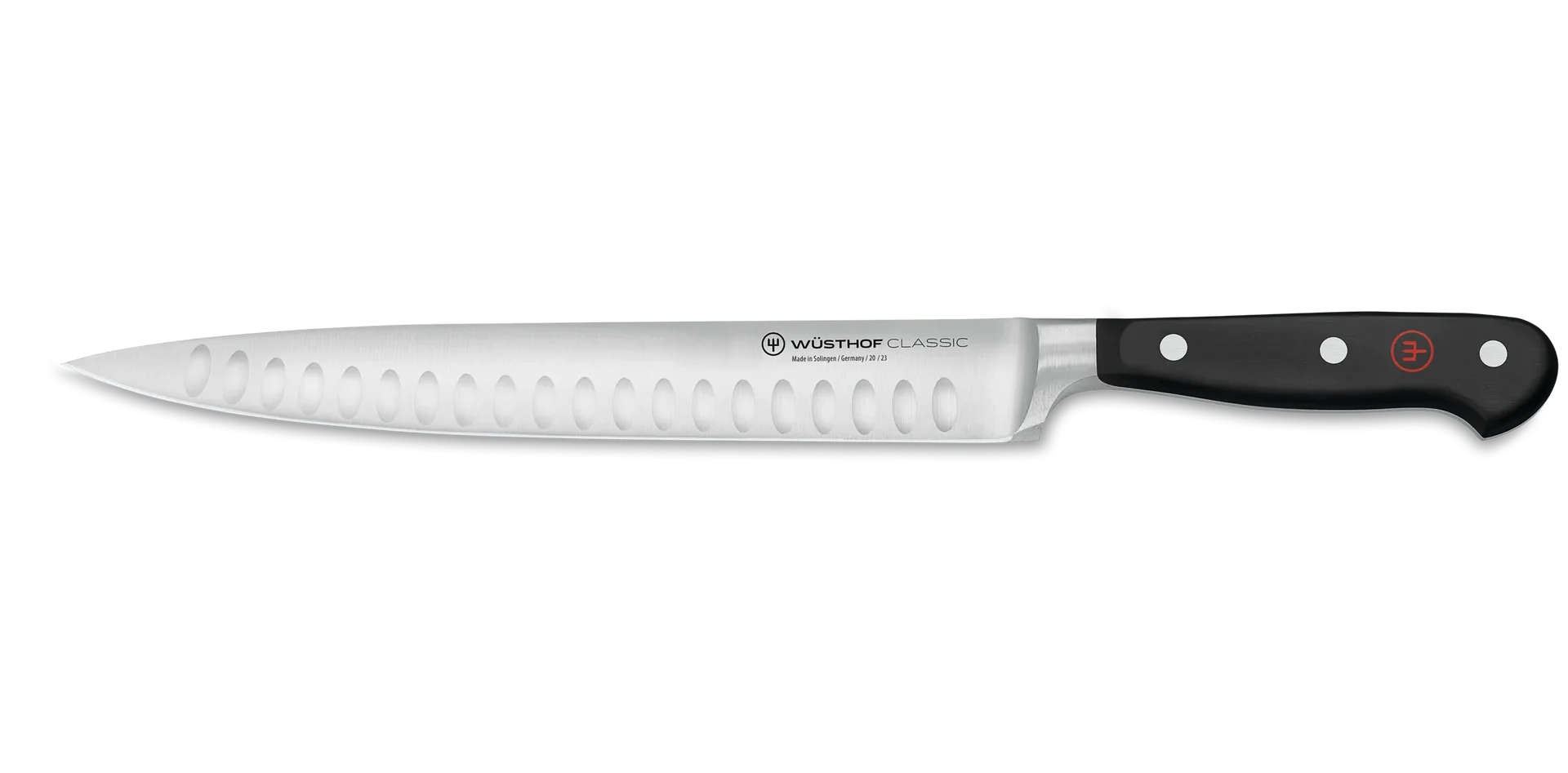
The Wüsthof Classic 9-Inch is the carving knife I’d buy for most home kitchens.
It’s firm enough to hold an edge through a full holiday carving session. It’s forgiving enough to handle bone contact without chipping.
The full tang, meaning the steel runs from tip through the entire handle, adds balance and durability. The pointed tip is well-defined. That matters when you’re working around the thigh joint or navigating the breastbone of a large turkey.
I’ve used this knife over multiple holiday seasons, and I’d call it a conclusion rather than a test result. What it doesn’t have: a granton edge on the standard Classic version.
For home carving frequency, that’s not a drawback. The benefit is marginal at the passes you’re actually making. The POM handle is durable and easy to sanitize. It’s not the most comfortable in this price tier for cooks with larger hands.
Victorinox Fibrox Pro 9-Inch Carving Knife
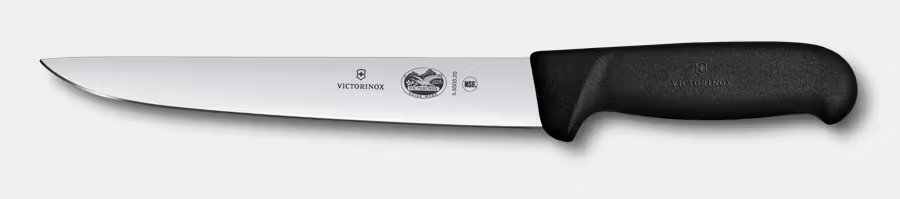
The Victorinox Fibrox Pro is the pick for solid carving performance without the premium price.
The Swiss steel runs softer than the Wüsthof, which means you’ll hone it more often. It also means you won’t chip it if the blade catches bone at an awkward angle.
The Fibrox handle, a textured thermoplastic rubber grip, is non-slip even with wet hands. That matters during the chaotic first ten minutes of holiday carving, when the roast is hot, and you’re moving fast.
The trade-off is edge retention. Victorinox steel dulls faster than German steel at 58 HRC. If you hone before every use, it carves cleanly.
Pull it from the drawer without honing, and you’ll feel the difference before the first breast slice is done. I tested this knife over one full season. That’s not long enough to call a firm conclusion.
The results are consistent with what its professional kitchen reputation would suggest.
OXO Good Grips Pro 8-Inch Carving Knife
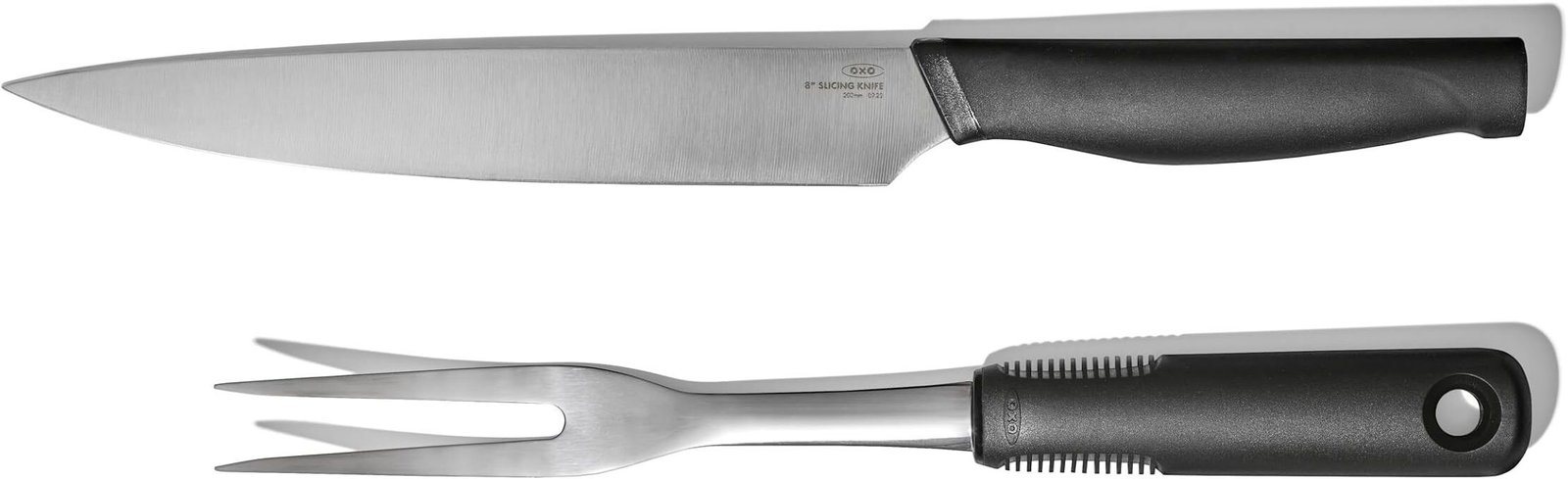
The OXO Good Grips Pro is the right choice when bone-in poultry is the primary task.
During three years consulting for OXO, I worked directly with their Pro kitchen tools line in real home kitchens. The handle on this knife is the best in this price range, full stop. The soft grip and forward taper put your hand exactly where the knife needs it.
That matters over a sustained carving session. Most cooks choke up too close to the blade. This handle makes it harder to do that without thinking about it.
The blade is also slightly more flexible than the Wüsthof Classic, which gives it an advantage on poultry specifically. The pointed tip is sharp and well-defined.
The semi-flexible blade follows the curve of the thigh joint without requiring excessive force. For a cook who carves turkey and chicken primarily at the holidays, this is where I’d spend the money.
Shun Classic 9-Inch Hollow Edge Carving Knife
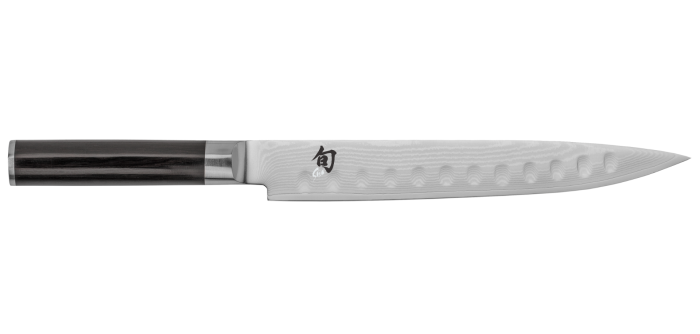
The Shun Classic is the right carving knife if you maintain your edges and want harder steel performance.
VG-MAX steel on the Shun Classic runs at 60 to 61 HRC.
Edge retention is genuinely different from the German picks above. A properly maintained Shun stays sharp longer through extended carving sessions. Its hollow edge is real, and I’ll note it honestly: even here, at home carving volume, I’d still describe the benefit as marginal.
You’re buying this knife for the steel hardness and the edge angle. The hollow edge is not the reason.
The trade-off is brittleness, and it matters specifically on a carving knife. The Shun chips under lateral bone contact if the approach angle is wrong. A cook who is deliberate and consistent with their edge maintenance and carving angle will get excellent results.
A cook who carves infrequently or isn’t careful about the angle near the bone will be better served by the Wüsthof. The harder steel rewards care. It punishes inattention in a way German steel doesn’t.
Caring for a Carving Knife Between Uses
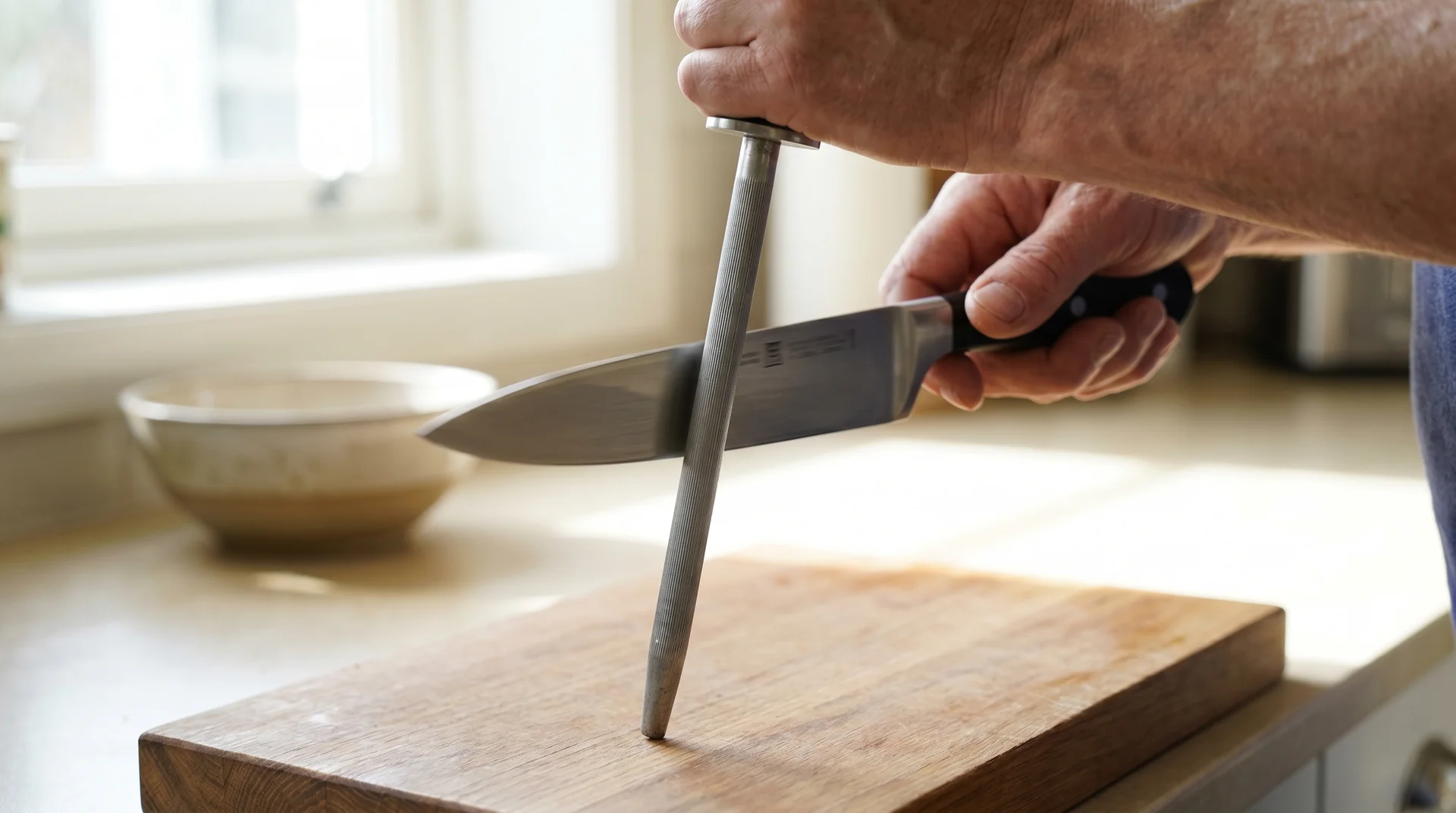
A carving knife used four times a year can still be ruined between uses.
1. Hand-wash and dry immediately after carving. The dishwasher dulls the edge and, over time, warps the handle material on most kitchen knives.
2. Store in a knife block, on a magnetic strip, or in a blade guard. Counter contact degrades the edge faster than the carving itself does.
3. Hone before every major carving session. A honing steel realigns the edge rather than removing steel. When honing, keep the edge angled away from your body. It seems obvious until you’re rushing to get dinner to the table.
For a carving knife used four to six times per year, this single habit makes more difference than anything else.