

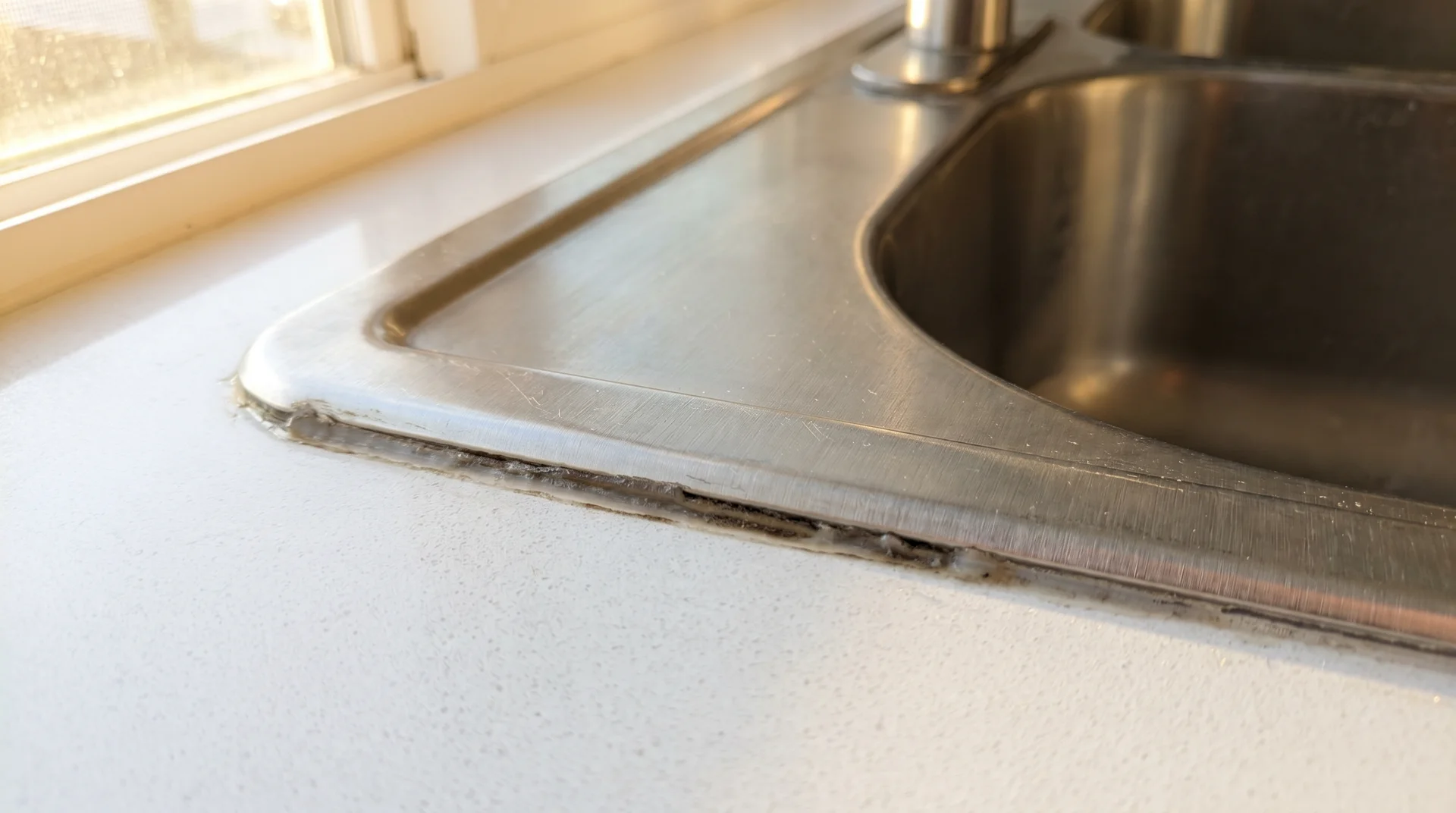
Stainless steel is supposed to be the hygienic choice. Finding dark spots or a musty smell around your sink, fridge, or water bottle is saddening when you chose the material specifically to avoid this.
Mold cannot feed on stainless steel itself. The metal is inorganic and non-porous, which means it provides no nutrients for fungal growth.
The mold problem in a stainless steel kitchen is a residue problem.
What mold does grow on stainless steel is the organic residue, trapped moisture, and food debris that accumulates on and around stainless surfaces.
That distinction changes both where you look and what you do about it.
Can Mold Grow on Stainless Steel? What’s Actually Happening in Your Kitchen?
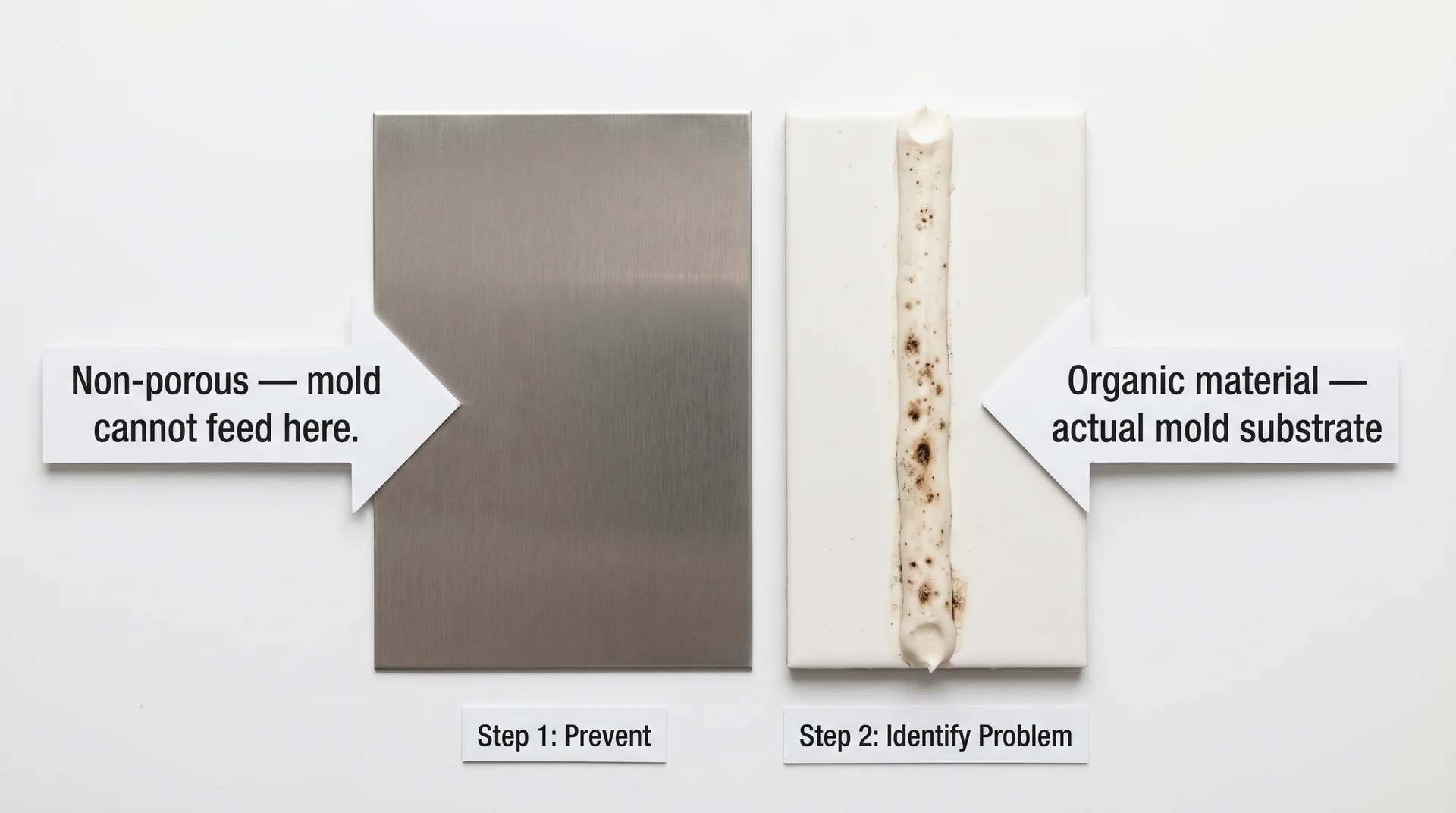
Stainless steel resists mold growth. That is not the same as mold-proof.
NSF/ANSI 51 governs materials used in food equipment. It recognizes stainless steel as appropriate for food contact because of its smooth, non-porous surface.
Being appropriate for food contact is not the same as being self-sanitizing. The mold you’re seeing is feeding on something organic.
Grease, food particles, soap scum, or moisture trapped in a seam: one of those is the actual food source. The steel surface is incidental. Cleaning advice that overlooks this is the reason people keep wiping their sink and finding mold returns within days.
Black mold gets asked about separately, and the answer is the same. What appears as dark fuzzy growth on a stainless surface is most often Cladosporium or Aspergillus species growing on organic residue. The steel itself is not the host.
Where Mold Actually Shows Up in a Stainless Steel Kitchen
The high-risk locations in a stainless steel kitchen are the seams, gaskets, and crevices that sit adjacent to stainless steel but are made of something else entirely.
The steel basin of your sink, the exterior panels of your refrigerator, the interior of a water bottle: each is low-risk under normal conditions. What surrounds and connects those surfaces is not.
The Sink
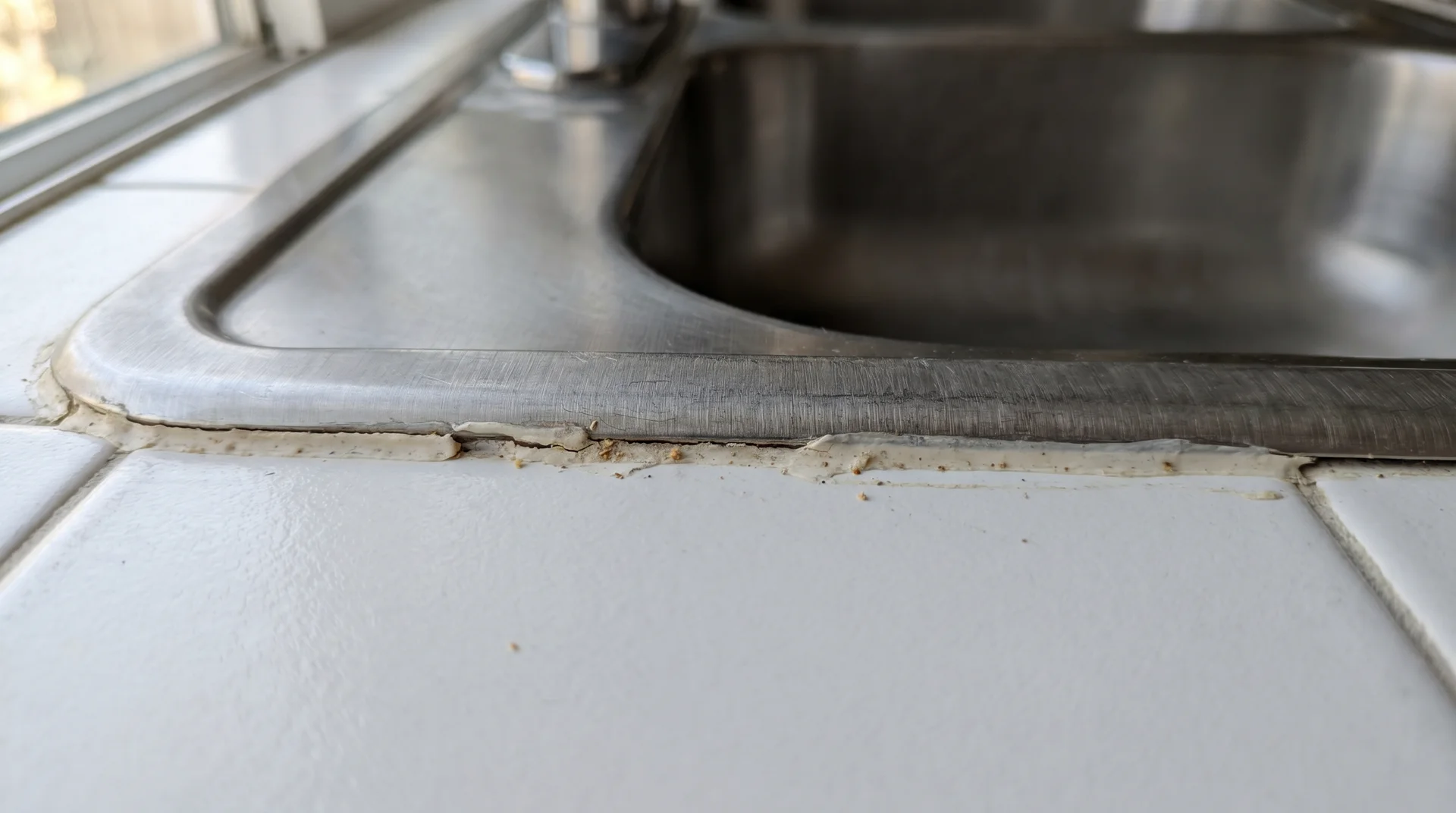
The steel basin is low-risk when dried after use. The caulk line between the sink and the countertop is a different situation entirely.
Silicone or latex caulk is an organic material sitting in a permanently damp location. That makes it an ideal mold substrate. Wiping the steel basin does nothing for what is growing in or on the caulk seam.
Undermount sinks add a risk zone that most people never see. When the counter overhangs the sink edge slightly, a small ledge forms on the underside where the two surfaces meet.
Water, food splashes, and debris collect there. Mold grows on the unfinished stone or substrate beneath the counter edge, not on the steel.
The drain rim and faucet base are worth checking, but what grows there is usually biofilm rather than mold. Biofilm is a bacterial colony, not a fungal one, and it requires physical scrubbing with dish soap rather than an antifungal agent.
Using vinegar on it and wondering why it keeps coming back is one of the most common cleaning loops in a kitchen.
The Refrigerator
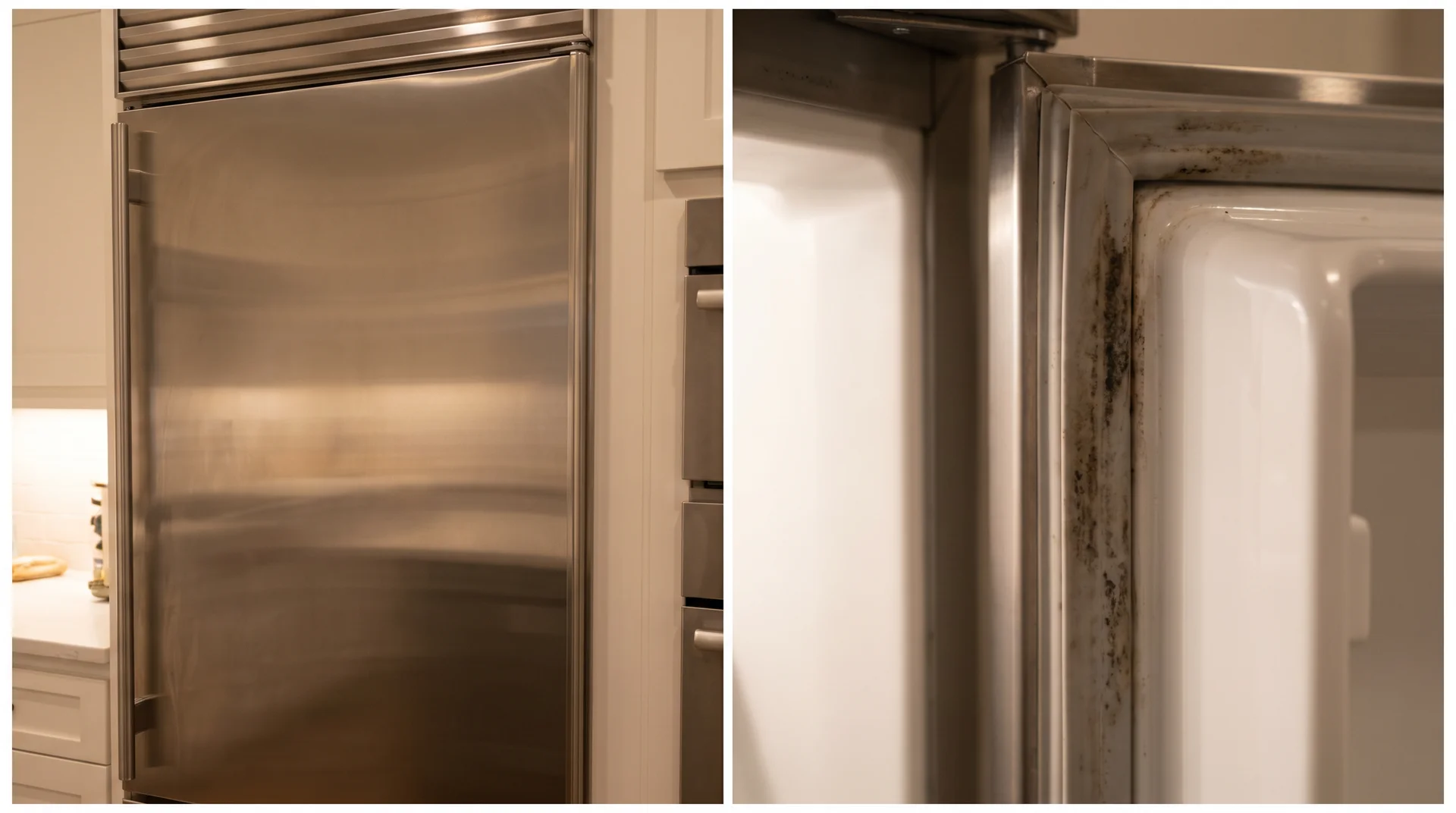
The steel exterior panels of a refrigerator carry very low mold risk. Condensation can form on them, but a simple wipe removes both the moisture and anything growing on it.
The gasket folds are dark, damp, food-adjacent, and rarely dried after the door closes. Those conditions are what mold needs.
The drip pan beneath the refrigerator and the crisper drawer tracks are secondary zones.
Both accumulate organic debris in low-airflow corners that almost never get attention during routine cleaning.
Water Bottles and Tumblers
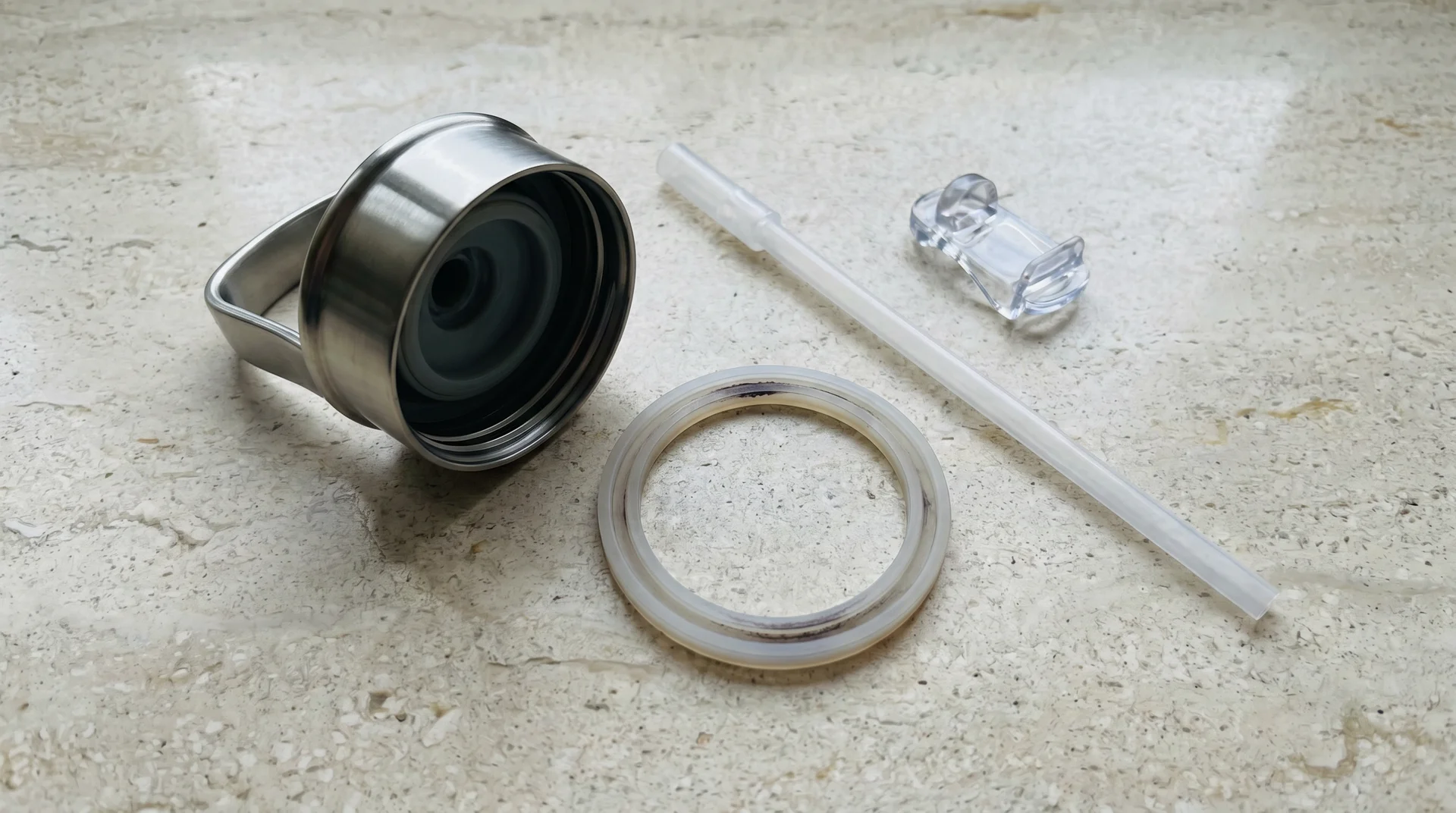
The steel interior of a water bottle grows mold when organic residue and moisture are both present, and the bottle is sealed before drying.
Dairy, smoothies, and coffee leave residue that clings to surfaces far more effectively than water does. The silicone gasket inside the lid, the straw attachment point, and any flip-top mechanism are the primary mold sites. These components get rinsed but rarely disassembled and dried.
Mold colonies can establish in a lid gasket within 48 hours under the right conditions. The bottle interior gets blamed because it is what you see when you open it.
Dishwasher Interior

The stainless interior of a dishwasher is relatively low-risk during regular use because heat cycling disrupts mold growth.
The risk surfaces are the rubber door seal, the filter housing at the base, and the spray arm attachment points where food debris accumulates.
Standing water remaining in the filter after a cycle is the primary driver. Leave the door slightly ajar post-cycle and clean the filter weekly.
What You’re Actually Looking At: Mold, Biofilm, or Mineral Deposit
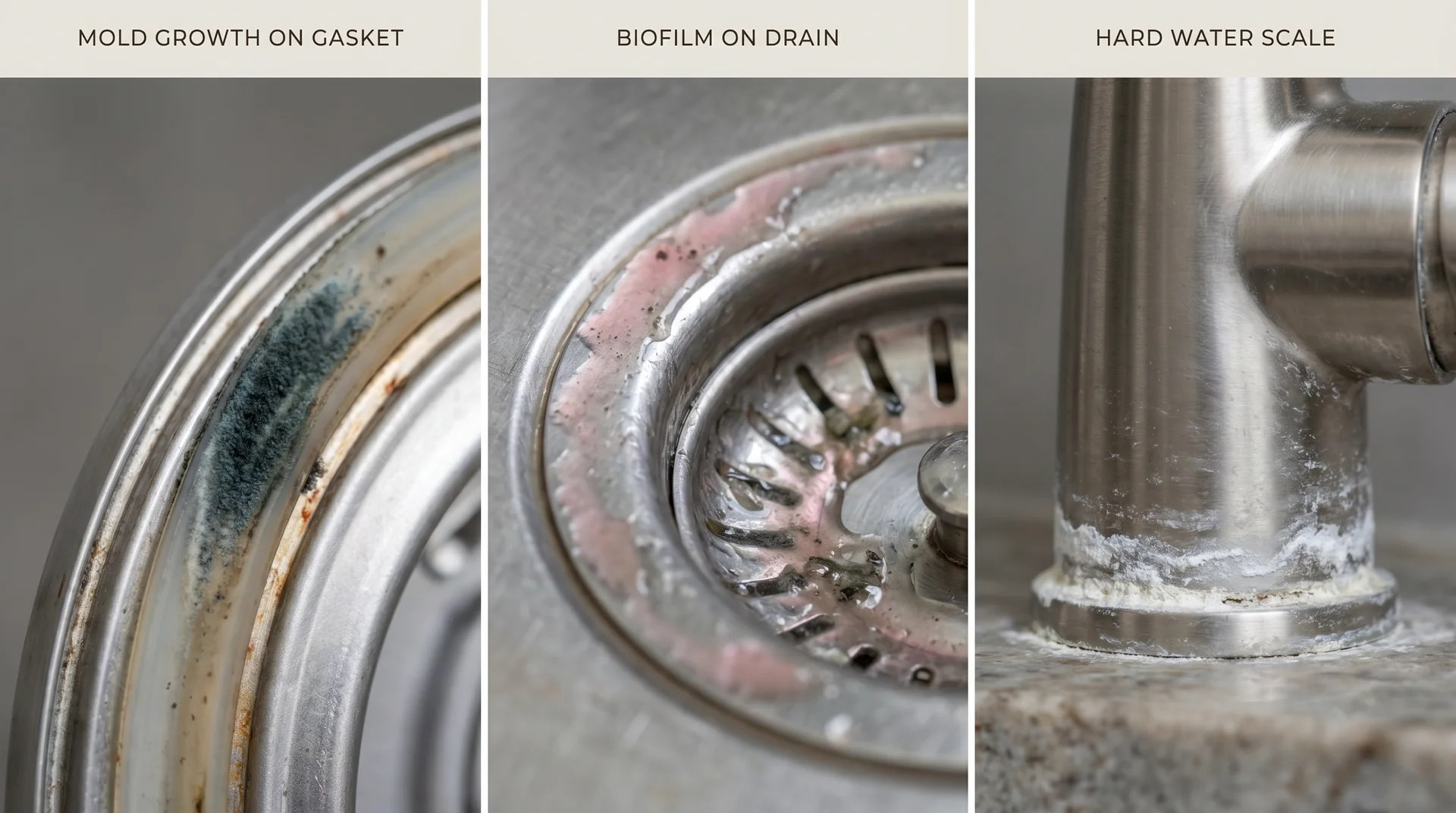
- If you smell something musty, you are almost certainly dealing with mold or biofilm.
- If there is no smell but the surface looks cloudy or chalky, the answer is usually mineral scale from hard water.
Knowing which one you have before reaching for a product saves time and prevents surface damage.
| What It Is | Appearance | Smell | Where You’ll Find It | Cleaning Approach |
|---|---|---|---|---|
| Mold | Fuzzy or powdery; dark green, black, or gray | Musty or earthy | Caulk lines, door gaskets, lid gaskets, and damp seams | Antifungal with adequate contact time, white vinegar or hydrogen peroxide with a wait period before scrubbing |
| Biofilm | Slimy or slick; pink, gray, or off-white | Sour or faintly musty | Drain rim, faucet aerator housing, sink basin near the drain | Physical scrubbing with dish soap and a brush; antifungals accomplish very little here |
| Mineral deposit | Chalky or crusty; white, gray, or pale brown | No odor | Around faucets, drain edges, and any surface with regular hard water contact | Acid treatment, white vinegar dissolves calcium and magnesium scale; no antifungal needed |
Biofilm is bacterial, not fungal. It forms when bacteria from food handling, raw meat prep, or drain backwash establish a colony in a damp area over time.
Research published in Frontiers in Microbiology in 2021, examining bacterial adhesion on stainless steel food-contact surfaces, documented two relevant findings.
- Biofilm formation is driven by surface roughness and sustained moisture.
- Micro-scratches from abrasive cleaning tools create additional surface area for bacterial adhesion. Using steel wool on what you think is mold can make the biofilm problem significantly worse over time.
How to Remove Mold from Stainless Steel Surfaces
Spraying vinegar on a moldy surface and immediately wiping it off removes the visual evidence. It does not eliminate the mold colony.
EPA registration data on acetic acid documents that antifungal efficacy requires sustained surface contact before wiping.
The Protocol
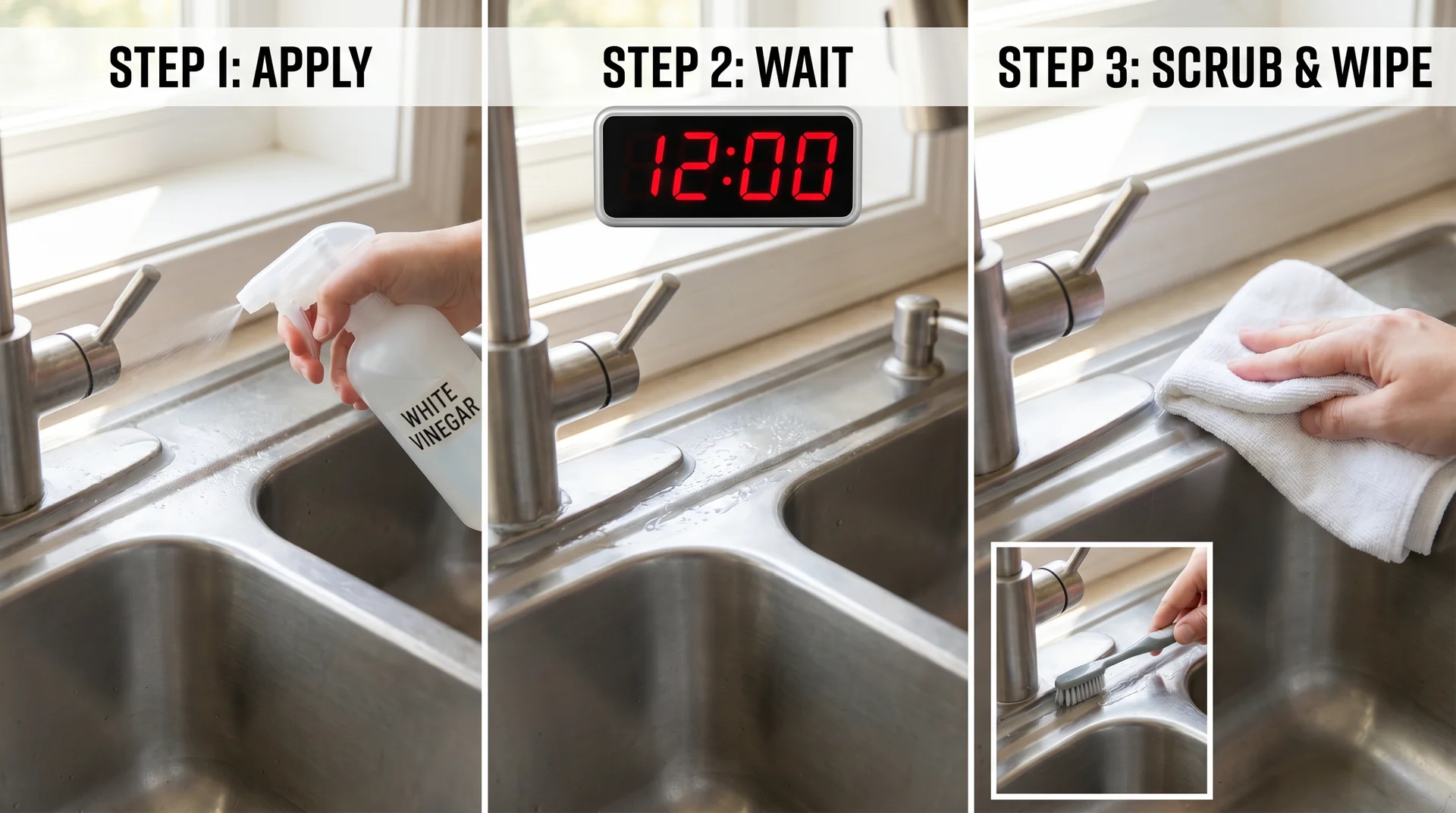
Before starting, ventilate the space. Open a window or run the exhaust fan. If the mold area is larger than a few square inches, mist it lightly with water before scrubbing to reduce the number of spores that become airborne during the process.
- Identify the surface before applying anything. Steel, rubber gasket, silicone lid gasket, and caulk each tolerate different products. Confirm this before you reach for the spray.
- For steel surfaces: Spray undiluted white vinegar. Wait 10 to 15 minutes. Scrub with a soft-bristle brush. Rinse with clean water. Dry immediately with a cloth.
- For rubber gaskets on fridges and dishwashers: Spray 3% hydrogen peroxide. Wait 5 to 10 minutes. Work a toothbrush into the gasket folds. Rinse with clean water. Dry thoroughly.
- Do not apply vinegar and hydrogen peroxide to the same surface in the same cleaning session. Combining the two produces peracetic acid, a compound that irritates skin and airways even at concentrations formed by household products.
- For silicone lid gaskets in water bottles and tumblers: Disassemble completely. Soak the gasket in a 50/50 white vinegar and water solution for 15 minutes. Scrub with a small brush. Rinse. Air-dry completely before reassembling. Returning a wet gasket to the lid recreates the conditions you just cleaned away.
- For stubborn residue after the antifungal step: Mix baking soda and water into a paste. Apply with a cloth. Scrub gently. Rinse completely. Baking soda provides mechanical abrasion without scratching the steel finish.
- Dry completely before considering the job done. Mold recolonizes damp surfaces. If the surface is still wet when you walk away, the mold will rebuild.
Skipping the contact time step is the most common reason mold returns to the same spot within a week. The colony is reduced to a level that is not visually detectable, and then it rebuilds from what remains.
What Not to Use Bleach?
Bleach kills mold. That is accurate and EPA-registered. What the label does not say is what bleach does to the material itself over time.
My father spent thirty years as a commercial kitchen inspector, and bleach was his answer to nearly every surface contamination question. He is not entirely wrong. He is also not entirely right, and the distinction matters here.
The mechanism the label omits.
Bleach is corrosive to the passive chromium oxide layer that gives 304 stainless steel its corrosion resistance. That layer is a thin protective film that forms naturally on the steel surface.
In a crevice or seam where bleach pools and stays in contact with the steel, that layer degrades. The surface becomes more textured over time.
On rubber gaskets, the damage is different but equally cumulative.
Repeated chlorine exposure makes rubber brittle and prone to cracking. A cracked gasket stops sealing properly. Warm air enters the refrigerator, condensation increases, and mold conditions improve.
If you have cleaned your fridge gasket with bleach for years and the gasket has degraded, those two facts are likely connected.
Other products and tools to avoid:
- Steel wool and abrasive scrubbing pads. These create micro-scratches that trap organic material and provide better conditions for biofilm. The surface looks clean immediately after. It is now more susceptible than it was before.
- Citrus or citric acid cleaners on appliance panels. Many modern stainless steel appliances have an anti-fingerprint coating. Citric acid degrades that coating. This applies to the exterior finish, not to bare stainless steel.
- Spray-and-wipe with any antifungal product. Contact time is not optional for any antifungal agent. This includes commercial mold sprays marketed specifically for kitchens.
When Surface Cleaning Is Not Enough?
Mold returning to the same spot after repeated cleaning is almost always a caulk problem.
The caulk seam between your sink and countertop is the most common site of persistent kitchen mold in a stainless steel kitchen.
Vinegar applied to the surface of colonized caulk reduces the mold on top. The mold within the caulk material survives and regrows. This cycle can continue indefinitely without the surface ever staying clean for more than a week or two.
The actual fix is removing the old caulk and replacing it with mold-resistant silicone caulk rated for kitchen and bath use. Remove the old caulk with a caulk removal tool. Clean the seam with hydrogen peroxide and let it dry completely. Apply fresh caulk and allow 24 hours of cure time before water contact.
That is a one-time job. Cleaning colonized caulk indefinitely is a recurring job with a lower success rate.
Preventing Mold from Coming Back
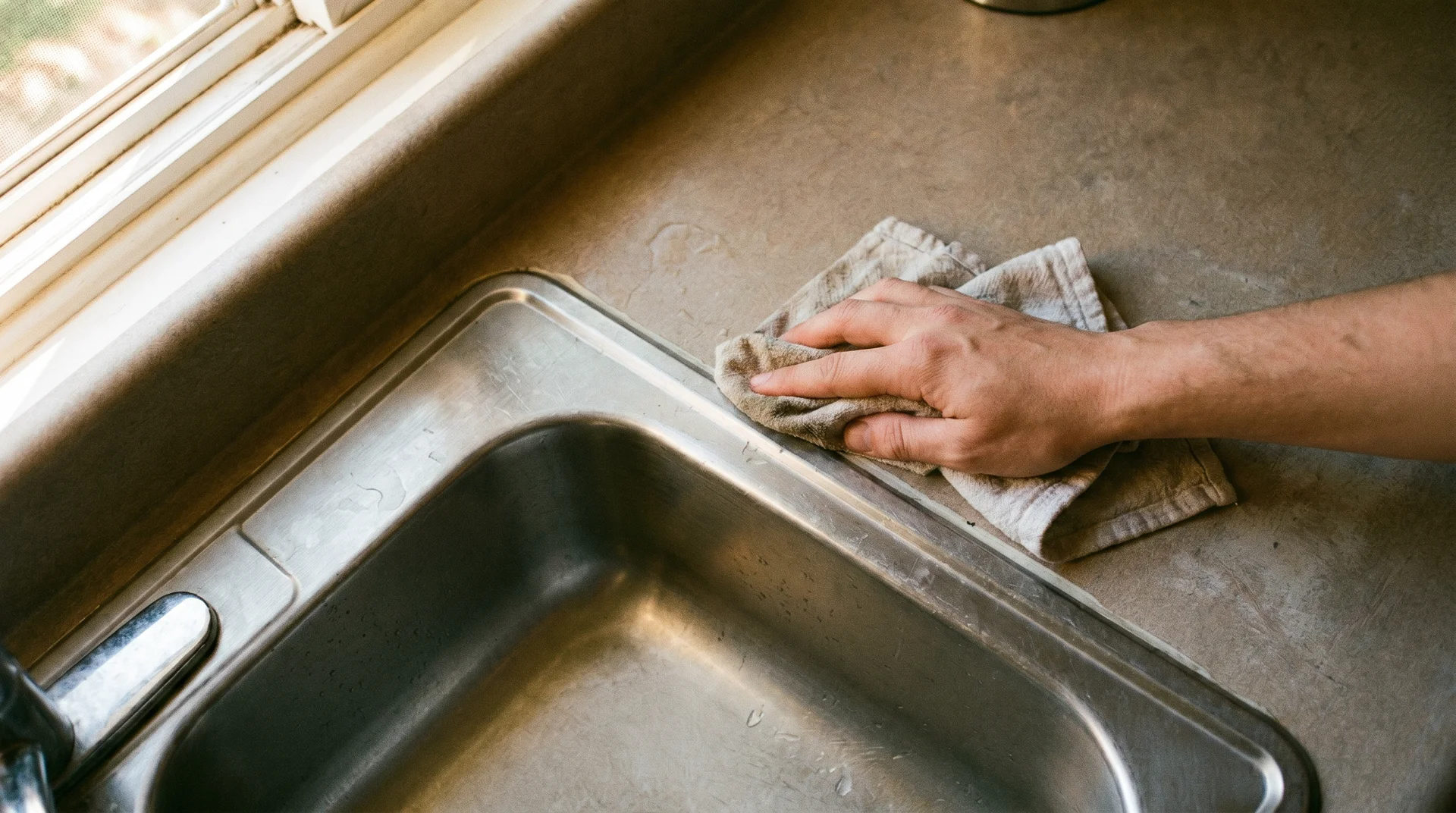
Moisture is the variable within your control.
Organic residue in a kitchen is unavoidable. Moisture is the factor that determines whether the residue becomes a mold substrate. Deprive the mold of consistent moisture, and the residue stays harmless.
- Wipe the sink basin and the caulk line dry at the end of the last dishwashing of the day.
- Wipe the fridge gasket when you notice condensation forming on it. This takes about 20 seconds and is almost never done consistently.
- Disassemble water bottle lids before drying. The gasket cannot dry if it is still seated in the lid channel.
- Leave the dishwasher door slightly ajar after the cycle ends. The heated interior creates condensation on the rubber door seal as it cools. That moisture needs somewhere to go.
- In kitchens with consistently high humidity, a small dehumidifier shifts the ambient conditions enough to reduce mold risk across multiple surfaces at once.
I track what surfaces in my kitchen were cleaned and when on a whiteboard.
After a month of logging it honestly, two surfaces showed up as consistently missed: the faucet base and the sink-to-counter seam. Not by intention. They fall outside the natural path of a sink wipe-down. You wipe what you look at, and the caulk line is below eye level.
The threshold for when mold begins is genuinely variable.
How long stainless steel can remain damp before mold colonizes depends on ambient humidity, temperature, and what organic material is present.
I cannot give you a universal number because it varies too much across kitchens. In a well-ventilated kitchen at normal indoor humidity with minimal food debris, the threshold is longer than most cleaning guides suggest.
When This Is Not a Cleaning Problem
Surface cleaning has limits, and knowing them prevents months of frustration.
If mold returns to the same location after proper caulk replacement and consistent cleaning protocol, the moisture source is not coming from the surface.
A slow plumbing leak, moisture infiltration behind the wall, or condensation from poor insulation beneath the sink cabinet can all drive mold growth that no surface protocol will eliminate.
The EPA recommends professional remediation for mold coverage larger than 10 square feet. For anything approaching that threshold, cleaning protocol is not the right framework.