
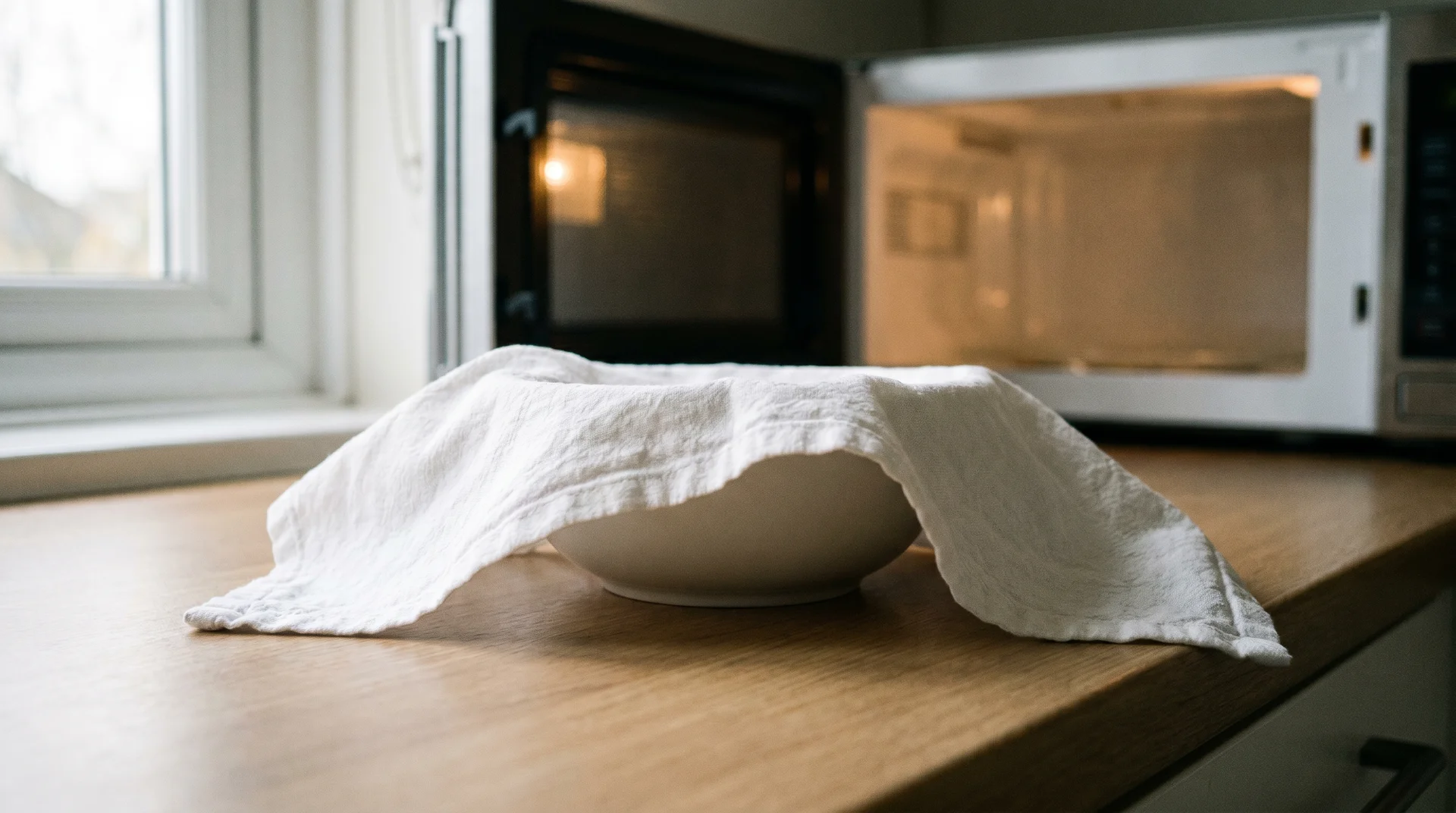
Yes, you can put a napkin in the microwave. Whether it’s safe depends on the specific type you’re holding and what you’re reheating underneath it.
Most plain white paper napkins cause no problems during short reheating sessions. A few napkin types create genuine fire conditions, and the reason is specific.
Can You Put a Napkin in the Microwave?
Plain, white, unprinted paper napkins are microwave-safe for short reheating sessions.
The USDA Food Safety and Inspection Service lists napkins under acceptable microwave materials.
A napkin is microwave-safe when it contains no metallic materials, chemical coatings, printed dyes, or synthetic fibers that react to heat.
The cases where a napkin becomes a problem are specific: recycled paper, printed designs, synthetic fabric blends, and certain food types underneath.
Why Napkins Don’t Heat the Way Food Does
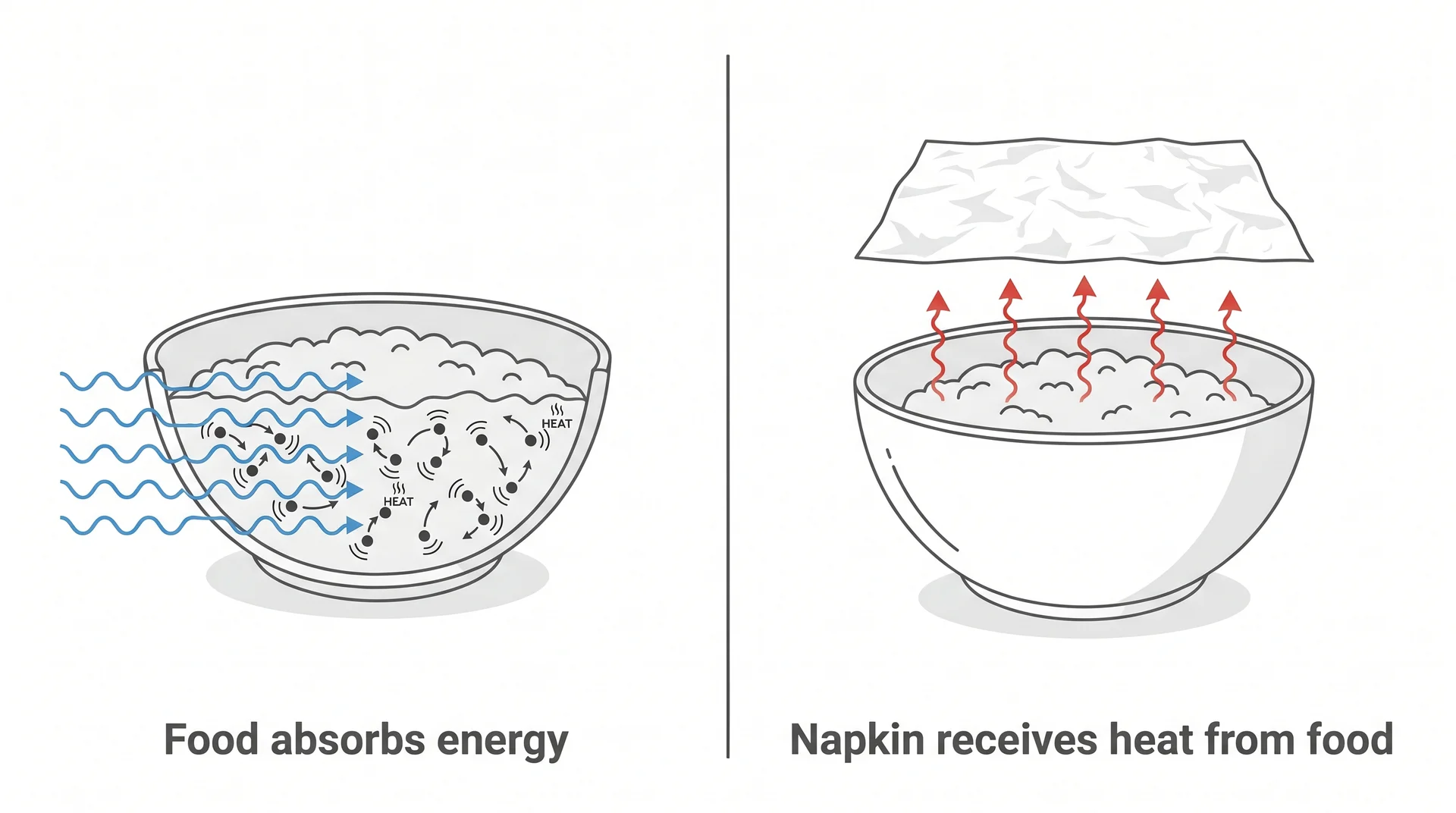
Napkins don’t absorb microwave energy the way food does, and that difference matters for safety.
A microwave excites water molecules in food, producing heat through molecular friction. Napkins contain very little moisture. They don’t absorb that energy the same way.
That’s part of why a dry napkin over very hot food is riskier than it looks.
A dry napkin sitting above food generating intense heat becomes a passive recipient of that thermal energy. Given enough time or enough heat from below, it can reach ignition conditions.
This happens without the napkin having directly absorbed any microwave energy.
Food Underneath the Napkin
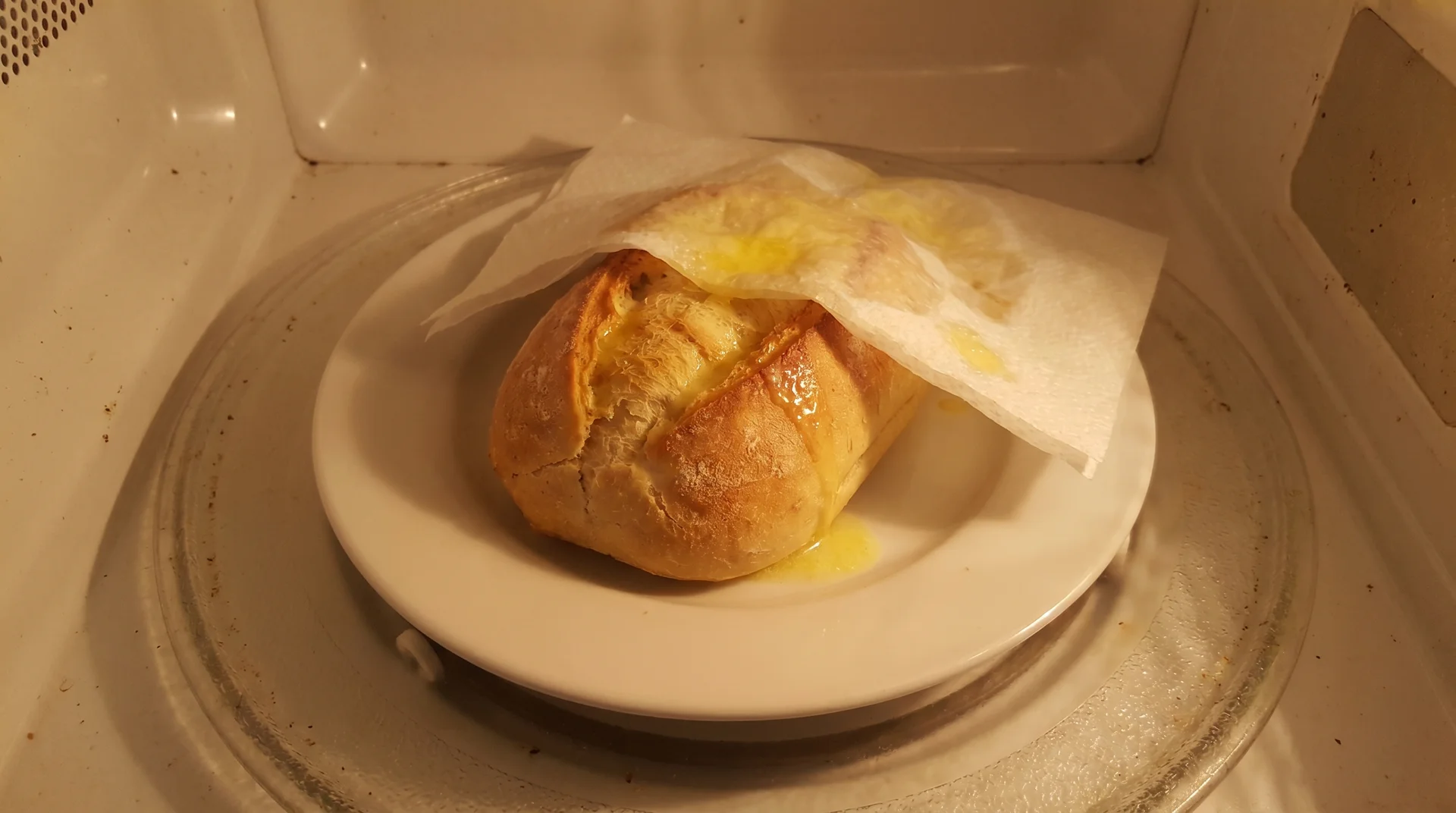
High-fat and high-sugar foods generate microwave temperatures that a plain white napkin cannot safely withstand for long.
Butter, oil, and sugar-heavy sauces heat faster than the surrounding food. They can reach surface temperatures well above what a brief session implies.
Common high-risk food types when using any napkin as a splatter cover:
- Butter-coated bread and rolls
- Oily leftovers and fatty meats
- Cheese-heavy dishes
- Caramel, jam, and sugar-dense sauces
- Bacon
A plain white napkin is fine over a bowl of soup. That same napkin over buttered bread can encounter contact heat that creates fire conditions.
The food changed the equation, not the napkin.
Most microwave incidents involving napkins trace back to fatty or sugary foods, not the napkin material alone.
Paper ignites at approximately 451 degrees Fahrenheit. A microwave can reach that at the contact surface under the wrong conditions.
Paper Napkins: What’s Safe, What Isn’t, and Why
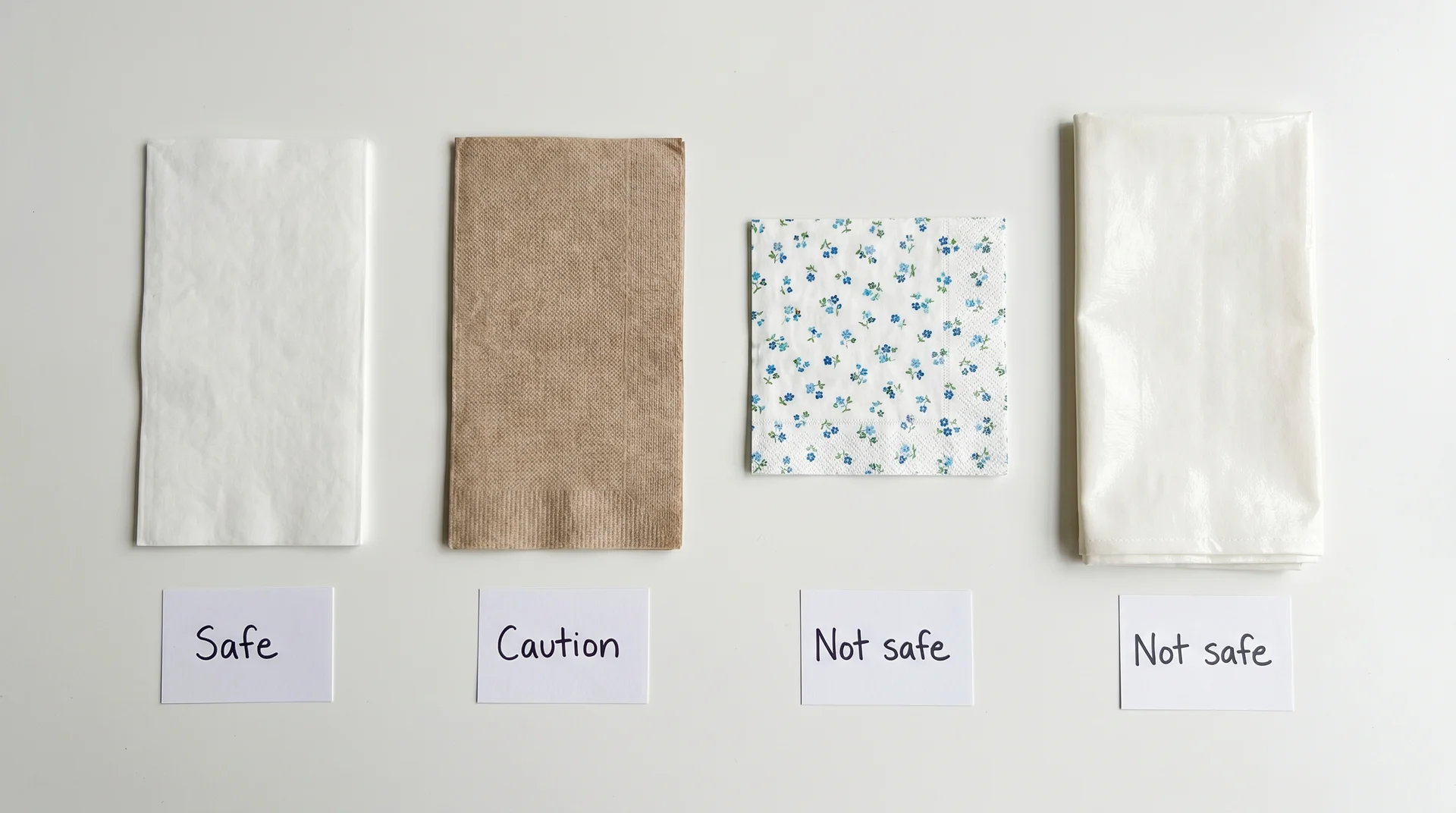
Not all paper napkins carry the same risk profile.
The distinction that matters is not brand or price.
I have a shelf in my garage of products I’ve tested and ruled out for specific reasons; most recycled paper napkin brands are on it for microwave use. It comes down to what went into the paper during manufacturing.
| Napkin Type | Microwave Safety | Primary Risk |
|---|---|---|
| Plain white, unprinted | Safe for short sessions | Duration and food type (see above) |
| 100% virgin wood pulp, white | Safe for short sessions | Same as above |
| Recycled paper, unprinted | Use with caution | Trace metal contamination from manufacturing |
| Printed or colored | Not safe | Metallic inks and dyes; can arc or ignite |
| Coated or wax-lined | Not safe | Coating melts; potential fume release |
| Scented or treated | Not safe | Chemical additives not rated for heat exposure |
Recycled Paper Napkins: The Eco-Friendly Problem
Recycled paper napkins can contain trace metals from the manufacturing process, and those metals spark in a microwave.
This is not an inherent property of recycled fiber. It’s a manufacturing contamination issue. During processing, recycled pulp can pick up fine metal particles from equipment that don’t always get fully removed.
GE Appliances guidance notes that recycled paper products may contain metal particles that arc or ignite in a microwave. The label on most recycled napkins says nothing about this.
The label and the manufacturing process are two different sources of information here.
I keep a short list of product categories I check before using near the microwave. Recycled paper napkins are on it. The risk isn’t visible from the outside of the package.
Printed, Colored, and Decorative Napkins: The Ones People Actually Own
Printed napkins, including the cocktail napkins in most kitchen drawers, should not go in the microwave.
The advice exists in most articles on this topic. It’s buried in a bullet point and framed as a theoretical edge case. It is not an edge case.
Common types to avoid:
- Holiday and seasonal patterned paper napkins
- Cocktail napkins with designs or logos
- Solid-colored napkins with dye throughout
- Branded or promotional paper napkins
Metallic inks and colored dyes contain compounds that react to microwave energy. Even small metallic traces can arc, meaning spark and potentially ignite.
If the napkin has a color or a pattern on it, treat it as unsafe for microwave use. That is the rule.
Cloth Napkins in the Microwave
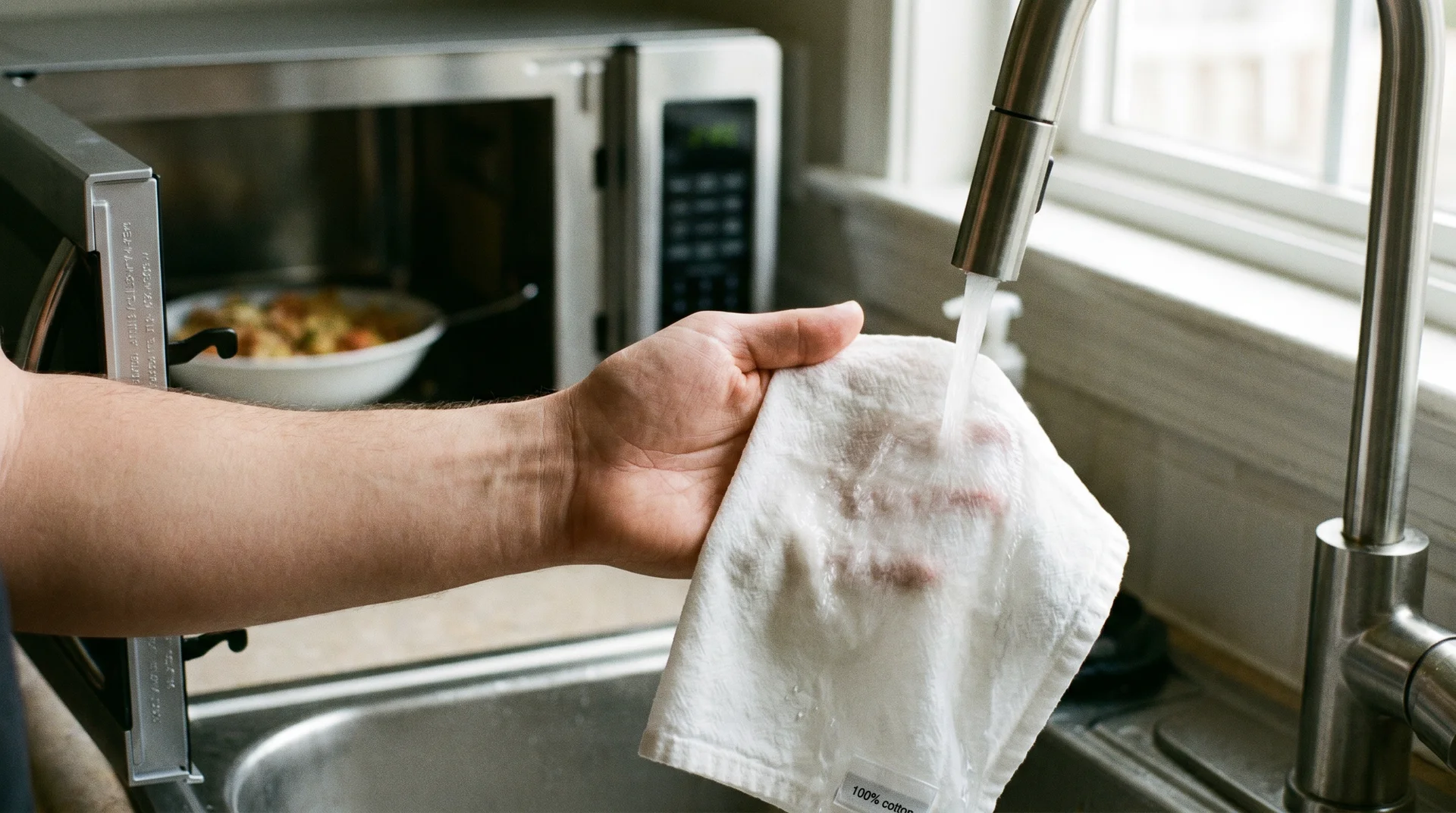
Cloth napkins are often the safer option here, and most people never use them.
Compared to recycled or printed paper napkins, a 100% cotton cloth napkin carries none of the metallic contamination risks. It also retains moisture during reheating, which helps food stay less dry.
Fiber content is the only label check that matters here.
A label showing 100% cotton is the safe signal. A synthetic blend, a polyester-cotton mix, or anything containing nylon filaments is not safe for microwave use. Synthetic materials are not the same thing as cotton.
The Damp Versus Dry Distinction: Why It Changes the Physics
A slightly damp cloth napkin distributes heat more evenly and reduces fire risk compared to a dry one.
When a cloth napkin contains moisture, the microwave excites those water molecules. That distributes thermal energy rather than concentrating it at a single contact point. A dry cloth napkin can’t do that.
A bone-dry cloth napkin behaves closer to a paper napkin. It doesn’t absorb energy directly, but it can reach high temperatures against a very hot food source. A slightly damp napkin changes the physics.
The Conditions That Make a Safe Napkin Dangerous
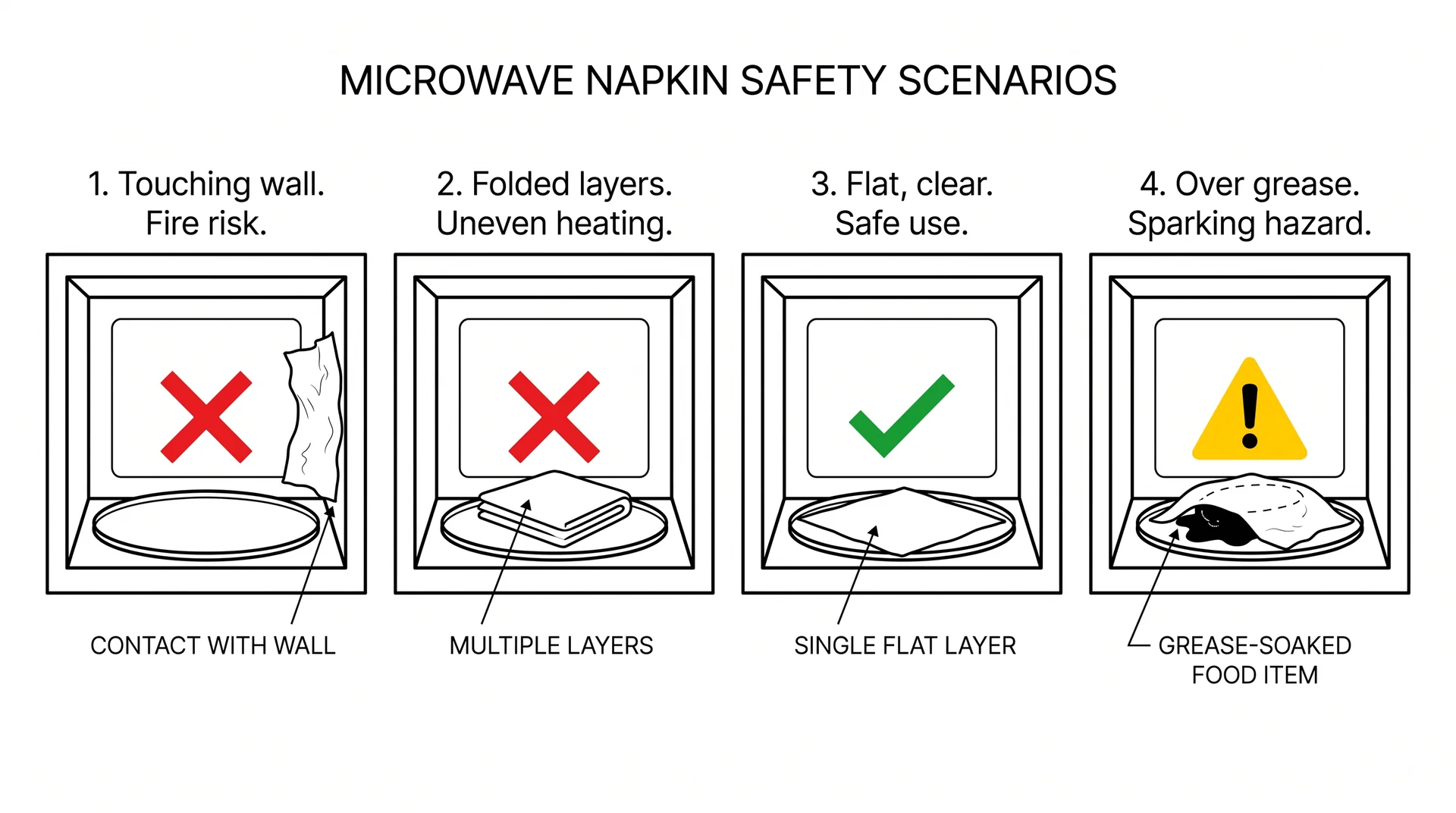
A plain white napkin can cause problems if the surrounding conditions are wrong.
These are the specific variables, in order of how often they produce incidents:
- Contact with the microwave wall or ceiling. A napkin touching the interior surface concentrates heat at that contact point. Keep the napkin clear of the sides and ceiling of the cavity entirely. Skip this, and you’ve created a high-heat contact scenario unrelated to the napkin’s material rating.
- Folding or stacking. Multiple layers trap heat between them. A single flat layer is the correct configuration. Folding creates an insulating pocket that builds temperature faster than the food below it.
- High-fat or high-sugar food underneath. Butter, heavy oil, and sugar-dense sauces generate contact heat that affects the napkin regardless of its material. The food changes what the napkin encounters, independent of how safe the napkin is rated.
- Heating duration over two minutes without a break. Two minutes is the standard interval limit. Beyond it, even safe napkins accumulate thermal exposure that approaches the risk threshold.
- Brown or scorched spots after heating. This is a warning sign, not a normal outcome. If a napkin comes out with dark edges or spots, the conditions were borderline. Stop and reassess before continuing.
If a napkin ignites in the microwave, keep the door closed and switch off or unplug the appliance.
Opening the door introduces oxygen and makes it worse. Let it extinguish on its own before opening.
Whether browning always signals a near-miss is genuinely hard to answer.
Microwave wattage varies: a 700-watt oven runs much cooler than a 1,200-watt model. Treat visible browning as a stop sign regardless of your oven’s specs.
How to Use a Napkin in the Microwave
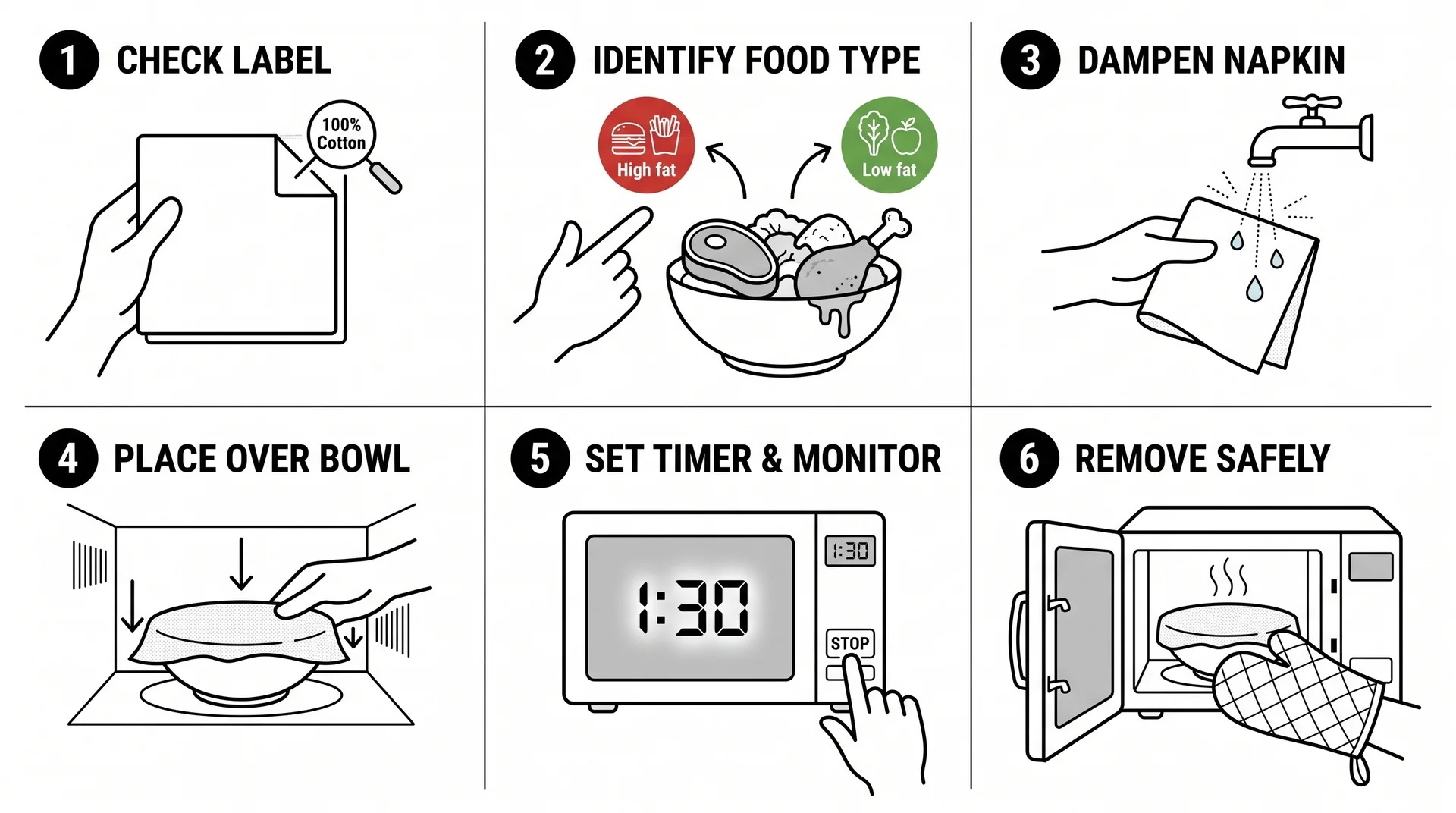
Sequence matters here.
- Choose the right napkin first. Clean, plain white, unprinted, uncoated paper, or a 100% cotton cloth napkin with no synthetic blend. Check the label if you’re not certain. This step is upstream of everything else in this list.
- Check the food type. High-fat and high-sugar foods need extra attention. Butter dishes, oily leftovers, and sugar-dense items generate higher contact temperatures than soups or vegetables. For those categories, keep the first heating interval well under two minutes.
- Dampen slightly if using a cloth. The napkin should feel lightly damp, not wet. A wet napkin can become superheated at the contact surface. A dry one has no moisture for the microwave to excite, so heat concentrates rather than distributes.
- Lay flat, single layer, clear of all interior walls. The napkin covers the food loosely. It does not touch the sides or ceiling of the microwave cavity. One layer, flat, resting on the container.
- Heat in intervals under two minutes. Stop the microwave and check the napkin visually before continuing. No brown spots, no discoloration, no unusual smell. If any of those appear, switch to a different cover.
- Remove with oven mitts. The napkin will have absorbed heat from the food. Handle it as you would the bowl beneath it.
What happens if you skip step two? You can execute every other step correctly and still encounter fire conditions, because the food generated temperatures the napkin wasn’t designed to contact. Steps one and two come first.
When to Skip the Napkin Entirely
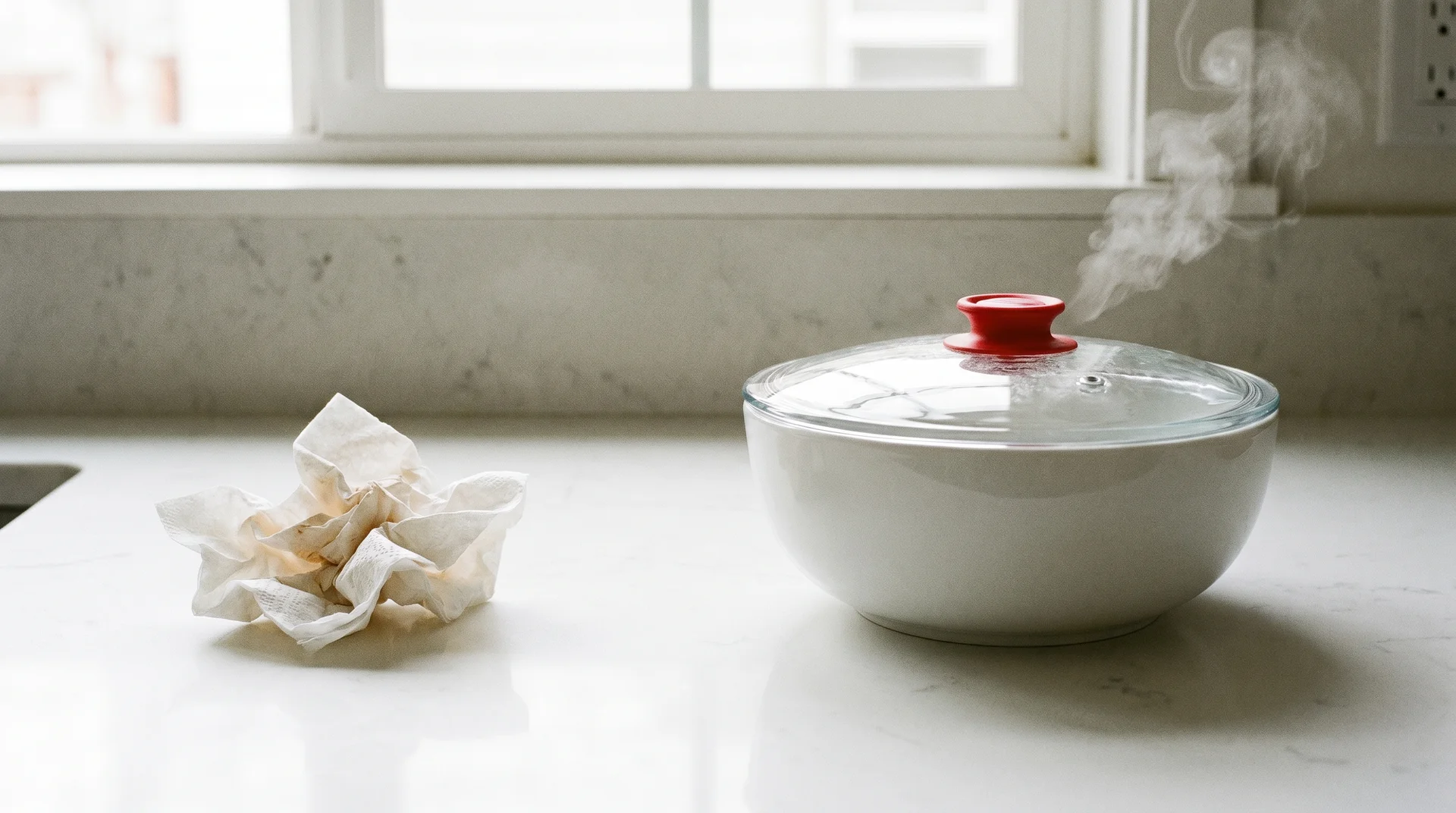
A napkin handles most short reheating tasks without issue.
For reheating sessions over two minutes, use a microwave-safe glass or ceramic container with a vented lid. High-fat food at high power falls into the same category.
My father would tell you plain napkins are always fine in the microwave. He’s not entirely wrong. He’s not entirely right, and the part he’s missing is the food underneath them.