

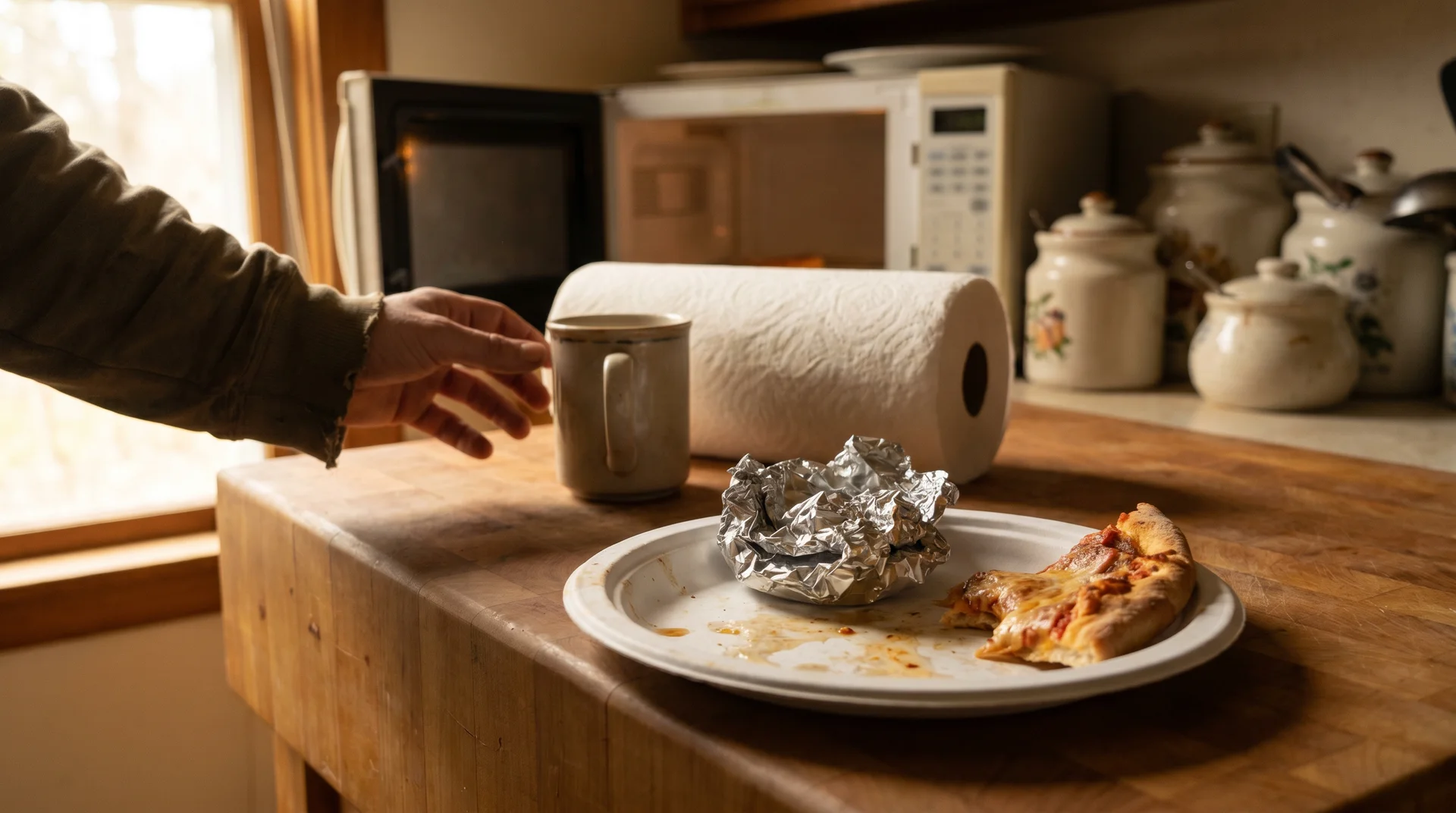
You’re standing at the counter, leftovers already on the plate, reaching for the paper roll. That half-second pause, wondering whether this is a good idea, is what this article is for.
The answer is not a single yes or no. It depends on the paper.
The Quick Answer: It Depends on the Paper
Some paper is completely safe to microwave. Some will catch fire. The difference comes down to what is in or on the paper, not the paper itself.
Microwaves pass through paper rather than heating it directly. What creates the risk is what is in or on the paper: coatings, inks, recycled fibers, metallic elements.
The USDA’s Food Safety and Inspection Service lists most white, unprinted paper products as acceptable for microwave use. That one condition rules out the majority of problems people actually run into.
Quick Reference: Paper in the Microwave
| Paper Type | Microwave Safe? | Key Conditions |
|---|---|---|
| Plain white paper towels (non-recycled) | Yes | Lay flat; under 2 minutes; check often |
| Parchment paper | Yes | No special restrictions for short use |
| Plain uncoated paper plates | Yes | Under 2 minutes; avoid with very greasy food |
| White coffee filters | Yes | No restrictions |
| Wax paper | Conditionally | Loose cover only; low power; not with fatty or sugary food |
| Brown paper bags | No | Fire hazard; fumes risk |
| Newspaper | No | Ink contamination |
| Recycled paper products | No | Possible metal traces; arcing risk |
| Printed or decorative paper | No | Ink and coating risks |
| Takeout and food-service containers | Generally no | Unless explicitly labeled microwave-safe |
Paper That Is Safe to Use in the Microwave

Plain, uncoated, unprinted paper is the baseline for safe microwave use.
Each type below meets that standard. A few come with specific conditions that matter. Those conditions are stated upfront, not buried at the end.
Plain White Paper Towels
Plain white, non-recycled paper towels are safe for covering food in the microwave.
The word plain does real work there. According to GE Appliances, recycled paper towels can contain metal particles left from the recycling process. Those particles can spark or arc inside the microwave. Printed paper towels introduce inks that do not belong near food under heat.
Lay the towel flat, not crumpled or folded. Bunched paper creates uneven pockets where heat concentrates faster. Set the timer to two minutes or less, then check before continuing.
Parchment Paper
Parchment paper is the most reliable, safe paper option for microwave use.
Its silicone coating makes it heat-resistant by design. You do not need to look for a microwave-safe label on parchment because its composition is the safety case.
Unbleached parchment is the slightly better choice when you have it. Some sources suggest the bleaching process used in standard white parchment introduces minor concerns at sustained heat. The difference is small enough that most cooks will never notice it, but if both are available, reach for the brown roll.
Plain White Paper Plates
Plain, uncoated paper plates are fine for short reheating sessions.
Run your finger across the surface before you use one. An uncoated plate has a slightly rough, matte feel. A coated one feels slick or stiff. That touch tells you what you need to know faster than reading the packaging.
The plainer the plate, the safer it usually is. The plates with decorative patterns are more likely to carry a coating or metallic ink. That is not a coincidence.
White Coffee Filters
Unbleached white coffee filters are microwave-safe and work well as a splatter cover.
Thin, plain paper, no coatings, no recycled fiber concerns. When you are out of paper towels, drape one loosely over a bowl before heating. That is the full answer on coffee filters.
Wax Paper: Safe Under Specific Conditions
The USDA lists wax paper as acceptable for microwave use, but the conditions that come with it genuinely matter.
The wax coating softens under sustained heat and can transfer to food. This risk increases when wax paper is in direct contact with fatty or sugary food. Both fat and sugar reach high surface temperatures quickly in the microwave, and those temperatures accelerate wax breakdown.
Use wax paper loosely, as a cover only, at low-to-medium power, for under two minutes. Do not let it touch the microwave walls.
The bigger confusion with wax paper has less to do with its conditions and more to do with the fact that most people cannot reliably tell it apart from parchment. That gets its own section below.
Paper That Should Never Go in the Microwave
The reason varies by type. Knowing why something is unsafe is more useful than a list to memorize, especially for the types where the hazard is not visible from the outside.
Brown Paper Bags
Brown paper bags are not microwave-safe, regardless of what the social media popcorn hack suggests.
The hack circulates constantly. It works sometimes. That is exactly what makes it unreliable. Brown bags vary in fiber density, moisture content, and adhesive composition depending on brand and storage conditions.
You have no way to know the heat threshold of the specific bag in your hand.
The reason microwave popcorn bags are sometimes safe is that they are engineered for heat exposure. They are tested and lined specifically for that purpose.
A lunch bag or a grocery sack is a different product entirely. Even when a brown bag does not ignite, it can release fumes from the adhesives and dyes used in manufacturing.
The constraint here is composition, and composition is not visible.
Newspaper
A newspaper is not safe in the microwave.
The newspaper is the easiest call on this list. The inks used in printing are not food-safe under heat. Warming food near a newspaper transfers compounds into whatever you are reheating. It is also not sanitary as a food surface.
Recycled Paper Products
Recycled paper towels and plates carry an arcing(sparking) risk that goes unmentioned in most kitchen safety guides.
The recycling process can leave trace metal particles embedded in paper fibers. Metal in a microwave causes arcing. That is the spark some readers will have seen without understanding its cause.
Recycled paper towels look identical to standard white ones on the roll. The label is your only signal. Check it before you reach for them.
Printed, Decorated, or Metallic Paper
Paper with printed designs, metallic inks, or foil accents is not microwave-safe.
Metallic inks conduct electricity. Glossy coatings on paper plates and napkins can melt under heat. Neither of these hazards is visible from a normal viewing distance.
Party packs of paper plates often mix plain and printed plates in the same sleeve. Once they are out of the packaging and stacked in a cabinet, they look the same from above. If you can feel a coating or see a pattern, keep it out of the microwave.
Takeout Containers and Food-Service Paper
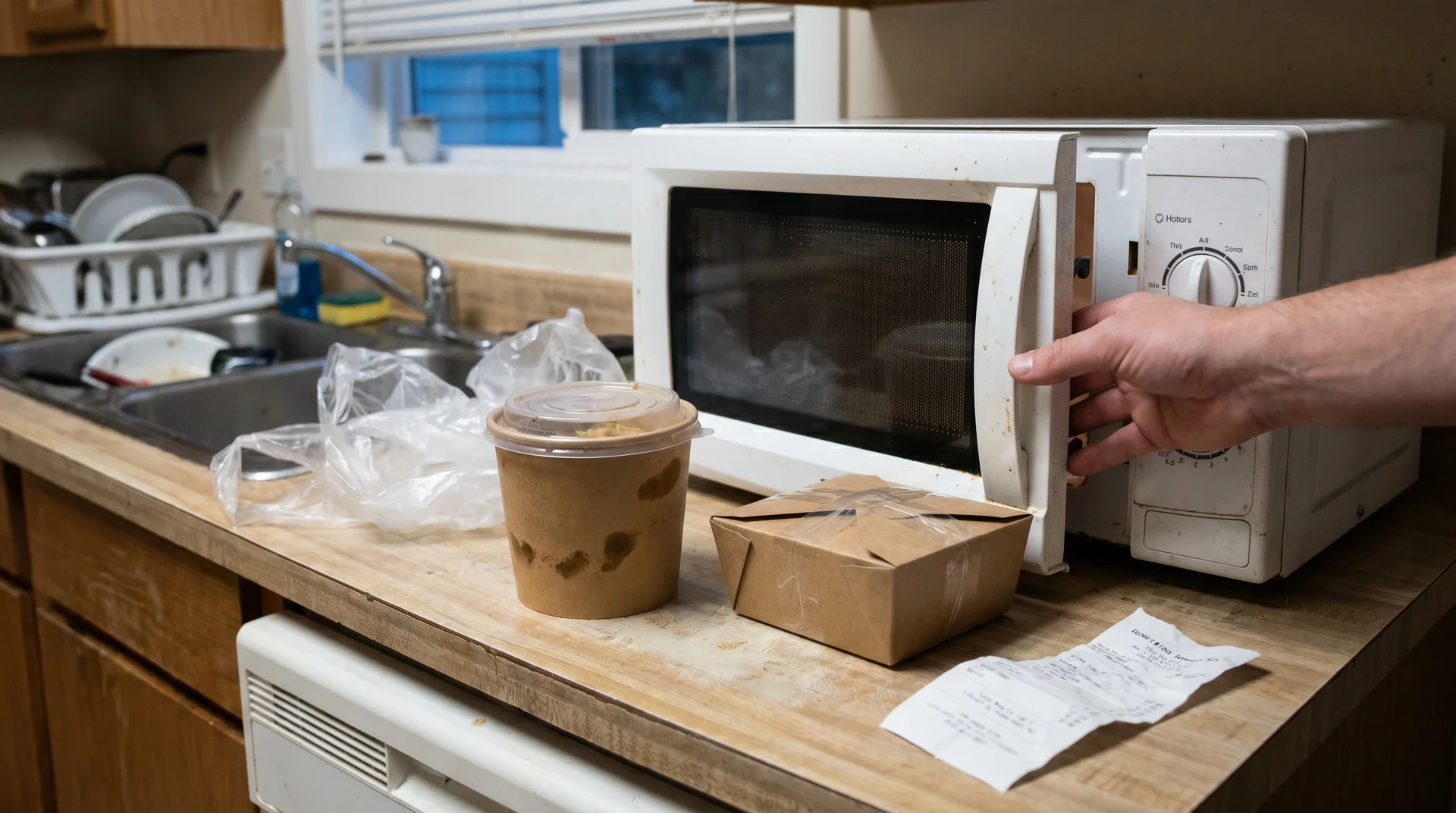
Reheating food in the container it arrived in is, in most cases, a bad idea.
Takeout containers are designed to be food-safe at cold or room temperature. The coating that makes them grease-resistant is often what makes them unsafe under heat.
Some contain PFAS-based grease barriers, which are fluorinated chemical compounds used to repel oil and moisture.
Others have plastic linings not visible from the outside. Under microwave temperatures, these coatings can melt, smoke, or migrate into food.
The label is probably already in the trash, and I know that. Transfer the food to a plain plate. It takes thirty seconds. If you’re not sure what container is safe, the answer is always glass or ceramic.
Why Paper Can Catch Fire in the Microwave
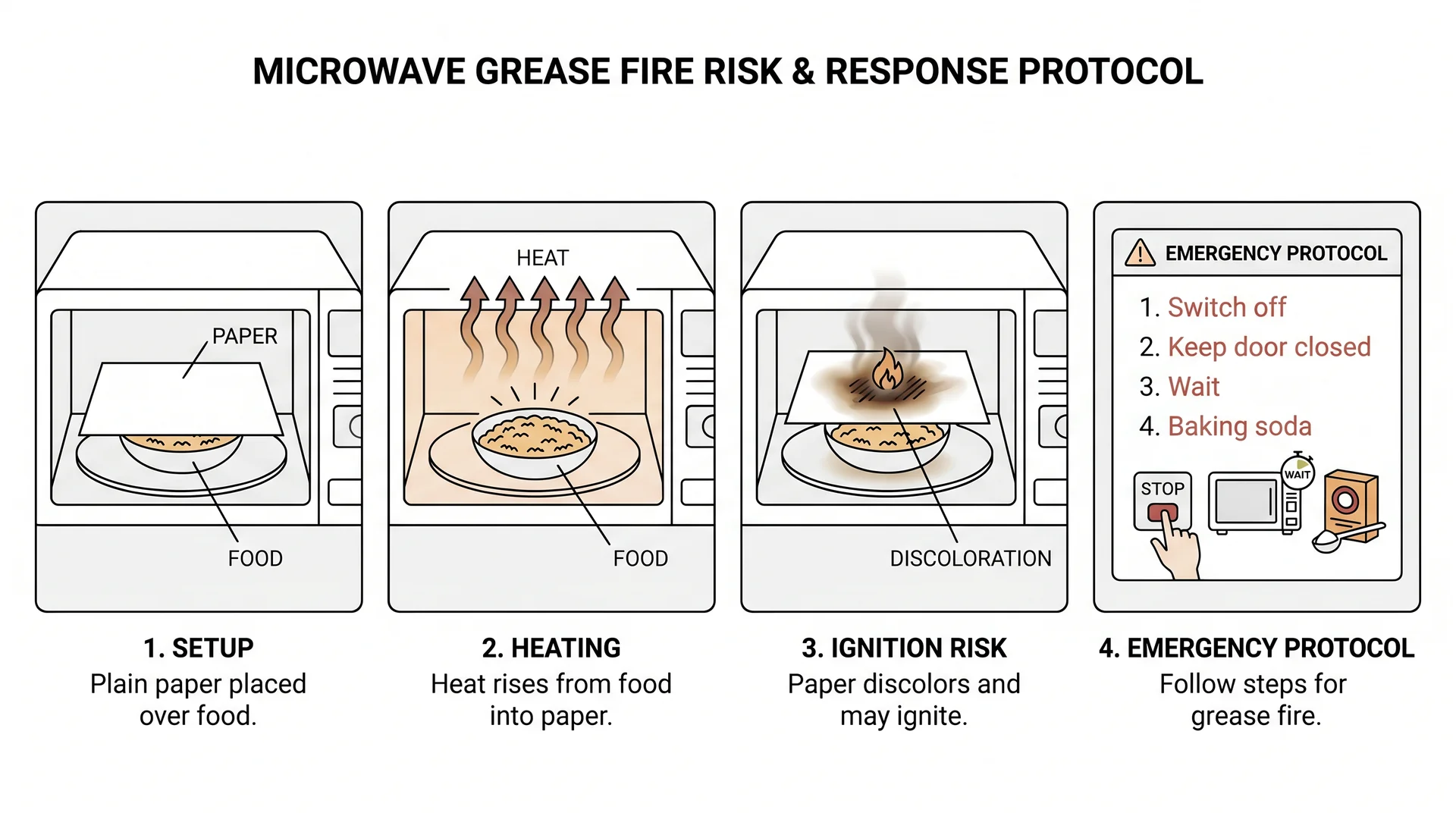
Paper doesn’t absorb microwave energy the way food does.
Microwaves target water molecules. Dry paper has very little moisture, so the energy mostly passes through it. The heat that reaches the paper comes from the food itself, specifically from hot food transferring heat into the paper it is directly touching.
Paper ignites at approximately 450 to 480 degrees Fahrenheit, a range that varies depending on paper type, moisture content, and how densely it is packed. A microwave can reach that threshold under specific conditions. The risk increases when:
- Paper is in direct contact with fatty or sugary food for more than two minutes
- The paper is crumpled or folded, which concentrates heat unevenly
- Recycled paper contains metal traces that cause localized arcing
- The microwave runs without interruption long enough for the food to overheat
If paper catches fire in your microwave, follow this sequence:
- Switch off the microwave immediately. Do not wait.
- Do not open the door. Keeping it closed cuts off oxygen and contains the fire.
- Wait two to three minutes before opening to let the interior cool and the smoke settle.
- If residue remains after cooling, use baking soda on it. Keep water away from the heating elements.
Wax Paper vs. Parchment Paper? How to Tell Them Apart?

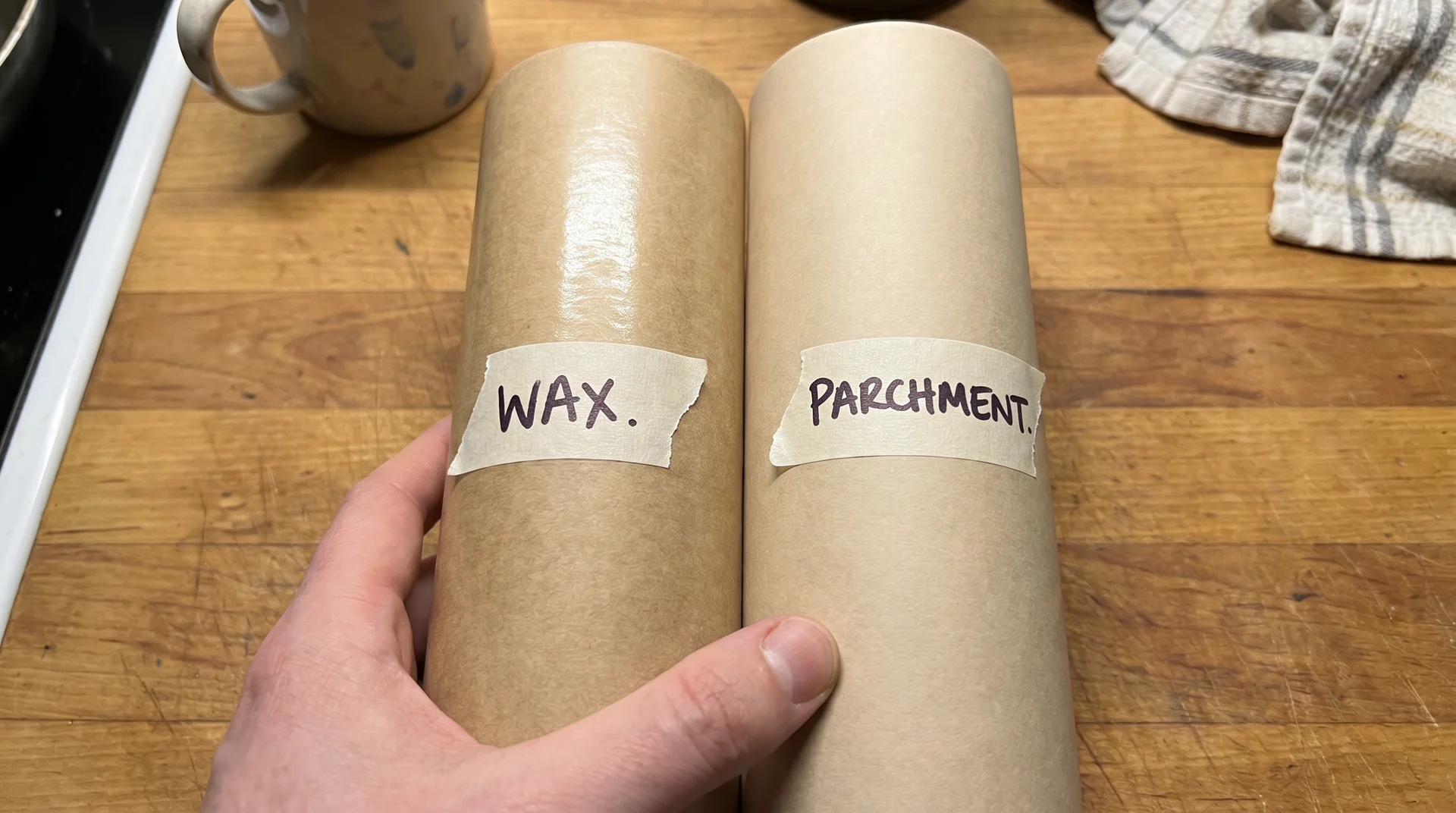
These two rolls look nearly identical once they are out of their boxes.
- There is a touch test. Run your finger along the surface. Parchment feels slightly firmer and drier. Wax paper has a faint slipperiness under your fingertip, almost like a coated surface. It is subtle but consistent.
- There is also a light test. Hold the paper up to a lamp or a window. Wax paper has a slight, almost oily sheen. Parchment is more matte, closer in texture to heavy writing paper than to a coated surface.
Before going further, wax paper can be used loosely as a cover at low power for under two minutes, but only if you are certain which roll you have. Parchment has no such restriction. That difference is what makes the visual confusion between them a real kitchen problem, not just a trivia question.
To avoid this practically in your life, place parchment paper in the drawer nearest the microwave. Wax paper moves to the baking supplies drawer. They do not share storage again.
If both rolls are currently unlabeled, write on them with a permanent marker before you put them away. You make that decision once.
Reading the Microwave-Safe Label
The microwave-safe symbol is three wavy lines, usually inside a small box.
It means the product was tested not to warp, melt, or release harmful substances at typical microwave temperatures. For paper products, the label matters most on coated items: plates, bowls, and food-service containers. Plain white uncoated paper does not need the label. Its composition is the safety case.
When there is no label on a coated or commercial paper product, skip it. Transfer the food to a plain plate or glass container. That rule applies in real time, without any additional research.
There is one area where I am genuinely uncertain, and it is worth saying so directly. Some paper food-service packaging contains PFAS compounds, fluorinated chemicals used to make paper grease-resistant and moisture-resistant.
The FDA has approved specific PFAS compounds for food-contact use and maintains that they are safe as intended.
What remains genuinely unresolved is how those compounds behave under repeated microwave heat. The research is still developing. If you regularly reheat food in commercial paper packaging, glass or ceramic is the best choice. Glass and ceramic sidestep the question entirely.