

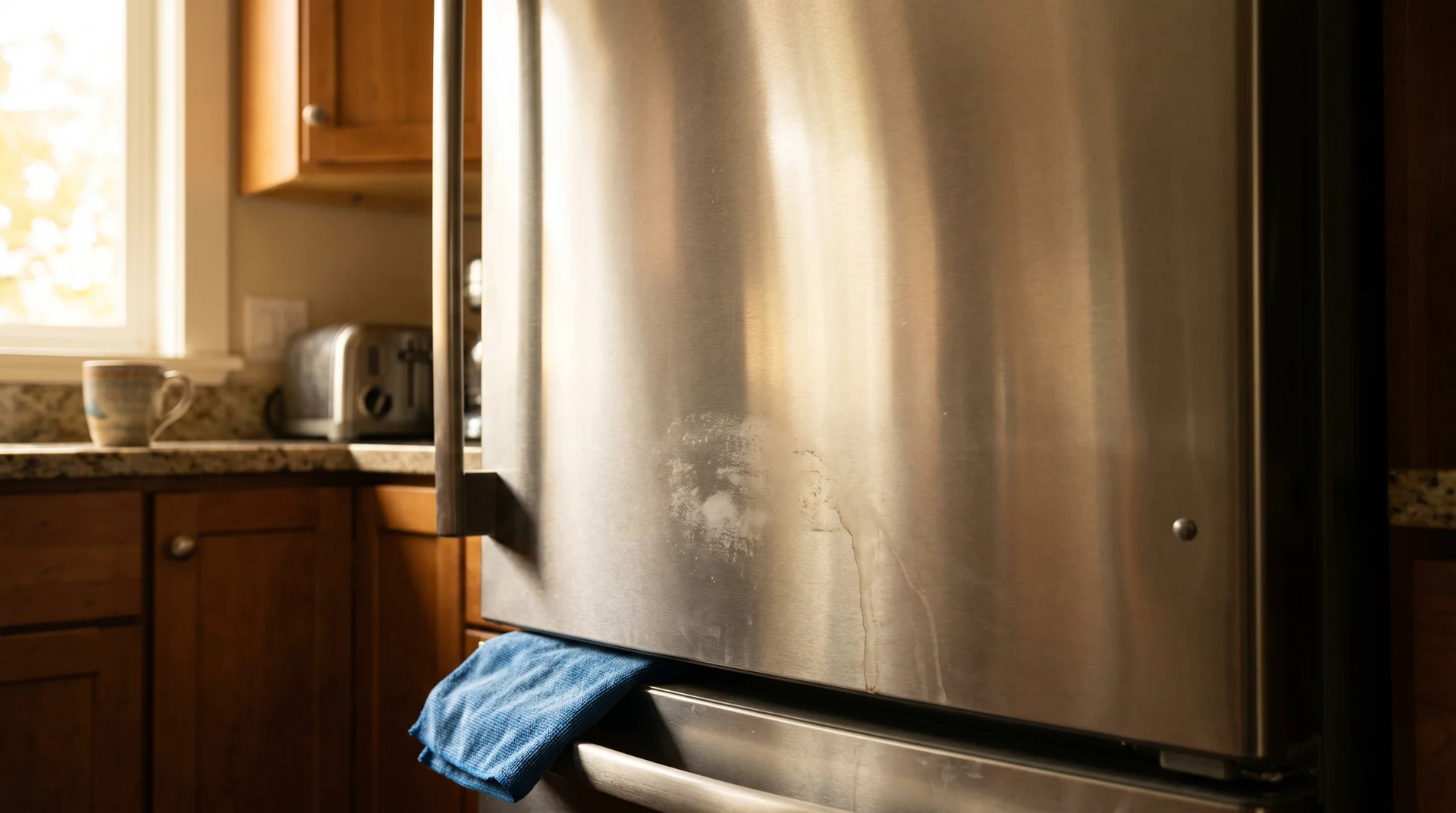
Ammonia-based glass cleaners damage stainless steel with repeated use.
Ammonia-free glass cleaners are a safer option. The answer depends entirely on which formula is in the bottle you’re holding right now.
What Is in Glass Cleaner and Why It Matters for Stainless Steel
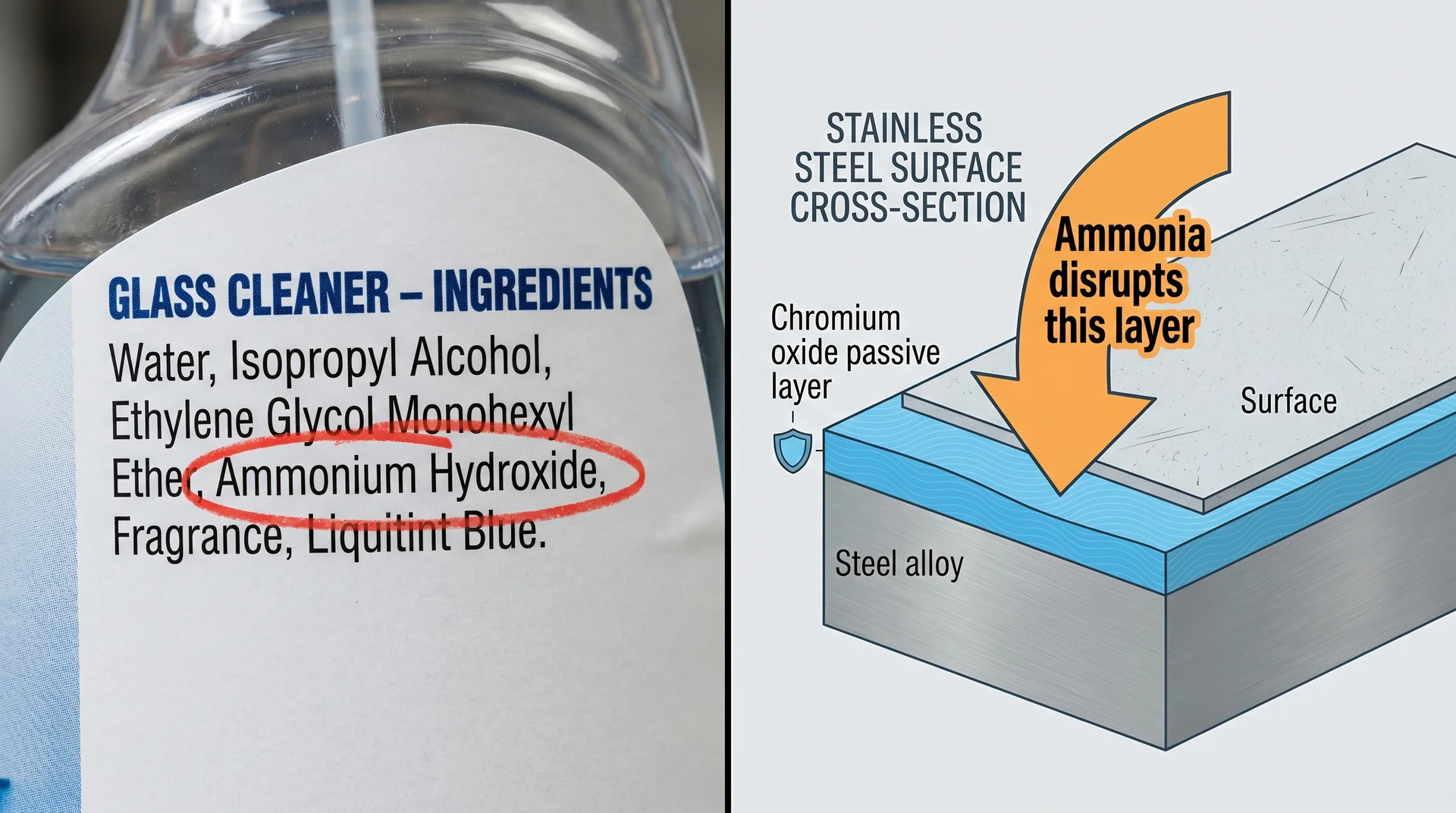
Glass cleaner is a category that covers many different formulas. Not all of them behave the same way on stainless steel.
The ingredient that determines safety on stainless steel is ammonia. That single ingredient changes the answer entirely.
Ammonia-Based Formulas and Stainless Steel
Ammonia attacks the protective layer that keeps stainless steel from rusting.
Stainless steel resists rust because of a film called the chromium oxide passive layer. This film forms automatically when steel is exposed to air. The chromium in the alloy reacts with oxygen and produces chromium oxide.
Chromium oxide creates a barrier against moisture and rust. The barrier is invisible and very thin. Under normal conditions, it’s self-repairing.
Ammonia disrupts that self-repair
Ammonia is an alkaline compound with a pH around 11. At that level, it reacts with chromium oxide. With repeated application, it thins and weakens the passive layer over time.
What the chemistry behind EPA-registered ammonia-based cleaning products shows is that ammonia reacts with metal oxide surfaces.
Maytag’s published appliance care guidance lists glass cleaner among products to avoid on stainless steel appliances. The reason is ammonia.
Stainless steel is not glass
The chemistry behaves differently. I’ve reviewed enough product registration data in institutional settings to know that the label and the registration are not always telling the same story.
SC Johnson labels some Windex formulas, including the proprietary Ammonia-D formulation, as safe for stainless steel on their packaging. Whether that formulation behaves differently from standard ammonia cleaners on stainless steel is not settled. Published appliance care guidance doesn’t resolve it.
Some homeowners using certain appliance finishes have reported purple or grey discoloration after using ammonia-based cleaners.
Samsung refrigerators come up in this pattern specifically. The specific finish grade of the steel affects how visible the degradation becomes. That pattern matters more if you have been reaching for glass cleaner every week.
Ammonia-Free Glass Cleaners and Stainless Steel
Ammonia-free glass cleaners skip the reactive compound, and that changes the risk profile significantly.
Windex Ammonia-Free, Invisible Glass, and Seventh Generation Free & Clear are all labeled for use on stainless steel and chrome. Method Glass + Surface falls in the same category.
SC Johnson markets an ammonia-free version of Windex specifically because ammonia is the problem with the original formula.
The packaging on those products says “safe for stainless steel.” That claim reflects the absence of the compound that causes damage. It’s a chemical distinction, not marketing language.
I’d still call this a second-best option on stainless steel.
Glass cleaner is engineered for flat, non-porous surfaces. Stainless steel has a brushed grain.
That grain is a pattern of fine parallel lines running in one direction across the surface. It comes from the finishing process the metal goes through before it becomes an appliance panel.
Applying glass cleaner without following the grain leaves residue in the finish channels.
That residue is what streaks look like. The streaks aren’t a product failure. They’re a technique failure that the glass cleaner’s design never accounted for.
Ammonia-free glass cleaner as a spot treatment is a reasonable fix in a pinch.
Using it as your regular stainless steel cleaner means removing fingerprints without conditioning or protecting the surface.
The Difference Between One Use and a Habit
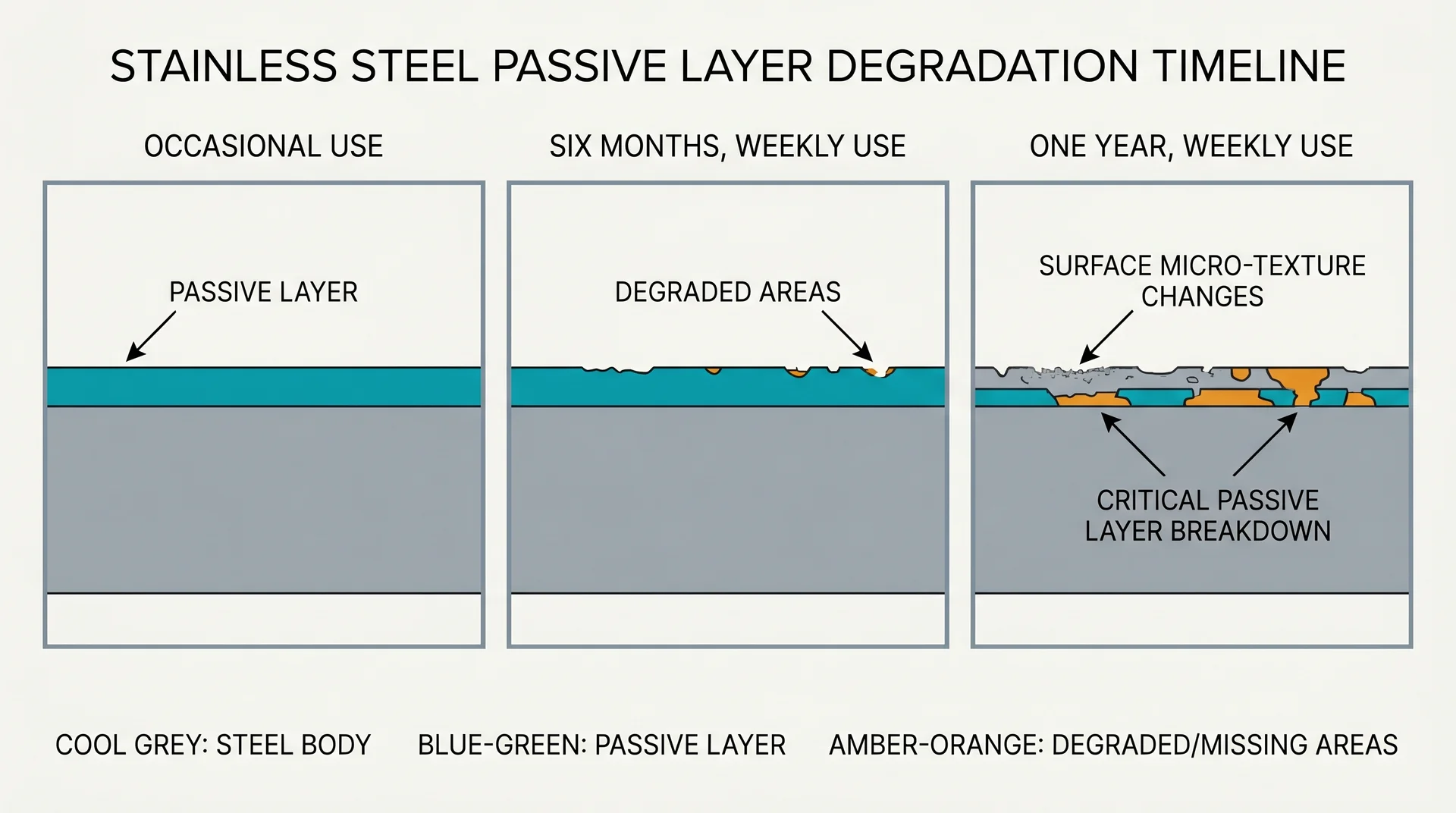
One use of ammonia-based glass cleaner will not ruin your refrigerator.
Ammonia-based formulas are those that list ammonia or ammonium hydroxide in their ingredients. The chromium oxide passive layer is self-repairing. Minor chemical exposure does not permanently destroy it.
In most kitchen appliances, the steel has enough chromium for the passive layer to rebuild after brief contact.
Repetition is where the actual risk lives.
Weekly use over twelve months is a different exposure level than occasional use twice a year. The passive layer regenerates, but only at a fixed rate. Repeated ammonia exposure in a warm, humid kitchen can outpace that regeneration over time.
My father would say this is overthinking it. He spent thirty years as a commercial kitchen inspector in Baltimore. His position on most cleaning chemistry questions is that glass cleaner is glass cleaner.
He is not entirely wrong.
He is also not entirely right. Most people using Windex on their fridge without visible damage are looking at a surface that looks fine. A thinning passive layer does not announce itself.
The effect shows up later as fingerprints that are harder to remove. The finish starts to look subtly duller than it did when the appliance was new. That isn’t the same thing as a surface that hasn’t changed.
The exact rate of passive layer degradation from household-concentration ammonia glass cleaners is not a settled number.
It varies with ammonia concentration, surface temperature, humidity, finish grade, and wipe frequency. The mechanism is established by materials science. The precise timeline for any individual kitchen is an extrapolation.
Occasional use of ammonia-based glass cleaner is low risk. Weekly use is a real risk. Using it as your routine cleaning method means running an experiment on an expensive appliance without knowing the outcome.
How to Use Glass Cleaner on Stainless Steel Without Causing Damage
The technique matters as much as the formula here.
Confirm your glass cleaner is ammonia-free before starting. The sequence below determines whether you get a clean surface or a streaky one.
Finding the Grain Direction
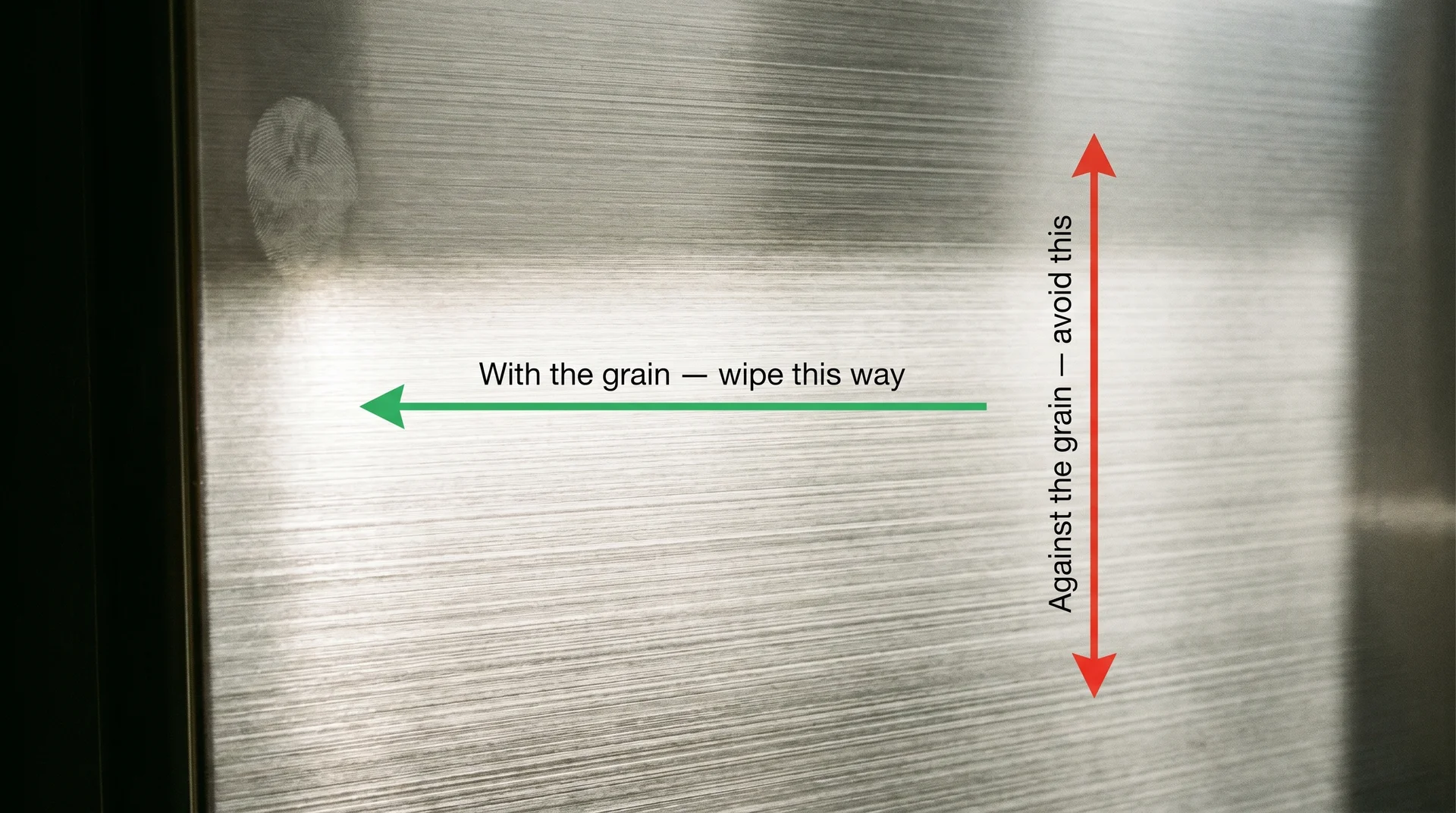
Stainless steel has a directional grain, and you must identify it before wiping anything.
The grain is the pattern of fine parallel lines in the steel surface. It comes from the finishing process the metal goes through before it becomes an appliance panel. Look at the surface from an angle under direct light.
On most refrigerators, the grain runs horizontally across the door. On most dishwashers, it runs vertically. On stainless steel sinks, the direction varies by manufacturer, so look before you start.
Wiping against the grain pushes product residue into the finish channels rather than across them.
That trapped residue is what streaking looks like. Grain direction is the most ignored instruction in all of stainless steel cleaning. It is also the one most likely to determine your result.
The Right Way to Spray
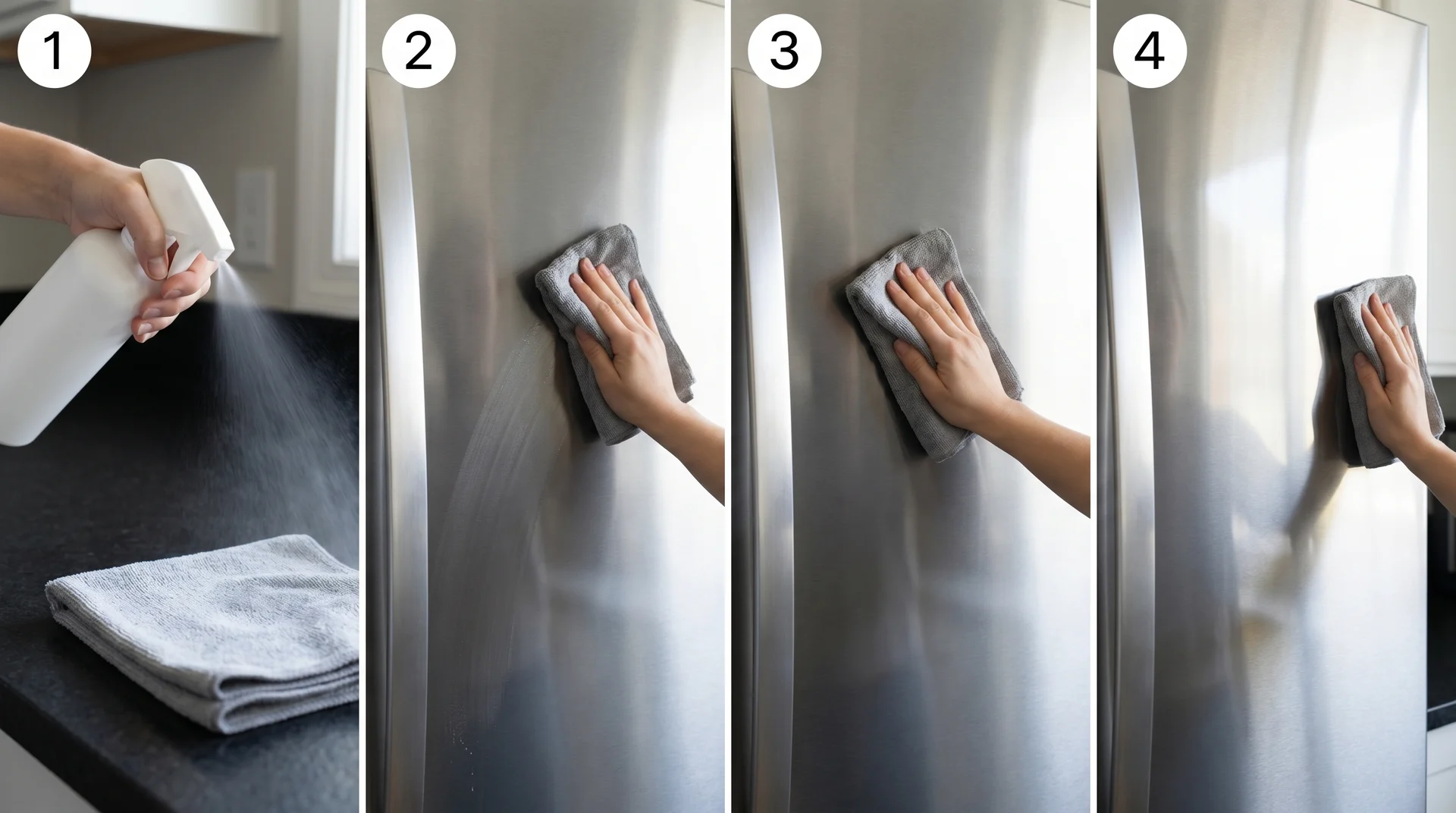
Spray the glass cleaner onto the cloth, not onto the appliance surface.
Spraying directly onto stainless steel causes the product to drip into seams, handles, and the gaps around controls. It also allows the cleaner to begin setting on the surface before you wipe. Set residue causes the streaking you’re trying to prevent.
The protocol for glass cleaner on this surface follows a specific order. Contact time on brushed stainless steel appliance finish: zero.
Sequence: apply to cloth, wipe with the grain, buff immediately dry. These steps are not interchangeable. Skipping any one of them changes the outcome.
Before you begin, confirm your formula is ammonia-free.
If the label lists ammonia or ammonium hydroxide in the ingredients, put the bottle back. Choose a different product.
Use glass cleaner in a kitchen with open windows or active ventilation. Even household concentrations of ammonia irritate eyes and airways in enclosed spaces.
- Spray the cleaner onto a clean microfiber cloth until the cloth is lightly damp, not saturated.
- Wipe the surface in single directional passes following the grain. Do not use circular motions.
- Follow immediately with a dry microfiber cloth. Buff along the same grain direction until no residue remains.
- Check the surface under angled light to confirm there is no streaking before you stop.
These four steps take under two minutes. They require nothing beyond a microfiber cloth and the cleaner you already have.
If you spray directly onto the appliance, the product begins setting into the grain channels before you reach for the cloth. A dedicated stainless steel cleaner can recover from that missed step.
An ammonia-free glass cleaner cannot.
You will spend more time removing dried residue than the shortcut saved you.
What to Use Instead of Glass Cleaner on Stainless Steel
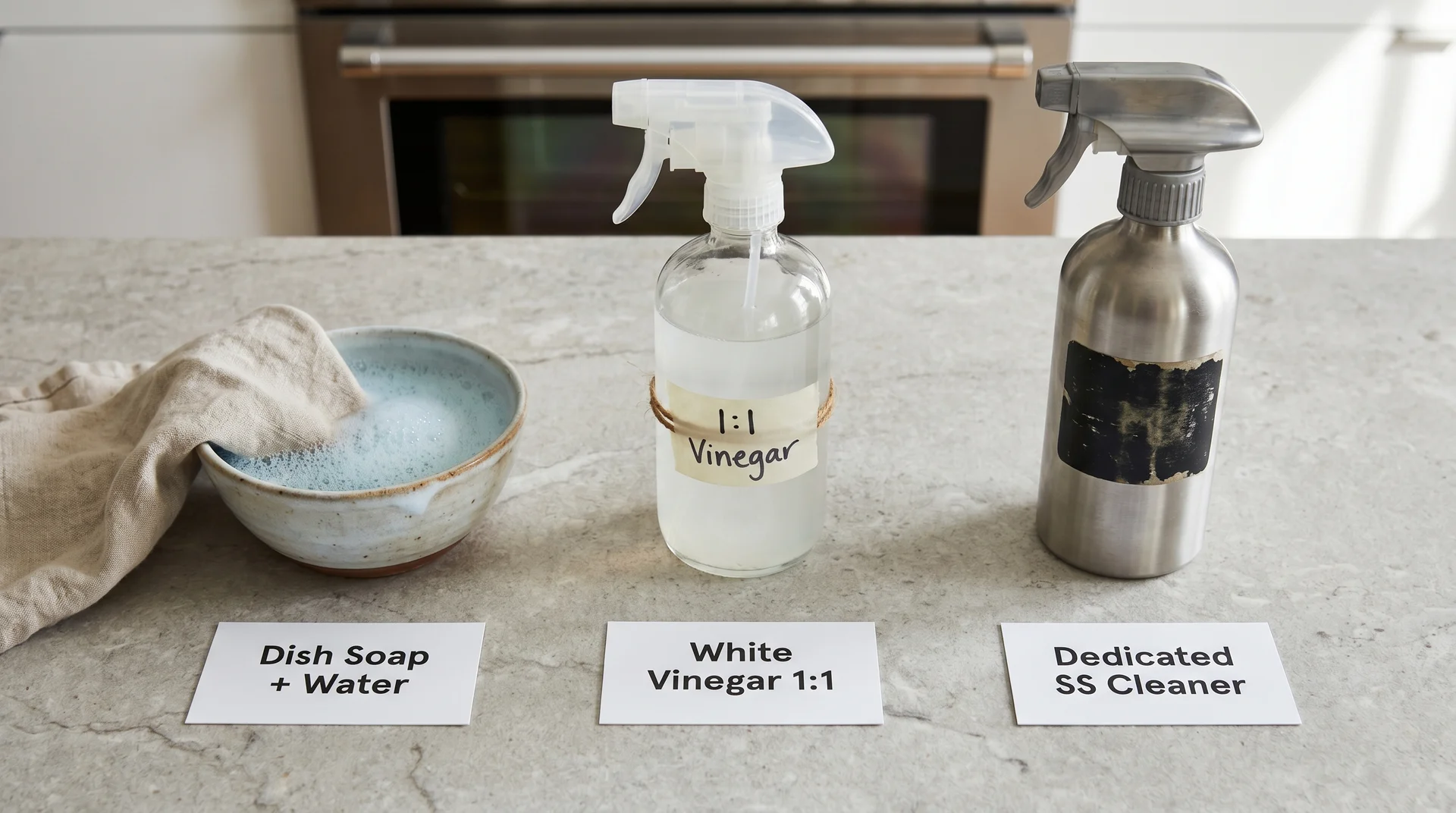
Three alternatives work on stainless steel without affecting the passive layer.
The passive layer is the thin chromium oxide film that keeps stainless steel from rusting. The right choice depends on what you’re cleaning.
| Option | Best For | Limitation | Passive Layer Safe |
|---|---|---|---|
| Dish soap and warm water | Every day grease, fresh fingerprints | Leaves no polish or protective coating | Yes |
| White vinegar diluted 1:1 with water | Water spots, mineral deposits | Must be rinsed promptly; never leave undiluted on the surface | Yes, if diluted and rinsed immediately |
| Dedicated stainless steel cleaner (Weiman, Method) | Full clean, polish, and fingerprint protection | Requires a dry-buff step; skipping it causes streaking | Yes |
Vinegar appears on both safe and avoid lists across different sources. Diluted white vinegar rinsed off promptly is safe. Undiluted vinegar left to air-dry is a different application entirely.
Dedicated stainless steel cleaners are worth the cost if you use them correctly. Weiman and Method both use pH-neutral formulas that clean without disrupting the passive layer.
I’ve seen plenty of people abandon these products after one use because they got streaking.
The streaking comes from skipping the dry buff step after application. That is not a product flaw.
The protective coating can’t bond properly to a wet surface.
Buff while the surface is still slightly damp. Then finish with a dry cloth.
Getting that step right matters more than which cleaner you choose. The passive layer point from earlier in this piece connects directly to this one.
Appliance Surfaces vs. Stainless Steel Sinks
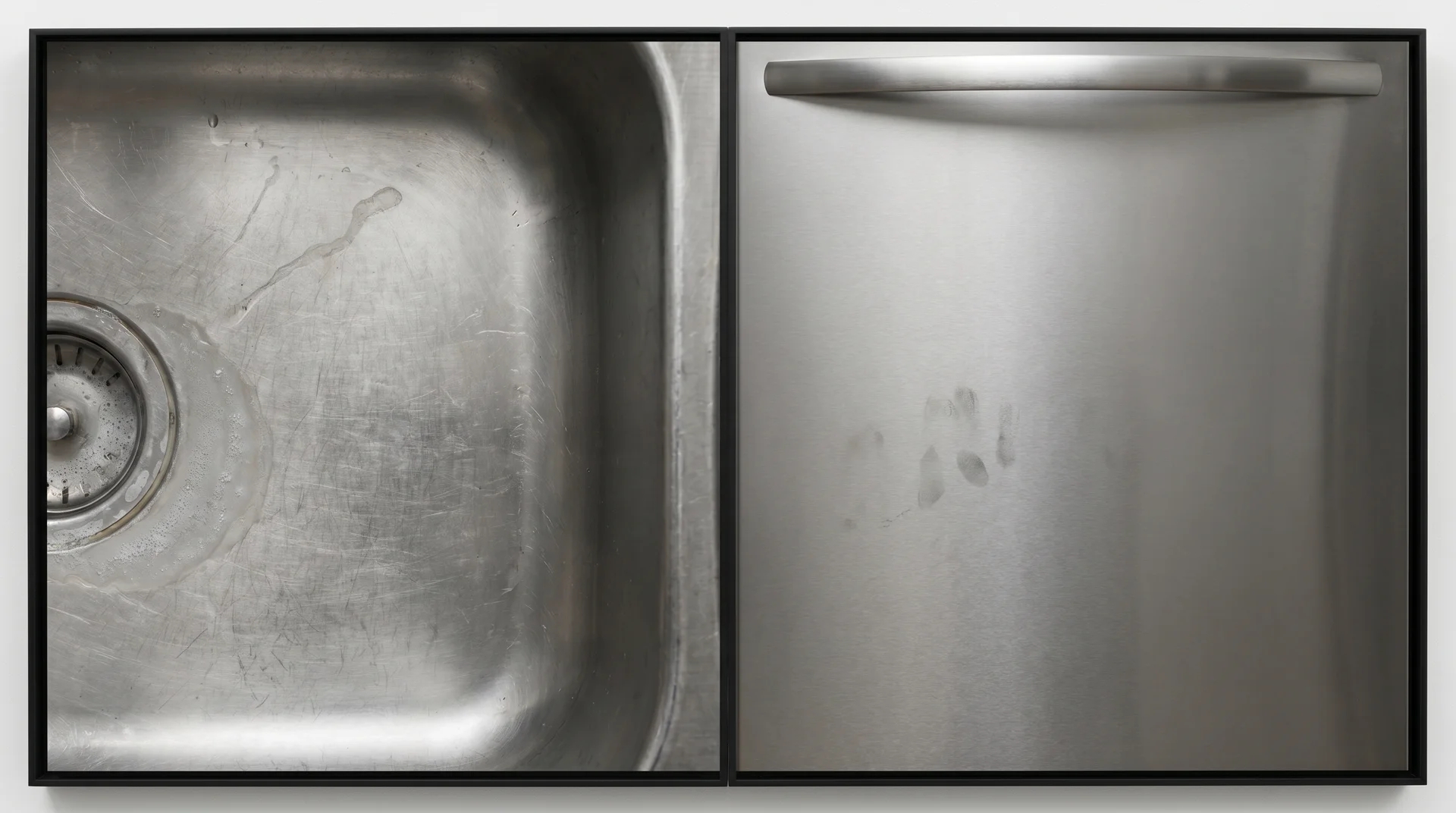
A stainless steel sink and a refrigerator door are different cleaning problems.
Frequency is the key difference.
Sinks face daily water exposure, food acids, soap residue, and mineral deposits from hard water. Most households clean their sinks daily or near-daily.
A refrigerator door typically gets a wipe-down once a week or less. The frequency difference matters because passive layer exposure is cumulative.
For sinks, dish soap and water or a diluted vinegar solution is the right routine cleaner. Glass cleaner, even ammonia-free, wasn’t designed for that cleaning frequency.
This piece covers appliance surfaces only.
Stainless steel cookware is a different alloy grade with a different finish type. The guidance above does not apply to pots, pans, or bakeware.
Frequently Asked Questions
The most common questions about glass cleaner on stainless steel have short answers.
The chemistry covered above handles the mechanism behind each one.
Does Windex damage stainless steel?
Original Windex with ammonia causes cumulative damage to the passive layer with repeated use. One use won’t cause visible harm. Weekly use over months will thin the finish and make the surface harder to keep clean.
Can you use Windex Ammonia-Free on stainless steel?
Yes. Apply it to a microfiber cloth and wipe with the grain. It will not damage the passive layer. It will streak if your technique is wrong.
Can you use window cleaner on a stainless steel fridge?
If the formula is ammonia-free, yes, with the technique described above. If it contains ammonia, it’s not a sound routine choice. Check the ingredient list before you decide.
Is glass cleaner safe on a stainless steel sink?
Occasionally and with correct technique, yes. As a daily routine cleaner, no. The frequency of sink use makes even ammonia-free formulas a poor regular fit.
Why does stainless steel streak after cleaning?
Usually, the grain direction. Wiping against the grain traps residue in the finish channels. Identify the grain, wipe again with a dry microfiber cloth following it, and check the result under angled light.
The formula in your bottle is the first thing to check. Ammonia-based glass cleaner used regularly will thin the passive layer over time.
Ammonia-free glass cleaner is safer. It wasn’t built for metal surfaces. No product works correctly on stainless steel without following the grain. Check it before you wipe.