

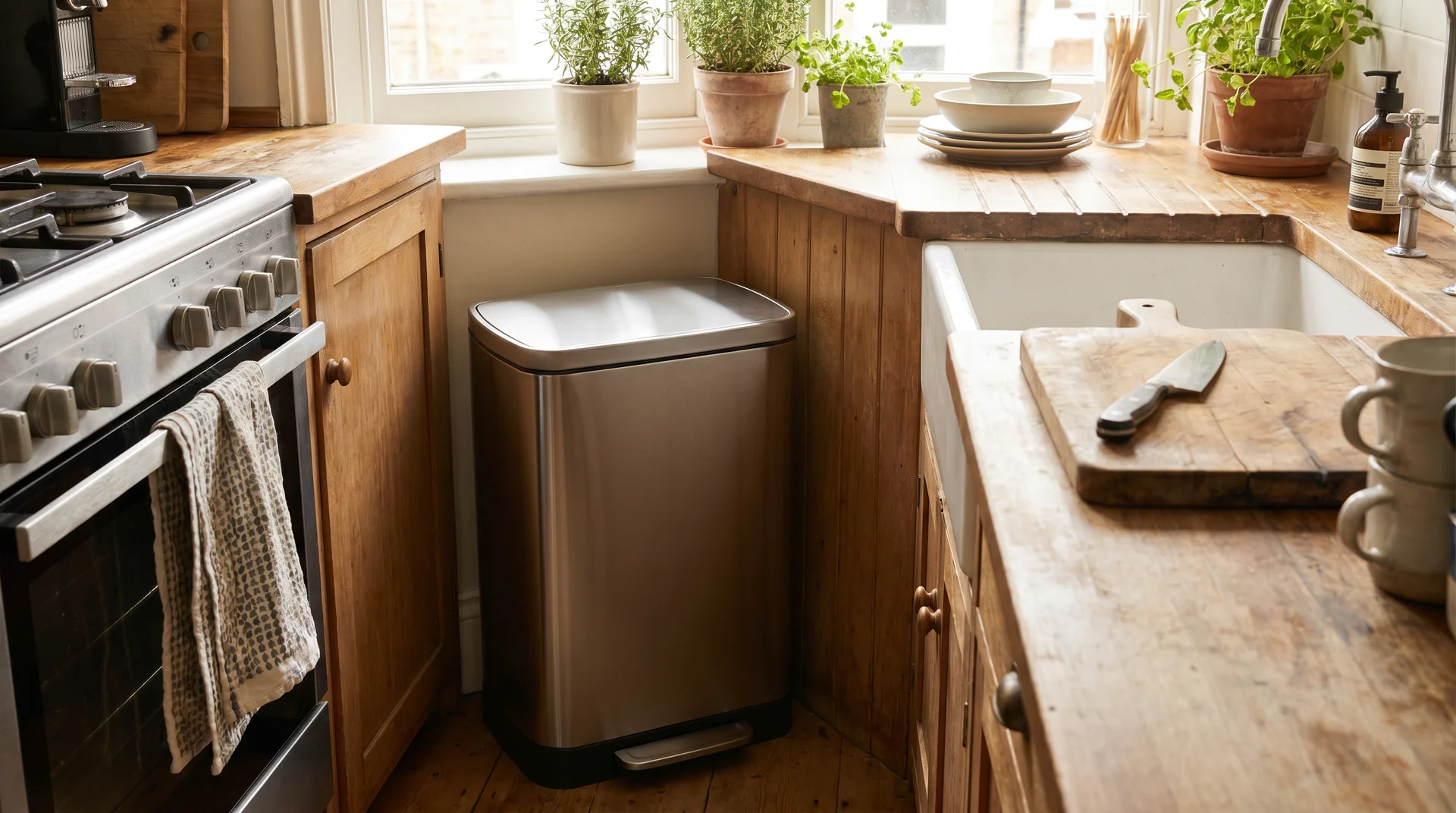
For most kitchens, 13 gallons is the right starting point. Whether it actually works for your kitchen depends on where the can is going and how your household generates waste.
Nearly every sizing guide leads with household headcount. That’s the wrong variable, and it’s why people keep buying cans that overflow every other day or claim floor space they needed for something else.
Different Sizes of Kitchen Trash Cans
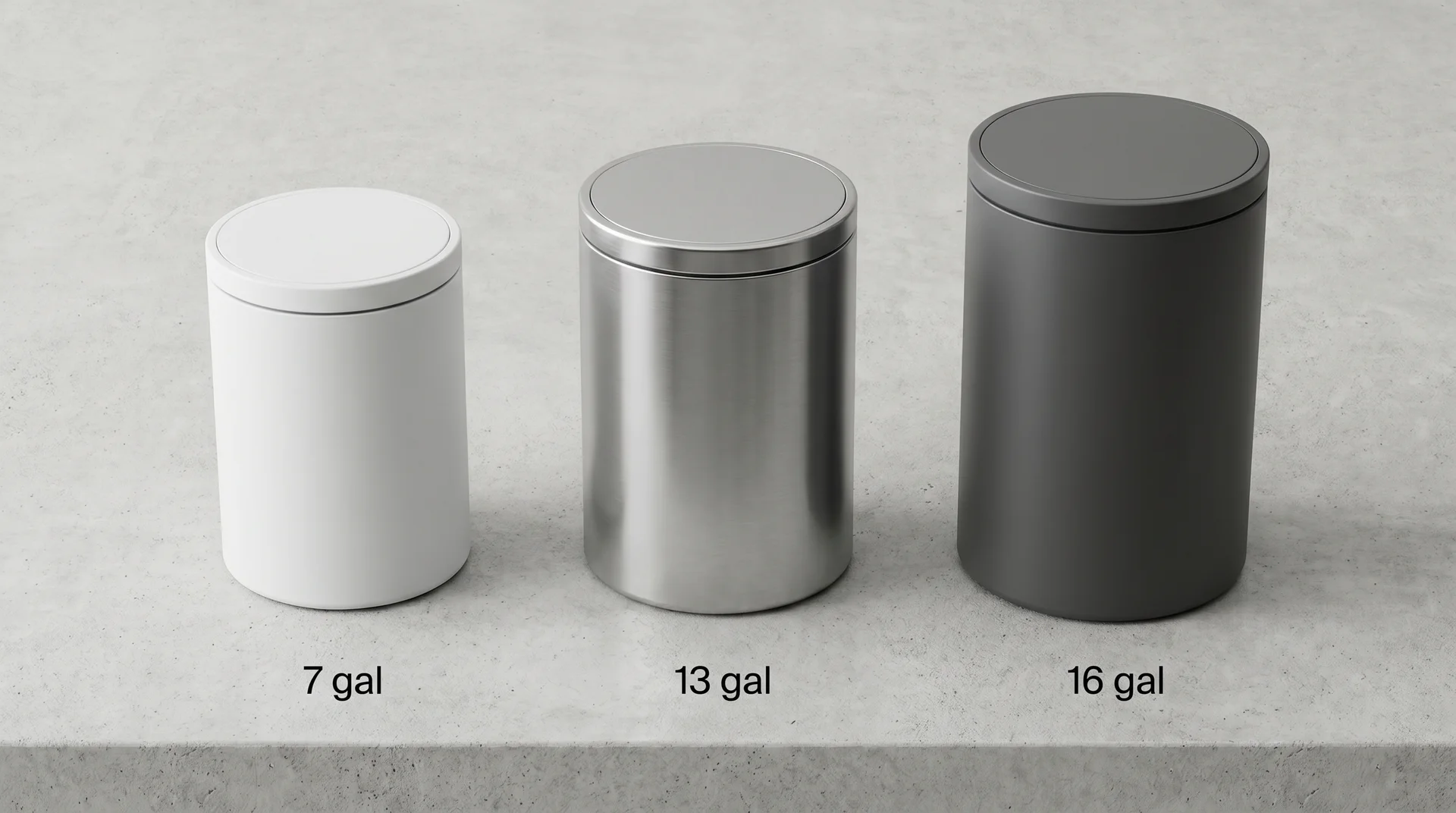
Most households do well with a 13-gallon kitchen trash can. That size handles two to four people who cook regularly and run one bin for all their kitchen waste.
A 10-gallon can works for smaller households or for anyone who separates food scraps and recycling before they reach the main bin.
Households of five or more generally need closer to 16 gallons to avoid emptying it every single day.
Those numbers assume it can physically fit where you plan to put it. Under-sink or pull-out cabinet placement can change them significantly.
Read the placement section before you buy.
Why Household Size Is the Wrong Starting Point
Household size gives you a rough estimate, not a reliable sizing answer. Two people who cook from scratch five nights a week generate more kitchen waste than a family of four that mostly orders takeout.
Cooking habits are the more reliable predictor of what size you actually need.
Cooking Volume
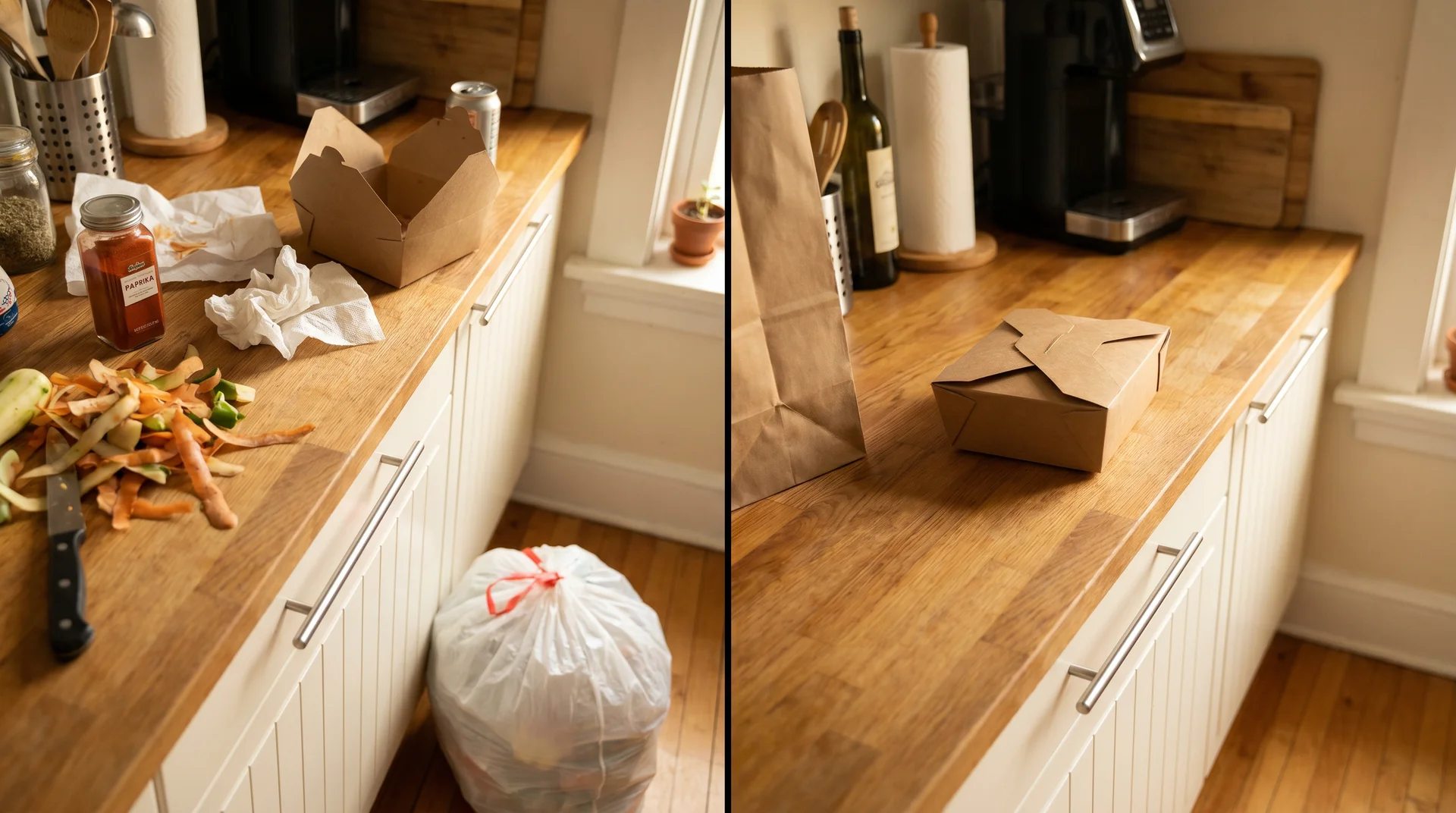
The most useful variable is how many meals your household actually prepares at home each week.
Home cooking generates packaging, food trimmings, and paper waste at a rate that ordering in does not. A household cooking seven dinners a week fills a trash can faster than one that cooks twice. Headcount alone does not tell you that.
I tracked cooking frequency against trash volume across kitchen audits in real residential homes, not controlled environments. Cooking nights predicted fill rate more consistently than household size did every time.
Fewer than three home-cooked meals per week, and you can likely size down from whatever the headcount-based chart recommends. Five or more means sizing up. That’s a more actionable variable than how many people sleep in the house.
How Composting and Recycling Change the Math
If food scraps leave the kitchen through a compost container, your main trash can can be meaningfully smaller.
Food waste is heavy, compresses poorly, and is the primary driver of kitchen trash odor. When food scraps stay in the main bin, they determine both how fast it fills and how fast it starts to smell. Routing them to a countertop compost container changes both of those variables at once.
Your main bin then handles packaging and dry waste. That stream fills more slowly and smells considerably less. Separating glass, cardboard, and plastics into a recycling stream further reduces it.
I can’t give you a reliable percentage for how much smaller your bin can be. Waste composition is specific to how your household cooks and shops. Separate more streams, and a smaller main can become viable.
Once you have a sense of your waste volume, placement constraints narrow the size range further.
Figure Out Placement Before You Pick a Size
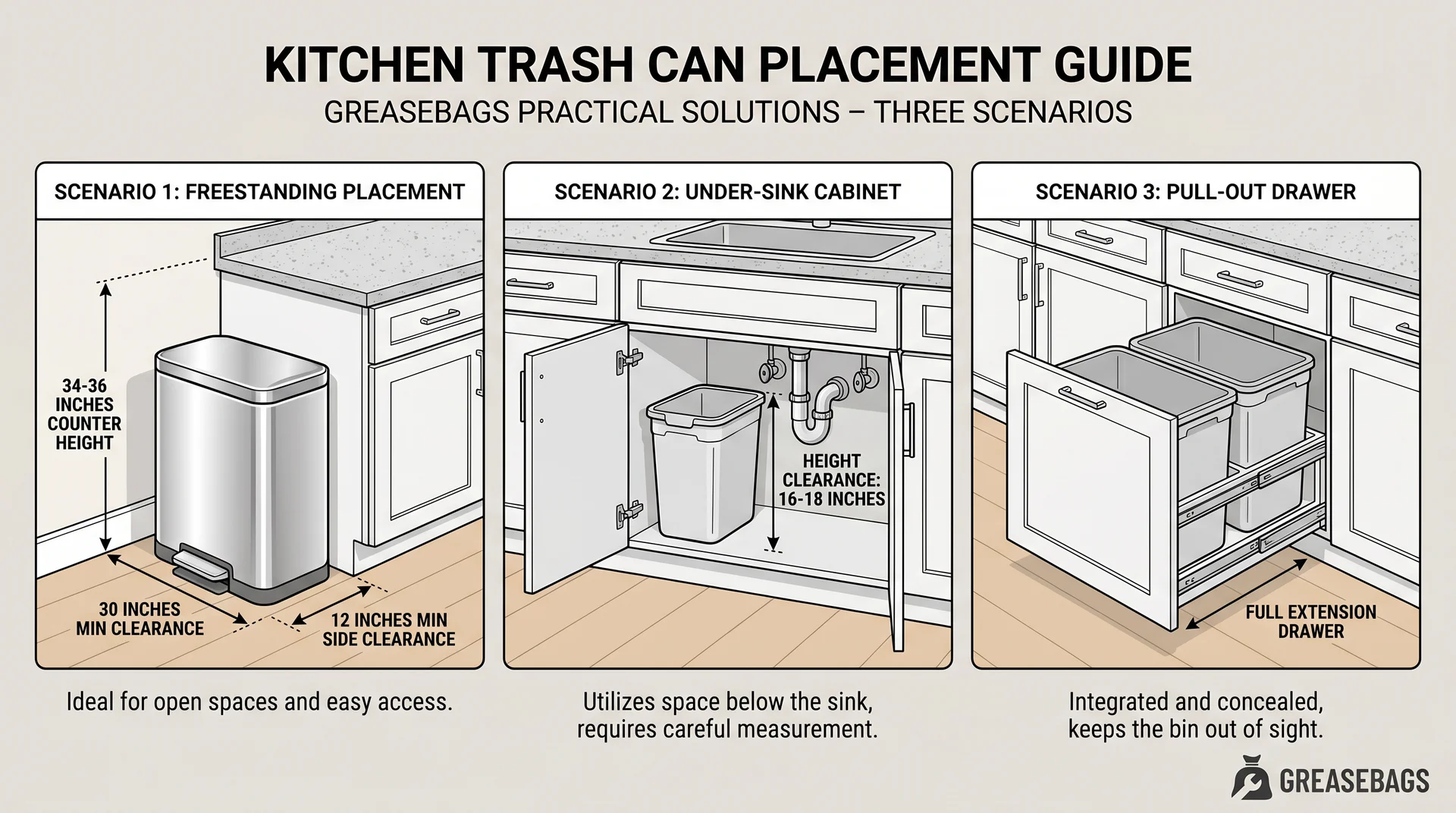
Where the can lives determines the size range you’re working within.
This is the correction most people need before they buy. They settle on a gallon number, buy a matching can, and discover it doesn’t fit the space they planned. Placement comes first.
Capacity is the decision you make inside whatever the space allows.
Freestanding Cans (Next to Counter or Island)
Freestanding cans give you the most size flexibility, but kitchen trash can dimensions still need to fit your actual space.
Standard 13-gallon freestanding cans measure 23 to 26 inches tall and 14 to 16 inches wide. That footprint needs roughly 6 inches of clearance on all sides for comfortable use and enough room for the lid to open without catching on a wall or cabinet.
Step-on pedal models need 3 to 4 additional inches at the base for foot operation. Touchless sensor models need overhead lid clearance, which typically means 35 to 40 total inches of height with the lid open.
Rectangular cans usually have a smaller floor footprint than round cans at the same gallon capacity. In a tight kitchen, that difference is real.
Under the Sink
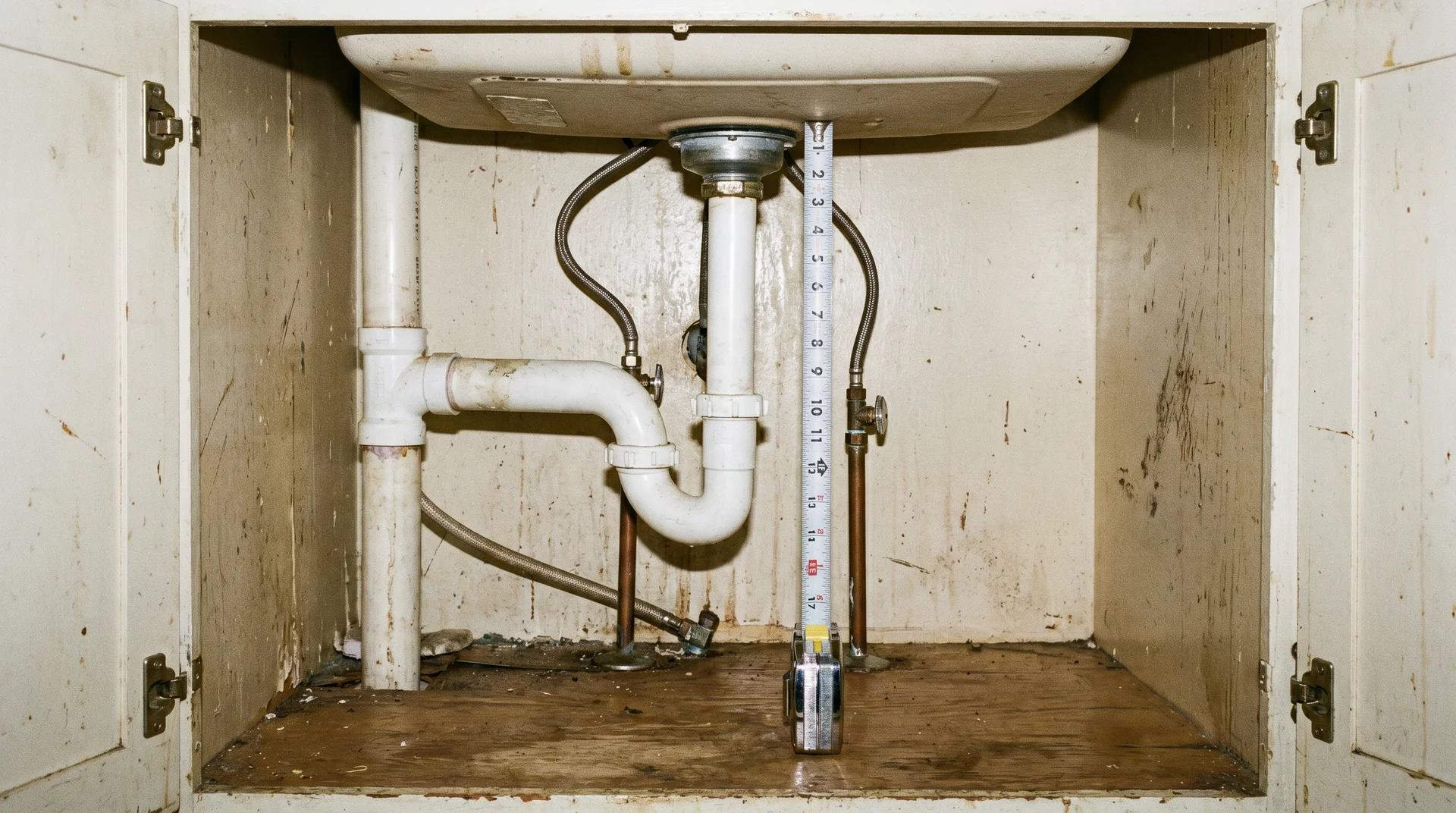
Under-sink placement is where the most kitchen trash can purchases fail, and height is almost always the reason.
The 7 to 10-gallon range appears everywhere as the under-sink recommendation. That guidance addresses capacity. It says nothing about whether a given can physically fit under your specific sink.
Height is the constraint that gallon ratings don’t capture.
Standard under-sink clearance in a 24-inch base cabinet typically runs 18 to 22 inches from the floor to the underside of the sink basin. That’s before plumbing. The shutoff valves and drain assembly take additional vertical space at the back of the cabinet.
Usable width is often narrower than the cabinet’s outer dimension suggests. A drain pipe and P-trap project into the cabinet interior on one side, reducing the space where a can can actually sit.
Measure three things before buying any under-sink can:
- Height from the floor to the underside of the sink basin, measured at the exact spot where the can will sit
- Usable width after accounting for the drain pipe and shutoff valves
- Cabinet depth from the door to the back wall
Compare those measurements against the physical dimensions of any can you’re considering. Gallon ratings tell you nothing about fit. Measure before you buy. That’s the full instruction.
Pull-Out Cabinet Systems
If you have a pull-out trash cabinet, the drawer frame determines your bin size.
Standard pull-out organizer cans run 35 to 50 liters, roughly 9 to 13 gallons. The bin has to fit the frame. The footprint needs to match the drawer interior with about 2 inches of clearance on each side for mounting hardware and smooth operation.
If you’re retrofitting a standard cabinet not designed for a pull-out system, check drawer depth before anything else. Full-extension slides need at least 20 to 24 inches of cabinet depth to operate without binding. Everyone who has done this retrofit says the same thing: measure depth twice. Picking the bin size is the easy part.
The Bag-to-Can Mismatch
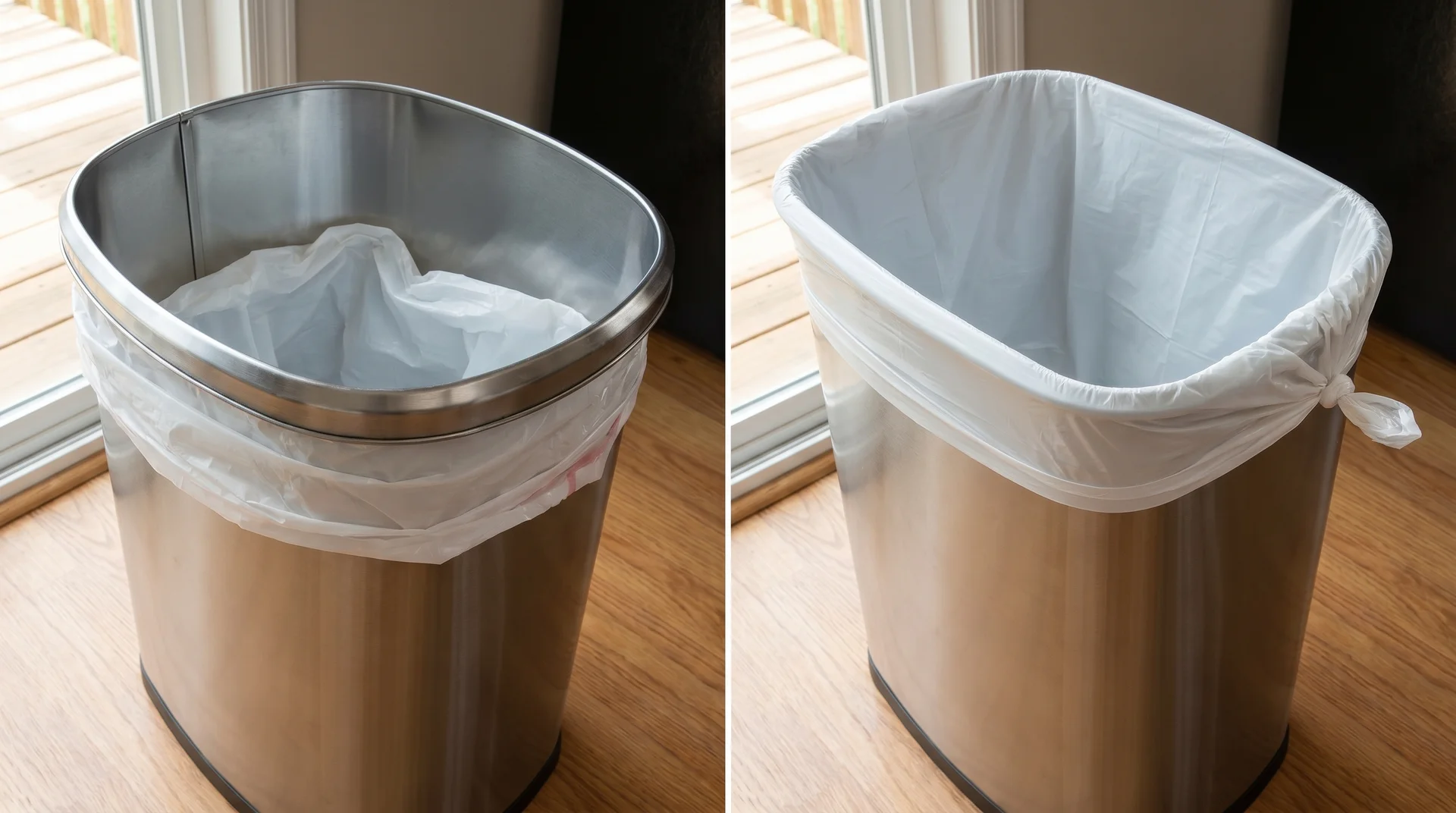
The gallon number on your can and the gallon number on your bag measure different things.
A 13-gallon bag placed in a 13-gallon can will sink below the rim the moment you add anything to it. The can’s rating is brim capacity, which is the theoretical volume to the top edge.
The bag’s rating is fill-and-tie capacity, the volume at which you’d knot the top with enough slack left to carry it. Those numbers are close, but they don’t match at 1:1. That gap is exactly what makes the bag slip every time you change it.
I noticed this coming up repeatedly in product reviews before I tested it in my own kitchen, across several can sizes. The fix holds consistently.
Buy bags rated 1 to 2 gallons larger than your can’s stated capacity.
- A 13-gallon can takes bags labeled 13 to 15 gallons.
- A 10-gallon can takes bags labeled 10 to 12 gallons.
That extra labeled capacity is what keeps the bag anchored at the rim rather than sinking inside it. Trash bag size is the detail that determines whether the whole setup actually functions.
It costs nothing to get right once you know why it matters.
A Sizing Reference by Household Type
The right size comes from combining your waste volume with your placement constraints. Use this table as a starting point, then adjust for where the can is actually going.
| Household | Waste Habits | Recommended Size |
|---|---|---|
| 1–2 people, cooks occasionally | Composts food scraps, recycles packaging | 7–10 gal |
| 1–2 people, cooks most nights | Everything into one bin | 10–13 gal |
| 3–4 people | Recycles, cooks regularly | 10–13 gal |
| 3–4 people | No composting or recycling separation | 13–16 gal |
| 5+ people | Any | 16–20 gal freestanding |
Every row assumes freestanding placement. A large-household recommendation is worthless if the only available space is an under-sink cabinet with 18 inches of clearance.
The One Question Worth Asking Before You Buy
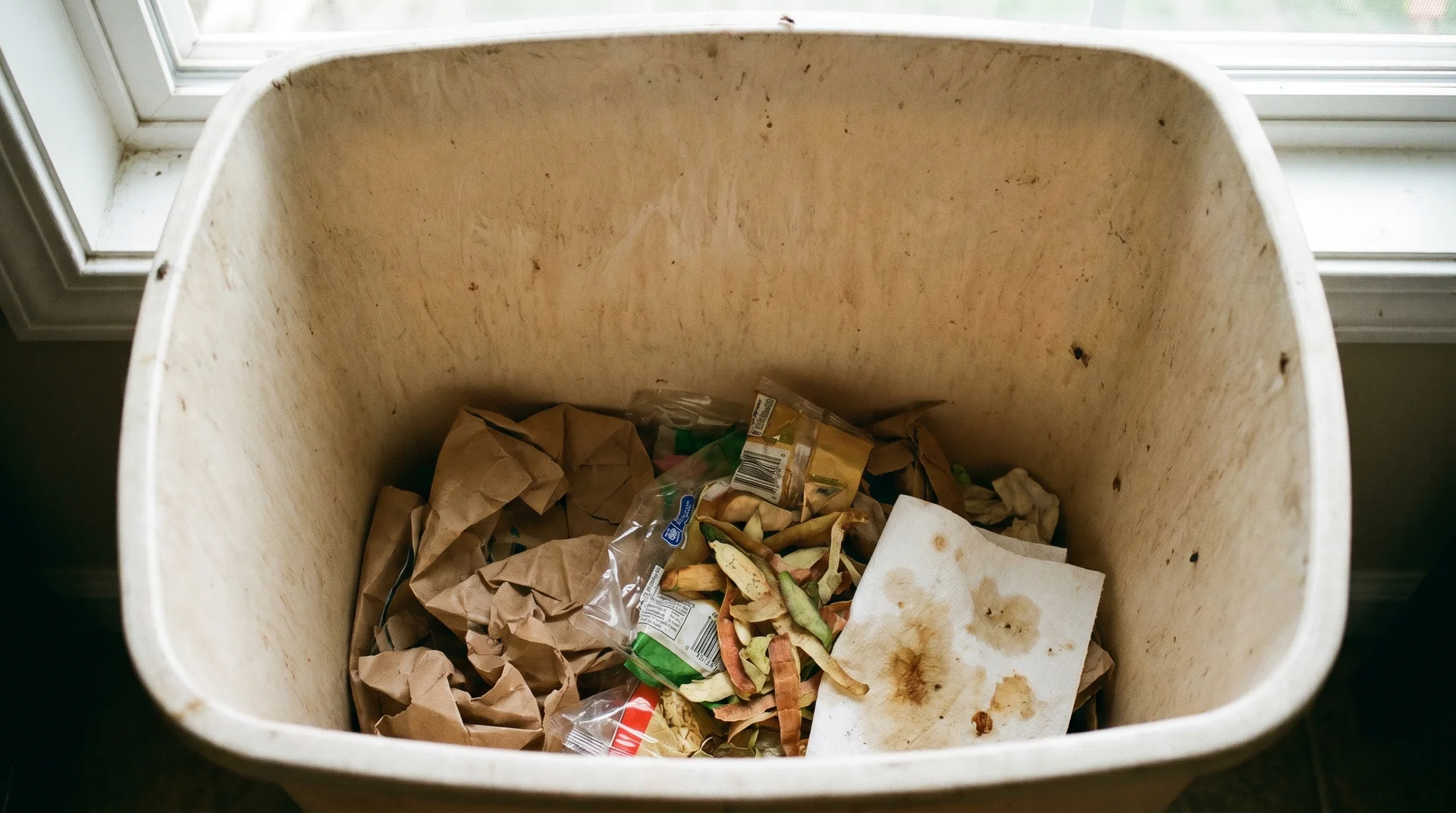
Before gallon capacity, before material, before brand: decide how often you’re willing to take the trash out.
If the answer is as rarely as possible, size up. Know what you’re trading for that convenience.
A 20-gallon can sitting half-full for five days smells worse than a 10-gallon can emptied every two days.
Larger bins give food scraps more time to develop odor before you remove them. A well-sealed can at the right size outperforms an oversized one on every measure that matters in daily kitchen use.