

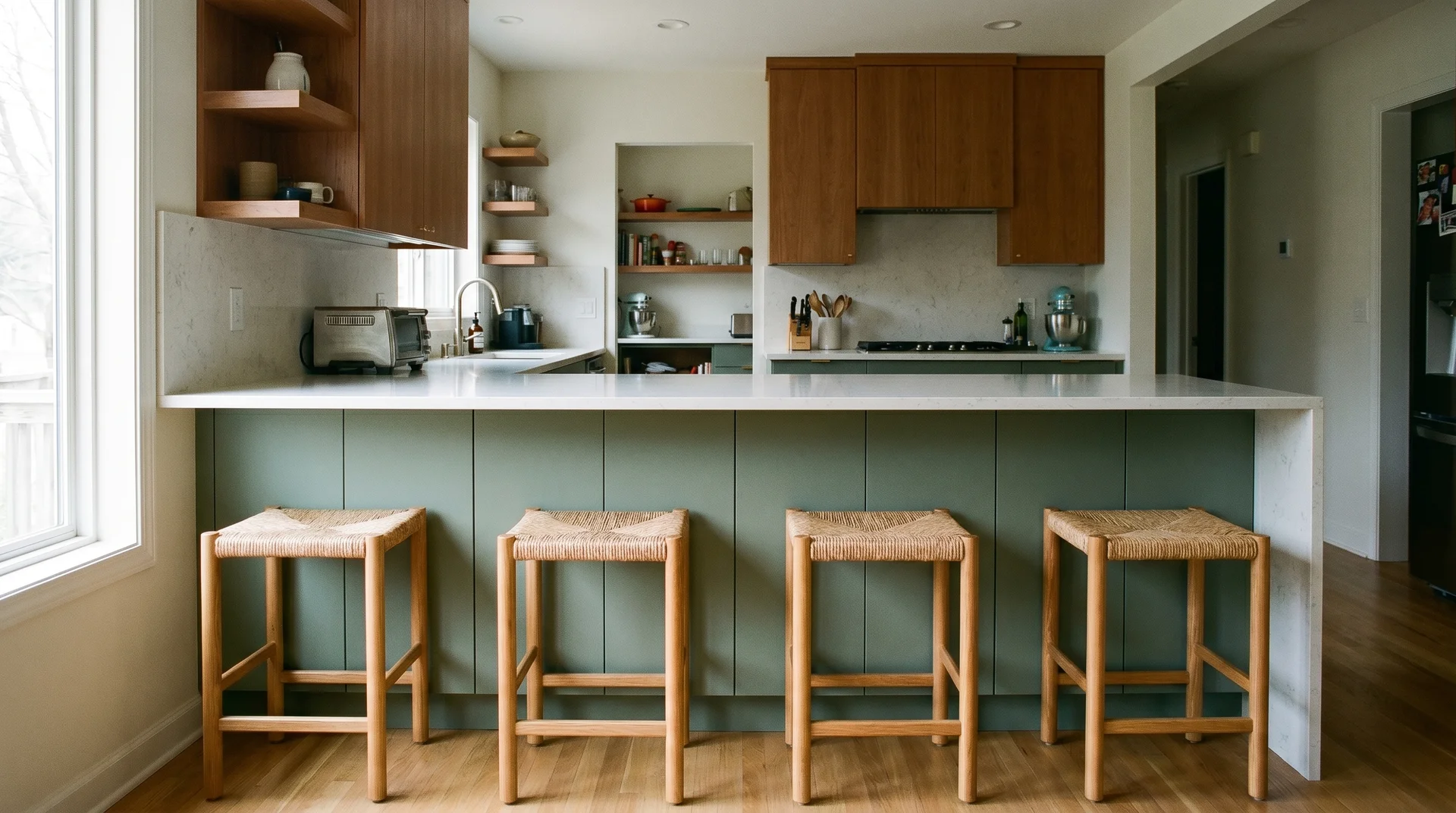
Counter height tables stand 34–36 inches tall. Bar height tables stand 40–42 inches. Those six inches determine which stools fit, how the room reads visually, and whether the setup works for how your household actually uses the space.
Most people land on this question mid-purchase, with a table tab open and a stool tab open, and no clear answer on whether the two are compatible.
Here’s what the measurements mean before anything ships.
Counter Height, Bar Height, and Dining Height at a Glance
Counter height is the middle tier of three standard table heights.
The organizing rule across all three is the same: the stool seat should sit 10–12 inches below the underside of the table surface. That clearance keeps seated knees relaxed and arms at a natural angle. Too little and the table edge presses on your thighs. Too much and your arms hang low.
| Height Type | Table Height | Seat Height | Best Use |
|---|---|---|---|
| Dining height | 28–30 inches | 17–19 inches (standard chair) | Formal dining, long meals, families with young children |
| Counter height | 34–36 inches | 24–26 inches | Everyday kitchen use, kitchen islands, casual dining |
| Bar height | 40–42 inches | 28–30 inches | Home bars, entertainment spaces, short social seating |
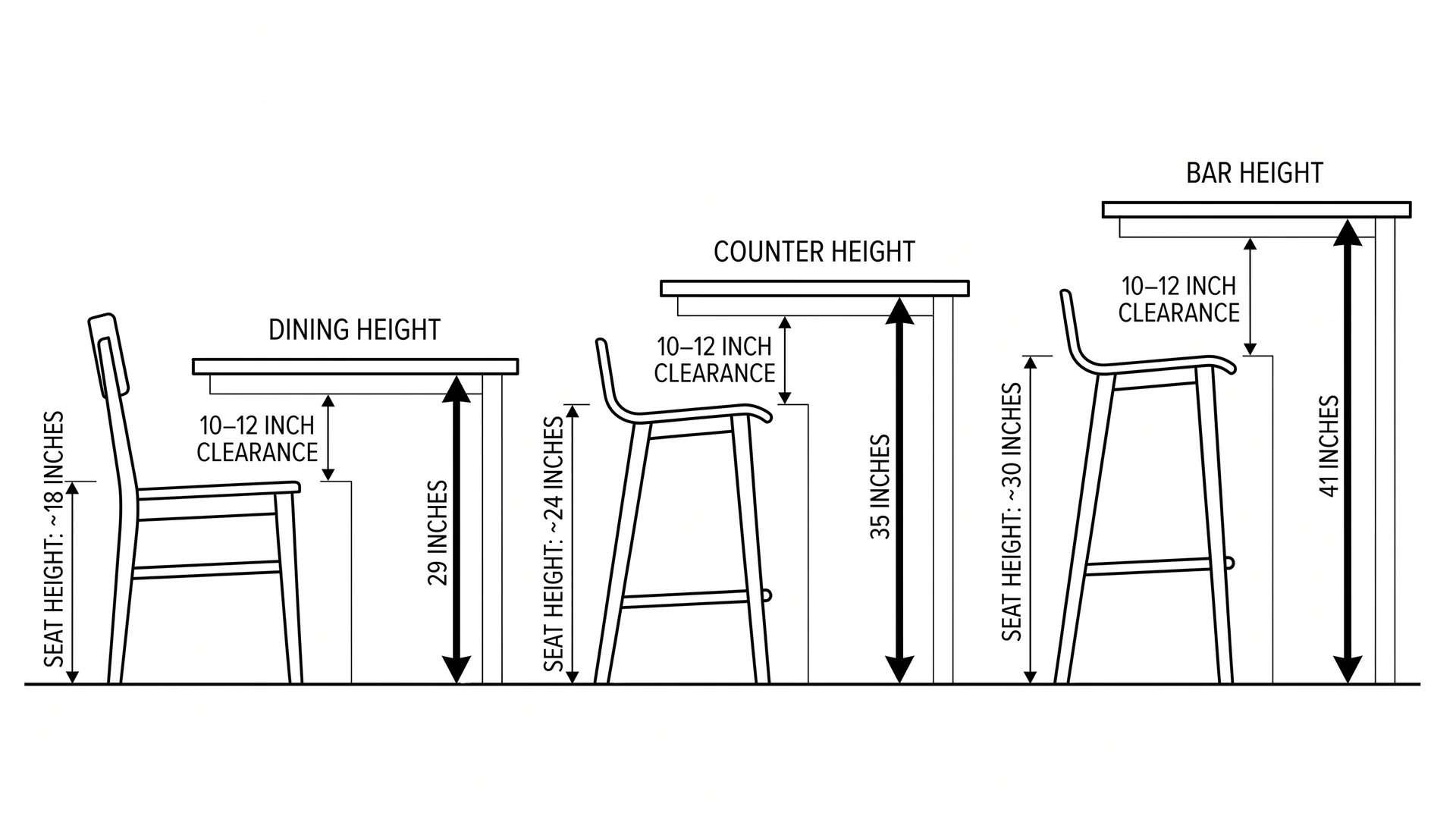
The NKBA (National Kitchen and Bath Association)sets 36 inches as the standard kitchen counter height in its planning guidelines. Counter height tables take their name from that number.
The ANSI/KCMA (American National Standards Institute / Kitchen Cabinet Manufacturers Association) standard for base cabinetry lands at 34.5 inches with a countertop installed, which rounds to the same place in practice.
The measurements are settled. What isn’t settled is which height belongs in your kitchen.
If you’ve already landed on dining height and need to work out the right length, sizing a rectangular table for 8 people covers that next decision.
How to Match Stools to a Counter or Bar Height Table
The clearance between the stool seat and the table underside determines comfort.
This applies whether you’re working with a counter height table at 34–36 inches or a bar height table at 40–42 inches. The principle is the same. Most returns happen because someone matched the label instead of the number.
Counter Height Stools are 24–26 Inches from Floor to Seat

Counter height stools have a seat height of 24–26 inches. This pairs well with tables and islands in the 34–36-inch range.
- At 24 inches of seat height paired with a 36-inch surface, the clearance is 12 inches.
- At 26 inches paired with a 34-inch surface, the clearance drops to 8 inches.
Both fall inside the comfort range, but the fit at the lower end is tighter.
I’ve specified counter stools for enough projects to know the label “counter height stool” is not reliable. Some manufacturers use it for a 24-inch seat. Others use it for a 28-inch seat.
Look past the label and find the seat height number in the product specifications. That number is the only thing that determines fit.
If the stool has arms, aim for the lower end of the range, around 24–25 inches. Arms reduce the available knee clearance at the table underside. Armless stools can run toward 26 inches with more flexibility.
If your table height falls between the standard ranges, adjustable height stools solve the problem without compromise. Most adjust from 24–29 inches, covering both counter and bar height from a single seat.
Bar Height Stools are 28–30 Inches from Floor to Seat

Bar height stools have a seat height of 28–30 inches. These pair with surfaces in the 40–42 inch range.
At bar height, a footrest is not optional for most people. Legs dangle without one, and the discomfort builds quickly over a 20-minute meal.
A separate category creates confusion here. Spectator-height stools, designed for raised-platform seating in specific commercial settings, are 33–36 inches high. These are not standard barstools for residential use.
If a stool listing shows a seat height above 30 inches, find out what surface height it was designed for before buying.
Your Table Needs at Least 10–12 Inches of Overhang for Seated Knees
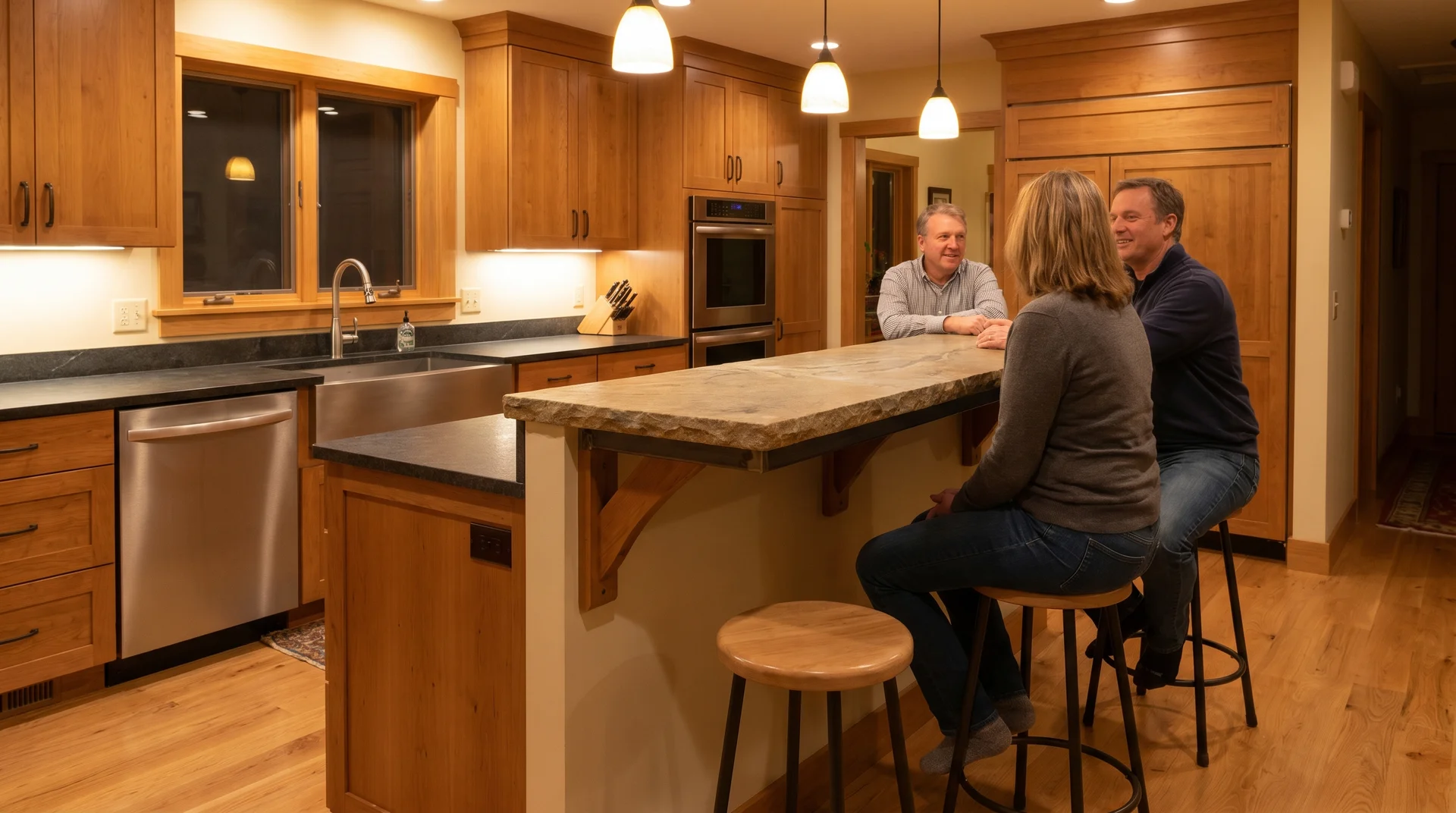
Your table or island needs at least 10-12 inches of overhang so seated knees can slide underneath without crowding. Height is listed on every product page. Overhang depth is not generally mentioned.
This gap in product listings causes discomfort that no stool adjustment can fix after delivery.
Here is how to check before buying:
- Look for “overhang depth” or “knee clearance” in the product specifications tab.
- If neither is listed, search the product name plus “dimensions” — some brands include a full diagram in a secondary product image.
- If you still can’t find the number, contact the seller before ordering. A table with no overhang forces knees sideways when seated.
- For kitchen islands, the NKBA recommends a minimum of 12 inches of overhang for stool seating.
This check takes two minutes and prevents a return.
When you’re seating multiple people, plan 24–30 inches of counter or table length per stool. That’s enough width for elbows without crowding.
For stools with swivel mechanisms or arms, lean toward 30 inches per seat.
Bar Height vs Counter Height: Which One Belongs in Your Kitchen?
How you use the room drives this decision more than how the table photographs.
Counter and bar height are the two most common elevated table categories in residential kitchens. The choice between them is more spatial than aesthetic.
I’ve watched homeowners make this decision based on a showroom photo. The room usually makes it for them once I walk through it.
Why Counter Height Works for Most Kitchens

Counter height is the more functional choice for everyday household use. It aligns visually with the standard 36-inch kitchen counter. The table becomes a part of the kitchen environment rather than a separate furniture addition.
The surface height stays consistent across the island, and the table, and the same stools often work at both.
The seated position holds up better over longer meals.
Counter height puts you about 6 inches above a standard dining chair. It’s elevated enough to feel casual and social, and low enough to sit through a full meal without shifting.
Counter height is the more inclusive choice across household ages and heights.
A 24 to 25-inch seat is manageable for a child of ages 8 or 9.
The ADA (Americans with Disabilities Act) sets 34 inches as the maximum height for an accessible counter surface, which is why counter height fits a wider range of users than bar height in multigenerational households.
The 6-inch difference between the two categories matters considerably for shorter adults, older family members, and anyone with limited mobility.
I’ve recommended counter height in projects where the homeowner arrived with bar height already decided. After walking the room and talking through household ages and ceiling height, we switched every time.
None of them came back to say they wished we’d gone higher.
When Bar Height Earns Its Place
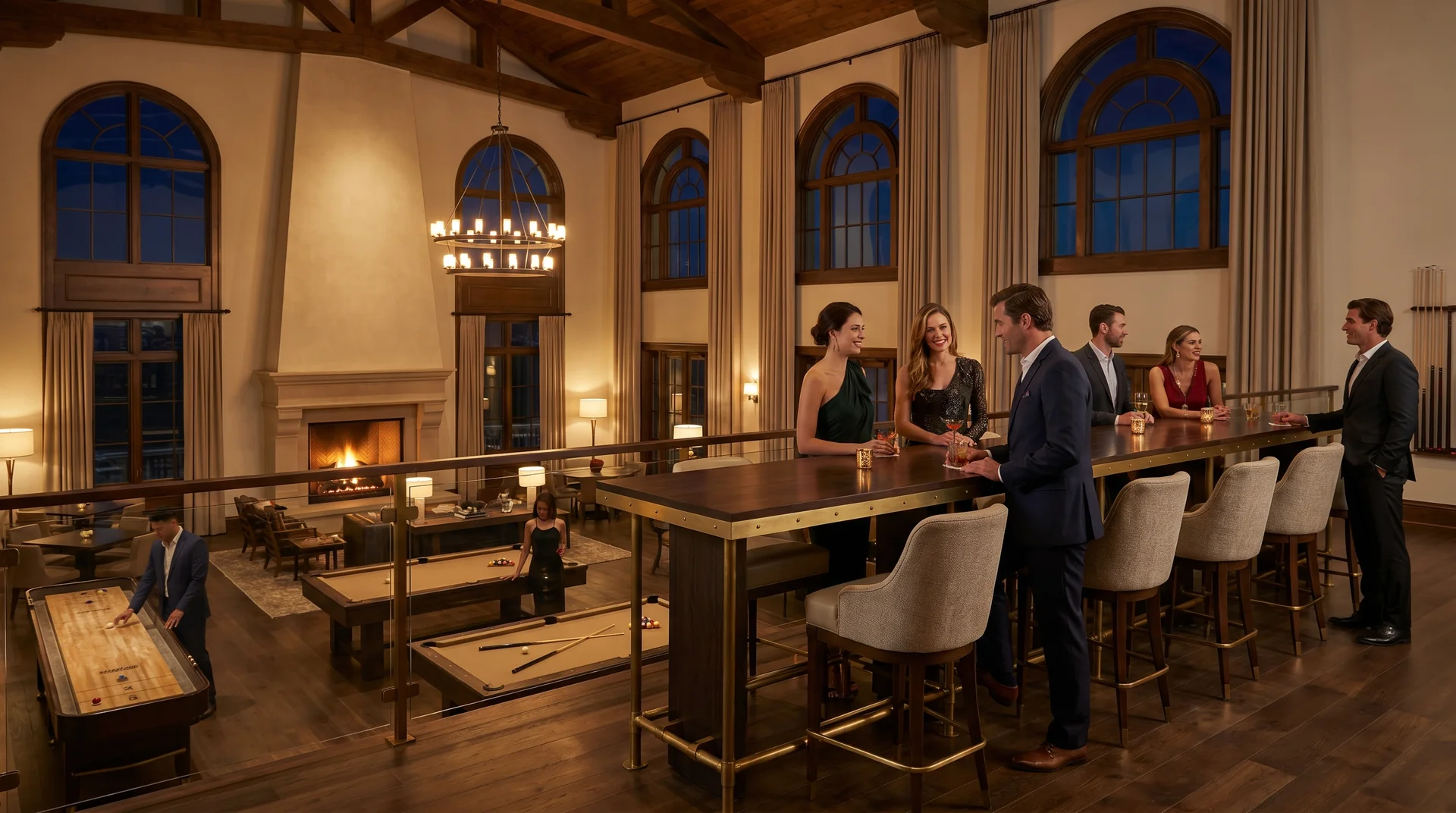
Bar height works best in rooms built for entertaining, with the ceiling height and proportions to support it.
The elevated surface changes the social dynamic in a real way. People stand and lean more easily at 42 inches.
Conversations at a bar-height table in a game room or home bar feel genuinely different from those at a lower surface. That’s not a styling claim. It’s a function of how the body positions itself at different heights.
In an open-plan home where the kitchen is visible from the living room, a bar height surface at 42 inches physically blocks the line of sight into the prep zone. Dishes, cutting boards, and morning chaos stay below the sightline from the sofa.
It also creates a physical barrier against water and mess spreading from the sink side to the seating side, which is the practical argument that tends to convince people more than the aesthetic one.
Bar height also makes ergonomic sense for very tall households. Someone at 6 feet 4 inches may find a 36-inch counter surface genuinely low.
Bar height can be the better fit in that context, and the visual trade-offs around ceiling height become more acceptable.
Bar height works poorly in three specific situations:
- Family kitchens with children under 12
- Rooms with ceilings under 9 feet
- Open-plan spaces where the table shares a sightline with a standard 36-inch island or counter
Bar height stools at 28–30 inches are not safe for children under 8 to use independently. The seat height requires assistance to get on, and there’s no table edge close enough to catch a fall. If young children use the space daily, the counter height is the safer setup.
Whether bar height works on a patio or balcony is a different calculation. Outdoor proportionality, sightlines, and furniture material all change the criteria. That’s a different article, and it needs different criteria to answer properly.
The Ceiling Height
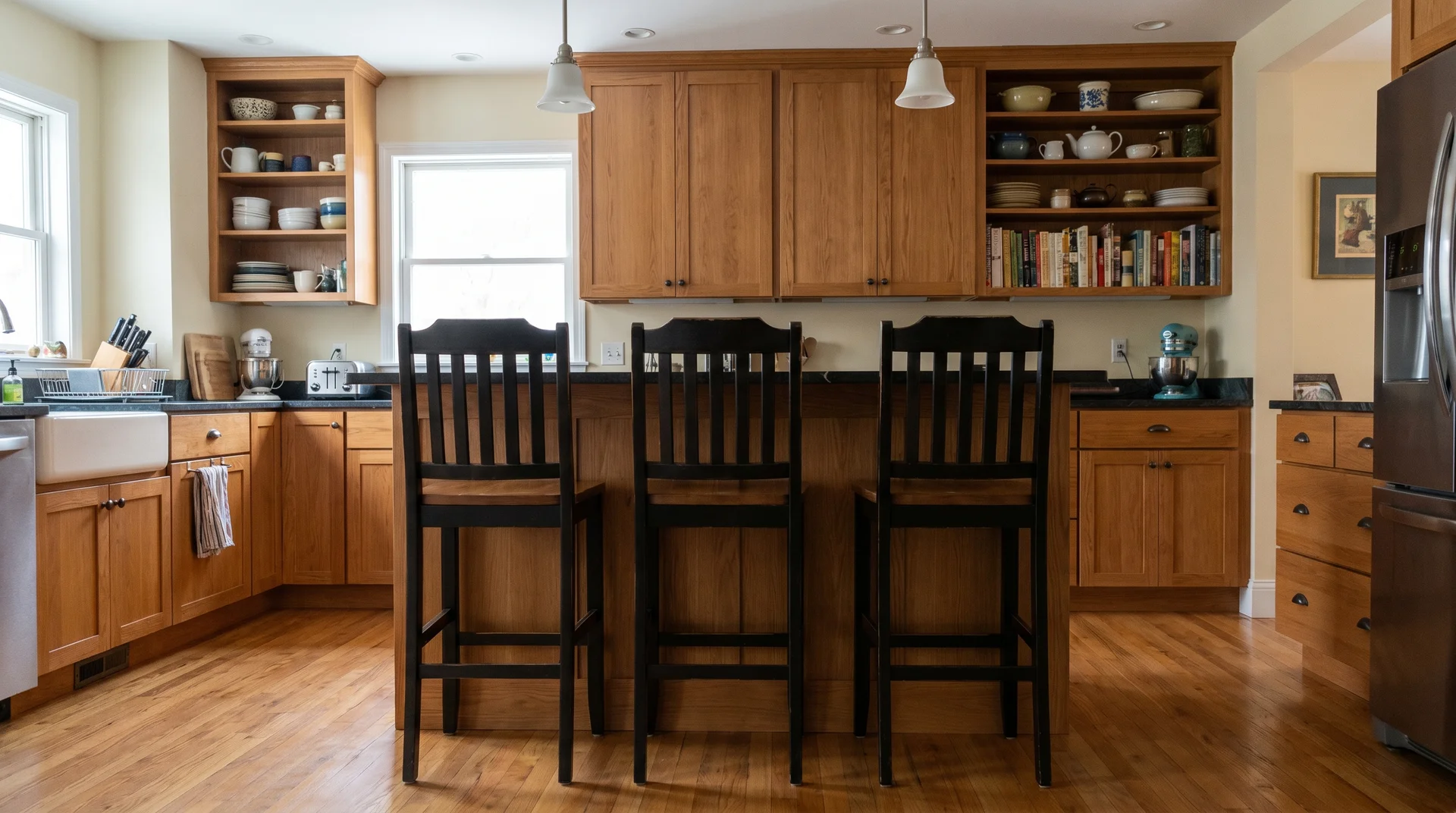
Bar height tables need ceilings of at least 9 feet to look proportionate in a real room. Design professionals and kitchen planning guides broadly agree on this threshold. Here is what it actually means to stand in that room.
In a kitchen with 8-foot ceilings, upper cabinets typically stop around 54 inches from the floor. That’s the standard 36-inch counter height plus the NKBA-recommended 18-inch clearance to the upper cabinet bottom.
A 30-inch bar stool back sits inside that same visual zone as cabinet doors, hardware, and open shelving.
The stool backs are at eye level. That’s the problem.
Everything in that zone competes for visual attention. The floor plan may have plenty of room. The stools start to crowd the room visually before the floor plan runs out of space.
No furniture rearrangement resolves it because the issue is vertical, not horizontal.
The ceiling is the constraint. That’s where the real design decision lives, not in the table catalog.
Counter height stools at 24–25 inches stay well below that visual threshold. The space above the seating reads as open. In a room under 9 feet, that’s a meaningful difference in how the kitchen feels to work and eat in every day.
I should be honest about where this guidance runs out. Ceiling height isn’t the only variable. A narrow galley with 8-foot ceilings reads differently than a wide-open kitchen at the same height.
If your ceilings are under 9 feet and you’re drawn to bar height, stand next to a bar height stool in a showroom first. Your body will tell you what the chart can’t.
In any connected kitchen-dining space, one height should dominate.
I arrived at that principle on a project that cost me $6,000 to fix. I had over-specified the kitchen, competing materials, competing textures, and two different seating heights sharing one sightline. The client cried at the reveal. Not happy tears. I redesigned the kitchen at my own expense.
What that project taught me is that the eye registers height inconsistency across a connected space even when the brain can’t name what’s wrong.
Don’t mix a 36-inch counter-height island with a 42-inch bar-height table in the same open room. Pick one height and let everything else in the space submit to it.
Is Bar Height Outdated?
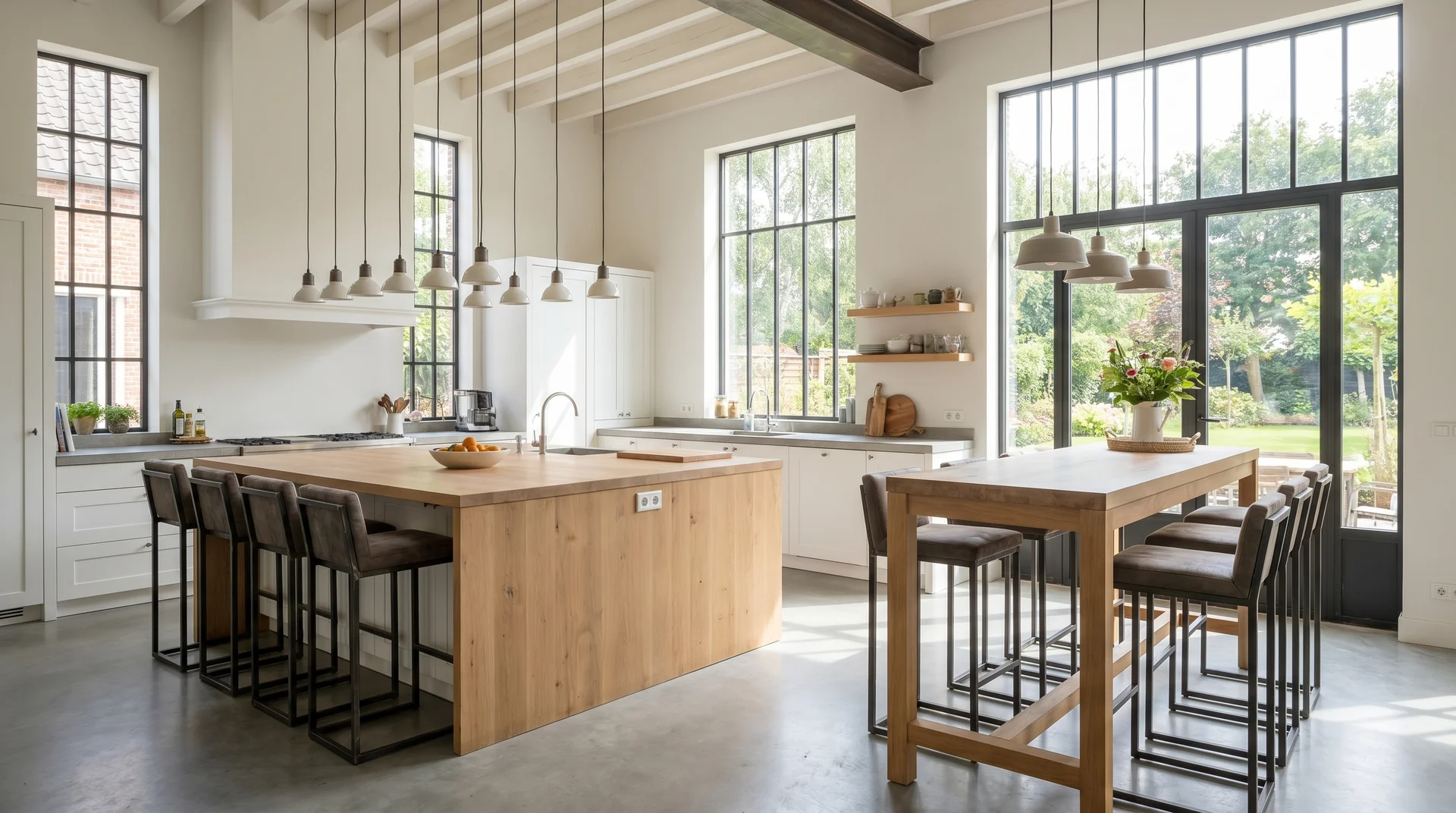
Bar height is not outdated. The spaces where it always worked are simply less common than they were.
What changed between 2015 and now is not that bar height fell out of fashion. Open-plan kitchen islands at counter height became the dominant design choice in new builds and renovations. Counter height won that category. That pulled the design center of gravity down.
Bar height didn’t become wrong. It became more specific.
It was always best suited for home bars, game rooms, and kitchens designed primarily around entertaining. Those spaces still exist. Bar height still works in them.
What got overused was bar height in everyday family kitchens, where it was never the right fit. That’s where the “outdated” feeling comes from. People put bar height stools at kitchen islands in the mid-2010s because they looked social and casual in magazine photos.
A few years of living with them in a household with young children and 8-foot ceilings told a different story.
The issue was never bar height. It was the wrong application in a space that didn’t call for it. If your space calls for it, bar height is still the right answer. Most spaces don’t.
What “Pub Height” Actually Means (And Why the Label Isn’t the Spec)
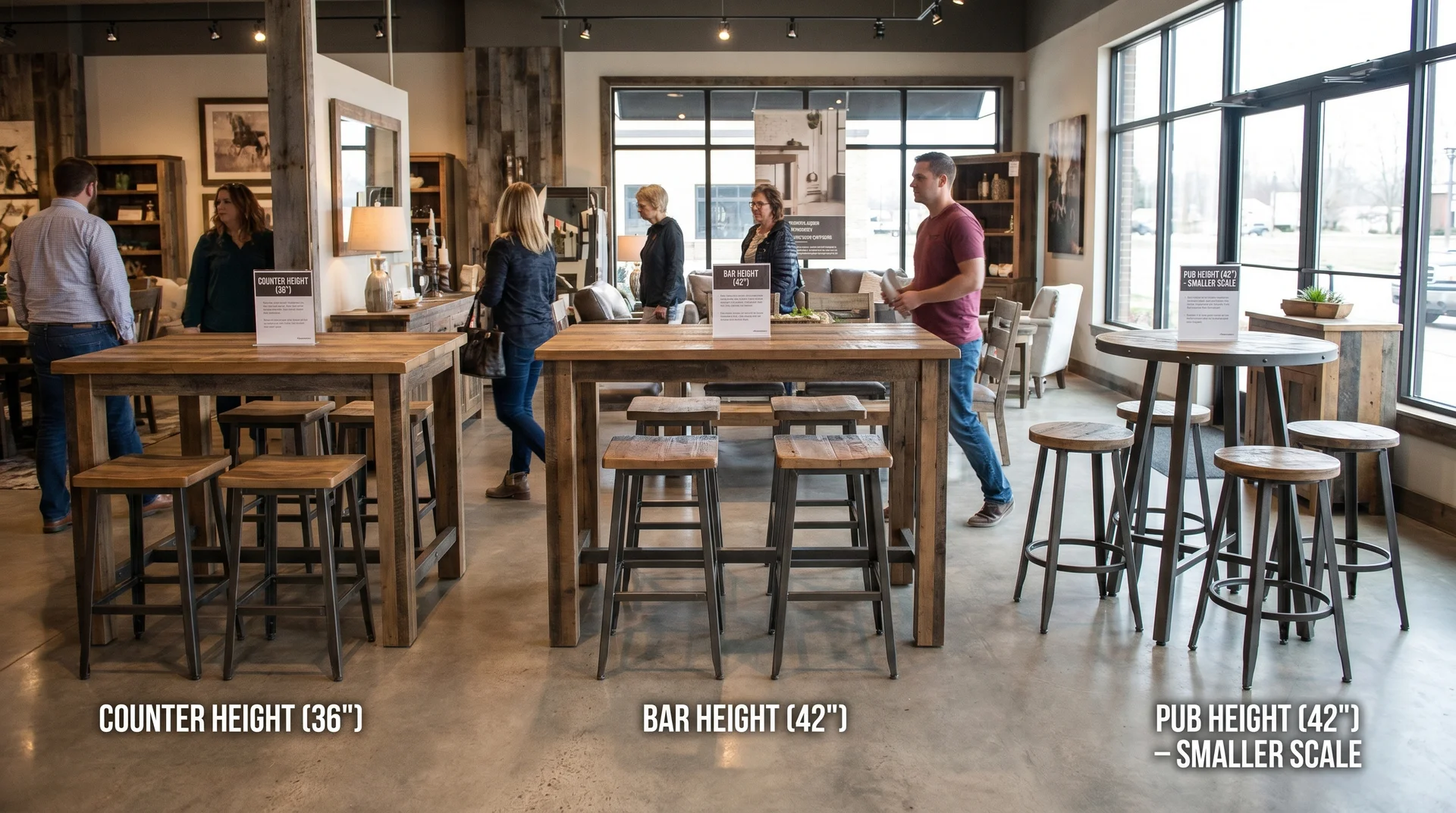
“Pub height” is not a standardized measurement across the furniture industry.
Most manufacturers use pub and bar interchangeably, both referring to tables in the 40–42 inch range.
Some catalogs draw a finer line, like pub at 42 inches, bar at 40, but that two-inch distinction rarely changes which stools you need. “High-top” means the same thing in most retail and restaurant furniture contexts.
The stool-return problem covered earlier in this piece happens most often in this naming tangle. Someone orders stools labeled “pub” for a table listed as “counter height.” The stools arrive at 28–30 inches of seat height. The counter-height table sits at 36 inches.
The clearance drops below 8 inches at the stool’s tallest end, which means knees press against the underside and elbows sit above the table surface. Ignoring the label name entirely and locating the inch measurement in the product spec would have caught it before the order went through.
The two numbers that matter are the tabletop height in inches and the stool seat height in inches.
When Your Kitchen Island and Your Table Are Different Heights
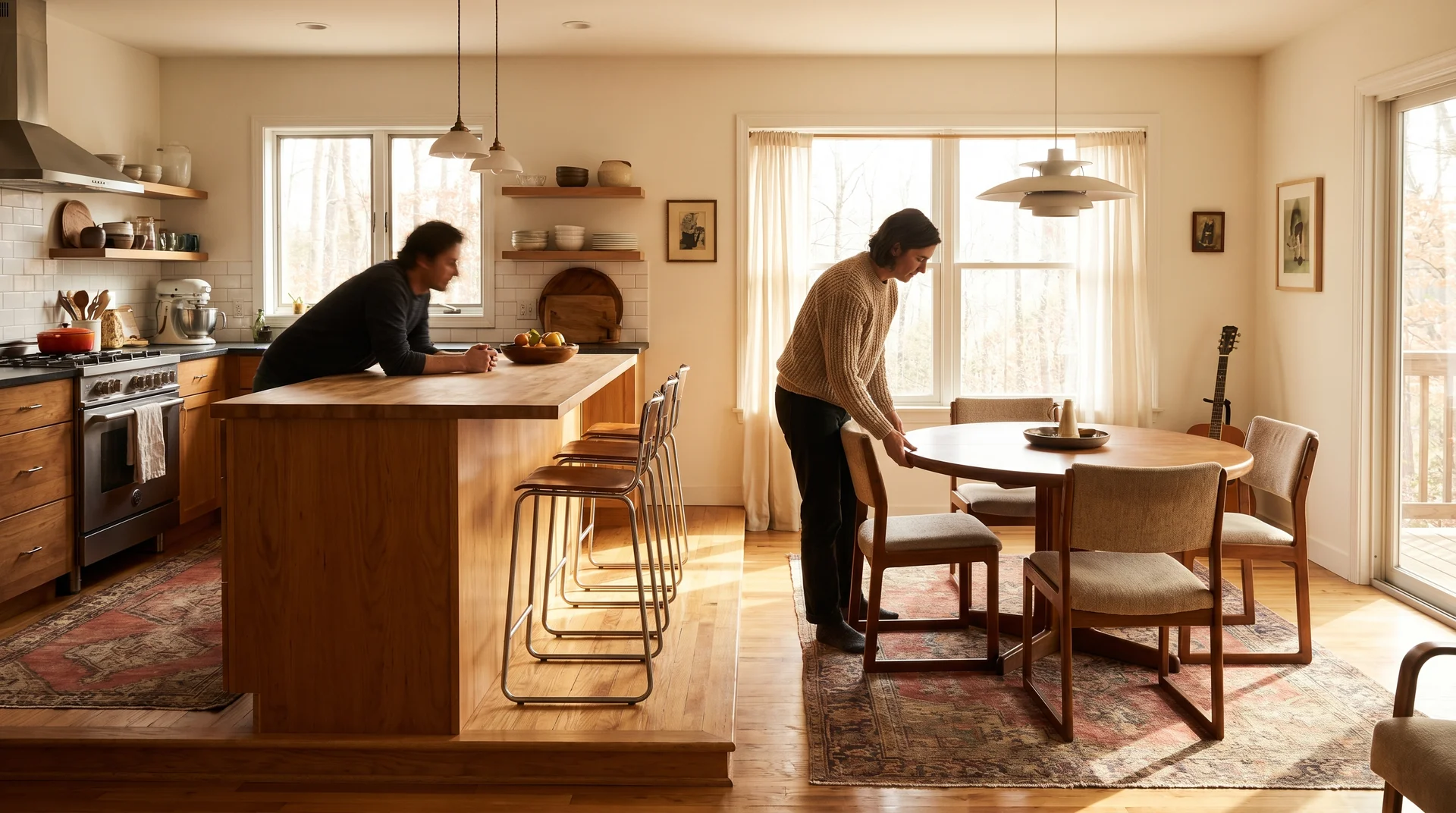
A standard kitchen island stands 36 inches tall.
This section addresses a specific situation: you’re placing a counter or bar height table near an existing kitchen island and want to know whether the same stools will work at both surfaces.
You’re standing in the kitchen, looking left at the island and right at the space where the table is going. If the island is 36 inches and the table you’re buying is listed as “counter height” at 34 inches, those are not the same height. The shared label doesn’t make them equivalent.
That two-inch gap matters when you’re choosing stools for both surfaces.
A 25-inch stool seat gives you 9 inches of clearance at a 34-inch table and 11 inches at a 36-inch island. Both fall inside the 10–12 inch comfort range, but they don’t feel identical. The table end sits slightly low. The island end feels right. The same tool works at both. It works better at one.
If the island already has seating at 36 inches, buy the freestanding table as close to 36 inches as the product options allow. The closer the two surface heights, the more the connected space reads as a single deliberate choice.
I’ll be honest: I don’t have a clean rule for when the gap becomes a visible problem. Two inches is usually manageable. Four inches starts to compete.
I’ve seen both work and both fail. If you can bring a stool candidate into the space and set it next to both surfaces before committing, do it. That test tells you more than any chart.
Quick Answers: Counter Height, Bar Height, and Stools
Seven questions come up on this topic more than any others.
How High Is a Counter Height Table?
Counter height tables measure 34–36 inches from the floor to the tabletop. This matches the height of a standard kitchen counter. Bar height is the next tier up at 40–42 inches. Standard dining tables sit at 28–30 inches.
Is a 36 Inch Table Counter Height?
Yes. 36 inches is the top of the standard counter height range and the measurement the NKBA uses as the reference kitchen counter height. If a table listing shows 36 inches, it is counter height. Pair it with stools at 24–26 inches of seat height.
Is 30 Inches Counter Height or Bar Height?
It depends on what you’re measuring. A 30-inch table surface is standard dining height, not counter or bar height. A 30-inch stool seat is at the upper end of the bar height stool range, designed for surfaces at 40–42 inches.
The same number means different things depending on whether you’re reading a table spec or a stool spec. Always confirm which measurement the listing refers to before concluding.
Is 32 Inches Too High for a Dining Table?
A 32-inch table falls between standard dining height and counter height, and it creates a pairing problem. Standard dining chairs at 17–19 inches leave too little clearance.
Counter stools at 24–26 inches sit too high. Neither standard seating category pairs cleanly with a 32-inch surface. If a product listing shows 32 inches, check whether it’s an adjustable height table or a non-standard product before buying seating for it.
What Stool Height Do I Need for a Counter Height Table?
Look for stools with a seat height of 24–26 inches. This keeps 10–12 inches of clearance between the stool seat and the table underside. Check the seat height number in the product spec, not the category label. The label is not consistent across manufacturers.
Is Pub Height the Same as Bar Height?
Generally yes. Both terms typically refer to tables in the 40–42 inch range. Verify using the inch measurement in the product spec rather than the label. In most catalogs, pub and bar are used interchangeably with no industry-standard definition separating them.
Will Bar Height Stools Work at a Counter Height Table?
No. Bar stools with a 28–30 inch seat height at a 34–36 inch table leave as little as 4 inches of clearance between the seat and the surface underside.
That puts elbows above table level for most adults and presses knees against the underside. The setup is uncomfortable within minutes.