
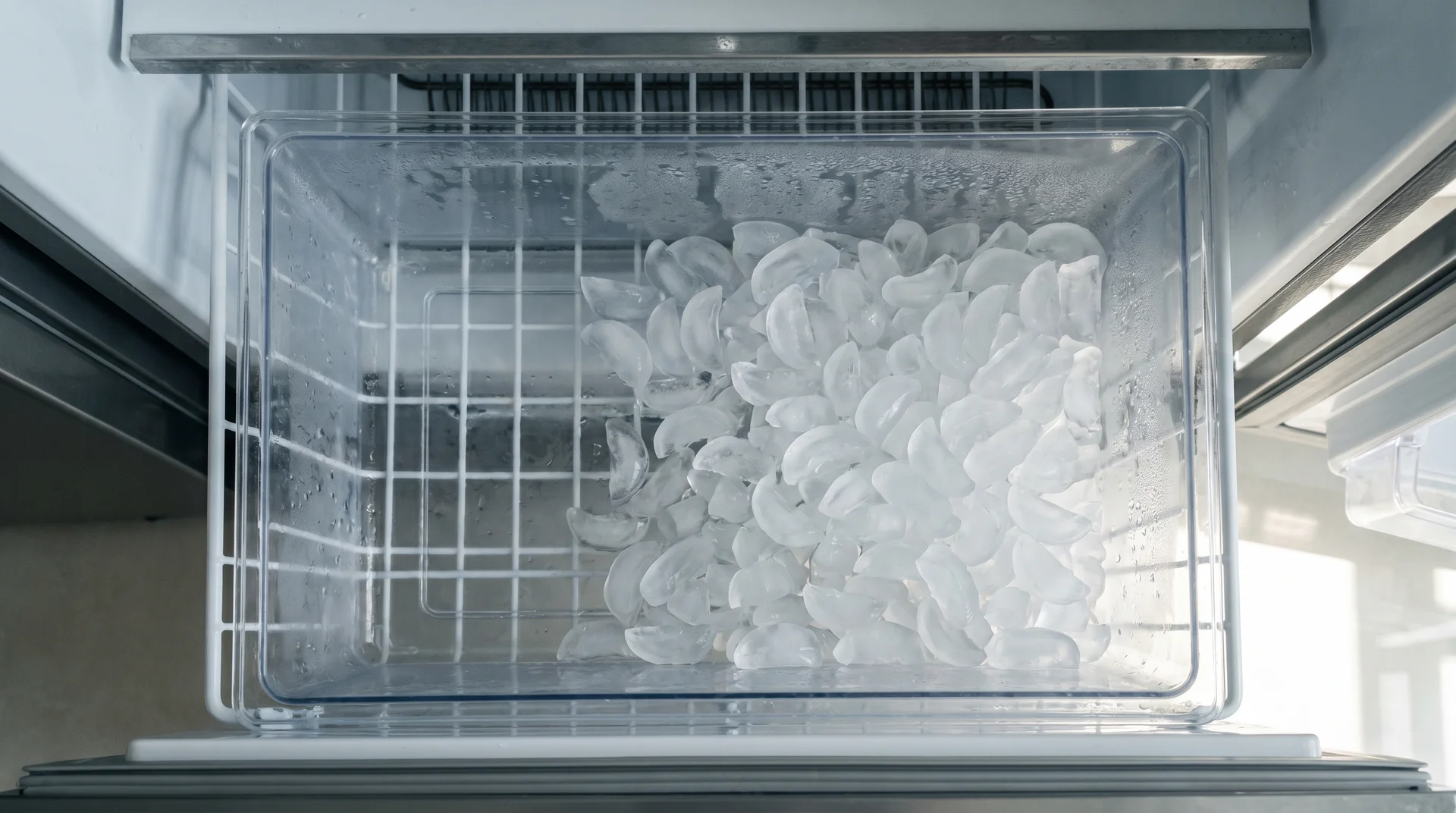
A built-in fridge ice maker runs one cycle every 90 minutes. It makes 8 to 10 cubes per batch.
A countertop portable makes its first batch in 6 to 15 minutes, depending on the style of ice. Those two numbers are where most articles stop.
What they miss is your machine’s daily output ceiling. That’s the number that determines whether you run short.
How Long Does a Refrigerator Ice Maker Take to Make Ice?
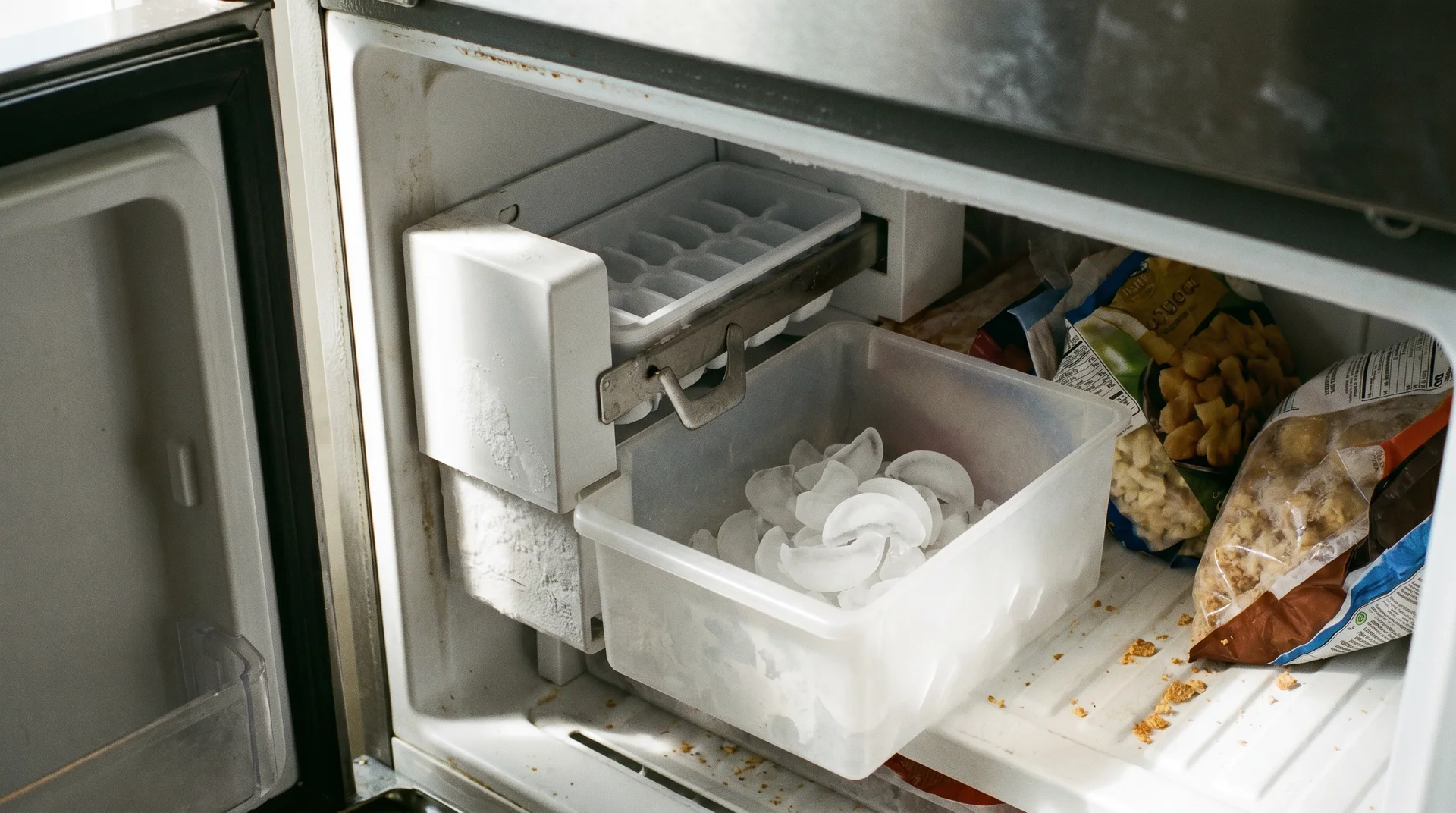
90 minutes is the baseline cycle time for a built-in refrigerator ice maker.
Under ideal conditions, the machine produces 8 to 10 cubes per cycle.
Over a full day, that’s up to 130 cubes, depending on the model. Depending on cube size, that works out to between 3 and 7 pounds.
For most households, that daily output covers normal use without trouble. The ceiling becomes visible when you have people over or when someone pulls from the bin every hour.
Most people think ice makers run all the time. They don’t. The machine cycles, stops, then cycles again.
The day’s total is fixed whether the bin is full or empty. That’s the ceiling that matters most.
The Four Steps in One Ice Maker Cycle
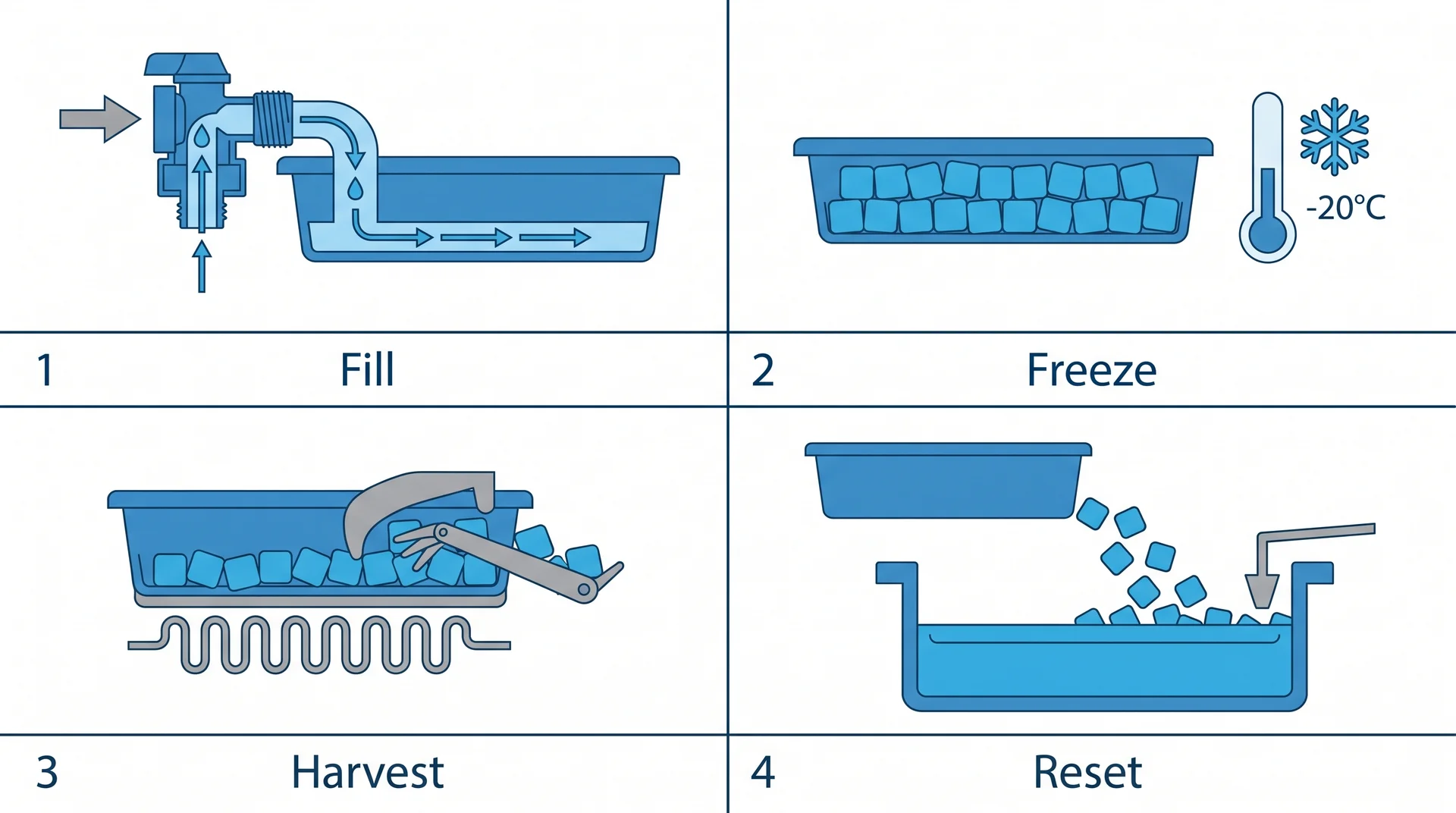
The cycle runs the same sequence every time, as long as the bin has room and nothing is blocking the mechanism.
Knowing the steps tells you where slowdowns actually happen. Step two is where most of them land.
- The water inlet valve opens and fills the ice tray with a metered amount of water.
- The water freezes solid. This step alone takes 60 to 75 minutes, depending on freezer temperature. [VERIFY — sub-step timing not directly sourced from OEM documentation; total 90-minute cycle confirmed across multiple sources.]
- A heating element briefly warms the tray from below. The ejector arm then sweeps the finished cubes into the storage bin.
- A sensor checks whether the bin has room. If it does, the valve opens, and the sequence starts again.
The freeze step is where most of the 90 minutes go. That timing applies from the very first cycle, including on a brand-new installation.
How Long Does a New Ice Maker Take to Start?
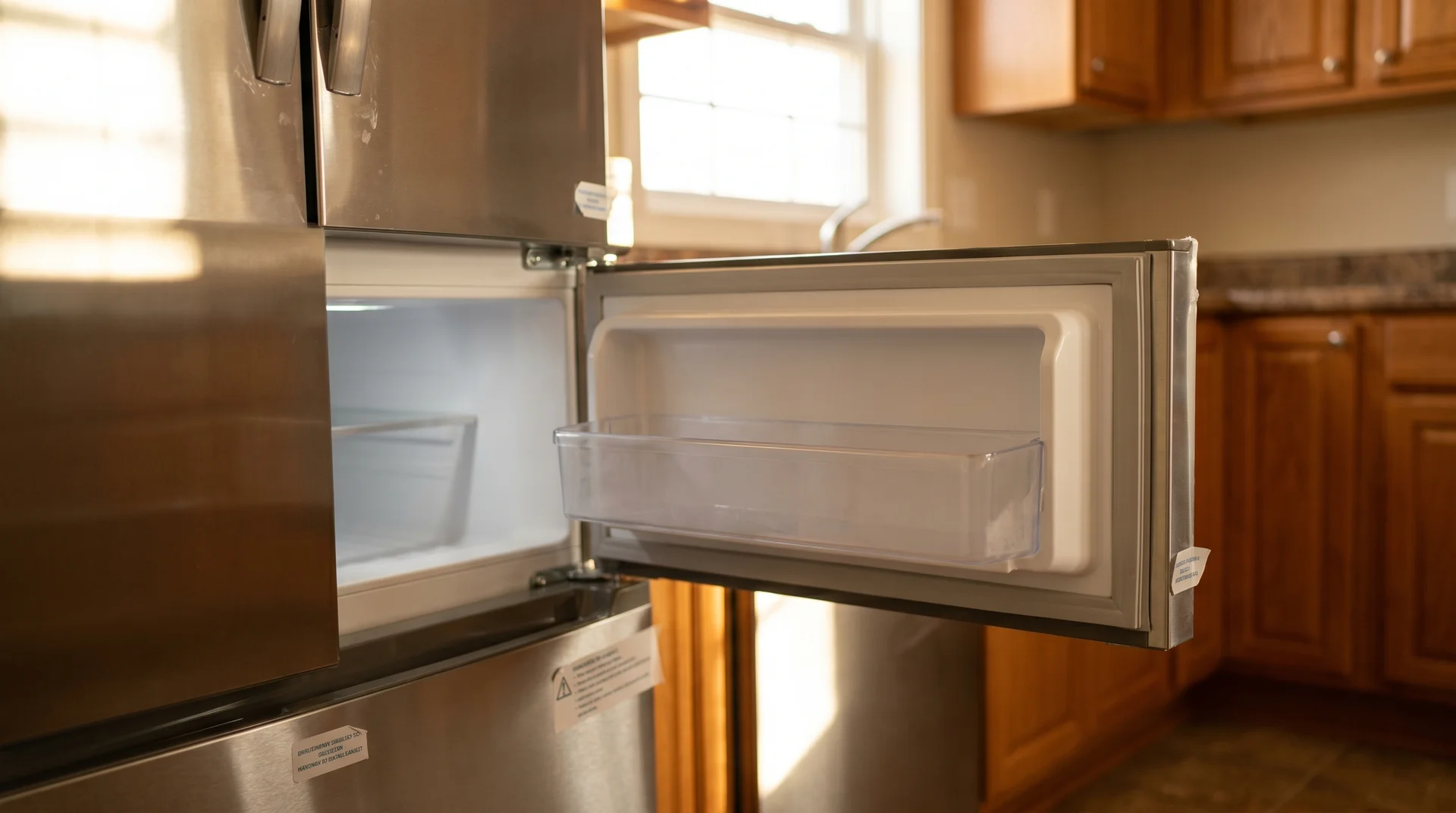
After installation, most ice makers make their first batch in 6 to 24 hours.
- Samsung’s installation guidance puts first ice at 6 to 12 hours.
- KitchenAid and Whirlpool advise allowing a full 24 hours.
The difference depends on how quickly your specific model reaches its operating temperature.
Most people think something is wrong at the 18-hour mark. In almost every case, the machine just isn’t ready yet.
Why the First Three Batches Should Go in the Sink
The first 30 or so cubes from a new machine are not for drinking.
Three things end up in that initial run of ice. Each one affects how it tastes.
- Air trapped in the water lines
- Residue from the supply pipe into your home
- Sediment from inside the machine itself
It tastes off because it is off. Samsung, KitchenAid, and Whirlpool give the same guidance: discard the first three batches, about 30 cubes total.
I’d add one thing: check the water filter if the ice still tastes strange after those first batches are gone. A filter past its replacement date affects taste before it slows ice production.
How Long Until the Ice Bin Is Full?
Two to three days from empty is a realistic timeline for a new installation.
Most ice bins hold between 4 and 11 pounds at full capacity, depending on the model. At a daily output of 3 to 7 pounds, the machine doesn’t fill the bin in a single day.
Every time you open the freezer to check, warm air comes in and extends the next freeze cycle. Leave it alone for a full day, then check once.
How Long Does a Countertop Ice Maker Take to Make Ice?
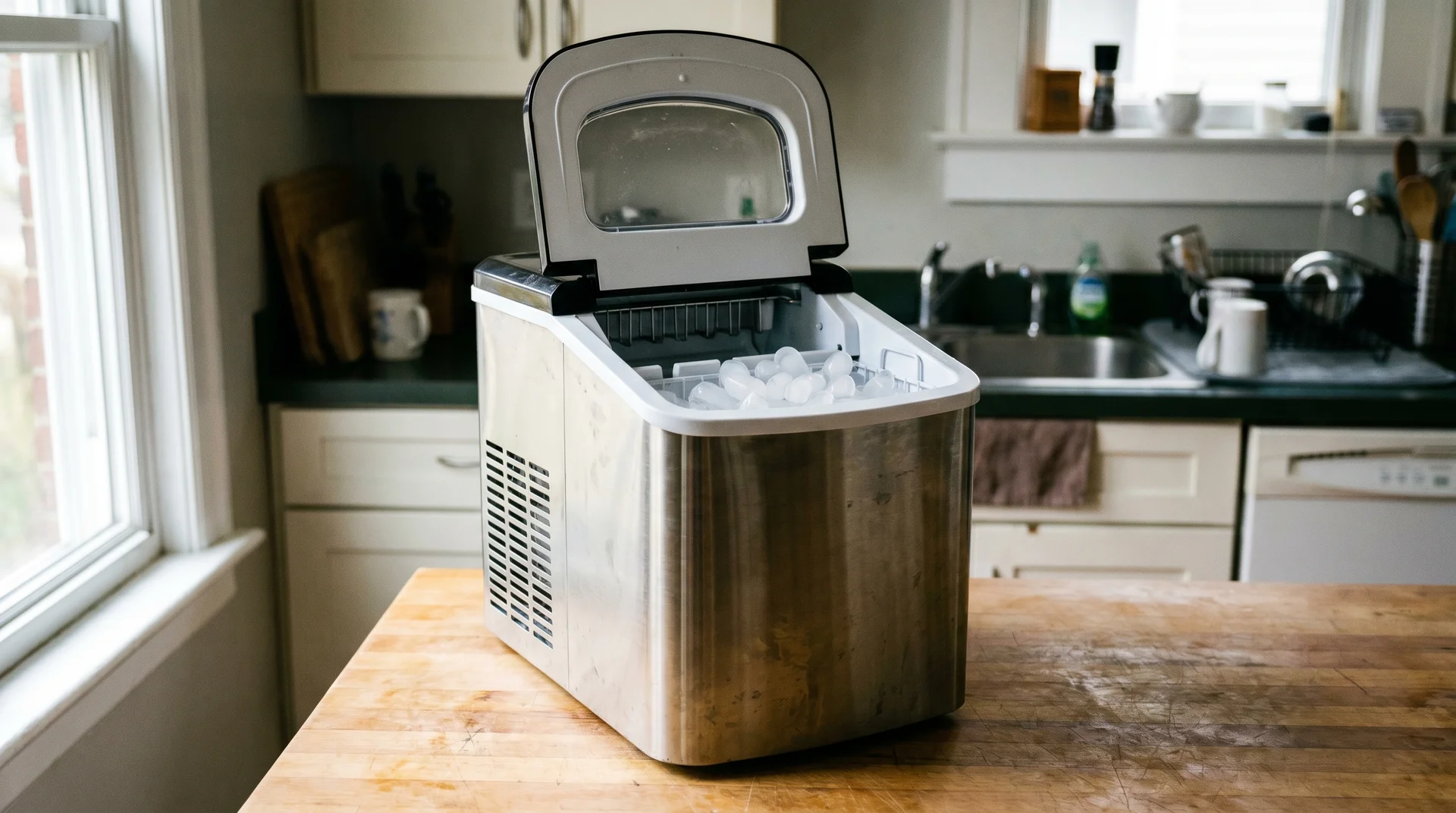
A countertop portable makes its first batch in 6 to 15 minutes.
Most people expect 6-minute ice and get 14-minute ice instead. The machine isn’t underperforming. It makes a different style of ice, and that style changes how long freezing takes.
Why Bullet Ice Freezes Faster Than Clear Cube Ice
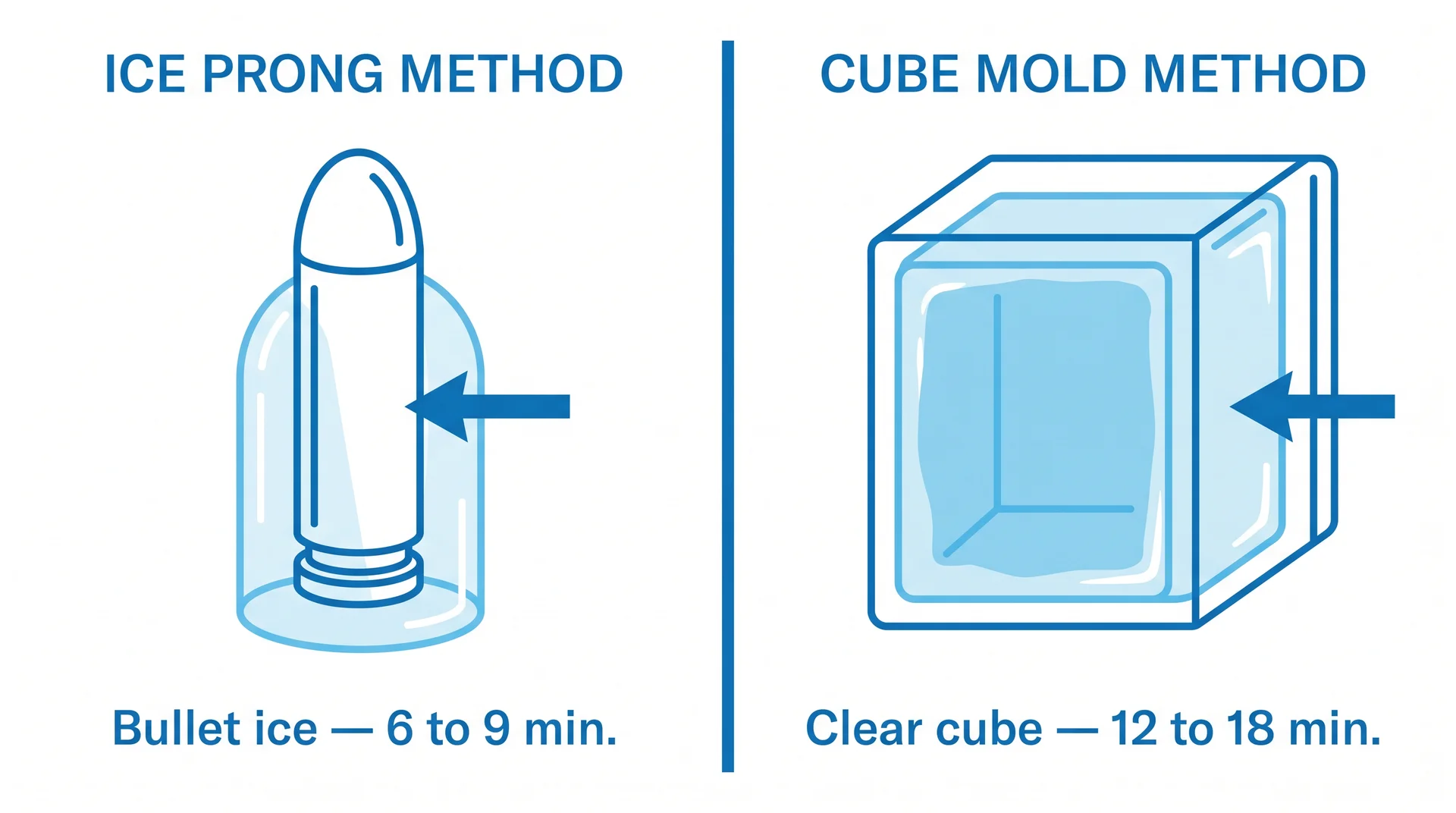
The batch time difference between ice styles comes from geometry, not quality.
Bullet-style machines freeze water over metal prongs. The small bullet shape loses heat quickly. The first batch time is just 6 to 9 minutes.
Clear cube machines freeze larger, denser pieces of ice. The center has to solidify completely before harvest can run. That’s a longer process, not a worse machine.
I ran a bullet-style unit and a clear cube model in my own kitchen under the same room conditions. The gap held consistent across every batch I tested. Neither machine was underperforming.
What “26 Pounds Per Day” Actually Means
The 26-pound-per-day figure comes from a lab, not a kitchen.
Manufacturer daily-output figures assume ideal room temperature, a full water tank, and uninterrupted cycling with no delays. A machine running next to a stove won’t hit those numbers. One in direct afternoon sun won’t either.
Manufacturer specs are accurate for what they’re measuring. That measurement is controlled in lab conditions. Real kitchens don’t match those conditions.
What Slows Down Your Ice Maker
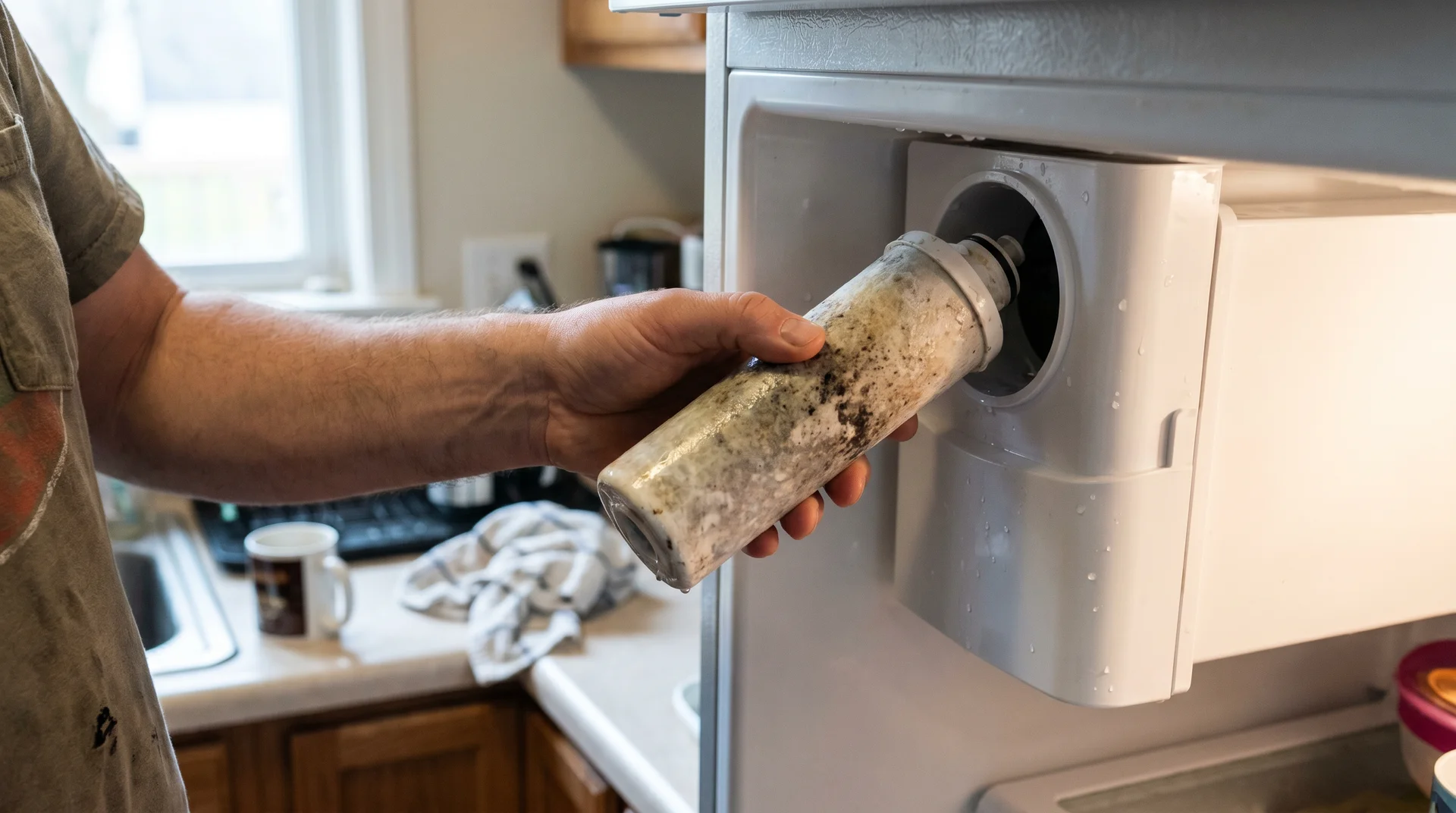
Most people check the cycle settings first when their ice maker slows down.
That’s rarely where the problem is. Most slowdowns come from four causes. Three of them cost nothing to address and take five minutes to rule out.
| Factor | What Happens | What to Do |
|---|---|---|
| Freezer temperature above 0°F | Freeze phase takes longer; cubes may not fully harden before ejection | Set to 0°F and wait a full 24 hours before checking output again |
| Clogged water filter | Restricts water flow; cubes come out undersized, and production slows | Replace every 6 months, or when the indicator light prompts you |
| Frequent freezer door openings | Raises the internal temperature each time; extends the freeze step | Limit access and avoid checking the bin mid-cycle |
| Low water pressure | The tray underfills; cubes come out small. Most ice makers need at least 40 PSI to operate properly. | Check the supply valve behind the fridge; look for kinks in the water line |
Countertop portables have a fifth factor: ambient room temperature. Place a portable near a stove or in direct sunlight, and the cycle time climbs. Moving it to a cooler spot on the counter usually recovers the difference.
Some modern refrigerators have a Power Freeze or Quick Ice setting. It can shorten the cycle to about 55 minutes for up to 10 hours. The 90-minute baseline only holds when the freezer, filter, and water line are all working correctly.
When Slow Ice Production Is an Actual Problem
Not every slow ice maker is malfunctioning.
Some machines are running in conditions that slow the cycle. Others are overwhelmed by demand that exceeds their daily output ceiling. The signs separating those situations from the hardware failure point in different directions.
Problems You Can Fix Yourself
Small cubes and a bin that empties too fast are almost always fixable without a technician.
These three situations account for most slow ice maker complaints. They appear in order of how often they cause the problem.
- Undersized or cloudy cubes with otherwise normal output: check water pressure first, then replace the filter if it’s been more than six months
- Production that slows in summer: expected; higher ambient temperatures affect freeze speed in both fridge and countertop machines
- Bin fills slower than it used to: check the freezer temperature setting and look for a partially closed supply valve behind the fridge
All three are fixable without a technician. Working through them before calling saves time and money on both ends.
When to Call for Service
A few failure patterns consistently need professional diagnosis, and they look very different from the condition’s problem.
These are the specific signs that a technician needs to assess:
- A grinding or cracking noise during the harvest step, rather than the normal soft click and sweep
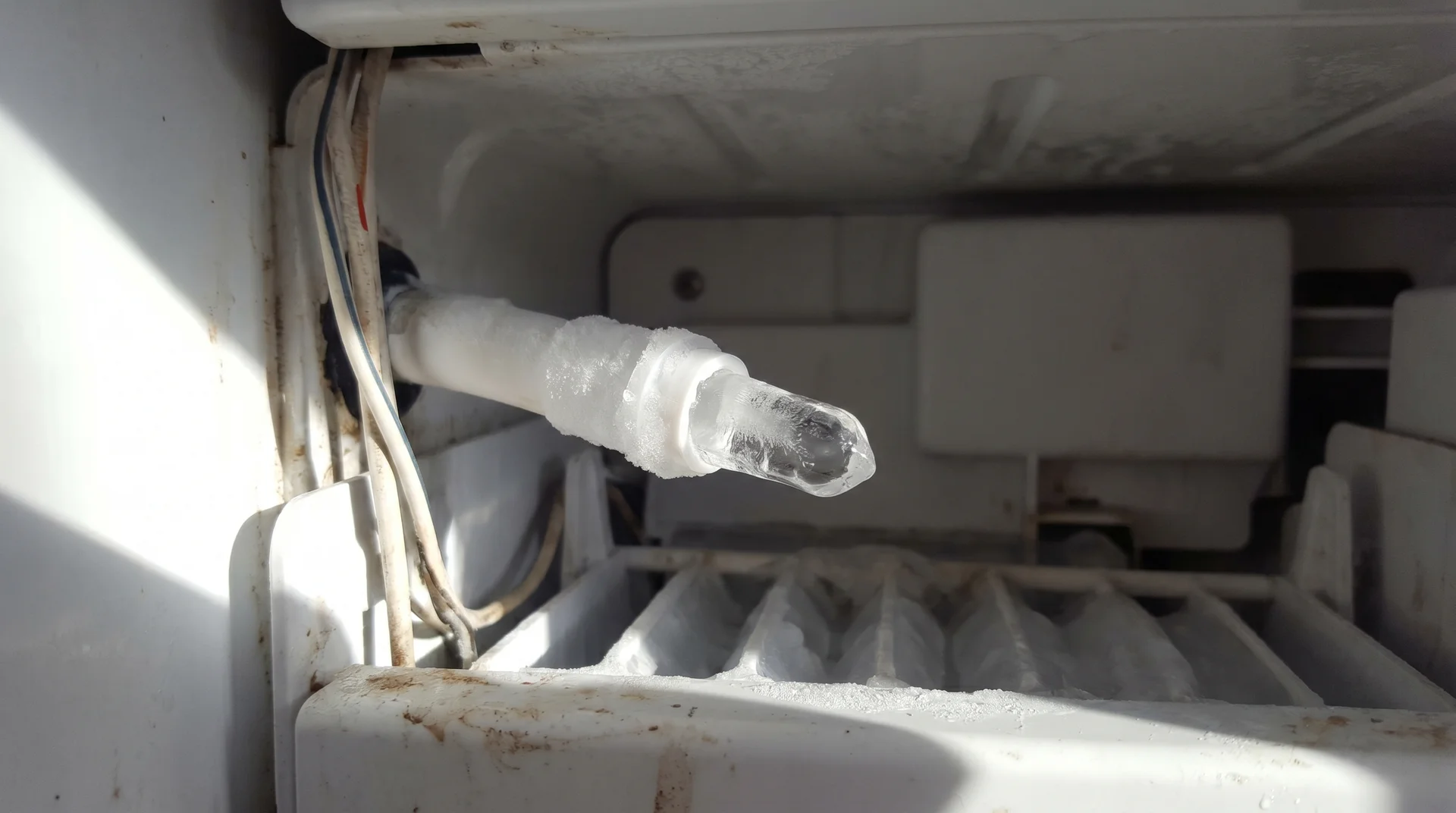
- Cubes arriving in a frozen clump, usually caused by a cracked or leaking fill tube, deposit water between cycles
- The ejector arm stays in the raised position and won’t reset on its own
- No ice after 48 hours on a newly installed machine, with all setup steps confirmed complete
A frozen fill tube is on my short list of things I won’t fix myself. Thawing it incorrectly can crack the tube. A cracked fill tube then leaks slowly behind the fridge for months before you find it.
The line between a condition problem and hardware failure isn’t always clean. A failing compressor can make your ice maker look like it just needs a temperature adjustment.
If adjusting the temperature and replacing the filter shows no improvement after 48 hours, get a technician.