

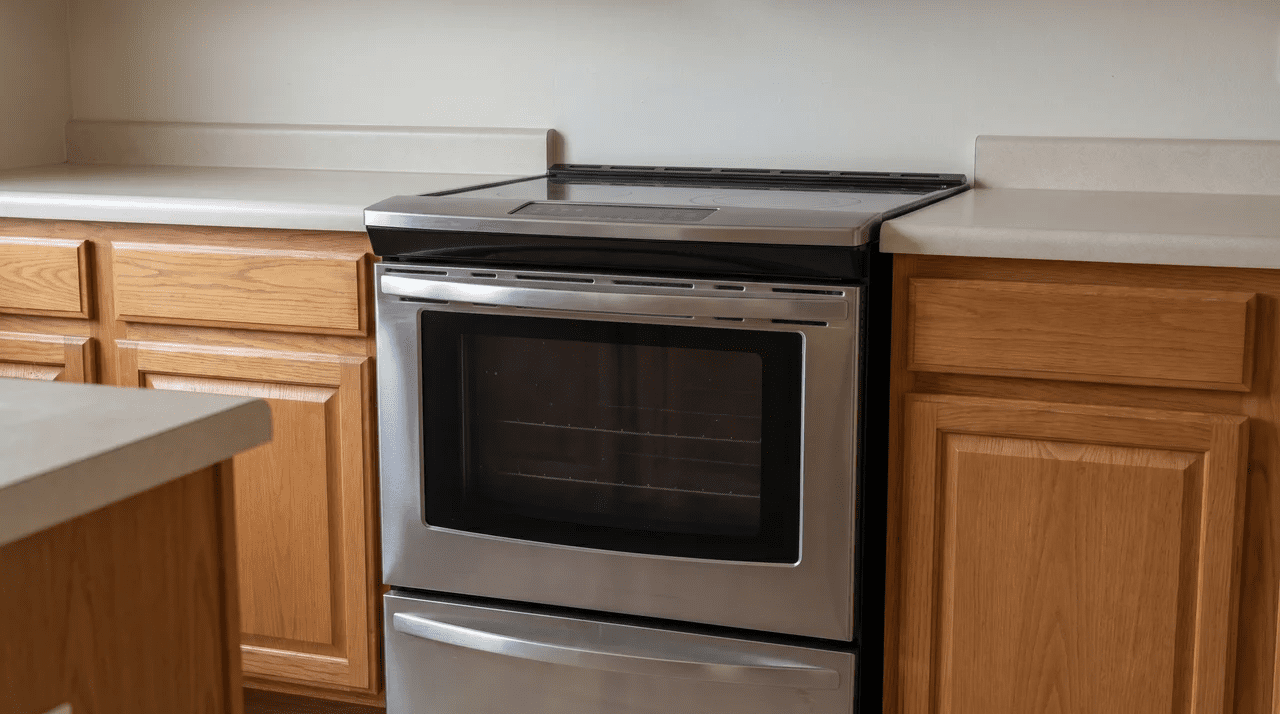
The oven in my last kitchen lasted 18 years. The one before it barely made 11.
Same brand, roughly the same use. Two very different outcomes.
The difference came down to one habit I didn’t know was doing damage. It’s the same one most oven owners repeat regularly without realizing what it costs.
Knowing how long an oven typically lasts is a useful number. But knowing what actually pushes yours toward 11 years or toward 18 is what matters when something goes wrong.
How Long Does an Oven Last?
The average oven lasts 10 to 15 years.
Gas ovens tend to run a little longer, about 15 to 17 years on average. Electric ovens typically fall between 13 and 15.
The difference comes down to how each type is built.
Twenty years is possible. But it’s not what you should plan around.
Ovens that reach that age were used carefully throughout. Most ovens under normal household use max out in that 13 to 15 year range, and that’s the number I’d plan around.
Where yours lands comes down to two things: how hard it’s used, and how it’s maintained.
What Determines How Long an Oven Lasts?
Three things decide where your oven ends up within its type’s lifespan range.
Two of them; oven type and build quality are fixed when you buy. The third is still in your hands.
Gas vs. Electric Ovens
Gas ovens last slightly longer than electric. The averages are 15 to 17 years for gas, and 13 to 15 for electric.
The reason is the parts.
Gas ovens run on the igniter and the gas valve; both mechanical, both straightforward to replace. One failing rarely causes another to follow.
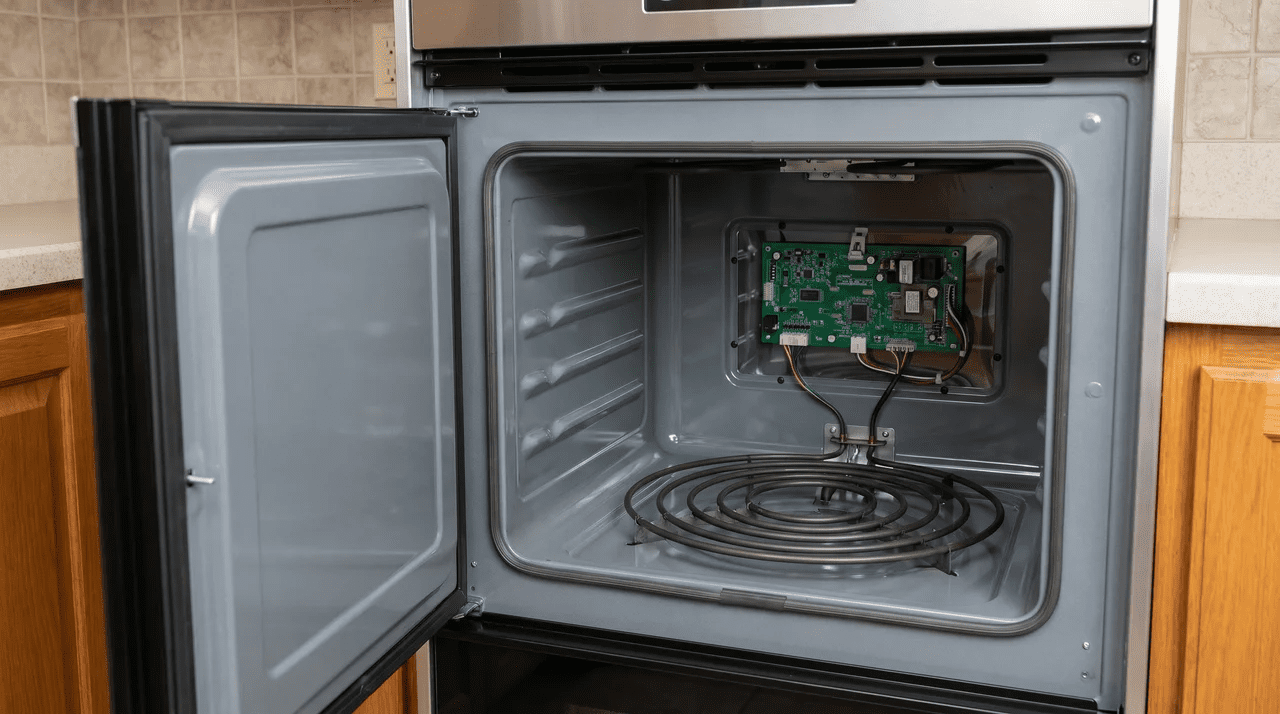
Electric ovens are different. They rely on sensors, heating elements, and an electronic control board that manages every function. The control board is the weak point. If yours is electric, this is the component worth keeping an eye on.
It fails more often than any comparable gas component. And when it does, the repair is expensive.
I’ve seen people replace a control board only to have it fail again within a year. That’s not because it’s a defective part. It’s what happens when the replacement runs in the same conditions that killed the first one.
The gas-versus-electric gap matters less than most people think. A gas oven running monthly self-clean cycles won’t outlast a well-maintained electric one.
How You Use It and How It’s Built
How hard you push your oven matters more than most people expect.
Daily cooking above 400°F wears down heating elements, door seals, and wiring faster than occasional use. Add regular broiling or long sessions and the wear adds up faster.
Build quality plays into this too. Cheaper models use thinner wiring and lower-grade control board components.
The same usage pattern that gives a premium oven 15 years might give a budget model 10.
In my experience, most people blame the brand when an oven dies early, but usually it’s the pattern of use.
If you already own the oven, how you use it matters more than what tier it’s from.
The door is worth treating carefully too. Hinge wear is one of the quieter ways ovens lose efficiency early. A worn hinge stops the door sealing properly, and a door that can’t seal bleeds heat on every cook.
Why Self-Cleaning Shortens Oven Life
This is the one that catches most people off guard. And it does more damage than almost anything else an owner can do.
During a self-clean cycle, your oven reaches roughly 900°F. Normal cooking runs between 350°F and 500°F. That gap is not small.
The electronic control board sits inside or right next to the oven cavity. It was built to handle cooking temperatures, not 900°F held for two to four hours.
This is what actually breaks under that heat.
Inside the control board are capacitors; small components that keep voltage stable across the board’s circuits. Sustained heat at self-clean temperatures wears them out.
It also degrades the relay contacts that switch the board’s functions on and off. When those break down, the board becomes unpredictable.
Temperature readings drift, controls stop responding, and the board can fail mid-cycle or shortly after.
This is why a replacement board often dies again quickly. If the self-clean habit continues, the new board runs into the same problem.
What surprises me most is that people run self-clean thinking they’re doing the oven good, but they’re actually doing the complete opposite.
Limit self-cleaning to once or twice a year and wipe spills while the oven is still warm.
That one habit protects the most expensive part of the oven more than anything else.
When Should You Replace Your Oven?
Most people think about this as one question. It’s actually two.
Is the oven showing signs it’s done? And does the repair cost make financial sense on a unit that’s already aging?
Signs Your Oven Is Past Repair
There are three signs worth taking seriously. One on its own might be fixable. Two or more together is a different conversation.
Temperature that stays off after recalibration is the clearest warning.
All ovens drift over time, and calibration can compensate, but only up to a point. If yours is still running 25°F or more off after recalibration, calibration can’t fix it.
That’s not a calibration issue, the component itself has worn out. When a recently replaced part fails again, the problem isn’t the part.
A heating element that dies again within a year tells you something. So does a control board throwing new error codes a few months after replacement.
The issue is the electrical environment the part is running in, not the part itself. The wiring and board conditions that caused the first failure haven’t changed.
I always come back to this: if you’ve already replaced a part and it failed again, stop replacing it. The oven is telling you something.
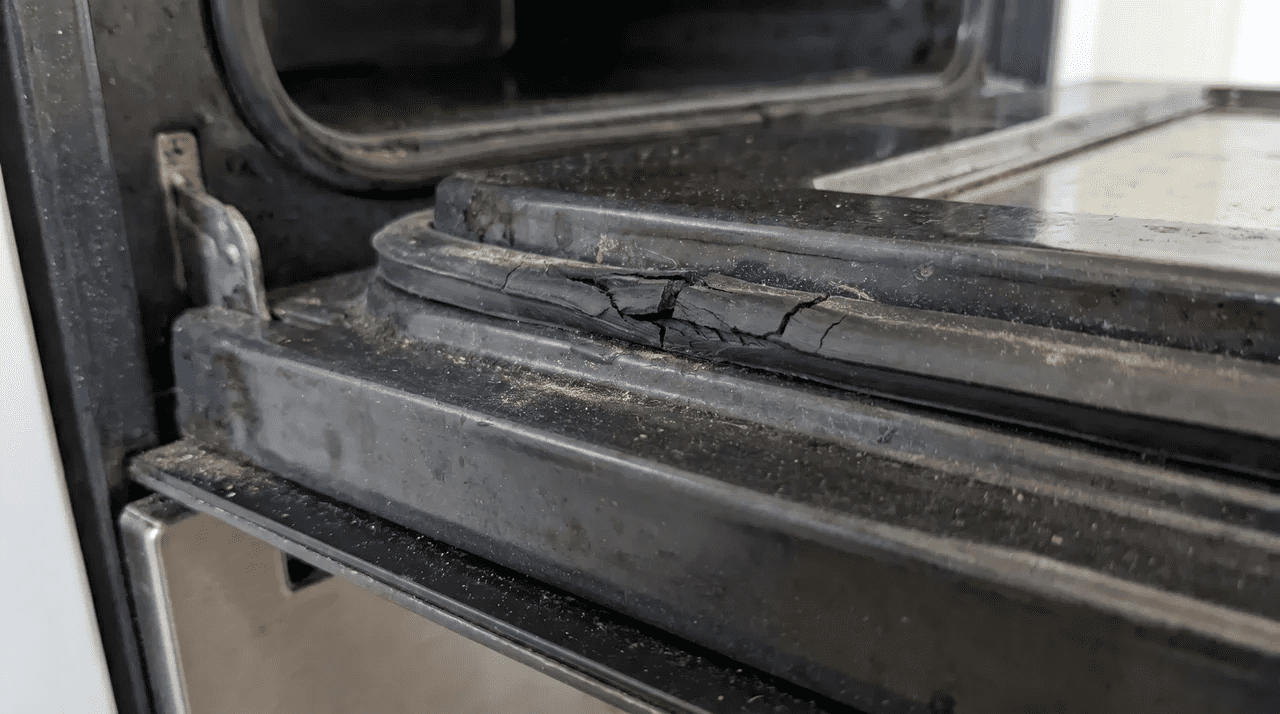
Physical damage to the door seal is the third sign.
If the gasket has worn past replacement, or damaged hinges are causing seal failure, the oven can’t hold temperature. Some of this is fixable.
But on an older oven with widespread damage, it rarely makes financial sense to pursue.
How to Decide — The 50% Rule
Here’s the rule I come back to every time.
If the repair costs more than 50% of what a comparable new oven would cost, replace it.
It’s a straightforward calculation. A major repair on an old oven doesn’t fix its age. What caused the first failure hasn’t changed. A second failure within a few years is likely.
If you go for a repair at this point, you’re not solving the problem, you’re delaying it.
Age changes how strictly to apply the rule. Under 10 years, a repair under the 50% line usually makes sense, especially if the oven is otherwise solid.
Over 10 years, major repairs like control board replacement, repeated element failures, door and seal damages, almost never clear it.
Category matters in how you apply this. A single element swap or a new oven light is a minor repair.
That’s not what this rule is for. The rule is for costly repairs, the ones where you pause before saying yes. If you’re asking, run the math.
Wrapping Up
The 10 to 15 year average is real, but it’s just a window. Two ovens of the same type and age can end up years apart. One makes it to 17, one gives out at 11.
The difference comes down to the self-clean habit, heat intensity, and whether small problems got fixed early.
The repair decision is where most people make the wrong call.
The familiar oven feels easier to fix. A new one feels like a lot of money. But if the repair crosses the 50% threshold and the oven is past 10 years, you’re not saving money. You’re spending it twice.
The ovens that reach 20 years aren’t special. They were just used carefully; spills wiped, self-clean kept to a minimum, small parts replaced before they became big ones.
Frequently Asked Questions
Can an oven last 20 years?
Yes, but it’s the exception, not what most owners should plan around. Getting to 20 years takes light use, quick attention to small repairs, and careful habits throughout. That mostly means limiting self-clean cycles and wiping spills before they harden. It’s most likely with a well-built gas oven treated carefully from day one.
Is it worth fixing a 10-year-old oven?
It depends on the repair cost. If the repair is under 50% of a comparable new oven’s price, fixing it usually makes sense, especially when nothing else is wrong. Control board replacements typically cost enough to fail that test on a 10-year-old model. At that point, replacement tends to make more financial sense.
How do I know when my oven needs to be replaced?
Temperature that won’t stabilize after recalibration is the clearest sign. Parts that fail again within a year of replacement are another. Door seal damage that stops the oven holding heat is the third. Two or more of these together, especially on an oven past 10 years, is usually the point to replace rather than repair.
Do gas ovens really last longer than electric?
Slightly. Gas averages 15 to 17 years; electric averages 13 to 15. Gas lasts longer because it runs on simpler parts, mainly the igniter and valve, rather than the sensors and control boards that electric ovens depend on. That said, how you maintain the oven matters more than fuel type in the long run.