

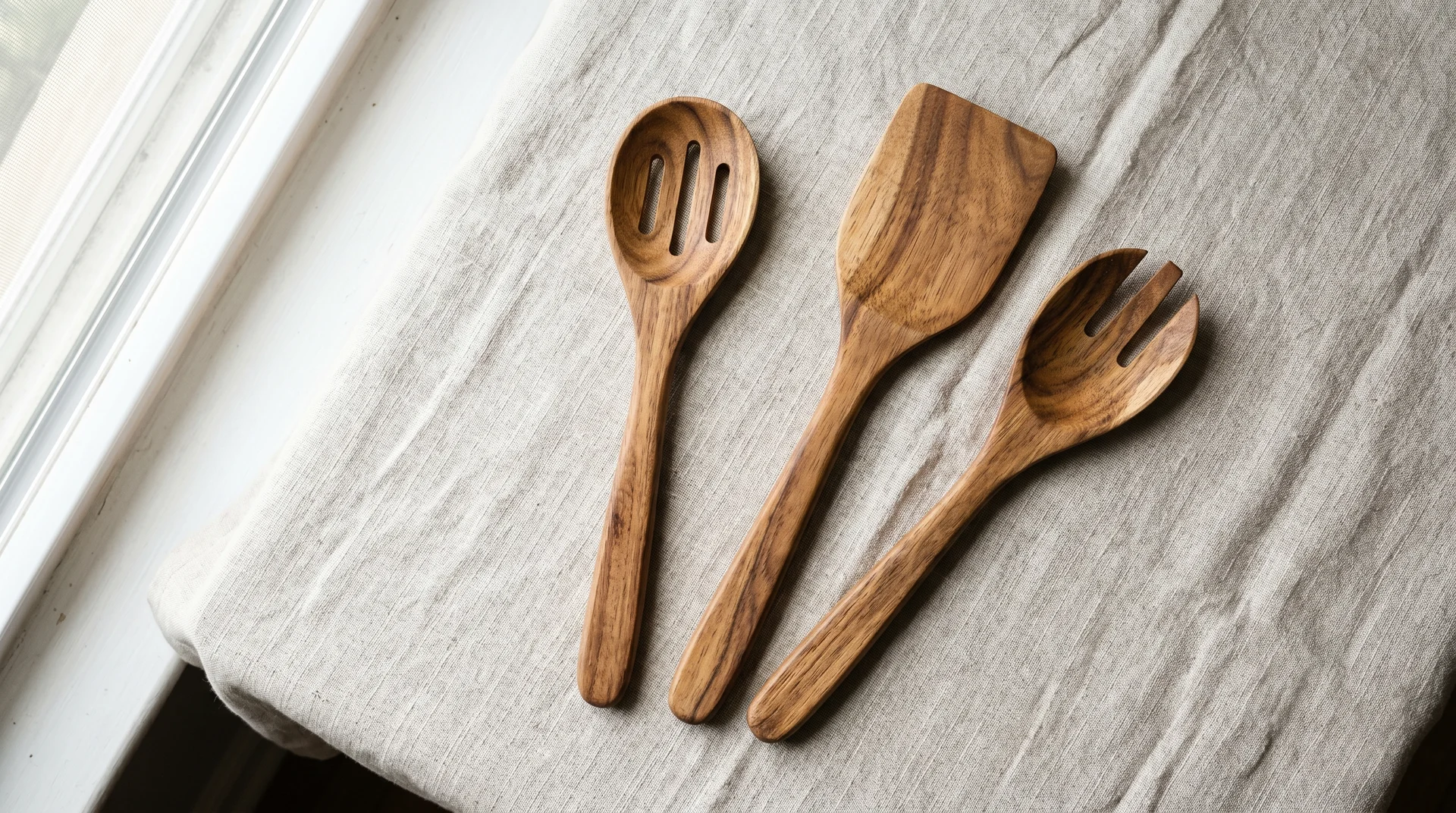
Acacia wood cooking utensils are worth buying. The word “acacia” on the label does not always mean what you think it means.
That gap matters more than most buying guides acknowledge, and it shapes everything about how you should shop for them.
Yes, Acacia Is a Good Utensil Wood
Acacia wood is food safe and genuinely good for cooking utensils in most home kitchens.
- It contains no toxins that transfer to food at cooking temperatures.
- It won’t leach chemicals the way plastic can under sustained heat.
- It’s harder than red oak; its natural oils provide moderate moisture resistance without treatment, and it won’t scratch non-stick or ceramic cookware.
Those properties are real. The problem is that they don’t describe every product sold under the “acacia” label.
“Acacia” is a genus, not a species. There are over 1,000 varieties in the acacia genus. Janka hardness across commercially sold acacia products ranges from roughly 1,160 lbf to over 3,100 lbf.
That’s a threefold range in density from one end to the other. The $8 set and the $45 set can both be accurately labeled “acacia” and perform like completely different materials.
What varies across the genus is density, durability, and how long your specific utensil actually holds up. That’s the part worth understanding before you buy anything.
What Makes Acacia a Practical Choice for Most Home Cooks
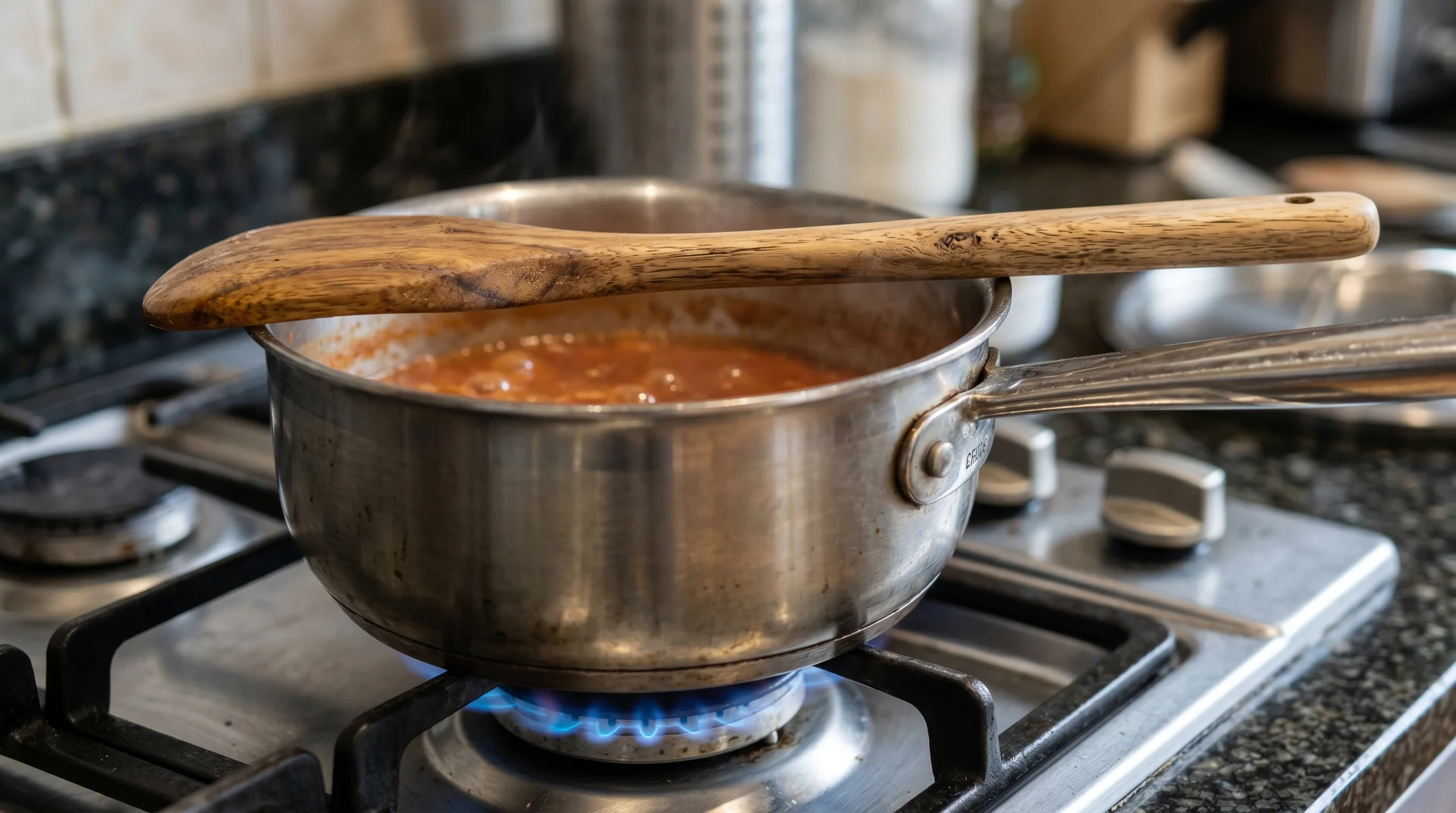
Acacia has real advantages for home kitchen use.
The natural oil content slows moisture absorption. That reduces the rate of warping and cracking compared to lower-oil hardwoods. The density of most commercial acacia species also resists surface scoring during normal stirring use.
For home cooks, those properties combine in a useful way.
Wood doesn’t conduct heat to your hand, won’t scratch non-stick or ceramic surfaces, and won’t transfer anything to your food.
Those are the things that make wooden utensils worth having. New acacia utensils sometimes have a mild, earthy smell from natural oils and tannins, which fades after the first several washes.
I tested acacia utensils alongside teak and maple across multiple product cycles, in real residential kitchens rather than controlled conditions.
Acacia performed well at mid-range price points. The caveat is that I was working with verified suppliers, not retail shelf stock.
Product quality within the acacia category varies widely enough that supplier sourcing matters more than the label, which is what the next section covers.
How Acacia Compares to Other Common Utensil Woods
Acacia is competitive on hardness, moderate on natural oil content, and genuinely variable in quality across the price range.
| Wood | Janka Hardness | Natural Oil Content | Maintenance Need | Relative Price |
|---|---|---|---|---|
| Acacia | 1,160–3,100 lbf (varies by species) | Moderate | Regular oiling | Mid |
| Teak | ~2,330 lbf | High | Low | Higher |
| Maple | ~1,450 lbf | Low | Regular oiling | Mid |
| Olive wood | ~2,700 lbf | High | Regular oiling | Premium |
| Bamboo | N/A (grass fiber) | None | Low | Low |
Teak’s main advantage over acacia is consistency. Its higher natural oil content means it needs less maintenance to stay water-resistant, and the species identity is more tightly controlled in the market.
If I were buying for someone who cooks daily but won’t think much about maintenance, I’d point them toward teak.
Maple is worth considering if you want simplicity. It’s a well-understood material with tight, uniform grain and a long track record in professional kitchens. If you’d rather skip the acacia labeling problem entirely, maple is a reasonable alternative.
Acacia Wood Cooking Utensils Labeling Problem
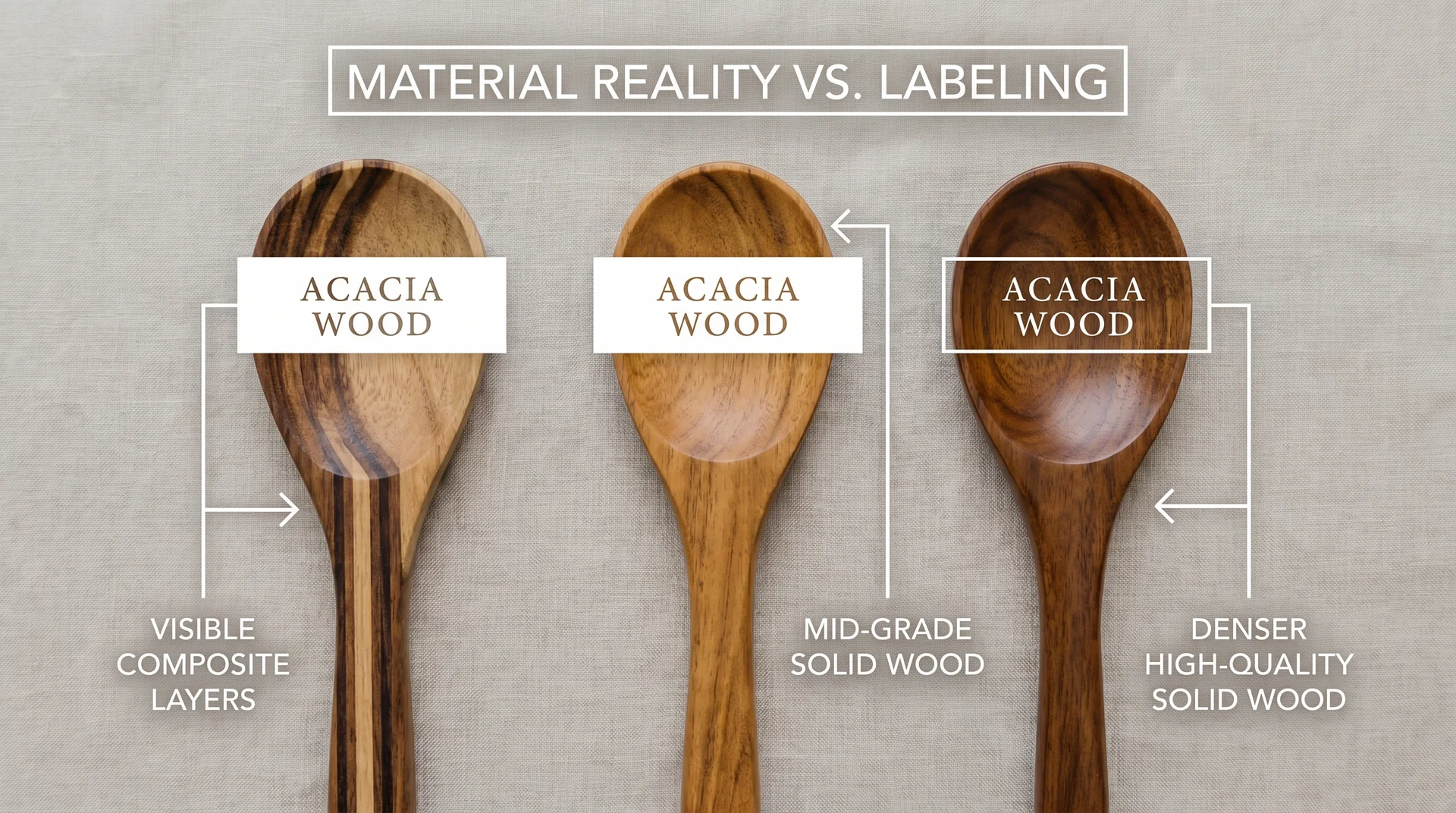
The word “acacia” on a utensil tells you less than almost any other wood designation.
A World Resources Institute study found that 62% of wood products sold in the US carry inaccurate species labels. The acacia category is especially affected because the name functions as a trade umbrella.
Plantation-grown Acacia mangium, which is softer and lighter than premium species, gets sold alongside denser, higher-performing varieties under the same label. Some products labeled “acacia” are composites or laminated constructions, not solid wood.
This isn’t always deliberate misdirection. It’s a structural problem in how the material is categorized at the consumer level, and it means the label can be accurate while still telling you almost nothing useful.
I encountered this directly during product development, consulting with a major kitchen tool manufacturer.
We tested multiple utensil batches from different suppliers, all labeled identically. The performance variation between batches was significant enough that we wrote specific sourcing requirements into supplier contracts. The material label alone was not a reliable filter for what we needed.
Most home buyers don’t have that option.
What to Actually Look For When Buying Acacia Utensils
Four criteria matter more than the “acacia” label itself.
- Solid construction, specified. Look for product descriptions that say “solid acacia” rather than just “acacia wood.” Products that don’t specify construction type are more likely to be composite or laminated. A heavier utensil relative to others of the same size is a reasonable proxy for denser solid wood.
- Appropriate finish. Some acacia utensils are lacquered or varnished for visual appeal. Those finishes degrade with heat and washing. Raw wood or oil-finished surfaces hold up better for kitchen use. If the surface looks like a coat of something rather than a natural sheen, it probably is one.
- Price as a material signal. Below $10 for a full set, you’re almost certainly working with plantation-grade material or composite construction. Sets in the $25–$45 range are more likely to be solid, higher-density acacia. That’s not a guarantee, but the price floor is real.
- Source transparency. Brands that specify the species or growing region in their product copy have that information and choose to share it. Absence of species information is worth noting before you buy.
Beautiful grain is one of acacia’s genuine selling points, and the variation between pieces is part of what makes it appealing. It has nothing to do with durability.
The prettiest sets I’ve tested are rarely the ones I’d recommend.
How to Take Care of Acacia Utensils So They Actually Last
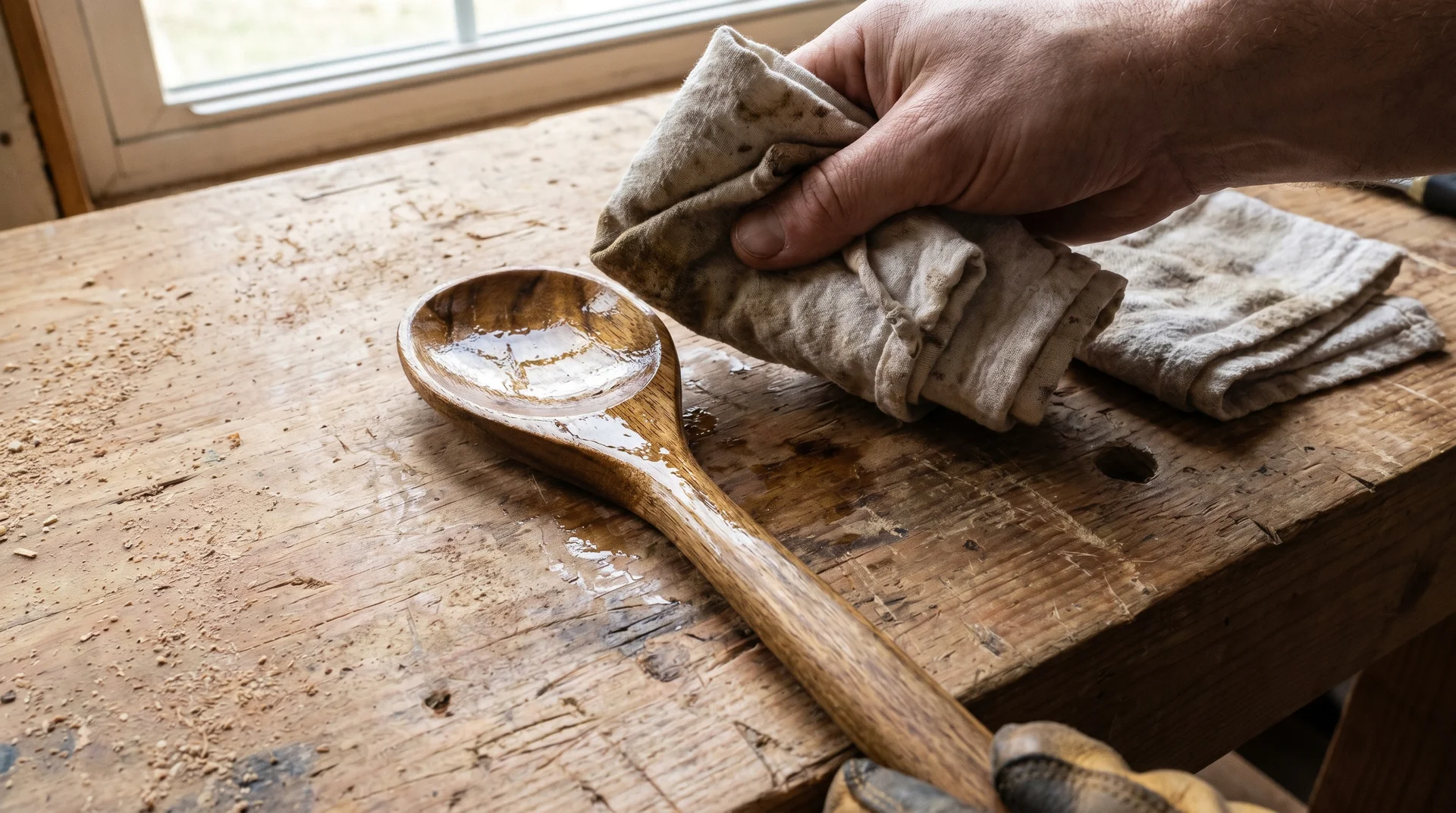
Acacia utensil maintenance is straightforward once you understand the actual mechanism.
The two things that degrade acacia fastest are sustained heat and repeated oil-stripping. Dishwashers do both at once. Hand-washing with mild soap and drying immediately does neither.
The Dishwasher Question
Do not put acacia utensils in the dishwasher.
A single cycle probably won’t destroy a well-made utensil. The problem is cumulative. Dishwashers combine high heat with alkaline detergent and prolonged moisture exposure. That combination strips natural oils, opens the grain, and causes the wood surface to dry unevenly.
Once that process starts, it accelerates. The damage compounds with each cycle and isn’t reversible.
This is one of the few wood-care rules I hold without flexibility. The mechanism is well understood, and the outcome is predictable.
Oiling
Oil your acacia utensils when the surface tells you to, not on a fixed calendar schedule.
Most care guides recommend oiling every one to three months. That’s a reasonable default. The real variable is moisture exposure: a spoon used daily in soups and sauces needs oiling more often than one used occasionally for dry mixing.
The indicator is the surface. If it looks lighter than usual or feels slightly rough, it needs oil.
Avoid leaving utensils resting in boiling liquid or on a hot pan edge; sustained heat exposure strips oil at the contact point and can cause localized cracking. Food-grade mineral oil is the right choice for conditioning acacia wood.
It’s odorless, flavorless, and food-safe after the refinement process. It penetrates dense wood effectively. I’ve used it consistently across two years of regular testing in my own kitchen, and it outperforms beeswax-based conditioners for penetration in harder wood varieties.
Avoid olive oil, coconut oil, and vegetable oils. They oxidize inside the wood over time and go rancid — a flavor problem, and in any wood with surface porosity, a hygiene one.
The process takes about five minutes:
- Apply a thin coat of food-grade mineral oil to all surfaces of the utensil.
- Let it absorb for several hours, or overnight if the wood looks particularly dry.
- Wipe off any excess with a clean cloth before use.
What to Do When a Crack Appears
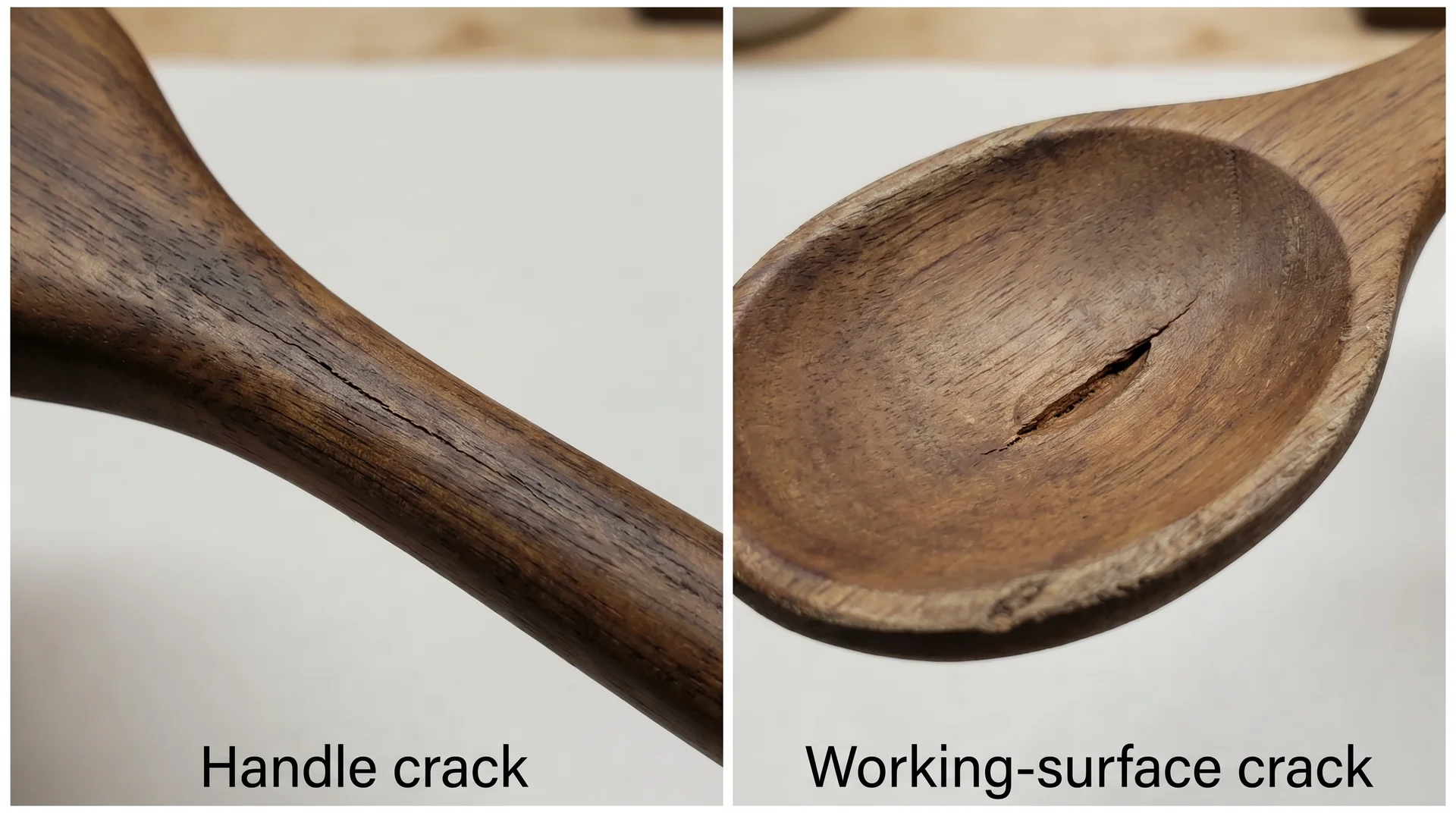
Shallow surface cracks on the handle, caused by the wood drying out, can often be reversed. Saturate the utensil in food-grade mineral oil and let it rest for 24 hours.
The wood rehydrates, and the crack closes or becomes negligible.
Cracks on the working surface are a different situation entirely.
The bowl of a spoon or the flat of a spatula with a crack creates a recess where food residue accumulates in ways that are difficult to clean reliably. Replace those utensils rather than trying to restore them.
If a well-maintained acacia utensil develops working-surface cracks within a year of normal use, that’s a material quality issue, not a maintenance failure. Knowing that distinction is useful when you’re deciding whether to replace the utensil or reconsider what you bought in the first place.
When Acacia Is Not the Right Choice
Acacia is a good material in specific conditions, and the wrong choice in others.
If consistent hand-washing isn’t realistic for how your kitchen runs, Teak is a better fit.
Teak’s higher natural oil content gives it more tolerance for irregular care. Acacia can match teak’s longevity with consistent maintenance, but teak requires less of it to get there.
Visual uniformity is a real consideration before buying.
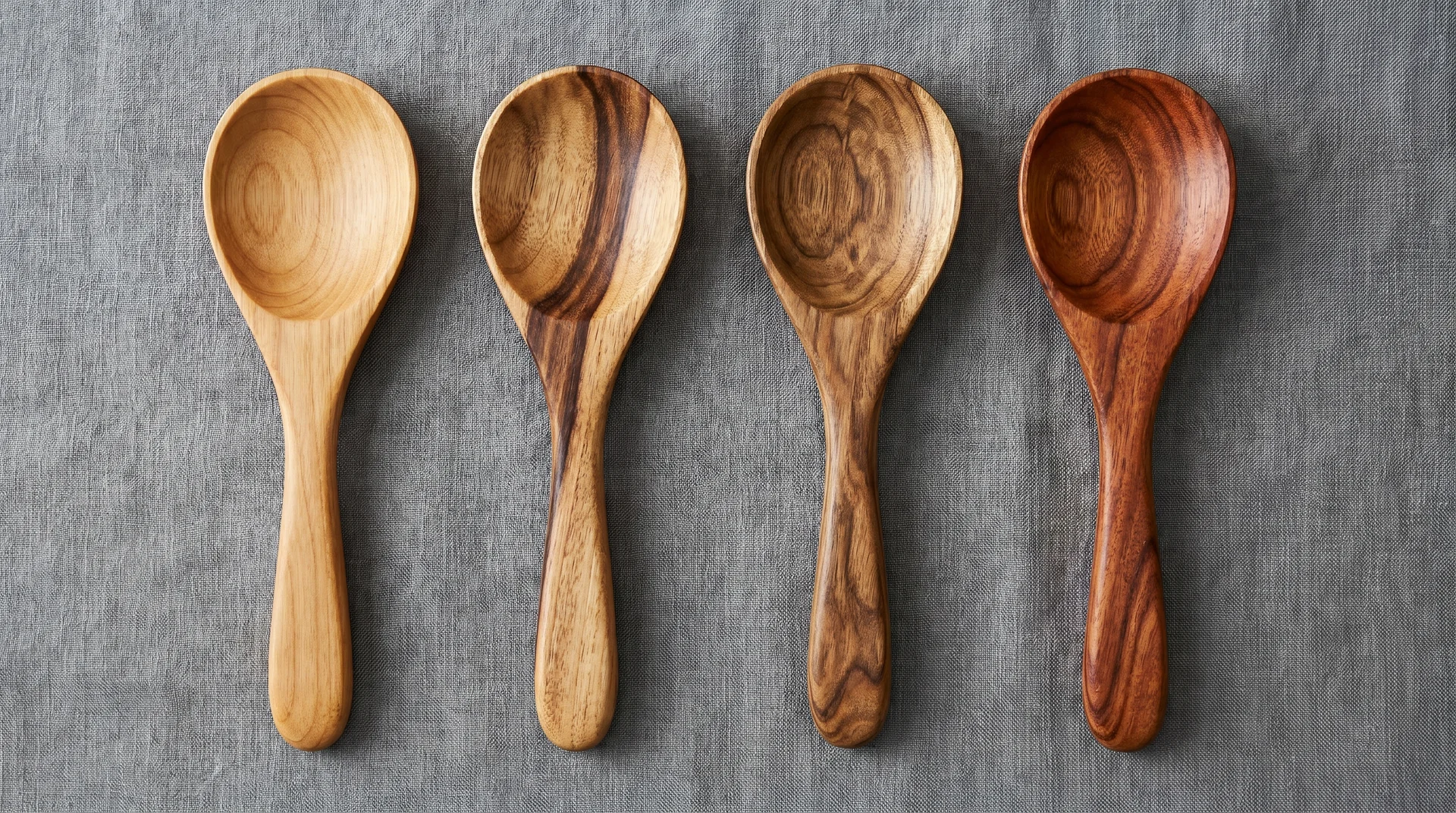
Grain pattern varies significantly between individual pieces and between production batches. If you want a set that looks uniform, acacia will frustrate you. That variation is part of the material’s character. It’s also a legitimate reason to consider maple or beech instead.
On the bacteria question: acacia’s natural oils reduce moisture absorption, which limits the surface conditions bacteria need. Whether that creates a meaningful hygiene advantage over other dense hardwoods is not clearly established in independent research.
Maple, teak, and olive wood all have tight enough grain to perform comparably with normal care. I’m not confident enough in the comparative evidence to make a strong claim here. Anyone citing acacia as definitively the most hygienic kitchen wood is working from brand copy, not independent data.
If your question is really about acacia cutting boards, that’s a separate evaluation. We’ve covered which cutting board materials are actually safest in a dedicated piece.
It talks about end-grain versus face-grain construction, knife-score hygiene, and cross-contamination risk, introducing criteria that don’t apply to stirring spoons.
The Verdict on Acacia Wood Cooking Utensils
Acacia is a genuinely good utensil material when you buy the right product.
The wood’s core properties are real: density, moderate moisture resistance, food safety, and compatibility with coated cookware. The problem is that the label doesn’t filter for those properties. The four buying criteria from earlier in this piece do.
Maintenance is the other half of the equation.
Hand-wash, dry promptly, and oil when the surface tells you to. A well-sourced acacia set maintained that way will hold up for years.
The readers who end up disappointed with acacia almost always bought the cheapest option available.