

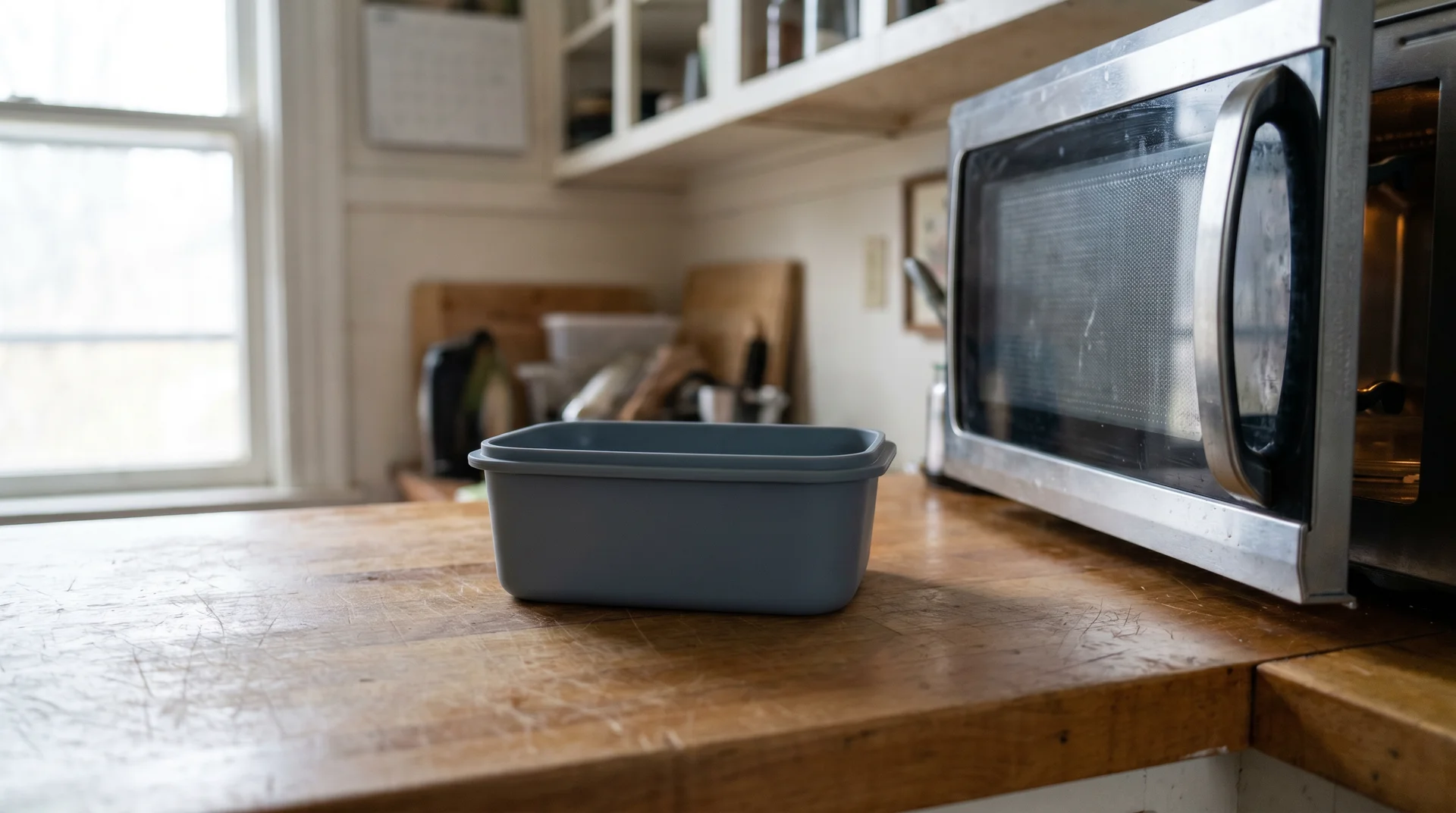
Yes, food-grade silicone is microwave safe, the FDA approved it, you’re fine. That answer is correct as far as it goes.
The problem is that “food-grade” covers a wider range of production quality than most people realize. The silicone you actually own determines how true that answer is. Knowing how to tell the difference is the part nobody explains.
What “Microwave-Safe Silicone” Actually Means
The microwave-safe label certifies one thing: the material won’t melt or warp at microwave temperatures.
But it doesn’t verify production purity, manufacturing method, or whether fillers were added during production. It’s a pass/fail on structural integrity under heat, not a comprehensive safety assessment.
Why Silicone Behaves the Way It Does in a Microwave
Food-grade silicone is built around a compound called polydimethylsiloxane, or PDMS. Its silicon-oxygen bonds are non-polar.
Microwave radiation heats food by vibrating polar water molecules.
Since pure silicone is non-polar, the waves pass through it without heating the material itself. That’s why a silicone container often stays cool while the food inside it gets hot.
This is genuinely different from plastic. Many plastics contain BPA, phthalates, or BPS, which can migrate into food under heat.
Food-grade silicone doesn’t contain those compounds. But framing silicone safety as simply “better than plastic” skips the part where silicone quality varies significantly depending on how it was made.
What the FDA Approval Actually Covers
The FDA approved polydimethylsiloxane for repeated food contact use under CFR Title 21, Section 177.2600.
That approval applies to materials meeting specific purity and migration standards at the point of manufacture. It doesn’t mean every product labeled food-grade was manufactured to those standards consistently, or that all manufacturers interpret the requirements the same way.
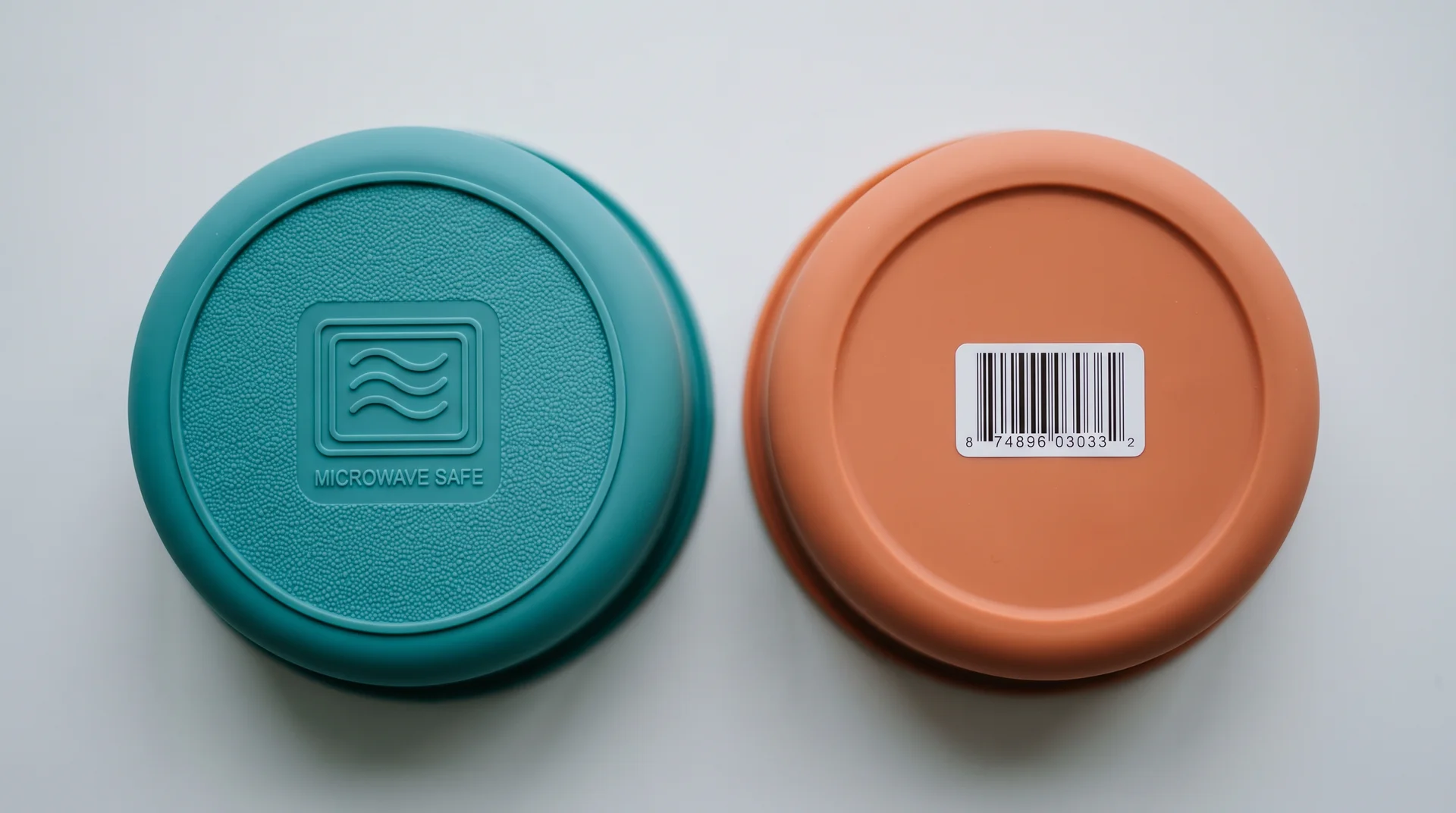
The microwave-safe symbol to look for is three horizontal wavy lines, sometimes inside a box with a microwave image. If that symbol is absent, the manufacturer hasn’t certified the product for microwave use. That absence is worth taking seriously.
Not All Silicone Is the Same: The Quality Problem the Label Hides
A 2023 peer-reviewed study published in Food Research International reviewed safety data on commercial silicone rubber products used in food processing. The researchers found that production quality varies significantly across manufacturers.
Residual chemical compounds, including siloxane oligomers, can migrate into food from lower-quality products during heating. The variation within the food-grade category is real and documented.
Three quality signals separate the better products from the worse ones: certification level, curing method, and filler content.
Food-Grade Certification
Not all food-grade certifications require the same level of testing. For products used with heated food, the standard you’re certified to matters.
The FDA standard, CFR Title 21 §177.2600, is the US baseline. The LFGB standard, which originated in Germany and aligns with broader EU food contact materials law, requires stricter migration testing.
That testing is specifically relevant for products used with hot or fatty foods. If a silicone product carries LFGB certification, it has been tested under conditions closer to actual cooking use.
This distinction matters most for items you’ll microwave regularly with fatty or acidic foods. For occasional use with simple foods, FDA certification is sufficient. For daily reheating of oily leftovers or high-acid foods, the stricter standard is worth seeking out.
Platinum-Cured vs. Peroxide-Cured
The curing method used during manufacturing is the most important quality variable in silicone kitchenware. It’s also the one that product labels almost never mention prominently.
Silicone starts as a liquid polymer and gets cured, or hardened, into its final form using a chemical catalyst. Two methods dominate the market.
- Platinum curing uses a platinum catalyst. It’s a cleaner process, leaves minimal residue, and produces silicone that is generally filler-free and odor-resistant.
- Peroxide curing uses peroxide compounds as the catalyst. It’s cheaper to run, and it can leave behind small amounts of peroxide residue in the finished product.
Peroxide-cured silicone is also more likely to incorporate fillers, which is a separate problem covered below.
For microwave use specifically, peroxide residue and fillers are more likely to off-gas or migrate during repeated heating than the base silicone polymer is. Over months of regular use, that difference accumulates in ways a single test won’t catch.
What eight months of testing show?
I tested silicone containers from both categories over eight months in real kitchens, not in a lab, and the longitudinal results are what matter here.
- Platinum-cured products held stable: no surface changes, no persistent odor after the first few uses.
- The peroxide-cured products varied. Some held fine. Some developed a faint surface tackiness by month six.
That’s not a dramatic failure. It’s a slow-motion quality signal that doesn’t appear in any one-off test. The question is whether you notice it before or after you’ve been reheating food in that container for a year.
The Filler Problem & Pinch Test (Checks in 10 Seconds)
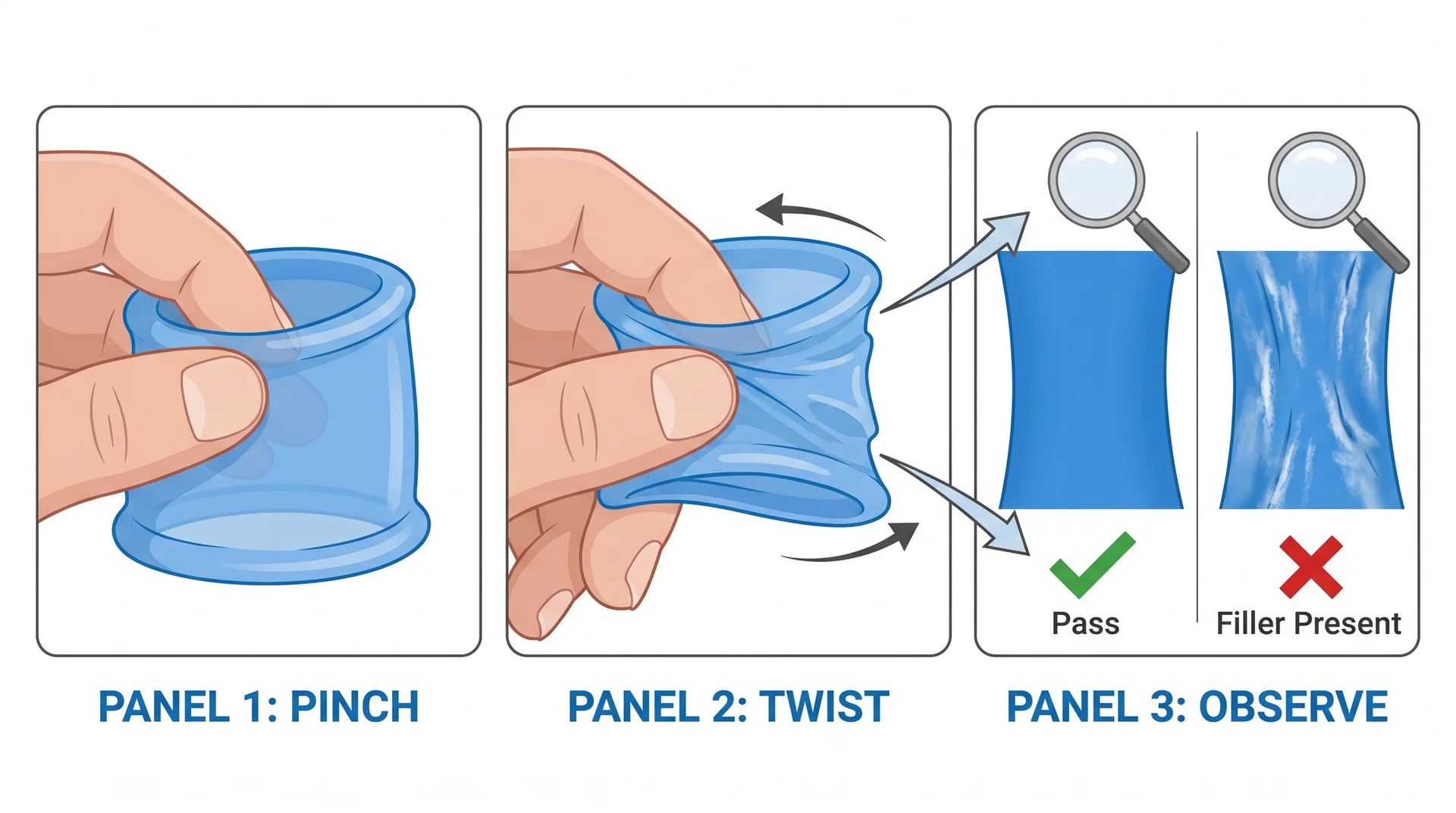
Many lower-cost silicone products contain fillers like added compounds that reduce production cost, and you can test for them at home without any equipment.
Pure silicone is expensive to produce. Manufacturers reduce cost by blending in filler compounds within the silicone structure. When the surface is intact, the fillers stay contained.
Repeated heating and mechanical stress degrade the surface over time, and exposed fillers are more likely to migrate toward food than the base silicone polymer.
Here’s how to do the pinch test:
- Find the thinnest section of the item, usually the sidewall of a container or the base of a mold.
- Pinch that section firmly between your thumb and forefinger.
- Twist in opposite directions, the way you’d wring out a cloth.
- Observe the color at the point of stress.
Pure silicone holds its color under that force. White or pale streaks at the stress point indicate fillers pulling apart from the silicone base. The streaks appear because the filler material and the silicone have different mechanical properties and separate under tension.
A filler-positive result doesn’t mean the item needs to go in the bin immediately. It means the product is lower quality than represented. Use it at lower heat settings, microwave it for shorter intervals, and monitor the surface over time. Replace it when the surface starts to change.
The Siloxane Question: What the Research Actually Says
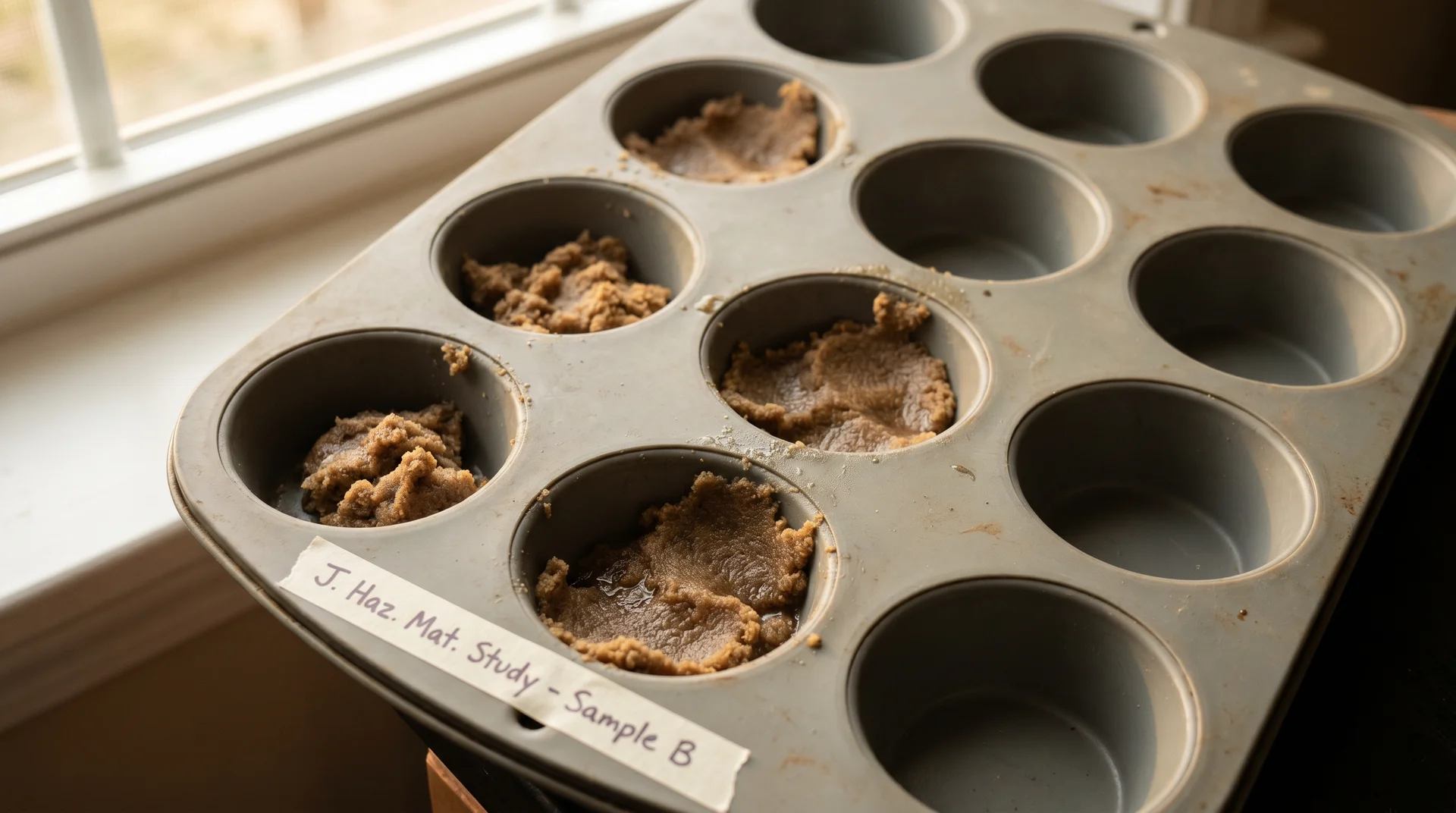
Siloxanes are compounds present in silicone’s molecular structure. Cyclic siloxanes, specifically D4 (octamethylcyclotetrasiloxane) and D5 (decamethylcyclopentasiloxane), have drawn research attention because they can be released during heating.
- A 2024 study in the Journal of Hazardous Materials found that silicone bakeware releases cyclic siloxanes during cooking. Higher emissions came from products with greater food surface contact, such as muffin trays and doughnut molds.
- A 2023 review noted that D4 and D5 have shown endocrine, immune, and reproductive effects in animal studies.
The Temperature Context
Both studies used oven baking conditions, at temperatures of 177°C (350°F) and above. Home microwave reheating operates well below those temperatures for most foods. Warming soup, reheating rice, defrosting leftovers: none of these approach the conditions used in the siloxane release research.
The risk profile for microwave use is meaningfully lower than for sustained oven baking. That’s not a dismissal of the research. It’s the relevant comparison for what most people are actually doing when they reach for a silicone container and a microwave.
The First-Use Smell
New silicone products release a small amount of residual siloxane compounds left over from manufacturing during initial uses. This process is called curing out. It is almost certainly the source of the faint odor many people notice the first few times they microwave a new container. That smell typically fades after several uses as the residual compounds dissipate.
That phenomenon is different from ongoing degradation. A smell that appears once or twice and then goes away is the product finishing its manufacturing cycle. A smell that persists across a dozen uses is a different situation entirely, and one worth taking seriously.
The Honest Uncertainty
The long-term effects of low-level cyclic siloxane exposure in humans are not fully established. The animal study data exists and have raised legitimate flags.
Regulatory bodies, including the FDA and the European Food Safety Authority, have reviewed polydimethylsiloxane’s safety profile for food contact. They have not issued restrictions on consumer kitchen use.
The current evidence doesn’t support stopping the use of quality silicone in the microwave. It does support caring about which quality of silicone you’re using, which is where the curing method and filler distinctions become practical rather than academic.
My read on this, after following the materials science literature for a few years: the siloxane research is real and worth watching. It is not a reason to throw out your containers. It is a reason to care about what they’re made from.
The Metal Frame Problem
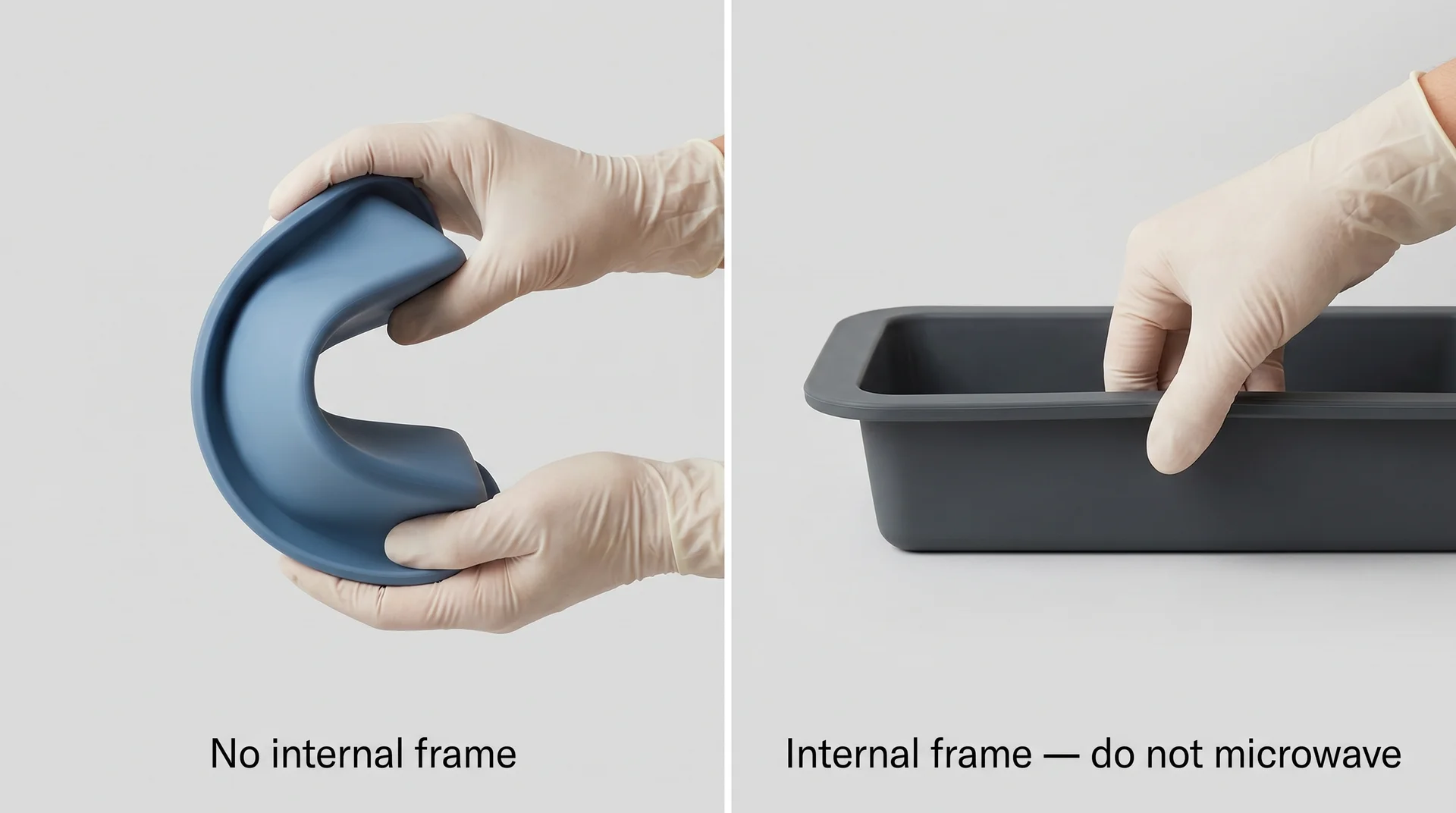
Manystructured silicone bakeware items, particularly loaf pans, bundt molds, and shaped cake pans, contain internal steel wire frames.
The frame provides rigidity that silicone alone can’t maintain at larger sizes. The product is labeled silicone, sold as silicone, and the microwave-safe claim applies to the silicone material. It does not apply to the steel inside it.
What Arcing Means and Why It Matters
Metal in a microwave causes arcing, which is electrical sparking. Sustained arcing can damage the appliance and, in extended exposure, cause a fire.
The silicone component does nothing wrong in this situation. That is a composite materials problem that gets lost because the silicone label is the visible one.
Checking for Internal Frames Before You Microwave Anything
Press firmly on the rim and sides of any structured silicone bakeware you own. If any section is rigid, meaning it doesn’t flex when you push it, there is likely a metal support frame inside that section. Fully flexible silicone that bends freely at every point has no metal frame to worry about.
This problem appears regularly in Amazon reviews for silicone baking molds. People put the item in the microwave and get sparks. The silicone didn’t fail. The product design created a hazard that the label didn’t disclose. Checking flexibility takes five seconds and eliminates the risk entirely.
How to Check What You Already Own

Three checks, two minutes, no tools required beyond your hands.
Check the Label and Bottom of the Item
Look for four things, in this order.
- Microwave-safe symbol: three horizontal wavy lines, sometimes inside a box or microwave image
- Food-grade certification: FDA-compliant language, or LFGB certification if the product is European-made or sold with EU compliance claims
- “Platinum-cured”: if this phrase appears anywhere on the label or the original product listing, it’s a meaningful quality signal
- Temperature rating: a maximum rating above 200°C (392°F) indicates better heat stability overall
If none of those appear, you have an unknown product. That’s not a verdict, but it means the pinch test below is your next step before you microwave the item regularly.
Do the Pinch Test
The pinch test described in the filler section above works on anything you already own, regardless of when you bought it.
Grab the thinnest point, pinch and twist firmly, and look at the color under stress. Color holds: no obvious filler. White or pale streaks appear: fillers present. Ten seconds, and you know something the label won’t tell you.
Read the Smell
A faint smell on the first few uses of a new silicone product is common. What it does after that is the informative part.
As described in the siloxane section, this is almost always the curing-out process. Residual manufacturing compounds dissipate over the first several uses. Most people notice the smell once or twice and then it’s gone. Give a new product five to eight uses before you draw any conclusions from it.
When the smell stops being normal?
A smell that persists past ten uses is worth taking seriously. Combined with a filler-positive pinch test result, it’s a reasonable basis for replacing the item. A persistent odor without other signs of degradation is harder to interpret, but worth monitoring.
Visible surface degradation, meaning tackiness, color changes, or any flaking at the edges, is a clear stop signal regardless of what the label says. The label reflects the product when it was new. It says nothing about what it is now.
What to Buy If You’re Starting Fresh
The buying criteria follow directly from the quality signals above.
Look for platinum-cured, explicitly food-grade silicone with LFGB certification where available. Those three criteria eliminate most of the manufacturing quality concerns.
Products that meet all three cost more than the alternatives. In my experience testing comparable items across three years, the price difference runs roughly 30 to 50 percent.
The performance difference over twelve months of regular use is worth that gap, and I’d rather pay it once than replace cheaper containers twice.
Final Thoughts
This piece covers silicone in the microwave, which operates at temperatures well below 212°F for most reheating tasks.
Silicone used for sustained oven baking at 375°F and above involves a different temperature range and a different risk profile than what’s described here.
That’s a different article, and it needs different criteria to evaluate it properly.
The short answer to whether silicone is microwave safe is yes. The more useful answer is that the yes applies fully to platinum-cured, filler-free, LFGB-certified silicone, and applies with more caveats to everything below that quality level.
The pinch test takes ten seconds. The label check takes thirty. Between those two things and the smell indicator over the first few uses, you have enough to evaluate what you already own and to make a better call the next time you’re buying.