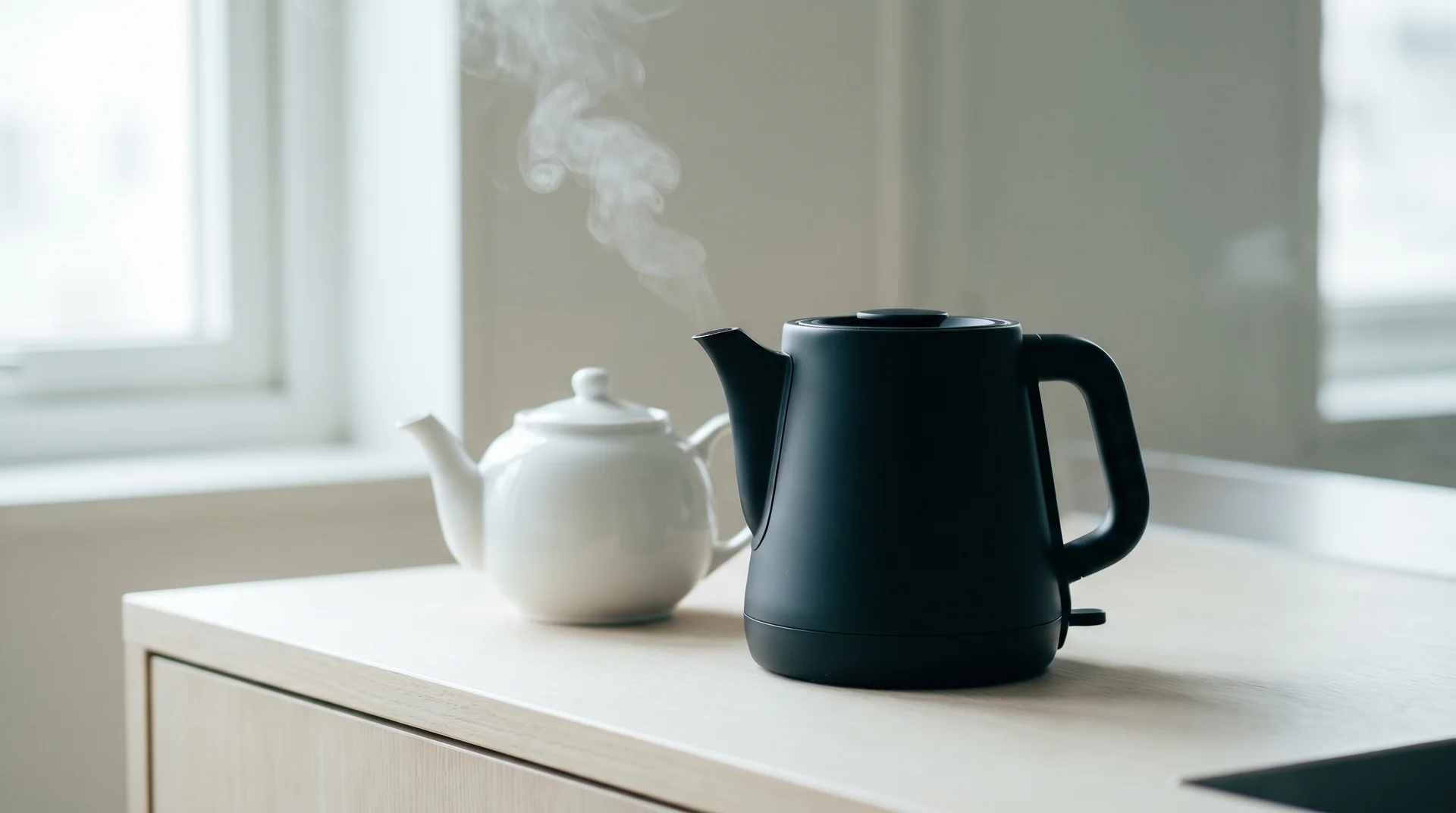
A kettle heats water. A teapot steeps tea.
The kettle is the essential first purchase. The teapot earns its place only in certain setups.
Kettle vs Teapot: What to Buy Today?
A kettle heats water to the temperature required for brewing. A teapot holds heated water with tea leaves for steeping.
You need a kettle to make tea. You don’t necessarily need a teapot. A tea bag in a mug with a good kettle is a complete daily setup for most people.
What a Kettle Does
A kettle has one job: get water to the right temperature for brewing.
How well it does that depends entirely on which type you have. The gap between a basic stovetop model and a variable-temperature electric kettle is larger than it looks on the shelf.
Stovetop Kettle vs. Electric Kettle
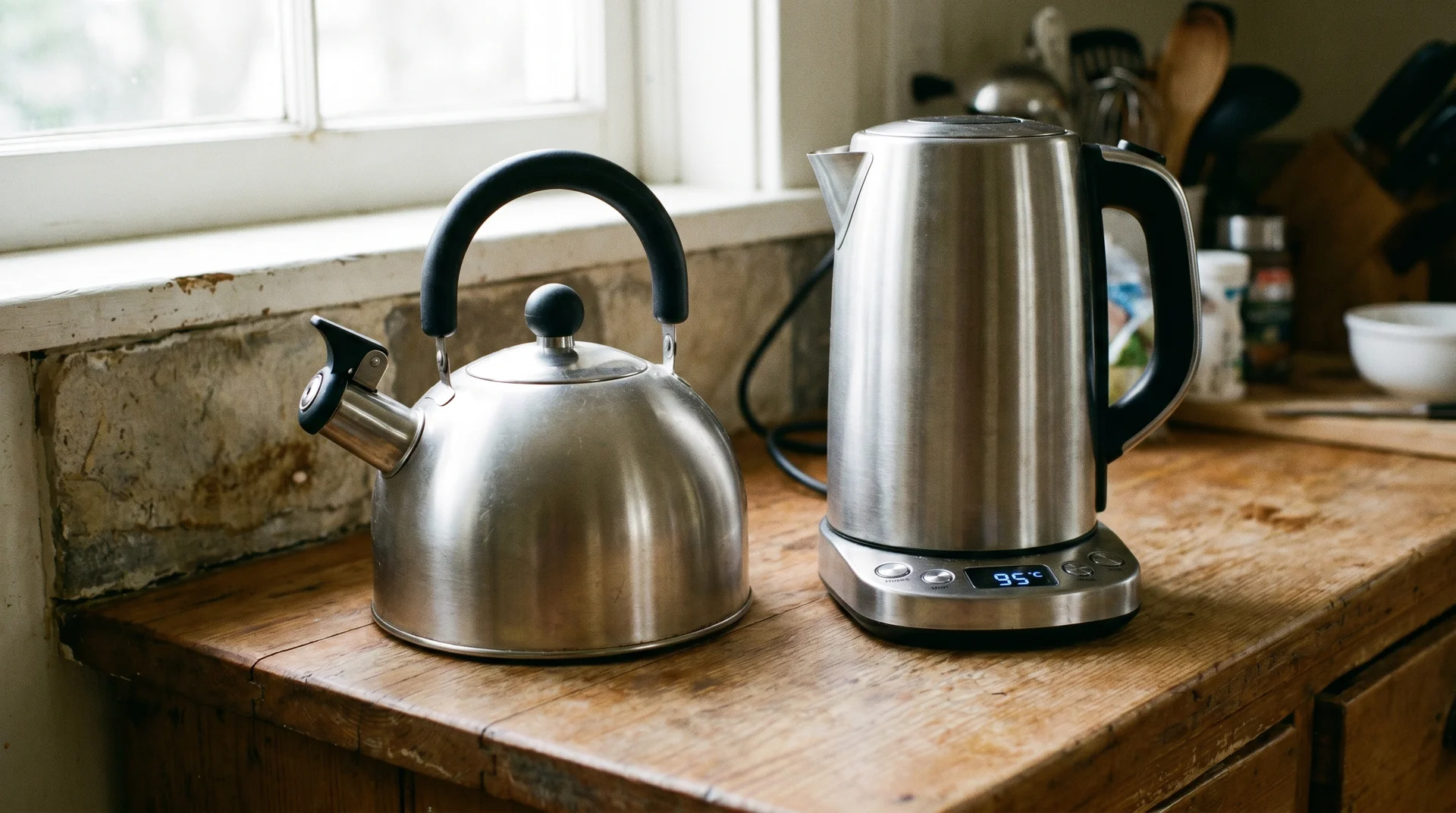
The real difference between stovetop and electric kettles is temperature control, and that difference determines which teas you can actually make well.
A stovetop kettle sits on a burner. Most whistles when the water reaches a full boil at 212°F. There is no other temperature setting.
An electric kettle heats water on a countertop base. Basic models heat to 212°F and shut off automatically. Variable-temperature models let you choose a specific target and hold it for 20 to 60 minutes. (Please note that hold times do vary by model.)
| Feature | Stovetop Kettle | Basic Electric Kettle | Variable-Temp Electric Kettle |
|---|---|---|---|
| Temperature control | None (boil only) | None (boil only) | Yes, set your target temperature |
| Heat source required | Stove or burner | Countertop outlet | Countertop outlet |
| Best suited for | Black tea, herbal | Black tea, herbal | All tea types |
| Typical price range | $20–$80 | $25–$60 | $50–$150+ |
I’ve run this comparison in my own kitchen across several years of tool testing. The performance difference shows up in the cup. For anyone who drinks green or white tea, variable temperature control changes what you can actually make well.
I think the whistling stovetop kettle gets more credit than it deserves for most types of tea. The whistle is pleasant. The lack of temperature control is a real limitation, and it matters.
Why Temperature Control Matters (and When It Doesn’t)
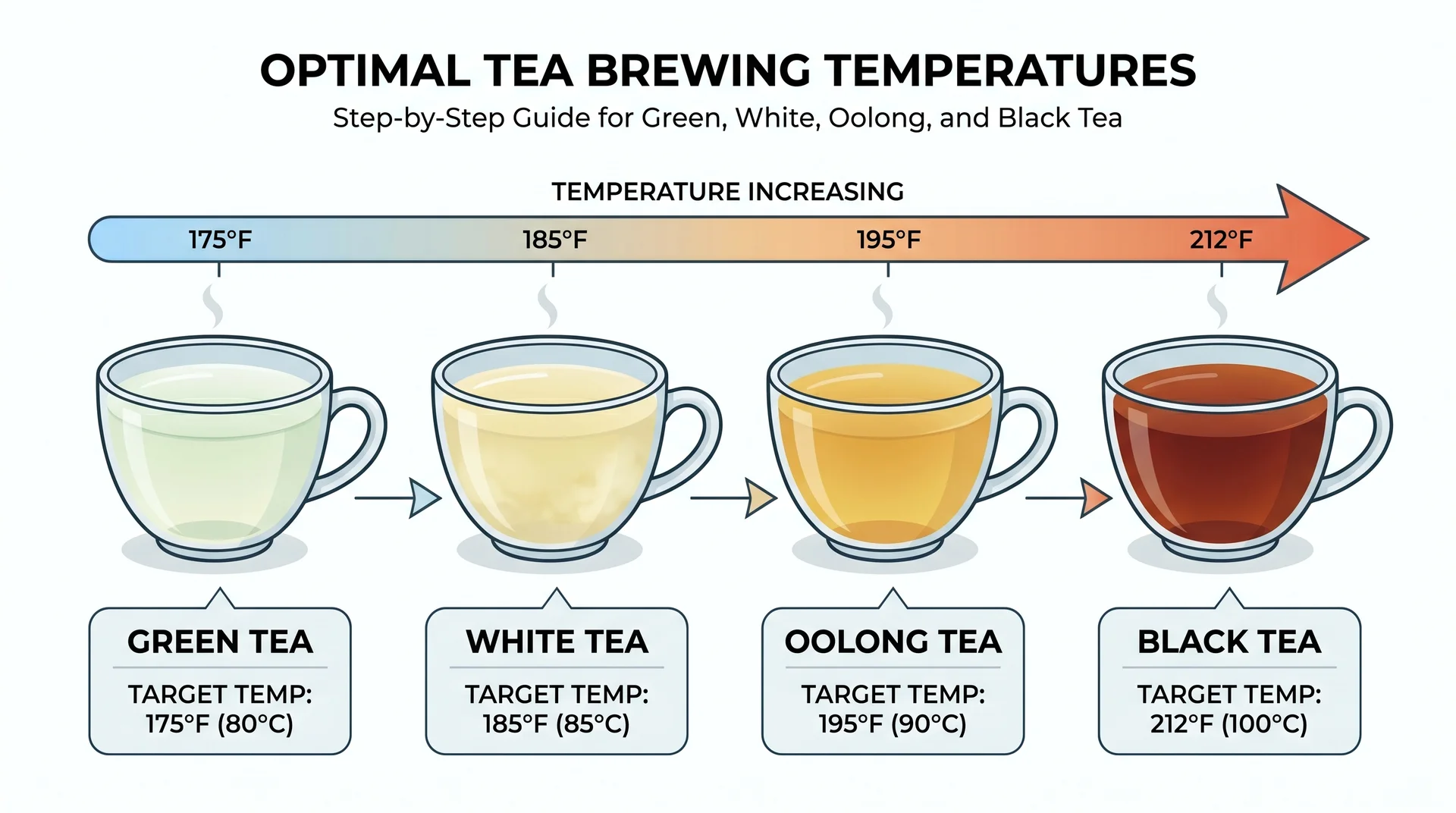
If your green tea tastes bitter, the kettle is almost certainly the reason, and a variable-temperature model is the specific fix.
Green tea should steep in water between 170°F and 185°F. Boiling water sits at 212°F. Pouring 212°F water over green tea leaves forces out excess tannins, and tannins are what taste bitter.
Tea sommelier Piotr Miga of Tea Forté has noted that temperature-preset electric kettles remove this problem entirely for green, white, and oolong teas. The fix is in the kettle. The bitter green tea problem is probably the most preventable bad-cup complaint in home kitchens, and few people trace it back to the kettle.
Target water temperatures by tea type:
- Green tea: 170–185°F
- White tea: 175–185°F
- Oolong tea: 185–205°F
- Black tea: 200–212°F
- Herbal and rooibos: 212°F (full boil)
The gap between where a standard kettle stops and where green tea needs to be steeped is the reason variable-temperature models exist. Temperature control doesn’t matter for black tea or herbal blends.
Both require near-boiling or boiling water, and any basic kettle handles them without issue.
If you’ve been fighting bitterness in green tea, check the kettle first. What matters here is whether your current kettle can reach the temperature your tea actually requires.
What a Teapot Does
A teapot is where the tea actually gets made.
The kettle delivers heated water at the right temperature. The teapot holds that water with the leaves long enough to extract the tea’s flavor.
Steeping, Not Heating
A teapot holds hot water and tea leaves together for steeping and delivers the finished tea to cups.
You place loose-leaf tea in the infuser basket inside the teapot. You pour pre-heated water from the kettle over the leaves. After the correct steeping time, you remove the infuser or pour the tea through a strainer.
The teapot receives already-heated water from your kettle, or from any other heat source you’ve used. It does not go on any heat source itself. That constraint has a specific explanation behind it.
Why a Teapot Can’t Go on the Stove
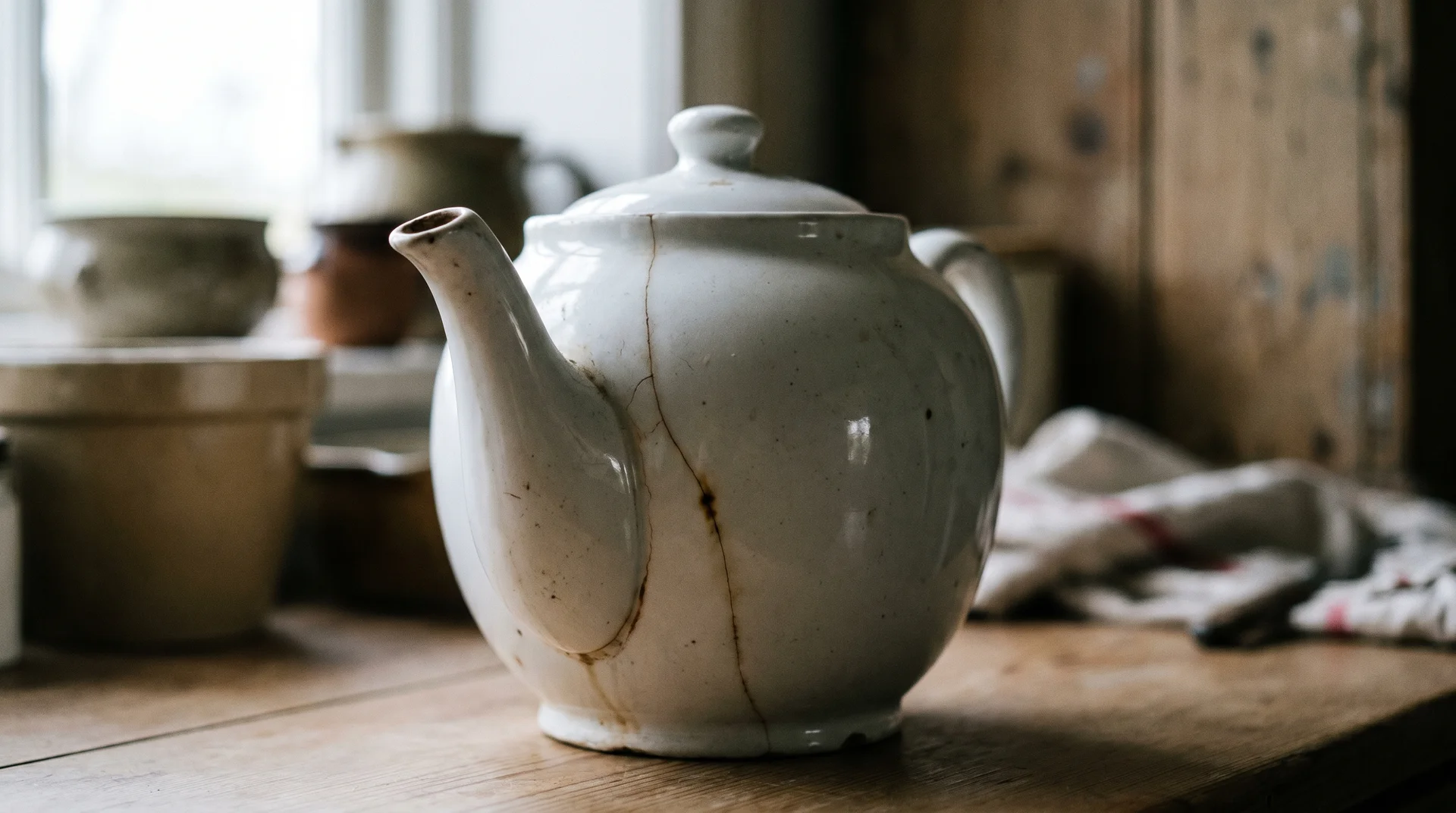
Most ceramic and porcelain teapots crack on direct heat because of thermal shock.
Thermal shock happens when a material heats unevenly or too quickly. Different parts of the teapot expand at different rates, and metal pots can handle that kind of stress. Ceramic and porcelain teapots cannot.
Decorative glaze worsens the problem. The glaze layer and the ceramic body underneath expand at different rates under heat. Direct heat forces that mismatch quickly, sometimes producing an immediate crack, sometimes a progressive failure over several exposures.
Two exceptions exist.
- Some cast-iron teapots are made for stovetop use and say so on the label.
- Some thick-walled stoneware also handles direct heat safely.
If your teapot lacks explicit stovetop labeling, keep it off the burner.
Materials and What They Actually Affect
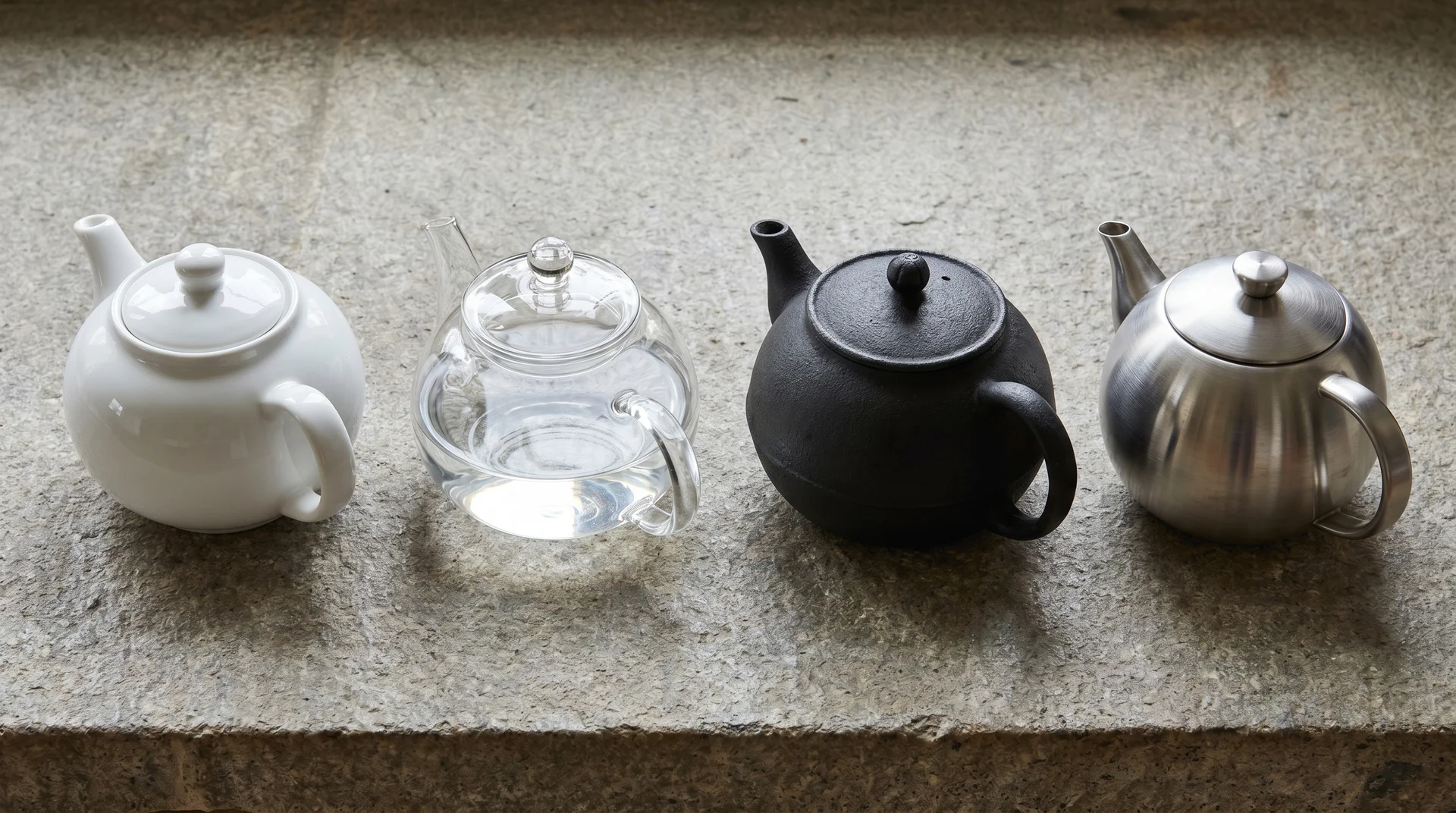
A teapot’s material is a functional decision because it changes how the tea holds its temperature and whether the vessel affects flavor.
Each material handles the steeping environment differently. The four you’ll most commonly encounter are ceramic, glass, cast iron, and stainless steel.
| Material | Heat Retention | Flavor Impact | Durability | Best Suited For |
|---|---|---|---|---|
| Ceramic / Porcelain | Moderate | Neutral | Fragile | Most teas, everyday use |
| Glass | Low | Neutral | Fragile | Flowering teas: visual steeping |
| Cast Iron | Very High | Seasons over time (pleasant in most cases) | Very Durable | Long steeping sessions; black tea |
| Stainless Steel | Moderate | Can transfer with delicate teas | Very Durable | Daily use: black or herbal tea |
Cast-iron teapots hold heat better than anything else on that list. I do own several, and the care requirements are more demanding than most articles admit.
Rust prevention is real, and a neglected cast-iron pot picks up off-flavors that don’t correct themselves.
For a first teapot, glazed ceramic is the right starting material. It’s flavor-neutral, easy to find, and the steeping results are consistent. Traditional Chinese Gong Fu brewing uses vessel types specific to that practice, and those methods deserve their own treatment.
Do You Need Both a Kettle and a Teapot?
Most sources say you need both.
That framing skips the more useful question, which is: which tool solves the problem you actually have right now? Start there.
Start with the Kettle
Buy the kettle first. The kettle is the non-negotiable first purchase because making tea requires hot water, and there is no real substitute for it.
You can make tea without a teapot. A tea bag in a mug works, a single-cup infuser works, and a pour-over strainer works. None of those methods is wrong, though they’re limited for loose-leaf brewing or multi-cup service.
You cannot make tea without a way to heat water. That’s why the kettle comes first, and why the teapot is optional in a way the kettle is not.
If you drink green, white, or oolong tea, get one with variable temperature control. That single decision has more impact on your daily results than any teapot purchase will.
When a Teapot Is Worth Adding
A teapot earns its counter space when at least one specific condition applies to how you actually drink tea.
Before buying one, ask yourself whether any of these are true:
- You drink loose-leaf tea regularly. An infuser basket inside a teapot steeps more consistently across a full pot of water than a small single-cup infuser can manage in a mug.
- You make tea for more than one person. A teapot’s capacity and pour spout are designed for multi-cup service. A mug is not.
- The process matters to you. If you find value in the deliberate act of making tea, a teapot gives that act a structure that a kettle-and-mug routine doesn’t.
If none of those conditions describe you, the kettle is a complete setup. Buying a teapot because you feel you should own one is how people end up with a teapot they use twice a year.
The Hybrid: Electric Kettles with Infusers
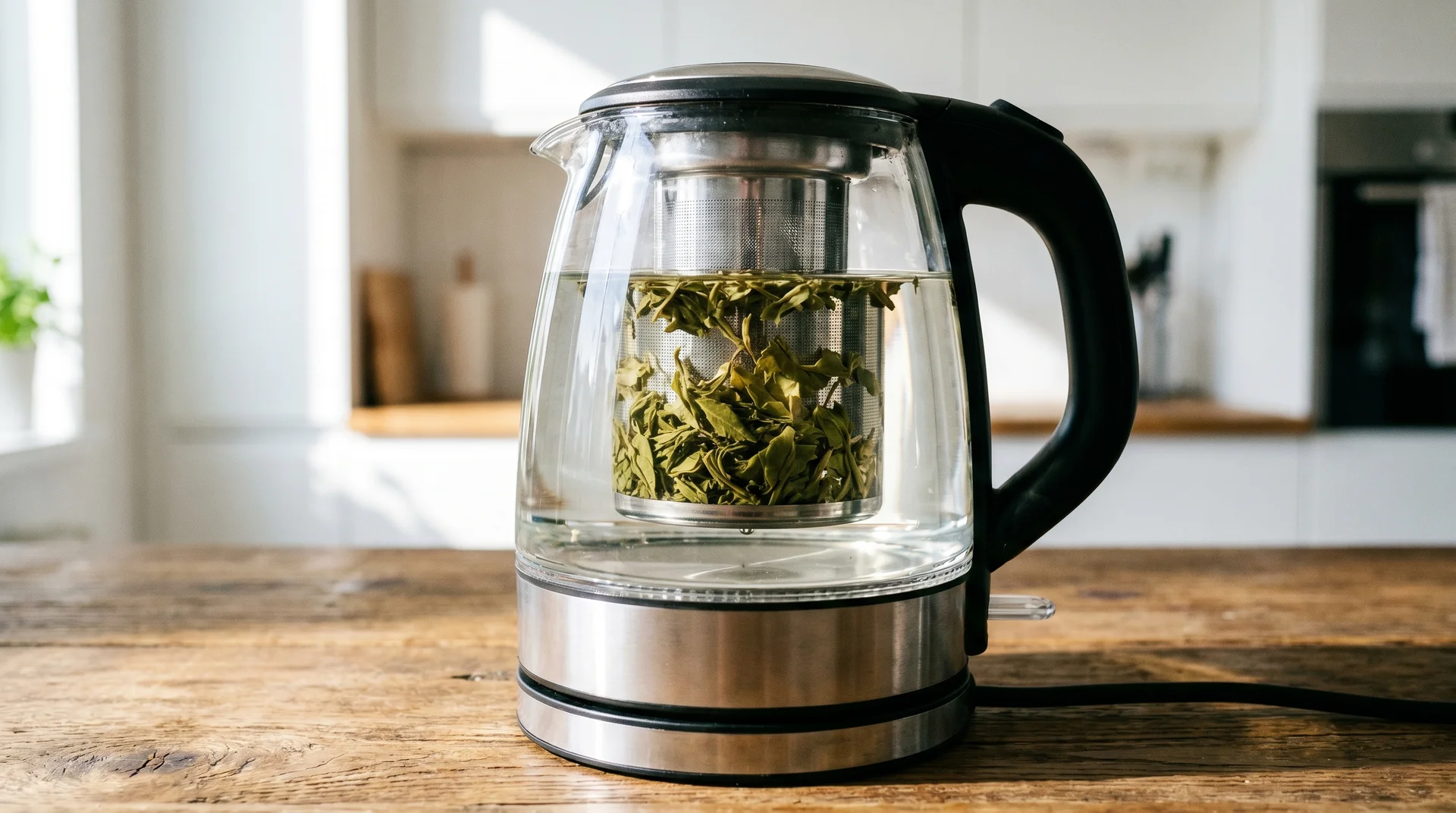
One product category merges both jobs into a single vessel, with a real trade-off.
An electric kettle with a built-in infuser includes a removable stainless steel basket inside the kettle body. The idea is that you heat the water and steep the tea leaves in the same vessel, without a separate teapot required.
The issue is sequence, and sequence matters more for some teas than for others.
When tea leaves are inside the kettle as the water heats, steeping begins before you hit your target temperature. That means you lose the clean separation between heating and steeping. For green or white tea, that gap matters considerably; for black tea and herbal blends, less so.
I tested one of these units in my own kitchen, not in a controlled environment, and I wouldn’t call the results a conclusion yet. The outcome varied by model. Adding leaves after the water reached the target temperature produced better results.
Two variables determine how well a hybrid kettle performs: temperature control and when you add the leaves.
Whether this category works for you genuinely depends on your water hardness, how regularly you descale, and which specific model you’re using. I can’t give a single answer here.
For green or white tea drinkers who care about bitterness, the hybrid category is a workable compromise at best.
Using Kettle & Teapot Together
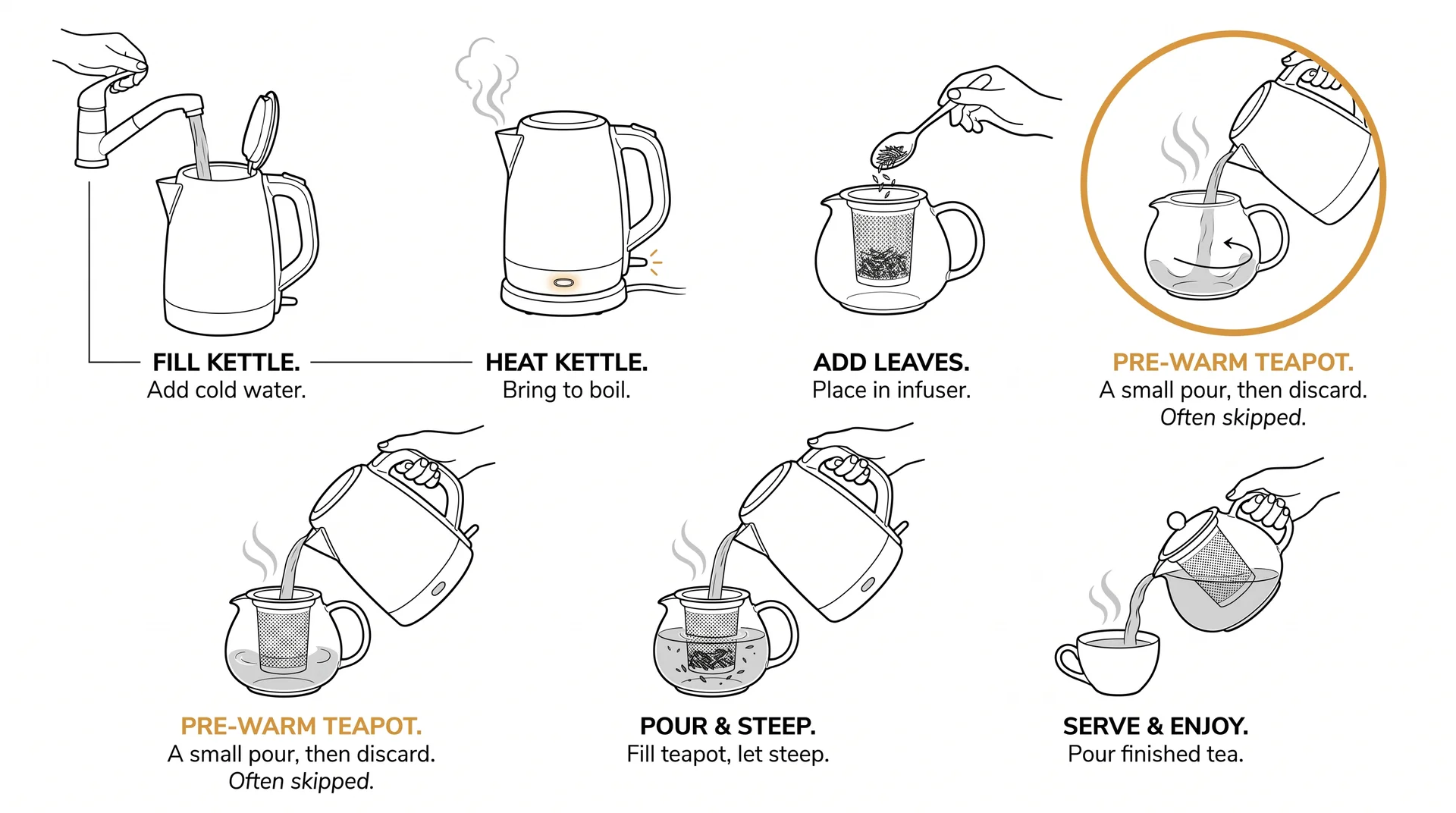
When you own a kettle and a teapot, the full process is straightforward.
Here is the step-by-step sequence that gets the best results from both tools:
- Fill the kettle with fresh cold water for the volume of tea you’re making.
- Heat the water to the target temperature for your tea type. (The temperature list in the kettle section above applies here.)
- While the water heats, place your tea leaves in the teapot’s infuser or strainer basket.
- Warm the teapot first: pour a small amount of the heated water into the teapot, swirl it around, and discard it.
- Pour the heated water from the kettle into the teapot over the leaves.
- Steep for the time your tea requires, then remove the infuser or pour through a strainer into cups.
Most people skip step 4. A cold ceramic teapot absorbs heat fast, dropping your steeping temperature before the leaves start. Thirty seconds of pre-warming pays back in the cup.
Kettle vs. Teapot: Side by Side
The two tools have different jobs, different heat sources, and only one is required.
| Kettle | Teapot | |
|---|---|---|
| Primary function | Heats water to brewing temperature | Steep the tea in pre-heated water |
| Heat source | Stove or electric base | None; receives pre-heated water only |
| Temperature control | Available on variable-temp electric models | None |
| Infuser included | Rarely (except hybrid models) | Often included or available separately |
| Common materials | Stainless steel, glass, copper | Ceramic, glass, cast iron, stainless steel |
| Required for making tea | Yes | No, most useful for loose-leaf and volume |
The Bottom Line
The kettle is the first purchase because it solves the problem that has no workaround.
Start with a good kettle. If you drink green, white, or oolong tea, get one with variable temperature control. Bitterness in those teas traces back to overheated water, and the kettle is the fix.
The teapot question resolves itself once you’ve handled the kettle question.
Add a teapot when loose-leaf brewing, volume, or the deliberate process of making tea gives you a real reason for it. Two tools, two jobs, one buying decision at a time.