A sharp knife falls through a tomato. When it doesn’t, the edge is dull.
Why it dulled faster than expected often comes down to blade angle. Most home cooks have never stopped to think about what the angle number on a spec sheet is actually measuring.
You need enough to maintain what your knife already has, and to recognize when changing the angle makes sense.
The Numbers on the Box Are Per Side, Not Total
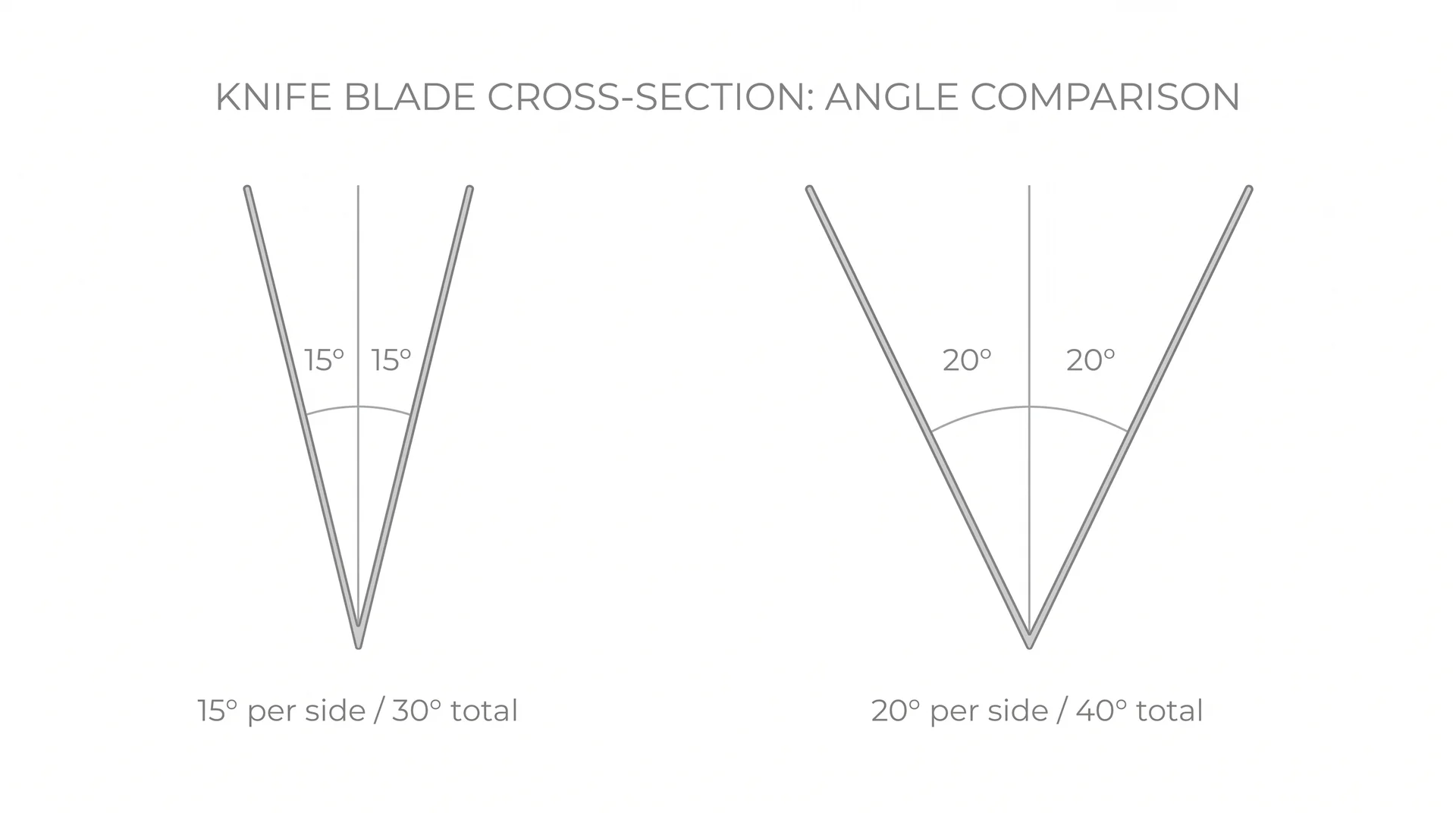
Blade angle creates the V-shape of the cutting edge.
The number of manufacturers listed is per side, not the total angle of the V. A knife described as “15 degrees” has 15° ground on each side of the blade, for a total included angle of 30°. A “20-degree” knife has 40° total.
Double Bevel and Single Bevel
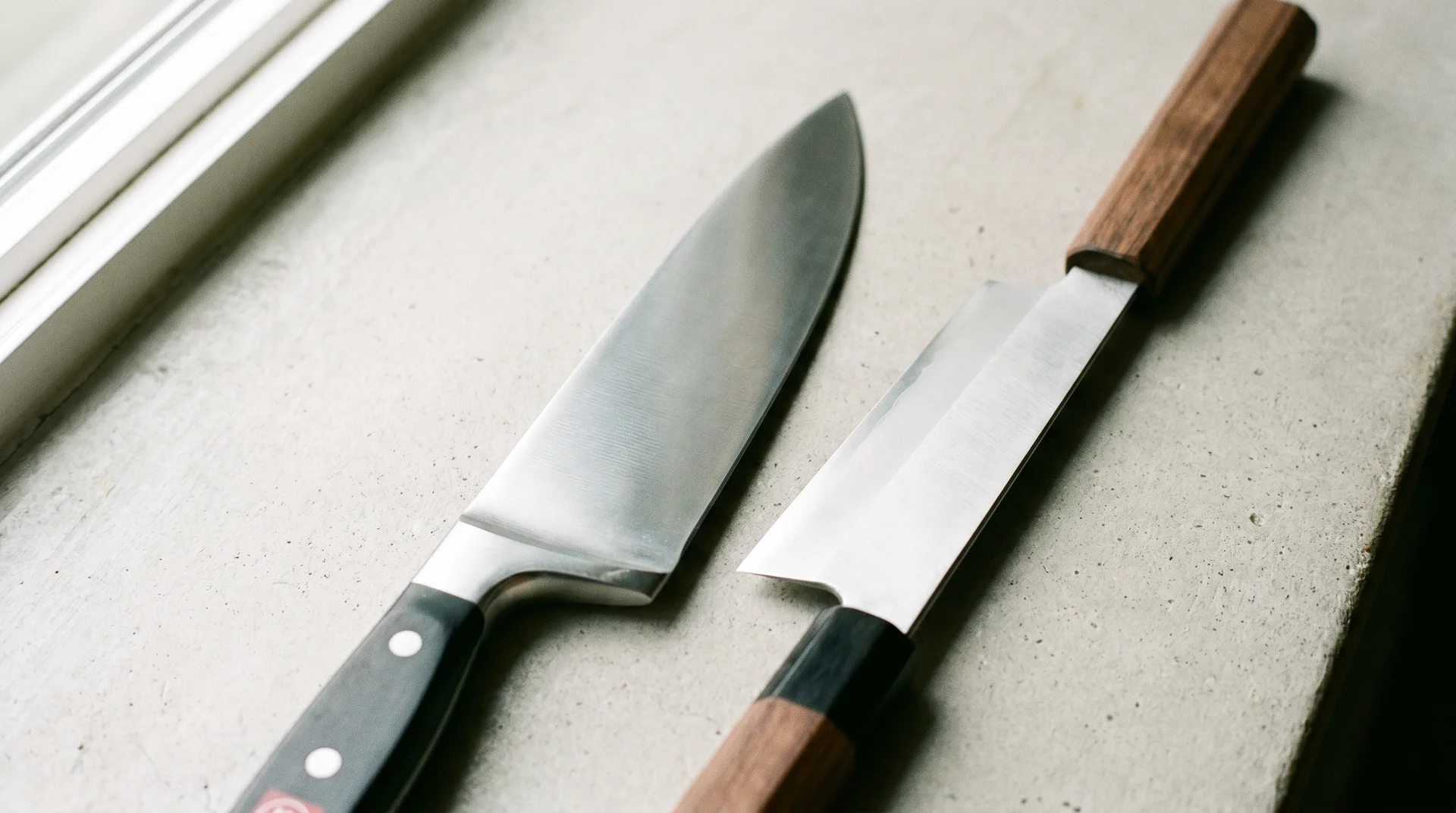
Most kitchen knives are double bevel, ground on both sides to form a V-shaped cutting edge. A bevel is the ground face on each side of the blade. When a knife passes through food, the full V angle determines how easily it moves through.
Single-bevel knives are ground on one side only. They’re specialist tools, mostly from traditional Japanese cutlery, and they follow entirely different sharpening rules. I’ll address them in their own section.
What 15° and 20° Knife Blade Angle Feel Like on the Board
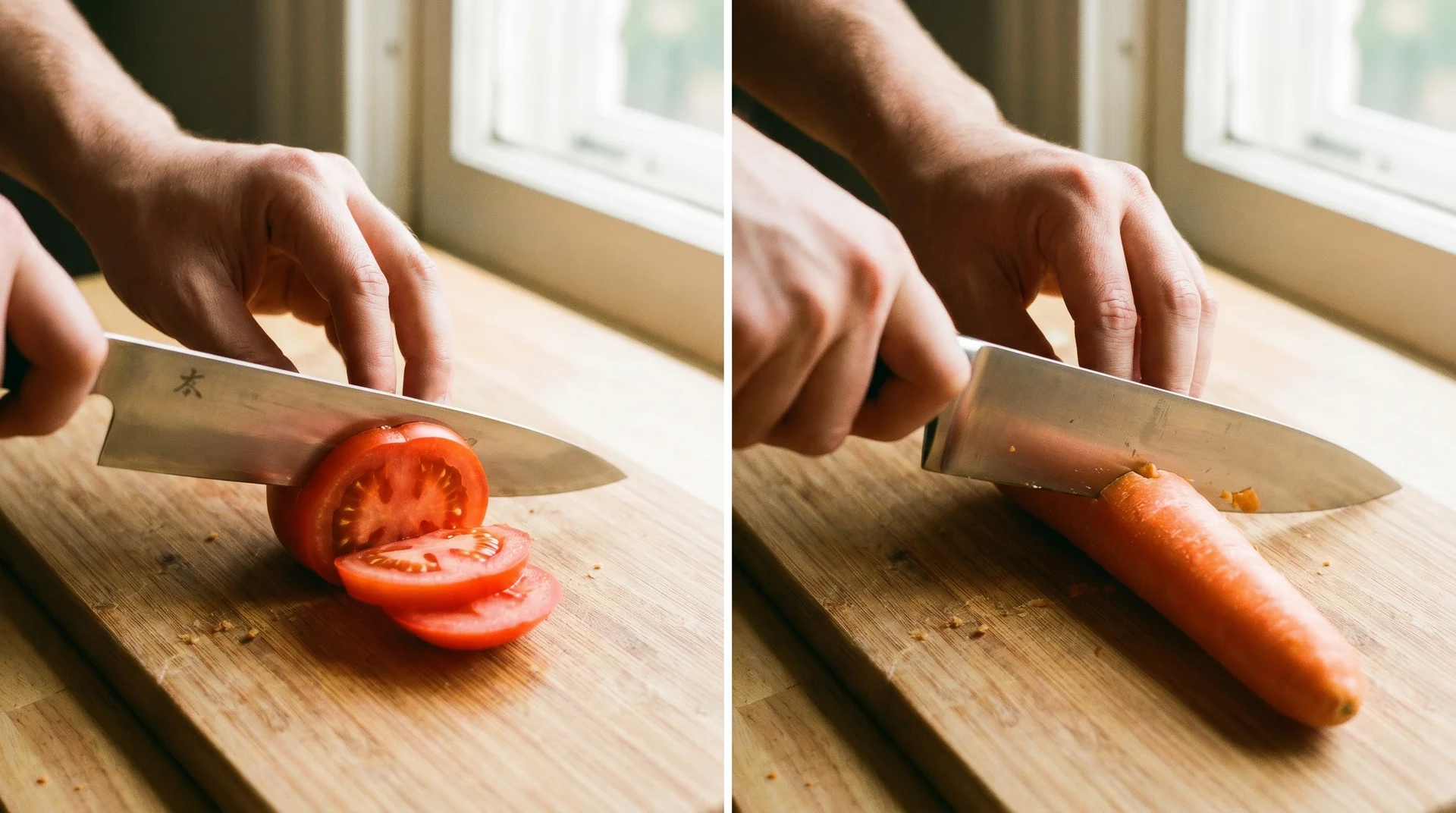
Most people treat 15° as better and 20° as settling for less.
These are the two most common blade angles on factory kitchen knives. I’ve sharpened both in my own kitchen, not in lab conditions, and the performance gap in daily cooking is smaller than most cooks expect. The trade-off is functional.
The 15° Edge
A 15° edge is thinner behind the cutting edge, and that thinness produces the sharper feel. Less metal sits between the food and the edge. On a ripe tomato, a soft aged cheese, or long, thin cucumber slices, the blade falls through rather than wedges.
For precision work, the advantage is genuine and easy to feel. The trade-off is stability: a thinner edge chips more readily on hard contact and rolls sooner when the underlying steel can’t hold the geometry.
The 20° Edge
A 20° edge gives up some slicing ease for more durability under everyday kitchen use. More steel sits behind the cutting edge. That extra mass means the edge holds up better under harder board contact and less careful maintenance.
For everyday cooking with casual maintenance, a 20° knife is more forgiving and doesn’t wear down as fast. For regular chopping and prep, most people wouldn’t notice a real difference between a sharp 15° and a sharp 20°. The gap shows up in precision work, where the wider edge wedges more noticeably.
Kitchen Knife Blade Angle by Knife Type
Factory angles vary by knife style and place of origin.
I use these as starting points when someone doesn’t know their knife’s angle. They reflect what ships from the factory, not theoretical ideals.
| Knife Type | Typical Angle (Per Side) |
|---|---|
| German-style chef’s knife (Wüsthof, Zwilling) | 20° |
| Japanese-style chef’s knife / gyuto | 15–17° |
| Santoku | 15–17° |
| Nakiri | 15–17° |
| Paring knife (Western) | 17–20° |
| Paring knife (Japanese) | 15–17° |
| Boning knife | 17–20° |
| Fillet knife | 12–17° |
| Slicer/carving knife | 15–17° |
| Bread knife | 20° |
| Cleaver | 25–30° |
These are starting points.
Victorinox moved several Western-style knives to 15° in recent years, and some European brands now ship thinner blade lines at 15–17°.
For the exact angle on your knife, check the manufacturer’s product page.
Once you know the angle, the steel section below explains why it was chosen.
Steel Hardness Sets the Floor for Blade Angle
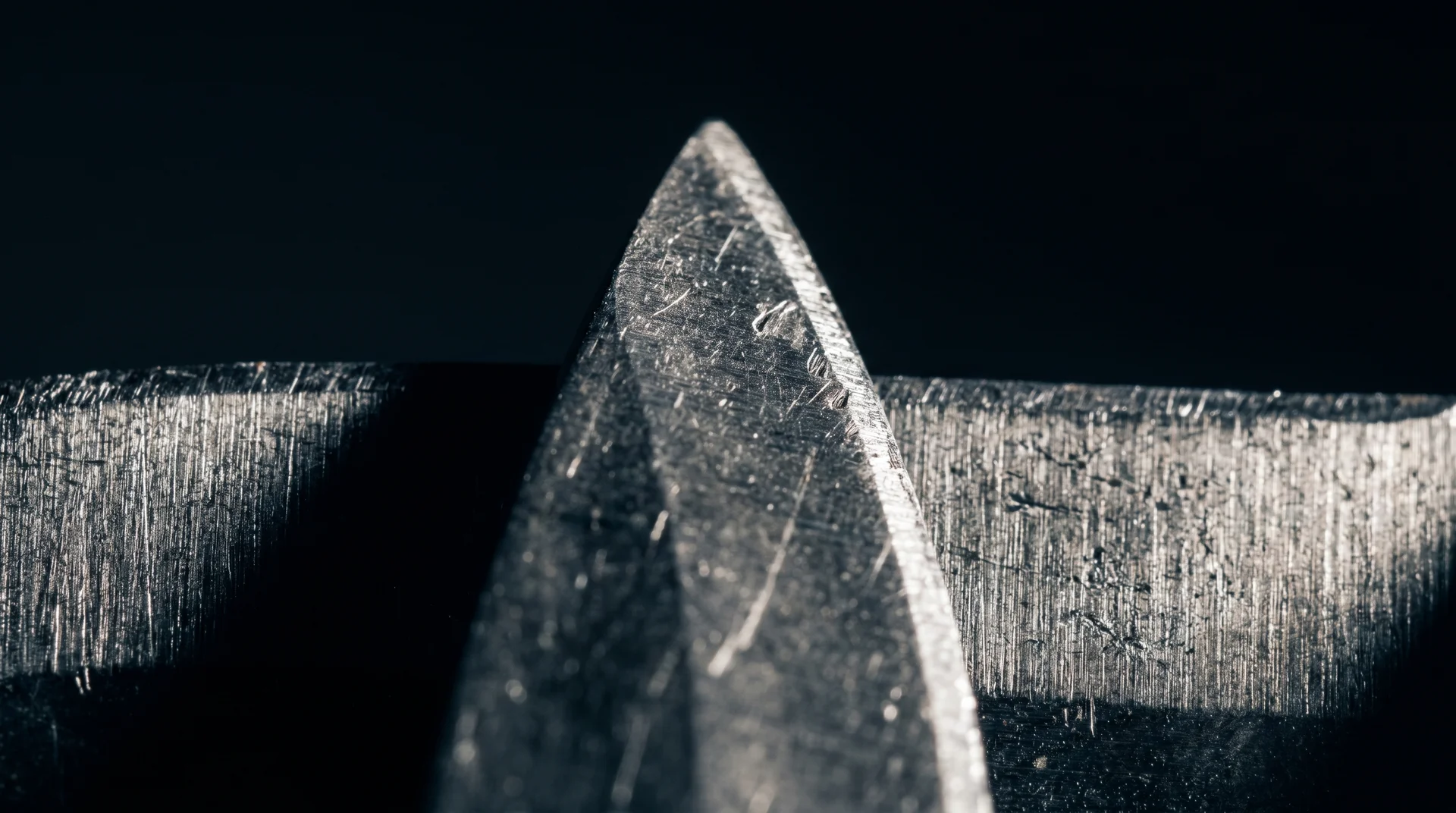
The angle you choose means nothing if your steel can’t support it.
Blade angle and steel hardness are a package decision. Japanese knives typically use harder steel, often 60-plus on the Rockwell Hardness scale (HRC). German-style knives run softer, typically 56–59 HRC. That difference is what makes different angles workable for each type in real kitchen use.
| Knife Style | Typical HRC | Typical Factory Angle |
|---|---|---|
| German-style (Wüsthof, Zwilling, Henckels) | 56–59 | 20° per side |
| Japanese-style (Shun, Miyabi, MAC) | 60–64+ | 15–17° per side |
Harder steel holds a thinner edge without rolling over under normal use. That’s what makes 15° workable on a Shun or a Miyabi.
Softer steel can’t hold the same geometry: it rolls rather than stays crisp, and the wider 20° angle makes up for it by putting more steel behind the edge.
Grinding a German chef’s knife to 15° doesn’t give you a Japanese-style cutting experience. The steel can’t hold that geometry under kitchen use.
I keep this in mind whenever someone tells me their German knife never matches their Japanese one: the answer is almost always the steel’s supported angle range.
Single Bevel Knives: A Different Case Entirely
Single-bevel knives follow completely different rules from everything above.
Traditional Japanese knives built for professional use are typically single-bevel. Common examples include:
- Yanagiba: a thin slicer for raw fish and sashimi
- Deba: thick, heavy blade for fish butchery
- Usuba: thin rectangular blade for precise vegetable prep
One side of these knives is ground as low as 5–8°, and the other side is flat or near-flat. These aren’t general kitchen knives, and they aren’t a starting point for home cooks.
Sharpening a single bevel knife is a specialist skill. How to do it is a different article, and it needs different tools and techniques from anything covered here. If you own one, the care instructions that came with it are the right starting point.
How to Find Your Kitchen Knife’s Blade Angle
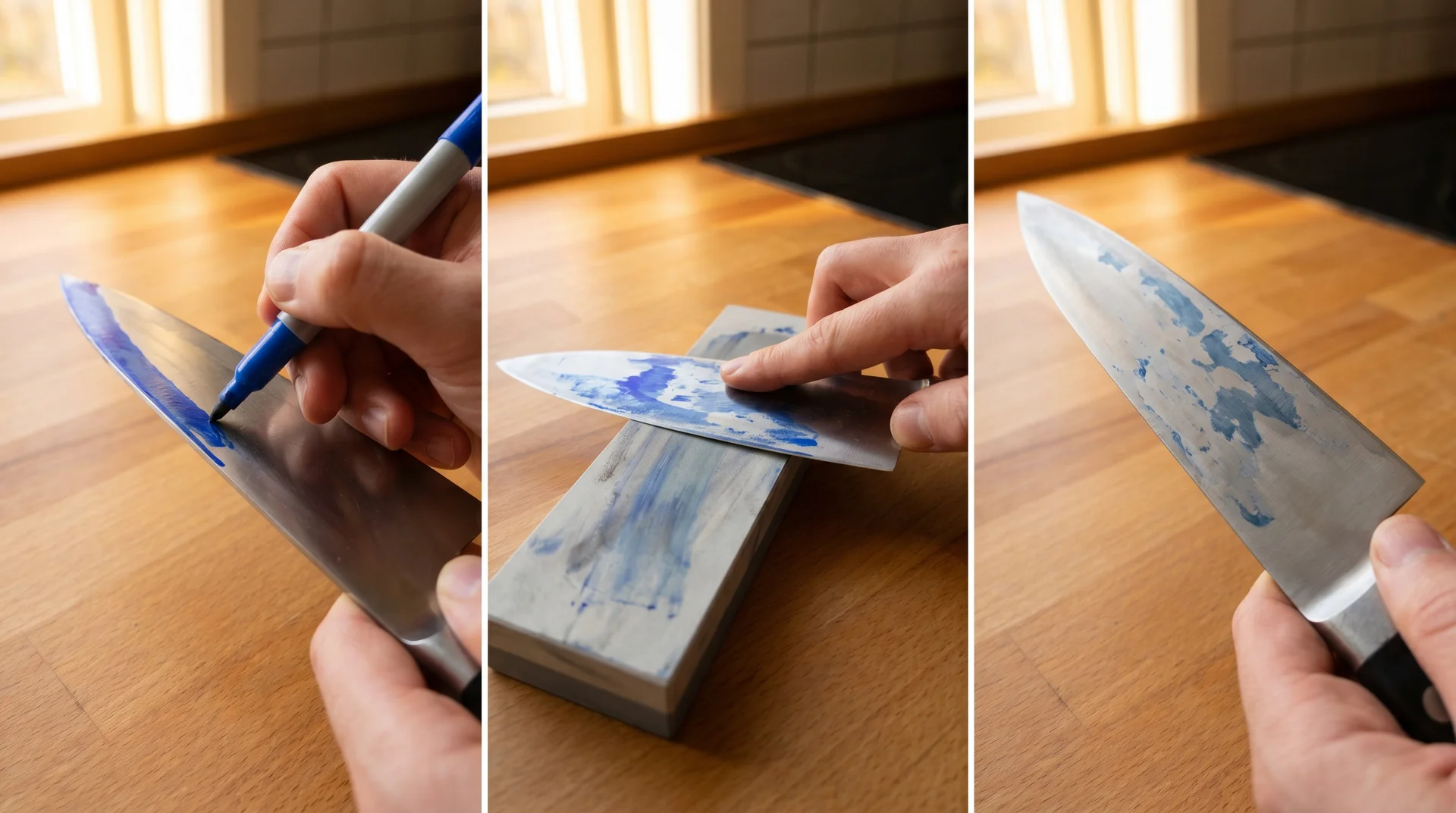
The Sharpie method finds your knife’s existing blade angle without any tools.
Before you sharpen, knowing what you’re matching saves you from removing steel you don’t need to remove. Here’s how it goes:
- Color the full bevel face on both sides of the blade with a permanent marker
- Make two or three light passes on your sharpening stone at the angle you think is correct
- Examine the ink marks
Here’s how to read what you see:
- Ink removed evenly across the full bevel width: you’ve matched the existing angle
- Ink only removed near the cutting edge: your angle is set too high, and you’re only hitting the edge itself
- Ink only removed near the spine: your angle is set too low, and you’re only hitting the shoulder
Adjust and recheck until the ink comes off cleanly across the entire bevel. That’s your knife’s angle.
If you’d rather skip the stone work, look up the factory spec. Wüsthof, Shun, Victorinox, MAC, and Global all publish factory angles in their product documentation. A search for your knife model plus “sharpening angle” usually returns it in under a minute.
Should You Change the Factory Angle?
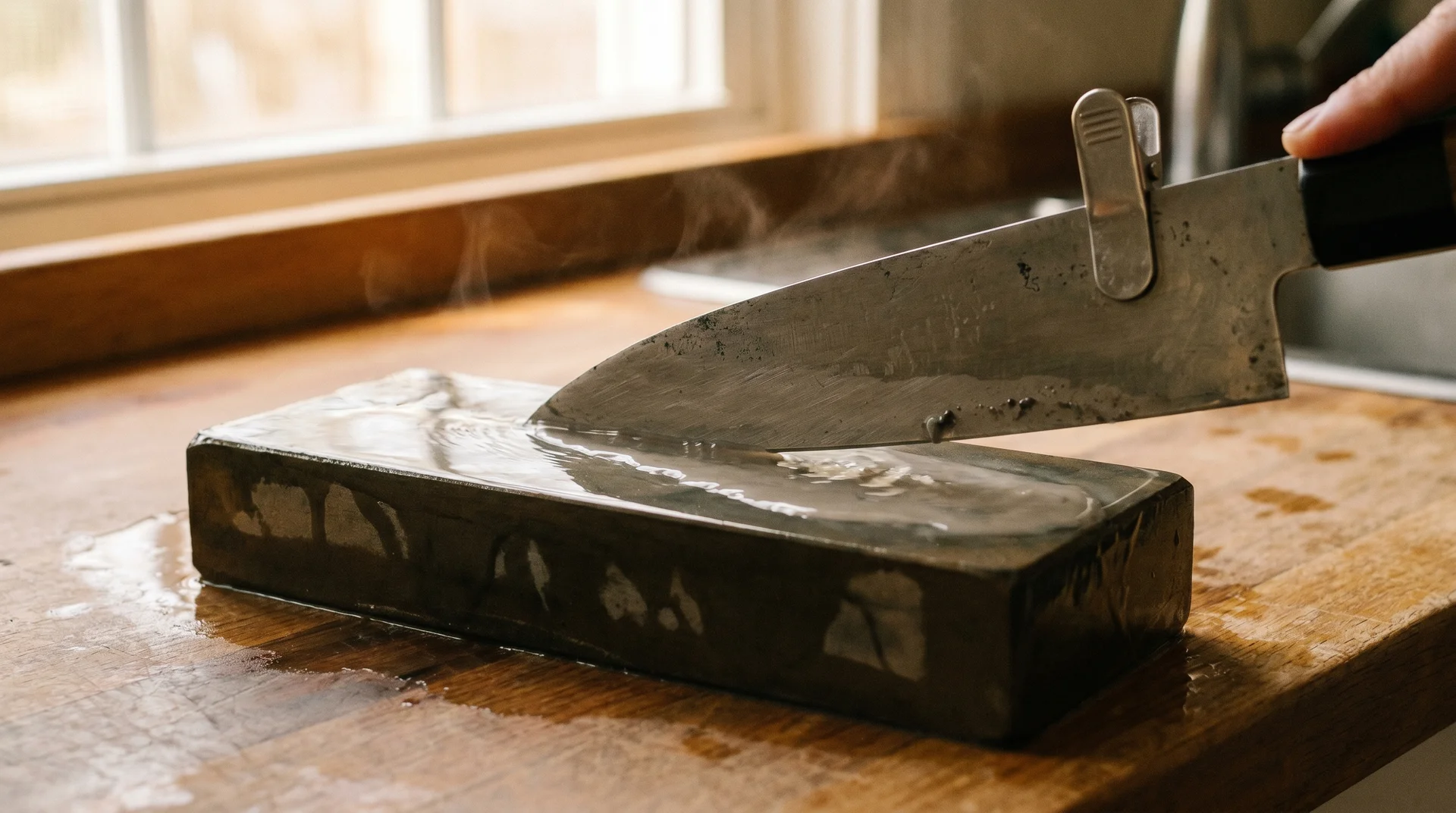
For most home cooks, the answer is no.
The factory angle was chosen for the knife’s steel and its intended use. Matching it when you sharpen is almost always the right call. Chasing a lower number because it sounds more precise isn’t worth the steel you’ll grind away.
Cases where a change makes sense:
- Going finer (e.g., 20° to 15°): Only worth it if the steel is hard enough to hold the thinner edge, and you’re prepared to sharpen more frequently. On softer German-style steel, this almost always fails.
- Your current geometry is uneven: If the edge has been inconsistently sharpened for years, a slightly wider angle rebuilds stability as you get consistency back.
- Starting over on a neglected knife: Set the angle you want and maintain it from that point forward. Reprofiling removes more steel than most people expect. Have a real reason before you start.
- Micro-bevel for hard steel: If your steel supports 15° but the edge rolls near the cutting board, sharpen the main bevel at 15° then make two or three final strokes at 17–18°. The small secondary edge adds durability without sacrificing much of the sharpness gain.
Consistency of angle during sharpening matters more than which angle you pick. A 20° knife sharpened at the same angle every session will outperform a 15° knife that drifts during each stroke. That’s the real skill.
I genuinely can’t give a clean HRC number for when softer steel fails to hold a finer angle. It varies by composition, heat treatment, and how the knife is used. In my experience, angle consistency is what determines whether your knife falls through a tomato or doesn’t.
The Short Version
Blade angle is per side.
A 15° knife has a 30° total included angle. A 20° knife has 40° total. The number on the box is always the per-side measurement.
| Angle | Cutting Feel | Best For |
|---|---|---|
| 15° per side | Sharper, falls through food more easily | Japanese knives, precision slicing, and regular sharpeners |
| 20° per side | Slightly more resistance, holds up longer | German-style knives, everyday cooking, casual maintenance |
Match the factory angle when sharpening. Use the Sharpie method to find it if you’re not sure what it is.
Don’t regrind without a concrete reason. The angle your knife shipped with was chosen deliberately for its steel. Your job is to maintain it.