

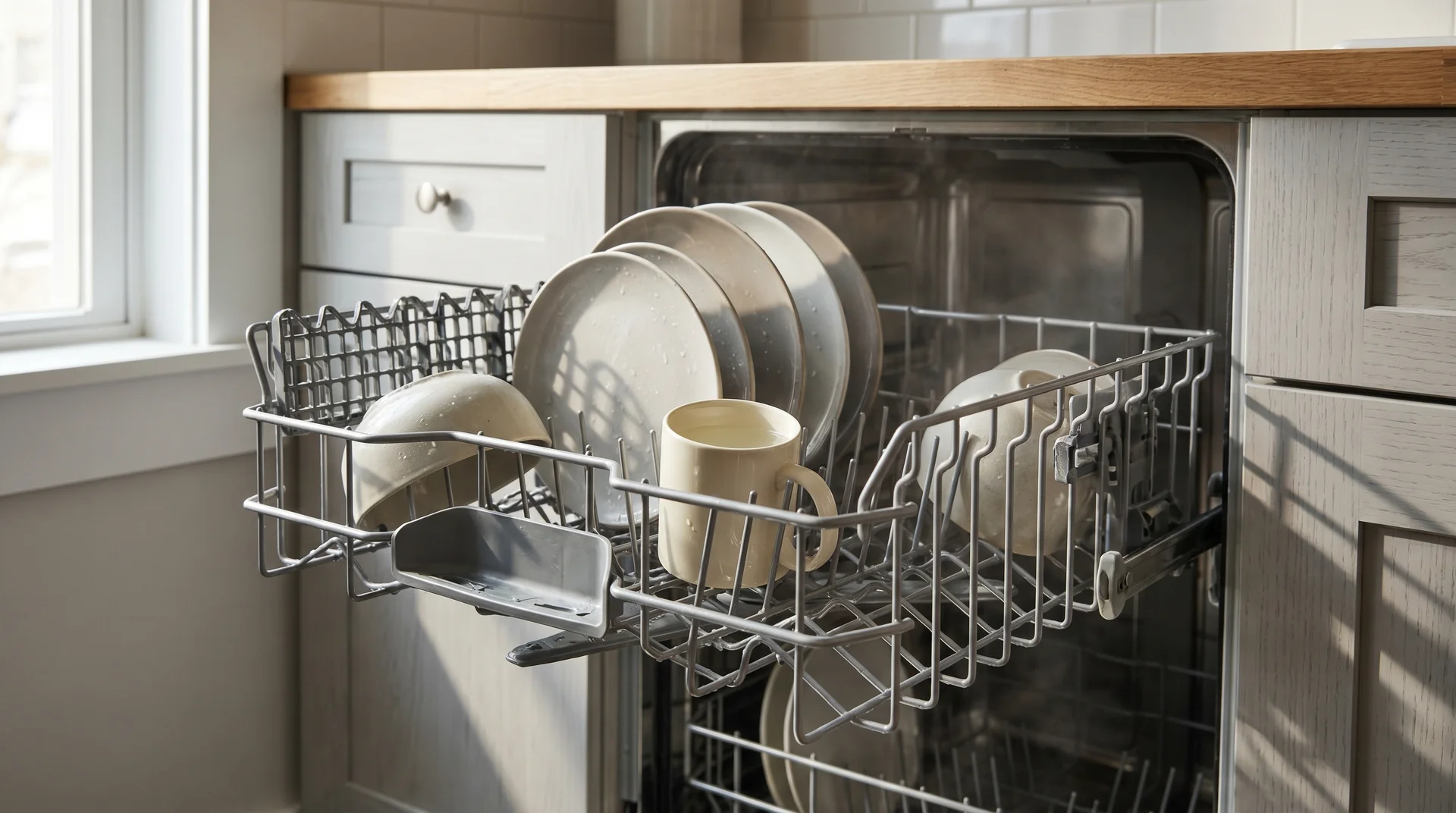
A natural rinse aid for your dishwasher does one of two things.
- It dissolves the mineral deposits that hard water leaves on glass.
- Or it reduces surface tension so water sheets off dishes instead of beading into spots.
Most natural options handle only one of those functions well, and which one you need depends on your water type and the specific failure you’re trying to fix.
This article explains how each option works, when to use it, and where the DIY approach runs into a limit it genuinely cannot get past.
What Rinse Aid Actually Does
The Surface Tension Function
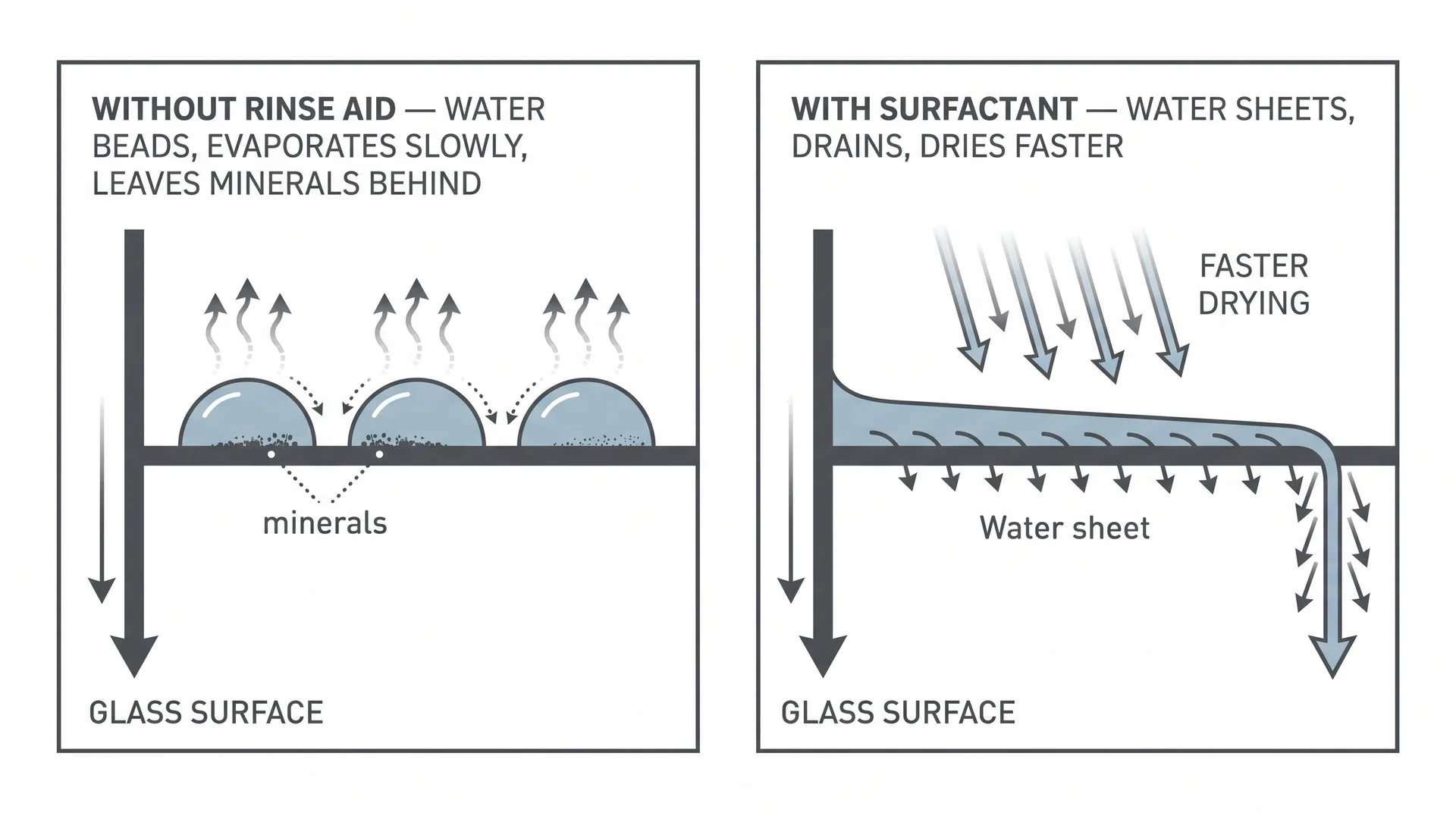
Rinse aid lowers the surface tension of water, causing water to sheet off dishes rather than bead on them.
Water beads naturally on surfaces. That’s surface tension at work. A surfactant is a compound that breaks that tendency. It causes water to spread out into a thin layer. That layer drains away instead of forming droplets that sit and evaporate slowly.
When water sheets off instead of beading, dishes dry faster. Less mineral residue gets left behind. The improvement in drying is a direct result of the surfactant function, not any cleaning action.
Vinegar and citric acid are acids, not surfactants. They don’t perform this function at all.
People try vinegar, see partial improvement on spots, and then spend months adjusting concentrations trying to fix the drying problem the same way.
The Mineral Chelation Function
Rinse aid also removes calcium and magnesium deposits, the minerals hard water leaves behind as it evaporates off your glass.
Those deposits form the cloudy film or white spots you see on glassware after a dishwasher cycle. They come from the water, not the detergent.
Acids dissolve these deposits. This is the spot-removal function. It is not the drying function.
I find this distinction matters more in practice than any product recommendation that follows it. Keeping those two outcomes separate is the most useful thing this section gives you before you choose an approach.
Understanding what you’re working with also matters for the next question: what is in conventional rinse aid, and is that worth worrying about?
Why the Ingredients in Commercial Rinse Aid Are Worth Questioning
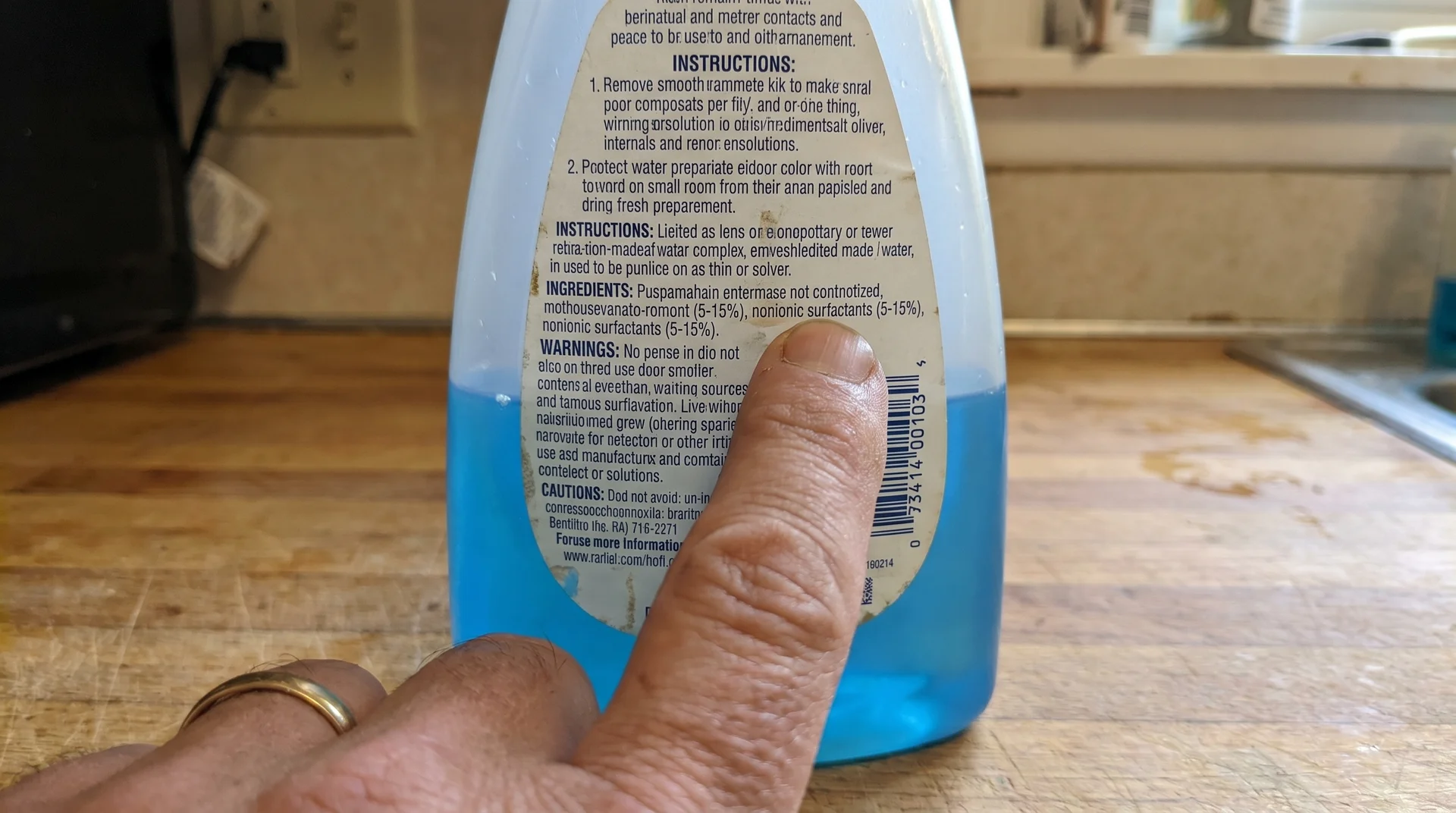
The main concern with conventional rinse aids centers on one specific ingredient type.
Research published in December 2022 identified a concern about a class of synthetic surfactants called alcohol ethoxylates. They appear in many commercial rinse aids.
The study found they can disrupt the protective lining of the intestine. That finding is worth understanding precisely. The way most coverage handled it, either with significant alarm or flat dismissal, left most people with an imprecise picture of what the actual risk is.
What the 2022 Study Found
Ogulur and colleagues at the Swiss Institute of Allergy and Asthma Research identified alcohol ethoxylates as the specific compound causing the damage, publishing their findings in the Journal of Allergy and Clinical Immunology.
In laboratory conditions, alcohol ethoxylates disrupted the gut’s epithelial barrier. The epithelial barrier is the protective cell layer lining your intestine. It controls what your body absorbs from food. Other research links damage to this layer to increased risk of inflammatory and chronic disease over time.
Here is the part that most coverage of this study doesn’t address. The concentrations tested came from commercial and institutional dishwashers, not home machines. Commercial machines run shorter cycles at higher water pressure. They also deliver rinse aid in higher volumes than a home dishwasher does.
The residential finding in that study is secondary and less severe than the commercial finding.
That doesn’t make the concern irrelevant to home use. It means the level of concern is not equivalent across both contexts. Applying the commercial concentration data to home machines without that qualifier leads to imprecise conclusions. The result is either an unnecessary alarm or an unwarranted dismissal.
I read the full study, not a press release. Imprecision in either direction isn’t useful here. The practical response is to know which ingredient is the concern and find formulations that don’t contain it.
How to Read a Rinse Aid Label
The label on your rinse aid bottle tells you what the manufacturer chooses to disclose. It does not give you a complete picture.
My father inspected commercial kitchens in Baltimore for thirty years. Dinner conversation in our house was about what gets restaurants shut down, described factually from his day. He thinks rinse aid safety is a simple question. Just use what the manufacturer recommends, he says. The label says it’s been tested.
He is not entirely wrong. He is also not entirely right.
The gap between those two positions is what this section covers.
“Plant-derived” on a label is a marketing descriptor. That is not a regulatory category.
A product can use that phrase and still contain alcohol ethoxylates in the ingredient list. Front-panel language and the actual formulation are two different conversations.
The EPA Safer Choice program is a more reliable reference point than label copy. The program evaluates ingredients for environmental safety and sensitization risk at the ingredient level, and it doesn’t always communicate the same things about the mentioned on the label.
In a natural rinse aid formulation, here are the ingredients worth looking for, and one category to avoid:
- Decyl glucoside: a plant-derived surfactant from sugar that reduces surface tension effectively and is stable in rinse aid dispenser concentrations
- Lauryl glucoside: same family and function, with a slightly different carbon chain length that makes it effective at lower concentrations
- Citric acid: adds mineral chelation to the surfactant action when combined with either glucoside above
The ingredient to avoid is alcohol ethoxylates. That is the specific compound the 2022 study identified as the mechanism behind the gut barrier disruption finding.
Vinegar as a Natural Rinse Aid: What It Does and Doesn’t Do
White vinegar removes mineral deposits. It does not improve drying.
Understanding that distinction answers most of the confusion around using vinegar in a dishwasher. The two problems require different tools, and vinegar is only one of them.
Why Vinegar Works on Spots
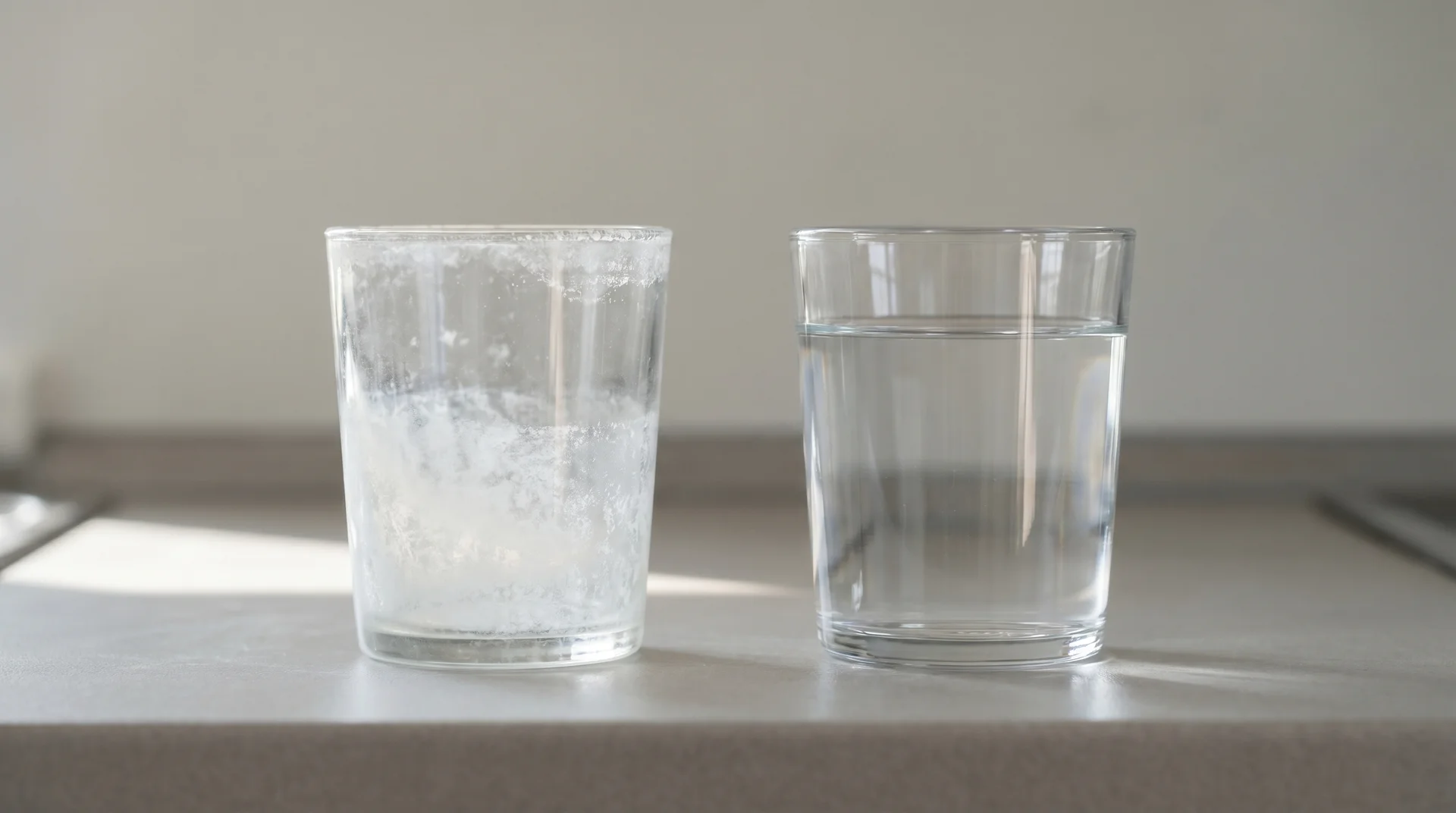
White distilled vinegar dissolves calcium and magnesium deposits because acetic acid breaks down mineral structures on contact.
White distilled vinegar has a pH between 2.4 and 3.5, depending on the brand. That’s acidic enough to dissolve most hard water deposits during a wash cycle.
When acetic acid contacts a mineral deposit, it breaks the mineral structure apart. The dissolved minerals rinse away with the water.
This is why results look good initially. Existing deposits come off. Glasses look clear after the first few loads.
Then the results degrade. This is the part most articles don’t explain.
Vinegar removes deposits that already exist. It doesn’t prevent new ones from forming in the next cycle. Without a surfactant, water still beads in the next cycle.
Mineral deposits again as that beaded water evaporates.
The “worked then stopped” pattern is expected. It is not a failure of technique or vinegar quality. It is what happens when you remove existing deposits without addressing why new ones keep forming.
What Vinegar Doesn’t Do for Drying
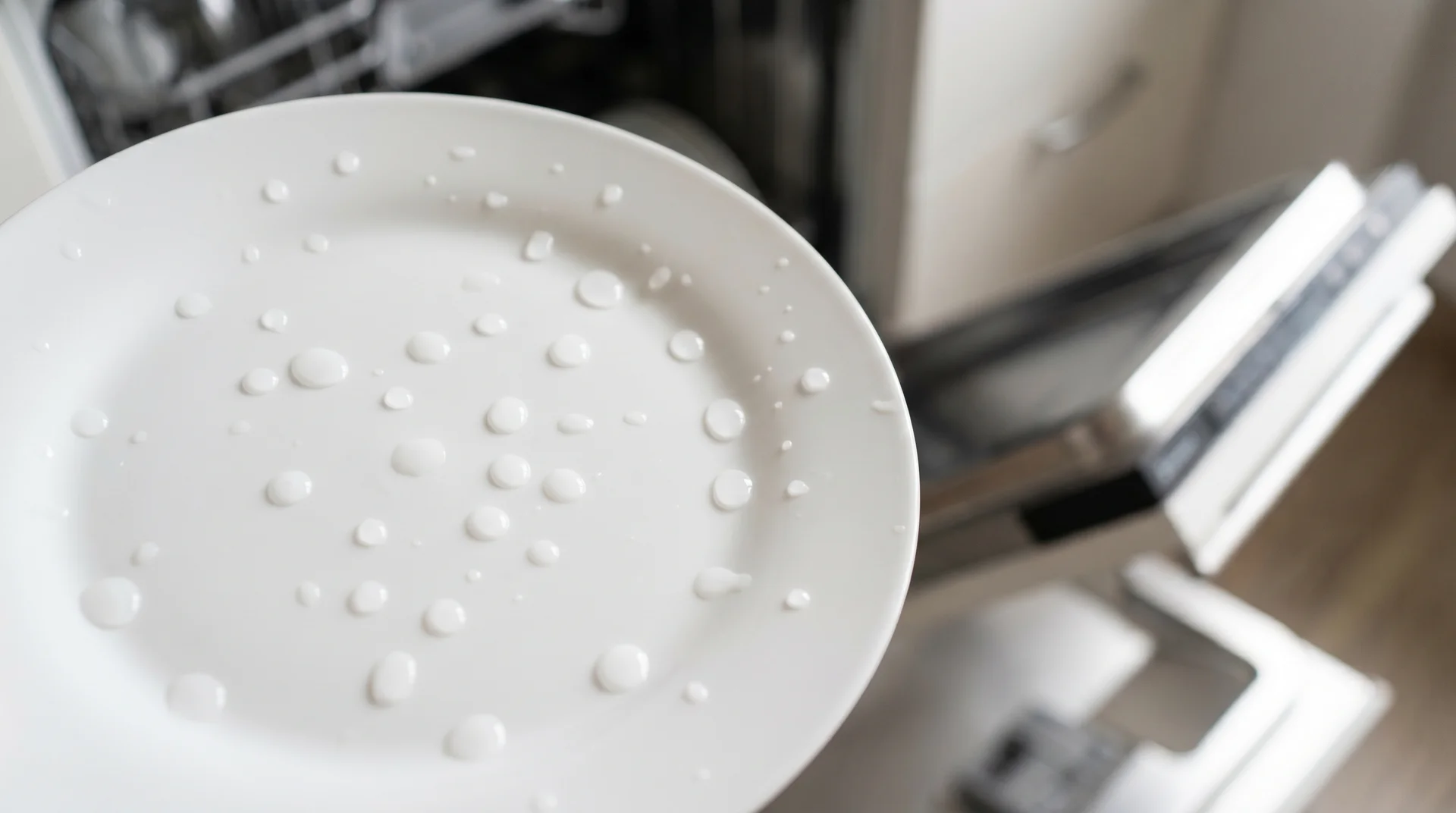
Vinegar has no surfactant function. It does not affect how quickly or cleanly your dishes dry after the cycle.
If your problem is spots on dry dishes, vinegar addresses that directly.
If your problem is damp dishes after the cycle, film on plastics, or a cloudy coating that persists regardless of temperature setting, vinegar doesn’t address those outcomes. Adding more vinegar doesn’t close the gap.
Frequency without the right chemistry is not a protocol.
I’ve tracked drying outcomes across food-contact surfaces in institutional settings.
The variable that predicted poor drying wasn’t cycle temperature or detergent choice. It was the absence of anything in the final rinse that actively reduced surface tension. Vinegar doesn’t do that. No concentration adjustment changes the underlying chemistry.
If drying is your primary problem alongside spots, a plant-derived surfactant rinse aid is what you need, either alongside the vinegar or instead of it.
The Compartment vs. the Cup Method
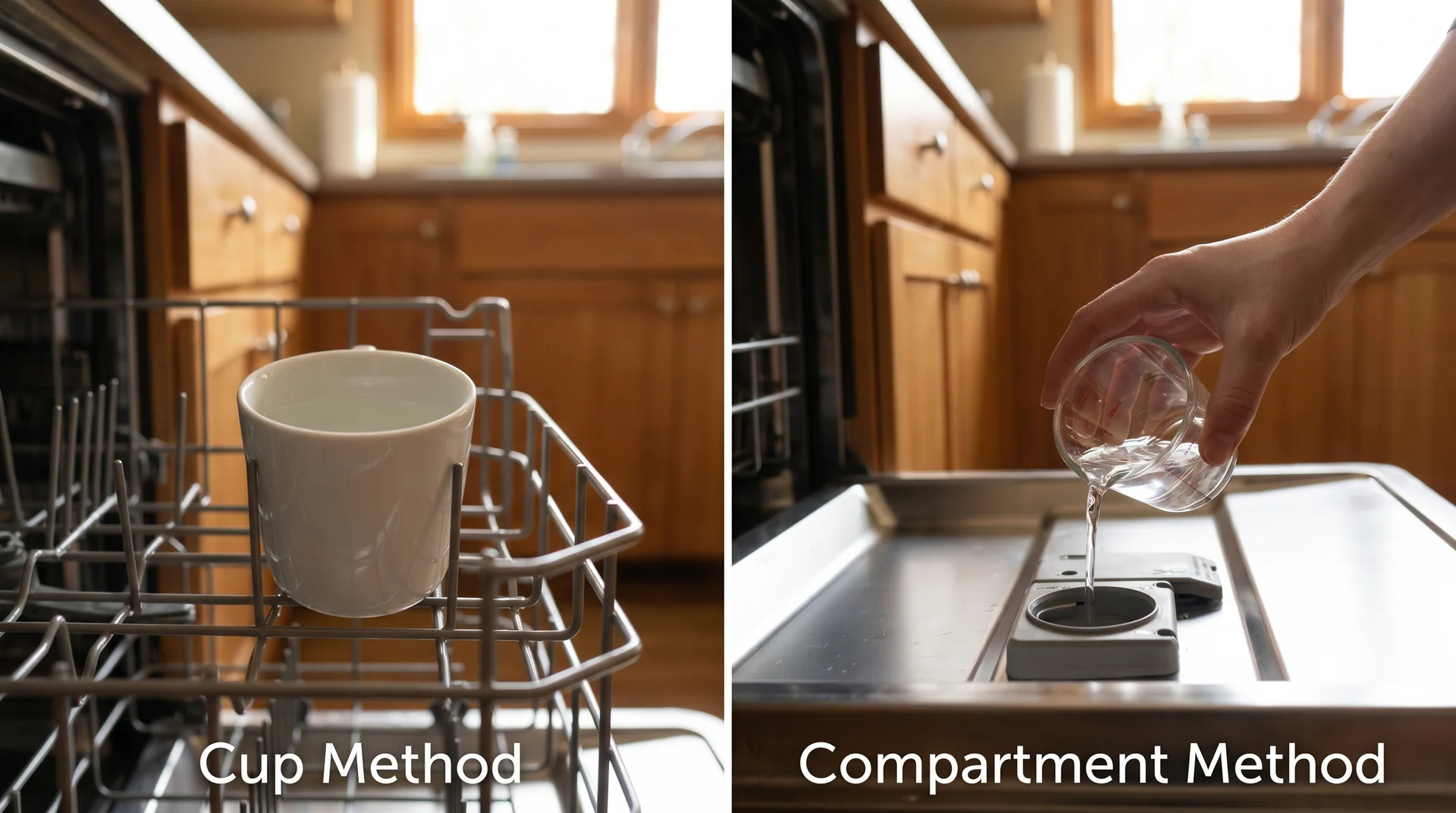
Vinegar can enter your dishwasher in two ways, and those two methods behave differently enough that the choice matters for machine safety.
- The cup method places a small open cup of vinegar on the top rack. It releases throughout the full wash cycle at high dilution. The acid concentration reaching the machine’s internal seals stays low.
- The compartment method fills the rinse aid dispenser directly with vinegar. It releases only during the final rinse. The concentration is higher. Contact with the dispenser housing is more direct.
The seal question comes up every time someone asks about vinegar in a dishwasher. “Vinegar destroys dishwasher seals” is the standard warning. That claim needs a rubber type attached to it to mean anything.
- Natural rubber seals degrade with sustained acid exposure over time. That part of the warning is accurate.
- Acetic acid at these concentrations doesn’t degrade silicone or EPDM seals. Those materials are standard in most dishwashers built after approximately 2010.
If you have an older machine and don’t know your seal type, use the cup method. If you have a newer machine with confirmed silicone seals, the compartment method works fine for regular use.
Here is the cup method protocol, in the order that matters:
- Contact time: Vinegar releases throughout the full wash cycle at high dilution. This is sustained, gentle mineral removal distributed across the cycle, not a concentrated end-of-cycle burst.
- Surface type: Glass, ceramic, and stainless steel only. Remove aluminum cookware and metal mixing bowls from the same load. Acetic acid reacts with aluminum and causes surface discoloration that doesn’t wash off.
- Sequence: Fill a small heat-safe cup with a quarter to a half cup of white distilled vinegar. Place it upright on the top rack, toward the back right, away from the main spray arm path. Close the door and start the cycle. Do not add the cup after the cycle has begun.
If the cup tips, all the vinegar dumps into the machine’s sump at once. You lose the distributed release across the wash cycle. Use a cup wide enough to stay upright in a rack tine.
Citric Acid: A Stronger Match in Hard Water
Citric acid outperforms vinegar at mineral removal in hard water.
It doesn’t address drying either. The surfactant gap remains. But for persistent spotting in hard water, citric acid is the more reliable option. It also creates fewer complications in the rinse aid dispenser than liquid vinegar does.
How Citric Acid Works as a Rinse Aid
Citric acid has a pH of approximately 2.2, making it a stronger acid than white vinegar and a more effective dissolving agent for hard water mineral deposits.
It’s the active mineral-fighting ingredient in many commercial natural rinse aids, including EPA Safer Choice certified formulations. The chemistry in those products is the same chemistry you’d use in a DIY application. You’re buying it in stabilized liquid form.
Here is the citric acid dispenser protocol, in the order that matters:
- Contact time: The dispenser releases only during the final rinse cycle. This targets deposit prevention at the end of the wash sequence, not throughout the full wash cycle.
- Surface type: All dishwasher-safe items. The aluminum exception applies here as well. Also avoid gold-rimmed dishes and aged enamelware.
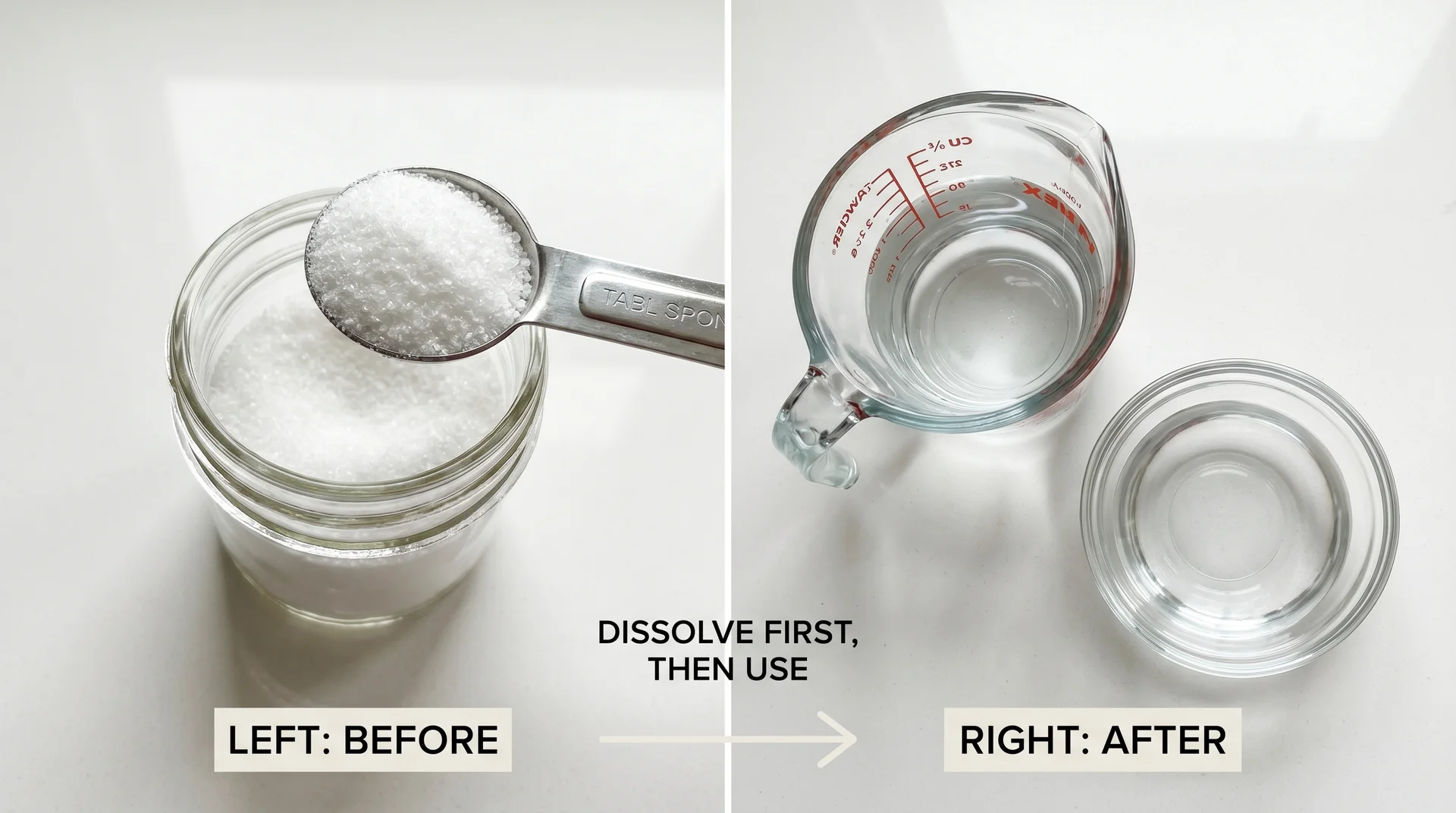
- Sequence: Measure one tablespoon of food-grade citric acid powder. Dissolve it fully in a quarter cup of warm water and stir until no granules remain. Pour the solution into the rinse aid dispenser up to the fill line. Run a normal cycle and check results after three complete loads before adjusting the concentration.
Never pour dry citric acid powder directly into the dispenser. Powder absorbs ambient moisture and clumps together. The dispenser jams or releases unevenly.
You get inconsistent results across loads and eventually a blocked compartment that needs cleaning before it functions reliably again.
When Citric Acid Beats Vinegar and When It Doesn’t
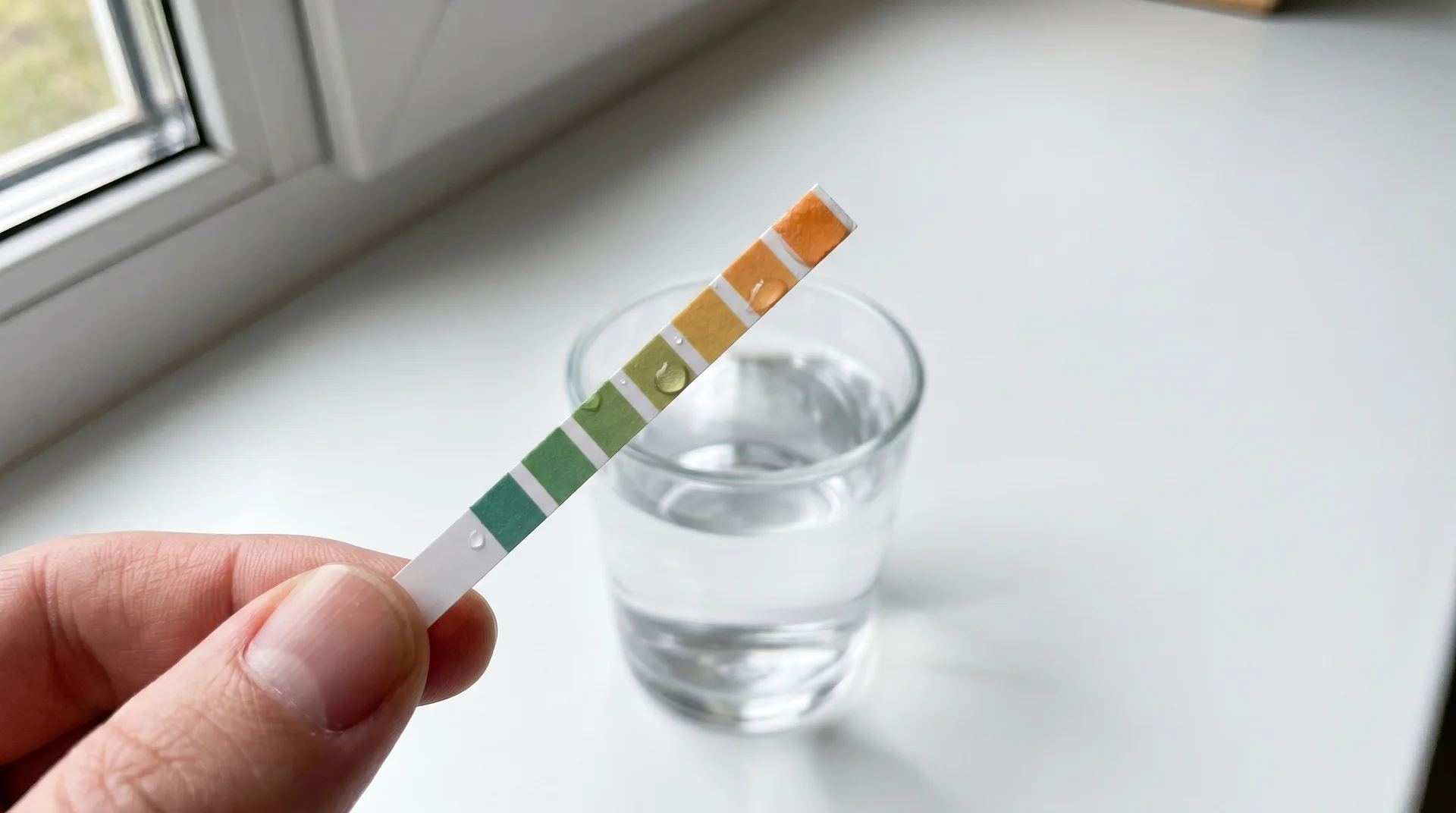
In hard water, citric acid is the better choice. In soft water, neither citric acid nor vinegar is the right tool.
- Hard water with persistent spotting: citric acid’s stronger acid concentration removes more mineral content per load than vinegar at comparable volumes. There’s no odor concern. The seal contact risk at dispenser concentrations is lower than filling the compartment directly with liquid vinegar.
- Soft water: acid-based approaches in genuinely soft water accelerate glass etching. That damage is permanent. In its early stages, it looks nearly identical to mineral cloudiness. The risk isn’t theoretical. The fix isn’t a different concentration of the same type of product.
I can give you the chemistry of each option. I can’t tell you whether citric acid is right for your water without knowing your hardness number and how your specific machine behaves. Those two variables change the answer more than any ingredient preference does.
Moderate to mildly hard water: vinegar works adequately and costs significantly less. Citric acid is more reliable but doesn’t produce better results meaningfully at low hardness levels. That decision starts with knowing your water type.
How to Know Which Option Applies to Your Water
Your water’s hardness determines which approach works.
It also determines which approaches cause damage. The vinegar and citric acid sections above covered what each option does in isolation. This section connects those options to the water condition that makes them appropriate or harmful.
Hardness varies significantly across the US by region and municipality. Your water supplier publishes hardness data in their annual Consumer Confidence Report, which is publicly available. The USGS also publishes national water hardness maps by region.
Before checking a hardness number, run this field test. It takes thirty seconds. It tells you whether your cloudiness problem is even solvable.
- Dampen a cloth with white vinegar.
- Rub a cloudy glass using a circular motion.
If the cloudiness starts to lift, the problem is mineral deposits. Acid-based approaches will help.
If the cloudiness stays completely fixed regardless of pressure or time, the glass is etched. Etching is permanent surface damage. No rinse aid corrects it.
I’ve seen people spend months trying different rinse aids on etched glasses, adjusting concentrations and switching products each time. Nothing worked because nothing could.
| Water Type | Hardness (mg/L CaCO₃) | Recommended Approach | What to Avoid |
|---|---|---|---|
| Hard | Above 120 mg/L | Citric acid dispenser method | No etching risk at this hardness; acid approaches are appropriate |
| Moderately hard | 60–120 mg/L | Vinegar cup method or citric acid solution | Start at standard concentration; test results before increasing |
| Soft | Below 60 mg/L | Plant-derived surfactant rinse aid at lowest dispenser setting | Vinegar and citric acid both increase etching risk here |
The soft-water row connects directly back to the citric acid warning above. Acid concentration and water mineral content interact. If your test places you in the soft zone, the next section covers the one category of natural product that actually applies to your situation.
Commercial Natural Rinse Aids: When DIY Doesn’t Fully Cover It
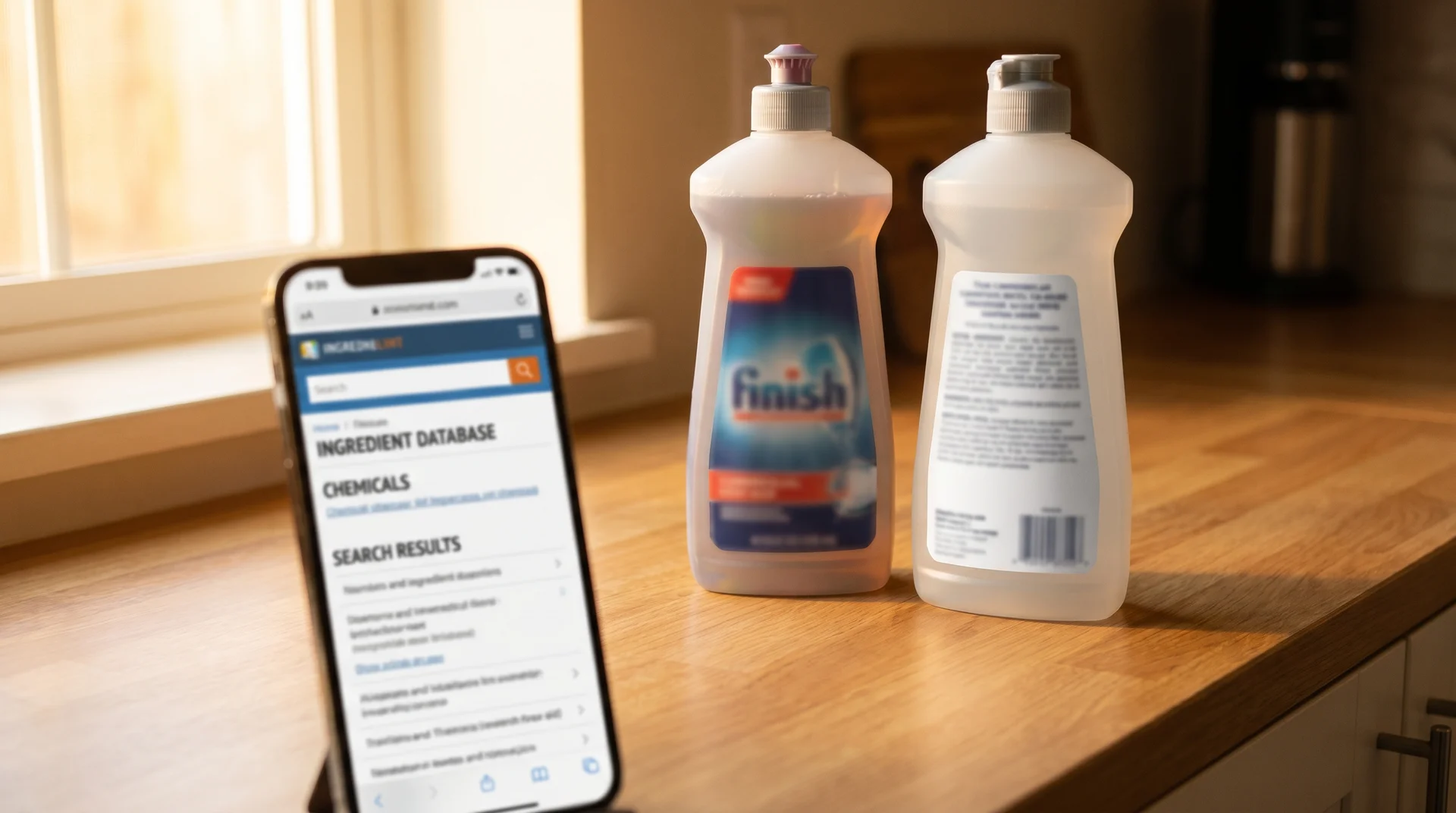
Commercial plant-based rinse aids solve a problem that DIY acid options can’t.
If drying is your primary complaint, you need a surfactant with enough functional strength to reduce surface tension. Vinegar and citric acid don’t provide that. Some commercial natural formulations do. That’s the reason they’re worth considering, even if you use DIY methods for everything else in the kitchen.
What EPA Safer Choice Certification Actually Tells You
EPA Safer Choice certification evaluates ingredients for environmental and health safety profiles. It does not evaluate residue behavior on food-contact surfaces after the cycle ends.
Those are two separate assessments. Most product labels blur that distinction. A product can carry the EPA Safer Choice seal and still contain ingredients worth questioning at the food-contact residue level.
The label says “EPA Safer Choice certified.” The EPA Safer Choice registry entry shows the specific ingredient-by-ingredient criteria the product was assessed against. Reading the registry entry is a different experience from reading the bottle. Those two sources don’t always communicate the same things about the same product.
What to Look For in a Plant-Based Rinse Aid Formula
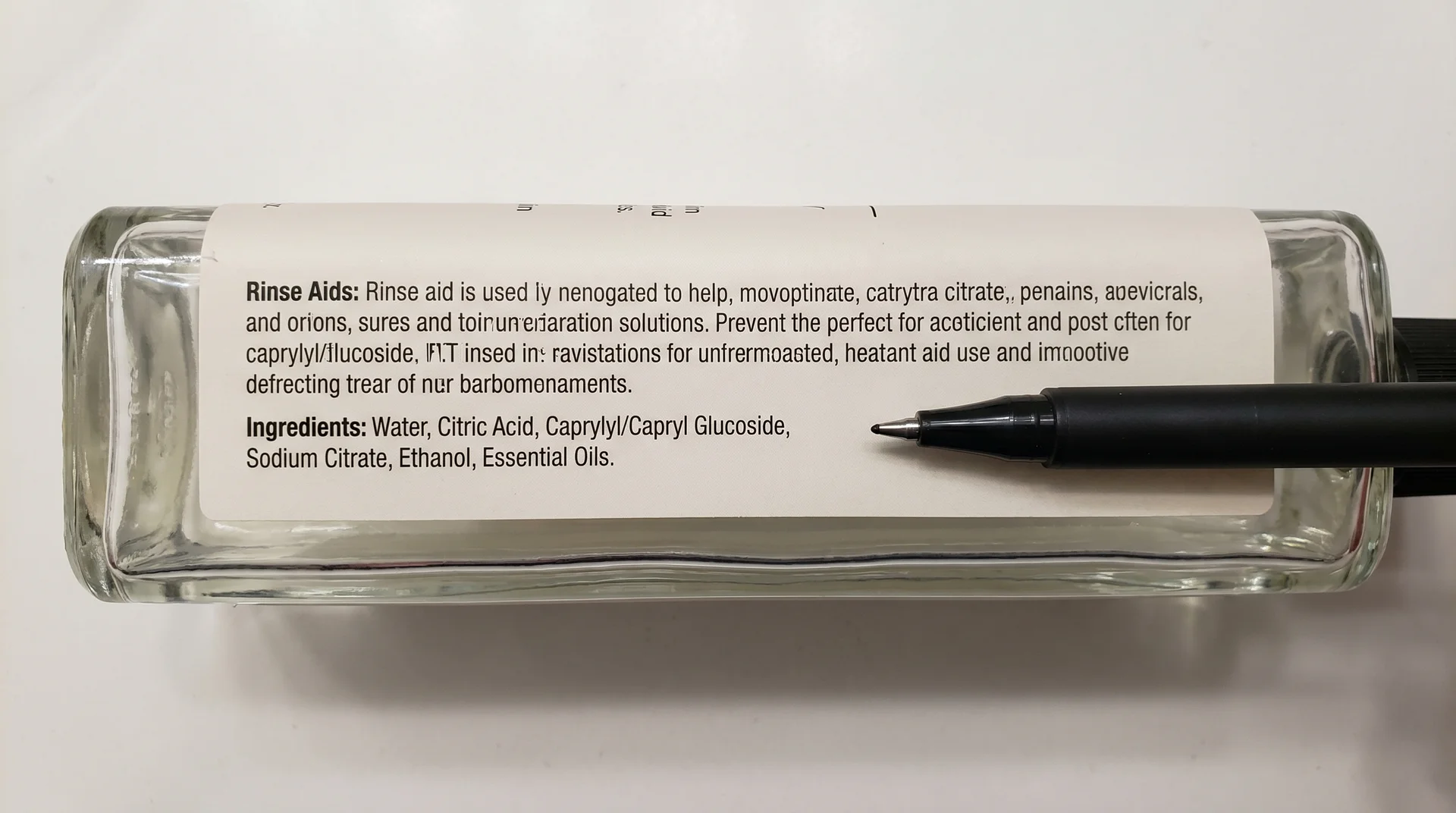
The plant-derived surfactants that reduce surface tension without alcohol ethoxylates come from the glucoside family.
Three to look for specifically:
- Decyl glucoside: derived from plant sugars; reduces surface tension effectively and is stable at rinse aid dispenser concentrations
- Lauryl glucoside: same plant-sugar origin; performs effectively at slightly lower concentrations than decyl glucoside
- Coco glucoside: the most commonly found glucoside surfactant in commercial plant-based rinse aid formulations currently available
They reduce surface tension less aggressively than synthetic surfactants. That’s why natural rinse aids don’t fully match conventional ones on drying performance. But they close enough of the gap that most people notice a real improvement in how dishes come out of the dry cycle.
A formula that combines a glucoside surfactant with citric acid as an active ingredient addresses both functions. That’s as close as current natural commercial options get to replicating what a conventional rinse aid does.
Two product formats to be cautious about:
- Dry citric acid powder used alone in a dispenser: humidity causes clumping and uneven delivery, as covered in the citric acid section above
- “Concentrated drop” formulas with heavy natural marketing: the dilution math often makes them less effective per load than simpler liquid solutions at a fraction of the cost
I’m not naming specific brands in this piece. Testing individual formulations for real performance requires controlled conditions and a meaningful number of loads per product. That article belongs somewhere else. It needs different criteria.
Start with the EPA Safer Choice product database. Follow these steps:
- Search the database by product name.
- Read the ingredient list against the criteria above.
- Ignore anything written on the front panel of the bottle.
That takes five minutes and gives you more reliable information than anything on the label.
Step-by-Step Protocol: Using Natural Rinse Aid in Your Dishwasher
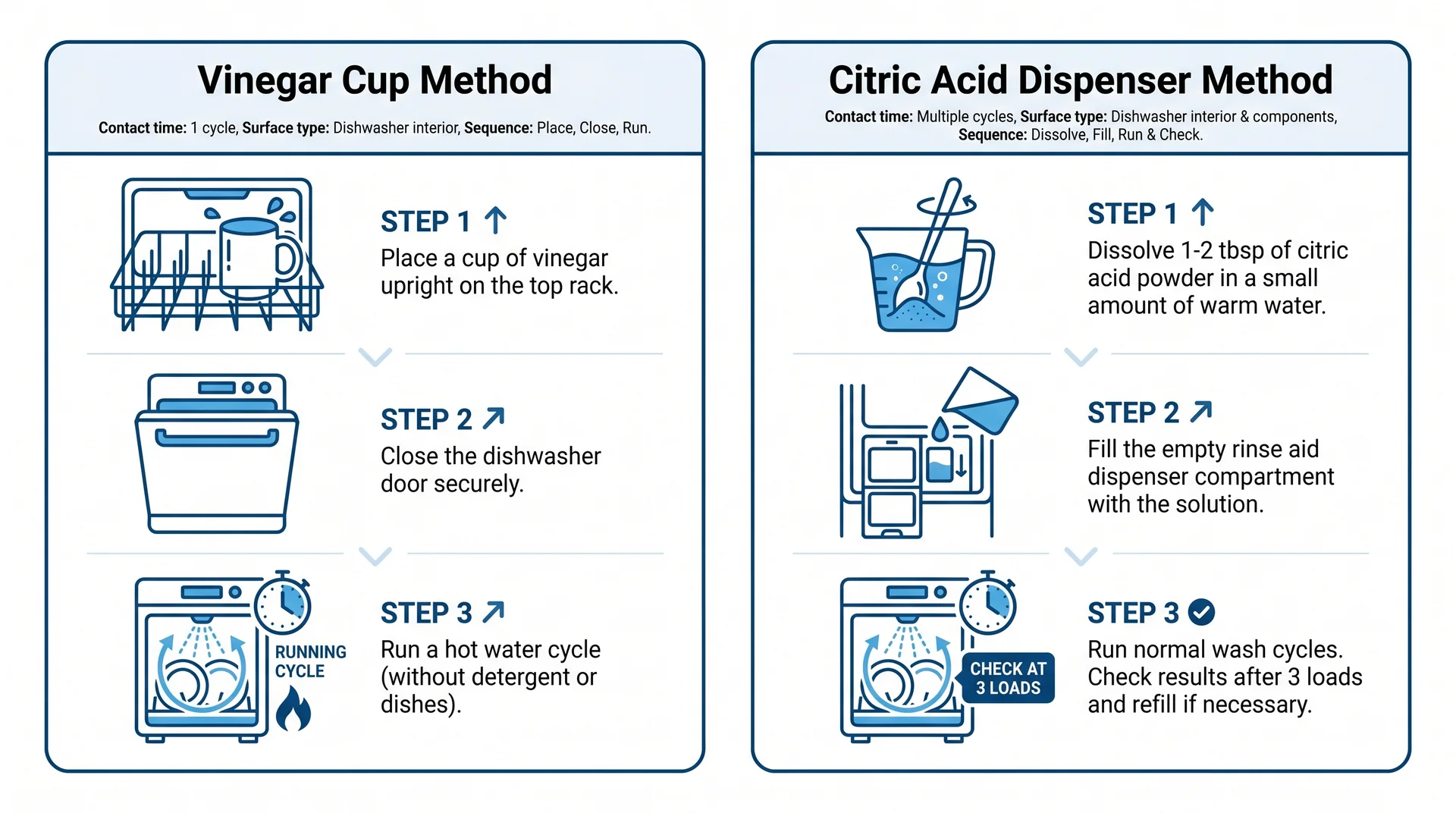
What you use matters less than how you use it.
Vinegar and citric acid remove mineral deposits. Neither of them reduces surface tension. Keep that distinction from the first section in mind before choosing a method.
I’ve worked with enough surface-cleaning protocols to know that sequence and surface type catch people out more than ingredient choice does.
| One option not covered below: hydrogen peroxide, which appears in some DIY rinse aid recipes online. Hydrogen peroxide carries a specific safety risk when it contacts residual acetic acid from a prior vinegar use. The combination forms peracetic acid, a more aggressive oxidizer than either ingredient alone. Building a protocol around an option with that failure mode attached isn’t something I’ll do here. |
The three methods below are organized from lowest to highest acid concentration in contact with machine components.
The Vinegar Cup Method
Use this method for moderate to hard water when your primary complaint is spots, not dampness after the cycle.
- Contact time: Vinegar releases throughout the full wash cycle at high dilution. Expect sustained, gentle mineral removal distributed across the cycle, not a concentrated end-of-cycle treatment.
- Surface type: Glass, ceramic, and stainless steel only. Remove aluminum cookware and metal mixing bowls from the load. Acetic acid reacts with aluminum and causes surface discoloration that doesn’t wash off.
- Sequence: Fill a small heat-safe cup with a quarter to a half cup of white distilled vinegar. Place it upright on the top rack, toward the back right, away from the main spray arm path. Close the door and start the cycle. Do not add the cup mid-cycle.
If the cup tips, all the vinegar dumps into the machine’s sump at once. You lose the distributed release across the wash cycle. Use a cup wide enough to stay upright in a rack tine, or wedge it securely before starting.
The Citric Acid Dispenser Method
Use this method if your water is hard and spots are persistent across multiple loads.
- Contact time: The dispenser releases during the final rinse only. This is a targeted, end-of-cycle treatment aimed at deposit prevention, not sustained exposure throughout the wash.
- Surface type: All dishwasher-safe items. The aluminum and gold-rimmed dish exceptions apply here as well.
- Sequence: Measure one tablespoon of food-grade citric acid powder. Dissolve it fully in a quarter cup of warm water and stir until no granules remain. Pour the solution into the rinse aid dispenser up to the fill line. Run a normal cycle. Check results after three complete loads before adjusting concentration.
Dry powder poured directly into the compartment absorbs ambient moisture and clumps. The dispenser jams or releases unevenly. You get inconsistent results. Eventually the compartment blocks and needs cleaning before it functions reliably again.
When the Method Isn’t Working
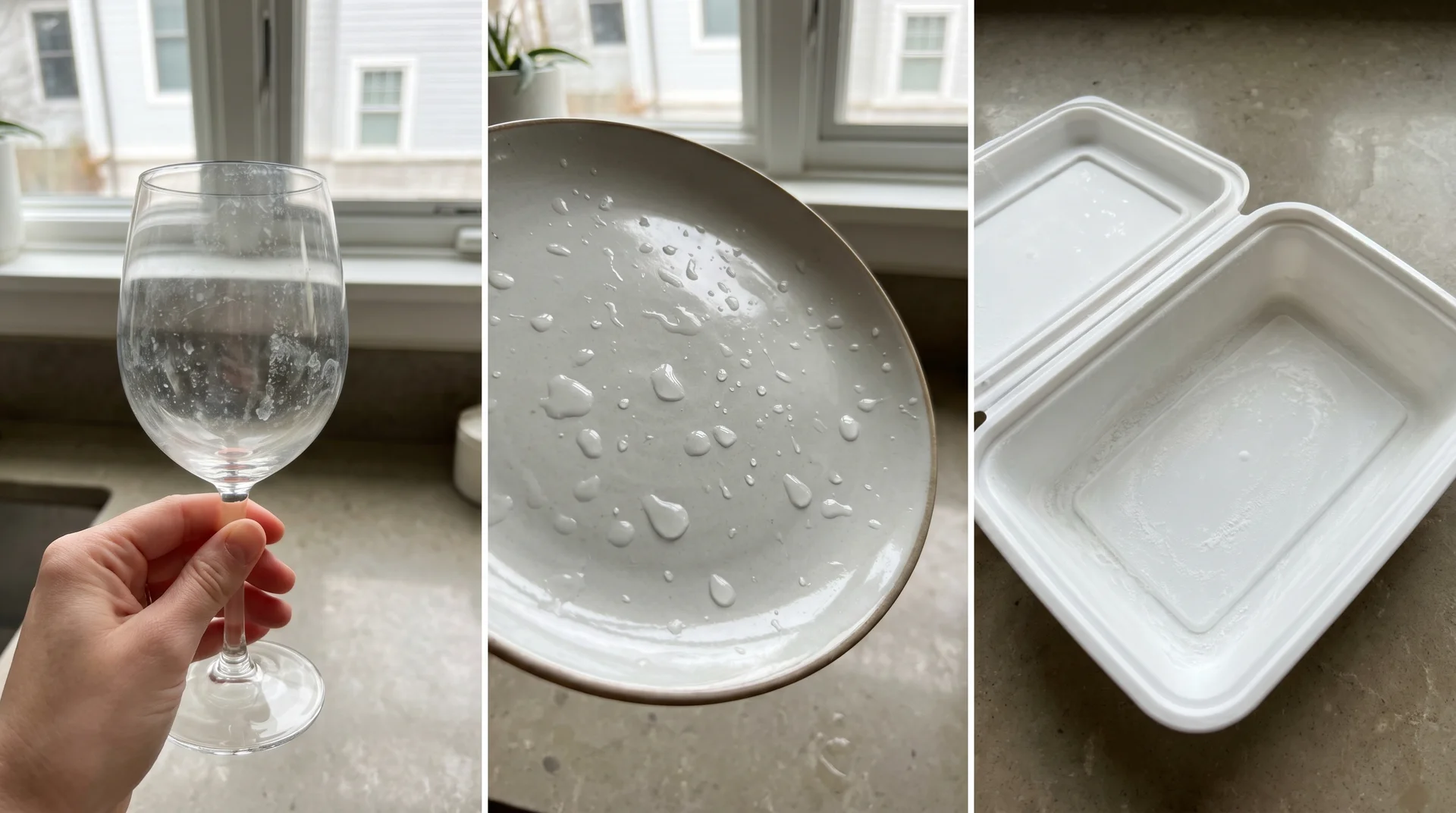
If results don’t improve after five complete loads, the problem is usually a specific mismatch, not a failure of the ingredient.
Here are the three specific patterns and what each one indicates:
- Spots persist after five loads: Your water hardness may be too high for citric acid at standard concentration. Increase to one and a half tablespoons per load and test for five more loads. If spots persist, add a commercial plant-based glucoside rinse aid alongside the citric acid solution.
- Dishes come out damp after the cycle: This is the surfactant gap covered in the opening section of this article. Acid-based natural options don’t address drying. You need a plant-derived surfactant formula, either as the primary product or paired alongside the citric acid method.
- White film on plastics specifically: This is usually excess detergent residue, not a rinse aid problem. Reduce your detergent amount by 25 percent and run two test loads before changing anything about your rinse aid approach.
If the white film appears on both plastics and glassware together, run the vinegar cloth test from the water hardness section first. The distinction between mineral deposits and etching changes.
Frequently Asked Questions
Four questions about natural rinse aids come up more than any others.
Can I Use White Vinegar in My Dishwasher’s Rinse Aid Compartment Every Cycle?
It depends on your water type and your machine’s seal material.
Hard water and confirmed silicone seals: the cup method, every cycle is safe for modern machines. Soft water: skip vinegar entirely. Acid in soft water accelerates glass etching, and that damage is permanent.
Unknown seal material: Use the cup method rather than the compartment until you’ve confirmed the seal type in your manufacturer’s manual.
Does Vinegar Actually Damage Dishwasher Seals?
It depends on the rubber type, not on vinegar itself.
Natural rubber seals degrade with sustained acid exposure over time. That part of the warning is accurate. Silicone and EPDM seals, standard in most dishwashers built after approximately 2010, are not meaningfully affected at typical cup-method concentrations.
Check your dishwasher manufacturer’s manual for seal type before using the compartment method regularly.
Is Citric Acid a Complete Replacement for Commercial Rinse Aid?
No. Citric acid replaces one function. It doesn’t replace both.
Citric acid dissolves mineral deposits, the process covered in the mineral chelation section at the start of this article. Commercial rinse aid also reduces surface tension to improve drying.
Citric acid doesn’t perform that second function. Dishes relying on citric acid alone will still come out wetter than they would with a surfactant-containing rinse aid.
My Water Is Soft, and My Glasses Are Still Cloudy. What Should I Use?
Skip acid-based options and run the field test first.
Soft water combined with acid increases glass etching risk. Etching looks like cloudiness. Before buying anything, dampen a cloth with white vinegar and rub a cloudy glass.
If the cloudiness doesn’t lift at all, the glass is etched, and no product will help.
If it does lift, use a plant-derived surfactant rinse aid at the lowest dispenser setting, without adding acid to an already low-mineral water environment.
Start with the Field Test
Run the vinegar cloth test on a cloudy glass before choosing any method or product.
If the cloudiness starts to lift, the problem is mineral deposits. Match your water type to the approach in the table above and work from there. If the cloudiness stays completely fixed, the glass is etched, and no rinse aid corrects permanent surface damage.
Knowing which problem you have changes every decision that follows. That’s why the test comes first, and the product comes second.