

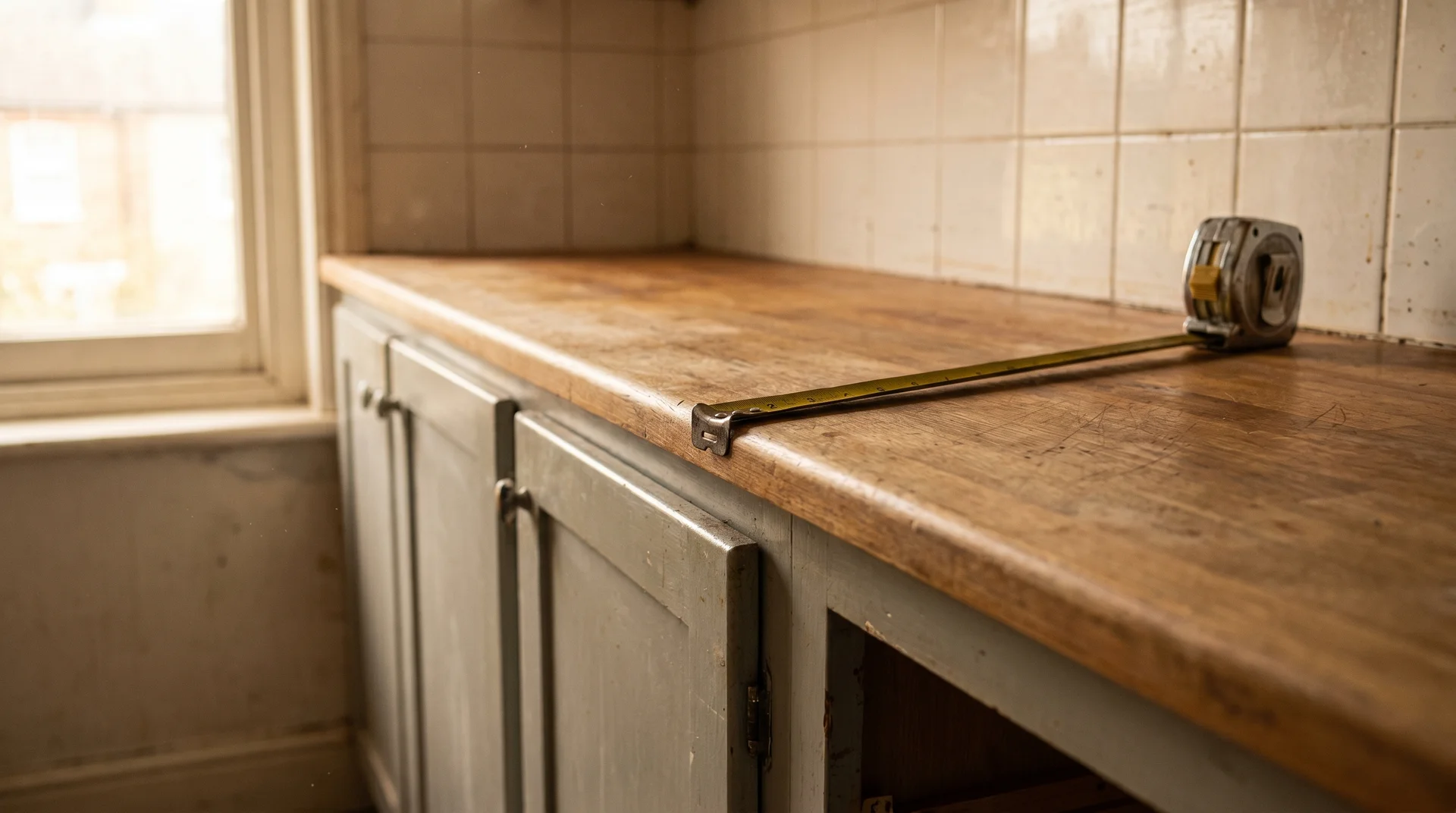
| Base cabinets are 24 inches deep. Wall cabinets are 12 inches. |
Those numbers are correct, and they might be incomplete. The 24-inch base cabinet depth exists for reasons most spec guides don’t explain. The 12-inch upper is a functional floor, not a generous allowance.
What those numbers leave out is more useful than the numbers themselves, and it’s what almost every cabinet depth guide skips.
This piece covers depth decisions and depth trade-offs.
Standard Kitchen Cabinet Depth at a Glance
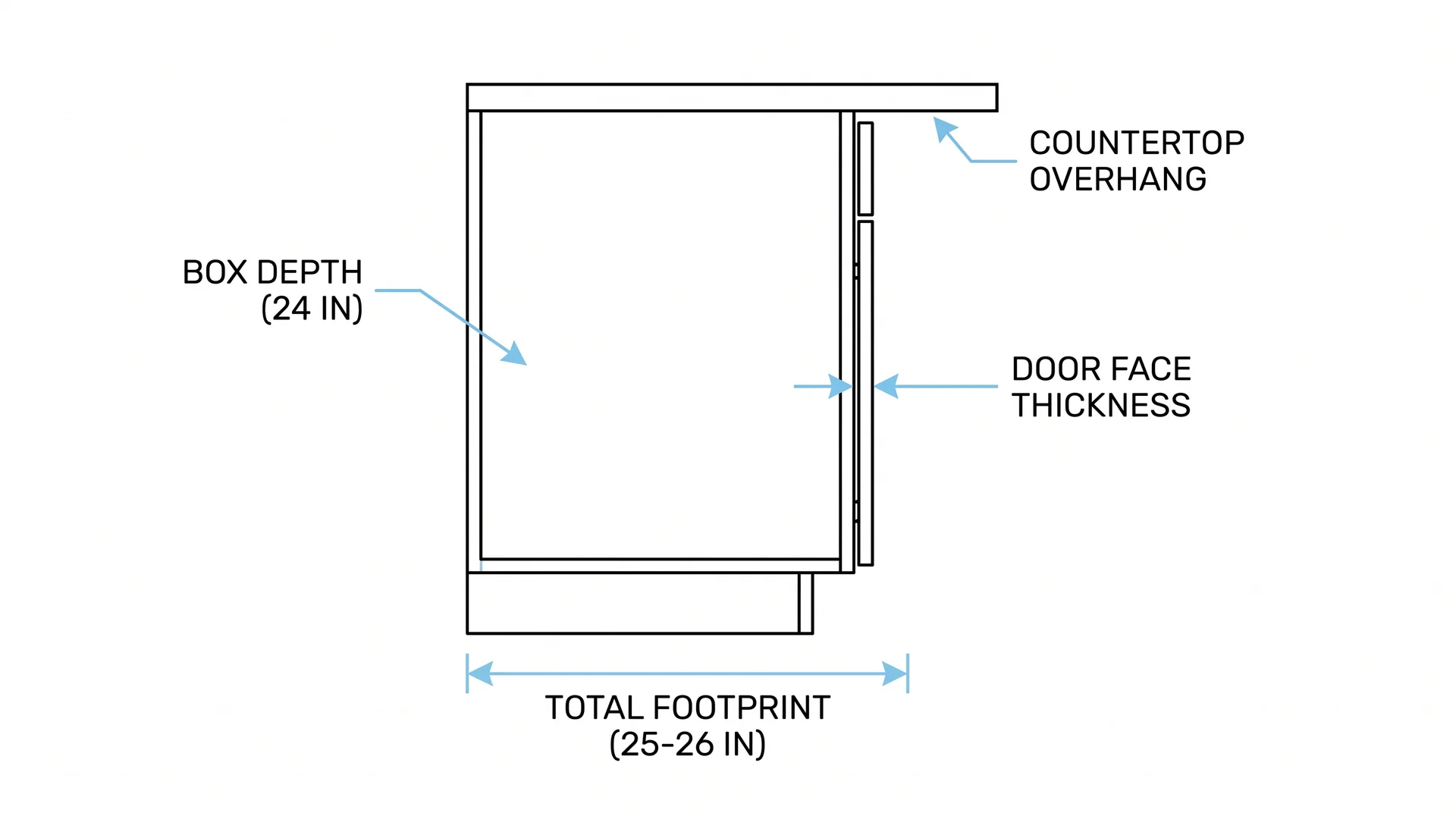
In the US, base cabinets are 24 inches deep, wall cabinets are 12 inches deep, and tall cabinets run 12 to 24 inches depending on what’s being stored inside them.
These measurements refer to the cabinet box only. They do not include the door face, the countertop overhang, or hardware. The real footprint each cabinet creates in your kitchen is larger than the spec sheet number.
| Cabinet Type | Standard Box Depth | What the Spec Excludes | Notes |
|---|---|---|---|
| Base cabinets | 24 inches | Door face (0.75–1 in), countertop overhang (1–1.5 in), hardware (1–1.5 in) | Real working footprint in room: approximately 25–26 inches |
| Wall / upper cabinets | 12 inches | Door face, hardware | Builder-grade cabinets sometimes ship at 10 inches. Verify interior box depth before accepting delivery. |
| Tall / pantry cabinets | 12–24 inches | Door face, hardware | Pantry storage: 12–18 inches. Built-in appliance housing: 24 inches. |
| Kitchen island cabinets | 24 inches (perimeter-facing side) | Countertop overhang, hardware | Accessible or seating face: often 18–21 inches. See island section below. |
The spec sheet number and the footprint your cabinet creates in the room are not the same measurement. In a galley kitchen, the difference between those two numbers is the difference between adequate aisle clearance and a kitchen that works against you every day.
What Standard Kitchen Cabinet Depth Actually Means
The 24-inch base cabinet standard and the 12-inch upper cabinet standard were not derived from ergonomic research.
They came from appliance industry dimensions and from working clearance requirements, which the National Kitchen and Bath Association (NKBA) later codified.
The 24-Inch Base Cabinet
The 24-inch base cabinet depth is an appliance-fit standard, not an ergonomic one. Manufacturers built it around the dishwasher.
Standard models are 24 inches wide and designed to sit flush with the cabinet face. Standard single-basin kitchen sinks run 22 to 24 inches front to back. The cabinet depth was sized to contain those appliances, not to optimize for the reach of whoever is cooking.
For instance, anyone under 5 feet 4 inches can’t comfortably reach the back of a 24-inch base cabinet without leaning or crouching. I’ve advised on enough residential kitchens to watch this pattern hold consistently: the cook adjusts her technique, the cabinet doesn’t. The standard was calibrated around a dishwasher’s width, and it never got recalibrated for the person standing in front of it.
The appliance compatibility argument for keeping the 24-inch standard is real. Deviating creates sizing conflicts with dishwashers, slide-in ranges, and undercounter refrigerators unless non-standard rough openings are planned before the cabinet order is placed.
The Wall 12-Inch Cabinet Depth
The 12-inch wall cabinet depth preserves the working clearance between the countertop surface and the underside of the upper cabinet.
NKBA guidelines specify 15 to 18 inches of clear space in that zone as the ergonomic minimum for comfortable prep work. A 12-inch upper mounted at 54 inches from the floor delivers that clearance consistently over a standard 36-inch base cabinet and countertop combination.
Arranging Plates in The Cabinet
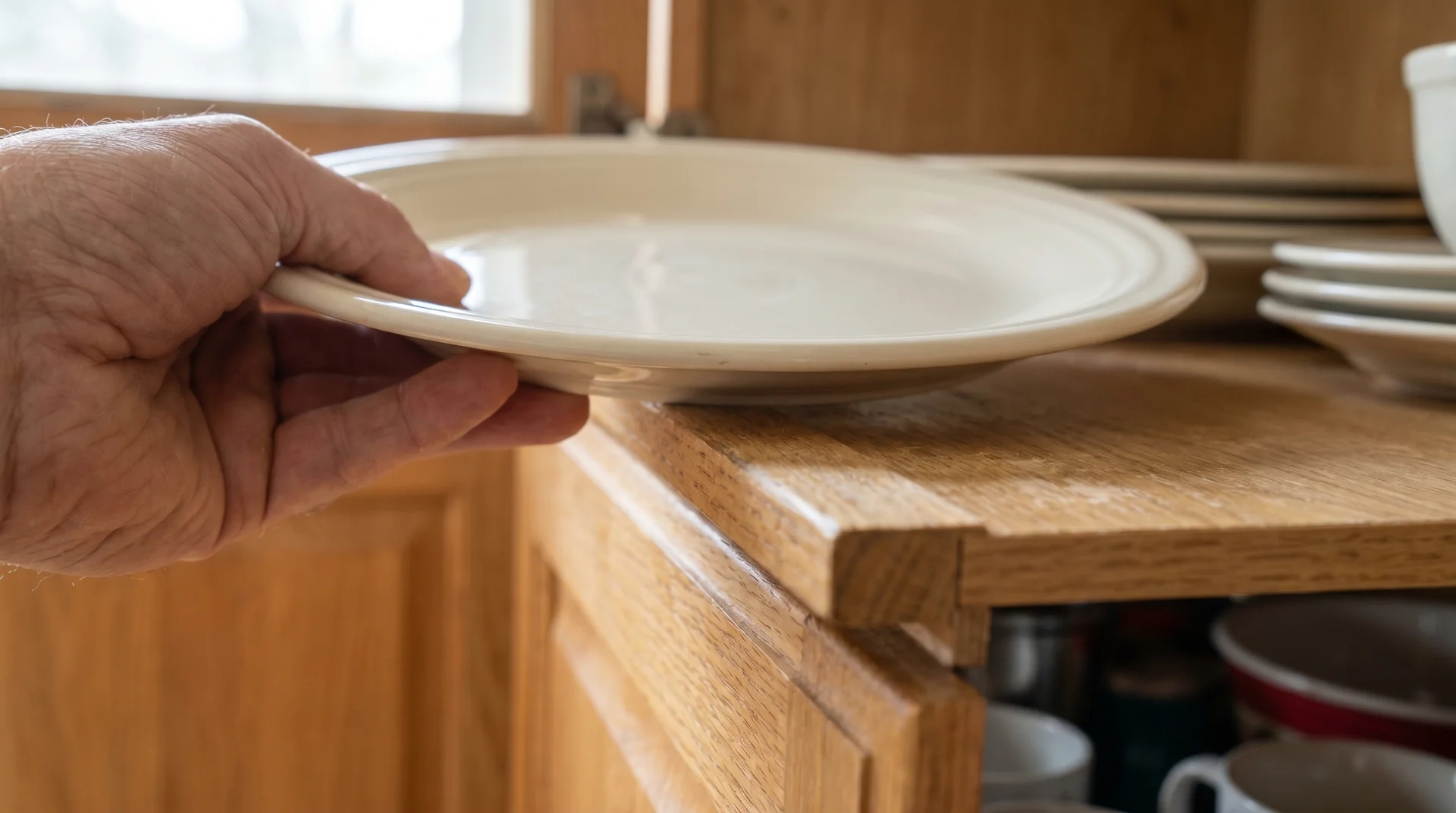
At 12 inches of shelf depth, a standard dinner plate (10 to 10.5 inches in diameter) fits with roughly an inch of margin at the front edge.
Store the plate one inch back from the shelf edge, which is a completely normal thing that happens in a cabinet opened thirty times a day, and you will notice that the margin is nearly gone. The 12-inch standard is a functional floor, not a comfortable one.
I’d push back on anyone who describes it as generous.
Here is something documented in Houzz forums: builder-grade upper cabinets in new construction sometimes ship at 10 inches of interior depth, not 12. Homeowners move in, try to shelve their dinner plates, and find the plates won’t lie flat.
If you’re taking delivery of stock cabinets, measure the interior box depth before signing off. Stated spec and actual shipping dimensions are not always the same number.
Tall and Pantry Cabinet Depths
Tall cabinet depth ranges from 12 to 24 inches because no other cabinet type has this much variation in actual use.
- A pantry column storing dry goods and canned food works well at 12 to 18 inches, where everything stays visible on a single shelf depth.
- A utility cabinet housing a built-in oven or full-height pull-out pantry system needs 24 inches to accommodate the appliance envelope and the hardware that makes it functional.
A pantry column at 24 inches creates dead-zone storage on the back half of every shelf. Specify pantry storage at 18 inches or less. Reserve 24-inch depth for the tall cabinets that genuinely need it for what they’re housing.
Specifying all tall cabinets at 24 inches because it simplifies the order is one of the more consistent mistakes I’ve seen in kitchen planning.
What the Box Depth Doesn’t Include
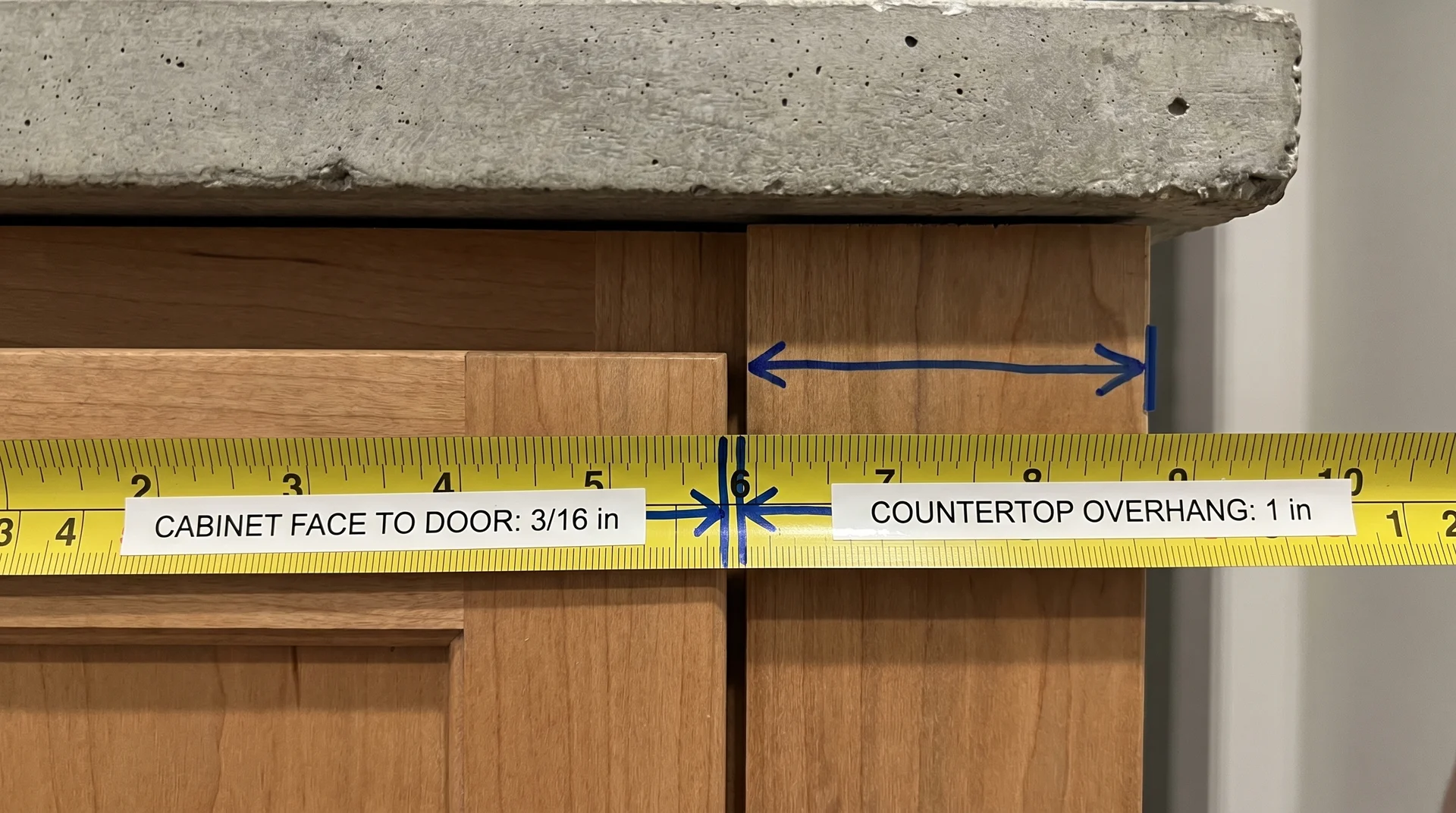
This is where the calculation gap causes the most trouble in tight kitchens.
When a cabinet manufacturer lists a 24-inch base cabinet, that measurement covers the box: back wall to front face frame. It does not include:
- The door face, which adds 0.75 to 1 inch when closed
- The countertop overhang, which typically extends 1 to 1.5 inches past the cabinet frame
- Hardware such as knobs and pulls, which project 1 to 1.5 inches into the room
Add those to a 24-inch box, and the real footprint of a base cabinet run lands at 25 to 26 inches before anyone stands in front of it. In a galley kitchen with two parallel runs, both sides carry that number.
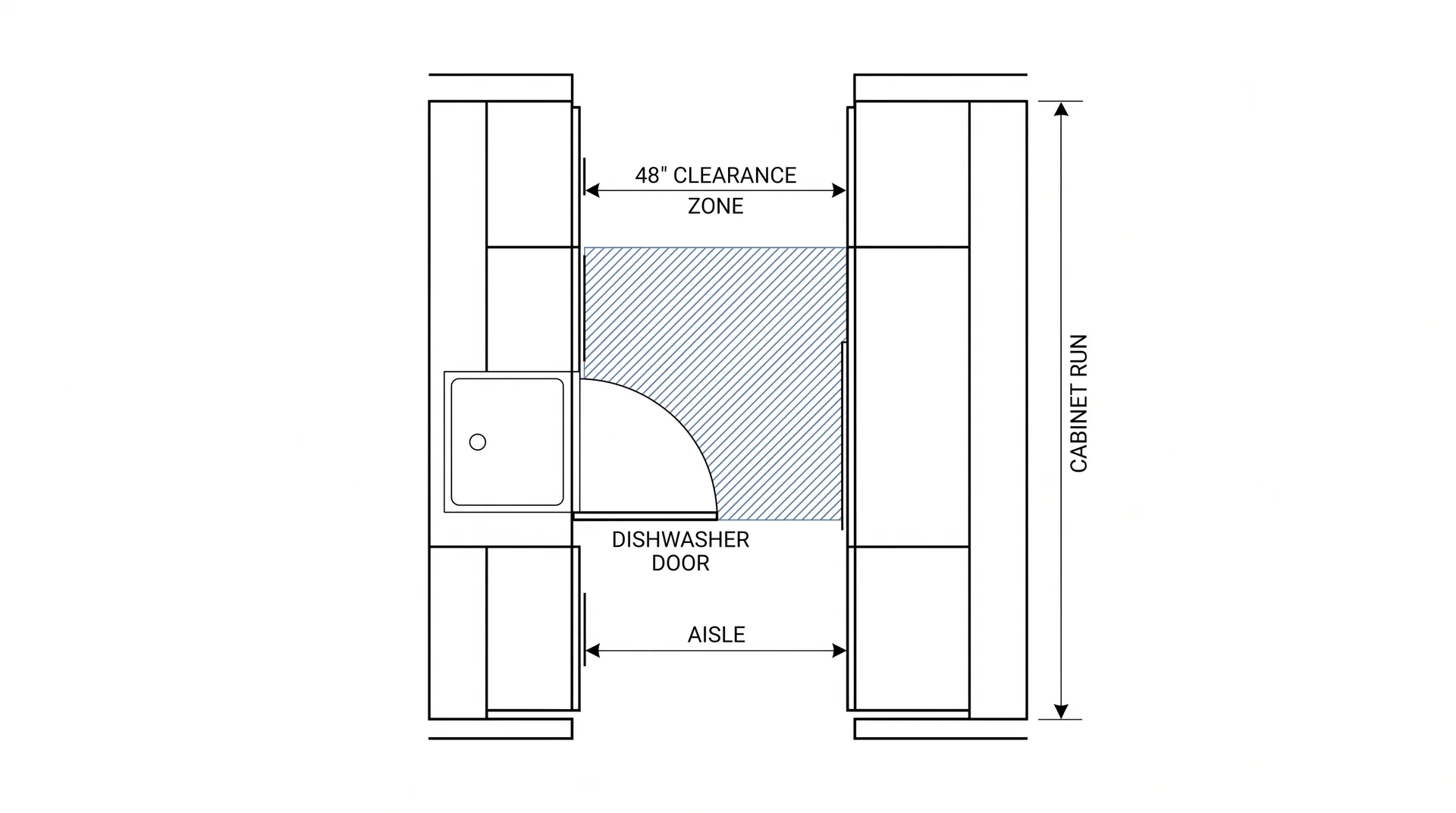
NKBA guidelines require a minimum 42-inch aisle clearance for a single-cook kitchen and 48 inches where two people cook together.
Both measurements assume a real footprint, not box depth. If the aisle calculation uses the spec sheet number, the clearance is off by 2 to 4 inches across the kitchen.
How Cabinet Depth Connects to the Rest of Your Kitchen
Depth doesn’t exist in isolation from the appliances, aisle widths, and countertop specs around it.
NKBA guidelines specify 158 inches of countertop frontage at 24 inches of depth as the functional minimum for a working kitchen. The link between depth and frontage is deliberate.
Reducing base cabinet depth across a run reduces working surface area even when the linear footage stays the same. A shallower run with the same number of linear feet gives you less functional countertop to work from.
Appliance clearance is where depth decisions get consequential faster. A standard dishwasher sits in a 24-inch cabinet opening. When fully open, the dishwasher door extends well into the aisle. Standing beside it and loading dishes requires the aisle to trouble both the door and a person, and in a sub-42-inch aisle, that combination creates a legitimate hazard beyond a workflow inconvenience.
NKBA recommends 48 inches between the dishwasher front and any opposing surface, specifically for this reason.
Reducing one cabinet run to 21 inches to recover aisle space can cut clearance on the opposing side at the same time. The net gain depends on which run you adjusted and what it faces. Calculate this before specifying non-standard depth.
Changing the spec after installation means pulling cabinets, and that cost is not recoverable from the savings you thought you were making on the original order.
Landing zones beside cooking surfaces and refrigerators also tie to cabinet depth. NKBA specifies a minimum 15-inch landing area on the handle side of the refrigerator. That spec assumes a full-depth countertop surface.
Adjust the cabinet depth, and the functional area of that landing zone changes, even when the linear dimension on the floor plan stays the same.
Kitchen Island Cabinet Depth
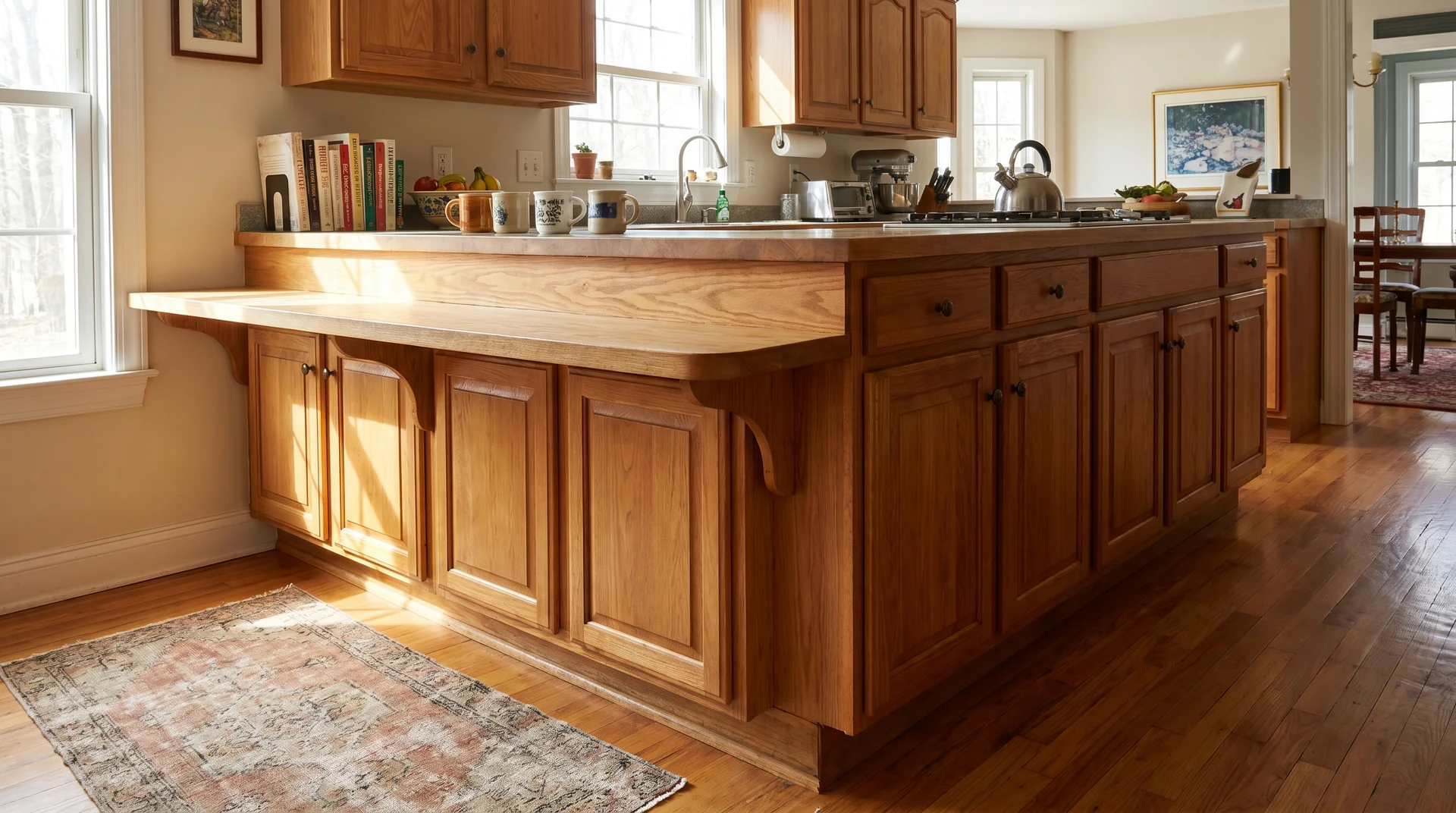
Island cabinets follow the same base cabinet conventions as perimeter runs, but they give you more legitimate reasons to deviate from them.
The perimeter-facing sides of an island typically use 24-inch base cabinets to match the surrounding countertop depth and maintain a flush countertop plane.
Total island countertop depth usually runs 25 to 36 inches.
At 36 inches, items at the back of the countertop become difficult to reach from either side. An island at that depth stops functioning as a prep surface and starts functioning as a barrier in the room.
The accessible or seating face of an island is where a shallower cabinet is often the right decision.
An 18 to 21-inch cabinet box on that face reduces reach distance, creates knee clearance for a seating overhang more naturally, and avoids the stepped countertop workaround that some designers use to compensate. The storage reduction is real and nasty.
Depth and hardware are the same decision when it comes to island storage. Heavy-duty rated full-extension drawer slides bring a cast iron pot to your hands from any cabinet depth.
When to Go Non-Standard for Your Cabinet
Non-standard depths work in specific situations. Each has failure modes worth understanding before you commit to the order.
Shallow Base Cabinets (15 to 21 Inches)
Shallow base cabinets make functional sense in galley kitchens with aisles under 40 inches, on the accessible face of an island, and for households where the primary cook’s reach doesn’t comfortably cover the full 24-inch depth.
In those situations, the storage reduction is real. It’s also a reduction from a standard that was calibrated around a dishwasher width and not around those cooks in the first place.
The organizational cost runs higher than most people plan for upfront.
A 12-inch Dutch oven doesn’t lie flat in a 15-inch base cabinet without a full-extension pull-out shelf under it. Shallow base cabinets require more hardware investment to deliver the same accessible storage that a standard-depth cabinet provides with basic fixed shelving. That hardware cost doesn’t appear on the cabinet quote.
Deeper Upper Cabinets (15 to 18 Inches)

Deeper upper cabinets work well above refrigerators, range hoods, and anywhere a countertop appliance is not running directly below them.
In those locations, the added storage volume is genuinely useful, and the reach to the back of the shelf stays manageable because these cabinets are accessed far less frequently than the cabinets over the main prep zone.
Above a working countertop with a coffee maker, electric kettle, or stand mixer, deeper uppers create two real problems.
The first is moisture damage. At a standard 12-inch depth, steam from a coffee maker generally clears the cabinet bottom with space to spare. At 15 to 18 inches of depth, the cabinet sits lower over the appliance, and moisture contact with the cabinet bottom accumulates over time.
I’ve seen this failure mode show up in real kitchens over one to three years of daily use.
The second problem is overhead clearance. A deeper upper extends further out over the countertop. Tilting a stand mixer head up or pulling a full carafe free may require repositioning the appliance to clear the cabinet face. You discover this after installation.
ADA and Accessibility Considerations
Accessible kitchen design under ANSI A117.1 specifies a maximum 34-inch counter height and a minimum 27-inch knee clearance under the sink base.
Those requirements sometimes push the accessible-side base cabinet to 21 inches of depth to allow a forward reach from a seated position without requiring the user to lean past the cabinet face.
This is a real scenario in aging-in-place renovations and households with mobility considerations.
Accessible kitchen design involves turning radius, hardware height, drawer versus door configuration, and appliance positioning in ways that interact differently from standard depth planning.
What Depth Actually Means for What You Can Store
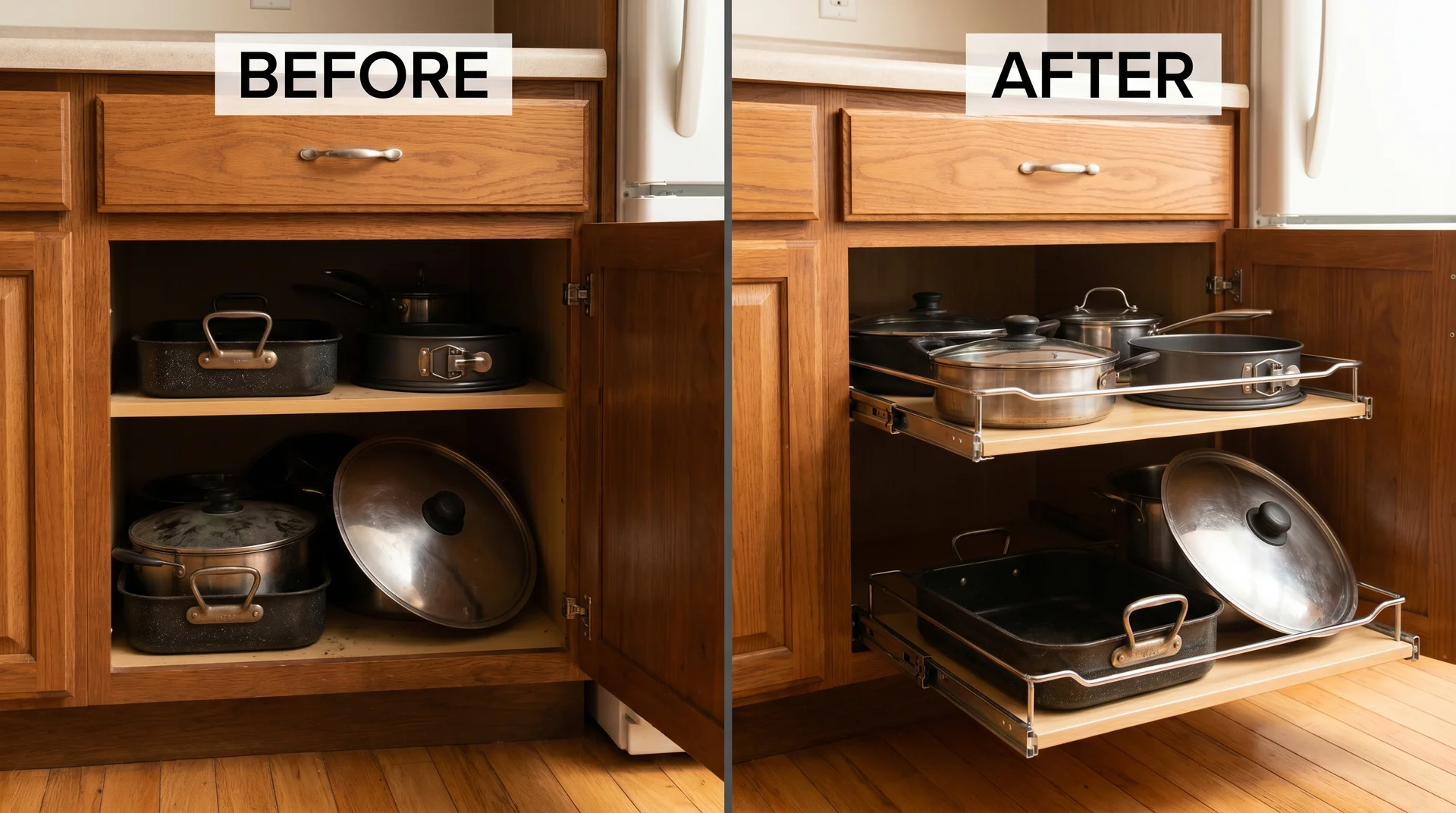
A 24-inch base cabinet is not 24 inches of usable storage. The back 4 to 6 inches of a standard base cabinet tends to become dead storage: the roasting pan that reappears at Thanksgiving, the springform that hasn’t moved since March, the baking sheet bought during an optimistic phase.
Full-extension pull-out shelves are what actually convert a 24-inch box into 24 inches of accessible storage. Without them, you have roughly 18 inches of accessible depth and a dead zone behind it.
If you’re specifying standard-depth cabinets and skipping the pull-out hardware to save money on the initial order, you’re paying for depth you won’t use. So that’s why the hardware decision should come before the cabinet type is finalized, not after.
For upper cabinets, the storage reality is thinner than the 12-inch standard implies. As I noted in the wall cabinet section, a 10.5-inch dinner plate fits on a 12-inch shelf with roughly an inch of margin at the front edge.
Store the plate one inch back, which is completely normal daily behavior, and that margin is gone. Larger-format plates don’t fit flat at any realistic shelf placement in a standard 12-inch upper.
Final Thoughts
I’ve tracked plate clearance across several kitchens, including my own, and I don’t have a fully clean answer on how much the margin matters relative to how people adapt.
Some households reorganize intuitively and never revisit it. Others run into the problem in the first week and stay frustrated.
What I can say is that “12 inches fits a dinner plate” is technically accurate and functionally thin, and those two things are not the same claim.
Depth is the first cabinet measurement most people settle on and the one they revisit least after the order goes in. The spec sheet number is accurate.
How well it works depends on the hardware inside the cabinet, the variation by use case across the kitchen, and the real footprint in the room.