
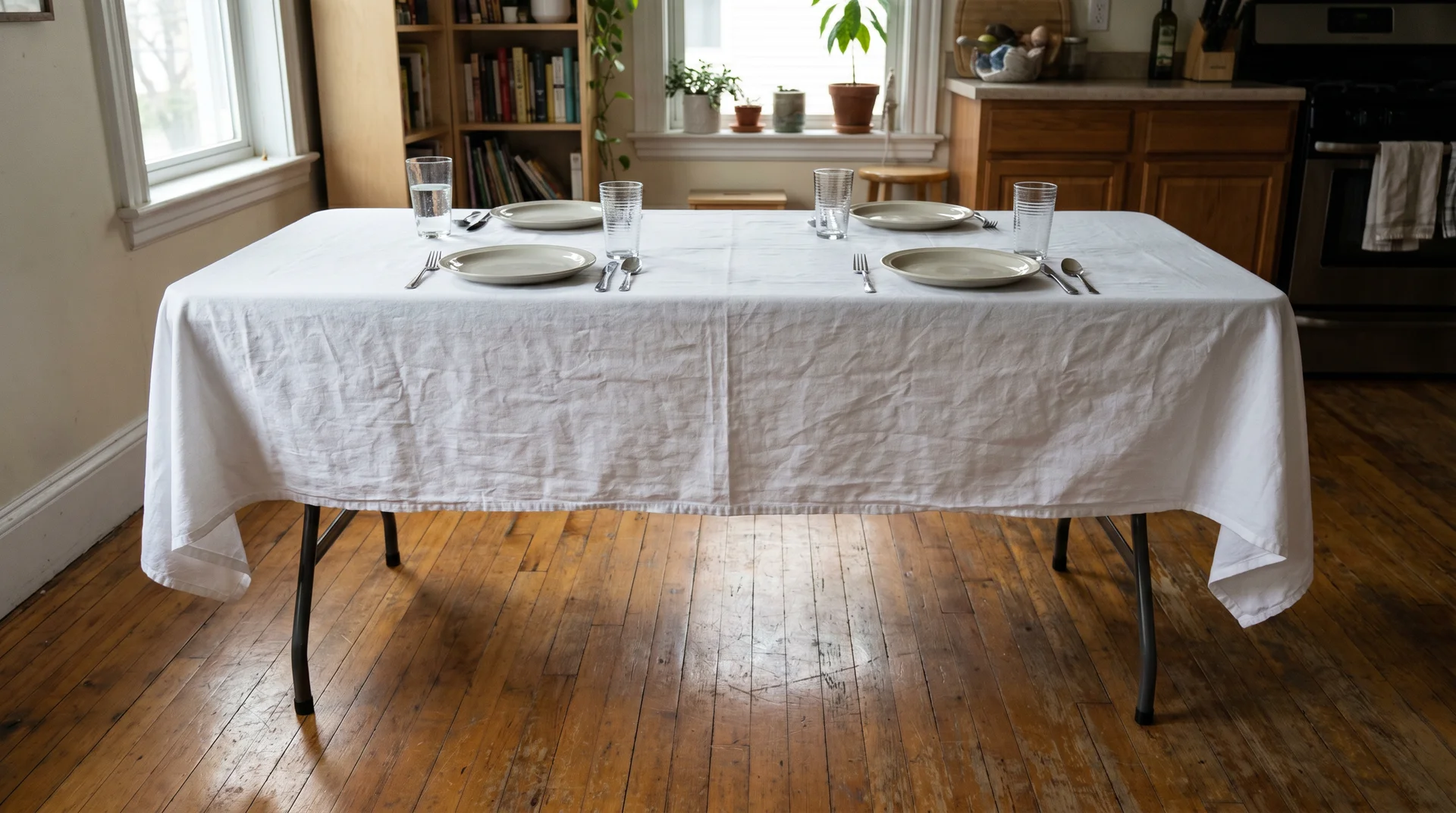
For a standard 6-foot folding table, the answer is a 60×102-inch tablecloth. That gives you a 15-inch drop on all four sides, clean, even, and right for most home gatherings.
The problem is that “6-foot table” only tells you the length. The width is the number that determines which cloth size actually fits. And that width is not the same across every table sold under that label.
The Answer for a Standard 6-Foot Table
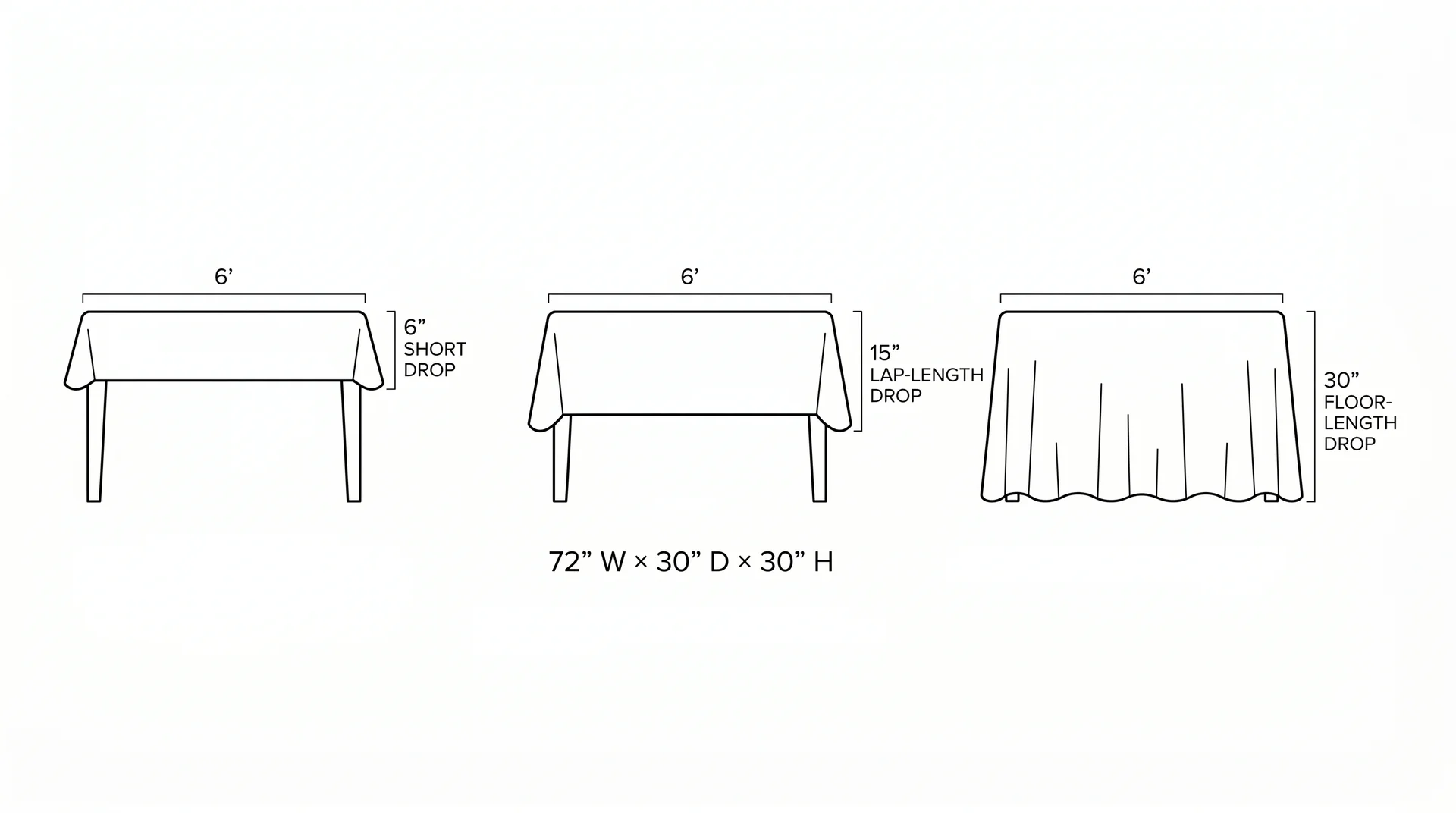
A 60×102-inch tablecloth fits a standard 6-foot folding table (30 inches wide by 72 inches long) and gives a 15-inch drop on all four sides. For floor-length coverage on the same table, use a 90×132-inch cloth.
The size you need depends on how far you want the fabric to hang below the table’s edge. That measurement is called the drop. The three sizes below cover nearly every common situation for a standard folding table.
| Drop Style | Drop Length | Tablecloth Size | Best For |
|---|---|---|---|
| Short | 6–9 inches | 60″ × 84″ to 60″ × 90″ | Casual dining, everyday use, outdoor setups |
| Lap length | 15 inches | 60″ × 102″ | Home parties, semi-formal events |
| Floor length | 29–30 inches | 90″ × 132″ | Formal events, concealing table legs, and storage |
These sizes are calculated for a table that is 30 inches wide. If your table is wider than that, read the next section before you order anything.
Why “6 Foot Table” Doesn’t Tell the Whole Story
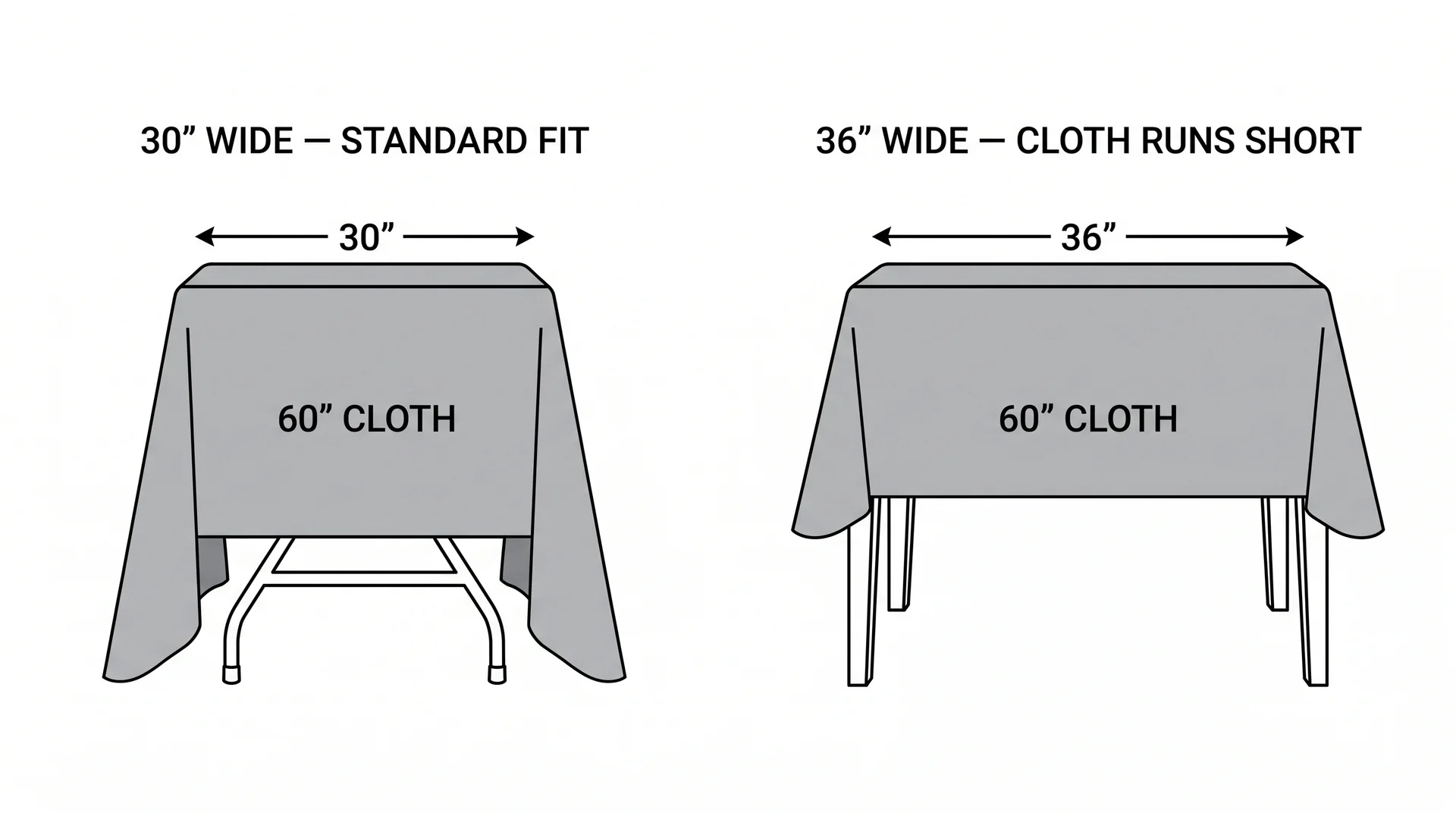
The width varies, and nobody labels it clearly.
A folding table from a party rental company, a Costco plastic folding table, and a dining room table can all be called “6-foot tables.” They are not the same width.
The Width Your Table Actually Is
Measure your table’s width before you look at any size chart.
Here is what the common types actually measure:
- Standard folding tables (Lifetime, Cosco, most rental tables): 30 inches wide. This is what every major size chart assumes.
- Seminar or classroom-style folding tables: 18 to 24 inches wide. These are narrower than they look and need a different cloth width entirely.
- Dining tables marketed as “6 feet”: Often 36 inches wide or more. These are longer dining tables, not folding tables, and the standard sizing does not apply directly.
A 6-inch difference in table width means a 12-inch difference in the cloth you need. The cloth hangs on both sides, so every extra inch of table width costs two inches of tablecloth width.
Folding Table vs. Dining Table
Most tablecloth packaging is written for 30-inch-wide folding tables, not dining tables.
If your dining table happens to be 6 feet long, “fits 6-foot tables” on the label is not a guarantee that it fits yours. Run the formula in the next section with your table’s actual width to confirm the size you need.
How to Calculate the Right Tablecloth Size
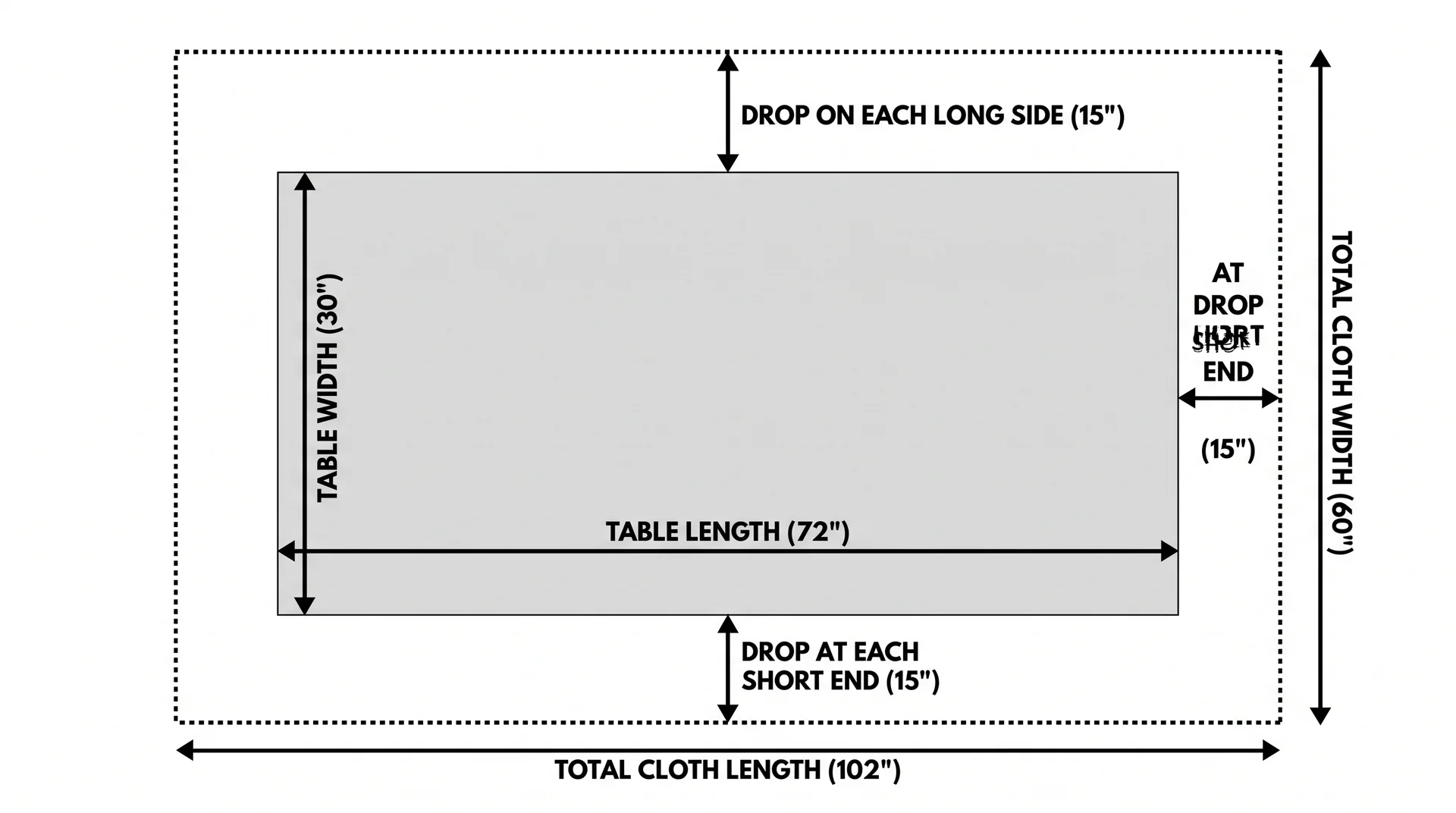
The formula is the same for every table shape, every drop length, and every occasion.
Understanding Drop Length
Drop length is how far the tablecloth hangs below the table’s edge on each side. It is the number that explains why the same table can take four different “correct” cloth sizes.
In practice, there are three ranges worth knowing:
- Short drop, 6–9 inches: Table legs stay visible. Chairs move in and out easily without catching fabric. This is the right choice for casual meals and anything outdoors where wind or debris matters.
- Lap length, 12–15 inches: The cloth reaches roughly to a seated guest’s lap. This is the most useful drop for home entertaining, it looks deliberate without creating a tripping hazard near the chairs.
- Floor length, 28–30 inches: Covers the table legs entirely. Useful when you want to hide what’s stored underneath, or when the setting genuinely calls for something formal. This drop is also the one most affected by your specific table height, something the next section covers.
The Formula
Add twice your desired drop to each table dimension to get the tablecloth size you need.
- Measure your table’s length. For most 6-foot tables, this is 72 inches.
- Measure your table’s width. Write this down. Do not guess.
- Choose your drop length based on the occasion.
- Tablecloth length = table length + (drop × 2).
- Tablecloth width = table width + (drop × 2).
Worked example:
- A table that is 72 inches long and 30 inches wide, with a 15-inch drop, needs a cloth that is 102 inches long (72 + 30) and 60 inches wide (30 + 30).
- That is why 60×102 is the standard recommendation for a folding table; the math produces exactly that size.
- You double the drop because the fabric hangs on both sides. One 15-inch drop on the left, one on the right.
Forgetting that step is the most common reason someone ends up with a cloth that barely clears the table edge.
When Your Table Is Wider Than 30 Inches
A 36-inch-wide table with a 15-inch drop needs a 66-inch-wide tablecloth. That width does not exist in standard retail.
Most rectangular tablecloths are manufactured at 60 inches wide. When the formula gives you a number retail doesn’t carry, you have three practical options:
- Accept a shorter drop on the width sides. A 60-inch cloth on a 36-inch wide table gives you a 12-inch drop instead of 15. The difference is small enough that most guests won’t notice, and 12 inches is still a clean, intentional-looking drop for everyday or casual use.
- Look for a 70-inch wide cloth. Specialty linen retailers carry wider widths. It takes more searching, but the option exists if an even drop on all sides matters to you for the occasion.
- Use a fitted or stretch tablecloth. These are cut to the exact dimensions of your table rather than calculated by drop length. They stay in place better and look sharper at a buffet or vendor setup. The limitation is that they won’t transfer to a different table size.
What Size Tablecloth Goes to the Floor on a 6 Foot Table
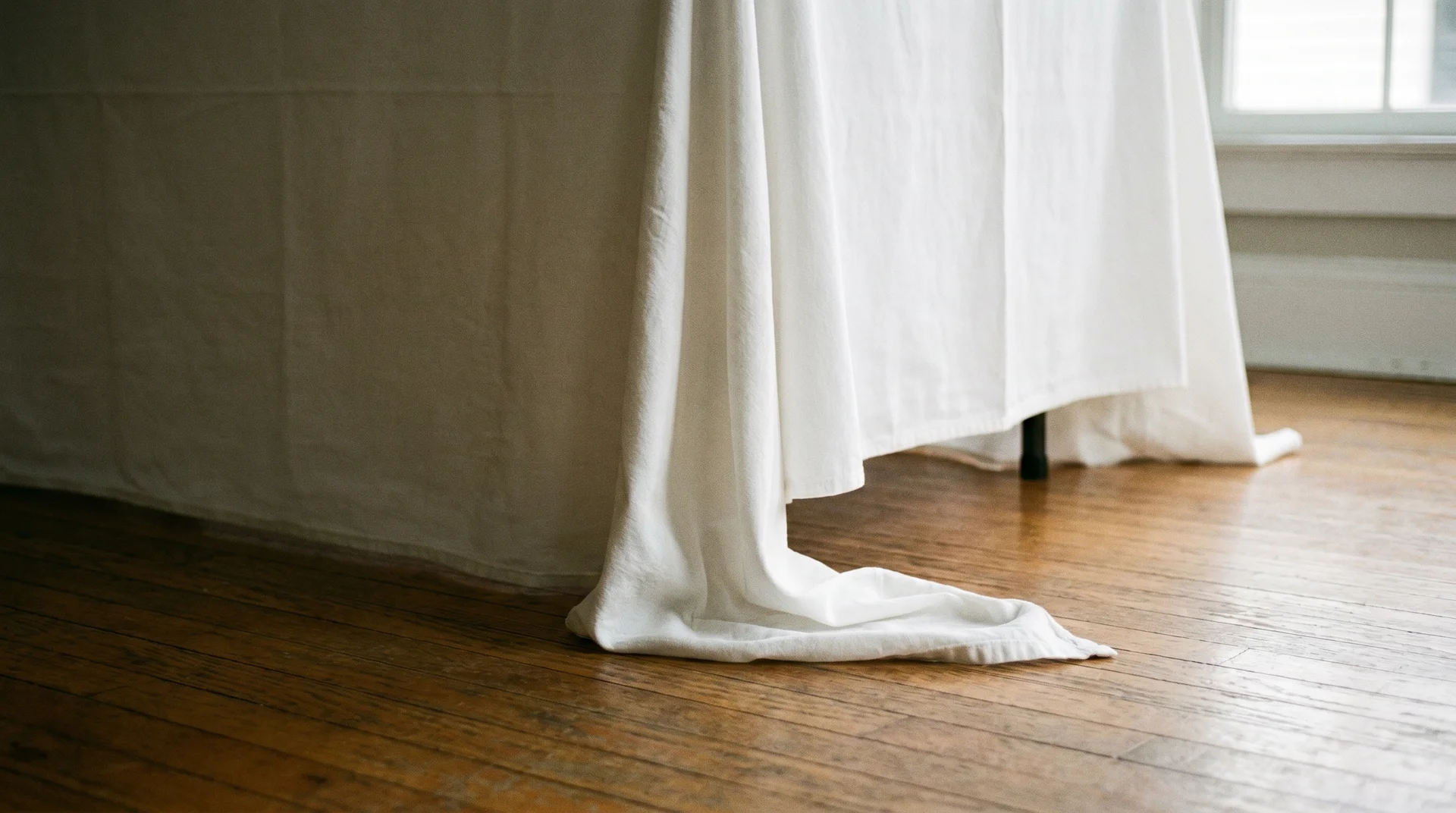
A 90×132-inch tablecloth goes to the floor on a standard 6-foot folding table.
That calculation assumes a table that is 72 inches long, 30 inches wide, and 30 inches tall. The formula produces a 30-inch drop on all four sides, which matches the standard table height.
Table height is the variable people forget. Most standard folding tables run between 29 and 30 inches tall, but rental and adjustable tables vary.
If you don’t know the exact height until the table arrives, that’s a real constraint and an honest one.
A 90×132 cloth will work for most scenarios, but on a 29-inch table, it will trail the floor by about an inch, and on an adjustable table set to 36 inches, it will stop several inches above the ground.
For outdoor events or informal setups where the floor-length look isn’t critical, the 60×102 lap-length cloth is more forgiving, and worth keeping in mind before you commit to covering table legs you haven’t actually seen yet.
If Your Table Is Round
A round tablecloth is sized by diameter, not by length and width.
A 6-foot round table measures 72 inches across. Add twice your desired drop to that number. For a 15-inch lap-length drop: 72 + 30 = 102 inches.
For floor length on a 30-inch-tall table: 72 + 60 = 132 inches.
Round tablecloths come in standard sizes of 90, 108, 120, and 132 inches. If your formula gives you a number between two standard sizes, go with the larger one.
Why Do Different Sources Give You Different Answers
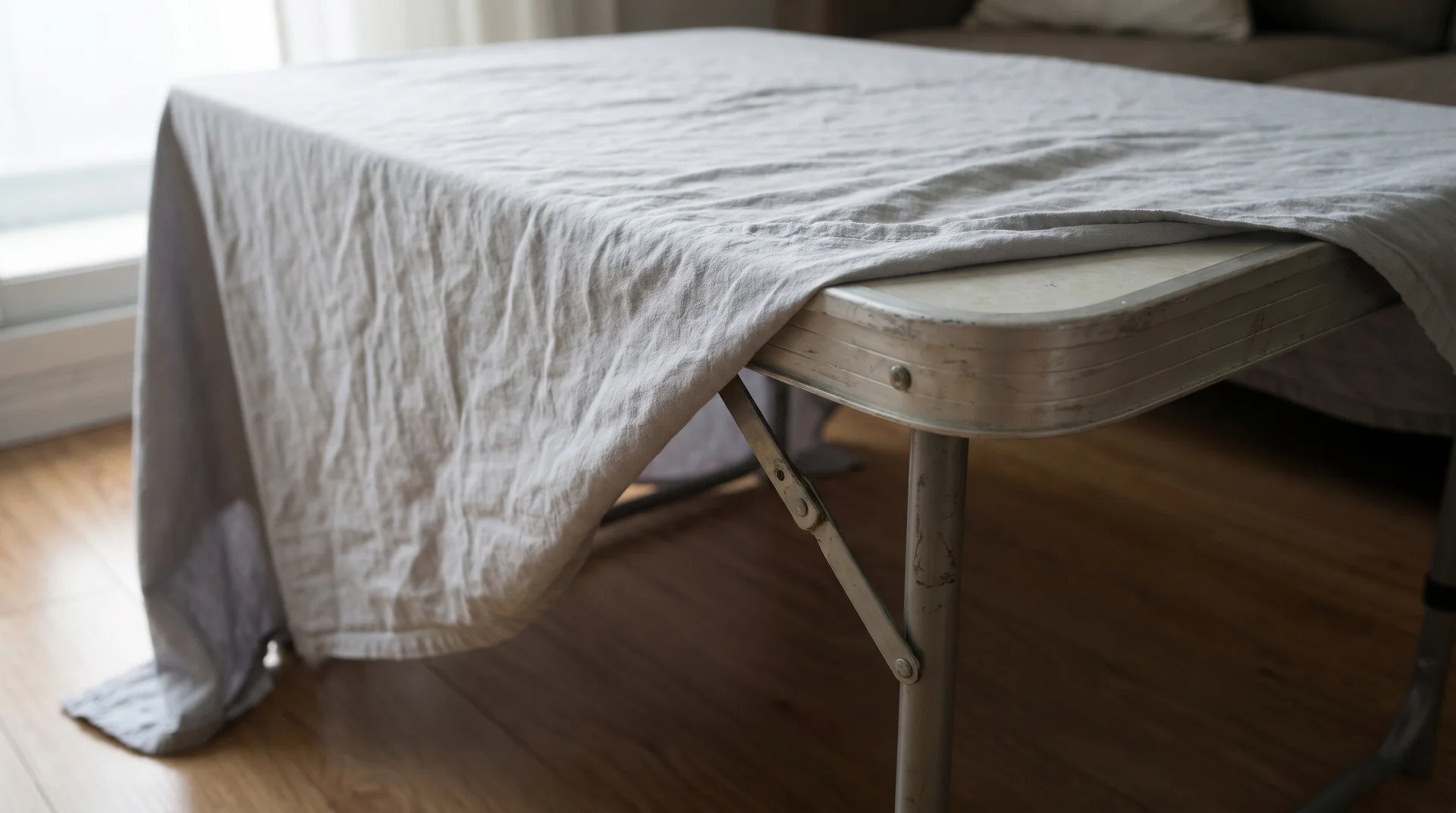
They are all correct. They are solving for different drop lengths.
Drop length, the distance the fabric hangs below the table’s edge, is why multiple sizes all get sold as “fits 6-foot tables.”
A 60×84, a 60×90, a 60×102, and a 90×132 are not competing facts. There are different choices for the same 30×72-inch starting point.
Here is what each common retail size actually gives you on a standard folding table:
| Tablecloth Size | Drop Along Length | Drop at Ends | What It Looks Like |
|---|---|---|---|
| 60″ × 84″ | 6 inches | 15 inches | Short on the long sides; hangs longer at each end |
| 60″ × 90″ | 9 inches | 15 inches | Still uneven; more clearance on the sides |
| 60″ × 102″ | 15 inches | 15 inches | Even drop on all four sides |
| 90″ × 132″ | 30 inches | 30 inches | Floor length on all four sides |
The 60×84 and 60×90 give you an uneven drop. The long sides hang shorter than the ends.
Once chairs are pushed in and the table is set, you will not notice it, but it’s worth knowing before you buy, especially if you’re photographing the setup or the occasion calls for a polished look.
When to Size Up and When to Compromise?
When the formula produces a size that retail doesn’t carry, go larger.
A cloth that hangs slightly longer than planned is easy to live with. A cloth that is too short either fails to reach the table’s edge or leaves a stubby, awkward drop on one side. Too long is forgiving. Too short is not.
Outdoors, stay at lap length. A floor-length cloth at an outdoor event picks up dirt and moisture at the hem within the first hour. The fuller look is worth it indoors. Outside, it is a cleaning problem that compounds over the course of the event.
If you’re covering a venue-provided or rental table and can’t measure it beforehand, order the 60×102. It is the most forgiving size for a standard folding table because both dimensions are generous without going to the floor. You lose nothing if the table turns out to be slightly shorter or longer than expected.
Fitted tablecloths, the kind with elastic edges or sewn corners that wrap around the table frame, sidestep the drop calculation entirely. They’re cut to your table’s exact dimensions rather than designed to hang.
If you own one table that you use repeatedly, a fitted cover is worth considering. It won’t slide, won’t pool, and looks sharper at a buffet or vendor setup than a draped cloth. The trade-off is that it won’t transfer to a different table size, which makes it a poor choice if you ever use tables of varying dimensions.