

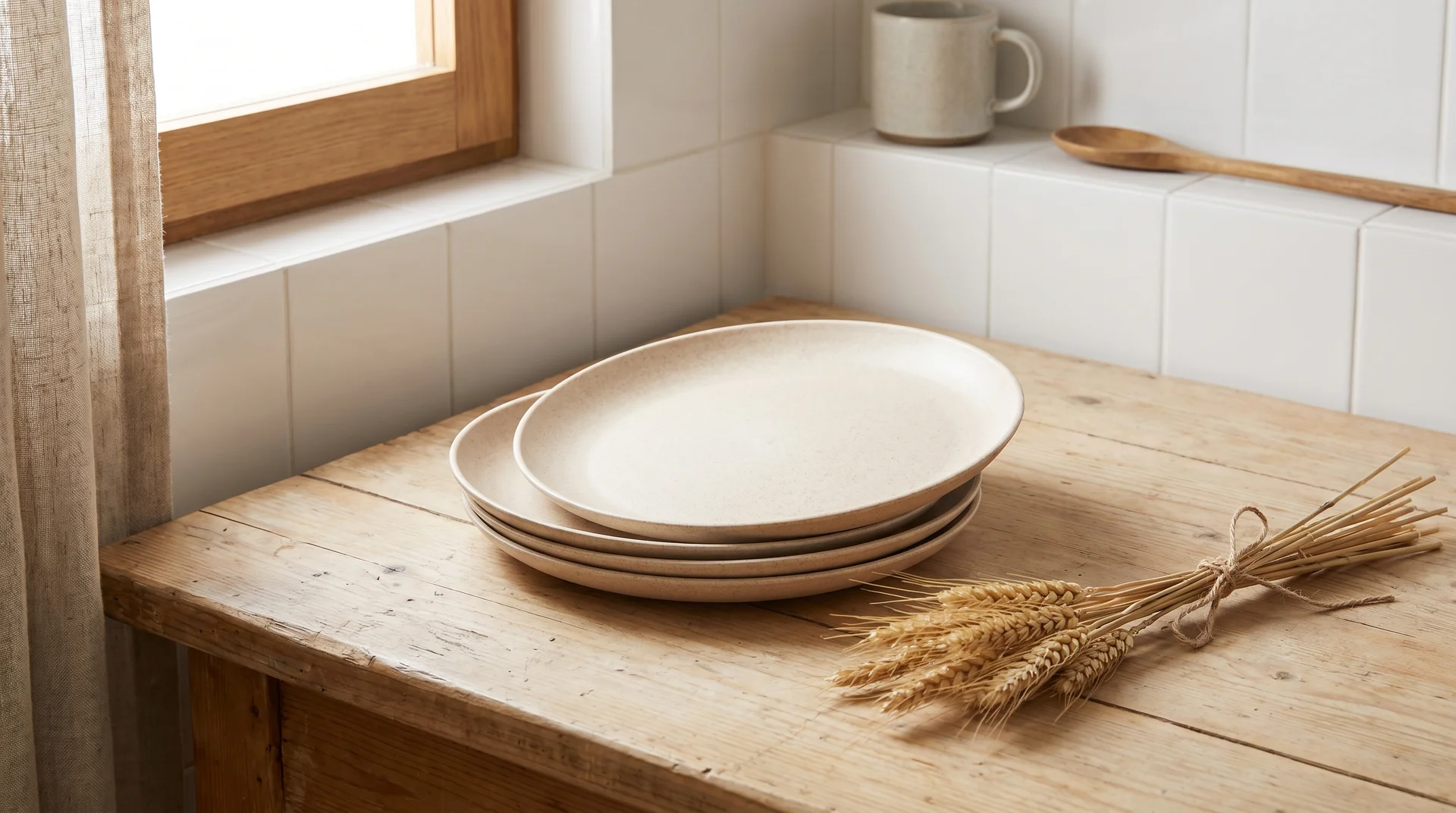
Most people buying wheat straw plates assume the product is mostly plant-based. That assumption is where nearly every confusion about this category starts.
Wheat straw plates are a composite material. What that composite actually contains is the question worth asking before you use it.
What Are Wheat Straw Plates Made Of?
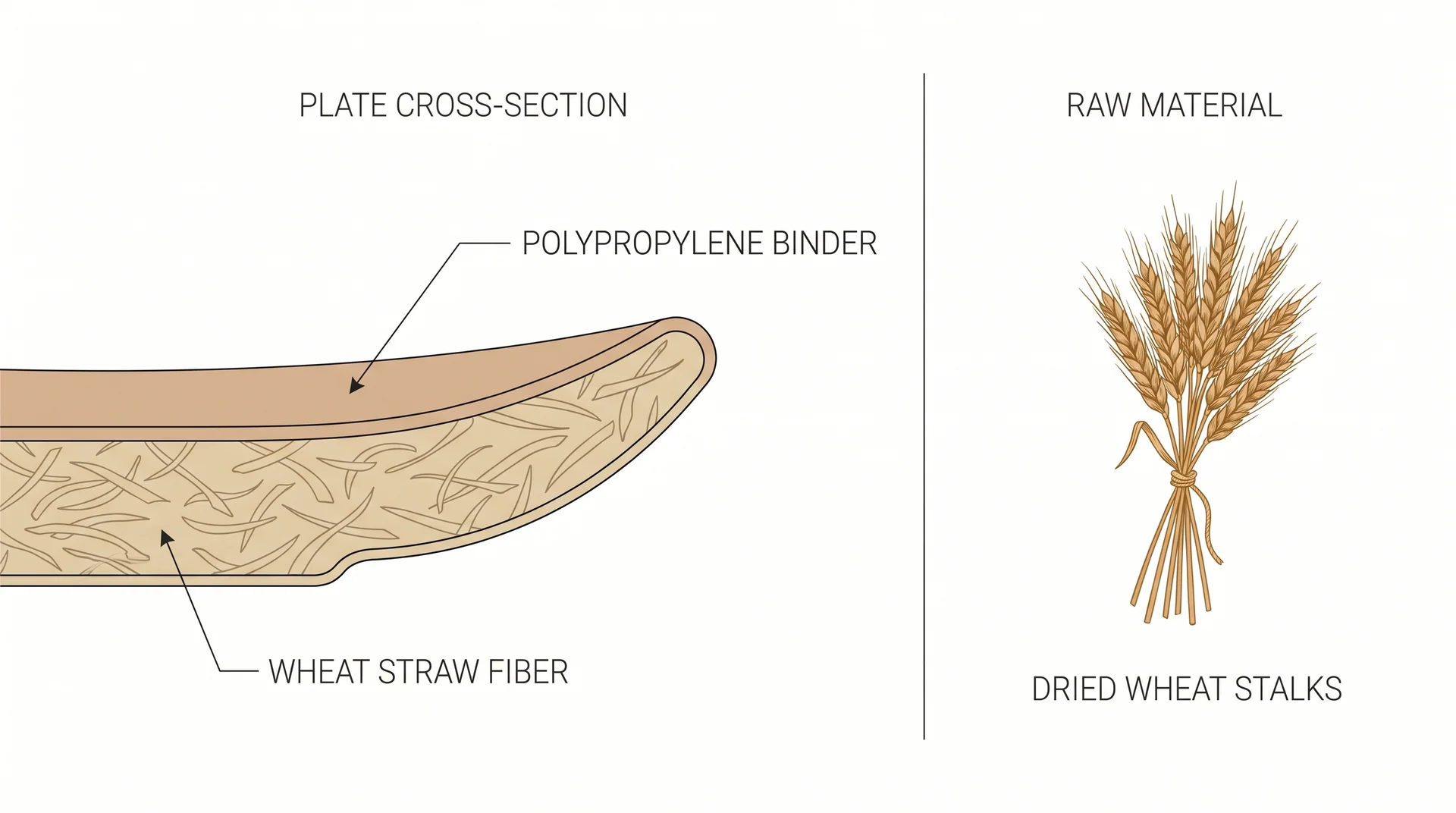
Wheat straw plates are built from plant fiber and a binding agent. The fiber is wheat straw, the dried stalks left over after the grain is harvested. That’s an agricultural byproduct.
A binder holds it together, and the binder is what most labels skip.
You’ll also see these products sold under the label “wheat straw plastic,” which describes the same composite material.
Wheat Fiber and Plastic Binder
The binder in most wheat straw plates is polypropylene, a food-contact plastic. The finished plate is typically around 30 to 50 percent wheat straw fiber, with polypropylene making up the rest.
The FDA regulates polypropylene as a food-contact material under 21 CFR 177.
This is why the BPA-free label is accurate and narrow at the same time. Polypropylene contains no BPA, so the claim is technically correct. BPA-free names one absent compound and says nothing about what the binder actually is.
Melamine-Bound Wheat Straw
Some wheat straw plates use melamine-formaldehyde resin, a synthetic binder, instead of polypropylene.
The two binders don’t perform the same way under heat. Their regulatory histories are also very different. If you’re trying to identify which type you have, the product spec sheet is the place to start.
- The EFSA lowered its tolerable daily intake for melamine in 2021, citing evidence of migration into food at elevated temperatures.
- The EU enacted category-level restrictions on melamine kitchen products in response.
Most wheat straw plate labels don’t name the binder type.
Are Wheat Straw Plates Safe?
Safety depends on the type of wheat straw plate you have.
Polypropylene-bound plates are generally safe for everyday food use within their temperature limits.
Melamine-bound plates carry a higher migration risk, particularly with acidic foods and at elevated temperatures. Most packaging doesn’t tell you which type you’re holding.
Temperature Limits and Microwave Use
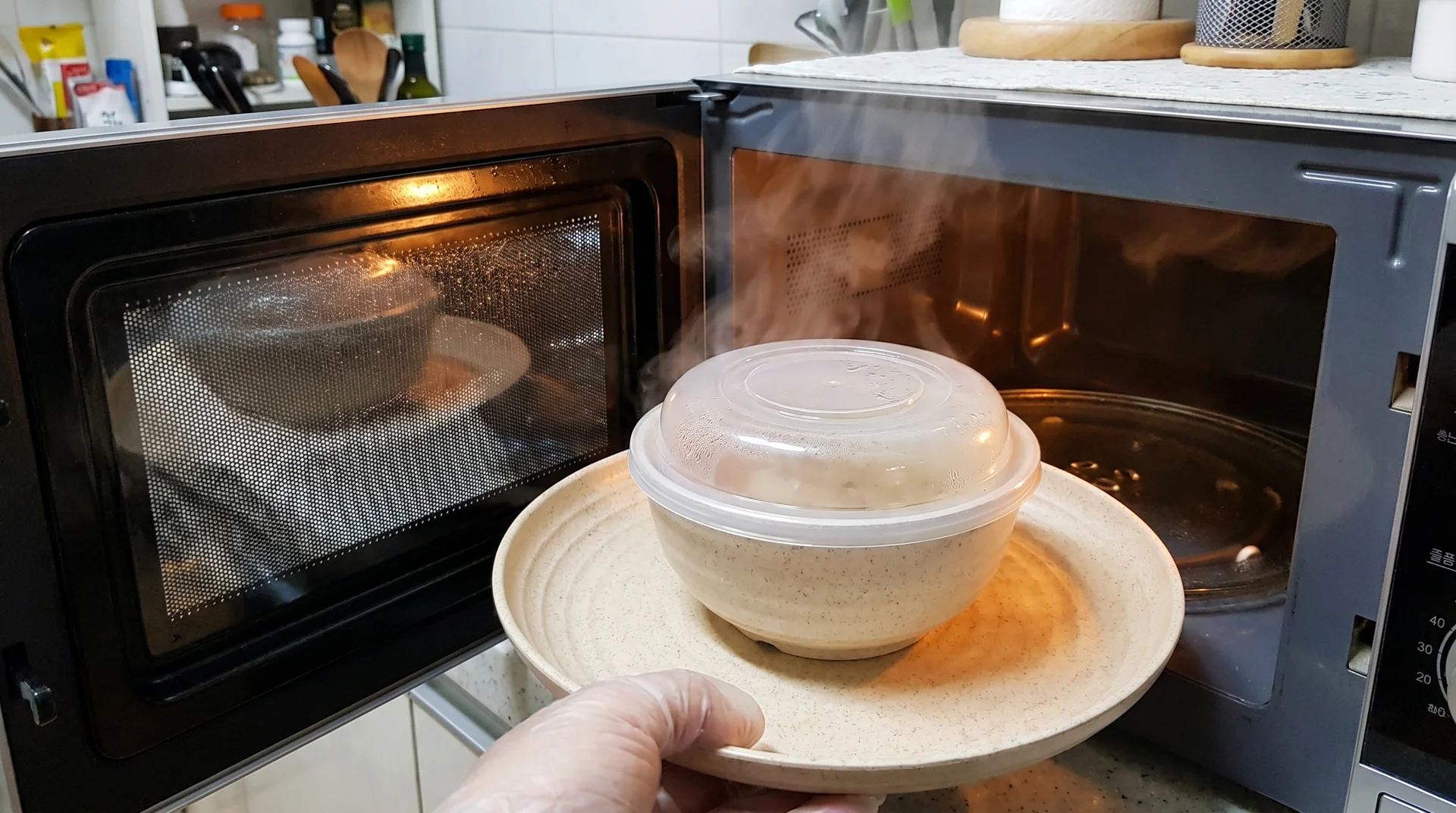
Whether wheat straw plates are microwave-safe depends on the binder, not the fiber.
Polypropylene is more heat-resistant than melamine and is rated for sustained food contact up to around 120°C (248°F). Most everyday microwave cooking stays below that point.
Covered food traps steam against the plate surface.
That steam can push surface temperatures above the food’s own temperature. The microwave power setting is rarely the direct problem.
Melamine-bound plates should not go in the microwave at all, since heat accelerates the migration of melamine monomers and formaldehyde into food with these products.
For PP-bound plates specifically, certain conditions create cumulative surface stress. Knowing them helps you set realistic expectations for how the plates hold up over time.
- Extended contact with acidic foods such as tomatoes, citrus, or vinegar-based dishes
- High-power microwave use, particularly with covered food
- Heated-dry dishwasher cycles run repeatedly for months
- Serving very hot food directly onto the plate from a hot pan
A single incident in any of these categories doesn’t fail the plate. The damage is cumulative and shows up over months, not meals.
Formaldehyde and Melamine Migration
The migration concern with melamine-bound wheat straw products is documented and specific. Research on plant-fiber tableware with melamine binders consistently shows that migration increases with temperature, acidity, and contact time.
The EU’s restrictions don’t automatically govern US products. For everyday use, the question that matters is whether your specific plate uses a melamine binder, not which country’s regulator reviewed it.
The FDA applies different thresholds for melamine in food-contact materials than the EU does.
Gluten and Celiac Safety
Wheat straw is the dried stalk of the plant. Gluten proteins are found in the grain’s endosperm, not the stalk. For most people with celiac disease, wheat straw dishware is not considered a significant gluten exposure source.
Manufacturing cross-contamination is possible in facilities that process both grain and straw material. If gluten exposure is a medical concern for your household, contact the manufacturer directly before using the product.
The Pros of Wheat Straw Plates
Wheat straw plates have specific advantages over ceramic and conventional plastic.
The advantages are practical. They’re not the ones most prominently featured on product listings.
Lightweight and Shatter-Resistant
- Wheat straw plates are significantly lighter than ceramic and won’t shatter when dropped. For camping, RV living, and households with young children, this is their clearest practical advantage.
- A ceramic plate dropped on tile from child height is a cleanup job, a safety problem, and a replacement purchase.
I’ve had a set in rotation for about eight months for exactly this purpose. They handle rough treatment without consequence. For the contexts where shatter resistance is the priority, they deliver on that specific promise.
Lower Upstream Environmental Footprint
Using agricultural waste as a feedstock reduces demand for virgin raw materials. Incorporating wheat straw fiber into sustainable materials manufacturing gives a byproduct a useful life.
In many agricultural systems, surplus straw is burned in the field, contributing to particulate air pollution.
Long Service Life
Wheat straw dishes resist chipping and don’t crack under normal handling. Structural integrity holds well for a plant-based composite material. These aren’t fragile products within their intended use range.
The operative phrase is “the right conditions.” Follow the temperature and use guidance from the safety section.
When those conditions are consistently met, the durability holds up better than most people expect from a product in this category.
The Cons of Wheat Straw Plates
Surface Degradation After Repeated Dishwasher Cycles
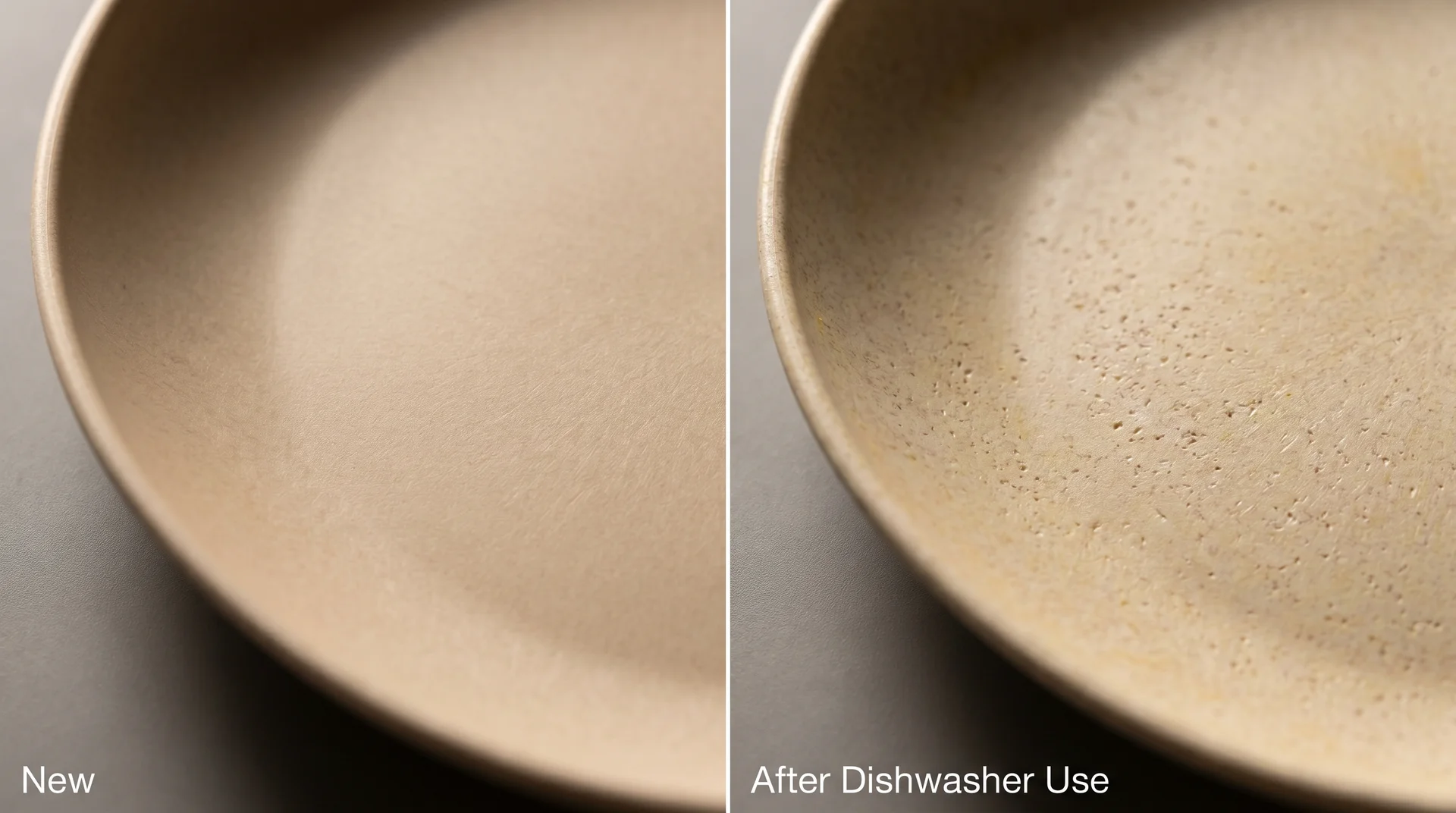
The surface of wheat straw plates degrades under repeated high-heat dishwasher cycles. Most reviews don’t run long enough to catch it. The typical review period covers the first few weeks. Surface change happens gradually over months of heated-dry cycles, not over any single run.
Over several months, I ran a set on my dishwasher’s heated-dry setting. These were not controlled lab conditions. Micro-pitting appears on the surface well before the plate looks visually degraded.
Replace these plates before the surface looks worn, not after.
Those small surface irregularities are where food residue accumulates, and bacterial retention begins. Hand washing, or running the dishwasher without the heated-dry setting, slows this process considerably. I watched the same failure sequence play out with worn commercial kitchen equipment during my restaurant years.
The Compostability Myth
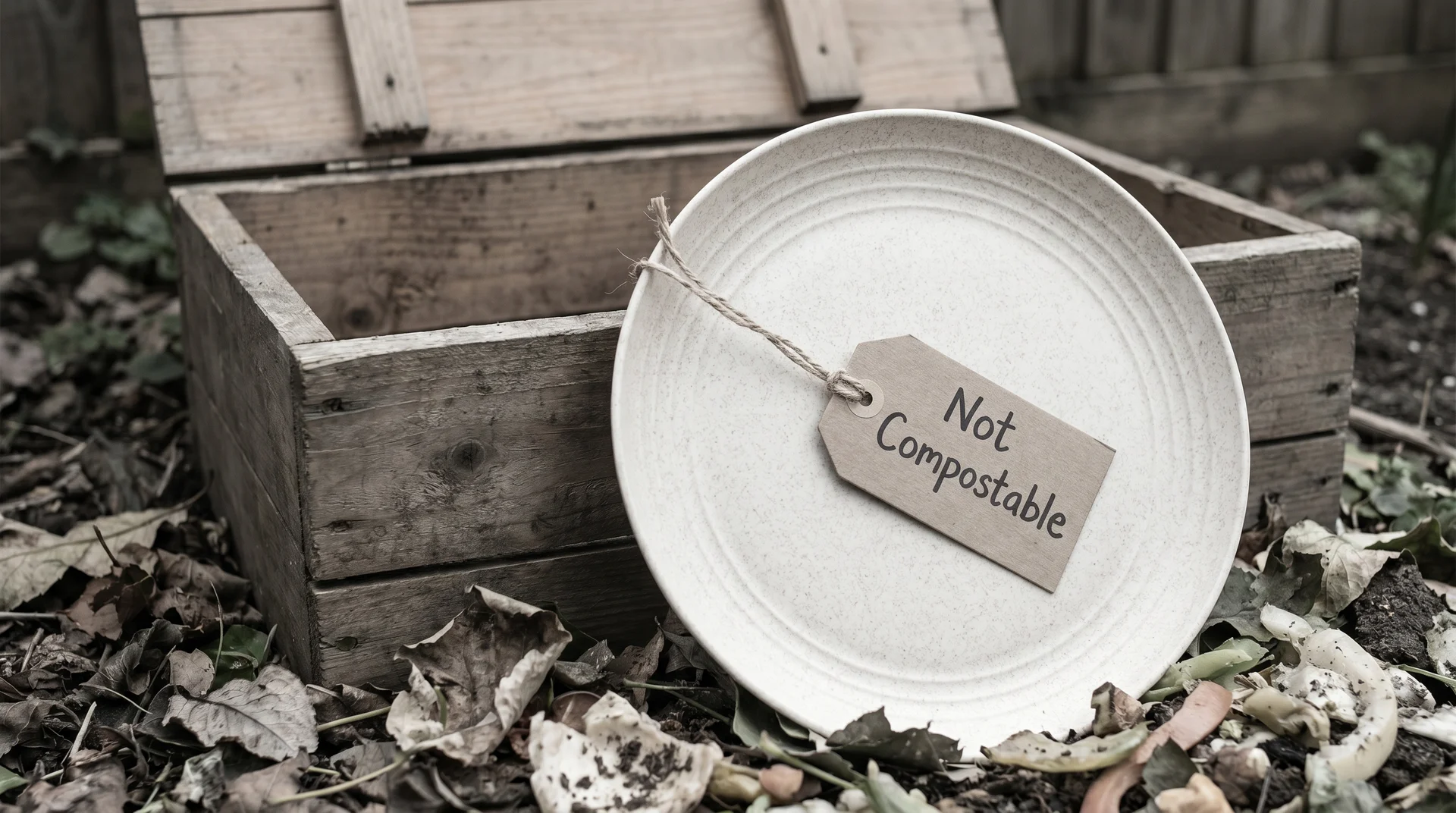
Most wheat straw plates are not compostable, despite what the branding implies.
The marketing language around “natural” and “plant-based” creates an expectation that the product can’t meet.
The wheat fiber portion of the plate would compost. The polypropylene binder won’t. Polypropylene doesn’t biodegrade in home composting conditions or in industrial composting facilities.
The environmental benefit is real upstream and stops at the factory gate.
Using agricultural waste fiber in manufacturing is a real environmental benefit. It reduces demand for virgin material at the production stage. That benefit ends there, and conflating it with end-of-life compostability is how the eco-friendly label creates expectations this product can’t meet.
Single-use wheat straw pulp products, the paper-like plates sold for outdoor events and catering, are a different material that can be industrially composted.
Heat Tolerance and Color Staining
Wheat straw plates absorb color from strongly pigmented foods, and this gets worse as the surface ages.
Tomato sauce, turmeric, and beet-based dishes leave stains that don’t fully wash out. The staining accelerates once micro-pitting develops from repeated dishwasher cycles.
Odor absorption becomes a secondary issue as the surface deteriorates. For dishes that stay hot at the table for extended periods, ceramic handles the heat load better and won’t pick up color over time.
Wheat Straw Plates vs. Plastic and Bamboo
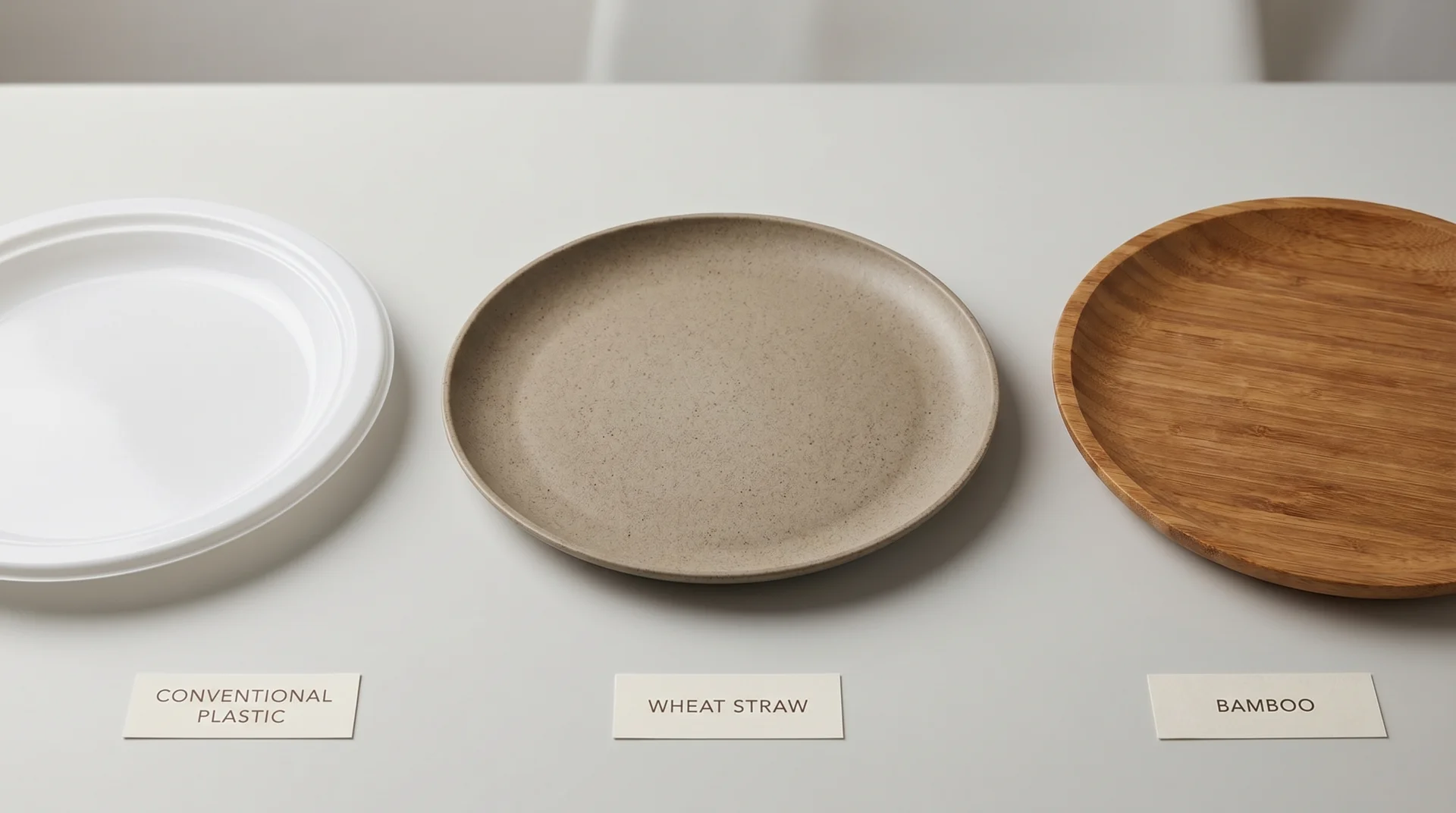
The comparison changes depending on which binder each product uses.
The table below covers PP-bound wheat straw plates, the most common type in the US market. Melamine-bound wheat straw products align more closely with bamboo plates in their safety and use profile.
| Attribute | Wheat Straw (PP-bound) | Conventional Plastic | Bamboo Plates (melamine-bound) |
|---|---|---|---|
| Primary material | Wheat fiber + polypropylene | Virgin or recycled polymer | Bamboo fiber + melamine resin |
| BPA-free | Yes | Varies by product | Yes |
| Microwave safe | Low power only | Varies by product | No |
| Dishwasher safe | Yes (top rack preferred) | Varies by product | No (most products) |
| Compostable | No | No | No |
| Shatter-resistant | Yes | Yes | Yes |
| Surface degradation risk | Yes, over time with heat | Low to moderate | Yes, with heat and acids |
| Migration concern level | Low (PP binder) | Varies by plastic type | Higher (melamine binder) |
| Typical cost per plate | $1–$3 | $0.50–$2 | $2–$5 |
When safety is the primary concern, the binder matters more than the fiber. PP-bound wheat straw plates carry a lower migration risk than melamine-bound bamboo plates because of the polypropylene, not the wheat.
That same logic extends to bamboo cutting boards, where the adhesive question is worth understanding before you buy.
When Wheat Straw Plates Are Actually Worth It

The right use case for these plates is more specific than the label suggests.
They fit certain situations well. In others, a different material is the better answer.
Good for RV Living, Camping, and Kids’ Daily Meals
Wheat straw dishes are a strong choice when shatter resistance and light weight matter more than long-term surface durability. RV and camping kitchens are the clearest fit. The plates pack light and handle drops without complaint.
For households with young children, the same logic applies. Plates that won’t shatter, used for everyday meals within normal temperature ranges, work well here. I wouldn’t use them as serving vessels for acidic or very hot food held for extended periods.
Bad for Eco-Minimalists and High-Heat Households
If you’re buying wheat straw plates for their end-of-life environmental benefit, this product won’t meet that expectation. The compostability gap is the category’s most consistent buyer disappointment. These plates don’t solve the plastic waste problem at the end of life.
If your household microwaves regularly at high power or with acidic foods, a composite plate is not the right tool.
A ceramic plate handles sustained high-temperature food contact more safely and will outlast any wheat straw product on the market. Sometimes the conventional choice is the better one, and that’s fine.
The Bottom Line on Wheat Straw Plates
Wheat straw plates have a real use case. It’s not the one that most of the marketing describes.
They’re a practical choice for shatter resistance and light weight, used within their temperature limits.
Whether they’re worth buying for your kitchen depends almost entirely on what binder was used to make them.