

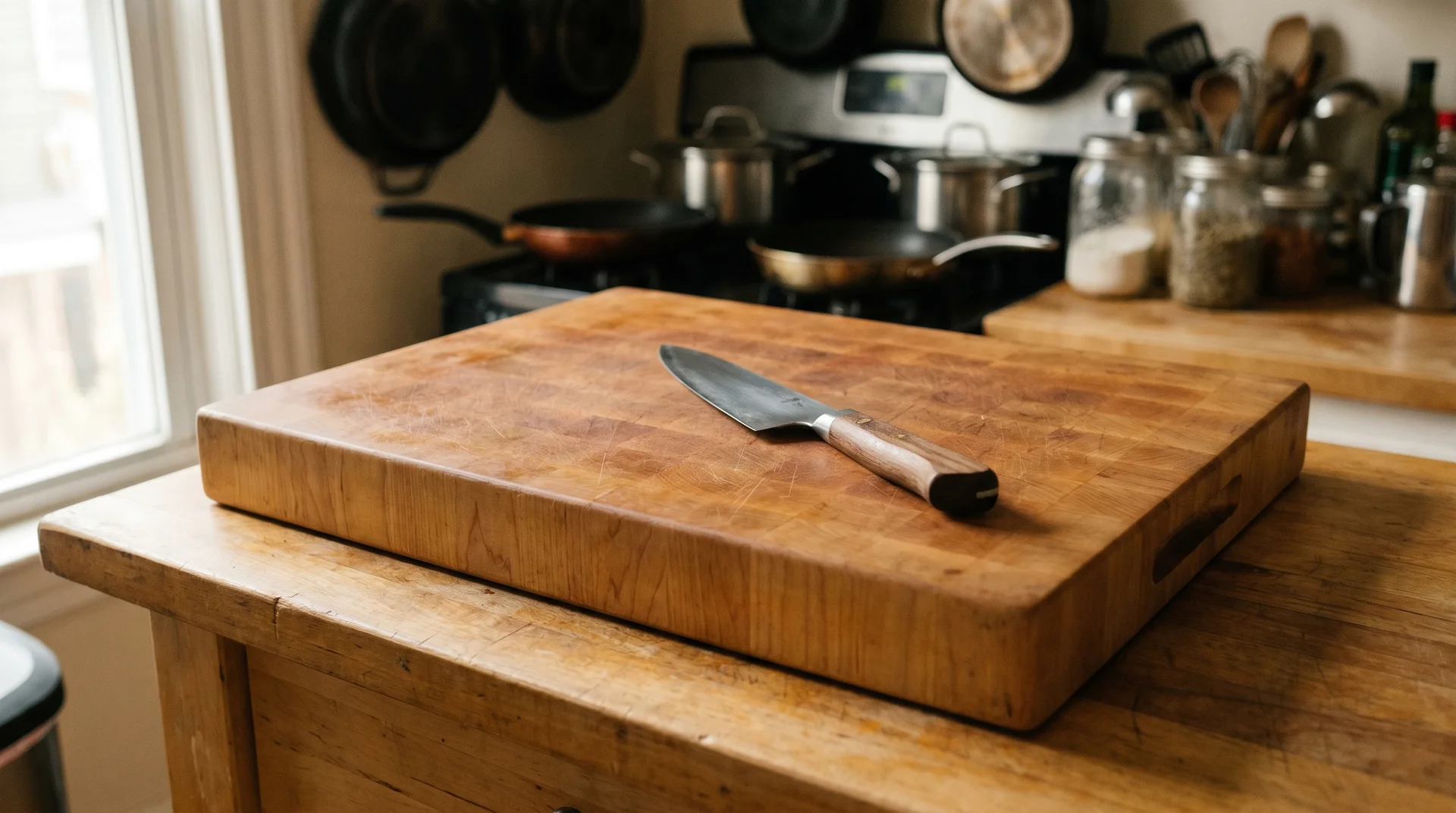
The most common mistake people make with cutting boards is picking the wrong one. The question isn’t which material is cleanest.
It’s which material stays safe, given how you actually use your kitchen? This article covers material selection, like which board types hold up under real use, and how to choose for your kitchen.
It covers material reasoning and specific picks in each category. The reasoning comes first because the picks only make sense in context.
It doesn’t cover sanitization protocols. Those need their own criteria.
What “Safest” Depends on Which Risk You’re Solving For
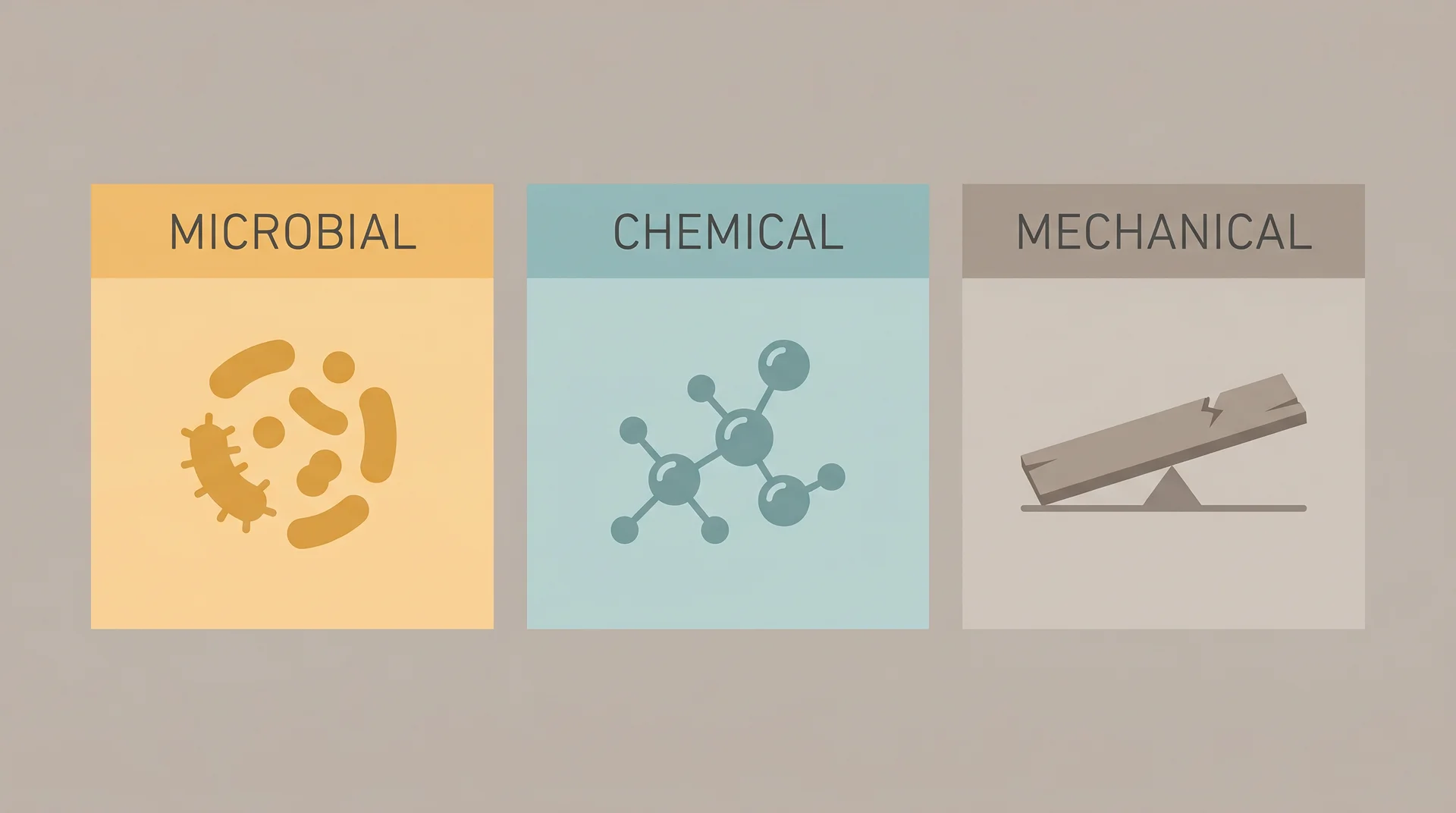
Three separate safety problems run in this conversation at once.
In practice, most people already know the first two. The third is the one they haven’t thought about yet.
- Microbial risk: bacteria from raw meat or contaminated produce surviving on the board surface
- Chemical risk: materials that shed microplastics, off-gas formaldehyde, or leach compounds into food during prep
- Mechanical risk: a board too small, too thin, or too unstable to work on safely
Most of the debate focuses on the first two. Mechanical risk is what sends people to urgent care.
Solid Hardwood: The Material That Lives Up to Its Reputation
For most home cooks, solid hardwood is the best primary cutting surface available.
The USDA Food Safety and Inspection Service recognizes that wood has documented properties working against bacterial survival. The fibrous grain structure of hardwoods like maple, walnut, and cherry pulls bacteria below the surface during use. They become trapped and die off rather than multiplying.
This is real, researched, and conditional on the board being in good condition. That condition is the part most people skip.
Two decisions inside the hardwood choice determine whether it holds: construction type and maintenance commitment.
End-Grain vs. Edge-Grain
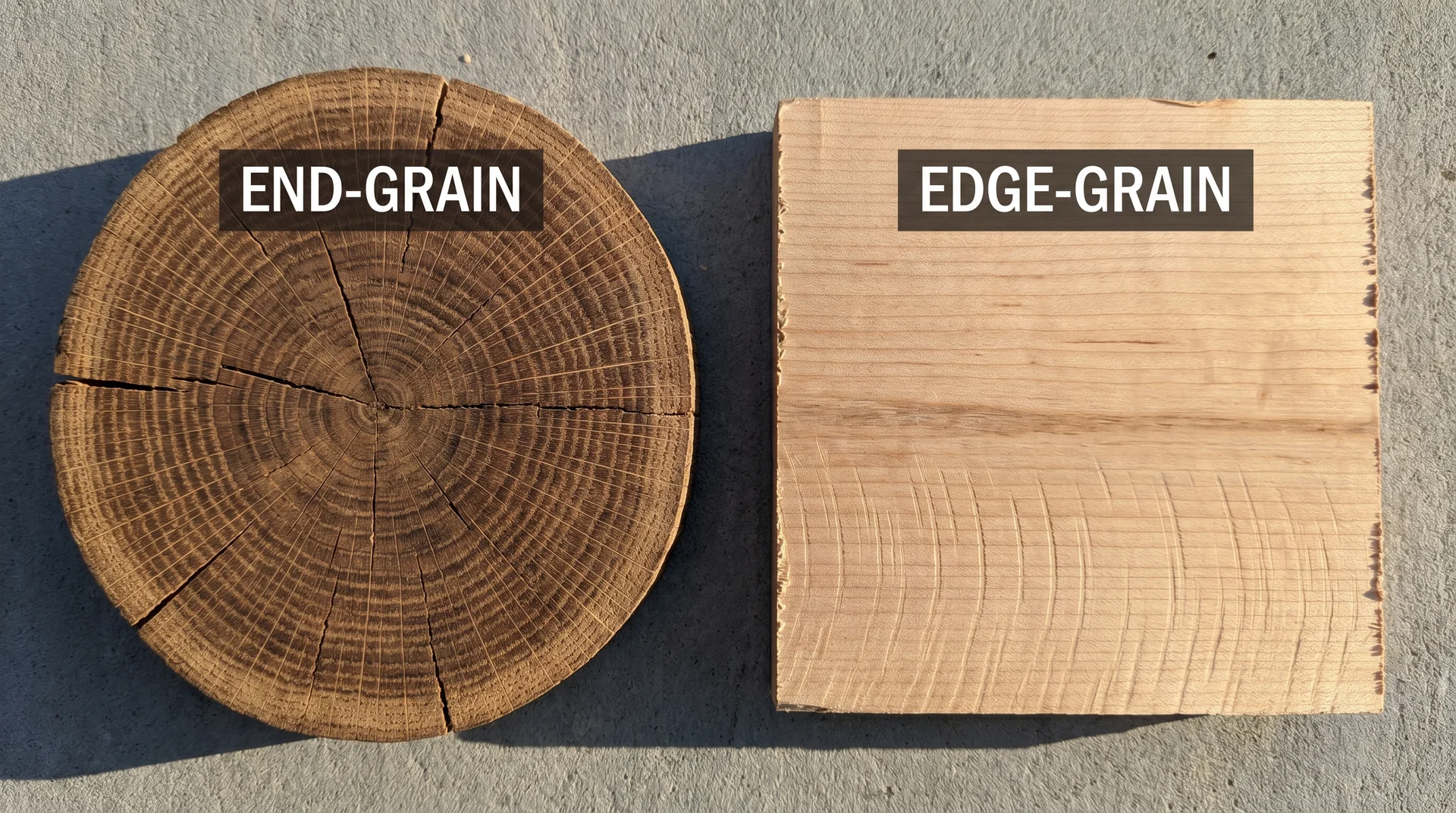
The construction type matters more than the wood species.
Look at the end of a hardwood board.
- Circular growth rings mean end-grain.
- Long parallel lines along the face or side mean edge-grain or face-grain.
End-grain boards are self-healing. A knife parts the wood fibers rather than cutting across them. The fibers close back up.
Testing both confirms the difference.
I’ve tested end-grain and edge-grain maple in my own kitchen, not in controlled conditions. After 18 months of comparable use, the end-grain showed almost no visible knife marking. The edge-grain accumulated visible channels.
Edge-grain boards don’t recover from knife pressure. The blade cuts across the fibers and leaves marks that build into grooves. Those grooves trap bacteria the same way scarred plastic does.
Face-grain is worse. It has the most surface exposure and the least structural integrity under blade pressure. If the construction type isn’t labeled when you’re shopping, that’s a signal: end-grain costs more to produce, and brands that make it say so.
What Maintenance Actually Requires, and What Happens If You Skip It
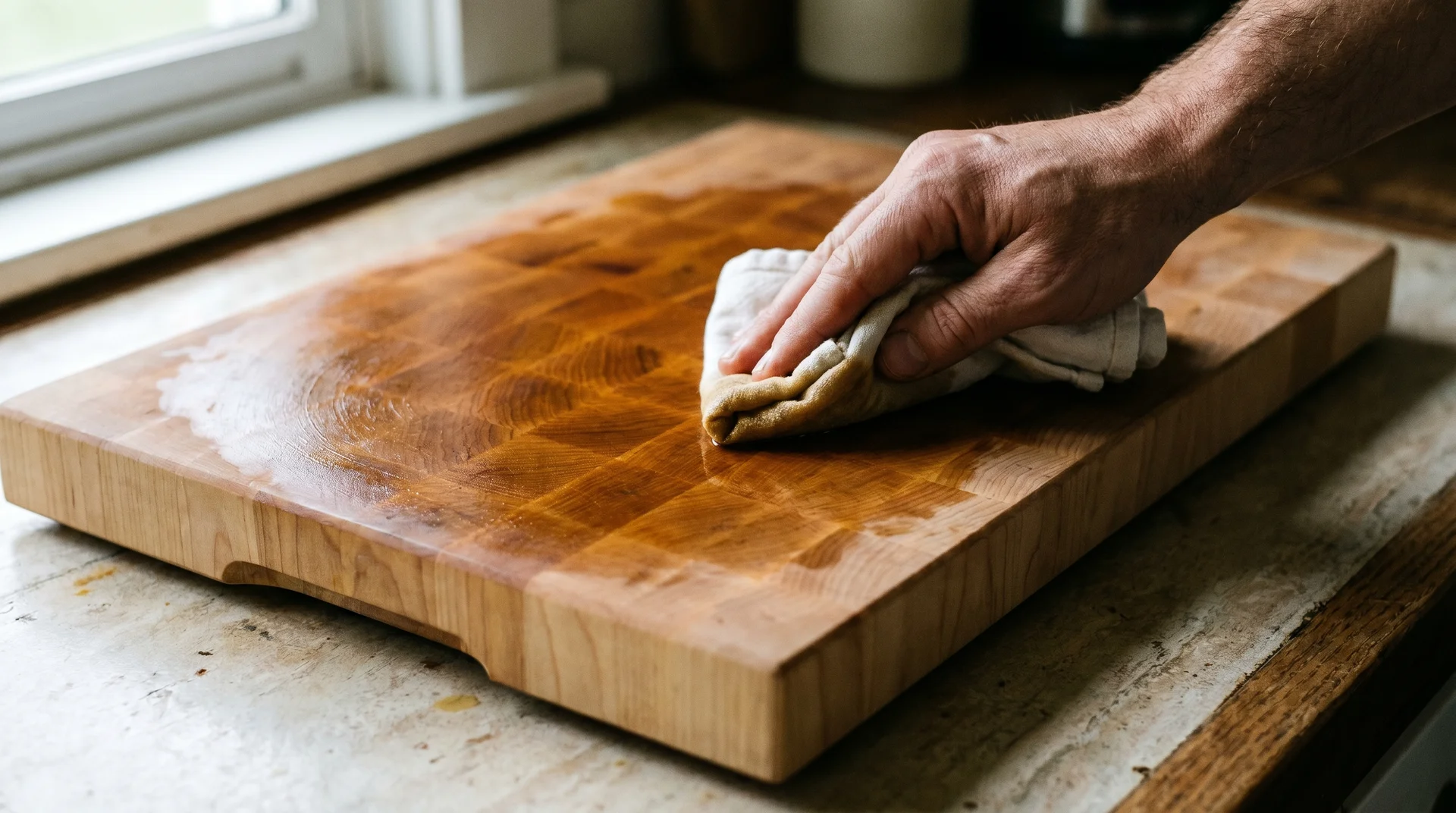
Under-maintained hardwood stops being the safe choice.
The antimicrobial properties of hardwood are real. They’re also conditional on the wood staying in good condition. A board that dries out develops micro-fractures along the grain.
Those fractures trap bacteria below the surface. Standard washing doesn’t reach them.
I’ve tracked conditioning schedules in my test notes for years, watching which boards develop, checking, and why. It’s almost always the same story: oil applied at purchase, then forgotten.
Two signs a board needs conditioning right now:
- It looks lighter in color than when it was new
- Water no longer beads on the surface the way it used to
If you see either of those, condition before your next use. Here’s the full routine:
- Before first use, coat the board with food-grade mineral oil and let it absorb overnight.
- Re-oil every four to six weeks under normal use. In dry climates or winter, do this more often.
- After washing, dry the board standing on edge, not lying flat. Flat drying concentrates moisture on one face and accelerates warping.
- Avoid olive oil, vegetable oil, and coconut oil. These go rancid inside the wood grain.
- Never put a hardwood board in the dishwasher: the heat and moisture cycling will warp and crack it within a few cycles.
Those aren’t optional. They’re what the antimicrobial claim depends on.
What happens when you skip them: the wood dries, contracts, and micro-fractures form along the grain. Standard washing doesn’t reach what’s trapped inside those fractures.
A checked hardwood board is not safer than a plastic board with grooves. It’s a different version of the same problem. This isn’t a reason to avoid hardwood. It’s a reason to be honest about what the choice requires.
Plastic Cutting Boards: What the Research Changed and What It Didn’t
Plastic boards aren’t a settled argument.
If you’ve been using the same plastic board for five or more years, there are probably two separate things happening to it at once. Both matter, and they’re worth understanding on their own terms.
The Groove Problem Predates the Microplastics Concern
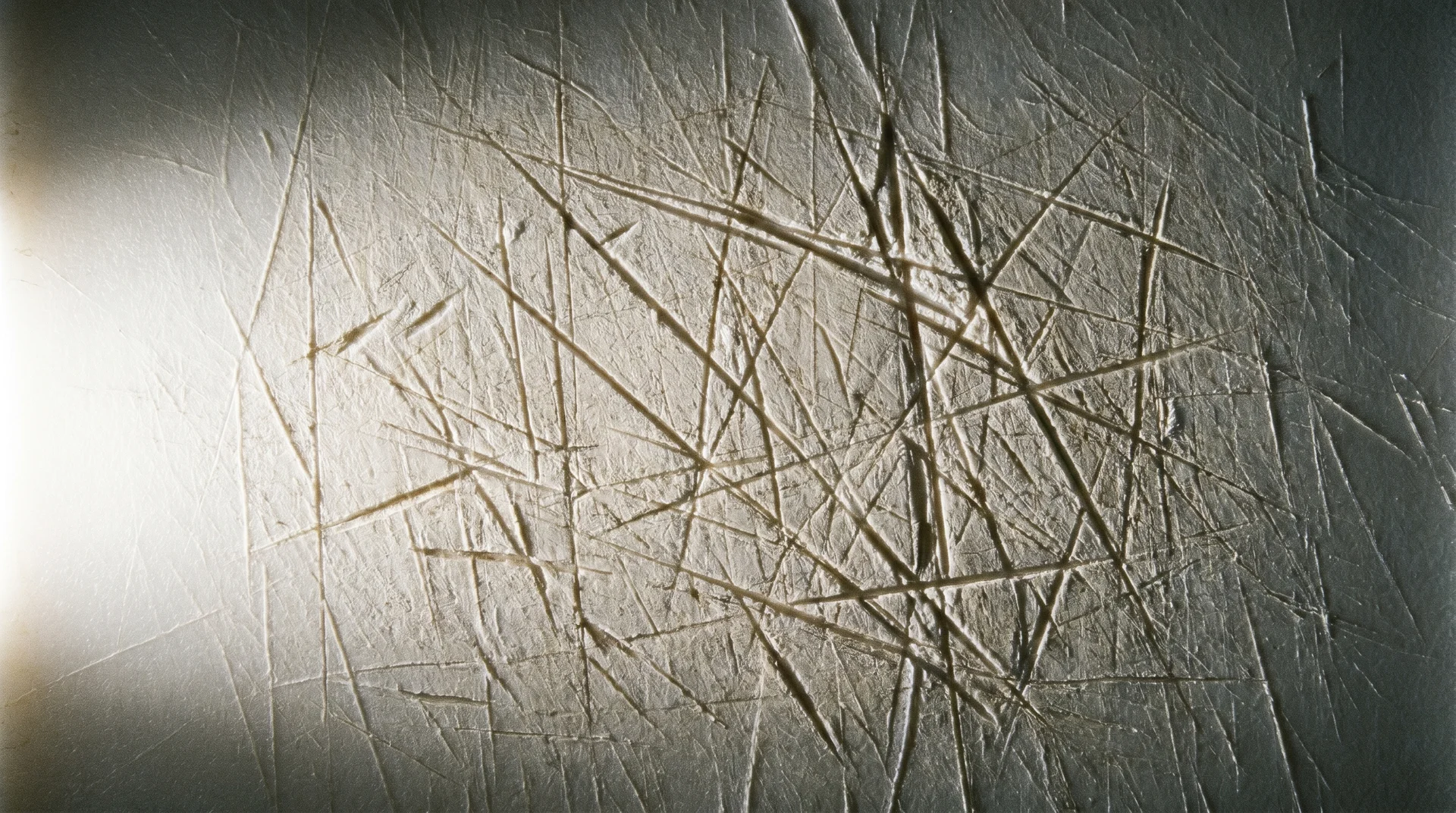
The original concern with plastic boards was always what they trap, not what they shed.
The USDA addressed cutting board safety long before anyone was discussing microplastics. Knife grooves in plastic accumulate food particles and bacteria. Standard hot soapy water reaches the board surface. It doesn’t reach the inside of a groove.
Plastic with visible knife scoring is effectively unsanitizable by standard home washing. This argument predates the microplastics research. It’s also the more settled science.
What the 2023 Microplastics Study Actually Found
A 2023 study confirmed that chopping on plastic boards releases microplastic particles directly into food.
The particle counts were significant: thousands of particles per use in published testing. The science on what microplastic ingestion does at those quantities is genuinely unresolved. The precautionary case against plastic is reasonable.
What is clear: a plastic board with significant knife grooves carries two compounding problems.
- The grooves trap bacteria that washing won’t remove.
- The plastic surface sheds particles during use, especially around those grooves.
Those are two separate reasons to replace a heavily used plastic board.
Food-Grade Rubber: The Professional Standard Home Cooks Don’t Know About
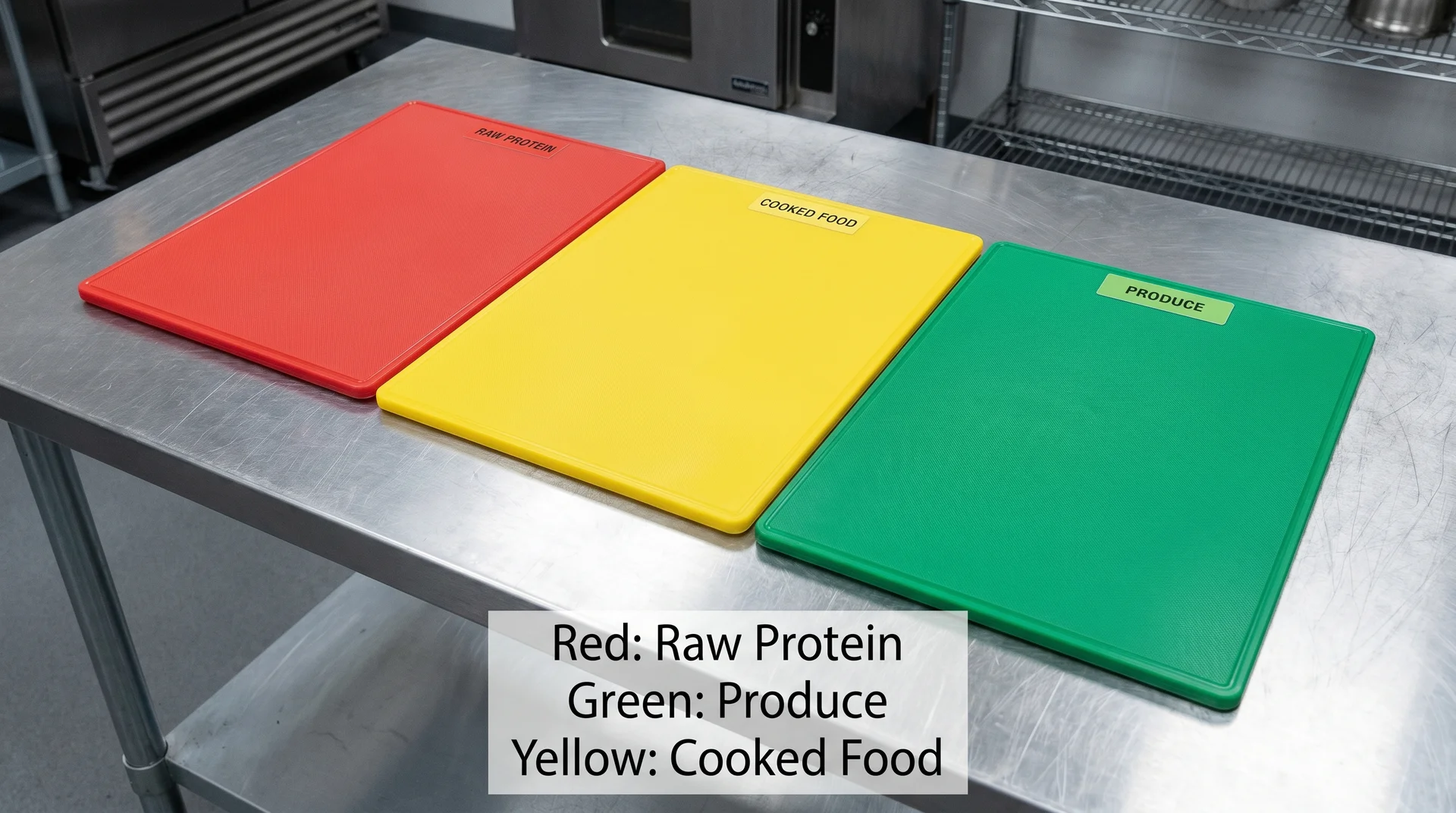
Professional cooks use food-grade rubber. Home cooks mostly don’t know it exists.
In years of restaurant kitchen work, the boards I almost never used for raw protein were plastic.
The standard was NSF-certified food-grade rubber, meaning boards independently certified for commercial food contact. They were color-coded by task, one for raw protein and a separate one for produce. That system exists for reasons that hold up outside professional kitchens.
Here’s what food-grade rubber delivers across all three safety concerns:
- Non-porous surface: liquids and food particles don’t absorb into the material during prep
- No microplastic shedding: the rubber compound doesn’t release particles under knife pressure the way polyethylene plastic does
- Knife-friendly: the slight surface gives reduces blade wear compared to both hardwood and harder plastics
- Reliable sanitization: dishwasher safe, and it responds well to the USDA-recommended bleach solution for boards that contact raw meat
That’s a strong profile. The catch is finding it.
Why It Doesn’t Show Up in Consumer Roundups
Food-grade rubber boards come from restaurant supply, not kitchen stores.
Consumer roundups feature what’s available through retail channels. NSF-certified food-grade rubber boards move through restaurant supply distributors. They’re not absent from home kitchen recommendations because they perform worse.
They’re absent because the retail kitchen market and the food service supply market run on different distribution systems. If you want food-grade rubber, you buy from a restaurant supply retailer, not a kitchen store. The boards are not expensive.
Bamboo and Paper Composite: Two Materials That Need Separate Conversations
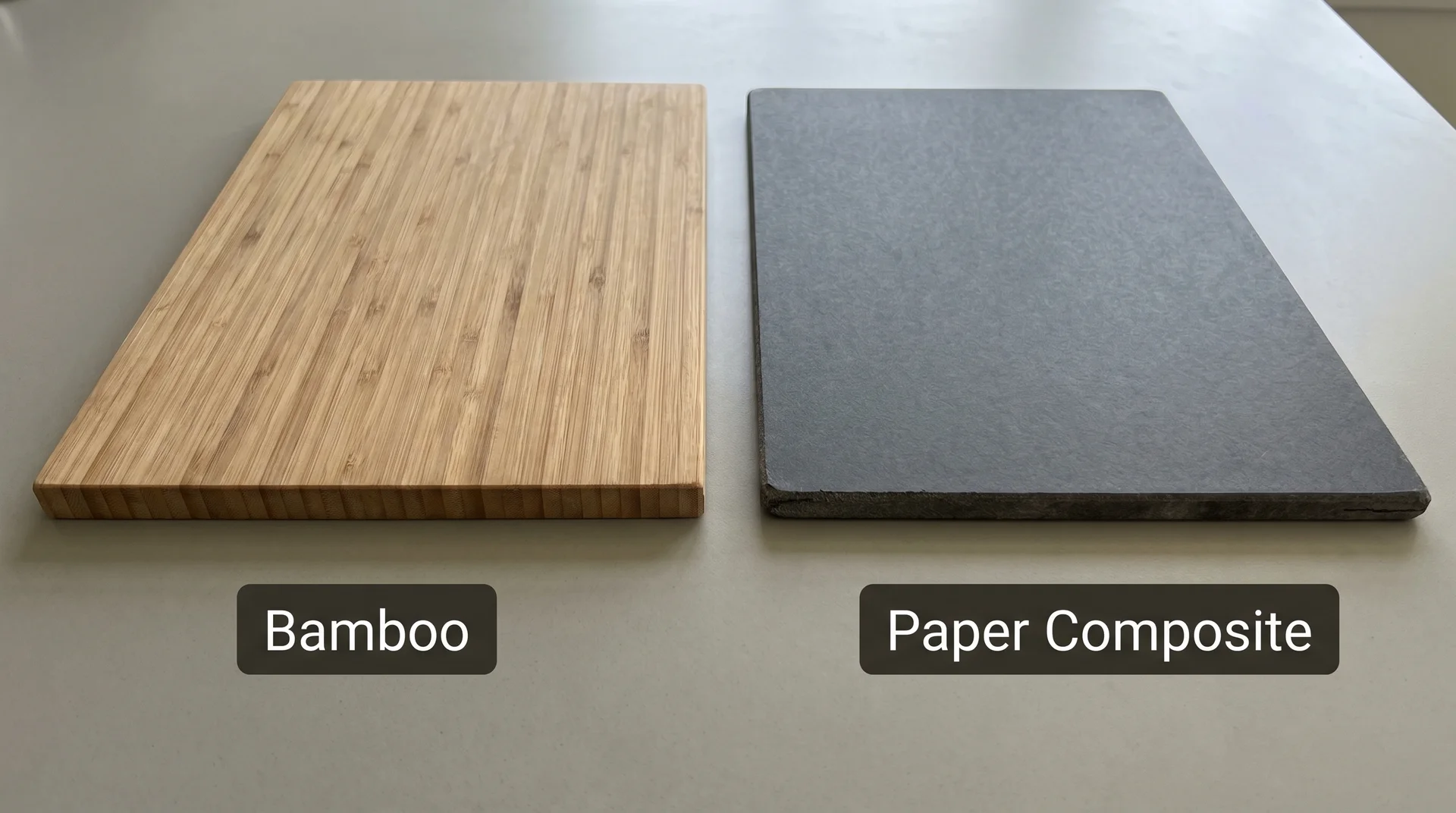
Bamboo and paper composites are not the same material.
They get grouped together constantly, and that causes bad buying decisions in both directions.
Bamboo
Bamboo is technically a grass, and its properties at the cutting surface reflect that.
The eco-marketing leans on sustainability: bamboo grows fast, and it’s renewable. What the marketing skips is what the material does to your knife.
Bamboo is denser and harder than most cutting board hardwoods. It contains more silica, the mineral compound that makes it abrasive against blade edges. More silica means more edge wear per use than maple or walnut delivers.
I’ve had people describe their bamboo boards as feeling smooth and therefore knife-friendly. Smooth doesn’t mean gentle. The silica is microscopic.
The adhesive question matters more than the surface question for most buyers.
Most bamboo boards are strips bonded with adhesive. That adhesive quality varies considerably. Lower-cost boards frequently use phenol-formaldehyde-based adhesives, the same type used in MDF and particle board.
These release formaldehyde when wet. Budget bamboo takes up more space in my tested-and-not-recommended list than any other category. The reason is always the adhesive quality.
Evaluating adhesive claims without a lab takes one step: find brands that name the adhesive type and confirm formaldehyde-free status. “Food-safe adhesive” without further specification is not enough.
Treat a vague adhesive claim the way you’d treat a vague ingredient label on food. You want to know more before buying.
Paper Composite
Paper composite is compressed, resin-infused paper, and it performs significantly better than that description suggests.
The material is layers of paper pressed under high pressure with resin and treated to create a non-porous cutting surface. Epicurean is the name most people know, but other manufacturers make comparable boards.
- Non-porous: doesn’t absorb liquids or food particles during use
- Dishwasher safe: no conditioning required, no oiling schedule
- Knife-friendly: softer than bamboo or hardwood, which reduces blade wear over time
- Stable: doesn’t warp, crack, or absorb moisture the way wood does under inconsistent maintenance
Paper composite differs from bamboo in every meaningful way.
One caveat worth checking: BPA and VOC status in the resin binder. Not all paper composite brands disclose this. Look for boards that explicitly confirm BPA-free and low-VOC resin.
Paper composite doesn’t have hardwood’s antimicrobial properties. It also skips the hardwood’s maintenance routine. For a household where consistent oiling isn’t realistic, it’s a more defensible everyday choice than a neglected hardwood board. That’s not a small distinction.
Glass, Stone, and Titanium: Where These Materials Actually Belong
These are not primary cutting board materials.
Glass and stone boards like marble and granite are non-porous and genuinely easy to sanitize. From a bacterial standpoint, they’re safe. They’re also hard enough to degrade knife edges with regular use.
The damage isn’t gradual dulling over months. A few sessions of real chopping on glass or stone will noticeably damage a quality knife’s edge. I keep glass on my counter for pastry work. It doesn’t come near a weeknight dinner.
These materials belong on pastry boards, cheese boards, and serving surfaces.
Our knife sharpening tips cover how to recover from glass or stone damage. Worth reading before you use either surface for anything beyond light slicing.
Titanium cutting boards have gained social media attention, with claims around toxin-free surfaces and extreme durability. The material is real. The specific claims vary considerably in what the evidence actually supports.
Whether titanium cutting boards deliver what the category promises is a longer answer than fits in a material guide.
How to Choose the Right Board for How You Actually Cook
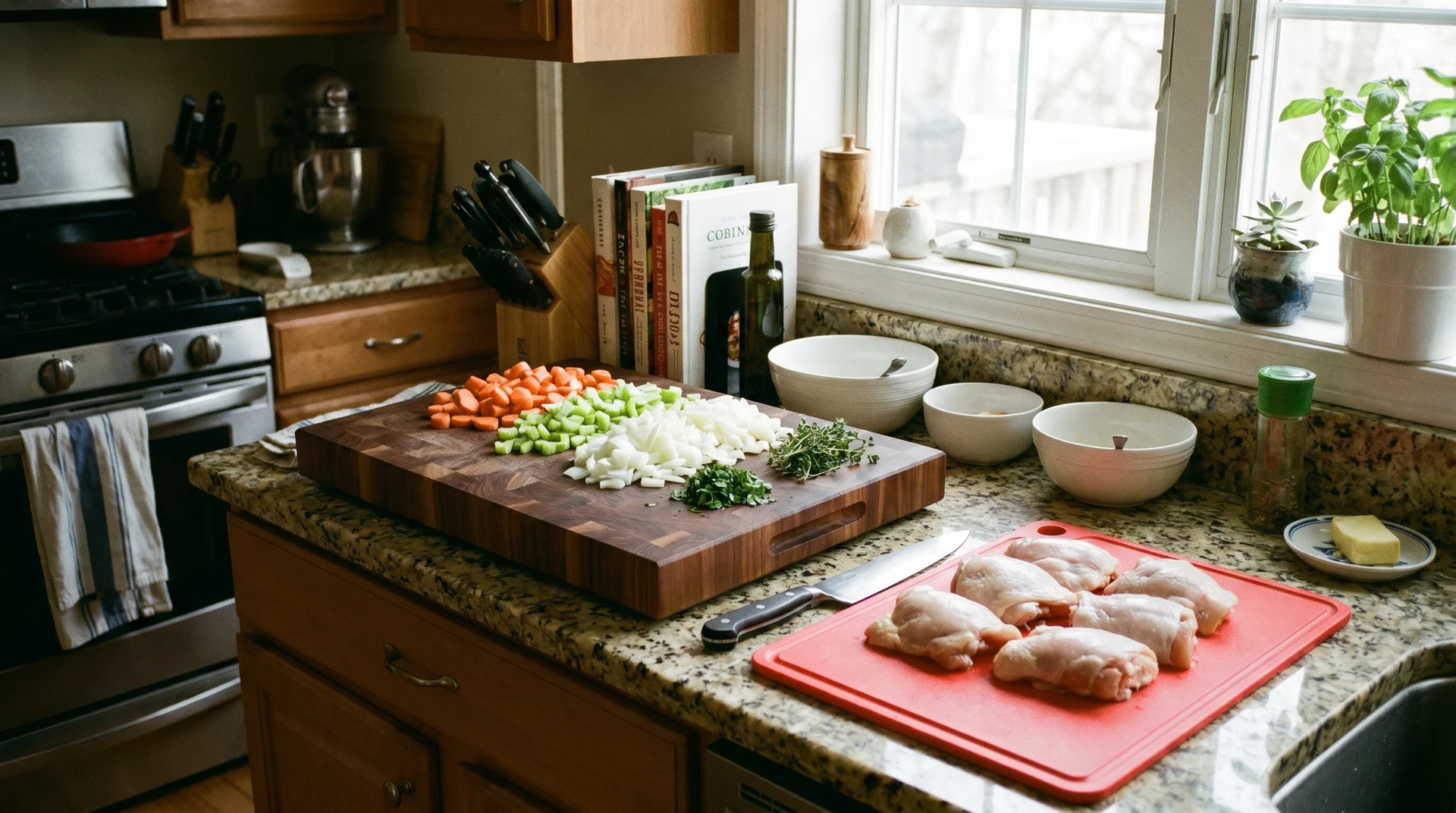
The safest cutting board is the one you’ll actually take care of.
Before you land on a material, ask yourself one honest question: Will you oil a cutting board every five or six weeks? The material comparisons above assume ideal use conditions. The real question is what material matches your actual habits, not the habits you intend to develop.
| Your kitchen situation | Best primary material |
|---|---|
| You’ll condition a board consistently every four to six weeks | End-grain hardwood: maple or walnut |
| You won’t maintain a regular conditioning routine | Paper composite: dishwasher safe, no oiling required |
| Heavy prep cook with counter space and willingness to source it | Food-grade rubber from a restaurant supply retailer |
| Pastry work, cheese service, or light slicing only | Glass or marble: not for daily chopping |
The separate-boards question comes up in every cutting board conversation. The advice is almost never made practical.
Two boards don’t require two counters. They require a system. Color-coding is the easiest one: one board exclusively for raw proteins, a different one for everything else.
If counter space is limited, a secondary board for raw meat doesn’t need to match your primary board. A food-grade rubber board from a restaurant supply retailer is inexpensive and takes minimal storage space.
Here’s what the sequencing looks like in practice:
- Prep all produce first on your primary board.
- Set that board aside before moving to raw protein.
- Use the secondary board for any raw meat or fish.
This is more realistic than washing the same board between tasks. It’s also more protective than a quick rinse mid-session.
What to Buy: Our Picks by Material Category
Brand recognition is the wrong filter for this decision.
What follows is organized by material and confidence level, with caveats before praise. No affiliate commissions on anything listed here.
End-Grain Hardwood Picks
Three boards are worth your attention here, and the confidence basis on each one is different.
The most common mistake in this category is leading with the brand name and treating the material label as confirmation. The Boos name appears on end-grain boards and on face-grain boards. Those are not the same product, so check the product title for the construction type before ordering anything.
| Board | Species | Confidence basis | What I’ve observed |
|---|---|---|---|
| John Boos & Co. end-grain maple | Maple | Two years of daily use in my kitchen | Holds conditioning well under consistent maintenance. Construction type is labeled clearly on their end-grain line. |
| BoardSmith end-grain | Maple or walnut | Researched on my extended-test shortlist | Small-batch US manufacturer. Species and sourcing are stated in product copy, which is rare in this category. |
| Virginia Boys Kitchens | Walnut | Tested once; wouldn’t call it a conclusion yet | Walnut’s tighter grain structure is a real material advantage for surface durability, not only an aesthetic one. |
If I were buying today, I’d start with the Boos. It has the longest track record in my kitchen, the most accessible distribution, and clearly labeled end-grain construction. The BoardSmith and Virginia Boys are both worth considering if sourcing transparency or the walnut species specifically matters to you.
Food-Grade Rubber Picks
All three picks here come from commercial food service supply, and that’s where you’ll need to buy them.
I know food-grade rubber from professional kitchen work. The NSF certification and commercial track records are the basis for these picks. I’d buy any of them for a home kitchen without hesitation on the material itself.
| Board | Origin | Confidence basis | What sets it apart |
|---|---|---|---|
| Asahi Rubber | Japan | Professional kitchen material knowledge | The most consistently cited option in home-cook communities that have found this category. Available through restaurant supply retailers and online distributors. |
| Hasegawa | Japan | Professional kitchen material knowledge | Comparable performance to the Asahi. Sometimes easier to source, depending on which distributors serve your area. |
| San Jamar Saf-T-Grip | US commercial | Professional kitchen material knowledge; commercial track record | The US commercial equivalent. Rubber feet prevent board movement on smooth counter surfaces, which the Japanese boards don’t prioritize. |
Sourcing availability is the real decision variable between the three. If the Asahi is in stock at a distributor near you, start there. If counter stability matters for your setup, the San Jamar’s rubber feet are a practical advantage worth choosing.
Paper Composite Picks
Epicurean owns this category in the home market, and both of their main boards are worth knowing.
Both the Original and Gourmet Series are made of the same material in different formats. I’ve used the Original as a secondary board for about 14 months in my kitchen. Both have held up under daily use, and the dishwasher-safe claim on each is accurate.
| Board | Format | Confidence basis | Best for |
|---|---|---|---|
| Epicurean Original Series | Standard gauge | 14 months as a secondary board in my kitchen | The accessible entry point. Available through mainstream retail, no restaurant supply account needed. Right for readers who want to test the material before committing to a heavier board. |
| Epicurean Gourmet Series | Heavier gauge | Six months as a primary board in my kitchen | The right format if paper composite is your primary surface. The added thickness reduces flex under knife pressure and makes the board feel more substantial underhand. |
If paper composite is your primary surface, buy the Gourmet. The Original is the right entry point if you want to test the material before committing to a heavier board. The format is the only real decision between them.
Secondary Board for Raw Protein
Your secondary board for raw protein doesn’t need to match your primary board.
The right answer here is a small-format food-grade rubber board from restaurant supply. A 10-by-14-inch Asahi or Hasegawa costs less than most retail cutting boards. It’s non-porous, NSF-certified, and takes minimal storage space.
A grooved plastic board is a worse secondary board than no secondary board at all.
If you’re starting with plastic because you already own one, use it for raw protein only. Replace it as soon as knife channels appear on the surface. OXO makes a serviceable budget option, and the replacement clock starts the first time you use it.
The tested-and-not-recommended column in this category deserves a sentence.
Bamboo cutting boards take up most of it, for the adhesive reasons covered in the material section. Unlabeled hardwood boards are the next common entry. If the product description doesn’t specify construction type, it’s almost certainly not end-grain.
When to Replace Any Cutting Board?
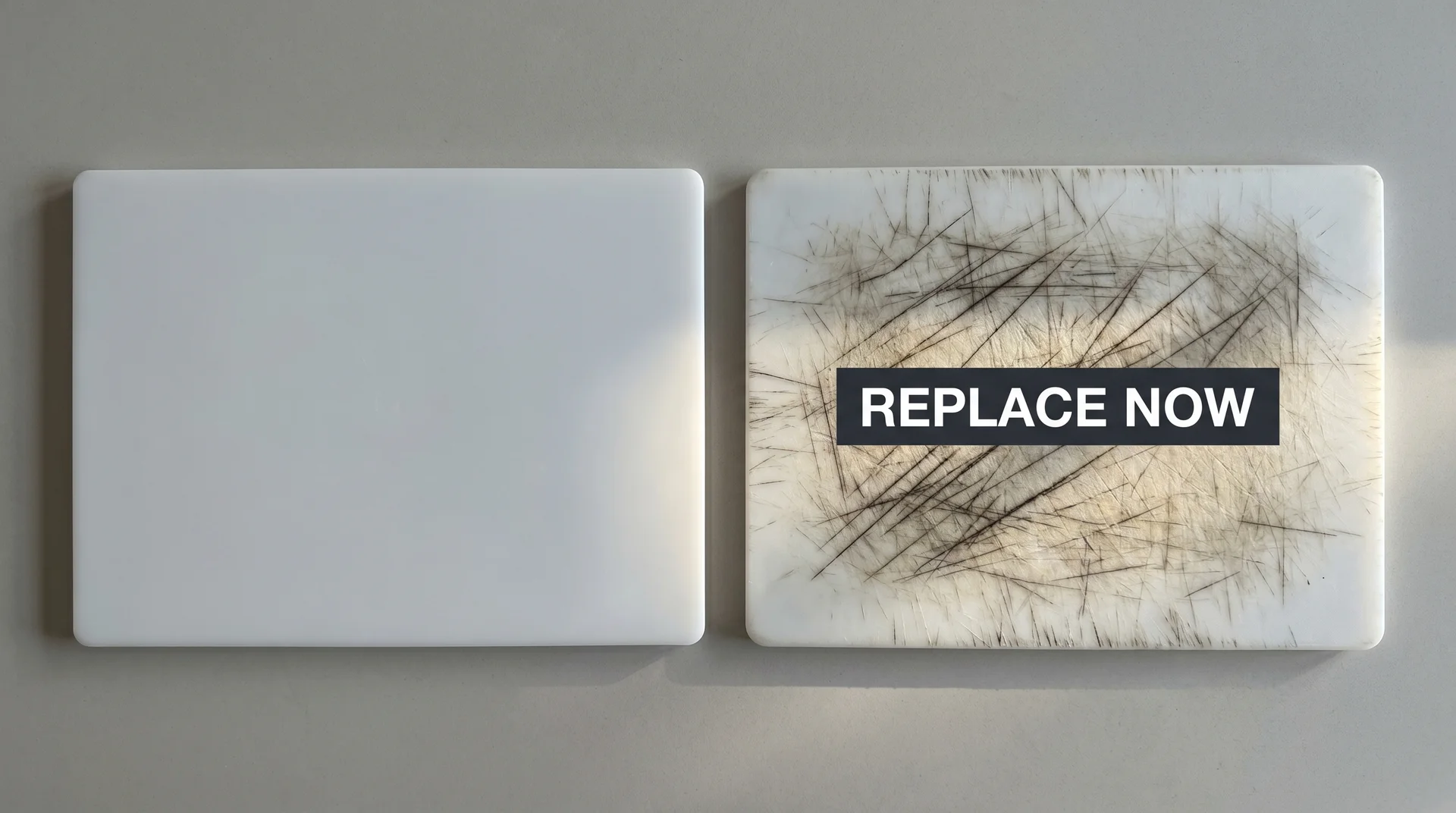
The replacement question applies to every material.
The USDA Food Safety and Inspection Service is direct: boards too scarred to sanitize should be replaced. What that looks like varies by material.
- Plastic boards: visible knife grooves deep enough to trap food particles. Run your fingernail across the surface. Channels that catch your nail are catching bacteria.
- Hardwood boards: surface checking, the hairline cracks that start at the edges or end grain. Early surface-level checking can sometimes be sanded back and re-oiled if you catch it soon. Deep checking or significant warping is past recovery.
- Paper composite and rubber boards: deep surface scoring, or any sign of delaminating or lifting at the edges. These hold up longer than wood or plastic under consistent use, but they’re not permanent.
One signal applies to every material: persistent odor after washing.
As I covered in the plastic section, contamination below the surface doesn’t respond to surface cleaning. That’s as true in hardwood and rubber as it is in plastic. If the odor is there after a proper wash, the problem is inside the material.
Frequently Asked Questions
What Is the Safest Material for a Cutting Board?
End-grain hardwood, specifically maple or walnut, is the safest primary cutting board material for most home cooks. The protection is real but conditional: a board not conditioned regularly with food-grade mineral oil develops micro-fractures that defeat it. If consistent maintenance isn’t realistic, paper composite is the more defensible everyday choice.
What is the Most Food-Safe Cutting Board?
“Most food safe” depends on which risk you’re solving for and how you actually use the board. For bacterial safety, end-grain hardwood and food-grade rubber lead. For microplastic concerns, any non-plastic surface wins.
What Do Professional Chefs Use for Cutting Boards?
NSF-certified food-grade rubber is the standard in many professional kitchens, particularly for raw protein handling. End-grain hardwood is also common for produce prep. Glass, marble, and titanium are not typical professional cutting surfaces.
What Is the Most Sanitary Cutting Board for Meat?
A non-porous, undamaged surface that can be fully sanitized is the most sanitary choice for raw meat. Food-grade rubber and paper composite both meet that standard. A dedicated secondary board for raw proteins is the most reliable long-term approach.
The Honest Starting Point
Solid end-grain hardwood, properly maintained, is the safest choice for most home kitchens.
Food-grade rubber is the professional standard. The reasoning holds outside professional kitchens just as well.
The decision that actually protects your kitchen starts somewhere different. A neglected hardwood board isn’t safer than a new plastic one. The starting point is an honest look at what you’ll actually maintain, not a material ranking.